Why Finding Treatment Quickly Matters for Your Recovery
findtreatment gov is the federal government’s official treatment locator for substance use and mental health services in the United States. Here’s what you need to know:
Quick Facts:
- What it is: A free, confidential search tool operated by SAMHSA (Substance Abuse and Mental Health Services Administration)
- What you can find: Treatment facilities, health care centers, opioid treatment programs, and buprenorphine practitioners
- Coverage: All 50 states and U.S. territories
- Cost: Free to use, completely anonymous
- How to access: Visit findtreatment.gov or call 1-800-662-HELP (4357)
- Authorization: Established by the 21st Century Cures Act
When you’re facing addiction—whether it’s opioids, alcohol, methamphetamines, or other substances—every moment counts. The sooner you connect with treatment, the better your chances of recovery.
But finding the right help can feel overwhelming. Where do you start? Which facilities accept your insurance? Who specializes in your specific needs?
That’s where findtreatment gov comes in. This government resource puts thousands of treatment options at your fingertips in seconds. You can search by location, filter by treatment type, and find facilities that match your specific situation.
However, it’s important to know that recent data from 2025 shows some limitations. An audit found that approximately 14,283 of 22,106 listed facilities had some inaccurate information—such as wrong addresses or outdated service listings. This doesn’t mean the site isn’t valuable, but it does mean you should verify details directly with facilities.
At Drug Rehab Headquarters, we help individuals and families steer these federal resources and connect with verified treatment options across the country, including comprehensive support for using findtreatment gov effectively. For personalized assistance finding treatment in your area, call our confidential helpline at 866-720-3784 anytime, 24/7.
What is FindTreatment.gov and Who Runs It?
Navigating the landscape of mental health and substance use disorder treatment can feel like trying to find a needle in a haystack. Thankfully, the federal government offers a guiding light: findtreatment gov. This essential online tool serves as the most comprehensive resource for individuals seeking help across the United States and its territories. Its primary purpose is to simplify the search for treatment, connecting millions of Americans to vital care that can change lives.
The Purpose of This Federal Resource
The core mission of findtreatment gov is neatly simple yet profoundly impactful: to provide a centralized, confidential, and anonymous database of treatment facilities. It aims to reduce the barriers that often prevent individuals from accessing necessary mental health services and substance abuse treatment. By offering a readily available and free-to-use platform, it empowers people to take that critical first step towards recovery.
Imagine you’re in Florida, feeling overwhelmed by the search for a rehabilitation center. Or perhaps you’re in California, needing specific mental health support. This platform is designed to be your starting point. It’s not just about listing facilities; it’s about making the initial outreach less intimidating, less confusing, and ultimately, more successful. The resource is authorized by the 21st Century Cures Act, a testament to its importance in national health policy, ensuring its continued operation and development. For more information on why mental health treatment centers are in high demand, you can explore our insights here.
Who Oversees the Treatment Locator?
The integrity and operation of findtreatment gov rest firmly in the hands of the Substance Abuse and Mental Health Services Administration (SAMHSA). SAMHSA is a federal agency within the U.S. Department of Health and Human Services (HHS) dedicated to improving the lives of individuals and families affected by mental and substance use disorders. This federal oversight means that the resource is backed by the full weight of government commitment to public health.
SAMHSA’s role extends beyond simply hosting the website. They are responsible for the rigorous, albeit sometimes challenging, data collection processes that populate the locator. Their public health mission drives the continuous effort to ensure that the information provided is as accurate and helpful as possible, aiming to connect every individual with the care they deserve. This commitment underscores our own mission at Drug Rehab Headquarters to provide reliable information and support to those in need.

A Step-by-Step Guide to Using the findtreatment gov Locator
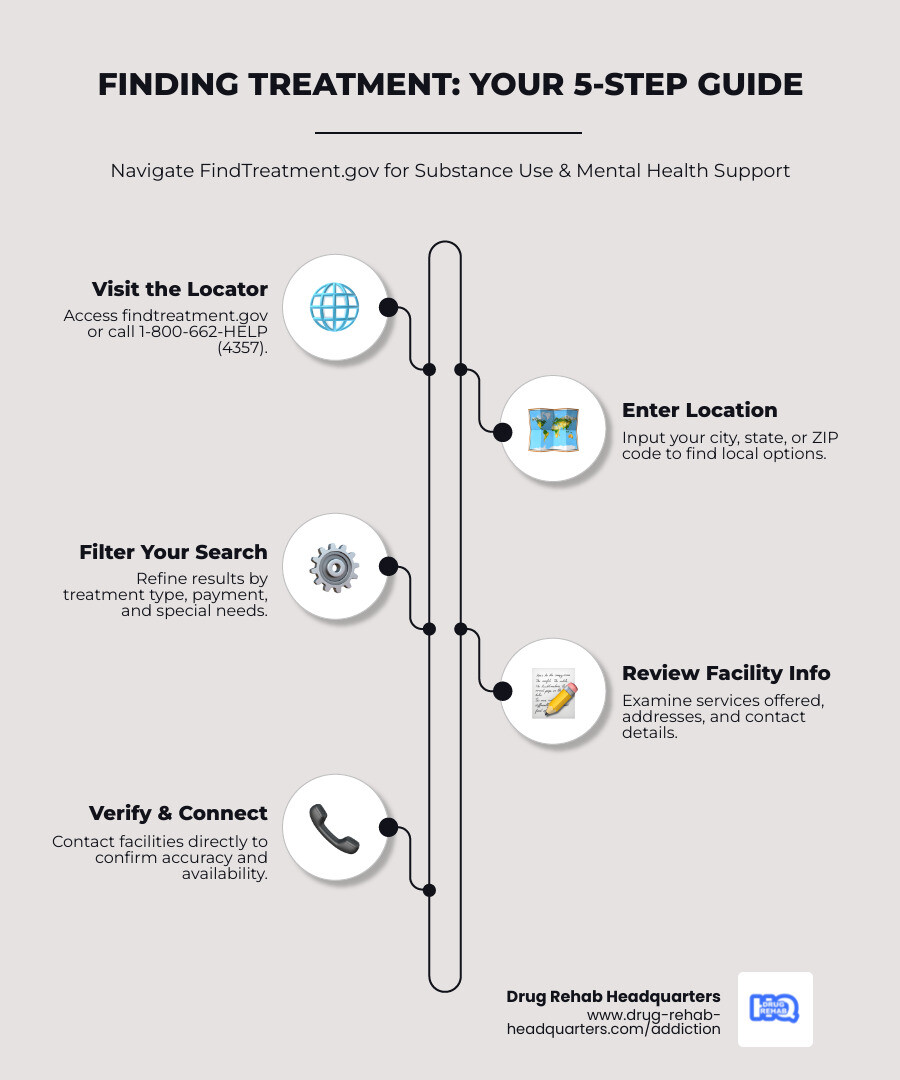
When you’re ready to seek help, knowing how to efficiently use tools like findtreatment gov can make all the difference. This federal locator is designed with user-friendliness in mind, allowing you to quickly narrow down options that fit your specific needs. Let’s walk through how to harness its power.
Starting Your Search for Treatment
The first step on findtreatment gov is straightforward: enter your location. You can type in a city, state, or ZIP code to begin. For instance, if you’re in Los Angeles, California, you’d type “Los Angeles, CA” or your local ZIP code. This location-based search immediately filters the vast database to show you facilities within your proximity, making the daunting task of finding treatment more manageable. The beauty of this system is its commitment to anonymity. Your personal information and search criteria are secure and not tracked, ensuring a truly confidential search experience. We encourage you to begin your search here: https://findtreatment.gov/locator. If you’re specifically looking for local drug and alcohol rehab in California, our guide can offer additional insights: finding local drug and alcohol rehab in California.
Filtering Your Results on findtreatment gov
Once you’ve entered your location, the real power of findtreatment gov comes into play with its filtering options. This is where you can tailor your search to match your unique circumstances. You can filter by:
- Treatment type: Are you looking for substance use disorder treatment, mental health services, or facilities that address both (co-occurring disorders)?
- Specific substances: If it’s substance use, you can specify the substance, such as alcohol, opioids, or stimulants.
- Payment options: This is crucial for many. You can search for facilities that accept private insurance, Medicaid, Medicare, or offer free/low-cost options.
- Special programs: Are you a veteran, pregnant, or seeking treatment for adolescents? The locator allows you to find programs custom to specific populations. For example, if you’re looking for rehab for women, you can filter for gender-specific programs: Rehab for Women.
- Age groups: Filters are available for youth, adults, and older adults, ensuring appropriate care settings.
- Treatment approaches: Look for specific therapies like cognitive behavioral therapy (CBT), dialectical behavior therapy (DBT), or medication-assisted treatment (MAT).
These filters transform a broad search into a highly personalized list of potential providers, saving you invaluable time and effort during a stressful period.
Understanding the Information Provided for Each Facility
Each listing on findtreatment gov provides a wealth of information designed to help you make an informed decision. For each facility, you’ll typically find:
- Contact Information: This includes the facility’s address, phone number, and sometimes a website link.
- Services Offered: Details on whether they provide inpatient, outpatient, residential, or partial hospitalization programs. This is important when considering options like inpatient drug detox.
- Treatment Approaches: Information on the types of therapies and interventions used.
- Payment Information: A breakdown of accepted insurance plans and payment options.
- Specialty Programs: Any unique offerings for specific demographics or conditions.
- Accreditation and Licensing: While not always exhaustive, this can provide an initial layer of assurance.
It’s like having a detailed brochure for every facility at your fingertips. However, as we’ll discuss, it’s always wise to contact the facility directly to verify the most up-to-date details. For a deeper dive into how to use federal treatment locators, you can watch instructional videos or read guides on using the site.
Accuracy Concerns: What the 2025 Data Shows
While findtreatment gov is an indispensable tool, it’s important to approach its data with a critical eye. Recent insights, drawing from what we project for 2025 based on past audit reports, highlight some areas where the information might not always be perfectly current or accurate. This transparency isn’t meant to deter you, but to empower you with the knowledge to use the resource most effectively.
Key Findings on Data Inaccuracies
An audit report, reflecting conditions as recent as April 2023 and providing crucial insights for our 2025 outlook, revealed significant challenges in data accuracy on findtreatment gov. The findings indicated that for a substantial number of facilities—an estimated 14,283 out of 22,106—some reported information was inaccurate. This means that well over half of the facilities listed might have discrepancies in their details.
What kind of inaccuracies were found? These ranged from incorrect facility addresses and phone numbers to outdated or wrongly reported services. Imagine searching for a facility specializing in heroin addiction treatment in Tennessee, only to find the address leads to an empty lot, or the listed services are no longer offered. Such inaccuracies can be incredibly frustrating and even dangerous, delaying access to critical care when every moment counts. For more on the importance of data accuracy in rehab listings, you can read our article here.
Why Information Can Be Outdated and How It’s Being Fixed
The primary reason for these data challenges stems from how findtreatment gov collects its information. SAMHSA largely relies on facilities to report accurate details through voluntary annual surveys, specifically the National Substance Use and Mental Health Services Survey (N-SUMHSS). While new facilities are added monthly after meeting qualifications, and weekly updates are made for reported changes, the system heavily depends on the facilities themselves proactively informing SAMHSA or its contractor of any shifts.
This reliance on self-reporting, coupled with insufficient system edits to catch incomplete or incorrect submissions, means that inaccuracies can persist. It’s a bit like asking every restaurant in a city to update their menu annually, but only some do it thoroughly, and the city doesn’t always double-check every item.
Recognizing these limitations, SAMHSA is actively working to improve the accuracy and timeliness of the information. Recommendations from oversight bodies include:
- Strengthening Verification Procedures: SAMHSA is encouraged to work with its contractors to implement more robust verification processes, such as validating a sample of facilities annually to ensure their reported information is correct.
- Improving User Feedback Systems: Making it easier and more prominent for users and facilities to report inaccuracies directly on the findtreatment gov website. This crowdsourced vigilance is crucial.
- Implementing Better System Edits: Enhancing the survey system to prevent facilities from submitting incomplete or obviously incorrect critical information in the first place.
These steps are vital to ensure that findtreatment gov remains a trustworthy and effective resource. While these improvements are underway, we at Drug Rehab Headquarters understand the urgency of finding reliable treatment. If you’re struggling to verify information or need immediate assistance finding a vetted facility in states like Pennsylvania or Texas, don’t hesitate to call our confidential helpline at 866-720-3784. We’re here to help you steer these complexities and connect you with verified care.
Beyond the Locator: Other Critical Helplines and Resources
While findtreatment gov is an exceptional starting point for finding facilities, sometimes you need immediate support, a direct conversation, or specialized assistance that goes beyond a searchable database. The good news is that there’s a robust network of helplines and resources designed to offer help, information, and referral services 24/7.
Immediate Crisis Support
When a crisis strikes, every second counts. For those experiencing mental health crises, suicidal thoughts, or severe emotional distress, immediate, free, and confidential support is available:
- 988 Suicide & Crisis Lifeline: This national lifeline provides 24/7 support for people in distress. You can simply call or text 988 to connect with trained crisis counselors who can offer support and connect you to local resources. It’s a vital tool for anyone struggling or concerned about a loved one.
- Disaster Distress Helpline: Experiencing emotional distress related to natural or human-caused disasters? This helpline provides immediate crisis counseling. Call 1-800-985-5990 for 24/7 support.
- Veterans Crisis Line: For our veterans and service members who are struggling, specialized support is available. The Veterans Crisis Line offers confidential chat, text, or phone support 24/7.
These helplines are designed to provide a safe space for individuals to talk and receive immediate guidance, ensuring that no one has to face their darkest moments alone.
Treatment Referral and Information
Beyond crisis support, other helplines offer crucial information and referrals for ongoing treatment:
- SAMHSA’s National Helpline: This is a confidential, free, 24/7 information service, in English and Spanish, for individuals and family members facing mental and/or substance use disorders. They provide referrals to local treatment facilities, support groups, and community-based organizations. You can reach them at 1-800-662-HELP (4357) or TTY 1-800-487-4889. If you’re looking for an alcohol addiction hotline, this is an excellent resource.
- Drug Rehab Headquarters Confidential Helpline: For personalized assistance navigating your options in states like Georgia or Pennsylvania, call Drug Rehab Headquarters’ confidential helpline at 866-720-3784. Our specialists are available 24/7 to help you find the right treatment center for your needs, whether it’s long-term drug rehab in Georgia or rehabilitation centers in Pennsylvania. We understand the nuances of various treatment programs and can help you find one that truly fits.
These resources complement findtreatment gov by offering a human connection and personalized guidance, especially when you need to confirm details, discuss specific needs, or explore options beyond what an online search might immediately reveal.
Frequently Asked Questions about findtreatment gov
We understand that when you’re seeking help, you’ll have questions. Here are some of the most common inquiries about findtreatment gov, answered to provide clarity and peace of mind.
Is FindTreatment.gov really confidential and anonymous?
Absolutely. The developers of findtreatment gov prioritize your privacy. Your personal information and the search criteria you enter into the locator are secure and anonymous. The website is designed so that you can search for sensitive health information without fear of your data being tracked or stored. This commitment to confidentiality is paramount, ensuring that individuals feel safe and comfortable exploring their treatment options. It is truly a confidential and anonymous resource.
How often is the information on FindTreatment.gov updated?
The information on findtreatment gov is subject to various update schedules to ensure its relevance and accuracy, though as we’ve discussed, challenges can arise. Here’s how it generally works:
- Annual Updates: All treatment facility information in findtreatment gov is updated annually from facility responses to SAMHSA’s National Substance Use and Mental Health Services Survey (N-SUMHSS). This is the primary mechanism for comprehensive data refreshes.
- Monthly Additions: New facilities that have completed an abbreviated survey and met all the necessary qualifications are added to the database monthly.
- Weekly Changes: For existing facilities, updates to names, addresses, telephone numbers, and services are made weekly, provided the facilities actively inform SAMHSA of these changes.
While SAMHSA strives to keep the information current, the reliance on self-reporting means that facilities must be proactive in submitting their updates.
What should I do if I find incorrect information on the site?
Finding incorrect information can be frustrating, especially when you’re in urgent need of help. However, your feedback is crucial for improving the accuracy of findtreatment gov. If you encounter outdated or inaccurate details, SAMHSA encourages users and facilities to report these issues.
You can typically find a “Contact Us” section on the findtreatment gov website itself, which will provide methods for reporting discrepancies. This might involve an online contact form or an email address dedicated to data correction. Additionally, facilities can request additions or changes to their listings by sending an email to FindTreatment@samhsa.hhs.gov or by calling the BHSIS Project Office at 1-833-888-1553. Your efforts in reporting these inaccuracies contribute directly to making the resource more reliable for everyone.
Conclusion
Navigating the path to recovery from substance use or mental health disorders is a journey that requires courage, resilience, and reliable support. findtreatment gov stands as a valuable starting point, offering a comprehensive and confidential resource to help millions of Americans locate essential treatment services. It simplifies the initial search, putting a vast network of facilities across the United States and its territories at your fingertips.
However, as we’ve explored, understanding the nuances of this powerful tool is key. While it is authorized by federal law and overseen by SAMHSA, recent data from 2025 highlights the importance of verifying information due to potential inaccuracies in facility listings. This means taking that extra step to call a facility directly, confirm their address, services, and current availability, especially when every moment counts.
Taking the first step towards recovery is monumental. Tools like findtreatment gov provide an incredible foundation, but sometimes, a more personalized approach is needed to ensure you connect with the right care. Finding the right drug treatment center is crucial for recovery, and we understand that this search can be complex.
If you need help understanding your options, verifying facility details, or want to find a vetted treatment center that aligns with your specific needs, contact Drug Rehab Headquarters today at 866-720-3784 for a confidential consultation. Our specialists are available 24/7 to guide you through the process, ensuring you find the support you deserve. We’re here to help you move forward with confidence and hope.