
Finding the Right Support for Your Mental Health Journey
Mental health professionals near me are trained specialists who can provide therapy, counseling, and support for a wide range of mental health and addiction challenges. Whether you’re struggling with anxiety, depression, substance use, or other concerns, qualified professionals are available in your community and online to help you move forward.
Quick Ways to Find Mental Health Professionals Near You:
- Call Info-Social 811 (in Canada) or 9-8-8 for suicide prevention and crisis support
- Search online directories like Psychology Today, the National Register, or provincial health websites
- Contact your primary care doctor or local community health center (CLSC) for referrals
- Use telehealth apps like TELUS Health MyCare for video chat appointments
- Reach out to community organizations like the Canadian Mental Health Association (CMHA)
- Call Drug Rehab Headquarters at 866-720-3784 for personalized guidance finding local professionals
If you are thinking of suicide or worried about someone, call or text 9-8-8 for free, confidential support anytime.
In 2025, approximately 1 in 5 people in Canada will experience a mental health issue in any given year. You are not alone, and seeking help is a sign of strength, not weakness. The good news is that mental health care has become more accessible than ever, with options ranging from free public services to specialized private practices and convenient virtual appointments.
At Drug Rehab Headquarters, we connect individuals and families with mental health professionals near me who specialize in addiction and co-occurring disorders, offering compassionate guidance to help you find the right support for your unique situation. We understand that taking the first step can feel overwhelming, which is why we’re here to make the process clearer and less intimidating.
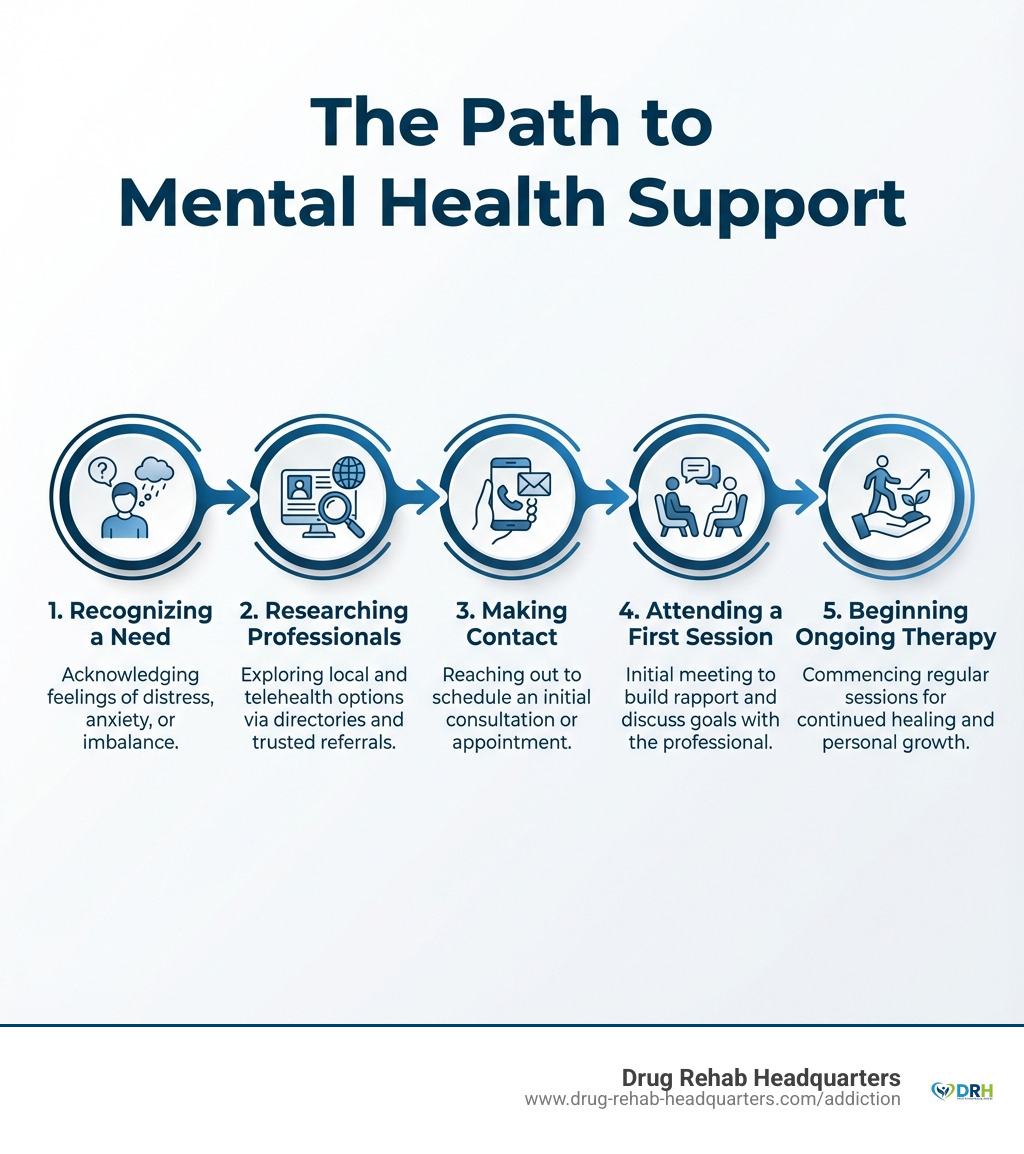
Simple guide to mental health professionals near me terms:
Understanding the Different Types of Mental Health Professionals
This section breaks down the various specialists available to help you on your journey.
When you begin your search for mental health professionals near me, it’s helpful to know the different types of experts available. Each professional brings a unique set of skills, education, and approaches to mental health care. Understanding these distinctions can help you choose the best fit for your needs.
Here are some of the most common types of mental health professionals you might encounter:
Psychiatrists (MD): These are medical doctors who specialize in mental health. They can diagnose mental health conditions, prescribe and manage medication, and provide various forms of therapy. Their medical background allows them to understand the biological aspects of mental illness and how it interacts with physical health. Canada, for instance, faces a shortage of psychiatrists, with an estimated 15.4% of Canadians living in areas with inadequate access to psychiatric care, highlighting the demand for these specialized medical professionals.
Psychologists (PhD, PsyD): Psychologists hold doctoral degrees (Ph.D. or Psy.D.) in psychology. They are experts in diagnosing mental health conditions and providing psychotherapy (talk therapy). They do not typically prescribe medication, though some states allow it with additional training. Psychologists often specialize in specific therapeutic approaches or populations, such as child psychology, clinical psychology, or neuropsychology. Platforms like Mental Health = Health emphasize verified credentials through the National Register of Health Service Psychologists, ensuring you find highly qualified professionals.
Licensed Professional Counselors (LPC/LCPC), Licensed Clinical Social Workers (LCSW), and Licensed Marriage and Family Therapists (LMFT): These professionals typically hold master’s degrees and are licensed by their respective states.
- LPCs/LCPCs (Licensed Professional Clinical Counselors) provide individual, group, and family counseling to address a wide range of mental and emotional health issues.
- LCSWs (Licensed Clinical Social Workers) offer therapy and support, often with a focus on how social and economic factors impact mental health. They are skilled in connecting individuals with community resources. David Lipschutz, LCSW, CADC, for example, combines clinical training with attentive listening to help individuals with substance use and related struggles.
- LMFTs (Licensed Marriage and Family Therapists) specialize in relationship dynamics, working with couples, families, and individuals to resolve interpersonal conflicts and improve communication.
Certified Addiction Counselors (CAC/CADC): These specialists focus specifically on substance use disorders. They provide counseling, education, and support to individuals and families dealing with addiction. David Lipschutz, LCSW, CADC, exemplifies a professional with expertise in both clinical social work and addiction counseling.
Other Specialists: You might also encounter mental health nurses, peer support specialists (individuals with lived experience who offer support), or dietitians who provide nutritional guidance that impacts mental well-being. TELUS Health MyCare, for instance, highlights access to registered dietitians via video chat.
Choosing the right professional often depends on your specific concerns. If you suspect a biological component to your mental health challenge or need medication, a psychiatrist is key. For talk therapy and behavioral strategies, a psychologist, counselor, or social worker might be ideal. For specific addiction challenges, a certified addiction counselor can provide targeted support.
Here’s a quick comparison to help clarify the roles:
| Role | Education | Ability to Prescribe | Typical Focus |
|---|---|---|---|
| Psychiatrist | Medical Doctor (MD) + Residency | Yes | Medication management, diagnosis, medical treatment of mental illness |
| Psychologist | Doctoral Degree (Ph.D., Psy.D.) | No (with rare state exceptions) | Psychotherapy (talk therapy), psychological testing, diagnosis, research |
| Therapist/Counselor | Master’s Degree (LPC, LCSW, LMFT, etc.) | No | Psychotherapy (talk therapy), counseling, addressing specific life challenges, emotional regulation, relationships |
How to Find Mental Health Professionals Near Me
Finding the right local support can feel overwhelming, but numerous resources are available to connect you with qualified professionals in your community.
The search for mental health professionals near me can feel like a daunting task, but we’re here to guide you. From online directories to community organizations, there are many avenues to explore.
Using Online Directories and Public Resources
One of the most effective ways to begin your search is through online directories. These platforms allow you to filter professionals by location, specialty, insurance acceptance, and even therapeutic approach.
- Psychology Today: This is a widely used and comprehensive directory where you can find therapists, psychiatrists, treatment centers, and support groups. You can search by state (like California, Florida, Texas, or New York) and then narrow it down by city (such as Los Angeles, Miami, Houston, or New York City) to find mental health professionals near me. Their listings often include detailed profiles, making it easier to find a good match.
- American Psychological Association (APA) Psychologist Locator: The APA offers a locator service to find psychologists. This can be particularly useful for ensuring you find a credentialed professional. You can use their tool to select your city and state from our company’s service areas, like Denver, Colorado, or Madison, Wisconsin.
- Health System Directories: Many large healthcare systems, like M Health Fairview (an example from the research, though not in our service area, demonstrates the concept), offer online directories of their providers. If you have a local health system in one of our service locations (e.g., in Phoenix, Arizona, or Atlanta, Georgia), check their website for a list of affiliated mental health professionals.
- State Health Departments: Your state’s Department of Health or Mental Health Services often provides resources, directories, or referral services for public mental health programs and licensed professionals. For instance, in Quebec, public health and social services institutions offer free mental health care and services, and while this is a Canadian example, many US states offer similar public-funded options. These resources are invaluable, especially if you’re looking for low-cost or free services in your area.
For personalized guidance on finding local mental health professionals near me, please Call Drug Rehab Headquarters at 866-720-3784.
Leveraging National and Community Organizations
Beyond online directories, national and local organizations play a crucial role in connecting individuals with mental health support.
- Community Mental Health Centers (CMHCs): These centers are often publicly funded and offer a range of services, including therapy, crisis intervention, and medication management, often on a sliding scale. Search for CMHCs in your state and city, whether you’re in Chicago, Illinois, or Portland, Oregon.
- National Mental Health Associations: Organizations like the National Alliance on Mental Illness (NAMI) or Mental Health America (MHA) offer extensive resources, support groups, and directories. While the Canadian Mental Health Association (CMHA) has 330 community locations across Canada promoting mental health and supporting those recovering from mental illness, you can find similar national and local affiliates in the US. These organizations can help you connect with local support groups or community services in areas like Las Vegas, Nevada, or
For help connecting with community resources for mental health professionals near me, Contact Drug Rehab Headquarters at 866-720-3784.
Exploring Virtual and App-Based Options
In our increasingly connected world, virtual mental health services have emerged as a convenient and accessible option. Telehealth, or video chat therapy, allows you to connect with mental health professionals near me from the comfort of your home, eliminating barriers like transportation or scheduling conflicts.
- Virtual Counseling Platforms: Many platforms offer access to doctors, psychologists, counsellors, and dietitians via video chat. For example, TELUS Health MyCare (a Canadian platform mentioned in our research) allows users to see a doctor, psychologist, counsellor, or dietitian from their phone. While this example is Canadian, many US-based apps offer similar services in states like California, New York, or Florida. These platforms often allow you to choose providers based on bios, previous visits, or gender, offering flexibility and choice.
- Benefits of Telehealth: The convenience of virtual sessions cannot be overstated. You can often book appointments outside traditional office hours, including evenings and weekends. For many, the ability to receive care without leaving home can reduce anxiety and make seeking help more manageable.
- Cost and Coverage: Doctor’s visits on some platforms are covered by provincial health plans (in Canada), and many US platforms or providers accept private insurance. Counsellor and dietitian sessions are often covered by extended health benefits. After a virtual session, you typically receive an in-app receipt that you can submit to your extended health care plan for reimbursement.

To learn about virtual support options for mental health professionals near me, Call Drug Rehab Headquarters at 866-720-3784.
What to Look For: Specialties, Approaches, and Common Concerns
Once you find potential professionals, it’s important to match their expertise with your specific needs.
Finding mental health professionals near me isn’t just about location; it’s about finding the right fit for your unique challenges. Therapists often specialize in certain areas or use specific therapeutic approaches that might be more effective for your situation.
Common Issues Therapists Can Help With
Mental health professionals are equipped to help with a vast array of concerns. Here are some of the most common issues they address:
- Anxiety: From generalized anxiety disorder to panic attacks and social anxiety, therapists can provide strategies to manage worry, fear, and physical symptoms. Relief, an organization mentioned in our research, offers services to help people live with anxiety.
- Depression: Therapists can help individuals steer feelings of sadness, hopelessness, and lack of motivation, working towards improved mood and engagement in life.
- Stress Management: Learning effective coping mechanisms for life’s inevitable stressors is a cornerstone of mental wellness.
- Grief and Loss: Dealing with the death of a loved one, job loss, or other significant changes can be profoundly challenging. Therapists provide support through the grieving process.
- Trauma and PTSD: For those who have experienced traumatic events, specialized therapies can help process memories, reduce symptoms, and regain a sense of safety. Veterans Affairs provides resources for those dealing with PTSD, emphasizing the need for specialized support.
- Eating Disorders: Conditions like anorexia, bulimia, and binge eating disorder require specialized care, which therapists can provide alongside medical professionals.
- ADHD (Attention-Deficit/Hyperactivity Disorder): Therapists can help individuals with ADHD develop organizational skills, improve focus, and manage impulsivity.
- Bipolar Disorder: Management of mood swings, from depressive lows to manic highs, often involves a combination of medication and therapy. Relief also offers services for bipolar disorder.
- Addiction and Substance Use: Many mental health professionals near me specialize in addiction, helping individuals address underlying causes, develop coping strategies, and maintain sobriety. This is a primary focus for us at Drug Rehab Headquarters.
For specialized addiction help, call Drug Rehab Headquarters at 866-720-3784.
Popular Therapeutic Approaches Explained
Therapists use various evidence-based approaches. Understanding a few key ones can help you discuss preferences with potential providers:
- Cognitive Behavioural Therapy (CBT): This widely used therapy helps you identify and change negative thinking patterns and behaviors that contribute to your problems. It’s often used for anxiety, depression, and addiction.
- Dialectical Behavior Therapy (DBT): A type of CBT, DBT focuses on teaching skills in four key areas: mindfulness, distress tolerance, emotion regulation, and interpersonal effectiveness. It’s particularly effective for individuals with intense emotional dysregulation.
- Eye Movement Desensitization and Reprocessing (EMDR): Often used for trauma and PTSD, EMDR involves guided eye movements to help process distressing memories and reduce their emotional impact.
- Somatic Therapy: This approach focuses on the connection between the mind and body, using body-oriented techniques to release trauma, stress, and emotional tension stored in the body.
- Psychoanalytic Therapy: This traditional form of therapy explores how unconscious thoughts, feelings, and past experiences influence current behavior and relationships. David Lipschutz, LCSW, CADC, for example, primarily draws from modern psychoanalytic theory.
- Acceptance and Commitment Therapy (ACT): ACT helps you accept difficult thoughts and feelings while committing to actions that align with your values.
- Narrative Therapy: This approach helps individuals re-author their life stories, separating themselves from their problems and finding new ways to respond to challenges.
- Motivational Interviewing: Often used in addiction counseling, this collaborative approach helps individuals explore and resolve ambivalence about change, strengthening their motivation.
Finding specialized services for your needs
Many mental health professionals near me offer services custom to specific populations or situations:
- Couples Counseling: Helps partners improve communication, resolve conflicts, and strengthen their relationship.
- Family Therapy: Addresses dynamics within the family unit, helping members understand and support each other through challenges.
- Child and Teen Therapy: Focuses on the unique developmental needs of younger individuals, often incorporating play therapy or other age-appropriate techniques.
- Veterans Support: Specialized services for veterans and their families, addressing trauma, adjustment issues, and other military-related mental health concerns. Veterans Affairs Canada, for instance, offers a helpline specifically for veterans and their immediate families.
- LGBTQ+ Affirming Care: Therapists who understand the unique challenges and experiences of the LGBTQ+ community provide culturally competent and supportive care. LifeStance Health Denver, for example, specializes in working with the LGBTQ+ community.
Contact Drug Rehab Headquarters at 866-720-3784 for help finding specialized services for mental health professionals near me.
Navigating the Logistics: Your First Session, Fees, and Privacy
Understanding the practical side of therapy can ease anxiety and help you prepare for your first appointment.
Once you’ve identified potential mental health professionals near me, it’s natural to have questions about what comes next. Knowing what to expect regarding your first session, costs, and confidentiality can make the process much smoother.
What to Expect During Your First Therapy Session
Your first therapy session is often called an intake session. It’s a chance for you and your therapist to get to know each other and determine if it’s a good fit.
- Building Rapport: Therapists understand that starting therapy can be nerve-wracking. They’ll likely begin by creating a safe, non-judgmental space and helping you feel comfortable.
- Setting Goals: You’ll discuss your reasons for seeking therapy, what you hope to achieve, and your personal history. Your therapist will ask about your situation, lifestyle, family and social network, work or study, overall health, and living conditions to understand your needs comprehensively.
- Intake Process: This might involve filling out forms about your medical and mental health history, and discussing confidentiality policies. Some practices, like Lotus Counselling, offer a free 15-minute consultation to help you assess if the therapist and approach are a good fit before a full session.
- Collaboration: A good therapist will work with you to develop a treatment plan. You should feel heard and respected, and have a clear understanding of the proposed next steps.
It’s okay if the first therapist isn’t the perfect match. Finding the right connection is crucial for effective therapy.
How to handle fees and insurance for mental health professionals near me
The cost of mental health services can vary significantly. Here’s how to steer fees and insurance:
- Provincial/State Health Plan Coverage: In some regions, like Quebec, all public health and social services institutions offer free mental health care. In the US, state-funded programs and some public health initiatives may offer low-cost or free services. It’s essential to check your state’s specific offerings.
- Extended Health Benefits/Private Insurance: Many private insurance plans offer coverage for mental health services. This often includes therapy with Licensed Professional Counselors (LPCs), Licensed Clinical Social Workers (LCSWs), and Psychologists. For example, LifeStance Health Denver accepts various insurance providers like Aetna, Cigna, and Humana. You’ll typically pay upfront and then submit a receipt for reimbursement. TELUS Health MyCare notes that counsellor and dietitian sessions often cost around $120, with initial psychologist visits at $225, and are frequently covered by extended healthcare plans.
- Sliding Scale Fees: Many mental health professionals near me offer a “sliding scale,” meaning the fee is adjusted based on your income and ability to pay. Don’t hesitate to ask about this option if cost is a concern.
- Private Pay: If you don’t have insurance or prefer not to use it, you can pay for services out-of-pocket. Some professionals, like David Lipschutz, LCSW, CADC, accept private payments and offer per-session payment options. This allows you to tailor your financial investment to your specific needs.
It’s always best to contact the therapist or their office directly to inquire about their fees and accepted insurance plans. We can help you understand your options; Call Drug Rehab Headquarters at 866-720-3784 for assistance with insurance and payment questions.
Understanding your rights to privacy and confidentiality
Confidentiality is a cornerstone of mental health care, creating a safe space for you to share openly.
- Legal and Ethical Standards: Mental health professionals near me are bound by strict legal and ethical codes (like HIPAA in the US) to protect your privacy. What you discuss in therapy is confidential.
- Confidentiality Policies: Your therapist will explain their confidentiality policy during your first session. This typically includes who has access to your records and under what circumstances information might be shared.
- Exceptions to Confidentiality: There are specific legal exceptions where a therapist may be required to break confidentiality, primarily when there is a risk of harm. These include:
- If you are a danger to yourself or others.
- If there is suspected child or elder abuse.
- If a court order requires the release of information.
- Safe and Non-Judgmental Space: The assurance of confidentiality allows you to explore sensitive topics without fear of judgment or exposure, which is vital for effective therapy.
Beyond Individual Therapy: Crisis Support and Treatment Centers
Sometimes, more intensive or immediate support is necessary. Know where to turn for urgent help and broader support systems.
While individual therapy is incredibly effective, some situations call for more immediate intervention or a more structured environment. It’s crucial to know about the broader ecosystem of mental health support, including crisis services and treatment centers, especially when looking for mental health professionals near me who offer comprehensive care.
Locating Support Groups and Treatment Centers
- Support Groups: These groups offer a powerful sense of community and shared experience. Peer support, where individuals with lived experience offer encouragement, can be incredibly validating. Organizations like the Canadian Mental Health Association (CMHA) have community locations offering various forms of support. For specific issues, you can find groups for anxiety (like Phobies-Zéro in Quebec), ADHD, eating disorders, and more. Psychology Today also lists support groups by location and topic.
- Treatment Centers: For more intensive care, mental health treatment centers provide structured programs. These can include:
- Outpatient Care: Allows you to live at home while attending therapy sessions, groups, and appointments at the center. LifeStance Health Denver and The Psychology Center in Madison, Wisconsin, for example, offer outpatient and virtual/in-home care.
- Inpatient Care: Provides 24/7 supervision and support in a residential setting, often for acute mental health crises or severe addiction.
- Partial Hospitalization Programs (PHP) and Intensive Outpatient Programs (IOP): These offer a higher level of care than traditional outpatient therapy but don’t require overnight stays.
- Specialized Treatment Programs: Many centers focus on specific populations (e.g., veterans, adolescents, LGBTQ+) or conditions (e.g., trauma, eating disorders, addiction). For instance, our research highlights LifeStance Health Denver’s specialization in populations like veterans and neurodivergent individuals.
If you are seeking a crisis center, you can find one near you to obtain free specialized crisis intervention services. For specialized addiction help, call Drug Rehab Headquarters at 866-720-3784 for 24/7 support.
Resources for urgent mental health needs
When immediate help is needed, knowing where to turn can make all the difference.
- Crisis Hotlines:
- 9-8-8 Suicide & Crisis Lifeline (US): This is a free, confidential service available 24/7 across the United States. You can call or text 988 anytime to connect with trained crisis counselors. This service is designed for anyone experiencing a mental health crisis or contemplating suicide.
- Local Crisis Lines: Many cities and counties in our service areas (from Los Angeles, California, to Houston, Texas, or Philadelphia, Pennsylvania) have local crisis hotlines that can provide immediate support and connect you to local resources.
- Emergency Services: If you or someone you know is in immediate danger, has seriously harmed themselves, or is experiencing a severe mental health crisis that poses a threat to safety, call 911 immediately.
- Hospital Emergency Rooms: For urgent mental health needs that are not life-threatening but require immediate attention, a hospital emergency room can provide assessment and stabilization.
- Text Support: Services like the Crisis Text Line (text HOME to 741741 in the US) offer support via text message, which can be a more comfortable option for some individuals, especially youth.
For an immediate addiction-related crisis, call Drug Rehab Headquarters’ 24/7 helpline at 866-720-3784. Our team is ready to provide guidance and connect you with the urgent support you need.
Conclusion
Your journey to wellness is unique, and finding the right support is a critical step. From individual therapists and specialized treatment centers to free community resources and crisis hotlines, help is available and accessible. Remember to be patient with the process and yourself. For those whose path includes overcoming addiction, Drug Rehab Headquarters provides dedicated resources to guide you toward recovery. Taking this step is an investment in your health and future. Call Drug Rehab Headquarters at 866-720-3784 to start your journey today.