
Understanding Inpatient Drug Detox and Why It Matters
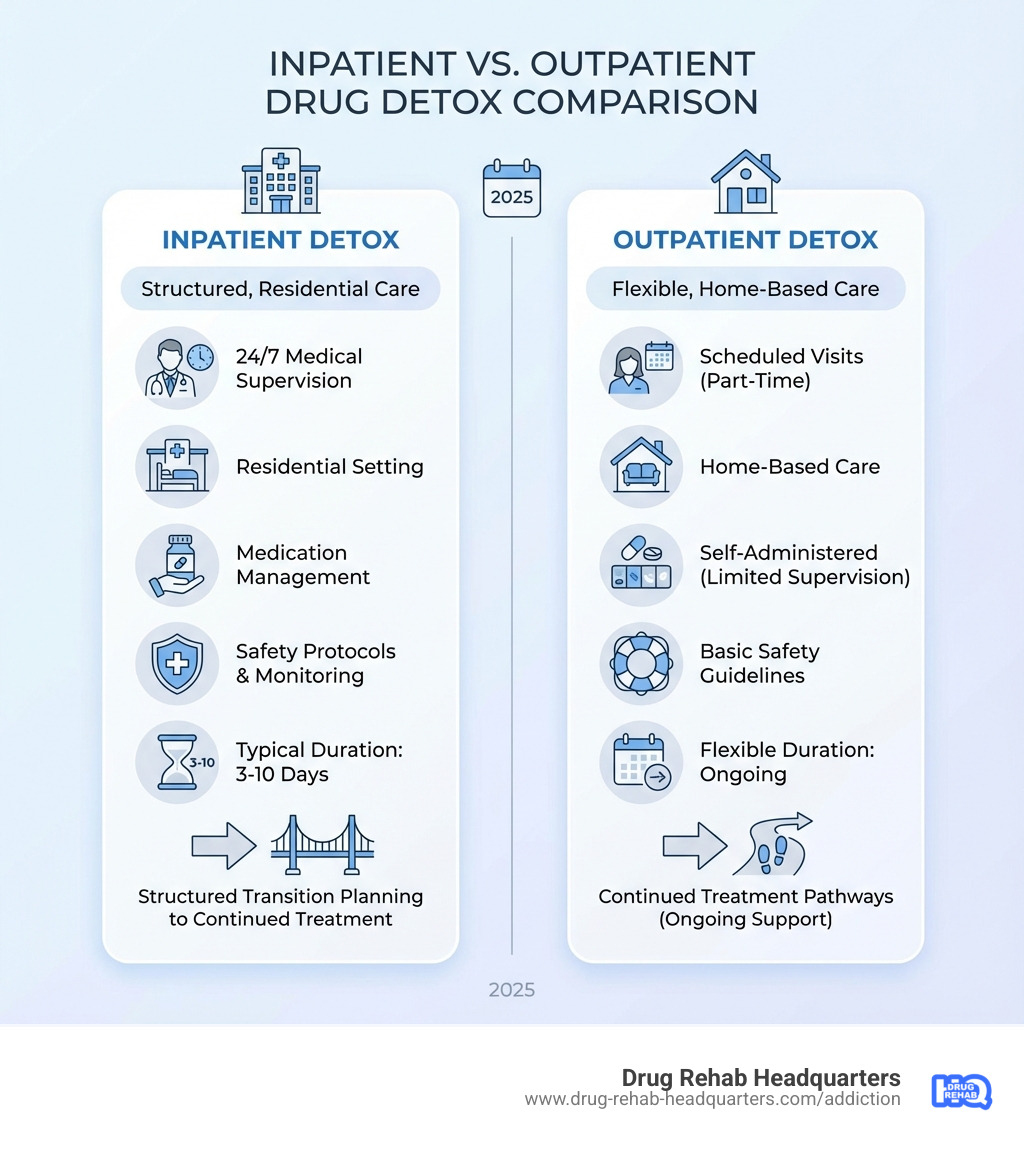
Inpatient drug detox is a medically supervised treatment program where individuals withdraw from substances in a safe, residential setting with 24/7 care. Here’s what you need to know:
| Key Feature | Description |
|---|---|
| Medical Supervision | Round-the-clock monitoring by healthcare professionals |
| Safe Environment | Controlled setting away from triggers and access to substances |
| Medication Support | FDA-approved medications to ease withdrawal symptoms |
| Duration | Typically 3-10 days depending on the substance and individual needs |
| Next Steps | Transition to residential treatment or outpatient programs |
The difference between inpatient and outpatient detox is simple: inpatient means you stay at the facility, while outpatient means you visit for treatment but return home. For severe addictions—especially to alcohol, benzodiazepines, or opioids—inpatient detox is often the safest choice because withdrawal can be life-threatening without proper medical care.
Finding the right program can feel overwhelming, especially when you’re already struggling. But knowing where to look and what questions to ask makes the process much easier.
At Drug Rehab Headquarters, we connect individuals and families with trusted inpatient drug detox resources and treatment options across the country. Our team of addiction specialists and recovery advocates understands the challenges you’re facing and provides compassionate, confidential support 24/7—call us at 866-720-3784 for immediate guidance.
1. Use Online Treatment Locators and Government Resources
When starting your search for an inpatient drug detox program, the internet can be a powerful tool, but it’s crucial to know where to look. We recommend beginning with trusted online databases and government resources. These platforms are often vetted for credibility and offer comprehensive lists of licensed facilities across the United States, including states like California, Florida, Texas, and Nevada, where we have strong connections.
One of the most reliable places to start is the Substance Abuse and Mental Health Services Administration (SAMHSA) National Helpline and its online treatment locator. SAMHSA is a federal agency that leads public health efforts to advance the behavioral health of the nation. Their resources are invaluable for finding legitimate treatment options. State-level health department websites are also excellent resources, providing lists of licensed facilities within their respective states. For instance, if you’re in California, the California Department of Health Care Services website would be a good place to cross-reference facilities.
While many online directories exist, vet them for credibility. Look for sites that clearly state their sources, provide direct contact information for facilities, and ideally, offer educational content alongside their listings. Our own platform, Drug Rehab Headquarters, serves as a comprehensive resource, helping you steer these options. You can use tools like the official government site to find a treatment facility near you or explore our insights on top cities in the US for addiction treatment to broaden your search.
How to Steer Treatment Finders
Navigating online treatment finders effectively can save you time and help you pinpoint the best options. Here’s how we recommend you use them:
First, filtering by location is usually your starting point. Whether you’re looking for a facility close to home in Arizona or considering a change of scenery in a state like Florida, most locators allow you to input a city, state, or zip code. This narrows down the overwhelming number of choices.
Next, specifically check for “inpatient detox” services. Many facilities offer a range of services, and you want to ensure they specialize in the initial detoxification phase. Some may only provide residential treatment or outpatient care, which comes after detox. You can often find this information in the facility’s profile or by checking their website directly.
Reading facility descriptions is critical. These often highlight the types of substances they treat, their philosophical approach, and any unique programs they offer. Look for details that resonate with your or your loved one’s specific needs. For example, some facilities might specialize in dual-diagnosis treatment for co-occurring mental health conditions, while others might focus on specific demographics.
Finally, always look for accreditations. Reputable inpatient drug detox centers will often be accredited by recognized organizations such as The Joint Commission or CARF (Commission on Accreditation of Rehabilitation Facilities). These accreditations signal that the facility meets high standards of care and safety. For those in the Golden State, we offer a dedicated resource to help you find a detox facility in California.
2. Consult with Medical and Mental Health Professionals
While online resources are a great starting point, nothing replaces the personalized guidance of medical and mental health professionals. These individuals can be crucial allies in finding the right inpatient drug detox care, offering insights custom to your specific health history and needs.
Your primary care physician (PCP) is an excellent first point of contact. They know your medical background and can assess the severity of your substance use, helping to determine if inpatient detox is indeed the most appropriate and safest option. They can also provide referrals to specialists or specific detox centers they trust. We often see patients who benefit greatly from their PCP’s holistic understanding of their health journey.
Psychiatrists or counselors who are already involved in your mental health care can also offer invaluable recommendations. They understand the psychological aspects of addiction and any co-occurring mental health disorders, which are common among individuals seeking detox. Their insights can help you find a program that addresses both physical withdrawal and mental health needs simultaneously.
Hospital social workers are another fantastic resource, especially if you or a loved one are currently in a hospital setting due to complications from substance use. They are experts in navigating healthcare systems and connecting patients with appropriate follow-up care, including detox and rehabilitation.
Lastly, if you’re employed, consider checking if your workplace offers an Employee Assistance Program (EAP). EAPs are confidential counseling services that can help employees with personal and/or work-related problems, including substance abuse. They can often provide referrals to treatment centers and help you understand your benefits.
Signs You Need an Inpatient Drug Detox
Deciding whether inpatient drug detox is necessary can be a critical moment. While some individuals might manage withdrawal in an outpatient setting, certain signs strongly indicate that the 24/7 medical supervision of an inpatient program is essential for safety and success. We want to ensure everyone understands these crucial indicators.
One of the most significant signs is experiencing severe physical withdrawal symptoms. For substances like alcohol and benzodiazepines, withdrawal can be life-threatening, potentially leading to seizures, delirium tremens (DTs), extreme hallucinations, or severe cardiac complications. Opioid withdrawal, while typically not fatal, can be excruciatingly painful and lead to severe dehydration or other medical issues without proper care. If you anticipate or have experienced these types of symptoms, inpatient detox is non-negotiable.
A history of relapse after outpatient attempts is another strong indicator. If previous attempts at detox or recovery in a less structured environment have not been successful, an inpatient setting provides a higher level of supervision and removes individuals from their usual triggers and environments, significantly increasing the chances of successful withdrawal.
Co-occurring mental health conditions like depression or anxiety also make inpatient detox a safer and more effective choice. These conditions can complicate withdrawal, intensify symptoms, and increase the risk of self-harm. An inpatient program can provide integrated treatment, addressing both the substance use disorder and the mental health issues simultaneously.
An unstable or triggering home environment can sabotage even the strongest intentions. If your living situation involves easy access to substances, negative influences, or high stress, an inpatient program offers a necessary respite and a controlled, supportive space to heal.
Finally, long-term, high-dosage substance use almost always warrants inpatient care. The body becomes heavily dependent, and the withdrawal process is likely to be more intense and prolonged, requiring continuous medical monitoring. Understanding these signs is vital for making an informed decision about your health. For more detailed information, especially regarding specific substances, you can learn more about alcohol detox symptoms.
3. Verify Insurance Coverage and Explore Payment Options
Understanding the financial aspect is a key step to accessing appropriate inpatient drug detox care. The cost of treatment can vary widely, but most reputable facilities work with insurance providers to make care more accessible. We believe that financial concerns should never be a barrier to getting the help you need.
Your first step should be contacting your insurance provider directly. This might seem daunting, but it’s crucial. You’ll want to ask specific questions about your policy’s coverage for “inpatient detoxification” and substance use disorder treatment. Be prepared to provide your policy number and personal information.
It’s important to clarify if pre-authorization is required for detox services. Many insurance plans require this before admission, and skipping this step could result in your claim being denied. Also, inquire about the approved length of stay for detox, as policies can vary.
Understand the difference between in-network vs. out-of-network costs. In-network facilities have a contract with your insurance company, meaning lower out-of-pocket expenses for you. Out-of-network facilities might be covered, but typically at a higher cost. Ask your provider for a list of local facilities that are in-network, especially in areas like Las Vegas, Nevada, or other major cities where Drug Rehab Headquarters operates.
If insurance coverage is limited or unavailable, don’t despair. Many facilities offer private pay options, and some provide sliding scale fees based on your income and ability to pay. Don’t hesitate to discuss these options with admissions counselors. They are often experienced in helping individuals steer financial challenges to get treatment.
Questions to Ask Your Insurance Provider
When you contact your insurance provider, having a clear list of questions will ensure you get all the necessary information. We recommend asking the following:
- What is my deductible for inpatient detox? You’ll need to know how much you have to pay out-of-pocket before your insurance coverage kicks in.
- Is pre-authorization required for inpatient detox services? If so, what is the process, and what documentation do I need?
- What is the approved length of stay for inpatient detox under my plan? Understanding this will help you know what to expect and plan for potential extensions if medically necessary.
- Which local facilities are in-network for inpatient detox? Request a list of approved providers in your area or areas you’re considering, such as in Tennessee, where we have resources for drug treatment centers in Tennessee.
- What are my co-pays or co-insurance amounts for inpatient detox? This will help you budget for ongoing costs during your stay.
- Are medications used during detox covered? This is crucial, as medication-assisted treatment (MAT) is often a vital component of safe detox.
Being prepared with these questions will empower you to understand your benefits thoroughly and make informed decisions about your care. You can also review Medicare coverage guidelines for treatment if that applies to your situation.
4. Evaluate Specific Programs and Ask the Right Questions
Once you’ve narrowed down your options to a list of potential inpatient drug detox centers that align with your needs and insurance, it’s time for some serious due diligence. This is where you dig into the specifics of each program to ensure it’s the right fit. We encourage you to be thorough and ask every question that comes to mind.
Start by looking into staff credentials and licensing. Are the medical staff (doctors, nurses) licensed in their respective fields? Do the therapists and counselors hold appropriate certifications? A highly qualified and experienced team is a cornerstone of effective detox.
Next, investigate facility accreditation. As we mentioned earlier, accreditations from organizations like CARF (Commission on Accreditation of Rehabilitation Facilities) and The Joint Commission are strong indicators of quality and safety. These organizations set rigorous standards for patient care, facility management, and ethical practices.
Consider the therapies offered. While detox primarily focuses on physical stabilization, many programs integrate early therapeutic interventions. Look for evidence-based approaches such as Cognitive Behavioral Therapy (CBT), Dialectical Behavior Therapy (DBT), and the availability of Medication-Assisted Treatment (MAT) if appropriate for the substance being detoxed. A holistic approach that addresses both physical and psychological needs is ideal.
Family involvement policies are also important. Some programs encourage family therapy or educational sessions, which can be incredibly beneficial for the recovery process, not just for the individual but for their support system.
Finally, inquire about aftercare and discharge planning. Detox is just the first step. A good program will have a clear plan for what happens next, whether it’s transitioning to residential rehab, outpatient programs, or connecting you with local support groups. This planning is crucial for long-term recovery. Drug Rehab Headquarters is here to help you find your ideal treatment option now.
[LIST] of Key Questions to Ask an Admissions Counselor
When speaking with an admissions counselor, seize the opportunity to ask detailed questions. Here’s a list we recommend to ensure you cover all your bases:
- What is your staff-to-patient ratio? A lower ratio often means more personalized attention and quicker response times from medical staff, which is critical during detox.
- What specific medical protocols do you use for my substance of choice? For instance, if you’re detoxing from opioids, ask about MAT options like buprenorphine or naltrexone. If it’s alcohol, inquire about medications to prevent seizures or manage delirium tremens.
- Do you treat co-occurring mental health disorders? Many individuals struggling with substance abuse also have underlying mental health issues. An integrated approach is often more effective.
- What does a typical day in detox look like? Understanding the daily schedule, including meal times, medical check-ups, and any therapeutic activities, can help you prepare.
- What are the next steps after detox is complete? Ask about their continuum of care and how they assist patients in transitioning to further treatment or support systems.
- What is your policy on family communication and involvement? Knowing when and how family can contact you, and if they can participate in any sessions, can be very reassuring.
Asking these questions will not only provide you with vital information but also give you a sense of the facility’s professionalism and commitment to patient care. For those considering options for younger family members, you might also want to explore options for rehab for young adults.
What to Expect During Your Inpatient Drug Detox Program
Entering an inpatient drug detox program can feel like stepping into the unknown, but understanding the process can alleviate much of that anxiety. The primary goal of detox is to safely and comfortably remove substances from your body, managing withdrawal symptoms under continuous medical supervision. We want to assure you that the process is structured to ensure your well-being.
The detox process typically unfolds in three main stages:
- Evaluation: Upon admission, you’ll undergo a comprehensive medical and psychological assessment. This includes a physical exam, blood tests, and an evaluation of your substance use history and any co-occurring mental health conditions. This stage helps the medical team create a personalized detox plan custom to your specific needs.
- Stabilization: This is the core of the detox process, where your body actively clears the substances. Medical staff will monitor your vital signs 24/7 and administer medications as needed to ease withdrawal symptoms, prevent complications, and maintain your comfort. This can be the most challenging phase, but with continuous care, it’s made as manageable as possible.
- Preparation for further treatment: As your body stabilizes, the focus shifts to preparing you for the next steps in your recovery journey. This might include educational sessions about addiction, introduction to therapeutic modalities, and discussions about long-term treatment options like residential rehab or outpatient programs.
As of 2025, data shows most detoxifications can be completed in 3-7 days, though this can vary significantly based on the substance, the duration and intensity of use, and individual physiological factors. Managing withdrawal side effects is paramount, and the ultimate goal is achieving medical stability, allowing you to transition safely to the next phase of recovery.
The Crucial Role of Medical Supervision in Inpatient Drug Detox
The cornerstone of effective inpatient drug detox is unwavering medical supervision. This isn’t just about comfort; it’s about safety, especially when dealing with substances that carry severe withdrawal risks.
In an inpatient setting, you benefit from 24/7 monitoring of vital signs – heart rate, blood pressure, temperature, and respiration. This constant oversight allows medical professionals to identify and respond immediately to any signs of distress or complication.
Medication-Assisted Treatment (MAT) plays a crucial role in easing withdrawal symptoms. For opioid detox, medications like buprenorphine or methadone can significantly reduce cravings and physical discomfort. For alcohol withdrawal, benzodiazepines are often used to prevent seizures and delirium tremens. These medications are carefully prescribed and adjusted by doctors to ensure maximum effectiveness and safety.
This continuous medical presence also allows for the prevention of life-threatening complications. Unmanaged withdrawal from alcohol or benzodiazepines can lead to fatal seizures or cardiac arrest. In an inpatient setting, these risks are minimized through proactive medical intervention. Furthermore, there’s immediate response to medical emergencies, providing a critical safety net that simply isn’t available in an outpatient or home setting.
Beyond the physical, medical supervision also provides crucial psychological support for anxiety and cravings. The medical team can offer reassurance, explain what you’re experiencing, and provide non-pharmacological interventions to help manage psychological distress. This comprehensive care ensures that both your body and mind are supported through this challenging phase. For those struggling with specific opioid addictions, understanding the full spectrum of care, including detox, is vital, and you can learn about heroin addiction treatment.
Life After Detox: The Next Steps in Your Recovery Journey
It’s vital to remember that detox is the first step, not a cure. While successfully completing inpatient drug detox is a huge accomplishment, it merely stabilizes your body. The real work of addressing the underlying causes of addiction and building a foundation for sustained sobriety begins immediately afterward.
The most common and highly recommended next step is transitioning to a residential rehab program. These programs offer a structured, supportive environment where you can engage in intensive therapy, learn coping mechanisms, and address behavioral patterns associated with substance abuse. This continuity of care is crucial for preventing relapse.
For those who may not require or prefer residential care, step-down levels of care like Partial Hospitalization Programs (PHP) and Intensive Outpatient Programs (IOP) are available. PHPs offer daily treatment while allowing you to return home at night, providing a blend of intensive therapy and personal freedom. IOPs offer fewer hours of treatment per week, allowing individuals to maintain work or family commitments while still receiving significant therapeutic support.
Throughout these next steps, a core focus will be building relapse prevention skills. This involves identifying triggers, developing healthy coping strategies, and learning how to steer high-risk situations without resorting to substance use. This skill set is essential for long-term sobriety.
The importance of ongoing therapy and support groups cannot be overstated. Individual therapy helps explore personal issues, while group therapy provides peer support and shared experiences. Support groups like Narcotics Anonymous (NA) or Alcoholics Anonymous (AA) offer a community of understanding and accountability. As of 2025, studies show a 16-19 day rehab stay is often sufficient to transition to a lower level of care, highlighting the effectiveness of structured post-detox treatment. Understanding that recovery is a journey, not a destination, is key to sustained success. If you’re wondering about the duration of these programs, you can find more information on what to know about short-term rehab.
Frequently Asked Questions about Inpatient Detox
Which substances most often require inpatient detox?
Due to potentially life-threatening withdrawal symptoms, inpatient detox is strongly recommended for alcohol, benzodiazepines (like Xanax and Valium), and opioids (like heroin and fentanyl). Quitting these “cold turkey” at home can lead to seizures, delirium tremens, or severe dehydration. Alcohol withdrawal can be particularly dangerous, with symptoms peaking within 72 hours and potentially including hallucinations and severe tremors. Benzodiazepine withdrawal can last for weeks or even months, with symptoms ranging from anxiety and insomnia to seizures. Opioid withdrawal, while rarely fatal, is uncomfortable and can lead to severe dehydration and medical complications without supervision.
How long does inpatient detox typically last?
The duration of inpatient drug detox varies significantly by substance, usage history, and individual health factors. According to 2025 data, for many, the acute phase of withdrawal lasts 3 to 10 days. Alcohol withdrawal may peak within 72 hours, with the entire detox process often completed within a week. However, some benzodiazepine detox protocols can extend for two weeks or more, as a slow, gradual taper is often necessary to ensure safety and minimize severe withdrawal symptoms. Opioid detox using Medication-Assisted Treatment (MAT) might see significant improvement within 5-7 days, but individual responses differ. The medical team continuously assesses progress to determine the safest and most effective length of stay.
Can pregnant individuals safely undergo inpatient detox?
Yes, and it is highly recommended over attempting to quit alone. Medically supervised inpatient drug detox provides specialized care to manage withdrawal for both the mother and fetus, minimizing risks like fetal distress or preterm labor. Abruptly stopping substance use without medical supervision can be more dangerous for both mother and baby than a carefully managed detox. Facilities specializing in maternal addiction offer custom protocols, often utilizing specific medications and continuous monitoring to ensure the safest possible path to recovery for both. This approach creates a stable path not just for detox but for ongoing prenatal care and long-term recovery planning.
Conclusion
Finding the right inpatient drug detox program is a courageous and life-changing first step on the path to recovery. We understand that the journey can seem daunting, but with the right guidance and resources, it is entirely achievable. By using these five methods – leveraging online locators, consulting medical professionals, verifying insurance, evaluating programs thoroughly, and asking crucial questions – you can effectively steer your options and find a safe, effective, and compassionate facility that meets your unique needs.
Recovery is possible, and professional help is available across the country, including in the states and cities where Drug Rehab Headquarters operates. We are more than just an online resource; we are dedicated to connecting you with the information and support you need to make informed decisions for your health and future. For immediate, confidential help finding a program that’s right for you or a loved one, don’t hesitate to call our 24/7 helpline at 866-720-3784 today. Your journey to a healthier, substance-free life starts here.