Why Real Recovery Stories Matter More Than Statistics
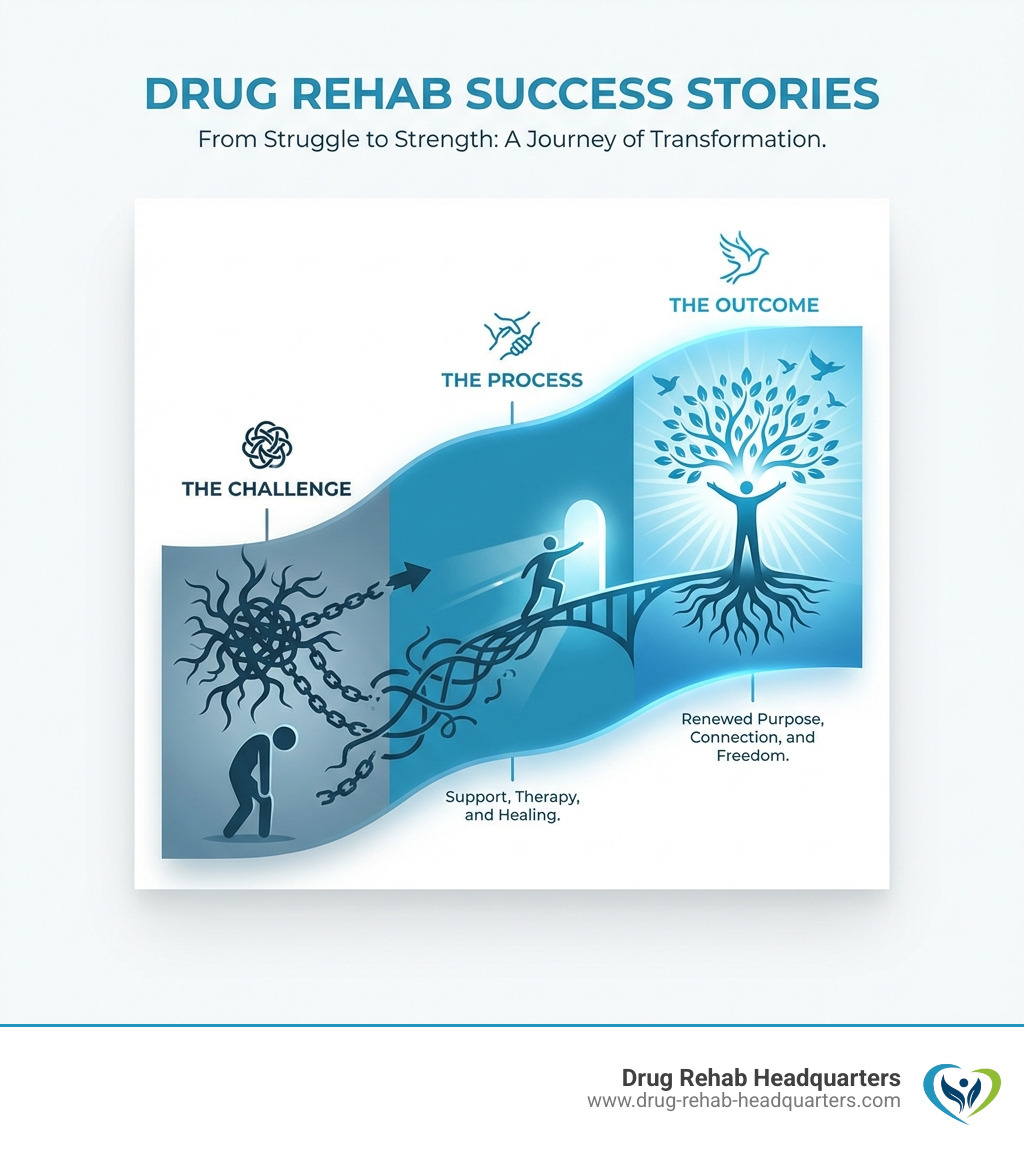
Drug Rehab Success Stories prove that lasting recovery is possible, even after years of addiction, multiple relapses, and hitting rock bottom. These narratives showcase real people who transformed their lives through treatment, peer support, and personal determination—offering hope to anyone struggling with substance use disorder.
Key themes in successful recovery journeys include:
- Early intervention and crisis moments – Many found sobriety after overdoses, arrests, or family interventions that forced them to confront their addiction
- Comprehensive treatment approaches – Medication-Assisted Treatment (MAT), 12-step programs, sober living homes, and peer support played critical roles
- Long-term commitment – Recovery required lifestyle overhauls, ongoing aftercare, daily meetings, and cutting ties with old habits and friends
- Family and community support – Loved ones, sponsors, recovery coaches, and alumni networks provided accountability and encouragement
- Purpose and giving back – Many turned their recovery into advocacy, counseling careers, or mentoring others in early sobriety
The statistics paint a sobering picture: nearly 108,000 Americans died from drug overdoses in 2022, relapse rates hover around 40-60%, and less than 43% of people complete their treatment programs. Yet behind these numbers are individuals like Cindy, who overcame prescription opioid addiction through Suboxone treatment; Sean, who broke a cycle of incarceration through sober living; and Raelyne, who survived a fatal overdose and rebuilt her life with peer support. Their stories demonstrate that with the right combination of clinical care, personal commitment, and ongoing support, recovery isn’t just possible—it’s achievable.
At Drug Rehab Headquarters, we’ve spent years connecting individuals and families with evidence-based treatment resources and sharing Drug Rehab Success Stories that inspire hope and demonstrate the transformative power of quality rehabilitation programs. Our mission is to help you understand that recovery is not only possible but within reach with the right support and treatment approach.
The Reality of Addiction and the Power of Drug Rehab Success Stories
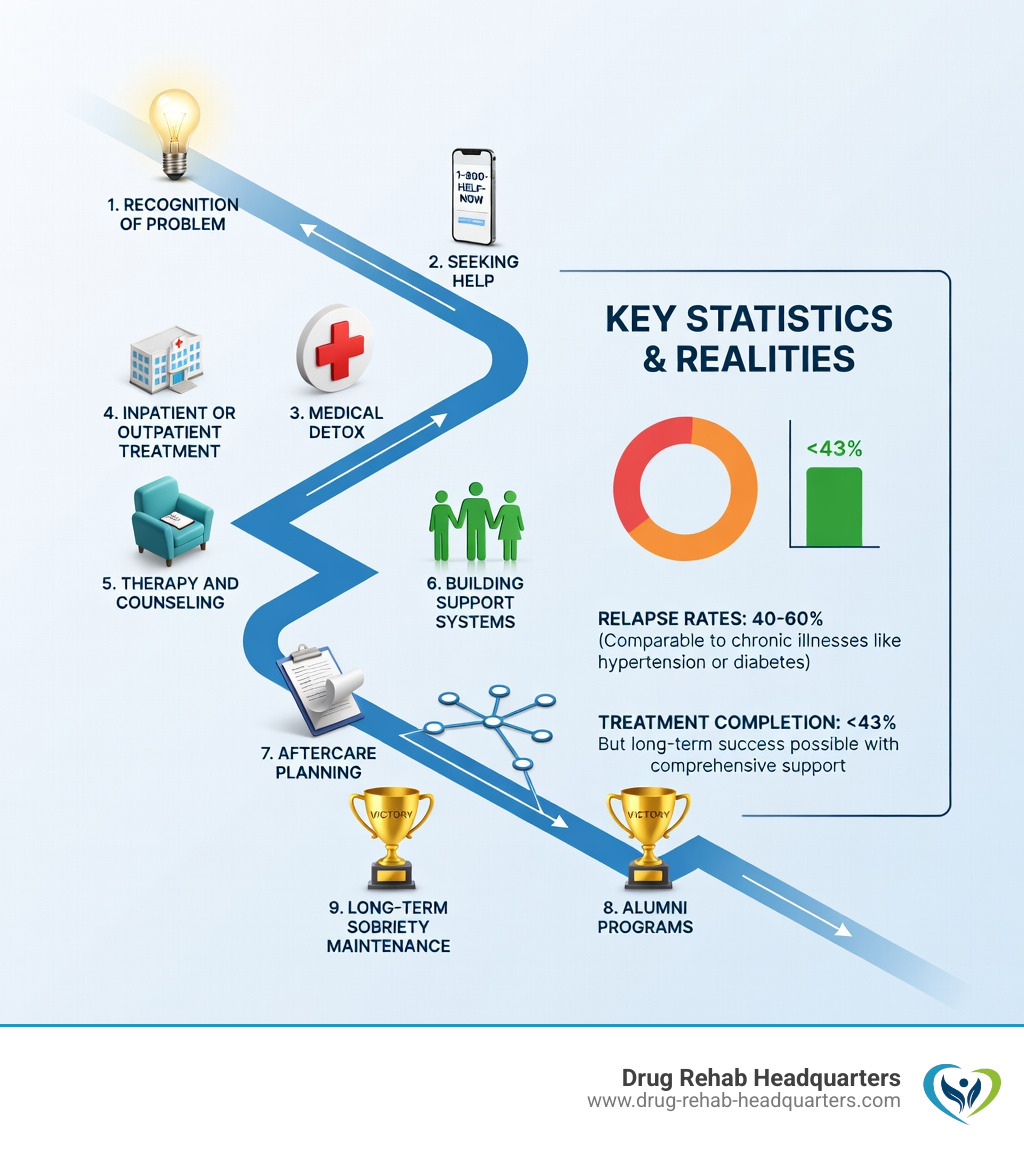
When we talk about addiction, it is easy to get lost in the numbers. We see headlines about the overdose crisis and the staggering death tolls—nearly 296 people a day in the United States alone. But statistics don’t tell the whole story. They don’t capture the moment a father regains the trust of his children or the day a woman who was once homeless walks across a stage to receive her college diploma.
The reality is that addiction is a chronic disease, much like hypertension or diabetes. This means that relapse statistics and recovery realities are part of the medical landscape. Relapse rates for substance use disorders are estimated at 40-60%, which is remarkably similar to other chronic illnesses. This doesn’t mean treatment failed; it means the treatment plan needs to be adjusted.
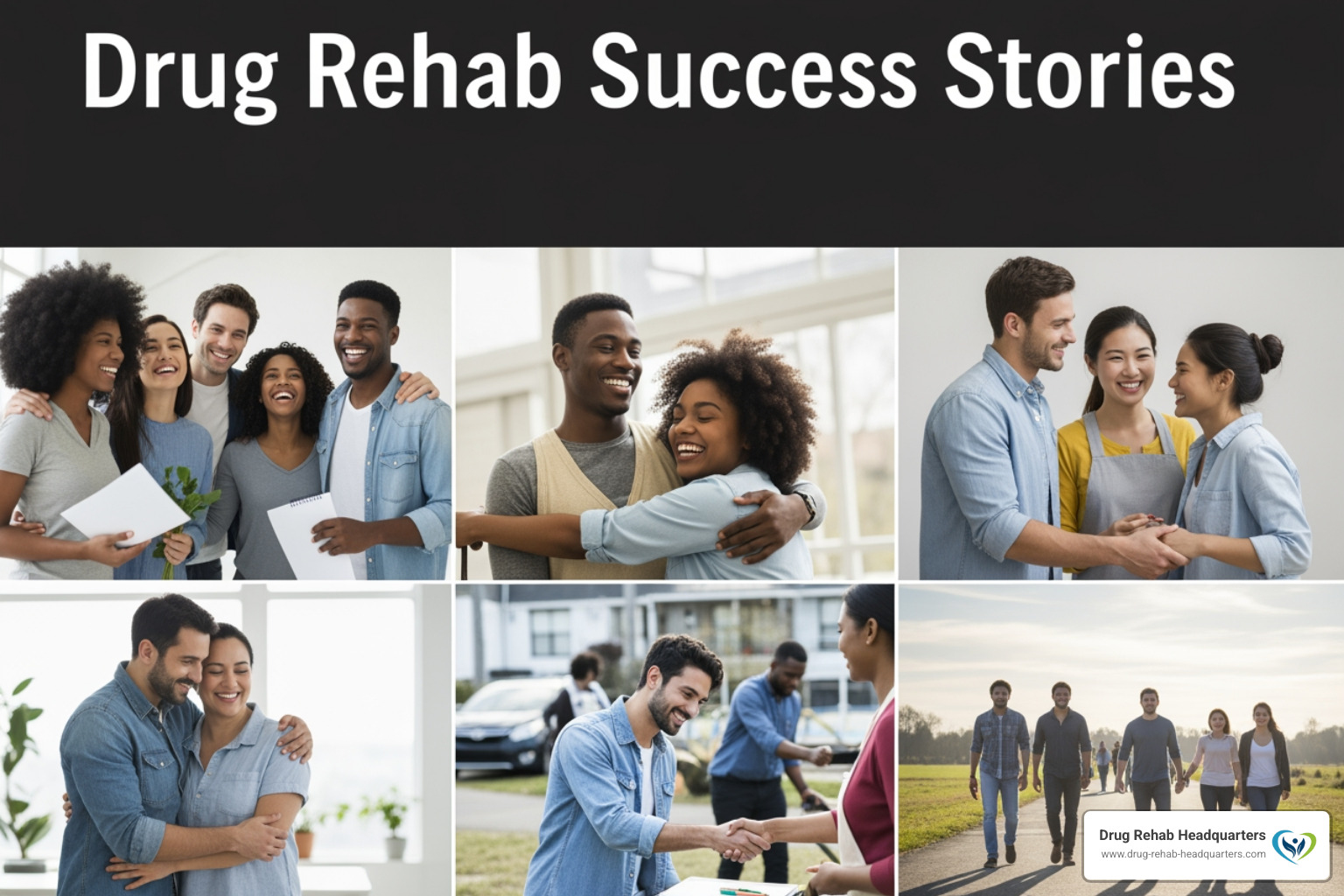
Drug Rehab Success Stories are the antidote to the despair these statistics can cause. They remind us that while the path is difficult, thousands of people are finding their way back to health every single day.
Why Structured Treatment Leads to Drug Rehab Success Stories
Why do some people succeed while others struggle? Often, the difference lies in the structure of the recovery program. “Spontaneous remission”—quitting on one’s own—is incredibly rare and dangerous, especially with substances like alcohol or opioids that require a medical detox.
Structured treatment provides:
- Safety protocols: Medical supervision during withdrawal to prevent life-threatening complications.
- Evidence-based care: Utilizing therapies like Cognitive Behavioral Therapy (CBT) and Dialectical Behavior Therapy (DBT).
- Clinical supervision: Having professionals who can identify co-occurring mental health disorders that often fuel addiction.
- A “reset button”: As seen in many success-stories, removing oneself from a toxic environment is often the first step toward clarity.
Overcoming the Statistics of Substance Use Disorder
It is a hard truth that less than 43% of individuals who enter treatment for drug and alcohol use actually complete it. Furthermore, more than 95% of people who needed drug rehab in 2023 didn’t receive it. These numbers highlight a massive gap in accessibility and completion.
However, research on recovery outcomes shows that those who engage in long-term behavioral health support—including aftercare and alumni programs—have significantly higher success rates. Success isn’t just about the 30 days spent in a facility; it’s about the years of support that follow.
10 Real-Life Recovery Narratives: From Rock Bottom to Redemption
Every person who enters our network has a unique “why.” For some, it’s a legal mandate; for others, it’s the realization that they are “fighting a rat for a corn dog,” as one person famously described their rock bottom. These Drug Rehab Success Stories highlight the incredible resilience of the human spirit.
One such account is chriss-story-how-i-was-saved-from-myself, which illustrates the profound internal shift from self-destruction to self-preservation.
Overcoming Opioids: Cindy and Raelyne’s Journeys
Opioid addiction often begins in the most “normal” of ways. Cindy was a healthcare manager, a black belt in martial arts, and a high-achiever. After a back injury, she was prescribed opioids. What started as legitimate pain management spiraled into a 5.5% statistical risk that became her reality. She faced the stigma of being a “drug addict” despite her professional background. Her turning point came through Medication-Assisted Treatment (MAT). Using Suboxone and Sublocade benefits, she was able to stabilize her brain chemistry and reclaim her life.
Raelyne’s story is equally harrowing. A former PTA president, she found herself overdosing in a hotel room. She was clinically dead, requiring CPR and two doses of Narcan to be revived. Her success was sparked by a peer support specialist named Kristina, who sat by her hospital bed and refused to give up on her. Raelyne has now surpassed 100 days of sobriety, proving that even a near-death experience can be the beginning of a new life. Stories like taras-second-chance-in-one-moms-opinion echo this sentiment: mothers can and do recover.
Breaking the Cycle: Sean and Julie’s Drug Rehab Success Stories
For many, addiction is a family legacy. Sean grew up in a household where drug use was the norm. His journey included 14-person robberies, pistol-whippings, and multiple prison terms. He viewed prison as a “reset button,” but it never stuck until he entered a structured sober living program. By surrounding himself with positive role models and mentors who tested his trust—like leaving a credit card out to see if he’d steal it—he built a new foundation of integrity. He is now a construction project manager, helping his own brother enter treatment.
Julie’s story began even earlier; she started using at just 13 years old. By 22, she was facing five years in prison. It took a court-mandated treatment program and a family that practiced “tough love” to get her to stay. She learned that she was “one decision away from a different life.” Today, she fills her time with recovery commitments and sponsorship, proving that you are never too young to start over. These changes are often documented in a-letter-to-a-role-model, where survivors thank those who stood by them.
From Homelessness to Higher Education: Gina and Ashleigh’s Triumphs
Gina’s addiction lasted 20 years. At her lowest point, she weighed 70 pounds and had survived a 20-foot fall while high. Her family had already begun preparing for her funeral. After 11 failed rehab attempts, she finally found a crisis center that helped her address the “spiritual void” she had been trying to fill with heroin. Gina didn’t just get sober; she went back to school and is now a social work student.
Ashleigh followed a similar path. After years of legal issues and overdoses, she entered recovery and graduated at the top of her class with both a bachelor’s and a master’s degree. These stories are a stark contrast to the tragic loss found in accounts like sophie-was-a-bright-wonderful-young-woman-until-her-addiction-took-her-life, reminding us that the stakes are life and death.
Key Factors That Determine Long-Term Treatment Success
What makes a Drug Rehab Success Story last? It isn’t just willpower. It is a combination of clinical tools and social support.
The Role of Medication and Peer Support
For many, the physical cravings for drugs are too powerful to overcome with “grit” alone. This is where Medication-Assisted Treatment (MAT) comes in. Whether it is Methadone or Suboxone, these medications allow the brain to heal while the individual works on the psychological aspects of addiction.
Equally important is the community. Programs like Narcotics Anonymous and Alcoholics Anonymous provide a “sponsee family” and a sense of belonging. For those looking for a non-secular or self-empowerment-based approach, SMART Recovery tools offer evidence-based techniques to manage urges and build a balanced life.
Why Spontaneous Recovery is Rare Compared to Structured Rehab
You might hear stories of people who “just stopped” one day. While inspiring, these are the exceptions. Structured rehab is more reliable because it addresses the three pillars of addiction:
- Physical: Withdrawal management and nutritional restoration.
- Psychological: Counseling to identify triggers and develop coping skills.
- Social: Building a network of sober peers and aftercare planning.
Without these pillars, the “chaos of life” often pulls a person back into old habits as soon as a major stressor occurs.
Frequently Asked Questions about Drug Rehab Success
How effective is drug rehab for long-term sobriety?
Rehab is highly effective when viewed as the beginning of a management plan for a chronic illness. While only about 25% of people with Alcohol Use Disorder (AUD) are successful at reducing intake for more than a year on their own, treatment effectiveness data shows that completion of a full program followed by aftercare drastically improves these odds.
What are the most common themes in recovery stories?
Most Drug Rehab Success Stories involve a “moment of sanity” or a rock bottom that leads to a total surrender. Other themes include the importance of personal accountability, the need to change one’s entire social circle, and the eventual desire to give back to others still struggling.
Can someone recover if they are forced into treatment?
Yes. While internal motivation is ideal, “forced” treatment (via drug courts or family ultimatums) often “plants a seed.” Many people enter rehab angry and resistant but find clarity once the substances leave their system. Legal mandates can provide the time necessary for the brain to begin healing, at which point internal motivation can take over.
Conclusion: Your Journey Starts Today
If you have been moved by these Drug Rehab Success Stories, know that they aren’t just stories—they are possibilities. At Drug Rehab Headquarters, we connect you with the same types of programs that helped Sean, Raelyne, and Gina.
Our certified counselors, many of whom have their own lived experience, are available 24/7 to offer free support. Whether you are in Alabama, California, New Hampshire, or Texas, we can help you find a personalized, holistic, or evidence-based treatment option that fits your needs.
There is no better time to begin your recovery than today. You are just one decision away from a completely different life. Find your path to recovery and let us help you write your own success story.