
Understanding the Line Between Social Drinking and Addiction
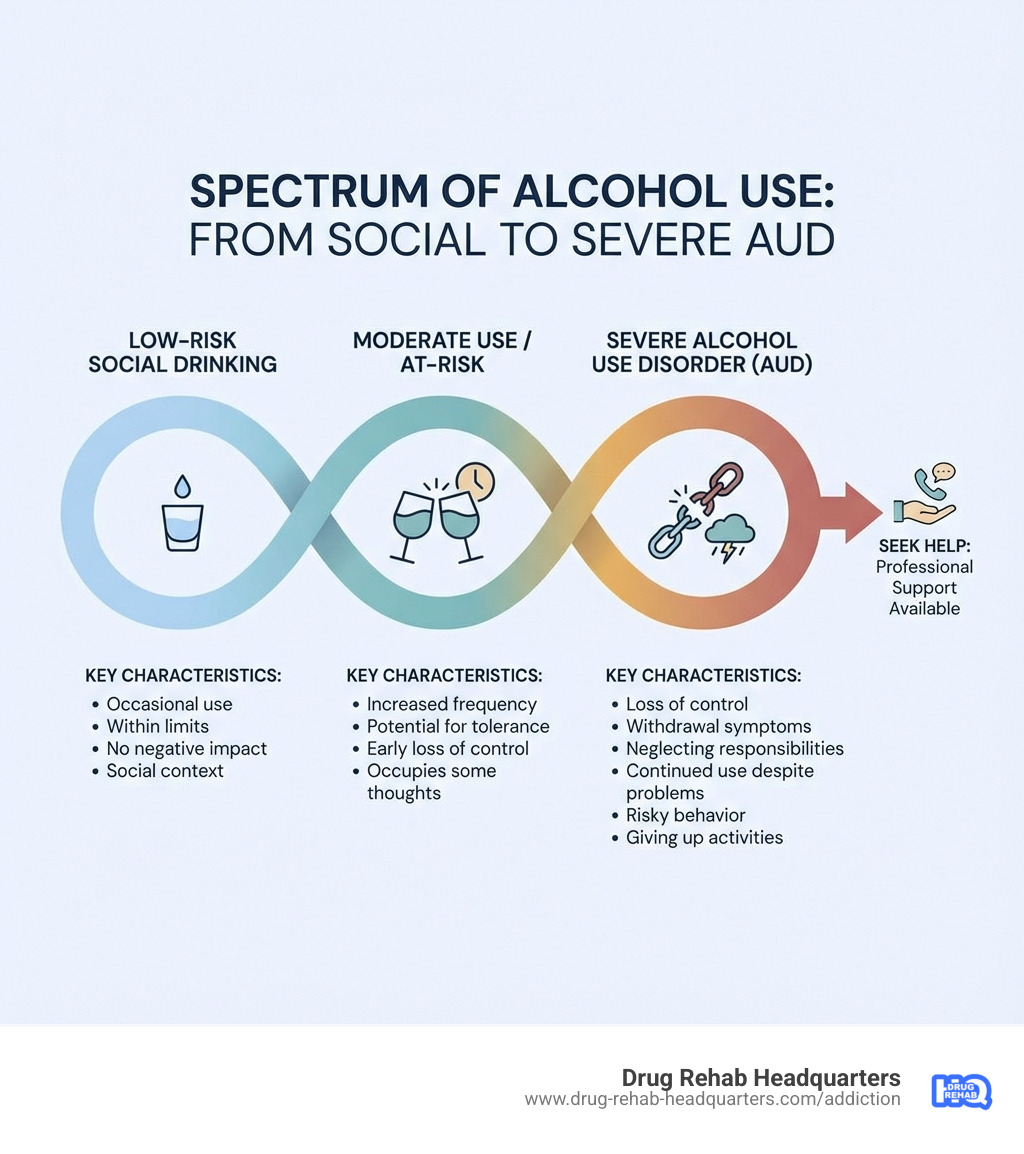
Alcohol addiction signs can be subtle at first, making it difficult to know when social drinking has crossed into dangerous territory. Here are the key warning signs to watch for:
7 Critical Alcohol Addiction Signs:
- Loss of Control – Drinking more or longer than intended, unable to cut down despite wanting to
- Tolerance – Needing more alcohol to feel the same effects
- Withdrawal Symptoms – Experiencing shakiness, anxiety, nausea, or sweating when not drinking
- Neglecting Responsibilities – Problems at work, school, or home due to drinking
- Continued Use Despite Problems – Drinking even when it causes relationship, health, or legal issues
- Risky Behavior – Drinking in dangerous situations like before driving
- Giving Up Activities – Abandoning hobbies or social events to drink instead
Many adults in Nevada and across the country enjoy alcohol without developing a problem. But when does occasional drinking become something more serious?
Alcohol Use Disorder (AUD) is a medical condition where a person cannot stop or control their alcohol use despite negative consequences. Recent public health data estimate that in 2025, over 30 million Americans are affected by AUD. That is roughly 1 in 10 adults in the United States. Yet only a small fraction of those with AUD receive any kind of treatment.
The line between social drinking and addiction is not always clear. You might wonder if your Friday night drinks have become a daily habit, or if your loved one’s behavior has changed in ways that worry you.
This article presents seven essential questions to help you identify alcohol addiction signs in yourself or someone you care about. These questions are based on clinical criteria and real-world indicators that addiction specialists use.
At Drug Rehab Headquarters, we have helped thousands of individuals and families in Nevada and across the U.S. recognize alcohol addiction signs and find effective treatment options. Whether you are in Las Vegas, Reno, Henderson, or in major cities like Los Angeles, Phoenix, Denver, Miami, or New York City, our network can help you compare top-rated treatment centers.
Our confidential helpline at 866-720-3784 connects you with caring specialists who understand the challenges you are facing. We are here to support your journey to recovery, no matter where you are in the process.
Question 1: Has My Drinking Escalated Beyond My Control?
One of the most telling alcohol addiction signs is a gradual loss of control over your drinking habits. What started as an occasional drink might have morphed into consuming more alcohol than you intended, or drinking for longer periods than you planned. You might find yourself saying, “Just one more,” only to realize you’ve had several.
This loss of control isn’t just about the amount you drink; it also extends to how much alcohol occupies your thoughts. A growing preoccupation with alcohol can mean you spend a significant amount of time thinking about when you’ll next drink, where you’ll get it, or how you’ll recover from its effects. This mental energy diverted to alcohol can overshadow other aspects of your life.
Cravings are another powerful indicator. These are intense urges to drink that can feel impossible to ignore, driving you to seek alcohol even when you know it might not be the best choice. We often see individuals who have made repeated, unsuccessful attempts to cut down or stop drinking altogether. This cycle of wanting to stop but being unable to is a classic symptom of Alcohol Use Disorder.
Consider the time you spend on alcohol-related activities. Is a substantial portion of your day or week dedicated to obtaining alcohol, consuming it, or recovering from its effects? This could mean missing work or family obligations because you’re hungover, or rearranging your schedule to accommodate drinking. This excessive time commitment is a significant red flag.
If you find yourself nodding along to these descriptions, it’s a strong indicator that your relationship with alcohol may have escalated beyond your control. Recognizing this is a crucial first step towards understanding if you or a loved one is exhibiting alcohol addiction signs.

Learn more about the cycle of addiction.
Question 2: Am I Developing a Tolerance or Experiencing Withdrawal?
Physiological dependence is a cornerstone of alcohol addiction, and it manifests primarily through two core signs: tolerance and withdrawal. Ignoring these symptoms can be dangerous, as they signal that your body has adapted to the presence of alcohol and now relies on it to function “normally.”
Understanding Alcohol Tolerance
Tolerance means that you need to drink increasingly larger amounts of alcohol to achieve the same effects you once felt with less. Perhaps you used to feel a buzz after one or two drinks, but now it takes three, four, or even more to get that familiar feeling. This is not a sign of a strong constitution; rather, it is your body adapting and becoming less responsive to alcohol.
A high tolerance can sometimes be mistaken for “high-functioning alcoholism,” where an individual appears to manage their daily life despite heavy drinking. However, this masks the severity of the underlying problem. While you might not seem intoxicated, your body is still experiencing the harmful effects of excessive alcohol. This increased tolerance is a critical alcohol addiction sign because it often leads to even heavier drinking, further escalating the risk of dependence and health complications.
Recognizing Alcohol Withdrawal Symptoms
Withdrawal symptoms occur when someone who has been drinking heavily for a prolonged period suddenly stops or significantly reduces their alcohol intake. Your body, accustomed to alcohol, reacts negatively when it is removed. These symptoms can range from mild to severe and are a clear indication of physical dependence.
Common withdrawal symptoms include shakiness, anxiety, nausea, insomnia, and excessive sweating. Imagine waking up feeling restless, irritable, and with a persistent tremor, even before your day has begun. These are classic signs. More severe symptoms can be life-threatening and include hallucinations, seizures, and a condition known as delirium tremens (DTs), which can involve confusion, rapid heart rate, and fever. Experiencing any of these symptoms underscores the significance of withdrawal as a major alcohol addiction sign and highlights the danger of attempting to detox without medical supervision.
If you or a loved one are experiencing severe withdrawal symptoms, seek immediate medical attention or call 866-720-3784 to speak confidentially with a specialist at Drug Rehab Headquarters who can help you find a medically supervised detox program near you, whether you are in Nevada or another state.
A detailed guide to alcohol detox symptoms
What is Alcohol Use Disorder (AUD)?
Question 3: Is Alcohol Negatively Impacting My Life and Relationships?
One of the most painful alcohol addiction signs is the ripple effect it has on your personal life and the people around you. What was once a source of enjoyment can become a wedge, creating distance and conflict in your most important relationships. When drinking begins to cause problems at work, school, or home, and yet you continue to drink, it is a clear indicator of Alcohol Use Disorder.
This often translates into neglecting responsibilities. Perhaps you are missing deadlines at work in Las Vegas, struggling with grades at school in Reno, or failing to uphold commitments to family members in cities like Phoenix, Denver, or Miami. These are not just isolated incidents; they become a recurring pattern. Hobbies and activities that once brought joy might be abandoned in favor of drinking. We often see individuals who used to be passionate about sports, art, or community involvement slowly withdraw, with alcohol becoming their primary focus.
The consequences can also extend to legal issues, such as driving under the influence (DUIs), which can have severe and lasting repercussions. Financial strain is another common outcome, as money is diverted to alcohol rather than necessities or savings. These are not just unfortunate events, but rather direct results of a developing alcohol addiction.

How Alcohol Affects Work, Social Life, and Family
Alcohol misuse can lead to poor performance at work, with declining productivity, missed days, or even job loss. Similarly, academic performance can suffer, leading to dropping out of school.
In social settings, conflict with loved ones becomes more frequent. Arguments might arise over your drinking habits, broken promises, or changes in your personality when intoxicated. This can lead to social isolation, as friends and family grow tired of the cycle.
Common Social and Professional Consequences of Alcohol Misuse:
- Poor job performance or absenteeism
- Declining grades or dropping out of school
- Increased arguments or tension with family and friends
- Loss of trust from loved ones
- Withdrawal from social activities and hobbies
- Legal troubles, including DUIs
- Financial difficulties
- Engaging in inappropriate or aggressive behavior
- Damaged reputation within your community or professional circles
If you are observing these patterns in your life or the life of a loved one, it is crucial to acknowledge them as significant alcohol addiction signs. You can call 866-720-3784 to speak with Drug Rehab Headquarters about treatment centers in Nevada, California, Florida, and other states that can help you rebuild your relationships and daily life.
Question 4: Am I Ignoring Physical and Behavioral Alcohol Addiction Signs?
It is easy to dismiss subtle changes, especially when denial is a powerful coping mechanism that can prevent us from seeing the obvious alcohol addiction signs in ourselves. However, both physical and behavioral changes often betray the presence of an alcohol problem. These concrete shifts signal that alcohol is taking a toll on your body and your life.
Key Physical Alcohol Addiction Signs
Your body often provides the first and most undeniable clues. While some signs are subtle, others can be quite pronounced:
- Flushed skin: Chronic alcohol use can lead to a ruddy complexion, especially on the face.
- Weight changes: You might experience unexplained weight loss due to poor nutrition or weight gain from the empty calories in alcohol.
- Unsteady gait: Coordination issues can make walking difficult, leading to frequent stumbling or an awkward walk.
- Slurred speech: Even when you believe you are speaking clearly, others may notice slurred or mumbled words.
- Memory blackouts: Periods where you cannot recall events that occurred while you were drinking heavily are a serious sign of alcohol’s impact on your brain.
- Neglecting personal hygiene: A decline in self-care, such as showering less frequently or wearing unkempt clothing, can be an indicator.
- Chronic fatigue: Despite drinking, you might feel perpetually tired, as alcohol disrupts healthy sleep patterns.
- Jaundice: Yellowing of the skin or eyes can signal liver damage.
- Tremors: Shaking hands or a general shakiness can be a sign of withdrawal or chronic alcohol impact.
These physical alcohol addiction signs are your body’s way of telling you that something is wrong. If you recognize several of these symptoms in yourself or someone in your family, consider reaching out for help. You can call 866-720-3784 to talk with Drug Rehab Headquarters about evaluation and treatment options in cities such as Las Vegas, Reno, Los Angeles, Denver, Seattle, and beyond.
Symptoms and causes – Alcohol Use Disorder
Common Behavioral Alcohol Addiction Signs
Beyond the physical, behavioral changes are often noticeable to those around you, and sometimes even to yourself, if you are honest:
- Drinking alone or in secret: Hiding your drinking from others, or preferring to drink when no one else is around, indicates a sense of shame or a desire to conceal the extent of your alcohol use.
- Defensiveness about drinking habits: Becoming angry, irritable, or defensive when someone expresses concern about your drinking is a common reaction. You might minimize the problem or lash out.
- Risky behaviors: Engaging in dangerous activities while under the influence, such as driving drunk, having unprotected sex, or participating in fights, points to impaired judgment.
- Unexplained mood swings or irritability: Alcohol can exacerbate underlying mood issues or cause rapid shifts in temperament, leading to unpredictable emotional outbursts.
- Hiding alcohol around the house or at work: Stashing bottles in unusual places is a clear attempt to conceal the amount of alcohol being consumed.
- Prioritizing drinking over other activities: Canceling plans, missing appointments, or neglecting responsibilities because you would rather drink or are recovering from drinking.
- Continuing to drink despite negative consequences: Even after experiencing problems like arrests, job loss, or relationship breakdowns, the inability to stop drinking is a powerful alcohol addiction sign.
If you are observing these physical and behavioral changes, consider them seriously. They are not just bad habits; they are often deeply ingrained alcohol addiction signs that require attention and support. Drug Rehab Headquarters can help you compare treatment centers in Nevada and other states so you can find the level of care that fits your needs.
Question 5: Am I Drinking to Cope or in Risky Situations?
A significant alcohol addiction sign is when drinking transitions from being a social activity to a psychological crutch or a means of coping. If you find yourself reaching for a drink primarily to escape problems, numb difficult feelings, or self-medicate for conditions like depression, anxiety, or trauma, your relationship with alcohol has likely become unhealthy. This psychological reliance indicates that alcohol is filling a void or attempting to solve issues it cannot, ultimately leading to more significant problems.
Poor judgment often accompanies this shift. You might engage in risky behaviors that you would not consider sober. This includes drinking in physically hazardous situations, such as before driving, operating machinery, or combining alcohol with certain medications. These actions not only endanger yourself but also others. Recent analyses from the Centers for Disease Control and Prevention highlight that excessive alcohol use is responsible for more than 140,000 deaths in the United States each year, many of which are preventable accidents and injuries.
Using alcohol as your primary stress reliever can prevent you from developing healthier coping mechanisms. Instead of addressing the root causes of your stress, you temporarily mask them, leading to a cycle where problems accumulate and alcohol becomes an even more entrenched “solution.” This pattern is particularly concerning, as it suggests a deepening dependence beyond mere physical addiction.
If you see yourself in this description, you do not have to face it alone. Call 866-720-3784 to speak with Drug Rehab Headquarters about counseling and rehab options close to you, whether you live in Nevada, California, Florida, Texas, or another state.
Explore risk factors for women and substance abuse.
Question 6: Could I Have a Problem Even if I Used to Drink Responsibly?
It is a common misconception that alcohol addiction signs only appear in individuals who have always been heavy drinkers or who started drinking problematically at a young age. However, Alcohol Use Disorder is a progressive condition that can develop at any point in life, even if you previously drank responsibly. You can develop an alcohol addiction regardless of your age, gender, lifestyle, or background.
Life changes, such as significant stress, loss, retirement, divorce, or major transitions, can act as triggers, leading to increased alcohol consumption that gradually spirals into addiction. What was once a celebratory drink could become a daily habit to cope with loneliness or anxiety.
Several risk factors contribute to the development of AUD. Genetics play a substantial role, with research suggesting that inherited factors account for a large share of the overall risk. If you have a family history of alcohol problems, you might be more vulnerable. Starting to drink at an early age also increases the likelihood of developing AUD later in life. Mental health problems like depression, anxiety, post-traumatic stress disorder, and a history of trauma are also strongly linked to a higher risk of AUD. Social and cultural factors, including peer influence and the normalization of heavy drinking in communities from Las Vegas and Reno to Miami, Chicago, and New York City, can also contribute.
AUD can range from mild to severe. Even a mild disorder can escalate if left unaddressed. According to the Centers for Disease Control and Prevention, excessive alcohol use is responsible for more than 140,000 deaths in the U.S. each year, underscoring the serious nature of this condition.
Recognizing emerging alcohol addiction signs—even if you once considered yourself a responsible drinker—is critical. If you are unsure whether your drinking has crossed the line, you can call 866-720-3784 to speak with a specialist at Drug Rehab Headquarters about screenings and treatment resources in Nevada and other states.
Question 7: What Are My Next Steps if I Answered “Yes”?
If you have answered “yes” to several of these questions, recognizing the problem is the most courageous and critical first step. It signifies that you are aware of potential alcohol addiction signs and are ready to consider change. Untreated alcohol addiction can lead to severe and sometimes irreversible consequences, including liver disease, brain damage, heart problems, increased cancer risk, and, tragically, death. The encouraging reality is that AUD is a treatable medical condition, and effective help is available.
Where can you seek help? There are a variety of treatment options designed to meet individual needs, from comprehensive inpatient programs to flexible outpatient services and supportive peer groups.
| Treatment Option | Description |
|---|---|
| Medically-Supervised Detox | Provides a safe and monitored environment to manage withdrawal symptoms. This is often the first step before beginning a treatment program, especially for people with moderate to severe dependence. |
| Inpatient/Residential Rehab | Offers 24/7 care in a structured environment. This is ideal for individuals with severe addiction or those needing to step away from their current environment in Las Vegas, Reno, Miami, or other cities to focus fully on recovery. |
| Outpatient Programs (PHP/IOP) | Allows individuals to live at home while attending treatment sessions several times a week. This offers flexibility for those with work, school, or family commitments and is available in many major cities across Nevada and the rest of the U.S. |
| Support Groups | Groups like Alcoholics Anonymous (AA) and other peer-support meetings provide ongoing support and a community of individuals who share similar experiences. They are often used alongside professional treatment. |
Drug Rehab Headquarters is a resource to help you find quality care that fits your situation and location. Our directory highlights top-rated centers in Nevada cities like Las Vegas, Reno, and Henderson, as well as major hubs across the country, including Los Angeles, San Francisco, Phoenix, Denver, Chicago, Miami, Orlando, New York City, and Seattle.
If you or a loved one is struggling, explore your treatment options or call our confidential helpline at 866-720-3784 to speak with a specialist today. You can also find top-rated rehab centers in California and other states to begin your search.
Question 1: Has My Drinking Escalated Beyond My Control?
This section will define loss of control, preoccupation, cravings, drinking more/longer than intended, and unsuccessful attempts to cut down. It will also cover spending excessive time on alcohol-related activities.
It will emphasize that when alcohol starts to dominate your schedule and thoughts—whether you live in Las Vegas, Reno, Henderson, or any other city—that is a clear alcohol addiction sign and a reason to reach out for help at 866-720-3784.
Question 2: Am I Developing a Tolerance or Experiencing Withdrawal?
This section will cover physiological dependence, defining tolerance (needing more for the same effect) and withdrawal symptoms (shakiness, anxiety, nausea, severe symptoms). It will explain why these are critical signs and link to the detailed guide on alcohol detox symptoms and the AUD definition page.
It will also note that anyone experiencing moderate or severe withdrawal should seek medical care immediately and can contact Drug Rehab Headquarters at 866-720-3784 for assistance finding a safe detox program in Nevada or other states.
Question 3: Is Alcohol Negatively Impacting My Life and Relationships?
This section will discuss the social, occupational, and interpersonal consequences of alcohol misuse. It will cover neglecting responsibilities, giving up hobbies, legal issues, and financial strain. It will list common social and professional consequences.
The section will highlight that these patterns are seen in individuals and families across Nevada and nationwide, and will encourage readers to contact Drug Rehab Headquarters at 866-720-3784 to learn about treatment centers that can help repair these areas of life.
Question 4: Am I Ignoring Physical and Behavioral Alcohol Addiction Signs?
This section will focus on concrete physical and behavioral changes.
Key Physical Alcohol Addiction Signs
This subsection will list physical signs like flushed skin, weight changes, unsteady gait, slurred speech, memory blackouts, neglecting personal hygiene, chronic fatigue, jaundice, and tremors. It will link to the Mayo Clinic symptoms page.
It will explain that noticing several of these symptoms in yourself or someone close to you in cities like Las Vegas, Reno, or Henderson is a strong reason to seek professional guidance and can be a moment to call 866-720-3784 for a confidential discussion.
Common Behavioral Alcohol Addiction Signs
This subsection will list behavioral signs like drinking alone/in secret, defensiveness, risky behaviors, mood swings, hiding alcohol, prioritizing drinking, and continued use despite consequences.
It will emphasize that these behaviors are not just “bad habits” but warning flags of AUD that warrant assessment and support through resources such as Drug Rehab Headquarters.
Question 5: Am I Drinking to Cope or in Risky Situations?
This section will explore psychological reliance, using alcohol to cope with stress/emotions, self-medicating, and drinking in physically hazardous situations (e.g., before driving, with medications). It will link to the risk factors for women and substance abuse page.
It will also mention that this shift from social drinking to coping-driven drinking is common among people dealing with stress or loss in Nevada, California, Florida, and other states, and will provide a clear call to action to contact Drug Rehab Headquarters at 866-720-3784 for help finding healthier ways to cope and appropriate treatment.
Question 6: Could I Have a Problem Even if I Used to Drink Responsibly?
This section will address the progressive nature of AUD, its development at any age, and triggers like stress/loss. It will cover risk factors such as genetics, early drinking, family history, mental health conditions, and social/cultural factors. It will include the CDC statistic on alcohol-related deaths.
The section will reinforce that even people who once drank moderately in places like Las Vegas, Reno, Miami, or Chicago can develop problems over time, and will encourage readers who are unsure about their drinking to call 866-720-3784 for a confidential conversation about assessment and treatment options.
Question 7: What Are My Next Steps if I Answered “Yes”?
This section will emphasize recognizing the problem as the first step. It will detail consequences of untreated addiction (liver disease, brain damage, death). It will present a table comparing treatment options: Medically-Supervised Detox, Inpatient Rehab, Outpatient Programs, and Support Groups. It will highlight Drug Rehab Headquarters as a resource, provide the helpline number, and link to treatment options and California rehab centers.
It will also note that Drug Rehab Headquarters can help you compare facilities across Nevada (Las Vegas, Reno, Henderson) and other major cities like Los Angeles, Phoenix, Denver, Miami, Orlando, Houston, Dallas, New York City, and Seattle, so you can find the right fit for your needs by calling 866-720-3784.
Conclusion: Taking the First Step Towards Recovery
Recognizing the signs of alcohol addiction is a crucial first step toward a healthier future. Alcohol Use Disorder is a treatable medical condition, not a moral failing, and seeking help is a sign of strength. With the right support and treatment, recovery is not just possible—it’s within your reach. Your journey to a better life can start today.
Conclusion: Taking the First Step Towards Recovery
This section will reiterate that AUD is a treatable medical condition, not a moral failing, and that recovery is possible. It will include a final CTA with the helpline number.
It will remind readers that Drug Rehab Headquarters focuses on helping people in Nevada and across the country compare treatment centers and find quality care close to home, and that they can call 866-720-3784 any time for free, confidential support.
I will ensure to integrate the company’s focus on locations like Nevada, California, Florida, etc., where appropriate, and use the 2025 statistics where available. I will also incorporate the CTAs for the helpline and relevant internal links.
The word count will be monitored throughout.