
Why Immediate Action Matters in an Addiction Crisis
Immediate addiction help can be the difference between life and death. If you or someone you love is in crisis right now, here’s what you need to know:
For Life-Threatening Emergencies:
- Call 911 immediately if someone shows signs of overdose (unconsciousness, trouble breathing, blue lips)
- Go to the nearest emergency room for severe withdrawal symptoms or suicidal thoughts
For Urgent Support and Guidance:
- SAMHSA National Helpline: 1-800-662-HELP (4357) – Free, confidential, 24/7
- 988 Suicide & Crisis Lifeline: Call or text 988 – For mental health emergencies
- Crisis Text Line: Text HOME to 741741 – For text-based support
What These Services Provide:
- Treatment referrals and facility locations
- Insurance guidance and payment options
- Information about withdrawal and detox
- Support for family members
Addiction doesn’t wait for convenient timing. Over 20 million Americans struggle with substance use disorders, and nearly 1 million have died from overdose during the opioid epidemic. The good news? Help is available right now, and recovery is possible.
You might feel overwhelmed, scared, or unsure where to turn. Maybe you’ve tried to quit before and relapsed. Maybe you’re a family member watching someone you love spiral deeper into addiction. These feelings are normal, and you’re not alone.
This guide will walk you through exactly what to do when addiction help can’t wait. You’ll learn how to recognize a true crisis, what resources exist for immediate support, and what happens when you reach out for help. We’ll cover free and low-cost options, what to expect during the first days of treatment, and how loved ones can help without enabling.
At Drug Rehab Headquarters, we’ve helped thousands of individuals and families steer the complex world of immediate addiction help and connect with treatment options that work. Our mission is to be your trusted resource when every moment counts.
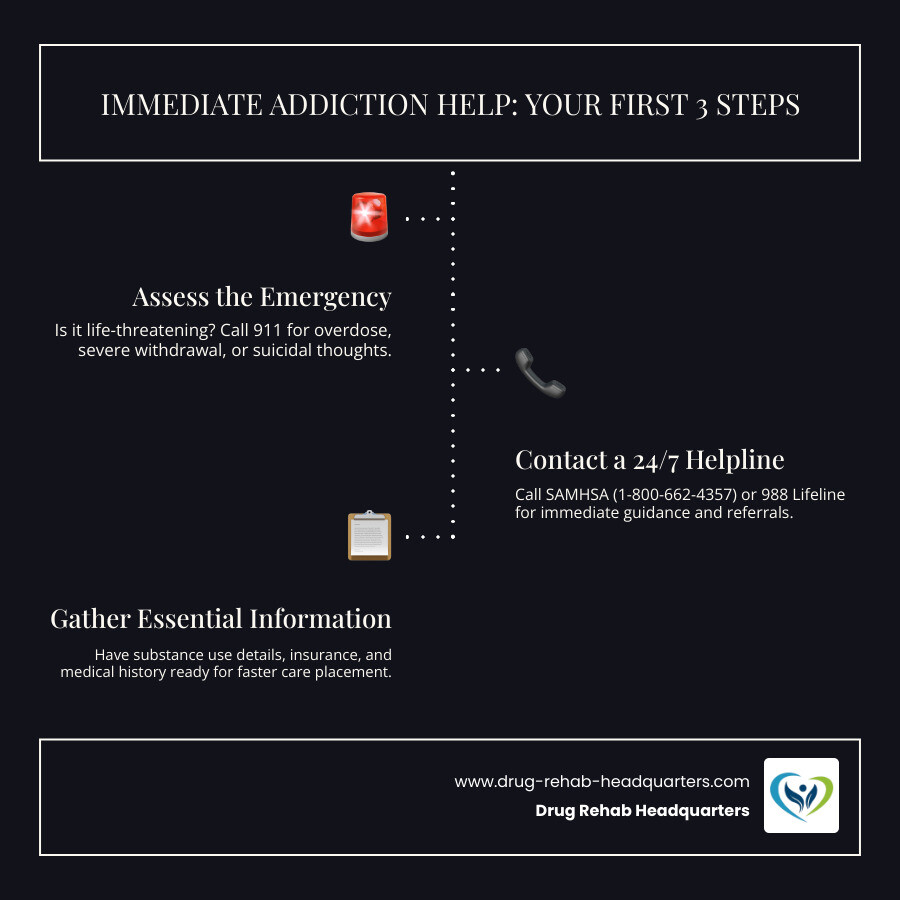
Step 1: Assess the Emergency – Is this life-threatening? Call 911 for overdose, severe withdrawal, or suicidal thoughts.
Step 2: Contact a 24/7 Helpline – SAMHSA (1-800-662-4357) or 988 Lifeline for immediate guidance and treatment referrals.
Step 3: Gather Essential Information – Have details about substance use, insurance, and medical history ready when you call for faster placement in appropriate care.
Quick look at immediate addiction help:
Recognizing a Crisis and Taking Immediate Action
When someone needs immediate addiction help, it often means they’re experiencing a crisis. Recognizing these signs is the first, crucial step toward getting urgent support. These situations demand swift action to ensure safety and connect individuals with the care they desperately need.

Signs that indicate a need for immediate professional intervention for substance abuse include:
- Signs of Overdose: This is a life-threatening emergency. Look for unconsciousness, shallow or stopped breathing, blue lips or fingertips, gurgling sounds, or unresponsiveness. An overdose requires immediate medical attention.
- Severe drug withdrawal symptoms: While withdrawal can be uncomfortable, some symptoms can be dangerous or even fatal if not medically managed. These include seizures, delirium tremens (DTs) from alcohol withdrawal, severe confusion, hallucinations, or extreme agitation. Detoxing at home without professional help is never recommended due to these risks.
- Suicidal ideation: If a person expresses thoughts of self-harm or suicide, especially when combined with substance use, it’s an immediate crisis. Substance use can impair judgment and intensify feelings of hopelessness.
- Co-occurring mental health crisis: About half of people who have a mental disorder will also have a substance use disorder at some point in their lives, and vice versa. An acute mental health crisis, such as severe psychosis, extreme paranoia, or uncontrolled aggression, particularly when fueled by substance use, warrants immediate intervention.
- Inability to stop using despite severe consequences: While not always an immediate physical emergency, if someone is actively losing their job, home, or relationships due to substance use and expresses an inability to stop, it signals a profound need for urgent professional help before further harm occurs.
In a Life-Threatening Emergency: Call 911
When the situation is life-threatening, don’t hesitate. Call 911 immediately or go to the nearest emergency room. This applies to overdoses, severe withdrawal symptoms that could lead to medical complications, or any indication of suicidal intent.
When you call 911 or arrive at the ER, be prepared to tell responders:
- What substance(s) were used: If known, specify the type of drug (e.g., opioids, benzodiazepines, alcohol) and the approximate amount or last time it was taken.
- Any co-occurring medical conditions: Inform them of any existing health issues, allergies, or other medications the person is taking.
- The person’s general medical history: This helps medical professionals provide the safest and most effective care.
- Your location: Be clear and precise to ensure help arrives quickly.
The priority is saving a life. Medical professionals are there to help, not to judge. For more Crisis Help information from SAMHSA, you can visit their official resources.
Contacting an Immediate Addiction Help Hotline
For urgent support and guidance that isn’t a 911 emergency, hotlines are an invaluable resource for immediate addiction help. These services offer confidential, non-judgmental support 24/7.
- SAMHSA National Helpline (1-800-662-HELP (4357)): This free, confidential service provides information, treatment referral, and prevention resources for mental health and substance use disorders in English and Spanish. It’s a fantastic starting point for anyone seeking help for themselves or a loved one.
- 988 Suicide & Crisis Lifeline: If mental health is a primary concern, or if substance use is intertwined with thoughts of self-harm, calling or texting 988 connects you with trained crisis counselors. This service is also available 24/7.
- Veterans Crisis Line: Veterans and service members can access specialized support by calling or texting 988 and pressing 1, or visiting VeteransCrisisLine.net.
When you call a hotline, you can expect to speak with a trained staff member who will listen to your concerns and ask questions to understand the situation. They can provide information on a wide variety of topics, including treatment options, how to help a loved one, available inpatient and outpatient clinics, considerations for choosing an addiction center, and accessing 12-Step programs or support groups. The goal is to provide impartial advice and guide you to the right treatment option. For more details on what to expect, check out our guide to 24/7 Support.
What Information to Have Ready
To streamline the process of getting immediate addiction help, having certain information ready can make a significant difference. When you contact a hotline or a treatment center, they will ask questions to assess the situation and recommend the most appropriate care.
Here’s what is crucial to have ready:
- Substance type and history of use: What substances are being used (e.g., alcohol, opioids, stimulants, benzodiazepines)? How long has the person been using? How much and how often? This helps determine the severity of dependence and potential withdrawal risks.
- Co-occurring conditions: Does the person have any other mental health conditions (like depression, anxiety, bipolar disorder) or physical health problems (diabetes, heart conditions)? About half of people with a mental disorder will also have a substance use disorder at some point in their lives, and vice versa, so addressing both is often key.
- Insurance details: If applicable, have the insurance provider’s name, policy number, and group number. This allows the helpline or facility to quickly verify coverage and discuss financial options. The Affordable Care Act (ACA) mandates that most insurance plans cover addiction treatment, so coverage is often available.
- Location: Your current geographical location is important for finding nearby resources, especially for walk-in clinics or crisis intervention services. Our network spans across Alabama, Alaska, Arizona, Arkansas, California, Colorado, Connecticut, Delaware, Florida, Georgia, Hawaii, Idaho, Illinois, Indiana, Iowa, Kansas, Kentucky, Louisiana, Maine, Maryland, Massachusetts, Michigan, Minnesota, Mississippi, Missouri, Montana, Nebraska, Nevada, New Hampshire, New Jersey, New Mexico, New York, North Carolina, North Dakota, Ohio, Oklahoma, Oregon, Pennsylvania, Puerto Rico, Rhode Island, South Carolina, South Dakota, Tennessee, Texas, Utah, Vermont, Virginia, Washington, West Virginia, Wisconsin, and Wyoming, making it easier to find help close to home.
Having this information at hand allows counselors to quickly understand the situation and provide accurate, personalized guidance, leading to faster access to appropriate immediate addiction help.
Finding Resources for Immediate Addiction Help
Finding the right resources can feel like searching for a needle in a haystack, especially when you’re under pressure. Fortunately, a variety of options exist to provide immediate addiction help.

National and Local Helplines
Beyond the initial crisis, helplines continue to be a vital resource for navigating the path to recovery. The SAMHSA National Helpline (1-800-662-HELP (4357)) is an excellent example, offering 24-hour, free, and confidential assistance. It serves as a central hub for treatment referral and information about mental health and substance use disorders, prevention, and recovery.
The Veterans Crisis Line is another critical resource, providing specialized support for veterans and their families who are struggling with substance use or mental health issues. These hotlines are staffed by compassionate individuals, many of whom have lived experience, who are trained to help without judgment. They connect you with treatment and mental health referrals near you, ensuring that you find support custom to your specific needs.
Same-Day and Walk-In Treatment Options
When time is of the essence, specific programs and facilities offer same-day or next-day appointments for addiction treatment. These options are designed to provide rapid access to care.
- Crisis Intervention Services: Many communities offer crisis intervention services, which can include mobile crisis teams or walk-in centers. For example, in Kentucky, Medicaid services include “Crisis Intervention” and “Mobile Crisis” for immediate, short-term help during an event-triggered crisis, and “Residential Crisis Stabilization” for individuals needing overnight hospitalization. These services are crucial for de-escalating crises and connecting individuals to ongoing care.
- Walk-in Assessments: Some treatment centers, like Seven Counties Services, offer walk-in assessments at specific locations and times, allowing individuals to get immediate evaluations without a prior appointment. This can be a swift way to begin the treatment process.
- Hospital Emergency Rooms: While primarily for medical emergencies, ERs can initiate the process for immediate addiction help by stabilizing individuals and connecting them with inpatient or outpatient addiction services. They are especially critical for managing severe withdrawal symptoms or overdose.
- Immediate Appointments: Some providers understand the urgency of addiction. Spero Health, for instance, emphasizes “Immediate Appointments Available” for their integrated care model, which includes physician services, counseling, and recovery support.
- Medical Detox Programs: These specialized programs are often available for immediate admission, providing a safe environment for withdrawal management.
Free and Low-Cost Immediate Addiction Help
Concerns about cost should never be a barrier to seeking immediate addiction help. Many free or low-cost options are available, making treatment accessible to everyone.
- State-Funded Programs: Many states offer affordable addiction treatment through public mental health or substance use treatment centers. These programs often require proof of residency, income status, and legal U.S. residency. You can contact your state’s behavioral health agency for information on available services and application processes.
- Non-Profit Organizations: Organizations like the Salvation Army operate detox and residential programs that are often free or low-cost, serving communities across the nation. Faith-based programs may also offer treatment, sometimes requiring prior medical detox but providing valuable support.
- The Affordable Care Act (ACA): Thanks to the The Affordable Care Act’s role in coverage, insurance companies are prohibited from denying coverage or charging more due to pre-existing conditions, including addiction. Substance use disorder treatment is considered an essential health benefit, so all Marketplace health insurance plans and most individual and small group plans must cover it.
- Medicaid and Medicare Options: Medicaid expansion programs under the ACA also include substance use treatment services. If you have Medicaid, contacting your Managed Care Organization (MCO) is the first step to accessing behavioral health and substance use disorder treatment. For example, in Kentucky, MCOs like Aetna Better Health of Kentucky, Anthem Blue Cross Blue Shield, Humana Healthy Horizons, Passport Health Plan, United Healthcare Community Plan, and WellCare of Kentucky provide comprehensive services. Medicare can also be an option for those who qualify.
- Sliding Scale Fees and Payment Plans: Many treatment centers offer sliding scale fees based on income or provide flexible payment plans to make treatment more affordable. Don’t hesitate to ask about these options.
Our admissions navigators are available 24/7 to help you explore these options, verify your insurance, and find treatment that fits your needs and circumstances, compassionately and without pressure.
What to Expect When You Get Help
Taking the brave step to seek immediate addiction help is a significant achievement. Knowing what to expect in the initial stages of treatment can help alleviate anxiety and prepare you for the journey ahead.
The Initial Assessment
Once you connect with a treatment provider or facility, the first step is typically a comprehensive initial assessment. This isn’t just a formality; it’s about understanding your unique needs to create the most effective Addiction Treatment plan.
- Screening Process: This involves a detailed discussion about your substance use history, including the type of substances used, frequency, duration, and any previous attempts at quitting.
- Physical and Mental Health Evaluation: A medical professional will conduct a physical exam to assess your overall health and identify any immediate medical concerns. A mental health professional will evaluate for co-occurring mental health disorders, which are very common alongside substance use disorders. This holistic approach ensures that all aspects of your well-being are considered.
- Creating a Personalized Treatment Plan: Based on the assessment, a personalized treatment plan will be developed. This plan will outline the recommended level of care (e.g., detox, inpatient, outpatient), specific therapies, and supportive services custom to your individual situation.
The First Stage: Detoxification
For most individuals with physical dependence, detoxification, or “detox,” is the essential first stage of immediate addiction help. Detox refers to the process by which a person is safely withdrawn from the substance(s) of abuse.
- Medically Supervised Drug Detox: Medically supervised detox is crucial for safety and comfort. Withdrawal symptoms can range from uncomfortable to life-threatening, depending on the substance and severity of dependence. For example, severe alcohol withdrawal can lead to seizures or delirium tremens, while opioid withdrawal can be painful but rarely fatal on its own. Attempting to detox at home without medical supervision is highly dangerous and not recommended.
- Managing Withdrawal: In a medical detox setting, healthcare professionals monitor vital signs, manage symptoms with medication, and ensure the individual’s safety. For Alcohol Detox, medications like benzodiazepines (e.g., Valium or Librium) might be used to prevent seizures and manage agitation. For opioid detox, medications can help alleviate severe cravings and withdrawal symptoms.
- Safety and Comfort: The primary goals of detox are to ensure safety, treat withdrawal symptoms, and prepare the individual for the next phase of treatment. The duration of detox varies widely: short-acting opioids might take 4-10 days, while long-acting benzodiazepines could take 2-8 weeks.
Detox is not a cure for addiction, but a necessary first step to clear the body of substances and stabilize the individual physically and mentally, paving the way for effective ongoing treatment.
Transitioning to a Treatment Program
After successful detoxification, the real work of recovery begins by transitioning into a comprehensive treatment program. This phase addresses the psychological, emotional, and behavioral aspects of addiction.
- Levels of Care:
- Inpatient Drug Detox / Residential Treatment: Individuals live at the facility 24/7, receiving intensive therapy and support. This is ideal for those with severe addictions, co-occurring mental health issues, or unstable home environments.
- Intensive Outpatient Programs (IOP): These programs offer a high level of structured therapy several days a week, allowing individuals to live at home or in sober living.
- Outpatient Programs (OP): Less intensive than IOPs, OPs provide regular therapy sessions while allowing individuals to maintain work, school, and family responsibilities.
- Medication-Assisted Treatment (MAT): This approach combines FDA-approved medications (like Suboxone, Vivitrol, or methadone for opioid use disorder) with counseling and behavioral therapies. MAT has been shown to be highly effective in reducing cravings, preventing relapse, and improving long-term recovery outcomes. Our integrated care models often include MAT as a core component of physician services.
- Counseling and Therapy: This is the cornerstone of addiction treatment. It includes:
- Individual Therapy: One-on-one sessions with a therapist to explore the root causes of addiction, develop coping skills, and address underlying issues like trauma or mental health conditions.
- Group Therapy: Provides a supportive environment where individuals can share experiences, learn from peers, and practice new social skills.
- Family Therapy: Involves family members in the healing process, addressing family dynamics, improving communication, and rebuilding trust.
- Recovery Support Services: Comprehensive programs extend beyond therapy to offer recovery support services, assisting with employment, housing, healthcare, education, and building essential life skills for a sustainable, substance-free life.
This holistic and integrated approach, often guided by ASAM (American Society of Addiction Medicine) treatment guidelines, is what we strive for, ensuring that every individual receives the comprehensive care they need for lasting recovery.
How Family and Friends Can Provide Support
Addiction is a family disease, impacting everyone involved. When a loved one seeks immediate addiction help, the support of family and friends can be a powerful catalyst for recovery. However, it’s crucial to offer support in healthy and constructive ways.
- Encouraging Treatment, Not Enabling: True support means encouraging and facilitating treatment, rather than enabling the addiction. This involves setting clear boundaries and consequences for harmful behaviors, while consistently expressing love and hope for recovery.
- Offering Practical Help: Practical assistance can be invaluable. This might include providing transportation to appointments, helping with childcare, or simply being present for support during difficult times. Always respect the individual’s privacy and wishes regarding who attends appointments with them.
- Setting Boundaries: It’s essential for family members to establish and maintain healthy boundaries. This protects your own well-being and prevents inadvertently contributing to the cycle of addiction. For instance, refusing to provide money that might be used for substances, but offering to help with treatment costs.
- Self-Care for Loved Ones: Supporting someone through addiction recovery can be emotionally exhausting. It’s vital for family and friends to practice self-care, seek their own support, and understand that they are not alone.
- Al-Anon and Nar-Anon: These support groups are specifically designed for family members and friends of individuals struggling with alcohol (Al-Anon) or drug (Nar-Anon) addiction. They provide a safe space to share experiences, learn coping strategies, and find strength in community. For teens affected by someone else’s alcoholism, Alateen offers specialized help.
- Educational Resources: Understanding addiction as a disease helps family members steer the challenges. SAMHSA offers resources like What Is Substance Abuse Treatment? A Booklet for Families, which answers questions about substance abuse, symptoms, treatment types, and recovery.
Family therapy is also a powerful tool, exploring the role of the family in recovery and improving communication. Many of our counselors have lived experience, allowing them to provide empathetic guidance to both individuals in recovery and their families.
Your Path to Recovery: Next Steps and FAQs
The journey to recovery is continuous, but with the right immediate addiction help and ongoing support, a fulfilling, substance-free life is absolutely possible. As you start on this path, you may have several questions. We’re here to provide clarity.
Frequently Asked Questions
Can I be forced into rehab?
Laws regarding involuntary commitment for addiction treatment vary by state. While some states have provisions (often referred to as civil commitment laws) that allow family members or legal guardians to petition a court to mandate treatment for someone deemed a danger to themselves or others due to substance use, this is typically a last resort. Our focus is always on encouraging voluntary treatment, as it generally leads to more sustainable recovery outcomes. We can help you understand the options available and how to encourage your loved one to seek help willingly.
Will I lose my job if I seek addiction treatment?
Seeking immediate addiction help and treatment often comes with concerns about employment. The good news is that federal laws offer significant protections:
- Americans with Disabilities Act (ADA): Addiction (specifically, being in recovery from a substance use disorder) is often considered a disability under the ADA. This means employers cannot discriminate against an employee based on their addiction if they are no longer using illicit drugs and are actively seeking treatment.
- Family and Medical Leave Act (FMLA): The FMLA allows eligible employees to take up to 12 weeks of unpaid, job-protected leave for medical reasons, including treatment for a serious health condition like addiction. This ensures your job is safe while you focus on recovery.
It’s always best to understand your employee rights and discuss your options with HR or a legal professional. Many employers are supportive of employees seeking treatment, recognizing that a healthy workforce benefits everyone.
How do I pay for treatment without insurance?
Lack of insurance should never prevent someone from getting immediate addiction help. We understand that the cost of treatment can be a significant concern, but many options exist:
- Sliding Scale Fees: Many treatment centers, particularly non-profits, offer fees based on your income and ability to pay.
- State-Funded Options: As mentioned earlier, states provide funding for addiction treatment through public health agencies. These programs are designed for individuals with limited financial resources.
- Grants and Scholarships: Various organizations and foundations offer grants or scholarships specifically for addiction treatment. Our certified counselors can help you identify potential funding sources.
- Payment Plans: Many facilities are willing to work with individuals to set up manageable payment plans.
- Medicaid and Medicare: For those who qualify, these government programs cover a significant portion of addiction treatment costs, including detox, inpatient, and outpatient services. Our navigators can help verify eligibility and connect you with facilities that accept these plans.
We are committed to helping you find affordable care options. Don’t let financial worries stop you from reaching out.
Your Recovery Starts Now
The path to recovery is a journey, not a destination, but it always begins with that crucial first step. If you or a loved one needs immediate addiction help, you are not alone, and recovery is profoundly possible. Millions of Americans have found their way to a substance-free life, and you can too.
At Drug Rehab Headquarters, we are dedicated to being your partner in this journey. We offer 24/7 free support from certified counselors, many with lived experience, who provide personalized guidance. Our mission is to connect you with suitable, evidence-based, and holistic treatment options available across our network of locations in Alabama, Alaska, Arizona, Arkansas, California, Colorado, Connecticut, Delaware, Florida, Georgia, Hawaii, Idaho, Illinois, Indiana, Iowa, Kansas, Kentucky, Louisiana, Maine, Maryland, Massachusetts, Michigan, Minnesota, Mississippi, Missouri, Montana, Nebraska, Nevada, New Hampshire, New Jersey, New Mexico, New York, North Carolina, North Dakota, Ohio, Oklahoma, Oregon, Pennsylvania, Puerto Rico, Rhode Island, South Carolina, South Dakota, Tennessee, Texas, Utah, Vermont, Virginia, Washington, West Virginia, Wisconsin, and Wyoming.
Don’t wait another moment. Contact us today to explore your treatment options and begin your journey toward a healthier, happier future.