
Meth Addiction Treatment in Colorado: What You Need to Know
Meth addiction treatment colorado residents can access spans a full continuum of care — from emergency detox to long-term outpatient support. Here’s a quick overview of your main options:
| Treatment Type | Best For | Typical Duration |
|---|---|---|
| Medical Detox | First step; safe withdrawal | Days to 1-2 weeks |
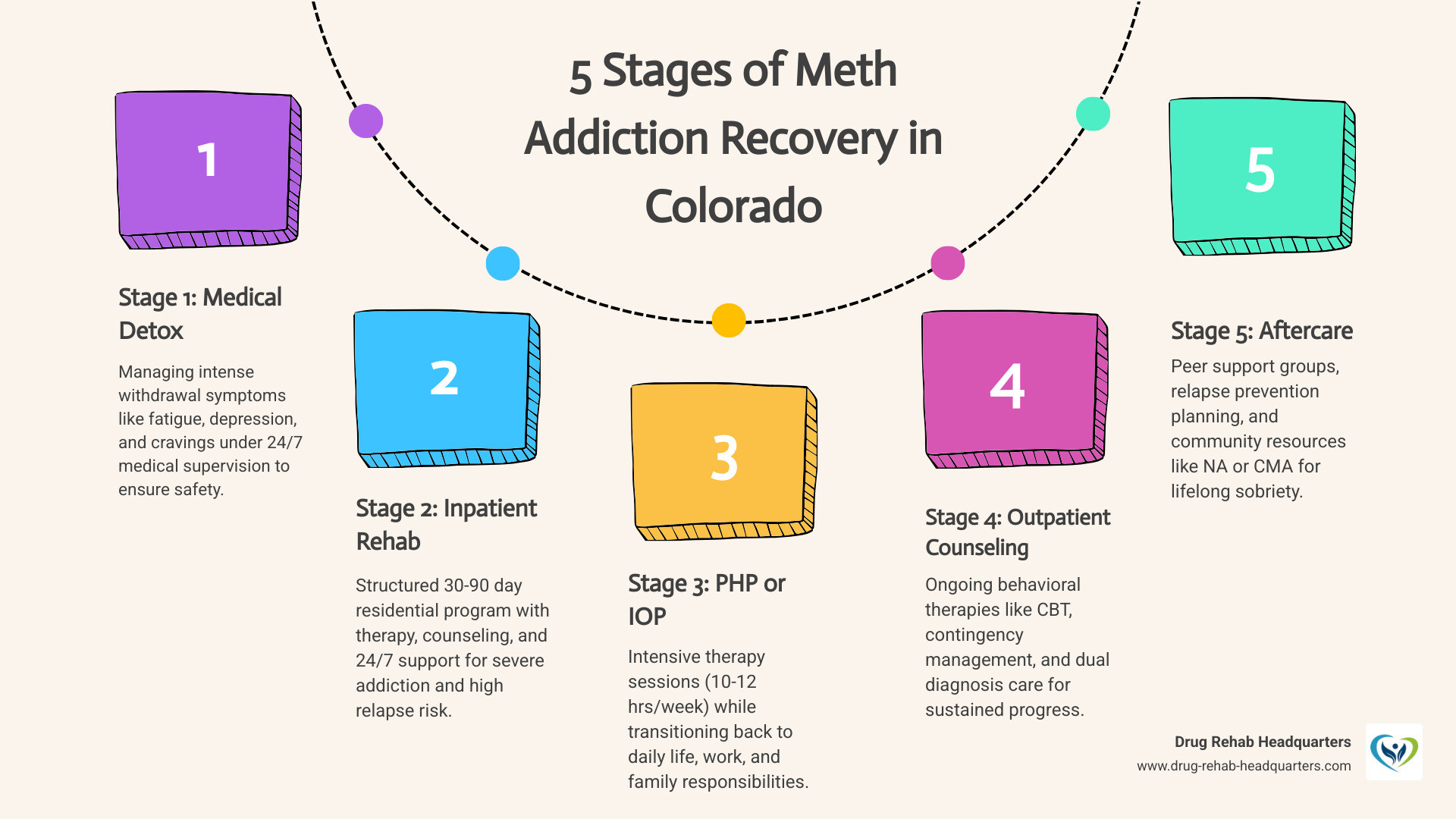
| Inpatient / Residential | Severe addiction; high relapse risk | 30-90 days |
| Partial Hospitalization (PHP) | Step-down from inpatient | ~90 days |
| Intensive Outpatient (IOP) | Moderate addiction; work/family obligations | 90 days, ~10-12 hrs/week |
| Standard Outpatient | Ongoing maintenance | Up to 6 months |
| Telehealth | Remote support; rural Colorado residents | Ongoing |
Need help right now? Call (866) 720-3784 to speak with a specialist about drug treatment centers and inpatient rehab options in Colorado.
Colorado is in the middle of a serious methamphetamine crisis. Overdose deaths related to meth more than doubled between 2013 and 2017 in the state — and the problem has only grown since. Meth-related hospitalizations are now outpacing opioid-related rates locally, making it one of the most urgent public health challenges the state faces.
Meth is notoriously one of the hardest addictions to overcome. It rewires the brain’s reward system, making normal pleasure feel impossible without the drug. That’s exactly why trying to quit alone rarely works — and why finding the right structured treatment program matters so much.
At Drug Rehab Headquarters, we’ve spent years helping individuals and families navigate drug and alcohol treatment services, including meth addiction treatment colorado facilities, connecting people with the right level of care for their unique situation. We’re here to cut through the confusion so you can focus on what matters — getting better.
The Growing Methamphetamine Crisis in Colorado
The Rocky Mountains provide a stunning backdrop for life in Colorado, but beneath the surface, a shadow has been growing. Methamphetamine, once thought to be a problem of the past, has come roaring back with a vengeance. We are seeing a shift where meth-related issues are becoming just as prevalent, if not more so, than the opioid crisis in many local communities.
According to state data, the number of overdose deaths related to meth more than doubled in a short four-year window. Why is this happening? For one, the average cost of methamphetamine has been dropping in Colorado over the last decade. It’s cheaper, purer, and more accessible than ever before.
This isn’t just a “big city” problem, either. While the top-6-cities-colorado-drug-alcohol-rehab hubs like Denver, Colorado Springs, and Aurora see high volumes of cases, rural areas are also struggling with limited resources.
Perhaps the most terrifying trend is the rise of fentanyl contamination. Much like the opioid supply, illicit meth is now frequently laced with fentanyl, turning a “typical” high into a fatal event. This has caused a massive spike in hospitalizations and emergency room visits across the state. If you or someone you love is using, please understand that every dose is a gamble. You can call us at (866) 720-3784 any time to discuss how to find a safe path forward.
Essential Levels of Care: Inpatient vs. Outpatient Rehab
When you decide to seek meth addiction treatment colorado, the first big question is usually: “Should I go to inpatient or outpatient rehab?” There isn’t a one-size-fits-all answer, but the data shows that people are split on their preferences. In recent surveys, about 54.2% of people chose inpatient facilities, while nearly 46% opted for outpatient or telehealth options.
Here is a breakdown of how these two paths differ:
| Feature | Inpatient Drug Rehab | Outpatient / Intensive Outpatient |
|---|---|---|
| Environment | 24/7 supervised residential stay | Live at home; attend scheduled sessions |
| Medical Support | Full-time clinical and medical staff | Limited to session times |
| Daily Structure | Highly structured (therapy, meals, sleep) | Flexible around work or school |
| Duration | Typically 30, 60, or 90 days | Several months to over a year |
| Relapse Risk | Lowest (no access to triggers) | Higher (daily exposure to old habits) |
Regardless of the path you choose, the journey often begins with detox-treatment. Because meth withdrawal can cause severe depression and even psychosis, having 24/7 clinical support during the first week is often the difference between success and immediate relapse. If you aren’t sure which level is right for you, our counselors at (866) 720-3784 can provide a free assessment.
Flexible Outpatient Meth Addiction Treatment in Colorado
For many Coloradans, life doesn’t just stop because of an addiction. You might have a job in the tech sector in Boulder, a family to care for in Fort Collins, or school commitments in Greeley. This is where outpatient drug-addiction-treatment shines.
Outpatient programs typically require about 10 to 12 hours a week at a local center. This allows you to maintain your “normal” life while receiving high-quality counseling. We have seen a huge rise in telehealth options as well, which is a lifesaver for those living in the more remote mountain towns where driving to a clinic every day isn’t feasible.
The key to successful outpatient care is a strong support system. You’ll engage in local counseling, group therapy, and regular drug testing to stay accountable. It’s a great option for those with a stable home environment who are highly motivated to change.
Choosing the Right Inpatient Rehab in Colorado
For chronic, long-term meth users, inpatient rehab is often the most effective route. Meth is an incredibly powerful drug; the DEA notes that meth can render people unable to feel pleasure because it damages the brain’s dopamine receptors. In a residential setting, you are given the time and space for those receptors to begin healing without the constant temptation of the outside world.
An inpatient-drug-detox program provides a structured environment where every hour is dedicated to your recovery. This is especially vital for those with a “dual diagnosis”—meaning they struggle with both meth addiction and a mental health disorder like depression or anxiety. In Colorado, many inpatient centers specialize in this “whole-person” approach, ensuring that your mind is treated alongside your body.
If you’re worried about the cost or the time away from work, your health is your greatest asset. We can help you find a facility that fits your budget and needs at (866) 720-3784.
Key Components of Effective Meth Addiction Treatment in Colorado
Recovery from meth isn’t just about “stopping.” It’s about rebuilding a life. Effective meth addiction treatment colorado consists of several moving parts that work together to ensure long-term sobriety.
The first hurdle is always the physical one. Medical-detox-programs are essential because meth withdrawal is notoriously unpleasant. While it’s rarely life-threatening in the same way alcohol withdrawal can be, the psychological toll—paranoia, extreme fatigue, and deep “crashes”—often leads people back to the drug just to stop the pain. Medical supervision allows doctors to use medications (like benzodiazepines for anxiety or sleep aids) to keep you comfortable and safe.
Once the drug is out of your system, the real work begins. This involves a mix of:
- Behavioral Health: Understanding the “why” behind the use.
- Holistic Wellness: Nutrition, exercise, and mindfulness to help the brain heal.
- Skill Building: Learning how to handle stress without reaching for a pipe or needle.
Evidence-Based Therapies for Meth Addiction Treatment in Colorado
There is no “magic pill” for meth addiction yet, but behavioral therapies have proven to be incredibly effective. In Colorado, we utilize several evidence-based approaches:
- Cognitive Behavioral Therapy (CBT): This helps you identify the thought patterns that lead to drug use and replaces them with healthier coping mechanisms.
- Contingency Management: This is essentially a reward system. Patients receive tangible rewards (like vouchers or small prizes) for staying drug-free. It sounds simple, but for a brain that has been rewired by meth, these small “wins” help jumpstart the natural reward system.
- The BEAT Meth Program: An innovative program found in many Colorado emergency departments. It focuses on “warm handoffs,” where peer counselors meet patients right in the ER to guide them directly into treatment. This program has been shown to triple the likelihood that a person will actually show up for their follow-up appointments.
- Trauma-Informed Care: Many people turn to stimulants to numb the pain of past trauma. Addressing that trauma is non-negotiable for lasting recovery.
More info about treatment options can be found on our website, or you can call (866) 720-3784 to learn which therapy might be best for your specific history.
Navigating Insurance and Financial Options for Recovery
One of the biggest hurdles to starting meth addiction treatment colorado is the “how do I pay for this?” talk. We get it—rehab can be expensive. But there are more options than you might realize.
- Private Insurance: Many private plans (like Blue Cross, Aetna, or Cigna) cover a significant portion of addiction treatment. You can Verify your insurance through our portal to see exactly what your plan covers.
- Medicaid and Medicare: Colorado has expanded access to substance use treatment for Medicaid recipients. Many local centers accept “Health First Colorado” (Colorado’s Medicaid).
- FMLA: If you are worried about losing your job, the Family and Medical Leave Act (FMLA) can protect your position while you seek treatment. You should look online for more information on FMLAs to see if you qualify.
- Sliding Fee Scales: Some community-based clinics in Denver and surrounding areas offer services based on your income. They won’t turn you away just because you’re short on cash.
Don’t let a price tag stand between you and your life. Call us at (866) 720-3784, and we can help you find a facility that works with your financial situation.
Frequently Asked Questions about Meth Rehab in Colorado
What are the signs of meth withdrawal?
Withdrawal usually happens in two phases. The “crash” phase occurs in the first 24–72 hours and includes extreme exhaustion, increased appetite, and intense cravings. The second phase can last several weeks and involves “anhedonia” (the inability to feel pleasure), irritability, and sleep disturbances. In severe cases, people may experience “formication”—the sensation of bugs crawling under the skin—and hallucinations. This is why medical supervision at professional drug treatment centers is so highly recommended. If you are experiencing these symptoms, call (866) 720-3784 for immediate guidance.
How does the BEAT Meth program work in Colorado emergency departments?
The BEAT Meth program (Behavioral Health Emergency Assistance Training) is designed to catch people at their most vulnerable. When someone enters a Colorado ER due to a meth-related crisis, they aren’t just patched up and sent away. They are met by peer specialists—people who have been in their shoes—who use “contingency management” (like spinning a prize wheel for rewards) to encourage them to link up with long-term treatment, such as an inpatient rehab program. It turns a scary ER visit into a gateway for hope.
Is long-term recovery from meth addiction possible?
Absolutely. While data suggests that about 23% of meth users struggle with daily use and feel they can never come down, thousands of people in Colorado have successfully reclaimed their lives through comprehensive alcohol and drug treatment services.
Long-term success usually involves a mix of professional treatment and community support. Groups like Nar-Anon or Crystal Meth Anonymous provide a “tribe” of people who understand the struggle. Sobriety isn’t a destination; it’s a journey that requires a solid relapse prevention plan and a phone full of people you can call when things get tough. We are one of those numbers: (866) 720-3784.
Conclusion
Recovery from methamphetamine is a steep climb, much like tackling one of Colorado’s famous “Fourteeners.” It takes grit, preparation, and the right team by your side. But the view from the top—a life free from the cycle of addiction—is worth every single step.
Whether you are looking for a high-end residential center in the mountains or a flexible outpatient clinic in the city, Drug Rehab Headquarters is here to guide you. Our certified counselors are available 24/7 to offer free, personalized support. Many of us have lived experience with addiction, so we know exactly what you’re going through.
Don’t wait for “tomorrow” or a “better time.” The crisis in Colorado is real, but so is the hope for recovery. Find a facility today and take that first step toward lifelong sobriety.
Call us now at (866) 720-3784 for comprehensive alcohol and drug treatment services. We’re ready when you are.