
When Alcohol Withdrawal Becomes Dangerous: What You Need to Know First
Medical detox for alcohol is the safest way to stop drinking when your body has become physically dependent on alcohol. Here’s a quick look at your main options:
| Detox Method | Medical Supervision | Best For | Safety Level |
|---|---|---|---|
| Inpatient Medical Detox | 24/7 on-site | Moderate to severe dependence | Highest |
| Outpatient Medical Detox | Daily check-ins | Mild to moderate dependence | High |
| Home Tapering | None or limited | Mild dependence only | Moderate risk |
| Cold Turkey at Home | None | Not recommended | Dangerous |
Stopping alcohol suddenly is not like quitting coffee. For someone who drinks heavily every day, withdrawal can trigger seizures, hallucinations, and a life-threatening condition called delirium tremens (DTs) — sometimes within hours of the last drink. Roughly 10% of people going through withdrawal experience severe symptoms, and without medical care, delirium tremens carries a fatality rate as high as 37%.
That’s why this isn’t a decision to make alone. A professional detox program keeps you safe, manages your symptoms with medication, and sets you up for real, lasting recovery.
At Drug Rehab Headquarters, we’ve helped countless individuals and families navigate medical detox for alcohol and find the right treatment path — whether that’s inpatient rehab, outpatient care, or a drug treatment center close to home. Call us anytime at (866) 720-3784 and we’ll help you find the right fit.
Understanding the Risks: Why Medical Detox for Alcohol is Essential
When we talk about medical detox for alcohol, we aren’t just talking about a “break” from drinking. We are talking about a critical medical intervention. Alcohol is a central nervous system depressant. When someone drinks heavily over a long period, the brain compensates by “turning up the volume” on its excitatory neurotransmitters to stay awake and functional.
If that alcohol is suddenly removed, the brain stays in that high-volume, over-excited state. According to scientific research on alcohol withdrawal syndrome, this imbalance leads to autonomic hyperactivity—your heart races, your blood pressure spikes, and your nervous system begins to misfire.
The most severe risks include:
- Grand Mal Seizures: These typically occur within the first 12 to 48 hours after the last drink. Research suggests that between 1% and 4% of patients undergoing withdrawal will experience a seizure.
- Delirium Tremens (DTs): This is the “boogeyman” of alcohol withdrawal. It involves profound confusion, hallucinations, and severe cardiovascular instability. While it only affects about 3% to 5% of people in withdrawal, it is a true medical emergency.
- Kindling: This is a phenomenon where each subsequent withdrawal attempt becomes more severe and dangerous than the last. If you’ve tried to quit before and had a hard time, the next time could be significantly worse.
Because of these risks, more info about alcohol detox symptoms is vital for anyone considering quitting. Trying to go “cold turkey” at home is more than just uncomfortable; it can be fatal. If you are worried about yourself or a loved one, please call us at (866) 720-3784 for immediate assistance in finding a safe, supervised environment.
The Alcohol Withdrawal Timeline and What to Expect
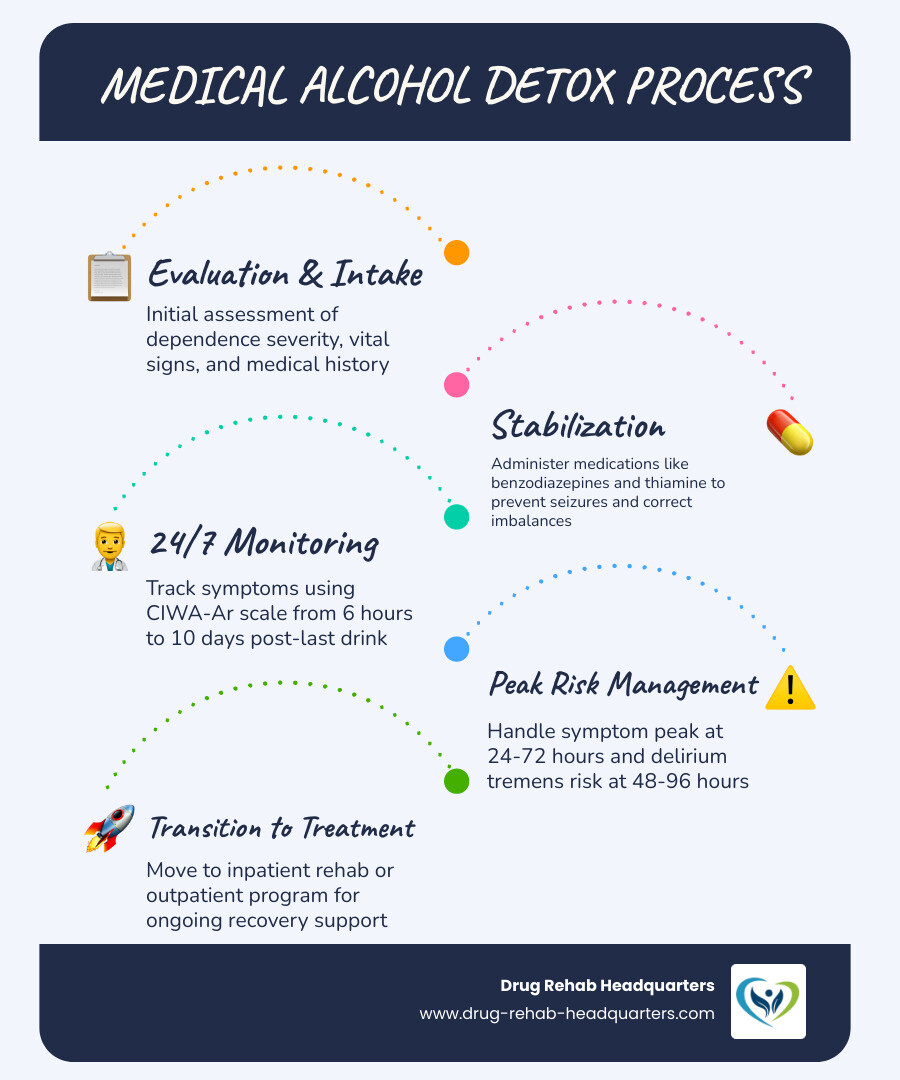
The journey through medical detox for alcohol isn’t a straight line, but it does follow a predictable clinical pattern. Understanding this timeline helps take some of the fear out of the process.
The First 6 to 12 Hours
Symptoms usually begin while there is still alcohol in the bloodstream. You might feel “the shakes” (tremors), anxiety, nausea, and insomnia. This is the stage where many people give up and take a drink just to feel “normal” again.
12 to 24 Hours
This is when alcoholic hallucinosis can begin. Unlike the delirium of DTs, people experiencing this are usually aware that the visions or sounds aren’t real, but they are still deeply distressing.
24 to 72 Hours
This is the “peak” of withdrawal. This is the highest-risk window for withdrawal seizures and the onset of delirium tremens. In a medical detox for alcohol program, clinicians are on high alert during this window, often using medications to keep the brain calm.
3 to 10 Days
For most, the physical danger subsides after the first week. However, psychological symptoms like depression, irritability, and sleep disturbances can linger. This is why transitioning into an inpatient rehab or a dedicated drug treatment center is so important—detox gets you sober, but rehabilitation helps you stay that way.
| Stage | Timeframe | Common Symptoms | Severity |
|---|---|---|---|
| Stage 1 | 6-12 Hours | Anxiety, tremors, nausea, insomnia | Mild to Moderate |
| Stage 2 | 12-48 Hours | Seizures, hallucinations, high BP | Severe Risk |
| Stage 3 | 48-96 Hours | Delirium Tremens (DTs), fever, confusion | Life-Threatening |
| Stage 4 | 5-10 Days | Gradual decrease in physical symptoms | Recovery Phase |
If you are currently in the early stages of withdrawal, do not wait for symptoms to peak. Call (866) 720-3784 to find a bed in a professional facility today.
Inpatient vs. Outpatient Treatment in Indiana
When you decide to seek professional help, you generally have two paths: inpatient or outpatient care. Both are valid forms of medical detox for alcohol, but they serve different needs. In Indiana, patients can access a wide range of facilities tailored to these specific levels of care.
Research on inpatient vs outpatient efficacy shows that for mild to moderate withdrawal, both settings can be effective. However, the decision usually comes down to safety and the level of support at home. At Drug Rehab Headquarters, our counselors can help you explore medical detox programs to see which level of care matches your history and health status. You can reach us 24/7 at (866) 720-3784.
Benefits of Inpatient Medical Detox for Alcohol
Inpatient care is the “gold standard” for safety. You reside at the facility—which might be a hospital unit or a specialized inpatient rehab center—and receive 24/7 monitoring.
- Total Immersion: You are removed from triggers and the easy access to alcohol.
- Immediate Intervention: If a seizure occurs or blood pressure spikes, medical staff can react in seconds.
- Nutritional Support: Chronic alcohol use often leads to severe vitamin deficiencies. Inpatient programs provide high-dose Thiamine (Vitamin B1) to prevent Wernicke’s encephalopathy, a brain disorder caused by malnutrition.
- Integrated Care: Most people can transition directly from detox into the therapeutic phase of a drug treatment center without leaving the building.
To learn about alcohol detox centers that offer these intensive services, call our team at (866) 720-3784.
When Outpatient Medical Detox for Alcohol is Appropriate
Outpatient (or ambulatory) detox allows you to live at home while visiting a clinic daily for medication and monitoring. This is generally only recommended if:
- Your CIWA-Ar score (a tool used to measure withdrawal) is low.
- You have no history of seizures or DTs.
- You have a sober, reliable “support person” at home 24/7.
- You do not have co-occurring medical or psychiatric issues.
Clinicians often prescribe medications like Chlordiazepoxide (Librium) for you to take at home under strict supervision. While more affordable and flexible, it requires a high level of personal commitment to the rehabilitation process.
Medications and Clinical Tools Used in Professional Detox
A major reason why medical detox for alcohol is so much safer than doing it alone is the use of targeted pharmacotherapy. Doctors don’t just “watch” you get better; they use science to ease the transition.
- Benzodiazepines: These are the primary medications used. According to scientific info on benzodiazepines for detox, drugs like Diazepam or Lorazepam mimic the effects of alcohol on the brain, “tricking” the nervous system into staying calm while the alcohol clears out.
- Phenobarbital: Sometimes used as an alternative or adjunct to “benzos,” especially in severe cases or in the emergency room setting.
- The CIWA-Ar Protocol: This is a 10-item scale that nurses use to “score” your withdrawal. They check for things like tremors, sweating, anxiety, and light sensitivity. If your score goes up, they give you more medication. If it stays low, they let you rest.
- Electrolyte Replacement: Alcohol is a diuretic and messes with your body’s chemistry. Medical teams monitor your potassium, magnesium, and phosphate levels to prevent heart rhythm issues.
Understanding why medical detox is crucial means realizing that “willpower” cannot fix a chemical imbalance. If your brain needs medicine to stay safe, that’s what a professional program provides. Call us at (866) 720-3784 to discuss which medications might be used in your specific situation.
Life After Detox: Transitioning to Long-Term Recovery
We often tell our clients: Detox is the beginning, not the end. While medical detox for alcohol clears the toxins from your body, it doesn’t fix the reasons why you drank in the first place. Without follow-up care, research shows that between one-third and one-half of people return to drinking within six months.
To prevent relapse, we recommend transitioning into a comprehensive drug treatment center or inpatient rehab program. These programs use evidence-based tools like:
- Cognitive Behavioral Therapy (CBT): This helps you identify the “triggers” that make you want to drink and teaches you new ways to cope with stress. You can learn more about how Cognitive Behavioral Therapy (CBT) works to rewire your habits.
- Peer Support: Programs like Alcoholics Anonymous (AA) and SMART Recovery provide a community of people who truly understand what you’re going through.
- Holistic Options: Many modern centers offer yoga, meditation, and nutritional counseling to heal the whole person, not just the addiction.
At Drug Rehab Headquarters, we specialize in connecting you with these long-term resources. Whether you need a 30-day program or long-term residential care, call us at (866) 720-3784 for personalized guidance.
Frequently Asked Questions about Medical Detox
How long does medical detox for alcohol take?
A typical medical detox for alcohol program lasts between 3 and 10 days. The most intense physical symptoms usually peak within the first 72 hours and begin to subside by day five. However, the exact length depends on your history of use and overall health.
Is it safe to detox from alcohol at home?
For heavy, daily drinkers, the answer is generally no. Because you cannot predict if you will have a seizure or develop delirium tremens, “home detox” is a massive gamble. Medical supervision is the only way to guarantee that if something goes wrong, help is already there.
Does insurance cover professional detox services?
Yes, most private insurance plans, as well as Medicaid and Medicare, cover some or all of the costs of medical detox and inpatient rehab. At Drug Rehab Headquarters, we can help you verify your insurance for detox and find a facility that is in-network for you. Call us at (866) 720-3784 to get started.
Conclusion
Taking the first step toward sobriety is brave, but taking that step safely is smart. Choosing medical detox for alcohol ensures that you aren’t just quitting—you’re surviving the process so you can actually enjoy your new life.
At Drug Rehab Headquarters, we are committed to making this transition as smooth as possible. Our certified counselors—many of whom have their own lived experience with recovery—provide 24/7 free support. We offer personalized guidance to find suitable, evidence-based, and holistic treatment options across North America. From Alabama to Wyoming, we know the best drug treatment centers and inpatient rehab facilities in your area.
Don’t leave your safety to chance. Call us today at (866) 720-3784 and let us help you find the safest bet for your recovery.
Cost and Success Rates of Medical Detox
Understanding the financial aspect and the effectiveness of treatment is essential for long-term planning. The cost of medical detox for alcohol can vary based on the facility and the intensity of care required. Generally, inpatient medical detoxification ranges from $500 to $1,500 per day. While this is a significant investment, the success rates for those who complete a professional program are much higher. Statistics show that individuals who transition from detox into a structured rehabilitation program are significantly more likely to maintain long-term sobriety than those who attempt to quit on their own.
Types of Rehab Centers in Indiana
For those seeking local care, there are various Types of Rehab Centers in Indiana designed to meet diverse needs. These include state-funded facilities, private drug rehab centers, and specialized inpatient rehab programs. Many Indiana facilities offer evidence-based therapies, including medication-assisted treatment and holistic rehabilitation options, ensuring that residents have access to high-quality care close to home.
Finding the Right Addiction Treatment Program
Finding the Right Addiction Treatment Program requires a careful evaluation of several factors, including the types of therapy offered, the qualifications of the staff, and the availability of aftercare. A successful rehabilitation journey often begins with a professional assessment to determine whether a patient needs the intensive structure of an inpatient rehab or the flexibility of an outpatient program. At Drug Rehab Headquarters, we help families navigate these choices to find the most effective path forward.
Insurance Coverage for Indiana Rehab Centers
One of the most common concerns is how to pay for treatment. Insurance Coverage for Indiana Rehab Centers is widely available through most major health plans. Providers such as Anthem, Blue Cross Blue Shield, and UnitedHealthcare typically cover medical detox for alcohol and subsequent rehabilitation services. To ensure you receive the maximum benefits, it is important to verify your coverage with the drug rehab centers you are considering. You can call us at (866) 720-3784 to help verify your insurance and find a facility that fits your budget.