
Medicaid Covers More Alcohol Treatment Than You Think
Medicaid alcohol treatment centers are available across all 50 states, and there are over 10,600 of them accepting Medicaid right now. If you or a loved one needs help with alcohol addiction or is searching for drug treatment centers but worries about cost, here’s what you need to know fast:
Quick answers:
- Does Medicaid cover alcohol rehab? Yes — detox, inpatient rehab, outpatient, counseling, and medications are all commonly covered.
- Who qualifies? Low-income adults, pregnant women, children, seniors, and those earning under 133% of the federal poverty level (in expansion states).
- Are there co-pays? Most Medicaid recipients pay little to nothing for addiction treatment.
- How do you find a center? Call (866) 720-3784 — help is available 24/7, free, and confidential.
Alcohol use disorder and substance abuse affect millions of Americans, and the cost of treatment stops far too many people from getting help. What most people don’t realize is that Medicaid — the government health insurance program for low-income individuals and families — covers a full range of alcohol and drug treatment services in most states.
The challenge isn’t whether coverage exists. It’s knowing how to use it.
At Drug Rehab Headquarters, we’ve spent years helping individuals and families navigate the complex landscape of addiction treatment and insurance coverage, including connecting people to medicaid alcohol treatment centers and drug treatment centers that offer real, evidence-based care. We’re here to cut through the confusion so you can focus on what matters — recovery.
Understanding Medicaid Alcohol Treatment Centers and Eligibility
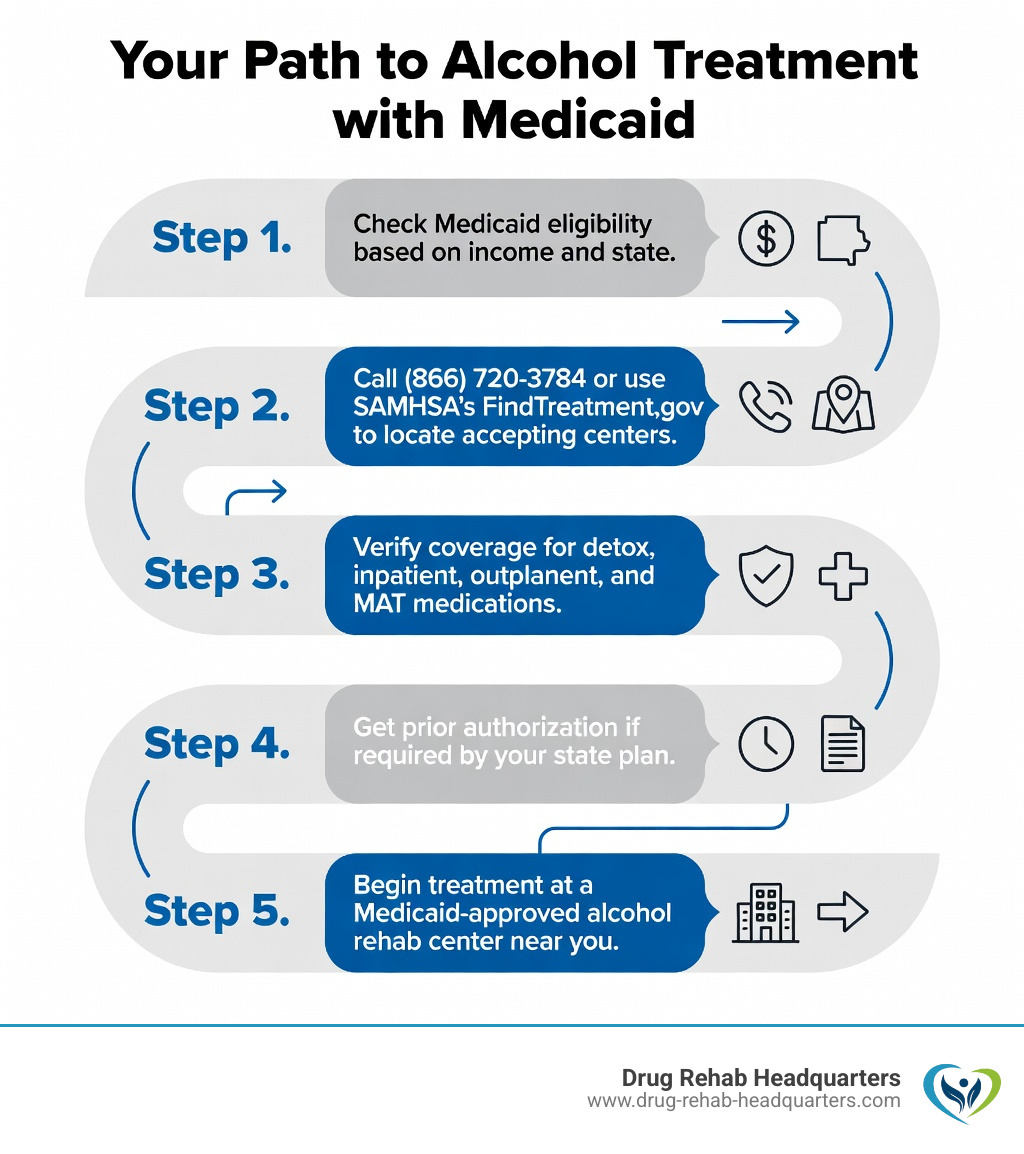
Medicaid is a joint federal and state program that provides health coverage to millions of Americans, including eligible low-income adults, children, pregnant women, elderly adults, and people with disabilities. Because it is administered by states according to federal requirements, the specific “flavor” of Medicaid you have depends on where you live. However, one thing remains constant: since the passage of the Affordable Care Act (ACA), Medicaid programs are generally required to cover basic aspects of drug and alcohol dependency recovery.
Under the ACA, many states expanded their Medicaid programs to cover all adults with income below 133% of the federal poverty level (FPL). This expansion shifted the paradigm for substance use disorder (SUD) treatment, significantly increasing the number of people eligible for life-saving care. If you aren’t sure where you stand, you can contact your State Medical Assistance (Medicaid) office to find out what specific health services are covered in your area.
At Drug Rehab Headquarters, we know that the fine print can be overwhelming. You can Verify Insurance through our resources or call us directly at (866) 720-3784 to check your status. We can help you determine if your specific plan will cover the medicaid alcohol treatment centers you are considering.
Who Qualifies for Medicaid Coverage?
Eligibility for Medicaid is primarily based on income, but other factors play a huge role. Generally, you may qualify if you fall into one of these categories:
- Income Brackets: Individuals earning less than 133% of the FPL (in expansion states).
- Pregnant Women: Medicaid provides robust coverage for pregnant and postpartum women, often with expanded eligibility to ensure both mother and child are healthy.
- Youth: Medicaid and the Children’s Health Insurance Program (CHIP) provide health care coverage for about half of the children and adolescents in the U.S.
- Seniors and People with Disabilities: Those over 65 or with qualifying disabilities often have access to Medicaid.
- Dual Eligibility: If you are eligible for both Medicare and Medicaid, you may have even more comprehensive coverage for behavioral health services.
Understanding the alcohol addiction signs is the first step; knowing you have the insurance to treat those signs is the second.
Federal Requirements for Behavioral Health
The landscape of addiction treatment changed forever with the Mental Health Parity and Addiction Equity Act (MHPAEA). This law prohibits insurance providers—including Medicaid—from imposing more restrictive benefit limitations on mental health and substance use disorder services than on medical or surgical benefits.
Furthermore, the SUPPORT Act has improved access by mandating coverage for certain medications and expanding the types of facilities that can accept Medicaid. These federal guidelines ensure that substance use treatment is treated as an “essential health benefit,” not an optional extra. According to the National Institute of Mental Health, approximately 50% of people with substance use disorders also have a co-occurring mental health condition, making these parity laws vital for holistic recovery.
Comprehensive Services Covered by Medicaid for Substance Use
When we talk about medicaid alcohol treatment centers, we aren’t just talking about a bed in a room. Medicaid is designed to cover a full continuum of care for both alcohol and drug addiction. This starts with a professional assessment to determine the severity of the addiction and moves through various levels of intensity, often provided at specialized drug treatment centers.
Commonly covered services include:
- Medically Supervised Detox: This is a 3-to-7-day process to safely manage withdrawal symptoms. For alcohol dependence, this is often a medical necessity due to the risk of seizures or delirium tremens.
- Individualized Counseling: One-on-one sessions with a licensed therapist to address the root causes of addiction.
- Group Therapy: Sharing experiences with peers under professional guidance.
- Family Involvement: Helping the entire family unit heal from the effects of alcohol abuse.
If you are looking for Alcohol Abuse Treatment or need immediate Alcohol Detox, call us at (866) 720-3784. We can help you find a facility that provides these exact services under your Medicaid plan.
Medication-Assisted Treatment (MAT)
Medicaid is a major financier of Medication-Assisted Treatment. Federal guidelines mandate that state Medicaid programs cover FDA-approved medications for opioid use disorder, and many states extend this to alcohol use disorder as well.
Commonly covered medications for alcohol addiction include:
- Naltrexone: Helps reduce cravings and the “reward” feeling of drinking.
- Acamprosate: Helps the brain function normally again after long-term alcohol use.
- Disulfiram: Causes unpleasant reactions if alcohol is consumed, acting as a deterrent.
These medications are most effective when combined with counseling. Understanding Alcohol Detox Symptoms is crucial, as MAT can often alleviate the physical discomfort of early sobriety.
Verifying Coverage at Medicaid Alcohol Treatment Centers
Because Medicaid is state-run, “verifying” your coverage is a critical step. Some states use a “fee-for-service” model where the state pays providers directly, while others use “Managed Care” organizations (private companies contracted by the state).
You may need “prior authorization” before starting certain treatments, especially inpatient rehab. Don’t let the red tape stop you. You can Verify Insurance on our site or call (866) 720-3784. Our counselors can help you navigate the authorization process so you don’t get stuck with unexpected bills.
Navigating Inpatient Rehab and Outpatient Options
Choosing the right setting for recovery is a decision that should be made with a healthcare professional, often based on the American Society of Addiction Medicine (ASAM) levels of care. Medicaid covers several different environments depending on your clinical needs.
| Treatment Type | Description | Medicaid Coverage |
|---|---|---|
| Inpatient Rehab | 24/7 care in a residential facility. | Covered (length of stay varies by state). |
| Partial Hospitalization (PHP) | Intensive treatment during the day, go home at night. | Widely covered as an alternative to inpatient. |
| Intensive Outpatient (IOP) | 9-20 hours of therapy per week. | Standard coverage in most state plans. |
| Outpatient Therapy | Weekly or bi-weekly counseling sessions. | Covered as a basic behavioral health benefit. |
Whether you need Alcohol Addiction Rehab Options or a full Alcohol Rehab program, call (866) 720-3784 to find an available bed.
Inpatient Rehab and Long-Term Care
For many, Rehab Centers for Alcoholics that offer 24-hour supervision are the best chance at long-term sobriety. These facilities provide a structured environment away from triggers. Medicaid typically covers these stays for a set period—often 15 to 30 days—though extensions are possible based on medical necessity.
For a deeper dive into what to expect, check out our Alcohol Rehab Centers Guide.
Outpatient and Peer Support Services
Once the intensive phase of treatment is over, Medicaid often continues to support your journey through outpatient services. This includes telehealth appointments, which have become increasingly common and are a great way to maintain support if you live in a rural area.
Medicaid also provides for crisis intervention and, in many states, peer recovery support services. Peer supporters are individuals with lived experience who offer guidance and encouragement. Our Alcohol Recovery Centers Near Me Guide can help you find these localized resources.
How to Find Medicaid Alcohol Treatment Centers Near You
Finding a facility that accepts Medicaid requires a “location-first” approach. While there are over 10,600 medicaid alcohol treatment centers nationwide, they are not distributed evenly.
The best way to start is by using the 2024 National Directory of Drug and Alcohol Use Treatment Facilities provided by SAMHSA. This directory allows you to filter by location and payment type. If you prefer a more personal touch, you can use our Alcohol Treatment Center Near Me tool or call (866) 720-3784 for a direct referral to a vetted center.
Finding Medicaid Alcohol Treatment Centers in Your State
Coverage and availability can change drastically once you cross state lines. Here are a few examples of how different states handle Medicaid-covered addiction services:
- New York: Offers a massive network of over 600 Medicaid-accepted facilities, including well-known hospital-based programs and private non-profits.
- Mississippi: While largely rural, Mississippi Medicaid covers inpatient rehab, PHPs, and IOPs. Collaborative community organizations often fill the gaps in rural access.
- California: Through its Medi-Cal program, California has some of the most robust SUD benefits in the country, including extensive Rehab Alcohol California options.
- Georgia: There are numerous Alcohol Rehab Centers in Georgia that accept Medicaid, ranging from urban intensive programs to quieter residential settings.
Comparing Medicaid and Medicare Coverage
It’s common to confuse the two, but they work differently for rehab:
- Medicare Part A: Covers inpatient hospital stays and psychiatric care (with a 190-day lifetime limit for psychiatric hospitals).
- Medicare Part B: Covers outpatient services, including IOPs and visits to doctors or psychologists.
- Medicare Part D: Covers the medications you might need for recovery.
- Medicaid: Often covers a broader range of “long-term” residential services that Medicare might not.
If you have “dual eligibility,” Medicaid often acts as the “payer of last resort,” picking up costs that Medicare leaves behind. To learn more about how these interact, read Does Insurance Cover Rehab?
Overcoming Barriers to Accessing Care
Even with insurance, the path to rehab isn’t always smooth. We face real challenges in the U.S. healthcare system, such as:
- Workforce Shortages: Nearly half of the U.S. population lives in a mental health workforce shortage area.
- Rural Access: If you live far from a city, finding a medicaid alcohol treatment center within driving distance can be tough.
- Waitlists: Because Medicaid facilities are in high demand, there may be a wait for a bed.
One way to overcome these obstacles is to look into out-of-state coverage. While Medicaid is generally state-specific, some states have “reciprocity” or will cover out-of-state care if the necessary treatment isn’t available locally.
Don’t let the Cost of Rehab or logistical hurdles stop you. Our Alcohol Addiction Hotline at (866) 720-3784 is staffed 24/7 by people who know how to navigate these exact barriers. We can help you find a solution when it feels like there isn’t one.
Frequently Asked Questions about Medicaid Alcohol Rehab
Does Medicaid cover out-of-state alcohol rehab?
Generally, Medicaid is intended to be used in the state where you reside. However, if a specific type of treatment is not available in your home state, or if you live near a state border, your state Medicaid office may authorize out-of-state care. Always call the facility first to see if they can work with your state’s plan.
How long will Medicaid pay for my inpatient rehab stay?
This varies significantly by state and clinical need. Most programs cover an initial 15 to 30 days of residential treatment. If your doctors determine that you need more time to stabilize or prevent relapse, they can submit a request for an extension based on “medical necessity.”
Are there co-pays for Medicaid-covered addiction treatment?
In most states, there are no co-pays for substance use disorder treatment under Medicaid. For states that do charge co-pays, they are typically very small (e.g., $1 to $5). Medicaid is designed to be accessible for those with limited financial means, so the out-of-pocket cost is almost always minimal.
Conclusion
Recovery is a journey that shouldn’t be reserved for the wealthy. Whether you are looking for evidence-based clinical care or holistic treatment options, medicaid alcohol treatment centers and drug treatment centers provide a viable, high-quality path to a new life.
At Drug Rehab Headquarters, we believe that everyone deserves a chance to heal. Our team is dedicated to connecting you with the right facility, whether it’s an inpatient rehab in California or an outpatient program in New York. We offer 24/7 free support from certified counselors who understand what you’re going through.
Don’t wait for things to get worse. You can Find a Facility using our online tools for personalized, compassionate guidance. We are here for you, every step of the way.