
When Alcohol Withdrawal Becomes a Medical Emergency
Medically assisted alcohol detox is the process of safely removing alcohol from your body under the supervision of licensed medical professionals — typically in a structured clinical setting where withdrawal symptoms can be monitored and managed around the clock.
If you or a loved one needs a quick answer, here’s what to know:
- What it is: A physician-led detox process that manages dangerous withdrawal symptoms using medications and medical monitoring
- Who needs it: Anyone with heavy, long-term alcohol use who is physically dependent
- How long it takes: Typically 5 to 10 days, depending on the individual
- Why it matters: Alcohol withdrawal can be fatal — seizures occur in up to 25% of withdrawal episodes, and delirium tremens affects roughly 5% of patients
- First step: Call (866) 720-3784 for free guidance on finding a medically supervised detox program near you
Alcohol is one of the only substances where withdrawal itself can kill you. Unlike opioids or stimulants, stopping alcohol suddenly after long-term heavy use can trigger life-threatening seizures, extreme confusion, and a dangerous condition called delirium tremens — all within the first 72 hours. That’s why medically assisted detox isn’t just recommended — for many people, it’s essential.
At Drug Rehab Headquarters, we’ve spent years helping individuals and families navigate the complex landscape of medically assisted alcohol detox and inpatient rehab options across North America. Our team connects people to evidence-based detox programs and drug treatment centers that match their specific situation and needs, so you don’t have to figure it out alone.
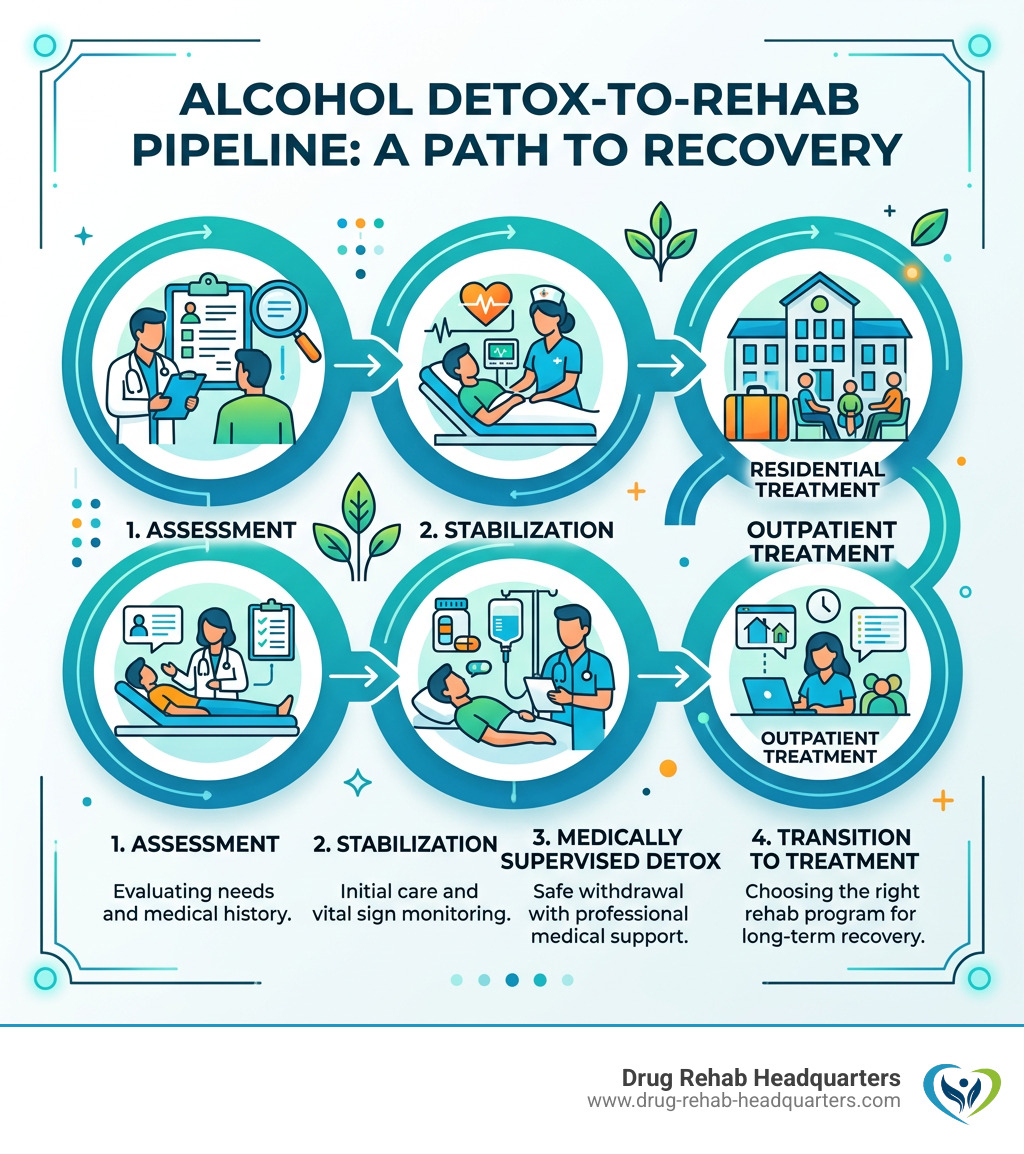
Medically assisted alcohol detox vocab explained:
Understanding Medically Assisted Alcohol Detox
When we talk about medically assisted alcohol detox, we are describing a clinical intervention designed to manage the physical symptoms of withdrawal. According to scientific research on addiction, substance use disorder is a chronic condition, much like diabetes or asthma. Just as an ER visit stabilizes a person during an acute asthma flare, medical detox programs serve to stabilize the body during the “flare-up” of withdrawal.
This process is led by a physician and a team of licensed nurses and clinicians. The primary goal is twofold: to clear toxins from the system and to ensure the patient remains medically stable. It is important to remember that alcohol-detox is not a “cure” for addiction. Instead, it is the essential first step that prepares the brain and body for the psychological work of recovery. If you are unsure if you require this level of care, our team at (866) 720-3784 can help evaluate your situation.
Why Medical Supervision is Necessary for Alcohol Withdrawal
You might wonder why someone can’t just “sleep it off” at home. The answer lies in how alcohol affects the brain. Alcohol is a central nervous system depressant. Over time, the brain adapts to its presence by working harder to stay “revved up.” When alcohol is suddenly removed, the brain doesn’t have time to adjust, leading to central nervous system (CNS) overexcitation.
This overexcitation causes autonomic hyperactivity, which can lead to:
- Grand Mal Seizures: These occur in up to 25% of withdrawal cases, often within the first 24 hours.
- Delirium Tremens (DTs): A severe syndrome involving hallucinations, extreme confusion, and cardiovascular collapse. Roughly 5% of patients experience DTs, which can be fatal without immediate intervention.
- Heart Arrhythmias: Rapid or irregular heartbeats that put immense strain on the cardiovascular system.
Beyond the shakes, medical detox is crucial because it provides 24/7 monitoring and safety protocols that a home environment simply cannot offer.
The Alcohol Withdrawal Timeline and Symptoms
The journey through withdrawal follows a relatively predictable path, though the intensity varies based on your history of use. We often talk about the “kindling effect,” where each successive withdrawal episode becomes more severe than the last. This means if you have tried to quit before, your next attempt may carry a higher risk of seizures.
| Stage | Timeline | Symptoms |
|---|---|---|
| Mild | 6–12 Hours | Anxiety, insomnia, mild tremors, headache, palpitations. |
| Moderate | 12–48 Hours | Hallucinations (visual or auditory), increased blood pressure, sweating. |
| Severe | 48–72 Hours | Delirium Tremens, seizures, extreme agitation, fever, disorientation. |
For many, the 72-hour mark is the peak of danger. This is when the risk for DTs is highest. Navigating this timeline requires professional oversight. You can reach our counselors at (866) 720-3784 to find a facility that provides this specialized monitoring.
Common Symptoms Managed During Medically Assisted Alcohol Detox
In professional alcohol-detox-center settings, clinicians use the CIWA-Ar scale (Clinical Institute Withdrawal Assessment for Alcohol). This is a 10-item tool that helps nurses measure the severity of alcohol-detox-symptoms like:
- Nausea and Vomiting: Managing hydration is key to preventing organ stress.
- Tremors: Often called “the shakes,” these are a sign of neurological distress.
- Anxiety and Agitation: Withdrawal is as much a mental battle as a physical one.
- Tactile/Visual Disturbances: Sensing things that aren’t there.
By monitoring heart rate and blood pressure continuously, medical teams can adjust medications in real-time to keep you comfortable and safe.
Medications and Protocols in Professional Detox Centers
Modern detox follows the ASAM Clinical Practice Guidelines to ensure evidence-based care. The “gold standard” for managing alcohol withdrawal is the use of Benzodiazepines (such as Diazepam or Librium). These medications act as a substitute for alcohol in the brain, allowing for a slow, controlled taper that prevents seizures.
Other critical protocols include:
- Phenobarbital: Sometimes used as a monotherapy or rescue therapy for severe cases that don’t respond to benzodiazepines.
- Thiamine Prophylaxis: Chronic alcohol use depletes Vitamin B1. Clinicians provide thiamine to prevent Wernicke-Korsakoff syndrome, a serious brain disorder.
- Electrolyte Balance: Dehydration and mineral imbalances (like low magnesium) are common and can trigger heart issues if not corrected.
Choosing detox done right means choosing a facility that understands these complex pharmacological needs.
Inpatient Rehab vs. Outpatient Medically Assisted Alcohol Detox
Not everyone requires a hospital bed, but the majority of people with a long history of heavy drinking do.
Inpatient Medical Detox: This is the safest setting. It offers 24/7 monitoring in a residential or hospital unit. It is highly recommended for those with a history of seizures, co-occurring mental health disorders, or a lack of stable support at home. Most drug treatment centers that offer inpatient services provide a seamless transition into residential therapy.
Outpatient (Ambulatory) Detox: This is a “step-down” option for those with mild-to-moderate symptoms and a very strong support system. It involves daily check-ins with a clinic but allows you to sleep at home.
If you aren’t sure which level of care is right for you, call us at (866) 720-3784. We can help you find inpatient-drug-detox options in your area, whether you are in Texas, Florida, or any of our 50+ service locations.
Transitioning from Detox to Long-Term Recovery
Once the physical toxins are gone, the real work begins. Statistics show that those who complete a medically assisted alcohol detox and immediately transition into detox-treatment programs are significantly more likely to maintain long-term sobriety.
Recovery is a marathon, not a sprint. After detox, we recommend exploring:
- Residential Treatment: Living at the facility for 30 to 90 days to address the root causes of addiction.
- Holistic Care: Incorporating nutrition, exercise, and mindfulness alongside traditional therapy.
- Drug Treatment Services: Utilizing group therapy and CBT to build relapse prevention skills.
Our team at Drug Rehab Headquarters is available 24/7 at (866) 720-3784 to help you map out this transition. We believe in personalized guidance because no two journeys to recovery are exactly the same.
Frequently Asked Questions about Alcohol Detox
How long does medical detox usually last?
In most cases, the process lasts between five to seven days. However, research on individualized detox shows that the timeline can range from two to eight days depending on the substance, the severity of the addiction, and your overall medical history. For alcohol, the physical symptoms usually peak at three days and begin to subside by day five.
Can I detox from alcohol safely at home?
We strongly advise against “cold turkey” detox at home. Because of the risk of seizures and dehydration, unsupervised withdrawal is dangerous. Medical professionals provide a safety net that can save your life if complications arise. If you are worried about the cost or location of a center, call (866) 720-3784 — we can help you find options that work with your insurance.
What are the risks of ultra-rapid detox?
Ultra-rapid detox involves being put under anesthesia while substances are flushed from your system. This is extremely dangerous. Approximately 1 in 500 people die from ultra-rapid detox procedures. It carries high risks of heart attack and does nothing to address the psychological aspects of addiction, often leading to immediate relapse.
Conclusion
Taking the first step toward sobriety is a brave decision, but it must be a safe one. At Drug Rehab Headquarters, we are committed to connecting you with the highest quality medically assisted alcohol detox programs and inpatient rehab centers across North America.
Our certified counselors — many of whom have lived experience with recovery — are standing by 24/7 to offer free, confidential support. Whether you need an evidence-based medical facility in California or a holistic retreat in Maine, we can guide you to the right place.
Don’t let the fear of withdrawal keep you trapped in the cycle of addiction. Call us today at (866) 720-3784 or use our rehabilitation search tool to find a center near you. Your new life is waiting, and we are here to help you reach it safely.
Types of Rehab Centers in Indiana
Indiana offers a diverse range of rehabilitation facilities designed to meet various needs. These include state-funded centers, private luxury facilities, and faith-based programs. Many drug rehab centers in the state specialize in medically assisted alcohol detox, providing a safe environment for those beginning their recovery journey. Whether you are looking for a clinical setting in Indianapolis or a more secluded environment in the rural areas, Indiana’s network of rehabilitation centers provides comprehensive care.
Inpatient vs. Outpatient Treatment in Indiana
Choosing between inpatient and outpatient care is a critical decision. Inpatient rehab in Indiana provides 24/7 medical supervision and a structured environment, which is often necessary for those undergoing medically assisted alcohol detox. Conversely, outpatient programs allow individuals to live at home while attending therapy sessions. For many, the intensity of inpatient rehab is the preferred starting point to ensure safety during the initial withdrawal phase.
Finding the Right Addiction Treatment Program
Finding the right addiction treatment program involves assessing your specific medical needs, history of substance use, and personal preferences. It is important to look for programs that offer evidence-based therapies and individualized care plans. When searching for drug rehab centers, consider factors such as the staff-to-patient ratio, the availability of specialized medical detox, and the transition plan for long-term rehabilitation.
Insurance Coverage for Indiana Rehab Centers
Understanding the cost and insurance coverage for Indiana rehabilitation centers is essential for planning your recovery. Most private insurance providers cover at least a portion of medically assisted alcohol detox and inpatient rehab. The cost of treatment can vary significantly based on the level of care and the length of stay. Many facilities in Indiana accept major insurance plans, and some offer sliding scale fees or payment plans to make rehabilitation more accessible. To get a clear picture of your benefits, call (866) 720-3784 for a confidential insurance verification.
Success Rates of Medically Assisted Detox
Success rates for recovery significantly improve when individuals begin with a medically assisted alcohol detox. Research indicates that completing a professional detox program reduces the likelihood of immediate relapse and increases the chances of successfully transitioning into long-term rehabilitation. While detox is the first step, those who follow it with a comprehensive inpatient rehab program show the highest rates of sustained sobriety over time.