
When Addiction and Mental Health Collide: What You Need to Know
Dual diagnosis rehab centers near me are specialized treatment facilities that treat both a substance use disorder (alcohol or drugs) and a mental health condition at the same time — in one integrated program.
Here’s how to find one quickly:
- Call (866) 720-3784 for free, confidential help finding an integrated rehab center near you
- Use SAMHSA’s treatment locator at findtreatment.samhsa.gov — filter by “Co-occurring disorders”
- Ask your insurance provider for in-network dual diagnosis or co-occurring disorder programs
- Search your state’s behavioral health directory for licensed inpatient rehab and drug treatment centers
If you or someone you love is struggling with both addiction and a mental health condition — like depression, anxiety, PTSD, or bipolar disorder — you’re not alone. According to the National Alliance on Mental Illness, 17 million U.S. adults experienced co-occurring mental illness and a substance use disorder in 2020.
The painful reality? Most people never get help for both conditions. In 2019, only 12.7% of people with co-occurring disorders received treatment for both at the same time.
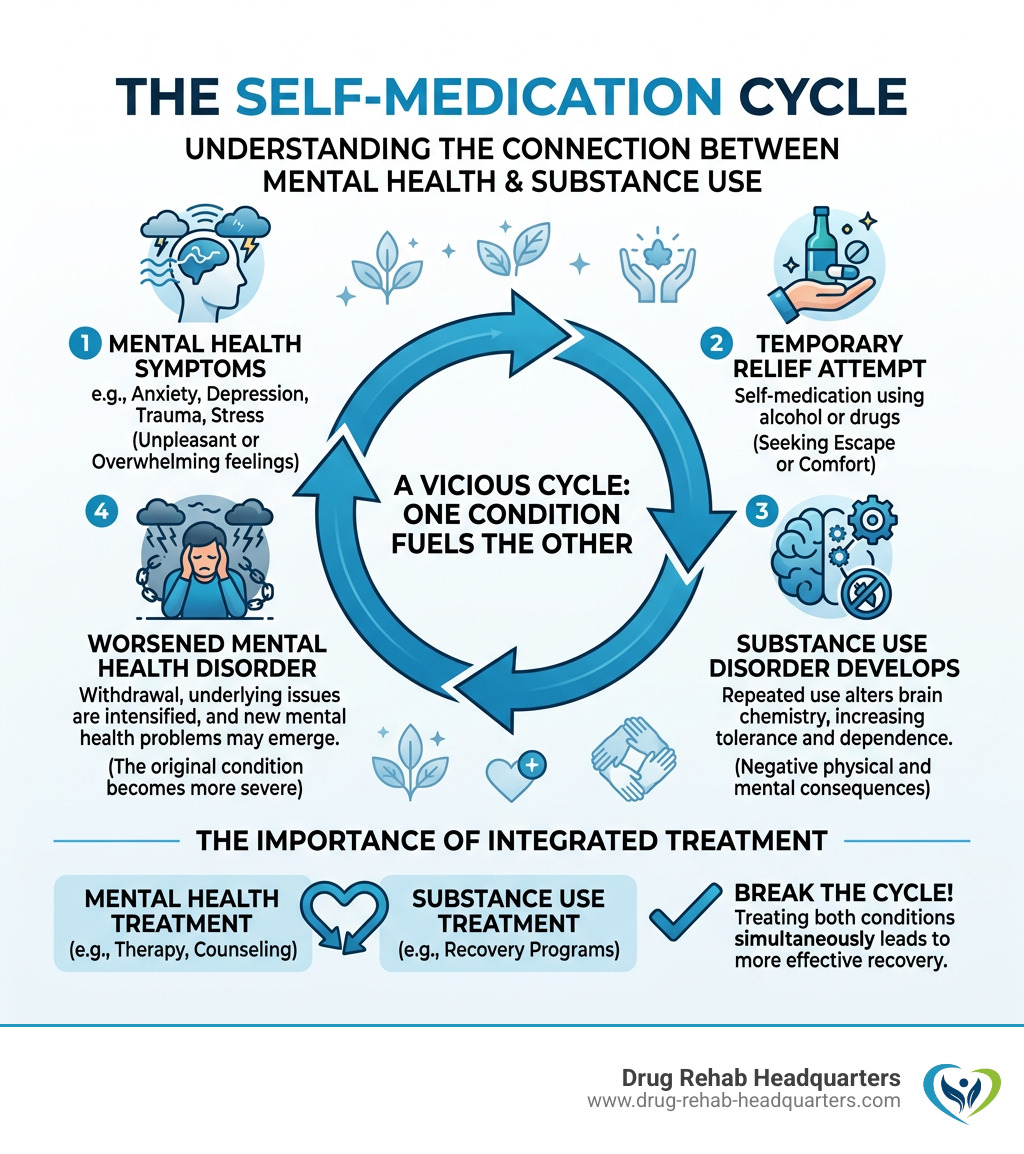
That gap in care matters. When only one condition is treated, the other tends to fuel it right back. Someone might drink to quiet anxiety. Or depression may worsen after stopping opioids. The two conditions are deeply connected — and they need to be treated together.
At Drug Rehab Headquarters, we’ve spent years helping individuals and families navigate the complex world of addiction recovery, including connecting people with the right dual diagnosis rehab centers near me. We understand how overwhelming this search can feel, and we’re here to make it simpler.
Understanding Co-Occurring Disorders and Comorbidity
In the medical world, having two or more conditions at once is called comorbidity. When it involves a mental health disorder and a substance use disorder (SUD), we call it a dual diagnosis. It is a incredibly common phenomenon; in fact, more than 25% of people who experience SUDs also struggle with mental health disorders.
The relationship between the two is often a “chicken or the egg” scenario. Does the depression cause the drinking, or does the drinking cause the depression? Often, it’s both. Research shows that nearly 19.4 million American adults have a mental illness and a substance use disorder simultaneously.
Common Signs and Symptoms
Recognizing a dual diagnosis can be tricky because symptoms often overlap. However, if you notice the following, it may be time to look into specialized alcohol and drug treatment services:
- Self-Medicating: Using alcohol or drugs to “numb” emotional pain, quiet intrusive thoughts, or manage social anxiety.
- Worsening Mental Health: Feeling increased depression or anxiety when the effects of a substance wear off.
- Risky Behaviors: Engaging in dangerous activities while under the influence to escape reality.
- Social Isolation: Withdrawing from friends and family to hide substance use or because of a depressive episode.
- High Tolerance and Withdrawal: Needing more of a substance to feel “normal” while simultaneously struggling with mood swings.
For more detailed information on specific conditions, you can explore resources like the National Alliance on Mental Illness — Substance Use Disorders or our guides on Bipolar Disorder Rehab and When Two Worlds Collide: Finding Support for Mental Health & Addiction.
Finding the Best Dual Diagnosis Rehab Centers Near Me
Finding a facility that actually understands both sides of the coin is vital. Many standard drug treatment centers are excellent at helping you detox, but if they don’t address the underlying PTSD or clinical depression, the risk of relapse skyrockets once you leave.
When searching for dual diagnosis rehab centers near me, you are looking for an inpatient rehab environment that offers a “whole-person” approach. This means the staff doesn’t just look at your toxicology report; they look at your history, your trauma, and your brain chemistry.
If you are feeling overwhelmed by the options, we are here to help. You can reach our team at (866) 720-3784 any time of day or night. We provide free support to help you navigate the sea of Addiction Rehab Centers Near Me to find the one that fits your specific needs.
How to Evaluate Dual Diagnosis Rehab Centers Near Me
Not all rehabs are created equal. To ensure you are getting the highest quality care, look for these “gold standards”:
- Accreditations: Look for the Joint Commission “Gold Seal” or CARF accreditation. These indicate the facility meets rigorous national standards.
- Staff Qualifications: A true Dual Diagnosis Treatment Facility should have board-certified psychiatrists, licensed clinical social workers (LCSWs), and certified addiction counselors on staff.
- Multidisciplinary Teams: Recovery is a team sport. Your care should involve medical doctors for detox, therapists for emotional work, and case managers for aftercare planning.
- Integrated Programming: Ask if the mental health treatment happens at the same time and in the same building as the addiction treatment. If they “outsource” the mental health part, it isn’t a true integrated program.
Accessing Dual Diagnosis Rehab Centers Near Me via SAMHSA
One of the most reliable free resources is the Substance Abuse and Mental Health Services Administration (SAMHSA). They provide a comprehensive behavioral health locator that allows you to search by zip code.
When using the locator, be sure to use the “Filter” option. Select “Co-occurring mental and substance use disorders” under the treatment services menu. This ensures you aren’t just looking at standard detox centers but at facilities equipped for complex cases. If navigating these filters feels like a chore, just call us at (866) 720-3784, and we can do the heavy lifting for you.
Evidence-Based Therapies and Inpatient Rehab Levels
The backbone of any successful recovery is “evidence-based” care. This simply means the treatments have been scientifically proven to work. In a dual diagnosis setting, this usually involves a combination of several approaches:
- Cognitive Behavioral Therapy (CBT): This helps you identify the negative thought patterns (e.g., “I’m a failure”) that lead to substance use.
- Dialectical Behavior Therapy (DBT): Excellent for emotional regulation and managing suicidal ideation or intense personality disorders.
- Trauma-Informed Care: Since many people use substances to cope with past abuse or tragedy, trauma-informed care creates a safe environment where you won’t be re-traumatized during the healing process.
- EMDR (Eye Movement Desensitization and Reprocessing): A specialized therapy often used for PTSD, helping the brain “reprocess” traumatic memories so they no longer trigger a desire to use drugs or alcohol.
For a deeper dive into how these work together, check out our resource on Integrated Healing: What You Need to Know About Co-Occurring Disorder Treatment.
Comparison of Care Levels
| Level of Care | Intensity | Best For… |
|---|---|---|
| Medical Detox | High (24/7 Meds) | Safely managing withdrawal symptoms. |
| Inpatient Rehab | High (Residential) | Severe addiction and unstable mental health. |
| Partial Hospitalization (PHP) | Medium (Daytime) | Transitioning from inpatient; 6+ hours of therapy daily. |
| Intensive Outpatient (IOP) | Low/Medium | People who need to work or attend school while in treatment. |
| Aftercare/Sober Living | Low (Supportive) | Long-term maintenance and community support. |
The Role of Medication-Assisted Treatment (MAT)
For many, the physical cravings for opioids or alcohol are so strong that therapy alone isn’t enough in the beginning. This is where Medication-Assisted Treatment (MAT) comes in.
MAT uses FDA-approved medications (like buprenorphine or naltrexone) to stabilize brain chemistry and block the “high” of substances. In a dual diagnosis center, MAT is also used for psychiatric stabilization. This might include non-addictive medications for depression, anxiety, or bipolar disorder. The goal is to level the playing field so you can actually focus on your therapy sessions without being overwhelmed by symptoms.
Navigating Costs and Insurance for Integrated Treatment
One of the biggest hurdles to getting help is the “How much will this cost?” question. We have good news: due to the Affordable Care Act (ACA) and the Mental Health Parity and Addiction Equity Act (MHPAEA), most insurance companies are required by law to cover mental health and substance abuse treatment at the same level they cover physical health.
This means if your insurance covers a heart surgery, it should also cover inpatient rehab for a dual diagnosis.
There are several ways to pay for treatment:
- Private Insurance: Blue Cross Blue Shield, Aetna, Cigna, and UnitedHealthcare often have extensive networks for dual diagnosis.
- Medicaid/Medicare: Many state-funded facilities accept Medicaid, though waitlists can sometimes be longer.
- Private Pay: Many centers offer “sliding scale” fees based on your income.
- Financing: Some facilities offer payment plans to spread the cost over several months.
Don’t guess what your plan covers. You can Verify Your Insurance Coverage through our secure portal or call us at (866) 720-3784 for a free benefits check. We can tell you exactly which dual diagnosis rehab centers near me are in your network.
Frequently Asked Questions about Dual Diagnosis
We know you have questions. Recovery is a journey into the unknown, and it’s normal to feel hesitant.
Is integrated treatment more effective than separate care?
Absolutely. Research shows that treating disorders separately often leads to “fragmented care.” If you go to a mental health clinic, they might tell you to “get sober first.” If you go to a standard detox, they might not be equipped to handle your bipolar mood swings.
Integrated treatment has been shown to significantly improve outcomes. One study on treatment effectiveness found that sobriety rates for those in integrated programs jumped from 2% to 39% after one year. By treating the “Two Birds” with “One Stone,” you address the root causes of both issues simultaneously.
What specialized programs are available for veterans or LGBTQ+?
Many dual diagnosis rehab centers near me offer tracks for specific groups. For example:
- Veterans: Programs like the Patriot Support Program focus on combat-related PTSD and the unique stresses of military life.
- LGBTQ+: These programs provide a safe space to address trauma related to discrimination, “coming out,” and internalized homophobia, which often drive substance use.
- Pregnant Women: Specialized care that includes prenatal medical visits and parenting skills alongside addiction treatment.
If you are looking for specific specialists, you can search for Mental Health Professionals Near Me who specialize in these demographics.
How long does a typical dual diagnosis program last?
There is no “magic number,” but most experts recommend a stay of 30 to 90 days.
- The first 30 days are usually focused on detox and stabilization.
- Days 30-60 are when the deep therapeutic work happens.
- Days 60-90 focus on relapse prevention and aftercare planning.
For more on what to expect, read our Addiction Treatment Center Complete Guide. You can also call us at (866) 720-3784 to discuss which program length might be right for your specific situation.
Conclusion: Your Path to Recovery Starts Here
Living with a dual diagnosis can feel like being caught in a storm with no umbrella. But the storm doesn’t have to last forever. Integrated dual diagnosis rehab centers near me offer the tools, the medical oversight, and the emotional support needed to find your way back to a healthy, stable life.
At Drug Rehab Headquarters, we are committed to helping you find that path. Our certified counselors—many of whom have walked this path themselves—are available 24/7 to offer personalized, compassionate guidance. Whether you need an Addiction Treatment Center in California, a Schizophrenia Treatment Center in New Jersey, or a holistic Mental Help resource in Texas, we have the connections to get you there.
Don’t wait for the “perfect time” to get help. The perfect time is right now.
Call us today at (866) 720-3784. Let’s take the first step together.