
Understanding the Path to Recovery from Alcohol Abuse
Rehab centers for alcohol abuse offer specialized treatment for one of the most common substance use disorders in the United States. If you’re searching for help, here’s what you need to know:
Key Types of Alcohol Rehab Centers:
- Inpatient/Residential Programs – 24/7 care in a structured environment (30-90 days typical)
- Outpatient Programs – Treatment while living at home (IOP, PHP options)
- Detox Centers – Medical supervision for safe alcohol withdrawal
- Dual Diagnosis Facilities – Treat alcohol abuse and mental health conditions together
To Find Quality Centers:
- Check accreditation (JCAHO, CARF)
- Verify licensed, credentialed staff
- Ask about individualized treatment plans
- Use resources like SAMHSA’s National Helpline (1-800-662-4357)
- Explore insurance coverage and payment options
Alcohol Use Disorder affects millions of Americans—approximately 1 in 10 children even live in a home with a parent who has AUD. Despite this, 94% of people with substance use disorders receive no treatment at all.
The good news? AUD is a treatable medical condition, not a character flaw or moral failing.
Recovery is possible. The key is finding the right type of care for your situation, whether you have mild symptoms or severe addiction. Some need intensive residential care, while others thrive with flexible outpatient therapy. Many also benefit from medications and ongoing support after initial treatment ends. The key is matching your needs to the right level of care.
At Drug Rehab Headquarters, we’ve helped thousands of individuals and families steer the complex landscape of rehab centers for alcohol abuse, connecting them with accredited providers that offer evidence-based, personalized recovery programs. Our mission is to make finding quality addiction treatment less overwhelming and more accessible.
Recognizing the Need: When to Seek Treatment for Alcohol Abuse
Recognizing when social drinking has become a problem can be difficult, as alcohol is legal and socially accepted. However, alcohol use disorder (AUD) is a diagnosable medical condition defined by an inability to control alcohol use despite negative consequences.

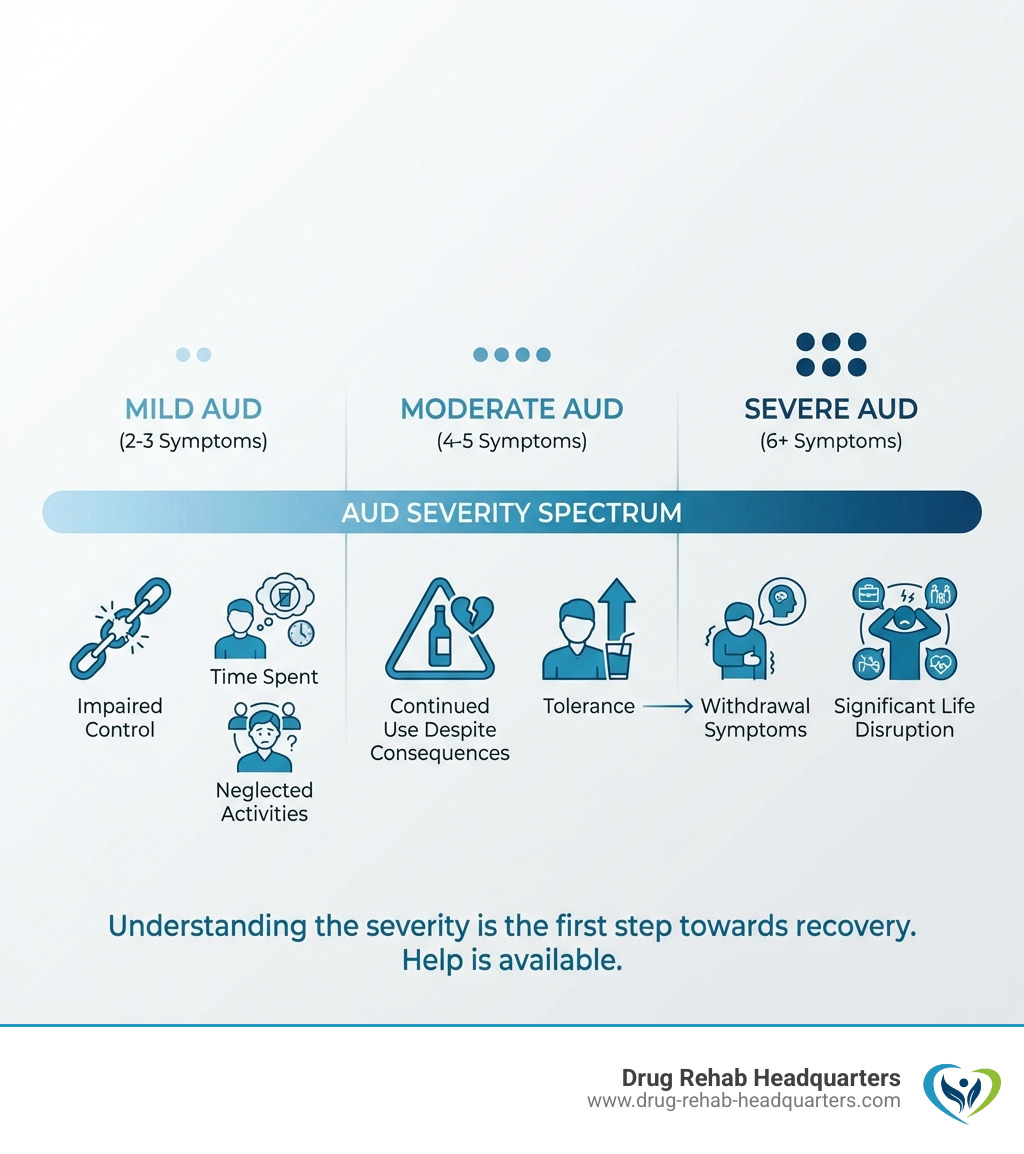
Healthcare providers diagnose AUD based on specific signs and symptoms, which can range from mild (2-3 symptoms) to moderate (4-5 symptoms) to severe (6 or more symptoms).
Common indicators that treatment may be necessary include:
- Impaired Control Over Drinking: You’ve tried to cut down or stop drinking but can’t, or you drink more or longer than intended.
- Social and Occupational Problems: Your drinking has caused issues at work, school, or home, such as neglecting responsibilities or straining relationships.
- Risky Use of Alcohol: You’ve engaged in dangerous activities while drinking, like driving, or continued drinking despite it worsening a health problem.
- Tolerance: You need to drink more to get the same effect, or the same amount has less effect than before.
- Withdrawal: When alcohol’s effects wear off, you experience symptoms like trouble sleeping, shakiness, nausea, sweating, a racing heart, or restlessness. For a deeper dive, explore Alcohol Detox Symptoms.
- Continued Use Despite Consequences: You continue to drink even though it’s causing or worsening physical or psychological problems.
- Neglecting Activities: You spend a lot of time drinking or recovering from it, causing you to give up or reduce important activities.
If you or a loved one are experiencing these signs, it’s a strong indication that professional help is needed. Recognizing these symptoms is the crucial first step toward recovery and finding effective Alcohol Abuse Treatment. For more detailed information, the National Institute on Alcohol Abuse and Alcoholism provides excellent resources such as More on AUD symptoms.
Navigating Your Options: Types of Alcohol Addiction Treatment Programs
Finding the right rehab centers for alcohol abuse involves understanding the different levels of care available. Treatment isn’t one-size-fits-all and often requires moving through various programs as your needs change. We help connect you with an individualized plan that best suits your situation.
Medically Supervised Alcohol Detoxification
For those with significant alcohol dependence, medically supervised detox is a critical first step. Suddenly stopping heavy, prolonged drinking can cause severe and potentially life-threatening withdrawal symptoms, including shakiness, seizures, hallucinations, and delirium tremens (DTs).
In a medical detox setting, healthcare professionals provide 24-hour monitoring and may administer medications like benzodiazepines (e.g., Librium, Valium) to ease withdrawal symptoms and prevent severe complications. This makes the process safer and more manageable.
Medically supervised detox is absolutely necessary when:
- There’s a history of severe withdrawal symptoms, such as seizures or DTs.
- You have co-occurring medical conditions that could be complicated by withdrawal.
- You have a history of prolonged, heavy drinking.
- You require round-the-clock medical monitoring for safety.
For more information, consult our guide on Alcohol Detox Symptoms. To find this type of care, visit Medical Detox Programs.
Inpatient vs. Outpatient: Choosing the Right Setting
After detox, you’ll choose between inpatient and outpatient treatment based on addiction severity, your home environment, and personal responsibilities.
| Feature | Inpatient/Residential Rehab | Outpatient Rehab |
|---|---|---|
| Structure | Highly structured, 24/7 supervision and care | Flexible schedule, allows living at home |
| Intensity | Intensive, immersive environment | Varies (IOP, PHP, standard outpatient) |
| Cost | Higher (average $300-$800 per day) | Lower (average $100-$250 per session) |
| Ideal for | Severe AUD, unstable home, co-occurring disorders, high relapse risk | Mild AUD, strong support system, work/family responsibilities |
| Medical Care | On-call medical staff, monitored detox | Less direct medical supervision |
| Success Rates | Higher (50-68% completion success) | Lower (35-45% completion success) |
Inpatient/Residential rehab provides a structured, 24/7 supportive environment away from daily triggers. It offers intensive therapy and medical care, making it ideal for severe AUD or co-occurring disorders. Longer stays (90 days or more) are linked to better outcomes. Learn more at Inpatient Drug Rehab.
Outpatient programs offer flexibility to live at home and manage daily responsibilities while receiving treatment. Intensity varies:
- Partial Hospitalization Programs (PHP): Intensive day treatment for several hours a day, multiple days a week.
- Intensive Outpatient Programs (IOP): A step down from PHP with fewer hours per week.
- Standard Outpatient Programs: Weekly therapy and support groups, ideal for mild AUD or as aftercare.
Outpatient care is best for those with mild AUD and a strong support system. It also serves as an excellent “step-down” option after inpatient treatment. To explore all options, visit Treatment Options.
The Rise of Virtual and Remote Counseling
Virtual and remote counseling has made addiction treatment more accessible and convenient. Our partners offer a range of telehealth options for alcohol use, providing quality care across North America.
Virtual care can include:
- Individual and group therapy via secure video conferencing.
- Virtual and phone-based coaching.
- Web tools and mobile apps for tracking progress and managing cravings.
Virtual treatment is suitable for individuals with mild to moderate AUD or those needing ongoing support with busy schedules. It is generally not recommended for those requiring medical detox or intensive supervision. To learn more about these flexible treatment options, visit Virtual Therapy.
The Core of Recovery: Therapies and Medications in Rehab Centers for Alcohol Abuse
Effective treatment at rehab centers for alcohol abuse addresses the root causes of addiction, helping you develop coping skills for a sober life. This is achieved through evidence-based and holistic practices that treat the whole person.

Common Therapeutic Approaches
Behavioral therapies are the cornerstone of addiction treatment. Common approaches include:
- Cognitive Behavioral Therapy (CBT): Helps you identify and change problematic thoughts and behaviors related to alcohol use, reducing relapse risk.
- Motivational Improvement Therapy (MET): Strengthens your motivation for sobriety by helping you resolve ambivalence about changing your drinking habits.
- Dialectical Behavior Therapy (DBT): Often used for co-occurring mental health disorders, DBT teaches skills in mindfulness, distress tolerance, emotion regulation, and interpersonal effectiveness.
- Family and Couples Counseling: Involves loved ones to heal relationships, improve communication, and build a supportive home environment.
- 12-Step Programs: Programs like Alcoholics Anonymous (AA) offer a structured path to recovery through peer support and are often instrumental in long-term sobriety. Learn more at 12 Step Program.
- Alternative Support Groups: For those who prefer a different approach, options like SMART Recovery and LifeRing offer secular, evidence-based alternatives focused on self-empowerment.
- Holistic Therapies: Many rehabs integrate holistic approaches like yoga, meditation, art therapy, and nutritional counseling to support physical, emotional, and spiritual healing. Find out more at Holistic Drug Addiction Treatment.
Medications for Alcohol Use Disorder (MAT)
Medication-Assisted Treatment (MAT) uses non-addictive medications to manage cravings and prevent relapse, playing a vital role in treating AUD as a chronic medical condition.
Three FDA-approved medications are commonly used:
- Naltrexone (ReVia, Vivitrol): Blocks the pleasurable effects of alcohol and reduces cravings. It can be taken as a daily pill or a monthly injection.
- Acamprosate (Campral): Helps restore brain chemistry balance to reduce post-acute withdrawal symptoms like anxiety, insomnia, and restlessness.
- Disulfiram (Antabuse): Acts as a deterrent by causing unpleasant effects (nausea, vomiting, headaches) if alcohol is consumed.
These medications are most effective when combined with behavioral therapies.
Treating Co-Occurring Disorders
Many people with AUD also have co-occurring mental health disorders like depression or anxiety (a “dual diagnosis”). These conditions can contribute to and be worsened by alcohol use.
Effective treatment requires an integrated approach, treating both the addiction and mental health condition simultaneously to prevent relapse. This care is provided by a multidisciplinary team that may include addiction psychiatrists and addiction medicine physicians who specialize in diagnosing and treating both conditions. By providing comprehensive care, rehab centers for alcohol abuse can significantly improve the chances of lasting recovery. Learn more about integrated treatment at a Dual Diagnosis Treatment Facility.
How to Find and Afford a Quality Alcohol Rehab Center
Finding the right rehab centers for alcohol abuse can feel overwhelming, but vetting potential centers helps you make an informed decision. It’s important to ensure they meet high standards of care.
Finding qualified rehab centers for alcohol abuse
When speaking with providers, ask these key questions to find a quality, evidence-based program:
- What kind of treatment does the program offer? Look for a range of behavioral therapies, MAT options, and holistic approaches.
- Is treatment custom to the individual? Personalized treatment plans are crucial for recovery.
- What are the credentials and licensing of the staff? Ensure clinicians are licensed and have specialized training in addiction.
- Is the facility accredited? Look for accreditation from the Joint Commission (JCAHO) or CARF, which signifies a commitment to quality and safety.
- What levels of care are available? A reputable center should offer a continuum of care, from detox to aftercare.
- How does the program handle setbacks or a return to drinking? A good program views relapse as part of a chronic disease, offering support rather than judgment.
- Does the program offer preventative support? This includes relapse prevention planning and education on coping skills.
For assistance, the Substance Abuse and Mental Health Services Administration (SAMHSA) offers a national helpline: SAMHSA’s National Helpline. Our page on Alcohol Treatment Center Near Me can also guide your search.
Understanding the cost of rehab centers for alcohol abuse
Rehab costs vary based on care level, duration, and location. A 30-day inpatient stay can range from $10,000 to $25,000, while outpatient programs are more affordable. However, cost should not be a barrier to seeking help.
- Using Health Insurance: The Affordable Care Act (ACA) and the Mental Health Parity and Addiction Equity Act (MHPAEA) mandate that most health insurance plans cover addiction treatment. Many facilities accept major insurance providers, which can significantly reduce out-of-pocket costs. We can help you verify your coverage. For more details, visit Does Insurance Cover Rehab.
- Options for Those Without Insurance: If you lack insurance, options include sliding-scale fees based on income, state-funded programs, and non-profits. Some centers also offer financing plans, scholarships, or grants. You can find more information at Cost of Rehab.
Life After Rehab: Ensuring Long-Term Sobriety
Completing a rehab program is a major achievement, but recovery is an ongoing process. Long-term sobriety requires continuous effort, support, and a solid aftercare plan.
The Importance of Aftercare Planning
Before you leave treatment, your clinical team will help create a comprehensive aftercare plan. This plan prepares you for daily stressors and helps you maintain your recovery goals. Effective aftercare plans often include:
- Step-Down Care: Transitioning to a less intensive setting (like an IOP or standard outpatient therapy) allows a gradual return to daily life with continued support.
- Sober Living Environments: These homes provide a supportive, drug-free environment that bridges the gap between intensive treatment and independent living.
- Ongoing Therapy and Counseling: Continuing individual or group therapy helps you refine coping strategies and address new challenges.
- Relapse Prevention Plans: These are personalized strategies to identify triggers, develop coping skills, and know what to do if sobriety is at risk.
For more details on building a robust aftercare plan, refer to our guide on Post Rehab Drug Rehab Aftercare.
The Role of Support Systems
A strong support system is invaluable for long-term recovery, providing encouragement, accountability, and community.
- Peer Support Groups: Groups like Alcoholics Anonymous (AA) and Narcotics Anonymous (NA) offer peer support through a 12-step framework. Other effective groups include SMART Recovery, which uses a 4-Point Program based on self-empowerment, and other secular alternatives.
- The Role of Family and Friends: Loved ones play a crucial role in recovery. Their understanding and active involvement can make a significant difference. Family counseling helps heal relationships and establishes a unified front for supporting sobriety.
- Resources for Loved Ones: It’s also vital for family and friends to seek support. Groups like Al-Anon, Nar-Anon, and SMART Recovery’s Family & Friends program provide coping strategies for those affected by a loved one’s substance use.
Frequently Asked Questions about Alcohol Rehab
How long does alcohol rehab typically last?
The duration of alcohol rehab varies depending on individual needs. Programs can be as short as 30 days, but inpatient rehab centers for alcohol abuse often range from 30 to 90 days. Research indicates that longer treatment—three months or more—leads to better outcomes and significantly increases the chances of long-term sobriety. For more on shorter programs, you can read about Short Term Rehab.
What is the success rate of alcohol rehab?
Measuring the “success rate” of rehab is complex, as recovery is an ongoing process. Alcohol use disorder is a chronic disease, so success is measured not just by abstinence but by sustained improvements in health, relationships, and quality of life. While completion rates are higher for inpatient (50-68%) than outpatient (35-45%) treatment, relapse is a common part of recovery, not a failure. A good rehab center for alcohol abuse prepares you for setbacks and helps you return to sobriety.
What happens after completing an inpatient program?
After inpatient rehab, the focus shifts to maintaining sobriety through aftercare. This is a crucial phase for long-term success.
- Transition to Aftercare: Most people transition to a lower level of care, such as an Intensive Outpatient Program (IOP) or regular therapy, for continued support.
- Continuing Therapy: Ongoing therapy reinforces coping skills and helps you steer new challenges in a safe space.
- Attending Support Groups: Regularly attending mutual-support groups like AA or SMART Recovery provides invaluable peer support and accountability.
- Utilizing New Coping Skills: You’ll apply skills learned in rehab—like stress management and trigger identification—to real-world situations.
- Rebuilding Relationships and Career: This phase involves repairing relationships and focusing on personal and professional goals, often with the help of family counseling or vocational support.
Your Path to Recovery Starts Here
Taking the first step toward recovery can be daunting, but it’s important to know that Alcohol Use Disorder is a treatable medical condition. Recovery is absolutely possible with the right support and resources.
At Drug Rehab Headquarters, we are committed to simplifying your search for quality rehab centers for alcohol abuse. We offer 24/7 free and confidential support, connecting you with certified counselors—many of whom have lived experience with addiction—who can provide personalized guidance. Our counselors will help you steer treatment options to find a suitable, evidence-based, holistic program in North America that is customized to your needs.
Don’t let the challenges of finding help deter you. Your path to a healthier, sober life starts here. Reach out to us today to Find the right alcohol addiction rehab center for you.