
Understanding Alcohol Use Disorder and Why Treatment Matters
When you find alcohol treatment, you’re taking a crucial step toward recovery. Alcohol Use Disorder (AUD) affects millions of Americans—nearly a quarter of adults meet the criteria for this condition at some point in their lives. The good news: recovery is possible, and more treatment options exist today than ever before.
Quick Guide: How to Find Alcohol Treatment
Immediate Resources:
- Call 988 – Suicide & Crisis Lifeline (24/7)
- Call 1-800-662-HELP (4357) – SAMHSA National Helpline for treatment referrals
- Use FindTreatment.gov – Confidential, anonymous government database of treatment facilities
Treatment Levels Available:
- Medical Detox – Supervised withdrawal management with 24/7 medical care
- Residential/Inpatient – 24-hour structured care in a treatment facility (30-90 days typical)
- Intensive Outpatient (IOP) – Several hours of treatment per day while living at home
- Outpatient – Regular therapy sessions while maintaining daily responsibilities
- Telehealth – Virtual therapy and support accessible from home
What to Look For:
- State licensing and accreditation (Joint Commission, CARF)
- Evidence-based therapies (CBT, DBT, MAT)
- Treatment for co-occurring mental health conditions
- Insurance acceptance or sliding-scale payment options
- Aftercare planning and ongoing support
Alcohol Use Disorder isn’t a choice or a character flaw—it’s a medical condition that changes how the brain functions. It exists on a spectrum from mild to severe, and professional treatment significantly improves recovery outcomes. Whether you’re concerned about your own drinking or worried about someone you love, understanding the path forward can feel overwhelming.
This guide breaks down everything you need to know about finding and choosing alcohol treatment. We’ll walk you through recognizing when help is needed, understanding different levels of care, navigating the search process, and building a foundation for lasting recovery.
At Drug Rehab Headquarters, we’ve helped thousands of individuals and families find alcohol treatment options that match their unique needs and circumstances. Our team connects people with accredited treatment centers nationwide, offering personalized guidance through every step of the recovery journey.
Recognizing the Need for Help & Taking the First Step
It can be difficult to acknowledge that alcohol has become a problem, either for ourselves or a loved one. Alcohol is a psychoactive substance, widely available and deeply ingrained in many social settings, making it easy to underestimate its potential for harm. However, excessive alcohol use is a leading cause of death in the United States, contributing to over 140,000 deaths annually. Recognizing the signs is the critical first step toward seeking help.

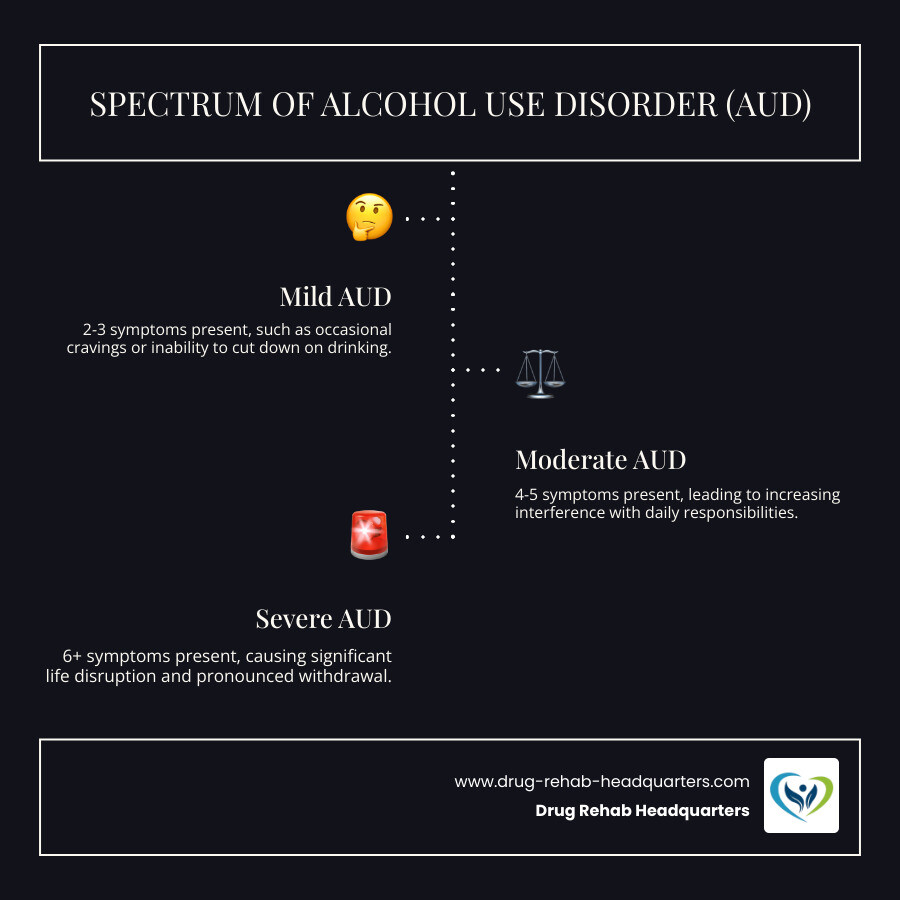
How do you know if you or someone you care about might need alcohol treatment? The National Institute on Alcohol Abuse and Alcoholism (NIAAA) provides a helpful set of questions. If you answer “yes” to two or more of these in the past year, it indicates the presence of Alcohol Use Disorder (AUD), with more “yes” answers suggesting a more severe problem and a more urgent need for help:
- Behavioral Changes: Have you spent a lot of time drinking alcohol or recovering from its effects? Has drinking often interfered with your home, family, job, or school responsibilities? Have you continued drinking despite it causing trouble in your relationships? Have you chosen to drink instead of participating in activities you normally enjoy?
- Physical Symptoms: Have you experienced physical withdrawal symptoms like insomnia, shaking, nausea, or sweating when you stopped or cut down on drinking? Have you increasingly needed to drink more to get the same effects (tolerance)?
- Emotional Signs: Have you continued to drink despite it making you feel anxious or depressed? Have you wanted to stop drinking or tried to stop, but couldn’t?
- Risky Behaviors: Have you found yourself in potentially dangerous situations while under the influence of alcohol?
AUD is not a moral failing; it’s a medical condition where the brain’s decision-making processes are altered, strengthening habits around alcohol use. Certain factors can increase the risk of developing AUD, including a family history of alcoholism (children of alcoholics are four times more likely to develop issues with alcohol), co-occurring mental health conditions such as depression, anxiety, or PTSD (approximately half of people with a Substance Use Disorder also experience a mental health disorder), social and cultural influences, past trauma (especially early-childhood trauma), and underage drinking.
If you recognize these signs in yourself or a loved one, know that you’re not alone, and help is readily available. Understanding these indicators is the first step on the path to recovery. For more detailed information on these indicators, you can explore our resources on Alcohol Addiction Signs. If co-occurring mental health issues are a concern, learning about a Dual Diagnosis Treatment Facility can be incredibly beneficial, as effective treatment often addresses both conditions simultaneously.
How to Support a Loved One
Supporting someone struggling with alcohol use can be challenging, but your role can be pivotal in their recovery journey. Approaching the conversation with empathy and without judgment is crucial. Express your concerns directly and lovingly, focusing on their well-being and the impact of their drinking, rather than accusations.
Offer support by researching treatment options together or simply by being a non-judgmental listener. Avoid enabling behaviors, which are actions that unintentionally protect the person from the negative consequences of their drinking, such as making excuses for them or cleaning up their messes. Instead, set healthy boundaries that protect your own well-being while still demonstrating care.
You cannot force someone to seek treatment, but you can encourage it and provide resources. It’s also vital for friends and family members to seek support for themselves. Resources like Al-Anon Family Groups, SMART Recovery Family & Friends, and Adult Children of Alcoholics Dysfunctional Families World Service Organization offer valuable guidance and a community of understanding. Studies show that strong family support, often through family therapy, can significantly increase the chances of maintaining abstinence. For more information on resources available to support you, please learn more about Family Support Resources.
Understanding the Levels of Alcohol Treatment Care
When you decide to find alcohol treatment, you’ll find a spectrum of care options, often referred to as a “continuum of care.” This means that treatment is not a one-size-fits-all solution but rather a personalized journey that adapts to an individual’s changing needs. The American Society of Addiction Medicine (ASAM) criteria define four basic levels of care, ranging from least to most intensive, ensuring that individuals receive the appropriate support for their specific situation. A professional assessment is always recommended to determine the most suitable level of care.
Medical Detox: The First Safe Step
For many individuals with AUD, especially those with severe dependency, medical detoxification is the first and most critical step. Alcohol withdrawal can be dangerous, even life-threatening, with symptoms ranging from nausea, sweating, and tremors to seizures and delirium tremens. Attempting to detox at home without medical supervision can lead to serious complications.
A medical detox program provides 24/7 medical supervision in a safe, controlled environment. Here, healthcare professionals monitor vital signs, manage withdrawal symptoms with medications (such as benzodiazepines, which help regulate the brain’s activity during withdrawal), and ensure the individual’s comfort and safety. This initial phase stabilizes the body, preparing the individual for the therapeutic work that follows. It’s a crucial foundation for recovery, preventing complications and setting the stage for long-term success. To understand more about what to expect during this phase, read our guide on Alcohol Detox Symptoms and explore options for an Alcohol Detox Center.
Residential vs. Outpatient Programs
After medical detox, or for those who don’t require it, the next step typically involves choosing between residential (inpatient) or outpatient treatment programs. The key differences lie in the intensity of care, the living situation, and the level of external support required.
| Feature | Inpatient/Residential Treatment | Outpatient/Intensive Outpatient (IOP) Treatment |
|---|---|---|
| Structure | Highly structured, 24/7 supervision and support | Structured therapy schedule, allowing flexibility for daily life |
| Intensity | Immersive, comprehensive, and intensive care | Less intensive than residential, but more than standard outpatient |
| Living Situation | Reside at the treatment facility, substance-free environment | Live at home, attend scheduled therapy sessions/groups |
| Therapies | Individual, group, family counseling, medical care, holistic therapies | Individual, group, family counseling, psychoeducation |
| Duration | Typically 30, 60, or 90 days, or longer | Varies based on program (IOP often 9-20 hours/week, standard outpatient less) |
| Ideal Candidate | Severe AUD, co-occurring disorders, unstable home environment, relapse history | Less severe AUD, strong home support, work/school/family obligations |
Residential Treatment: Often referred to as inpatient rehab, this level of care involves living at the treatment facility for a set period, typically 30, 60, or 90 days. It offers a fully immersive, structured, and substance-free environment with 24/7 support. This is ideal for individuals with severe AUD, those with co-occurring mental health disorders, or those whose home environment might trigger relapse. Residential programs provide intensive individual and group therapy, educational sessions, and often medical and psychiatric care. Learn more about this option with our guide on Inpatient Drug Rehab.
Outpatient and Intensive Outpatient (IOP) Treatment: These programs allow individuals to attend therapy sessions and receive support while continuing to live at home and maintain their daily responsibilities. IOPs offer a higher level of care than standard outpatient programs, with more hours of therapy per week. These options are suitable for individuals with less severe AUD, those transitioning from residential care, or those with strong support systems at home. They provide flexibility, allowing individuals to continue working, attending school, or caring for family. For more on this flexible approach, see our page on Intensive Outpatient Treatment.
The Role of Virtual Care in Addiction Treatment
The landscape of addiction treatment has evolved significantly, with telehealth and virtual care playing an increasingly important role. Telehealth in alcohol treatment involves receiving therapy sessions, counseling, and even some medical consultations via phone or video calls. This approach offers several benefits:
- Increased Accessibility: For individuals in rural areas or those with mobility challenges, telehealth removes geographical barriers to care.
- Convenience and Flexibility: Virtual sessions can often be scheduled more easily around work, family, or school commitments.
- Privacy: Some individuals feel more comfortable discussing their struggles from the privacy of their own home.
- Continuity of Care: Telehealth can help maintain consistent treatment, especially during unforeseen circumstances.
Many states, insurance companies, and Medicaid now cover telehealth services for addiction treatment, making it a viable and often preferred option. Additionally, eHealth tools, such as computer-based cognitive behavioral therapy (CBT) programs, digital self-help applications, and mobile relapse prevention tools, offer supplementary support and resources. This modern approach ensures that more people can access the care they need, when they need it. For more information on how technology is changing treatment, explore our resources on Telehealth Addiction Treatment.
How to Find Alcohol Treatment and Choose the Right Program
Finding the right alcohol treatment program can feel like a daunting task, but with the right approach, you can identify a facility that truly meets your needs. The key is to vet providers thoroughly, ensuring they offer evidence-based care and align with your personal circumstances.

Using Trusted Resources to Find Alcohol Treatment
When you are ready to find alcohol treatment, relying on trusted resources is paramount. We at Drug Rehab Headquarters offer 24/7 free support from certified counselors, many with lived experience, providing personalized guidance to help you steer your options. Our expertise covers a wide range of holistic treatment options across North America.
Beyond our direct support, several invaluable resources can help you in your search:
- FindTreatment.gov: This confidential and anonymous resource from the Substance Abuse and Mental Health Services Administration (SAMHSA) allows you to search for treatment facilities for mental and substance use disorders across the United States and its territories. You can filter by location, service setting (outpatient, residential), type of care, payment options, and specialized programs. The information is updated annually from facility responses to SAMHSA’s National Substance Use and Mental Health Services Survey (N-SUMHSS), ensuring its accuracy.
- State and Local Health Departments: These agencies often provide directories and referral services for substance use disorder programs within their jurisdiction. For example, in California, you can access DMC-ODS services by calling the 24/7 Member Access Line at (800) 723-8641, or for Orange County Substance Use Disorder Services, call OCLinks at (855) 625-4657. These local resources can provide information on government-funded or non-profit organizations that offer alcohol treatment.
- NIAAA Alcohol Treatment Navigator: This online tool from the National Institute on Alcohol Abuse and Alcoholism (NIAAA) guides you to quality, evidence-based treatment for AUD. It helps you search for programs, therapists with addiction specialties, and addiction doctors. It’s a non-commercial resource, emphasizing scientific evidence.
- Your Primary Care Provider: Your doctor can be an excellent starting point, offering assessments, crafting initial treatment plans, discussing medication options, and providing referrals to specialists.
When using any online directory or referral service, it’s always best practice to call the facility directly before visiting to confirm they provide the specific services you need and to discuss any questions you have. Begin your search for local options with our Find Alcohol Treatment Near You tool.
What to Ask When You Find Alcohol Treatment Programs
Once you’ve identified potential treatment facilities, it’s crucial to ask the right questions to ensure they are a good fit. This due diligence can significantly impact the effectiveness of your treatment and your long-term recovery. Here is a list of key questions we recommend asking:
- Are you licensed and accredited? Look for accreditation from recognized bodies like The Joint Commission or CARF, which indicate adherence to high standards of care. State licensing is also essential.
- What evidence-based therapies do you use (e.g., CBT, DBT)? Effective treatment relies on approaches proven by research, such as Cognitive Behavioral Therapy (CBT), Dialectical Behavior Therapy (DBT), motivational improvement, and family counseling.
- Do you treat co-occurring disorders? Many individuals with AUD also struggle with mental health conditions like depression, anxiety, or PTSD. Integrated treatment for these “dual diagnoses” is vital for comprehensive recovery.
- What is the staff-to-patient ratio? A lower ratio often means more individualized attention and support. Inquire about the qualifications of the staff, including therapists, doctors, and support personnel.
- Do you offer Medication-Assisted Treatment (MAT)? For alcohol use disorder, MAT can be a highly effective component of treatment.
- What are the payment options and insurance policies? Understand what forms of payment are accepted (cash, private health insurance, federal military insurance like TRICARE, Medicaid, Medicare, state-financed plans, IHS/Tribal/Urban funds). Ask about payment assistance programs like sliding scale fees, or options for those without insurance.
- What does aftercare planning involve? A robust aftercare plan is crucial for sustained recovery. Ask about relapse prevention strategies, sober living options, continued therapy, and connections to support groups.
- What is expected of the person with AUD during treatment?
- How is treatment success measured by the program?
- How does the program handle a return to drinking or a relapse?
- What are the facility’s policies on smoking and vaping?
- What age groups do you serve, and are there specific programs for different demographics?
- What language services are available for patients?
Asking these questions will help you gather the necessary information to make an informed decision and find a program where you feel respected, understood, and confident in the care provided.
Exploring Treatment Services, Payment, and Long-Term Support
Once you’ve identified a potential treatment facility, it’s time to dig deeper into the types of services they offer, how payment is handled, and what support is available for long-term recovery. A comprehensive approach addresses not just the addiction but also the individual’s overall well-being. Many facilities offer a combination of evidence-based therapies, including individual counseling, group therapy, and family counseling, to create a holistic treatment plan. For more information on these services, see our guide on Behavioral Health services.
Medication-Assisted Treatment (MAT)
Medication-Assisted Treatment (MAT) combines FDA-approved medications with counseling and behavioral therapies to treat substance use disorders, including AUD. MAT is highly effective in reducing cravings, preventing relapse, and supporting individuals in their recovery journey. The medications used in MAT for AUD are nonaddictive and work differently to support sobriety:
- Naltrexone: This medication works by blocking the euphoric effects and feelings of intoxication that alcohol produces, which can help reduce heavy drinking and prevent relapse.
- Acamprosate: This helps individuals who have already stopped drinking to avoid drinking alcohol again. It may work by reducing long-term withdrawal symptoms, such as insomnia, anxiety, and restlessness.
- Disulfiram: This medication deters continued alcohol use by causing unpleasant physical reactions (like nausea, flushing, and heart palpitations) when alcohol is consumed.
MAT is always integrated with counseling and behavioral therapies, as this combined approach has been shown to be most effective. If you’re considering MAT, discuss it with your healthcare provider to see if it’s the right option for you.
Specialized Programs for Diverse Needs
Recognizing that every individual’s journey is unique, many treatment programs offer specialized services custom to specific populations or circumstances. These programs ensure that care is culturally competent, trauma-informed, and addresses the unique challenges faced by different groups:
- Veterans Programs: Members of the U.S. military and veterans face unique stressors that can contribute to AUD. Many facilities offer specialized programs that address PTSD, trauma, and other service-related mental health concerns alongside addiction treatment. The U.S. Department of Veterans Affairs (VA) also provides comprehensive services. For more information, please see our resource on Veterans Addiction Treatment.
- Programs for Pregnant and Parenting Women: These services, often provided at outpatient and residential levels of care, promote the health of both mother and child. They offer evidence-based treatment to help women create positive change in their recovery, acquire coping skills, develop safe living situations, and decrease domestic violence and abuse.
- LGBTQ+ Affirming Care: Some programs specifically cater to the LGBTQ+ community, providing a safe and inclusive environment where individuals can address addiction without fear of judgment or discrimination.
- Court-Referred Services: For individuals referred by the court system (e.g., for Drug and DUI court Services), specialized programs exist to meet legal requirements while providing effective treatment.
- Other Special Populations: Treatment facilities may also offer programs for young adults, seniors, active duty military, military families, criminal justice clients, or clients with co-occurring HIV/AIDS, domestic violence experiences, or trauma. Our page on Drug Rehab for Women provides further insights into gender-specific care.
These specialized programs underscore the importance of finding treatment that respects and responds to your individual background and needs.
Navigating Payment Options
The cost of alcohol treatment can be a significant concern, but many payment options and resources are available to make care accessible. It’s important to understand your choices:
- Private Health Insurance: Most private health insurance plans offer coverage for substance use disorder treatment, often mandated by federal laws like the Affordable Care Act and the Mental Health Parity and Addiction Equity Act. Coverage details vary, so contact your insurer directly or have the treatment facility verify your benefits. Our resource, Does Insurance Cover Rehab?, provides detailed information.
- Medicaid and Medicare: These government-funded programs provide coverage for addiction treatment for eligible individuals. Medicaid is a primary source of funding for many state and local treatment programs.
- State-Funded Programs: Many states and counties operate or fund programs that offer free or low-cost treatment, particularly for those without insurance. These programs may have specific eligibility requirements or waitlists.
- Sliding Scale Fees: Some facilities offer treatment on a sliding scale, meaning the cost is adjusted based on your income and ability to pay.
- Cash or Self-Payment: If other options aren’t available, direct payment is always an option. Many facilities offer payment plans to help manage costs.
- Federal Military Insurance (TRICARE): This insurance provides comprehensive coverage for active duty and retired military personnel and their families.
- IHS/Tribal/Urban (ITU) Funds: These funds support healthcare services for eligible American Indian and Alaska Native populations.
Understanding the financial aspects is a key part of finding suitable treatment. Don’t let cost be a barrier to seeking help; many facilities are willing to work with you to explore all possible payment solutions. For a deeper dive into the financial aspects, refer to our page on the Cost of Rehab.
Building a Foundation for Lasting Recovery
Recovery from AUD is a lifelong journey, and treatment doesn’t end when a program concludes. Building a strong foundation for lasting recovery involves comprehensive aftercare planning and ongoing support.
- Aftercare Planning: This is a preplanned guide developed collaboratively by you and your clinical team, outlining the next steps in early recovery. It includes strategies for relapse prevention, managing triggers, and identifying resources for continued support. For more details on this crucial phase, visit our guide on Post Rehab Drug Rehab Aftercare.
- Sober Living Homes: These transitional residences provide a supportive, substance-free environment for individuals after inpatient treatment. They offer structure, peer support, and help individuals gradually reintegrate into society while reinforcing sober habits.
- Peer Support Groups: These groups offer a sense of community, shared experience, and mutual encouragement. Popular options include:
- Alcoholics Anonymous (AA): A widely recognized 12-step program focused on spiritual and personal growth.
- Narcotics Anonymous (NA): Similar to AA but for individuals struggling with any substance use.
- SMART Recovery®: A self-management and recovery training program that uses evidence-based tools for addiction recovery.
- Other groups like LifeRing, Women for Sobriety, Secular AA, and Moderation Management offer diverse approaches, emphasizing that finding a good fit is key.
Setbacks, or a return to drinking, are a common and normal part of the recovery process, not a failure. They can be learning opportunities that inform and strengthen your commitment to long-term sobriety. With persistence, a strong support system, and a custom aftercare plan, lasting recovery is achievable.
Conclusion: Your Path to a Healthier Future Starts Now
The journey to overcome Alcohol Use Disorder is a deeply personal one, but it’s a journey you don’t have to start on alone. When you find alcohol treatment, you’re making a powerful commitment to a healthier, more fulfilling future. We’ve explored the signs that indicate a need for help, the various levels of care available, how to steer the search for a suitable program, and the vital components of long-term support.
Recovery is not a destination but an ongoing process, and a range of effective, evidence-based options exists to support you every step of the way. Taking that first step, whether it’s recognizing the need for help or reaching out for information, is often the most challenging but also the most rewarding.
At Drug Rehab Headquarters, we understand the complexities of addiction and the hope of recovery. Our mission is to connect you with the best possible care. We offer 24/7 confidential support from certified counselors, many of whom have lived experience, providing personalized guidance to help you steer your options and find suitable, evidence-based, holistic treatment programs. Your path to a healthier future starts now. Explore personalized, holistic addiction treatment programs today.