
What Is Short Term Detox — and Is It Right for You?
Short term detox is a medically supervised process that safely clears addictive substances from the body, typically lasting anywhere from a few days to about 7–10 days. It is the critical first step in addiction recovery — not a cure, but a foundation.
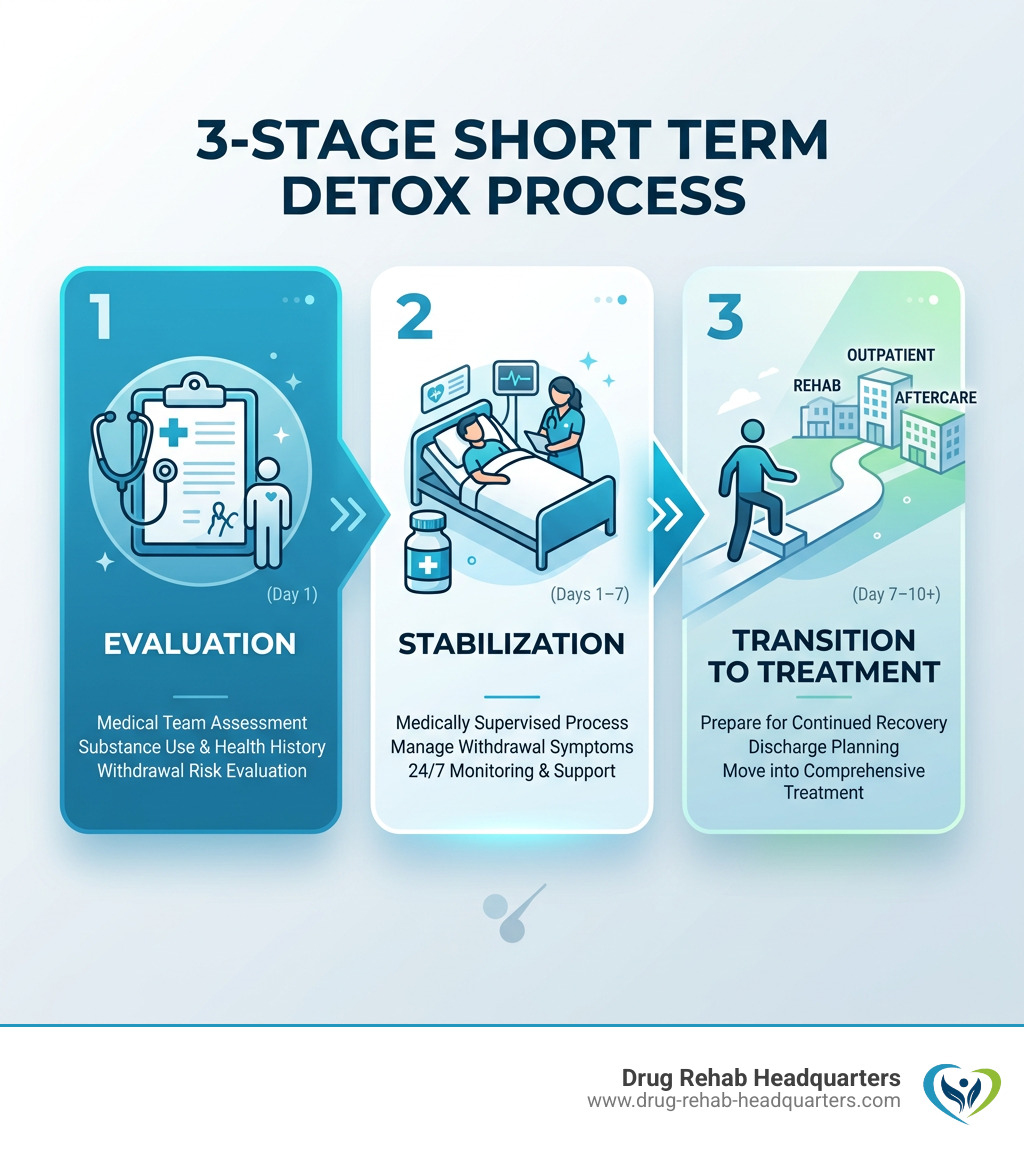
Here’s a quick overview of how it works:
| Stage | What Happens | Typical Timeframe |
|---|---|---|
| Evaluation | Medical team assesses substance use, health history, and withdrawal risk | Day 1 |
| Stabilization | Medications manage withdrawal symptoms under 24/7 supervision | Days 1–7 |
| Transition | Patient moves into rehab, outpatient care, or aftercare planning | Day 7–10+ |
Short term detox programs are available in several formats:
- 1-day to 3-day — for mild dependence or rapid stabilization
- 5-day — a common middle-ground option
- 7-day — the most widely recommended short-term format for moderate cases
- Weekend programs — feasibility depends on the substance and withdrawal severity
Important: Detox alone does not treat addiction. It manages the physical withdrawal so you can safely begin real treatment. Without follow-up care, relapse risk remains high.
If you’re not sure where to start, call (866) 720-3784 — help is available 24/7.
At Drug Rehab Headquarters, we’ve spent years connecting individuals and families with trusted inpatient rehab and drug treatment centers, guiding them through every stage of recovery — including short term detox. We’re here to cut through the confusion so you can focus on what matters most: getting well.
Short term detox further reading:
- drug rehabilitation center in florida
- drug rehabilitation centers in orlando florida
Understanding Short Term Detox and Its Role in Recovery

When we talk about short term detox, we are referring to the physiological process of ridding the body of toxins. It is a period of medical stabilization where the primary goal is to manage the acute physical symptoms of withdrawal. Think of it as hitting the “reset” button on your body’s physical dependence.
However, it is vital to distinguish between short-term-rehab and detoxification. Detox addresses the body; rehab addresses the mind. While short term detox clears the fog, detox-done-right-exploring-medical-detox-programs-for-addiction-recovery ensures that the patient is medically sound enough to engage in the heavy lifting of psychological therapy.
For many of us, the idea of taking 30, 60, or 90 days off for an inpatient rehab program feels impossible due to work or family commitments. This is where short term detox programs become attractive. They offer a quick entry point into the recovery continuum. If you find yourself unable to stop using despite damaging consequences, or if you experience “the shakes” when you try to quit, call us at (866) 720-3784. We can help you determine if a short-term stay is the right move for your specific situation.
3-Day and 5-Day Short Term Detox Options
We often get asked: “Can I just do a weekend detox?” The answer is: it depends. A 3-day or 5-day program is typically geared toward rapid stabilization. These ultra-short programs are often used for substances with shorter withdrawal windows or for individuals with a less severe history of use.
While some 7-day-detox-treatment-drug-rehabilitation-centers offer condensed schedules, these are not “shortcuts.” They are intensive medical interventions. For example, a 3-day plant-based cleanse or a One-Day Detox Plan might help someone reset their diet after a holiday, but when dealing with chemical dependency, 3 to 5 days is usually the bare minimum needed to ensure a patient won’t suffer a seizure or severe cardiac event.
If you are considering a very short stay, the most intense withdrawal symptoms often peak between 24 and 72 hours. A 5-day program allows medical staff to monitor you through that peak and begin the tapering process. To find out which timeline fits your needs, reach out to our team at (866) 720-3784.
Factors Influencing Detox Duration
No two people experience short term detox the same way. Several variables dictate how long you’ll need to stay in a medical-detox-programs facility:
- The Substance Involved: Alcohol and benzodiazepines often require longer stays due to the risk of life-threatening complications. Opioids have a notoriously uncomfortable withdrawal that may require a week or more to stabilize.
- Usage History: How long have you been using? What was the dosage? Long-term, high-dose usage typically requires a slower, more careful taper.
- Physical Health: Your liver and kidney function play a huge role in how fast your body processes toxins.
- Co-occurring Disorders: If you struggle with depression, anxiety, or PTSD alongside addiction, your detox might take longer as the medical team works to stabilize your mental health simultaneously.
The Medical Detoxification Process: What to Expect
Entering a short term detox program can be intimidating, but knowing what to expect can ease that anxiety. The process is highly structured to ensure your safety and comfort. It begins with an intake evaluation where we look at your medical history, substance use patterns, and current physical state.
Once admitted, you receive 24/7 monitoring. This isn’t just about making sure you don’t use; it’s about tracking your heart rate, blood pressure, and temperature to prevent emergencies. You are never alone in this process. For more information on why this level of care is vital, read beyond-the-shakes-why-medical-detox-is-crucial-for-recovery.
| Feature | Inpatient Detox | Outpatient (Ambulatory) Detox |
|---|---|---|
| Supervision | 24/7 Medical Staff | Daily Check-ins |
| Environment | Controlled, trigger-free | Home environment |
| Safety | Highest (for severe withdrawal) | Moderate (for mild cases) |
| Cost | Higher due to room/board | Lower |
| Relapse Risk | Lower | Higher |
If you need help deciding which level of care is appropriate, our counselors are available at (866) 720-3784.
Managing Withdrawal Symptoms During a Short Term Detox
Withdrawal is the body’s way of protesting the absence of a substance it has become dependent on. During short term detox, we focus on minimizing these symptoms. Common alcohol-detox-symptoms include nausea, insomnia, sweating, and intense anxiety.
In more severe cases, especially with alcohol, patients may face Delirium Tremens (DTs). This is a medical emergency characterized by hallucinations, seizures, and severe confusion. Without medical supervision, DTs have a high fatality rate. This is why we emphasize Medication-Assisted Treatment (MAT). Medications can “trick” the brain into thinking it still has the substance, allowing for a gradual and safe reduction in dependence.
Stabilization and Medication Protocols
Medication is a cornerstone of modern short term detox. We don’t believe in “toughing it out.” If there is a tool to make you safer and more comfortable, we use it.
- Buprenorphine and Methadone: Often used for detox-from-prescription-drugs and opioids to manage cravings and physical pain.
- Benzodiazepines (used sparingly): Sometimes used to prevent seizures in alcohol detox.
- Anti-nausea and Sleep Aids: To address the “flu-like” symptoms that make early recovery so difficult.
The goal of stabilization is to get you to a place where you can think clearly and participate in your own recovery.
Why Medical Supervision is Essential for Safety
We cannot stress this enough: detoxing alone is dangerous. When you abruptly stop using a substance, your central nervous system—which has been suppressed by drugs or alcohol—suddenly overcompensates. This “rebound effect” can lead to:
- Grand Mal Seizures: Common in alcohol and benzo withdrawal.
- Severe Dehydration: Caused by persistent vomiting and diarrhea.
- Cardiac Arrest: Due to extreme fluctuations in blood pressure and heart rate.
By choosing a supervised alcohol-detox or drug detox program, you have medical professionals ready to intervene the second something goes wrong. For a deeper look at what your body goes through, check out our drug-withdrawal-symptoms-complete-guide. If you are currently feeling unwell and trying to quit, please call (866) 720-3784 immediately.
High-Risk Substances Requiring Clinical Care
While all substance use carries risk, certain drugs are notoriously dangerous during the withdrawal phase.
- Alcohol: As mentioned, the risk of DTs and seizures makes clinical care non-negotiable for heavy drinkers.
- Benzodiazepines (Xanax, Valium): These require a very slow taper to prevent neurological damage.
- Opioids: While heroin-detox-process or vicodin-detox isn’t always fatal on its own, the secondary effects (dehydration, aspiration) and the sheer intensity of the pain often lead to immediate relapse without medical support.
The Dangers of “Cold Turkey” and At-Home Detox
The “cold turkey” approach is often a recipe for disaster. Beyond the physical dangers, at-home detox lacks the psychological support needed to handle relapse triggers. When you are in the throes of withdrawal, your brain will tell you that “just one hit” or “just one drink” will make the pain stop. In a clinical setting, we provide the environment and the tools to help you push through that moment.
Our guide on the-road-to-relief-understanding-drug-withdrawal-treatment explains why clinical safety is the only way to ensure you actually make it to day seven. Don’t risk your life on a DIY detox. Call (866) 720-3784 to find a safe bed today.
Transitioning from Short Term Detox to Long-Term Sobriety
If you complete a short term detox and go right back to your old life, the chances of staying sober are slim. Detox is the “cleaning of the house,” but rehab is “learning how to keep it clean.”
Aftercare planning is a major part of the detox-treatment process. Before you leave, we work with you to determine the next step. This usually involves some form of behavioral therapy to address the why behind the addiction. Whether it’s inpatient-drug-detox followed by residential treatment or a transition to a local support group, having a plan is the best way to prevent relapse.
Continuing Care Options After Detox
Once the physical toxins are gone, you have several paths forward:
- Partial Hospitalization (PHP): You spend the day at a treatment center but return home or to a sober living house at night.
- Intensive Outpatient (IOP): A few hours of therapy several days a week, allowing you to return to work.
- Sober Living: A drug-free residential environment that provides accountability.
- Standard Outpatient: Weekly therapy sessions to maintain progress.
Every journey is different. If you’ve just finished a drug-detox, don’t try to navigate the “what’s next” alone. Call us at (866) 720-3784 for personalized guidance.
Insurance Coverage and Finding Detox Centers in Florida
One of the biggest hurdles to seeking help is the cost-of-rehab. The good news is that most health insurance policies are required by law to cover at least some portion of addiction treatment, including short term detox.
Whether you are looking for a center in Florida, California, or New York, we can help you verify-insurance coverage. We work with a vast network of in-network providers to ensure that finances don’t stand in the way of your life. Florida, in particular, has some of the nation’s leading facilities that offer both medical excellence and a tranquil environment for recovery.
If you’re worried about the bill, call (866) 720-3784. Our counselors can run a free, confidential insurance check for you in minutes.
How to Locate Reputable Short-Term Programs
Not all detox centers are created equal. When you search-centers, look for these green flags:
- Accreditation: Look for The Joint Commission or CARF seals.
- Clinical Staff: Ensure there are MDs and RNs on-site 24/7.
- Evidence-Based Care: They should use proven methods like MAT and CBT.
- Transition Services: A good center won’t just kick you out after 7 days; they will have a clear aftercare plan.
We’ve vetted thousands of programs across North America. If you need a recommendation for a reputable center, we are here for you at (866) 720-3784.
Frequently Asked Questions about Short Term Detox
Is a 7-day detox long enough to cure addiction?
No. There is no “cure” for addiction, as it is a chronic condition. A 7-day short term detox is only long enough to manage physical withdrawal. Long-term sobriety requires ongoing therapy, lifestyle changes, and support.
Does health insurance cover the cost of medical detox?
In most cases, yes. Most private insurance plans, as well as Medicare and Medicaid in many states, cover detoxification because it is considered a medically necessary procedure.
Can I go to work while participating in a short-term program?
If you choose an inpatient short term detox, you will need to take time off work to stay at the facility. However, some ambulatory (outpatient) programs allow for more flexibility if your withdrawal symptoms are mild.
Conclusion
Recovery is a marathon, but every marathon starts with a single, often difficult, step. Short term detox is that step. It provides the safety, medical support, and physical stabilization you need to reclaim your life from the grip of substance use.
At Drug Rehab Headquarters, our mission is to make sure you don’t have to take that step alone. Our certified counselors—many of whom have their own lived experience with recovery—are standing by 24/7 to offer holistic, evidence-based options tailored to your unique needs. Whether you are in Alabama, Arizona, or anywhere else across North America, we can help you find the right path.
Don’t wait for “the right time.” The right time is now. Call us at (866) 720-3784 and let’s get started on your detox-homepage journey today.