
When OCD and Alcohol Addiction Collide: What You Need to Know
OCD alcohol rehab programs are specialized treatment programs that address both obsessive-compulsive disorder (OCD) and alcohol addiction at the same time, using evidence-based therapies like ERP and CBT alongside medical detox and medication support.
Here’s what these programs typically include:
- Dual diagnosis assessment – screening for both OCD and alcohol use disorder
- Medical detox – safely managing alcohol withdrawal under supervision
- Exposure and Response Prevention (ERP) – the gold-standard therapy for OCD
- Cognitive Behavioural Therapy (CBT) – targeting unhelpful thought patterns
- Medication management – SSRIs for OCD, plus anti-craving or withdrawal medications
- Group and family therapy – building support systems for lasting recovery
- Aftercare planning – relapse prevention and long-term support
Living with OCD is hard enough on its own. Add alcohol addiction to the picture, and it can feel completely overwhelming.
Many people don’t realize how closely these two conditions are linked. Research shows that roughly 25% of people with OCD will also develop a substance use disorder at some point in their lives. And in more than 60% of those cases, the alcohol or drug problem developed after the OCD — often as a way to cope with the relentless anxiety that comes with intrusive thoughts and compulsions.
The problem? Most standard rehab programs aren’t built to handle OCD. And most OCD programs won’t admit someone who is actively drinking. This gap in care leaves a lot of people stuck — bouncing between programs, getting discharged, and never fully recovering from either condition.
That’s exactly why finding the right integrated treatment matters so much.
At Drug Rehab Headquarters, we’ve spent years helping individuals and families cut through the confusion of addiction treatment — including navigating specialized OCD alcohol rehab programs that treat both conditions under one roof. If you need guidance right now, call us at (866) 720-3784 — our team is ready to help you find the right fit.
Understanding the Link Between OCD and Alcohol Addiction
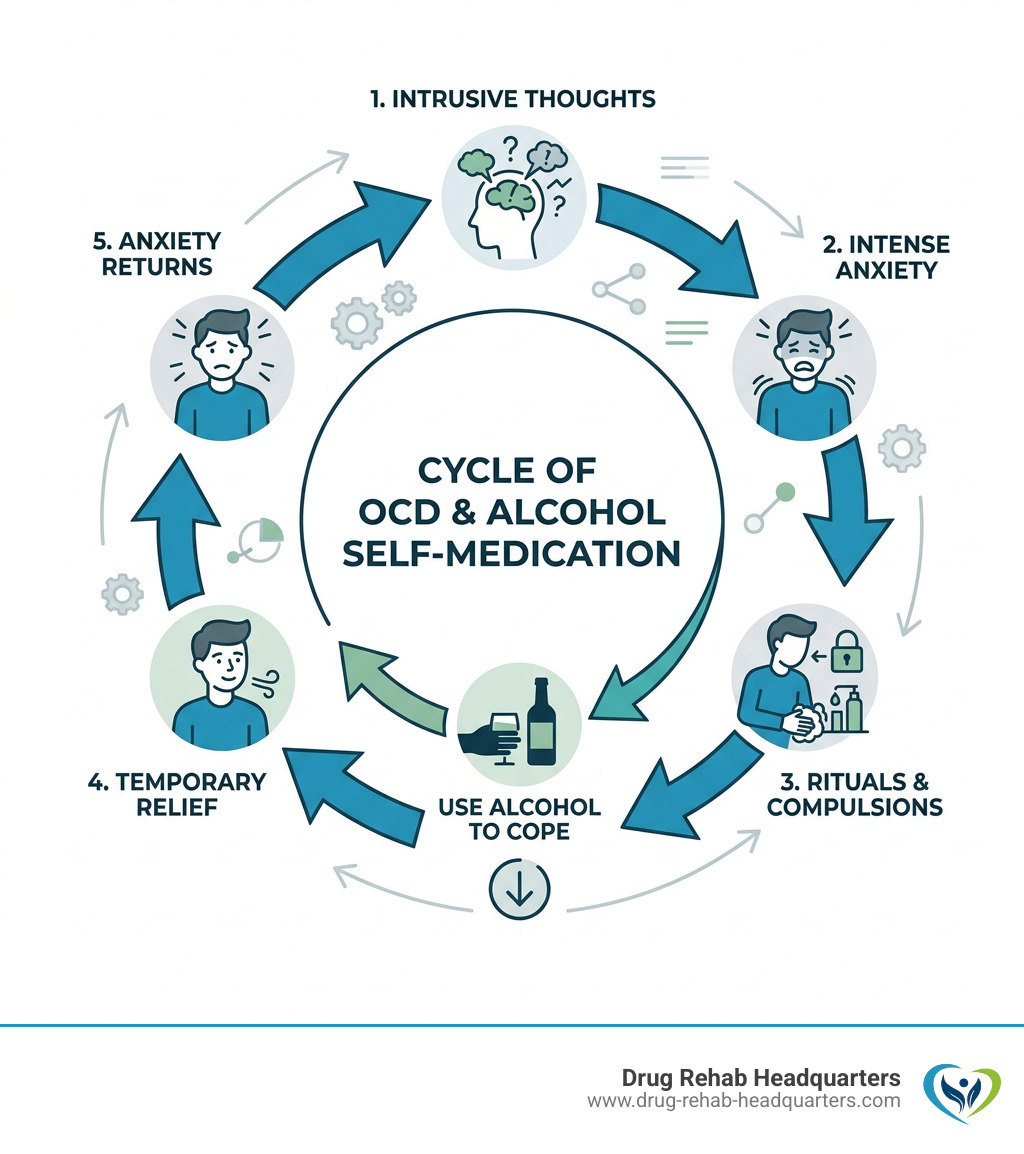
To understand why OCD alcohol rehab programs are so vital, we first have to look at how these two conditions feed off each other. OCD is characterized by two main components: obsessions (intrusive, unwanted thoughts or images) and compulsions (repetitive behaviors performed to ease the anxiety caused by those thoughts).
When the anxiety becomes unbearable, many people turn to alcohol as a form of “self-medication.” It makes sense in the short term—alcohol is a depressant that can temporarily dull the noise of intrusive thoughts. However, this creates a dangerous “secondary development” of addiction. In fact, statistics show that in over 60 percent of people dealing with both, the substance use started as a way to cope with the OCD.
The lifetime prevalence of OCD in U.S. adults is about 2.3 percent, but when you look at those seeking help for addiction, the numbers for co-occurring OCD skyrocket. They share similar neurological pathways in the brain—specifically those involving the “reward” and “habit” circuits. There is also a strong genetic predisposition; if your family has a history of anxiety or addiction, you may be more vulnerable to both.
Common signs of alcohol addiction often overlap with OCD rituals, making it hard to tell where one ends and the other begins. For instance, a person might drink a specific amount of alcohol in a ritualistic way to “cancel out” a bad thought. Without specialized help, this cycle can lead to severe social isolation and physical health decline. If you are noticing these patterns, call us at (866) 720-3784 to discuss your options. You can also read more expert opinions on co-occurring OCD and SUD to better understand the clinical side of this struggle.
Evidence-Based OCD Alcohol Rehab Programs
The “gold standard” for recovery is concurrent treatment. This means treating the OCD and the alcohol use disorder (AUD) simultaneously rather than waiting for one to “clear up” before starting the other. If you only treat the addiction, the untreated OCD will likely trigger a relapse as soon as the person feels anxious. Conversely, if you only treat the OCD, the physical dependency on alcohol remains a massive hurdle.
A high-quality OCD alcohol rehab program utilizes a multidisciplinary team. This team usually includes psychiatrists, addiction counselors, and specialized OCD therapists. They use a trauma-informed approach, recognizing that many people with these conditions have experienced high levels of stress or past trauma that fuels their symptoms.
Integrated care means that your therapy for OCD (like ERP) is woven into your addiction recovery plan. We can help you find dual diagnosis treatment facility options that specialize in this specific combination. For a broader look at what to look for, check out our guide to alcohol rehab centers. If you’re ready to start your journey, reach out to us at (866) 720-3784.
The Role of Exposure and Response Prevention (ERP) in OCD Alcohol Rehab Programs
You cannot talk about effective OCD treatment without talking about Exposure and Response Prevention (ERP). ERP is a specific type of Cognitive Behavioral Therapy (CBT) and is considered the frontline treatment for OCD.
In an OCD alcohol rehab program, ERP works by gradually exposing the person to the thoughts or situations that trigger their anxiety (the “Exposure”) and then helping them resist the urge to perform a ritual or take a drink (the “Response Prevention”). Over time, a process called habituation occurs—the brain learns that the anxiety will eventually go away on its own without the need for a compulsion or a bottle of vodka.
This is challenging work, which is why having the support of an inpatient rehab setting can be so beneficial. You have professionals by your side 24/7 as you face these fears. For a visual breakdown of how this works, you can watch this video guide to ERP therapy. If you have questions about how ERP fits into a recovery plan, call us at (866) 720-3784.
Medication Management in OCD Alcohol Rehab Programs
Medication often plays a supporting role in recovery. For OCD, Selective Serotonin Reuptake Inhibitors (SSRIs) are frequently prescribed to help lower the “baseline” of anxiety, making it easier for the person to engage in therapy like ERP.
In the context of alcohol rehab, medical supervision is critical during the initial stages. Alcohol withdrawal can be dangerous, sometimes even life-threatening, involving symptoms like seizures or delirium tremens. This is why medical detox for alcohol is the safest bet; it allows doctors to use pharmacological interventions to keep you safe and comfortable.
Beyond detox, doctors may use anti-craving medications to help reduce the urge to drink while the patient works on their OCD symptoms. Balancing these different medications requires expert care, which is a hallmark of specialized OCD alcohol rehab programs. If you need help finding a center with a strong medical team, call us at (866) 720-3784.
Inpatient vs. Outpatient Dual Diagnosis Treatment
Choosing between inpatient and outpatient care is one of the biggest decisions you’ll make. For many dealing with severe OCD and alcohol addiction, an inpatient or residential program is the most effective starting point. These programs provide an immersive environment where you are removed from the triggers of your daily life.
| Feature | Inpatient/Residential | Outpatient (IOP/PHP) |
|---|---|---|
| Support Level | 24/7 Medical & Emotional Support | Scheduled sessions (9-30 hours/week) |
| Environment | Controlled, trigger-free setting | Live at home; face daily triggers |
| Intensity | High; daily ERP and group sessions | Moderate; allows for work/school |
| Best For | Severe symptoms; high relapse risk | Mild-to-moderate symptoms; strong home support |
| Duration | Typically 30 to 90 days | Several months |
A Partial Hospitalization Program (PHP) or Intensive Outpatient Program (IOP) can be excellent for those who have completed residential treatment or whose symptoms are more manageable. However, the 12-week intensive structure often found in residential OCD alcohol rehab programs offers the time needed to truly rewire the brain’s habits. For more on these choices, see our alcohol rehab options page or call us at (866) 720-3784 for a personalized recommendation.
What to Expect in a Specialized Treatment Facility
When you enter a specialized program, the first step is a comprehensive assessment. This isn’t just a quick chat; it’s an in-depth look at your mental health history, your substance use patterns, and your physical health. From there, the team creates an individualized plan tailored to your specific obsessions and triggers.
A typical day in an OCD alcohol rehab program is highly structured. Structure is the enemy of OCD rituals and addiction cravings!
- Morning: Chef-prepared breakfast followed by one-on-one therapy or a medical check-in.
- Mid-Day: Nutritionist-planned lunch and physical exercise (like yoga or a fitness center workout).
- Afternoon: Intensive ERP practice and group CBT sessions.
- Evening: Peer support meetings, family psychoeducation, and relaxation activities.
Family involvement is a huge part of the process. Programs often offer six-week psychoeducation groups for loved ones, helping them understand that OCD isn’t just “being neat” and that addiction isn’t a “lack of willpower.” You can view a residential OCD treatment overview to see what these facilities look like. Before you go, make sure you learn about alcohol detox symptoms so you know what to expect in the first few days. We are available at (866) 720-3784 if you want to walk through the admissions process.
Overcoming Challenges and Planning for Aftercare
Recovery doesn’t end when you leave the rehab facility. In many ways, that’s when the real work begins. Aftercare planning is a vital component of any OCD alcohol rehab program. This usually includes a transition to outpatient therapy, continued medication management, and joining support groups.
Relapse prevention strategies for dual diagnosis patients often involve:
- Mindfulness: Learning to sit with uncomfortable thoughts without reacting.
- Social Support: Building a network of people who understand both OCD and sobriety.
- 12-Step or SMART Recovery: Engaging in community-based recovery programs that offer accountability.
It is also important to address the “shame” that often comes with OCD. Many people have “taboo” intrusive thoughts (about harm or religion) that they’ve never told anyone. A good aftercare plan ensures you have a safe space to continue processing these thoughts without turning back to alcohol. To find a local support network, you can start by accessing alcohol recovery centers in our network. Don’t forget to verify your insurance for rehab to see what aftercare services are covered. Our counselors at (866) 720-3784 can help you build this long-term roadmap.
Frequently Asked Questions about OCD and Alcoholism
Does alcohol make OCD symptoms worse?
Yes, absolutely. While alcohol might feel like it “numbs” the anxiety for an hour or two, the “rebound effect” the next day is often much worse. Hangovers increase physiological anxiety, which makes intrusive thoughts louder and compulsions harder to resist. Over time, the guilt and shame of drinking also become new “themes” for the OCD to latch onto.
Can I be treated for both OCD and addiction at the same time?
Not only can you, but you should. Treating them separately often leads to a “revolving door” effect where one condition triggers the other. Specialized OCD alcohol rehab programs are designed specifically to integrate these treatments so you can heal holistically.
What are the eligibility criteria for dual diagnosis programs?
Most programs require a primary diagnosis of OCD and a co-occurring substance use disorder. Some intensive OCD programs may require you to be medically stable (meaning you’ve completed detox) before starting the heavy ERP work. However, many dual-diagnosis centers have an on-site alcohol detox center to help you get to that point safely.
Conclusion
Finding the right path forward when you’re battling both OCD and alcoholism can feel like an impossible task, but you don’t have to do it alone. The cycle of intrusive thoughts and self-medication is a heavy burden, but with the right OCD alcohol rehab programs, recovery is within reach.
At Drug Rehab Headquarters, our mission is to connect you with the evidence-based, holistic care you deserve. Whether you need an alcohol addiction hotline for immediate support or help finding a specialized residential center in your state, our certified counselors are here for you 24/7. Many of us have lived experience and understand exactly what you’re going through.
Don’t let another day go by feeling trapped by your own mind and a bottle. Call us at (866) 720-3784 for personalized, free guidance. You can also search for treatment options on our website to find a program that fits your needs and insurance. Your journey to a quieter mind and a sober life starts with one phone call.