
The Role of a 60 Day Detox in Long-Term Recovery
A 60 day detox is one of the most effective starting points for lasting addiction recovery — and if you’re trying to decide whether it’s right for you or a loved one, here’s the short answer:
Quick Overview: What Is a 60-Day Detox?
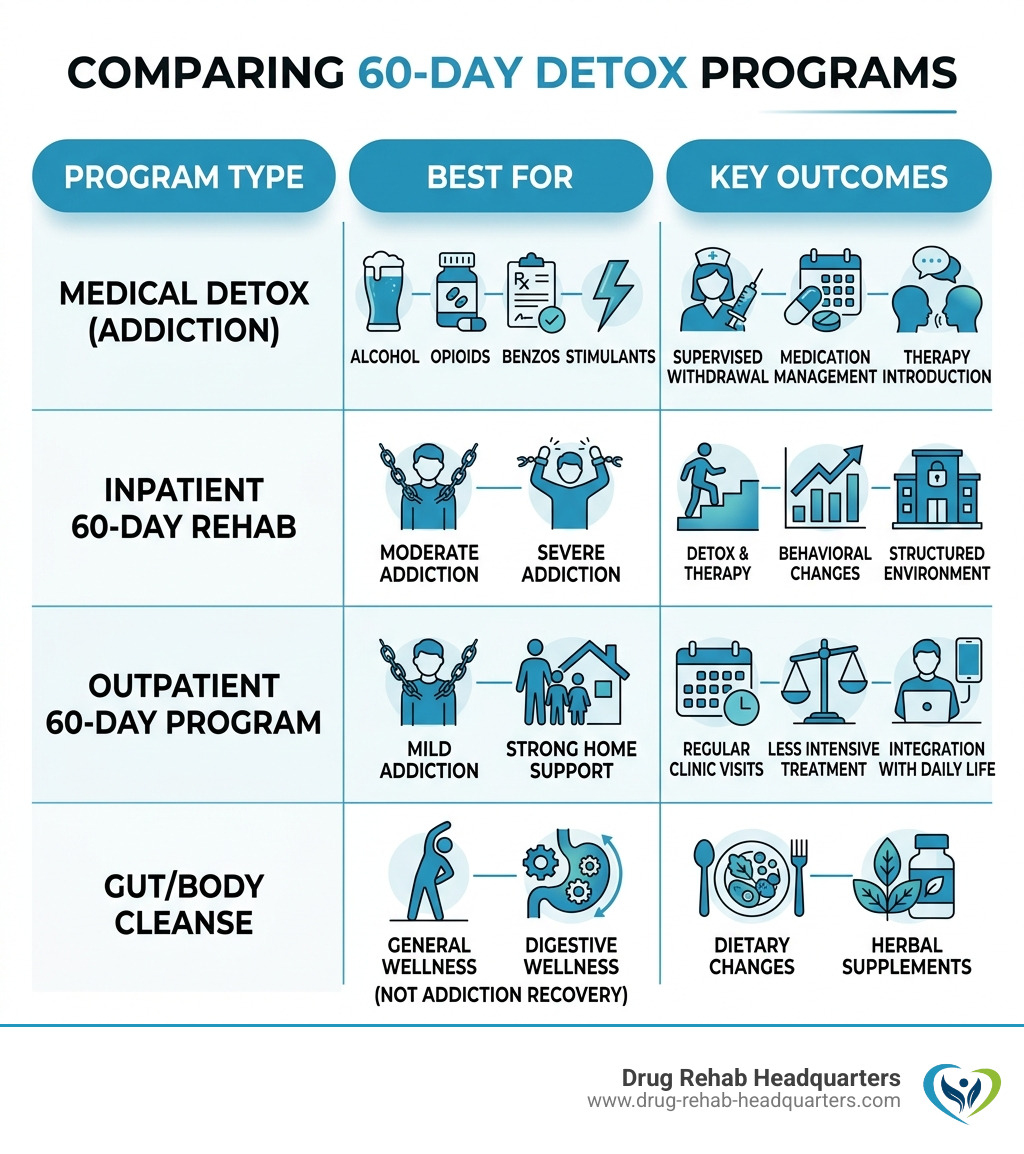
| Type | What It Involves | Best For |
|---|---|---|
| Medical detox (addiction) | Supervised withdrawal management, medication, therapy | Alcohol, opioids, benzos, stimulants |
| Inpatient 60-day rehab | Residential treatment with detox + behavioral therapy | Moderate to severe addiction |
| Outpatient 60-day program | Regular clinic visits, less intensive | Mild addiction, strong home support |
| Gut/body cleanse | Herbal supplements, dietary changes | General digestive wellness (not addiction) |
The term “60 day detox” covers very different things depending on context. For addiction, it means a structured medical and therapeutic program. For wellness, it may mean a dietary or gut cleanse. This guide focuses primarily on addiction recovery programs, where the 60-day timeframe has the most evidence behind it.
According to the National Institute on Drug Abuse (NIDA), treatments lasting less than 60 days may offer limited effectiveness in preventing relapse. That’s a critical benchmark — and it’s why so many clinicians recommend this length as a minimum for real, lasting change.
At Drug Rehab Headquarters, we’ve spent years helping individuals and families cut through the confusion of addiction treatment options, including guiding people toward the right 60 day detox program for their specific needs.
60 day detox further reading:
- Drug Rehabilitation Center in Florida
- Drug Rehabilitation Centers in Orlando Florida
- Rehabs in Fort Lauderdale
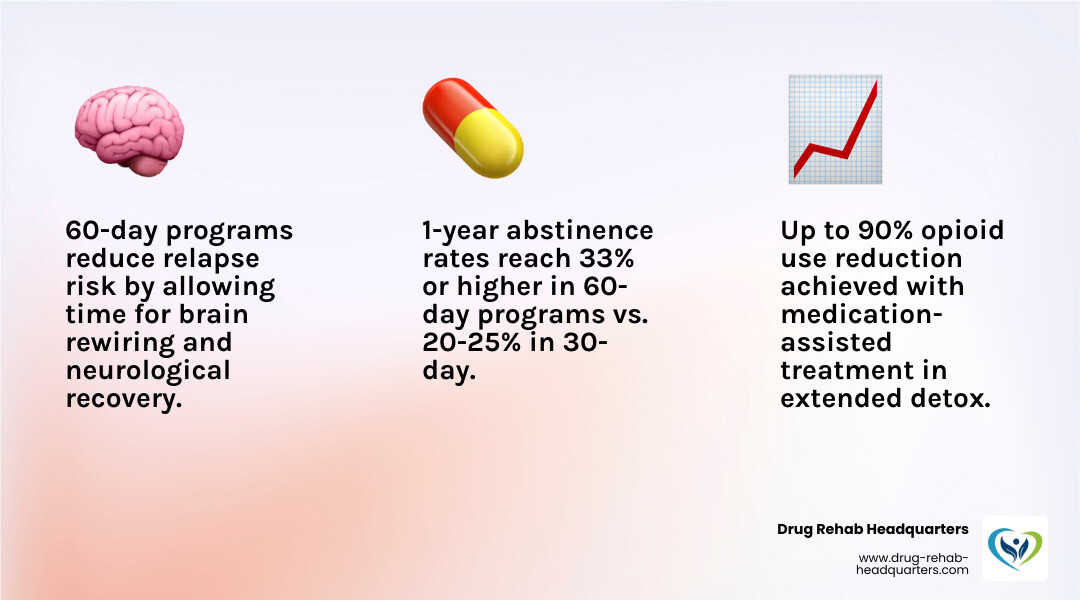
When we talk about recovery, we are talking about more than just “getting the drugs out.” True healing requires time for the brain to physically rewire itself. Research indicates that even after three months of sobriety, the brain is still undergoing the significant neurological changes necessary for full recovery. A 60-day drug & alcohol rehab program provides that essential middle ground between a quick fix and a long-term commitment. It allows for deep psychological healing, trauma processing, and the building of coping mechanisms that shorter programs simply can’t accommodate.
Medically Supervised 60-Day Detox Protocols
The first stage of any successful 60 day detox is stabilization. For many, this begins with medical detox programs, where withdrawal symptoms are managed by healthcare professionals 24/7. This isn’t just about comfort; it’s about safety. Withdrawing from substances like alcohol or benzodiazepines can be life-threatening without proper supervision.
In a phased approach, the first week or two is dedicated to physical stabilization. Once the “fog” lifts, the therapeutic work begins. This involves a personalized transition where medical staff monitor your progress and adjust medications as needed. If you are worried about the withdrawal process, please know you don’t have to do it alone. You can reach us at (866) 720-3784 to find a facility that offers compassionate, medically-backed detox.
Inpatient and Outpatient 60-Day Options
Choosing between inpatient and outpatient care depends on your unique situation, including the severity of the addiction and your home environment.
- Inpatient/Residential Care: This is often the gold standard for a 60 day detox. It provides a structured, drug-free environment where you can focus entirely on yourself. Inpatient drug detox removes the triggers of everyday life, allowing you to establish new, healthy habits.
- Outpatient Programs: For those with strong support systems at home or less severe substance use issues, outpatient care offers flexibility. You can receive evidence-based treatment while maintaining some work or family commitments.
- Social Detox: Some may opt for short-term detox programs for a rapid recovery, which focus on rest and privacy in a non-medical setting, though this is generally only recommended for low-risk withdrawals.
Regardless of the path you choose, the goal is the same: a stronger foundation for the future.
Local Availability and Success Statistics
Data doesn’t lie: the longer you stay in treatment, the better your chances of staying sober. A 60-day drug & alcohol rehab in California, for example, often reports higher success rates than 30-day alternatives because it gives the patient time to practice relapse prevention skills in a safe environment.
| Statistic | 30-Day Program | 60-Day Program |
|---|---|---|
| Relapse Risk | Higher (limited time for brain healing) | Lower (allows for habit formation) |
| Opioid Use Reduction | Significant | Up to 90% reduction with MAT |
| Abstinence at 1 Year | Approx. 20-25% | Approx. 33% or higher |
Regional 60-Day Detox Trends
Across North America, from Alabama to Washington, we are seeing a shift toward longer treatment stays. While 7-day detox treatment drug rehabilitation centers are excellent for clearing the body of toxins, they are rarely enough to prevent a return to use. Modern trends show that integrating medical detox with a full 60-day therapeutic window leads to much better recovery outcomes. Whether you are in New York, Texas, or Florida, there are accredited facilities ready to help.
How to Choose a Reputable 60-Day Program
Selecting a facility is a major life decision. You want to ensure that the program you choose is equipped to handle the complexities of addiction and any co-occurring mental health issues. What makes a 60 day treatment program in Connecticut successful is often the same thing that makes one successful in Arizona: a combination of accreditation, evidence-based practices, and personalized care.
What to Look for in a 60-Day Detox Facility
When vetting 60-day rehab programs, look for these “must-haves”:
- Accreditation: Ensure the facility is licensed by the state and accredited by organizations like the Joint Commission or CARF.
- Staff Credentials: The team should include board-certified doctors, licensed therapists, and certified addiction counselors.
- Dual Diagnosis Support: Since nearly half of people with addiction also face mental health challenges like depression or anxiety, the program must treat both simultaneously.
- Holistic Services: Look for programs that include nutrition, exercise, or yoga to help rebalance the body while the mind heals.
If you aren’t sure what questions to ask a potential center, our counselors are available 24/7 to provide a checklist and help you make an informed choice.
The Cost of a 60 Day Detox and Insurance Coverage
We know that “how much will this cost?” is often the first question on your mind. It’s important to view treatment not as an expense, but as an investment in a future that would otherwise be lost to addiction. The cost of untreated addiction — including health problems, legal issues, and lost wages — is almost always higher than the cost of rehab.

Many people are surprised to learn that their insurance covers much of the cost. By law, most private insurance plans must provide coverage for behavioral health and substance use disorders. You can verify insurance through our portal or call us to have an admissions navigator do the legwork for you. In many cases, even state-funded options like Medicaid can cover top rehab centers in Arkansas and other states.
Payment Options and Financial Aid
If you don’t have insurance, don’t lose hope. Many facilities offer:
- Sliding Scale Fees: Costs based on your ability to pay.
- Scholarships: Financial aid for those who qualify.
- Financing Plans: Monthly payment options to make the cost of rehab manageable.
Frequently Asked Questions about 60-Day Programs
Is a 60-day detox more effective than 30 days?
Yes, for most people. Research from NIDA and other experts suggests that 30 days is often only enough time to complete detox and begin feeling physically better. The extra 30 days in a 60-day program allow for the “heavy lifting” of therapy, which is where the real work of relapse prevention happens. It gives the brain the time it needs to start healing from the damage caused by long-term substance use.
What are the risks of a 60-day cleanse?
In the context of addiction, the primary risk is trying to do it without medical help. “Cold turkey” drug detox can lead to severe withdrawal symptoms, including seizures, hallucinations, or heart failure. In a professional 60-day program, these risks are mitigated by 24/7 medical supervision and the use of FDA-approved medications to keep you safe and comfortable.
Does insurance cover 60-day rehab?
Most likely. Under the Affordable Care Act, insurance providers are required to cover alcohol detox and other substance abuse treatments. Whether you are seeking a detox from prescription drugs or illicit substances, your insurance provider should offer a level of coverage. We can help you verify exactly what your plan pays for and what your out-of-pocket costs might be.
Conclusion
A 60 day detox is more than just a break from substances; it is a commitment to a new way of life. At Drug Rehab Headquarters, we believe that everyone deserves a chance at a healthy, sober future. Whether you need an intensive inpatient program or a flexible outpatient solution, our certified counselors — many of whom have been where you are — are here to provide personalized, 24/7 support.
We serve all 50 states and Puerto Rico, connecting you to evidence-based, holistic rehabilitation services that fit your specific needs. Don’t wait for “the right time” to get healthy. The right time is now to take the first step toward your 60-day transformation.