
Understanding Your Options for Alcohol Addiction Therapy
Recognizing that you or a loved one may have a problem with alcohol is the first, and often most difficult, step toward recovery. Alcohol Use Disorder (AUD) is a complex medical condition that affects millions of people in the United States and worldwide. It’s not a matter of willpower or a moral failing; it’s a chronic disease characterized by an impaired ability to stop or control alcohol use despite adverse social, occupational, or health consequences. The good news is that, like other chronic diseases, it can be managed effectively with the right treatment.
This guide is designed to walk you through the various alcohol addiction therapy options available. Understanding these choices is crucial because there is no single, one-size-fits-all solution. An effective treatment plan is often a combination of different approaches custom to the individual’s specific needs, circumstances, and the severity of their condition. We’ll explore the core components of modern addiction treatment, including:
- Behavioral Therapies: Techniques like Cognitive Behavioral Therapy (CBT), Dialectical Behavior Therapy (DBT), and Motivational Interviewing (MI) help individuals understand the root causes of their addiction and develop healthier coping mechanisms.
- Medication-Assisted Treatment (MAT): Certain FDA-approved medications can help reduce cravings and manage withdrawal symptoms, making the recovery process safer and more manageable.
- Support Groups: Programs like Alcoholics Anonymous (AA) and SMART Recovery provide a community of peers who offer encouragement, accountability, and shared experience.
- Holistic Therapies: Approaches such as yoga, meditation, and art therapy address the whole person—mind, body, and spirit—to promote overall well-being and support long-term recovery.
- Different Levels of Care: From inpatient residential programs to flexible outpatient services, treatment can be structured to fit the intensity of support you need.
Navigating these options can feel overwhelming, but you don’t have to do it alone. At Drug Rehab Headquarters, our team of certified counselors is available 24/7 to provide free, confidential guidance. We have years of experience helping people find the right treatment program to begin their journey to a healthier, sober life. This guide will provide the foundational knowledge you need to make an informed decision for yourself or your loved one.
Terms related to alcohol addiction therapy:
Recognizing the Need for Professional Help
Recognizing that you or a loved one might need help is often the most challenging, yet crucial, first step in the journey toward recovery. Alcohol use disorder (AUD) manifests in various ways, and understanding the signs is key to knowing when to seek professional intervention. It’s not about a single night of heavy drinking, but rather a pattern of behavior that causes distress and impairment.
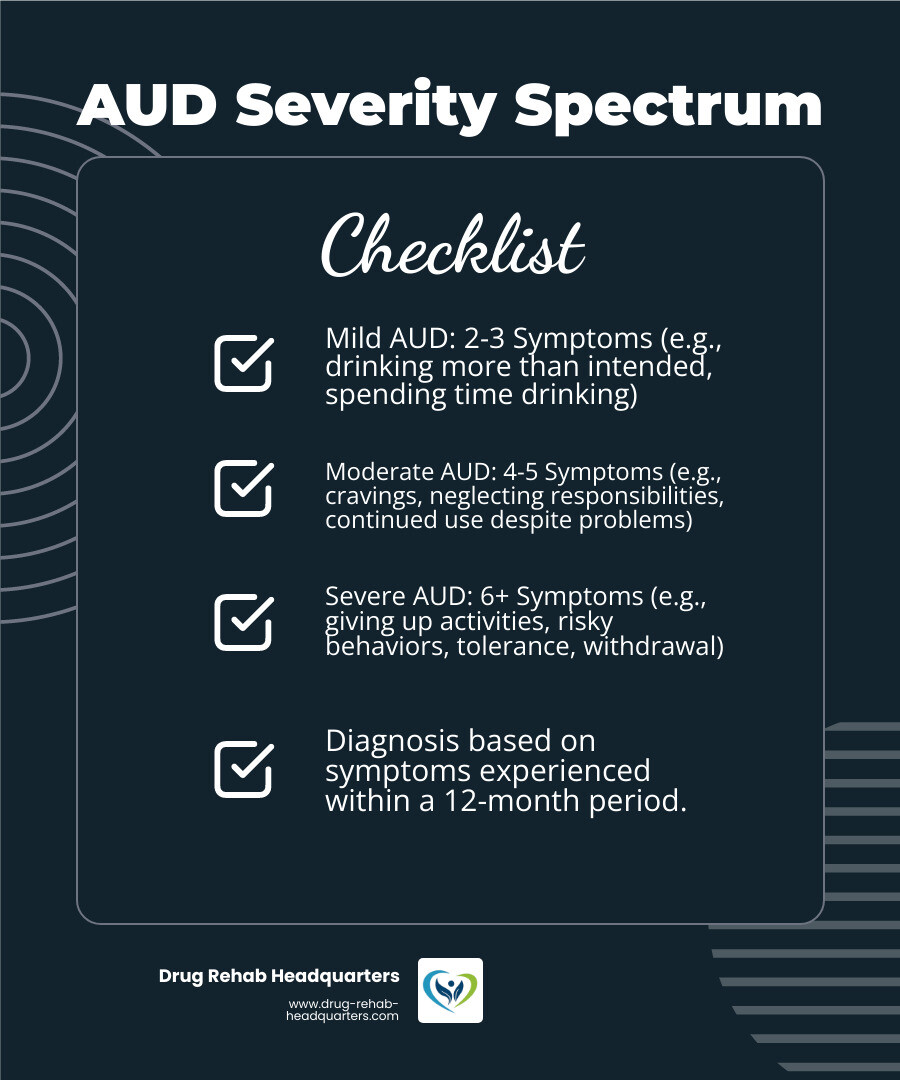
According to the National Institute on Alcohol Abuse and Alcoholism (NIAAA), alcohol-related problems are among the most significant public health issues in the United States. Millions of adults struggle with controlling their drinking. So, how do you know if it’s time for professional help? The Diagnostic and Statistical Manual of Mental Disorders (DSM-5) outlines 11 criteria for AUD. Experiencing two or more of these within a 12-month period can indicate a problem.
Common signs that indicate a need for professional alcohol addiction therapy include:
- Drinking more or longer than intended: You often end up drinking more alcohol or for a longer period than you originally planned.
- Wanting to cut down but being unable to: You have a persistent desire to reduce your alcohol consumption or have made unsuccessful attempts to control it.
- Spending a lot of time drinking or recovering: A significant portion of your day is dedicated to obtaining, using, or recovering from the effects of alcohol.
- Cravings: You experience strong urges or a powerful need to drink alcohol, which can be difficult to ignore.
- Neglecting responsibilities: Your alcohol use is interfering with your ability to fulfill major obligations at work, school, or home.
- Continuing to drink despite problems: You keep drinking even when you know it’s causing or worsening physical, social, or interpersonal problems.
- Giving up activities for drinking: You have reduced or given up important social, occupational, or recreational activities because of your alcohol use.
- Engaging in risky behaviors while drinking: You repeatedly use alcohol in situations where it is physically hazardous, such as driving or operating machinery.
- Drinking despite causing depression/anxiety or other health problems: You continue to drink even though you’re aware that it’s likely causing or exacerbating a physical or psychological problem.
- Tolerance increase: You need to drink more alcohol to get the desired effect, or you find that the same amount of alcohol has a much-reduced effect.
- Withdrawal symptoms: When the effects of alcohol wear off, you experience withdrawal symptoms like shakiness, irritability, anxiety, depression, restlessness, nausea, or sweating. In severe cases, this can include hallucinations or seizures.
If you recognize several of these signs in yourself or a loved one, it’s a strong indicator that professional alcohol addiction therapy may be beneficial. For a more comprehensive look at these indicators, explore our page on Alcohol Addiction Signs.
A primary care provider plays a vital role in diagnosing and initiating treatment for AUD. They are often the first point of contact and can assess your drinking patterns, conduct physical examinations, order lab tests to check for liver damage or other health issues, and complete a psychological evaluation. If they suspect an alcohol problem, they can refer you to a mental health provider or addiction specialist. They can also help craft an initial treatment plan and discuss medication options.
Preparing for Your First Appointment
Taking the step to schedule an appointment is courageous. To make the most of your first visit with a healthcare provider about alcohol concerns, preparation is key. This will help your provider understand your situation thoroughly and recommend the most appropriate alcohol addiction therapy.
Here’s what we recommend you prepare:
- List of symptoms: Detail all alcohol-related symptoms you’ve experienced, including when they started, how often they occur, and their severity. Be honest about the quantity and frequency of your drinking. Don’t forget any withdrawal symptoms you’ve had, as this is crucial for determining the need for medical detox.
- Personal information and stressors: Be ready to discuss significant life stressors, recent changes, and any past traumas. Your mental and emotional state is a critical piece of the puzzle. This context can be crucial for understanding your relationship with alcohol and identifying potential triggers.
- Medications and supplements list: Provide a comprehensive list of all medications (prescription and over-the-counter), vitamins, and supplements you are currently taking, including dosages. Also, mention any other substances you use, as this can affect treatment options.
- Questions for the provider: Prepare a list of questions you want to ask. This is your opportunity to get clear, actionable information. These might include:
- Do you think I have an alcohol use disorder? If so, how severe is it?
- What are the best alcohol addiction therapy options for my situation?
- What are the pros and cons of each treatment option?
- Are there any alternatives to the approach you’re suggesting?
- Do I need any medical tests for underlying physical problems?
- What is the first step I should take?
- What websites or resources do you recommend for more information?
Understanding Different Levels of Care
Alcohol addiction therapy is not a one-size-fits-all solution; treatment settings vary widely to accommodate different needs and severities of AUD. These settings range from highly structured inpatient programs to more flexible outpatient options. Understanding the differences is crucial for choosing the right path.
Here’s a comparison of common treatment programs:
| Feature | Inpatient/Residential Treatment – | Outpatient Treatment (including IOP/PHP) – |
|---|---|---|
| Structure | Highly structured, 24/7 care in a residential facility. Patients live on-site. – | Patients live at home and attend therapy sessions at a clinic or facility. Programs vary in intensity, from a few hours a week (standard outpatient) to several hours a day, multiple days a week (Intensive Outpatient – IOP, or Partial Hospitalization – PHP). |
| Intensity | Very high. Includes individual therapy, group therapy, medical supervision, and other therapeutic activities in a highly structured environment. – | Varies. Standard outpatient may be one session per week. Intensive Out-patient (IOP) is typically 3-5 days a week for several hours. Partial Hospitalization (PHP) is a step down from residential, with treatment for most of the day, 5-7 days a week. |
| Living Situation | Patients reside at the treatment facility for the duration of the program, typically 30, 60, or 90 days. – | Patients live at home and travel to the treatment center for scheduled sessions. This allows them to maintain work, school, or family commitments. – |
| Ideal Candidate | Individuals with severe AUD, those with co-occurring mental health disorders, those who have not succeeded in outpatient treatment, or those who need a safe, substance-free environment to begin recovery. Inpatient Drug Rehab | Individuals with a strong support system at home, a less severe addiction, or those who need to continue with work or school. Intensive Outpatient Treatment is a good step-down from inpatient care. |