
Taking the First Step: Your Guide to Addiction Helplines
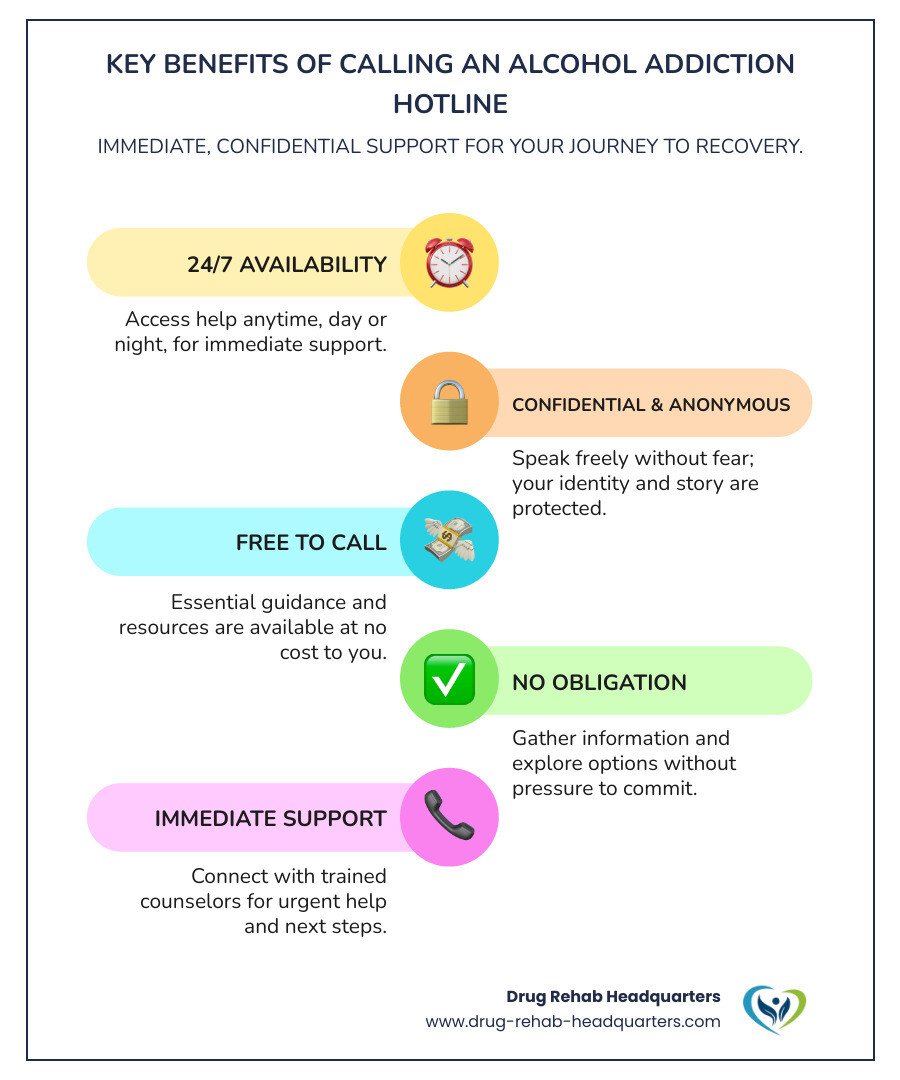
An alcohol addiction hotline provides 24/7 confidential support for anyone struggling with alcohol use. Here’s what you need to know:
Quick Access to Help:
- Available: 24 hours a day, 7 days a week
- Cost: Free to call
- Privacy: Completely confidential and often anonymous
- Support: Trained counselors provide immediate guidance
- Services: Crisis support, treatment referrals, and resources for families
- No Obligation: You don’t have to commit to treatment when you call
When a person is addicted to alcohol, it can be difficult to stop drinking on their own, and relapse is common. Between 2019 and 2020, deaths related to alcohol use in the US increased by 25% to over 99,000 annually, affecting countless individuals and families.
If you or someone you love is facing alcohol addiction, you’re not alone. In 2019, over 20 million people aged 12 or older had a substance use disorder in the US. The Substance Abuse and Mental Health Services Administration (SAMHSA) helpline receives over 70,000 calls per month from people seeking help.
Making that first call can feel overwhelming, but this guide will walk you through what to expect from an alcohol addiction hotline—what they offer, when to call, and how they connect you to help.
At Drug Rehab Headquarters, we’ve helped thousands find recovery by connecting them with treatment options through our alcohol addiction hotline. Our mission is to provide clear, compassionate guidance for your first step toward healing.
What Is an Alcohol Addiction Hotline and What Does It Offer?

An alcohol addiction hotline is a confidential phone service offering immediate support to individuals struggling with alcohol use and their loved ones. It’s a crucial first step for anyone facing Alcohol Use Disorder (AUD), connecting them to a network of support and empowering them to start their recovery journey. These toll-free services operate 24/7, providing information on AUD, access to treatment resources, and a clear path forward. Our alcohol addiction hotline is designed to simplify this process with actionable guidance. More info about addiction recovery services
What Services Do Alcohol Hotlines Provide?
An alcohol addiction hotline offers a range of services to meet callers’ immediate and long-term needs. Our trained counselors provide:
- Emotional Support: A compassionate, non-judgmental ear to help alleviate feelings of isolation.
- Crisis Intervention: Immediate support during a crisis, risk assessment, and connection to emergency services if needed.
- Information on Addiction: Accurate information on the nature of addiction, its effects, and its impact on individuals and families.
- Treatment Referrals: Guidance on treatment options, from detox to outpatient programs, and help finding suitable facilities in your area.
- Resource Connection: Referrals to community services, support groups like Alcoholics Anonymous (AA), and educational materials.
In 2020, SAMHSA’s National Helpline received over 833,000 calls, highlighting the critical need for these services and showing you are not alone. Our goal is to make the rehabilitation process as clear as possible. More info about the rehabilitation process
What are the Benefits of Calling?
Calling an alcohol addiction hotline offers profound benefits:
- Immediate Support: Get instant, 24/7 access to guidance when you need it most.
- Confidentiality and Anonymity: Calls are private, and you can remain anonymous, creating a safe space to talk openly.
- Non-Judgmental Space: Counselors listen with empathy, offering help without criticism.
- Relapse Prevention Strategies: For those in recovery, hotlines provide coping mechanisms and connect you with ongoing support.
- Support for Loved Ones: Addiction impacts entire families. Hotlines provide valuable guidance and emotional support for family and friends, including advice on how to approach the topic of addiction and information on the benefits of crisis intervention.
Recognizing the Signs: When to Call for Help
Deciding to call an alcohol addiction hotline is a difficult but brave step. If you’re questioning your drinking habits or are concerned about a loved one, it’s a sign to reach out for help. Our hotline is here to support you in making that change. More info about alcohol abuse treatment
What are the Signs of Alcohol Addiction?
While only a professional can diagnose Alcohol Use Disorder (AUD), understanding the signs is key. The Diagnostic and Statistical Manual of Mental Disorders lists 11 criteria. Experiencing two or more in a 12-month period may indicate AUD:
- Drinking more or for longer than intended.
- Unsuccessful attempts to cut down on drinking.
- Spending significant time obtaining, using, or recovering from alcohol.
- Strong cravings for alcohol.
- Failing to fulfill obligations at work, school, or home.
- Continuing to drink despite social or interpersonal problems.
- Giving up important activities due to alcohol use.
- Using alcohol in hazardous situations (e.g., driving).
- Continuing use despite knowing it causes physical or psychological harm.
- Tolerance: Needing more alcohol to get the same effect.
- Withdrawal: Experiencing symptoms when stopping or reducing use.
The number of symptoms determines the severity: mild (2-3), moderate (4-5), or severe (6+). Recognizing these signs is the first step to getting help. More info about the signs of alcohol addiction
Understanding Alcohol Dependency and Withdrawal
Physical dependency occurs when the body adapts to alcohol and needs it to function normally. This is different from addiction, which involves compulsive use despite negative consequences. A key sign of dependency is withdrawal symptoms when use is stopped or reduced. Common symptoms include:
- Tremors (shaking)
- Anxiety and restlessness
- Nausea and vomiting
- Insomnia
- Sweating and headaches
- Heart palpitations
Severe withdrawal can include hallucinations, seizures, and delirium tremens (DTs), which can be fatal. Medically supervised detox is crucial for safety. An alcohol addiction hotline can guide you to immediate medical help. More info about alcohol detox symptoms
What are the Risks of Alcohol Addiction?
Alcohol addiction carries extensive risks to nearly every aspect of life:
- Physical Health: Chronic use can cause liver disease, heart problems, pancreatitis, a weakened immune system, brain damage, and various cancers.
- Mental Health: It often co-occurs with or worsens depression and anxiety, and increases suicide risk.
- Social and Financial Problems: It can lead to relationship strain, job loss, financial instability, legal issues (like DUIs), and an increased risk of accidents.
Understanding these risks highlights the urgency of seeking help. Our alcohol addiction hotline can connect you with resources to address the full spectrum of alcohol’s effects on the body.
Your First Call: A Step-by-Step Guide to Using an Alcohol Addiction Hotline
Calling an alcohol addiction hotline is a powerful, empowering first step. It’s a pressure-free call with no obligation to commit to treatment—just an opportunity to gather information and explore your options. For more guidance, we have a comprehensive resource available. 24/7 Support: Connecting With a Drug Addiction Helpline
How to Prepare for the Call
While no preparation is necessary, a few things can make the call more productive. The most important thing is to simply make the call, but you might consider:
- Gathering your thoughts about why you’re calling.
- Writing down questions you have about addiction or treatment.
- Having insurance information handy (optional) if you want to discuss costs.
- Finding a quiet, private space to talk openly.
What Information Will I Be Asked?
A counselor will ask questions to understand your situation and provide the best guidance. You are not required to provide any personal identifying information. They may ask about:
- Your situation: Whether you’re calling for yourself or a loved one.
- Your location: Your state or zip code to find local resources.
- Substance use: If substances other than alcohol are involved.
- Your safety: To determine if you need immediate medical care (if so, they’ll direct you to call 911).
What Questions Can I Ask the Hotline?
This is your chance to ask anything on your mind. Consider asking:
- “What are the different types of treatment for alcohol addiction?”
- “What are the costs, and are there free resources or payment plans?”
- “Can you help me find an alcohol rehab program near me?”
- “Will my insurance cover treatment?”
- “What happens after this call? What are the next steps?”
- “How can I help a loved one who is struggling?”
Asking questions will empower you with the knowledge to make informed decisions about recovery. More info about treatment options
From Helpline to Healing: Understanding Your Treatment Options
Calling an alcohol addiction hotline is the first step on a transformative recovery journey. Recovery is a highly personal process with various levels of care to meet diverse needs. The goal is long-term sobriety and a healthier life. We connect people with effective addiction treatment centers. More info about addiction treatment centers
What Happens After I Call an Alcohol Hotline?
After your call, the next steps depend on your readiness. You are always in control. A counselor can:
- Provide Referrals: You’ll get information on suitable treatment centers and local support groups.
- Connect You with Admissions: If you’re ready, we can connect you with an admissions navigator to guide you through enrollment.
- Help Verify Insurance: An admissions navigator can verify your insurance benefits to determine coverage.
- Schedule an Assessment: The next step is often a comprehensive assessment to create a personalized treatment plan.
What are the Different Types of Alcohol Addiction Treatment?
Treatment is not one-size-fits-all and often combines several evidence-based approaches:
- Medical Detox: A supervised process to safely manage withdrawal symptoms, often the first step for those with physical dependence.
- Inpatient/Residential Treatment: 24/7 care in a structured, trigger-free environment. Ideal for severe addiction.
- Outpatient Programs (IOP/PHP): Allows you to live at home while attending regular therapy sessions. Offers flexibility for less severe cases or as a step-down from inpatient care.
- Medication-Assisted Treatment (MAT): Uses FDA-approved medications (like naltrexone or acamprosate) with counseling to manage cravings and support recovery.
- Behavioral Therapy: Therapies like Cognitive Behavioral Therapy (CBT) and Motivational Interviewing (MI) help change thought patterns and behaviors related to alcohol use.
- Holistic Therapies: Approaches like yoga, meditation, and art therapy support overall well-being.
We can help you find the right program for your needs. Find the right inpatient drug rehab program for you
How Much Does Alcohol Addiction Treatment Cost?
The cost of treatment varies based on the facility, level of care, location, and duration. Our alcohol addiction hotline can help you explore options regardless of your financial situation.
General Cost Ranges:
- Inpatient Rehab: Can range from $5,000 to $80,000+ for a 30-day or longer program.
- Outpatient Programs: Typically cost between $1,400 and $10,000.
Ways to Cover Costs:
- Insurance: Most insurance plans cover addiction treatment. We can help you verify your benefits. Does insurance cover rehab?
- Payment Plans: Many facilities offer installment plans.
- Financing: Private loans for treatment may be available.
- Free or Low-Cost Options: State-funded and non-profit programs exist. Our hotline can help you find them.
Don’t let cost be a barrier to seeking help. Affordable options are available. More info on the cost of rehab
National Helplines and Resources You Can Call Today
A wide network of national helplines and resources is available to provide support. These services offer everything from crisis intervention to long-term recovery planning. Our alcohol addiction hotline is part of this ecosystem, ready to connect you to the most appropriate resources. More info about resources
National Alcohol Hotlines
Here are some key national resources you can contact for support:
- Drug Rehab Headquarters 24/7 Helpline: Our dedicated alcohol addiction hotline offers free, confidential support and personalized guidance to treatment options across North America. Contact Drug Rehab Headquarters
- SAMHSA National Helpline: Call 1-800-662-HELP (4357) for a free, confidential, 24/7 information and treatment referral service for individuals and families.
- 988 Suicide & Crisis Lifeline: Call or text 988 for 24/7, free, and confidential support for people in distress.
- Al-Anon and Alateen: Call 800-356-9996 for support for teens and adults affected by someone else’s drinking.
- Crisis Text Line: Text HOME to 741741 to connect with a volunteer crisis counselor 24/7.
- Veterans Crisis Line: Call 1-800-273-8255 and Press 1, or text 838255, to connect veterans and their families with qualified responders.
Can I Call an Alcohol Hotline for a Loved One?
Yes, absolutely. Calling an alcohol addiction hotline for a loved one is a common and recommended step. Addiction impacts the entire family, and you don’t have to steer it alone.
When you call for a loved one, our counselors can:
- Provide Guidance: Offer advice on how to approach your loved one about their drinking.
- Offer Support for You: Give you emotional support and resources to help you cope.
- Discuss Intervention: Explain how to plan an effective intervention and connect you with professionals if needed.
- Refer to Family Support: Connect you with groups like Al-Anon, designed for families of those with AUD.
Even if your loved one isn’t ready for help, calling can give you the tools to set boundaries and encourage change. More info about pre-rehab intervention
Frequently Asked Questions about Alcohol Addiction Hotlines
Here are answers to common questions about calling an alcohol addiction hotline.
Are calls to an alcohol addiction hotline confidential?
Yes, calls to our alcohol addiction hotline are 100% confidential. We adhere to strict privacy laws like HIPAA. Anything you share is kept private and will not be disclosed without your consent. You can also remain anonymous. Our goal is to provide a safe, private space for you to speak openly without fear of judgment.
Do I have to start treatment after I call?
No. You are under no obligation to start treatment after calling. The purpose of the hotline is to provide information, support, and guidance in a pressure-free environment. The decision to pursue treatment is entirely yours. Your call is a step toward understanding, not a commitment.
What if I’m in an immediate medical emergency?
An alcohol addiction hotline is not an emergency service. If you or someone you know is experiencing a medical emergency, call 911 immediately. This includes situations such as:
- Alcohol overdose: Signs include unresponsiveness, slow breathing, or seizures.
- Severe alcohol withdrawal: Symptoms like high fever, seizures, or hallucinations (DTs) require urgent medical care.
- Suicidal crisis: If someone is threatening to harm themselves, call 911 or the 988 Suicide & Crisis Lifeline.
Hotlines provide non-emergency support and referrals. For life-threatening situations, always contact emergency services first.
Your Journey to Recovery Starts with a Single Call
Taking the first step toward addressing alcohol addiction is a courageous act. Your journey to recovery starts with a single call to an alcohol addiction hotline—a testament to your strength and desire for a healthier future.
Hope and healing are possible, and you are not alone. Millions of people struggle with alcohol use, and millions more find their way to recovery. Trained counselors at Drug Rehab Headquarters are available 24/7 to provide personalized, confidential guidance. Our certified counselors, many with lived experience, can connect you with evidence-based and holistic treatment options across North America.
Don’t let fear or uncertainty hold you back. Reach out today. Find an addiction treatment program today