
When Every Moment Counts: Understanding Immediate Alcohol Help
Immediate alcohol help is available if you or someone you care about is facing an alcohol crisis. You don’t have to wait for an appointment or struggle alone.
If you need help immediately:
- Call 911 – For medical emergencies like seizures, unconsciousness, or alcohol poisoning.
- Dial 988 – For the Suicide & Crisis Lifeline (24/7 support).
- Contact SAMHSA’s National Helpline – 1-800-662-HELP (4357) for free, confidential treatment referrals (24/7).
- Reach out to Drug Rehab Headquarters – For personalized guidance to find same-day treatment options.
When a drinking problem becomes a medical emergency, time matters. Professional help is available around the clock, and you can access it today.
This guide will walk you through:
- How to recognize when help is needed right now
- What to do in the first critical hours
- Why professional detox is safer than going it alone
- How to help a loved one in crisis
- Where to find treatment that accepts you immediately
Whether you’ve tried to quit before or this is your first time reaching out, realizing you need help is the hardest step—and you’ve already taken it.
At Drug Rehab Headquarters, we help individuals and families steer addiction treatment and find immediate alcohol help when it matters most. Our team connects people in crisis with same-day treatment options, cutting through the confusion to get you the personalized care you need.
Recognizing the Crisis: When is Help Needed Now?
Recognizing when someone needs immediate alcohol help can be difficult, as alcohol use often involves denial. However, certain physical, behavioral, and psychological signs indicate a crisis requiring urgent professional intervention. These signs point to severe risks with potentially fatal consequences.
Ignoring these red flags can lead to worsening health, legal troubles, or dangerous situations. For a comprehensive understanding of the warning signs, you can explore our guide on Alcohol Addiction Signs.
Signs of an Alcohol-Related Medical Emergency
When alcohol consumption reaches toxic levels, it can cause alcohol poisoning, a life-threatening condition. Knowing these symptoms and acting quickly can save a life. If you observe any of the following, call 911 immediately:
- Confusion: The person is disoriented or unable to respond coherently.
- Seizures: Uncontrolled convulsions.
- Slow or irregular breathing: Fewer than eight breaths per minute or long pauses between breaths.
- Pale or blue-tinged skin: A sign of poor circulation or lack of oxygen.
- Unconsciousness: The person cannot be awakened.
- Vomiting while passed out: This creates a serious choking hazard.
If someone has alcohol poisoning, stay with them, keep them warm, and place them in the recovery position (on their side) if unconscious. Do not leave them alone, try to make them vomit, or give them coffee. Alcohol poisoning can lead to organ failure and can be fatal. For more information about this critical condition, refer to our information on alcohol poisoning.
Behavioral and Psychological Red Flags
Beyond medical emergencies, certain behavioral and psychological shifts signal a severe crisis that requires immediate alcohol help. These signs often point to a deeper struggle that alcohol is worsening.
- Threats of self-harm or suicide: Take any mention of suicide seriously. Alcohol abuse and mental health issues like depression are often linked and can lead to suicidal thoughts.
- Extreme agitation or aggression: Uncharacteristic outbursts, violence, or severe irritability that poses a danger to themselves or others.
- Severe depression or anxiety: Intense feelings of hopelessness, sadness, or panic that prevent normal functioning. Alcohol can worsen existing mental health conditions.
- Inability to care for oneself or others: Neglecting basic hygiene, nutrition, or the needs of dependents (like children or elderly parents).
- Neglecting major responsibilities: Failing to attend work or school or a severe decline in performance due to alcohol use.
These signs show alcohol has taken control, impacting judgment and safety. Addressing underlying mental health concerns is a critical part of effective alcohol abuse treatment.
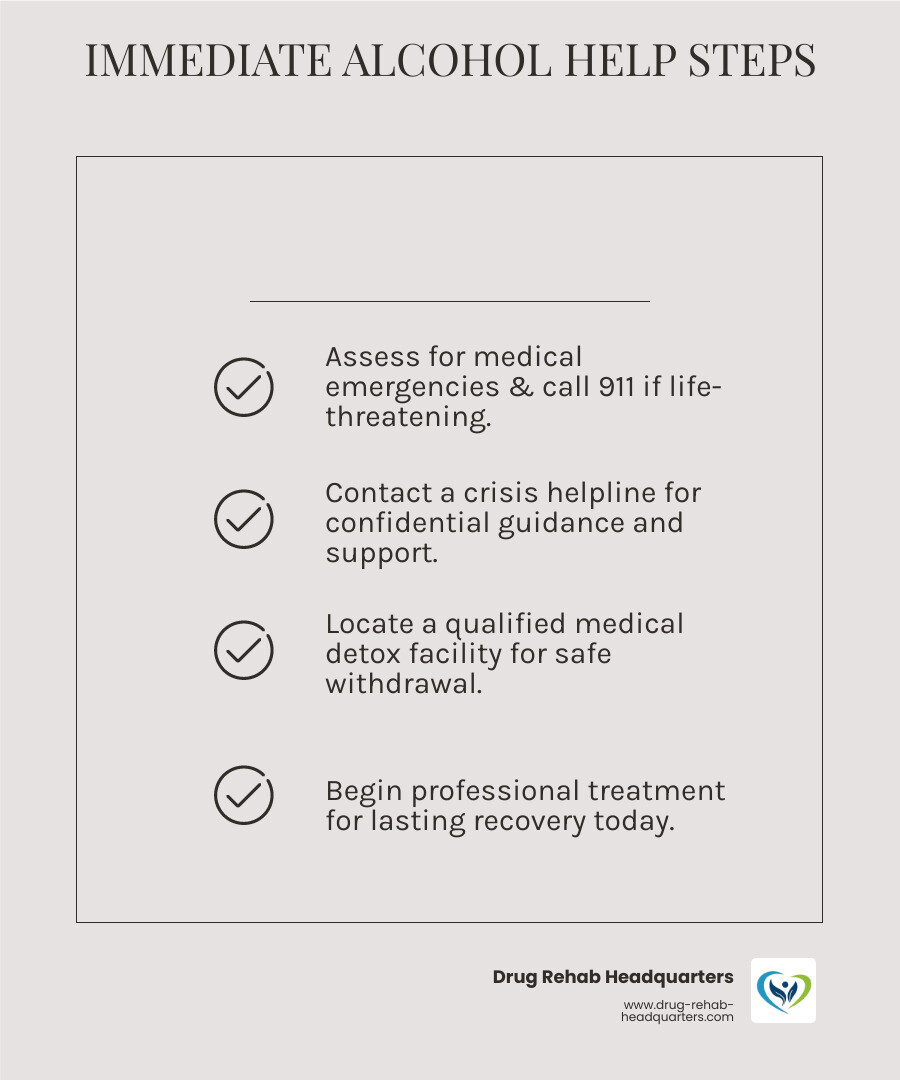
Your First Steps: How to Get Immediate Alcohol Help
Taking the first step toward immediate alcohol help is crucial, though it can feel overwhelming. Acting quickly can change a life. Whether for yourself or a loved one, clear paths to help are available now. We can guide you through these initial steps. To explore different treatment options, please see our guide to Alcohol Addiction Rehab Centers.
Use Crisis and Addiction Helplines
Helplines offer confidential, immediate support from trained professionals who provide guidance and referrals.
- 24/7 Availability: Helplines operate around the clock, so help is always available.
- Confidential Support: Calls are confidential, allowing you to speak openly without judgment.
- What to Expect When You Call: When you call, expect to answer questions about your safety, location, alcohol use, and mental health. This helps the counselor assess the situation and provide relevant resources.
Here are key national helplines for immediate alcohol help:
- 988 Suicide & Crisis Lifeline: Available 24/7 by calling or texting 988. This lifeline provides support for mental health crises, including those exacerbated by alcohol.
- SAMHSA’s National Helpline: Call 1-800-662-HELP (4357). This is a confidential, free, 24/7 information service for individuals and families facing substance use disorders. They provide referrals to local treatment facilities and support organizations.
- Veterans Crisis Line: For veterans and service members in crisis, call 988 and press 1, text 838255, or chat online.
- Drug Rehab Headquarters Helpline: Our counselors are available 24/7 to offer free, personalized guidance. We can help you understand your options and connect you with suitable, evidence-based treatment centers across our network of locations, including Alabama, Alaska, Arizona, Arkansas, California, Colorado, Connecticut, Delaware, Florida, Georgia, Hawaii, Idaho, Illinois, Indiana, Iowa, Kansas, Kentucky, Louisiana, Maine, Maryland, Massachusetts, Michigan, Minnesota, Mississippi, Missouri, Montana, Nebraska, Nevada, New Hampshire, New Jersey, New Mexico, New York, North Carolina, North Dakota, Ohio, Oklahoma, Oregon, Pennsylvania, Puerto Rico, Rhode Island, South Carolina, South Dakota, Tennessee, Texas, Utah, Vermont, Virginia, Washington, West Virginia, Wisconsin, and Wyoming. Reach out to us directly through our Contact page. For more information on helplines, visit our Alcohol Addiction Hotline page.
The Role of Emergency Services: 911 and Crisis Lines
Knowing when to use emergency services is critical. Some situations require immediate medical or law enforcement intervention beyond what a helpline can offer.
- When to Call 911: Always call 911 for life-threatening emergencies, including:
- Medical emergencies: Alcohol poisoning, severe injuries while intoxicated, loss of consciousness, or seizures.
- Overdose: If you suspect an overdose involving alcohol.
- Danger to self or others: If the person is violent or threatening harm.
- When to Seek Immediate Mental Health Support: For a mental health crisis, especially with suicidal thoughts, the 988 Suicide & Crisis Lifeline is the primary resource. They offer immediate counseling and local referrals, which is vital when alcohol worsens mental health conditions.
Do not hesitate to call when the situation is dire. For more information, please visit our Crisis support resources page.
Finding an Immediate Alcohol Help Center
After stabilizing the crisis, the next step is finding a facility for ongoing care. Many centers offer immediate alcohol help, including same-day admission.
- Medical Detox Facilities: For significant alcohol dependence, medical detox is a critical first step. These facilities provide 24/7 medical supervision to manage withdrawal symptoms safely.
- Inpatient Assessment: Many rehab centers offer immediate assessments to determine the right level of care.
- Same-Day Admission: Some facilities are set up for rapid admission, understanding the urgency.
- How to Find a Local Center: Our team at Drug Rehab Headquarters specializes in connecting individuals to treatment centers. We have an extensive network of Alcohol Addiction Rehab Centers across the US. We can help you Find an alcohol detox center that meets your needs and assist with checking if your insurance covers rehab.
The Dangers of Detoxing at Home

Detoxing from alcohol at home may seem like a private option, but for individuals with alcohol dependence, it can be incredibly dangerous and even life-threatening. This is due to Alcohol Withdrawal Syndrome (AWS). If you or a loved one is considering stopping heavy, prolonged drinking, seeking professional medical guidance is critical. Our page on Alcohol Detox Symptoms offers more detailed insights.
Understanding Alcohol Withdrawal Symptoms
Alcohol withdrawal occurs when a physically dependent person abruptly stops or reduces drinking. The body, accustomed to alcohol, reacts severely. Symptoms can range from uncomfortable to life-threatening.
- Mild to Moderate Symptoms:
- Anxiety and nervousness
- Tremors (the shakes)
- Nausea and vomiting
- Headaches
- Insomnia
- Irritability and mood swings
- Severe and Life-Threatening Symptoms: These usually appear 24-72 hours after the last drink.
- Hallucinations: Seeing, hearing, or feeling things that aren’t there.
- Seizures (grand mal): These can be fatal without medical management. An estimated 3-5% of people with alcoholism experience seizures during withdrawal.
- Delirium Tremens (DTs): A severe form of withdrawal with confusion, rapid heart rate, high blood pressure, and fever. Without medical care, the mortality rate for DTs can be as high as 20%.
The “kindling” phenomenon also highlights the danger of repeated home detox attempts. Each withdrawal can become more severe, increasing the risk of seizures and DTs. This makes professional supervision for immediate alcohol help essential. For a deeper dive, explore our Medical Detox Programs.
The Benefits of Medically-Supervised Detox
Medically-supervised detox is the safest first step for many seeking immediate alcohol help. These programs provide a controlled environment where professionals manage symptoms and prevent complications.
- Safety and Comfort: A medical detox facility offers 24/7 monitoring to address severe withdrawal symptoms immediately, reducing the risk of life-threatening complications.
- 24/7 Medical Care: Doctors and nurses are on hand to assess vital signs and administer medications.
- Medication to Manage Symptoms: Medications like benzodiazepines are used to alleviate withdrawal symptoms and prevent seizures and DTs. With medication, the mortality rate for DTs drops to about 1%.
- Nutritional Support: Detox programs provide balanced meals and fluids to address deficiencies caused by alcohol abuse.
- Seamless Transition to Further Treatment: After detox, a program can facilitate a smooth transition into comprehensive addiction treatment, which is crucial for long-term recovery.
Choosing a medically-supervised detox is a responsible decision that prioritizes safety and sets the foundation for successful recovery. Learn more about the alcohol detox process.
How to Help a Loved One Who Needs Immediate Alcohol Help

Watching a loved one struggle with alcohol addiction is agonizing. While you may feel helpless, your support can be a powerful catalyst for them to seek immediate alcohol help. It’s important to approach the situation with care and a clear understanding of your role.
Expressing Concern and Setting Boundaries
Your tone is critical when discussing a loved one’s drinking. Avoid judgmental language, which causes defensiveness. Instead:
- Use “I” statements: Focus on how their behavior affects you (e.g., “I’m worried about your health”).
- Choose the right time: Talk in a calm, private setting when you are both sober.
- Stop enabling: Do not make excuses, cover up mistakes, or provide money that could be used for alcohol. This prevents them from facing the consequences of their drinking.
- Set clear boundaries: Define what you will and will not tolerate and be consistent with consequences. Boundaries are about what you will do, not what you expect them to do.
Offering Practical Support
After expressing concern, offer practical help in finding resources. Drug Rehab Headquarters can be an invaluable partner in this process.
- Offer to research treatment options, call helplines, or provide transportation to appointments.
- Reassure them that immediate alcohol help is available and they are not alone.
Staging a Crisis Intervention
If your loved one is unwilling to seek help and their drinking is severely impacting their life, a structured intervention may be necessary. It is highly recommended to involve a professional interventionist to guide the process. The goal is to express concern and present a clear, pre-arranged treatment plan, not to shame or blame.
The Importance of Self-Care
Supporting someone with an addiction is emotionally taxing. It is vital to care for your own well-being.
- Seek your own support: Join groups like Al-Anon Family Groups or SMART Recovery Family & Friends.
- Consider counseling: A therapist can help you process emotions and develop healthy coping skills.
- Prioritize your needs: Don’t neglect your own health. Take breaks and maintain your social connections to avoid burnout. You cannot force someone into recovery.
For more resources, please refer to our Support for families of alcoholics page.
Frequently Asked Questions about Immediate Alcohol Help
We often hear many questions from individuals and families seeking immediate alcohol help. Here, we address some of the most common concerns to provide clarity and guidance during a challenging time.
Can I be forced into rehab?
In the United States, involuntary commitment laws for substance use disorders vary by state. Many states have laws that allow family members to petition a court for involuntary commitment if a person’s substance use poses a direct threat to themselves or others. These are often referred to as “Marchman Acts” (Florida) or “Casey’s Law” (Kentucky) or similar statutes in other states, including Alaska, Arizona, Arkansas, Colorado, Connecticut, Delaware, Georgia, Illinois, Indiana, Iowa, Kansas, Louisiana, Maryland, Massachusetts, Michigan, Minnesota, Mississippi, Missouri, Montana, Nebraska, Nevada, New Hampshire, New Jersey, New Mexico, New York, North Carolina, North Dakota, Ohio, Oklahoma, Oregon, Pennsylvania, Rhode Island, South Carolina, South Dakota, Tennessee, Texas, Utah, Vermont, Virginia, Washington, West Virginia, Wisconsin, and Wyoming.
The goal of these laws is usually to get individuals into assessment and initial treatment during a crisis, with the hope that they will then voluntarily engage in further recovery. While these laws exist, the ideal scenario is always voluntary treatment, as long-term recovery is most successful when the individual is committed to the process. If you are concerned about a loved one’s safety, contact our helpline or a legal professional in your state to understand the specific laws and procedures.
What is the very first step I should take if I want to stop drinking right now?
If you want to stop drinking right now, the very first step depends on your level of physical dependence.
- Assess for physical dependence: If you have been drinking heavily and consistently for an extended period, you are likely physically dependent. Signs include experiencing withdrawal symptoms (anxiety, tremors, nausea, headaches) when you try to cut back or stop.
- If dependent, do not stop abruptly without medical supervision: As we discussed, abrupt cessation can lead to dangerous and life-threatening withdrawal symptoms like seizures and Delirium Tremens.
- Call a helpline or medical professional immediately: Contact the SAMHSA National Helpline (1-800-662-HELP) or Drug Rehab Headquarters. Explain your situation honestly. They can help you determine the safest next steps, which may include connecting you to a medical detox facility for professional supervision. Your safety is our top priority.
Taking this crucial first step ensures you get the immediate alcohol help you need in the safest possible way. You can explore various alcohol addiction rehab options to find a program that suits your needs.
How much does immediate treatment cost?
The cost of immediate alcohol help and addiction treatment can vary widely depending on several factors, including the type of program, its duration, location, and the services offered. However, cost should never be a barrier to seeking help.
- Insurance Coverage: Most health insurance plans, including Medicaid and Medicare, are mandated to cover mental health and substance use disorder treatment under the Affordable Care Act. The extent of coverage varies by plan. We can help you Verify your insurance benefits now to understand what your policy covers.
- State-Funded Programs: Many states offer publicly funded treatment programs for individuals who meet certain income requirements or do not have insurance. SAMHSA’s National Helpline can provide referrals to these resources.
- Sliding Scale Fees: Some treatment centers offer services on a sliding scale, meaning the cost is adjusted based on your income and ability to pay.
- Free Resources: Support groups like Alcoholics Anonymous (AA) and SMART Recovery are free and offer invaluable peer support. While not a substitute for medical detox or professional therapy, they are vital components of a comprehensive recovery plan.
- Drug Rehab Headquarters: Our counselors can help you steer these financial aspects, connecting you with facilities that align with your budget and insurance coverage. We believe everyone deserves access to immediate alcohol help.
Your Path to Recovery Starts Today
We hope this guide has provided clarity and confidence in seeking immediate alcohol help. Recognizing the need for help is a sign of strength, not weakness. Whether you are struggling with alcohol yourself or are concerned about a loved one, help is not just available—it’s waiting for you right now.
- Recognize the Signs: Be aware of the physical, behavioral, and psychological red flags, including severe withdrawal symptoms or alcohol poisoning, which require immediate emergency intervention.
- Act Quickly: Do not hesitate to call 911 for medical emergencies or the 988 Lifeline and SAMHSA’s National Helpline for crisis support and treatment referrals.
- Prioritize Safety: Never attempt to detox from alcohol at home if you are physically dependent. Medically-supervised detox is crucial for managing dangerous withdrawal symptoms safely.
- Seek Support: For yourself and your loved ones, resources like Al-Anon and SMART Recovery Family & Friends offer invaluable support during this journey.
Recovery from alcohol addiction is a marathon, not a sprint, but your path begins with that very first step. At Drug Rehab Headquarters, we are committed to being your trusted partner throughout this journey. We offer 24/7 confidential support and personalized guidance to connect you with suitable, evidence-based, holistic treatment options across our extensive network of rehab centers in the United States.
Don’t let another moment slip away. Take the courageous step and reach out today. We are here to help you find the right immediate alcohol help and start on a healthier, sober future.