
Why Alabama’s Recovery Landscape Matters for Your Journey
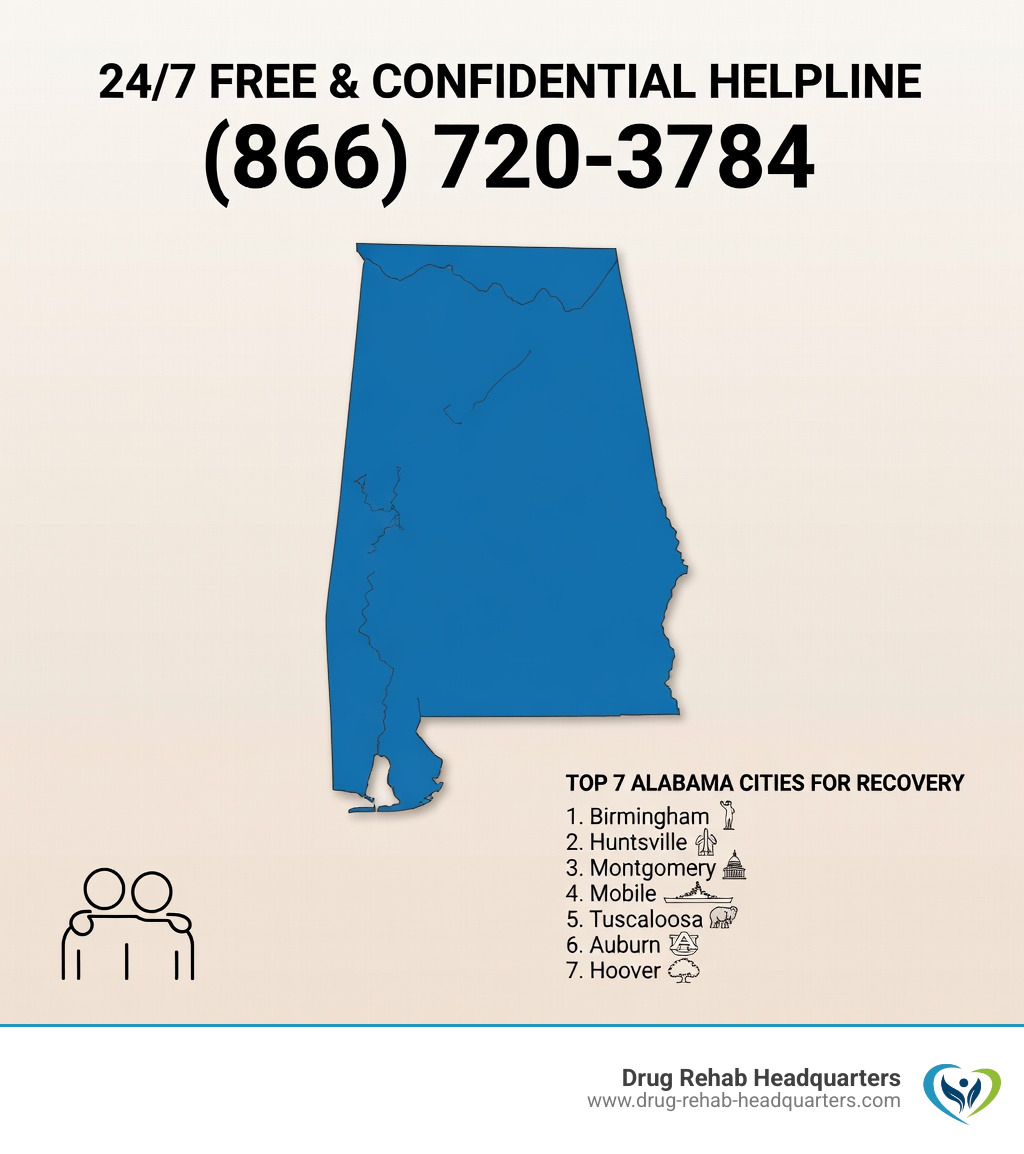
Top 7 Alabama Cities for Recovery offer a powerful combination of quality treatment centers, specialized programs, and supportive communities that can make all the difference in your path to sobriety. If you or a loved one is struggling with addiction, knowing where to find the best care is critical.
The Top 7 Alabama Cities for Recovery are:
- Birmingham – Largest selection of inpatient and outpatient facilities with dual diagnosis care
- Huntsville – Strong veteran programs and faith-based recovery options
- Mobile – Comprehensive MAT programs and coastal healing environments
- Montgomery – State capital resources with extensive Medicaid coverage
- Tuscaloosa – University-connected support and gender-specific treatment
- Gadsden – Specialized adolescent and family recovery programs
- Hoover – Luxury and executive rehab options with high success rates
Alabama faces serious addiction challenges. The state recorded 1,408 overdose deaths in 2021, equal to 30.1 deaths per 100,000 people—higher than the national average of 28.3. Approximately 17% of Alabama adults report excessive drinking, and 25% of individuals seeking treatment report methamphetamine as their primary drug, compared to just 15% nationwide.
But there’s hope. Alabama has 171 active substance abuse centers serving over 14,500 patients annually, including 124 inpatient facilities and 128 outpatient rehab centers. These facilities offer everything from medical detox and medication-assisted treatment to dual diagnosis care for co-occurring mental health conditions. Whether you need inpatient rehab, outpatient support, or specialized care for alcohol or drug addiction, these seven cities provide accessible, evidence-based treatment options.
Call (866) 720-3784 anytime, day or night, to speak with a compassionate counselor who can help you understand your options and find the right treatment center for your unique situation.
At Drug Rehab Headquarters, we’ve helped thousands of individuals and families navigate Alabama’s recovery landscape, connecting them with the most effective drug and alcohol treatment centers across the Top 7 Alabama Cities for Recovery. Our mission is to provide accurate, comprehensive information that empowers you to make informed decisions about your path to healing.
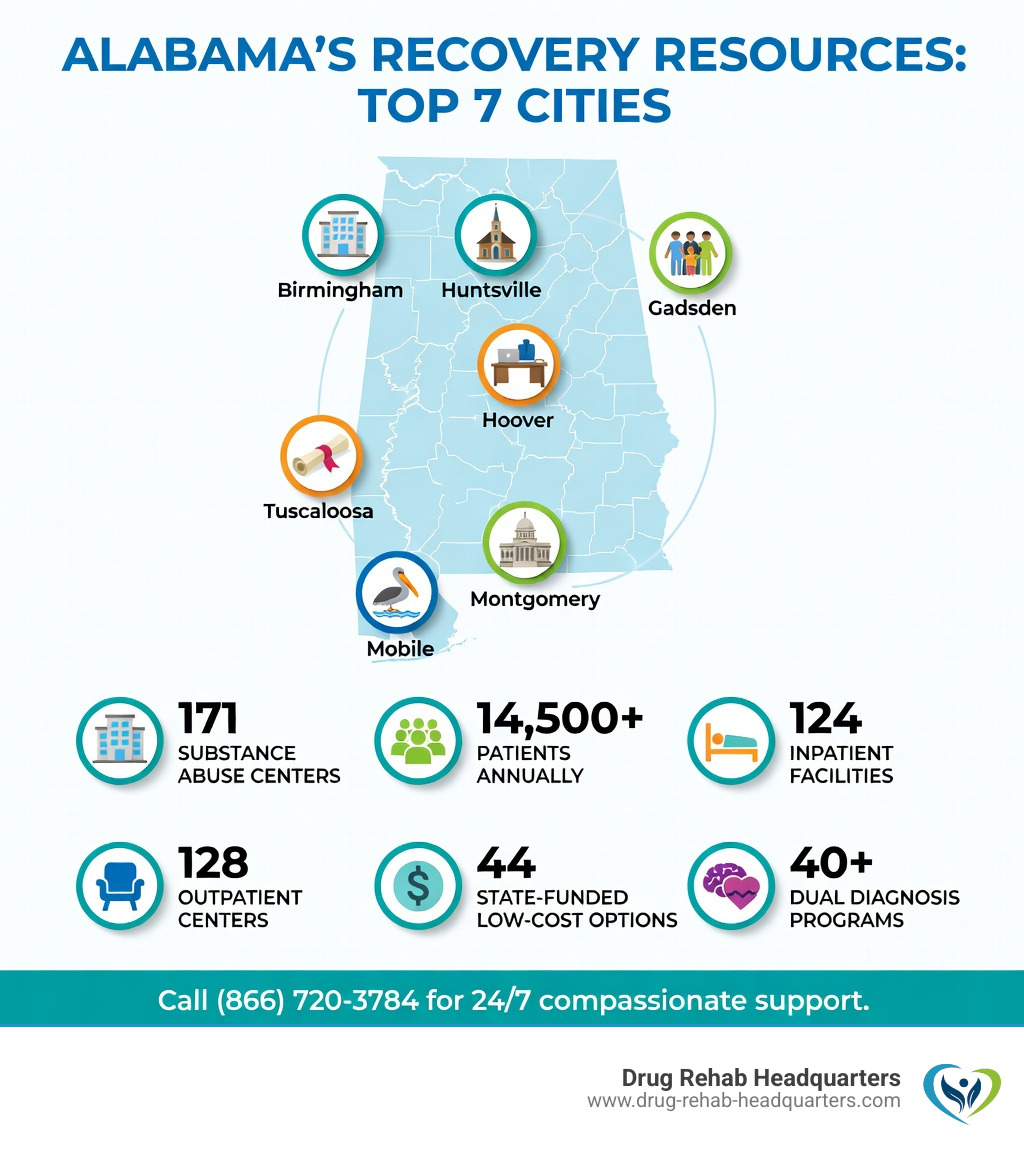
Top 7 Alabama Cities for Recovery
When we look at the Top 7 Alabama Cities for Recovery, we aren’t just looking at dots on a map. We are looking at hubs of transformation. Alabama’s recovery infrastructure is deeply rooted in Southern hospitality and a “neighbors helping neighbors” mentality. This culture translates into treatment environments that are warm, supportive, and focused on long-term success.
From the bustling medical corridors of Birmingham to the serene, forested retreats near Gadsden, these cities offer a diverse range of alcohol and drug treatment centers. Whether you are looking for a high-intensity inpatient rehab or a flexible outpatient program that allows you to maintain your career, the resources are available.
If you are feeling overwhelmed by the choices, you don’t have to navigate this alone. You can reach out to us at (866) 720-3784 for immediate assistance in finding a facility that fits your medical needs and your budget.
Why Birmingham is a Leader Among the Top 7 Alabama Cities for Recovery
Birmingham is undeniably the heart of Alabama’s healthcare system. As the state’s largest city, it serves as a primary medical hub, which is a massive advantage for those seeking inpatient rehab or specialized medical detox.
Why does Birmingham consistently rank at the top?
- Dual Diagnosis Expertise: Birmingham houses over 40 facilities that specialize in dual diagnosis treatment. This is crucial because many individuals struggling with substance use also face co-occurring mental health conditions like depression or PTSD.
- Urban Accessibility: For those in rural parts of the state, Birmingham offers the most robust transportation links and the highest density of specialists.
- Specialized Care: From high-end executive programs to state-funded facilities that offer sliding scale fees for the uninsured, Birmingham covers the entire economic spectrum of care.
- Jefferson County Trends: While Jefferson County has seen significant challenges with fentanyl and opioid-related overdoses (with a 27.9% increase in total overdose deaths recently), the city has responded by expanding access to Medication-Assisted Treatment (MAT) and life-saving resources like Naloxone.
If you are looking for a drug treatment center in the Magic City, call (866) 720-3784 to discuss the specific programs available, including those that accept Blue Cross Blue Shield of Alabama or Medicaid.
Accessing Care in the Top 7 Alabama Cities for Recovery
Each of the remaining cities in our top seven offers a unique “flavor” of recovery, ensuring that no matter your background, there is a place where you belong.
- Huntsville (The Rocket City): Known for its high-tech industry, Huntsville offers sophisticated recovery resources. It is particularly strong in veteran-specific care and faith-based initiatives. Programs here often integrate 12-step methodologies with professional career counseling, making it a great choice for those looking to rebuild their professional lives.
- Mobile: Situated on the Gulf Coast, Mobile provides a peaceful, restorative backdrop. It is a leader in opioid treatment, with several highly-rated Metro Treatment Centers offering MAT services. The coastal environment is often utilized in holistic therapies, providing a “breath of fresh air” for those in early recovery.
- Montgomery: As the state capital, Montgomery is the epicenter for state-funded resources. If you are looking for Alabama Department of Mental Health referrals or facilities that accept Medicare and Medicaid, Montgomery is an excellent place to start.
- Tuscaloosa: Home to the University of Alabama, this city offers vibrant, youth-oriented recovery communities. It also features standout gender-specific programs, such as long-term residential options for women that focus on trauma-informed care and parenting skills.
- Gadsden: This city is a hidden gem for families. Gadsden is home to specialized 90-day residential programs for adolescents (ages 12-18) situated on expansive, 70-acre campuses. These programs often integrate schooling with therapy, ensuring that young people don’t fall behind while getting healthy.
- Hoover: Located just south of Birmingham, Hoover offers some of the state’s most prestigious inpatient rehab facilities. These centers often feature luxury amenities, private rooms, and executive tracks for professionals who need to maintain some level of connectivity to their work while in treatment.
No matter which city calls to you, help is just a phone call away. Reach out to (866) 720-3784 to start your search.
Treatment Modalities and Inpatient Rehab
Understanding the different levels of care is the first step in choosing the right drug treatment center. Alabama’s facilities utilize evidence-based practices to ensure that every patient has the best possible chance at sustained sobriety.
Inpatient Rehab (Residential Treatment)
This is the “gold standard” for those with severe addictions or unstable home environments. You live at the facility 24/7, receiving round-the-clock medical and emotional support. In Alabama, the average stay ranges from 28 days to several months. These programs often include:
- Medical Detox: The essential first step to safely clear substances from your system.
- Individual and Group Therapy: Using techniques like Cognitive Behavioral Therapy (CBT) and Dialectical Behavior Therapy (DBT).
- Holistic Options: Many Alabama centers now include yoga, art therapy, and even equine therapy on rural campuses.
Outpatient Programs (PHP and IOP)
For those who cannot leave their family or work obligations, Partial Hospitalization Programs (PHP) and Intensive Outpatient Programs (IOP) offer a middle ground. You attend treatment for several hours a day but return home at night. This is also an excellent “step-down” phase after completing inpatient rehab.
Medication-Assisted Treatment (MAT)
MAT is highly effective for opioid and alcohol use disorders. By using FDA-approved medications like Suboxone, Methadone, or Naltrexone, patients can manage cravings and withdrawal symptoms, allowing them to focus on the psychological aspects of recovery. Alabama has nearly 130 outpatient centers that provide these life-saving services.
| Feature | Inpatient Rehab | Outpatient Rehab (IOP/PHP) |
|---|---|---|
| Living Arrangement | On-site (24/7) | At home |
| Structure | High intensity | Moderate intensity |
| Cost | Higher (includes room/board) | Lower |
| Best For | Severe addiction / Dual Diagnosis | Mild-to-moderate addiction |
| Medical Support | Constant medical supervision | Scheduled clinical visits |
If you’re unsure which level of care you need, our certified counselors at (866) 720-3784 can provide a free assessment to help guide you.
Navigating Costs and Insurance
One of the biggest hurdles to entering an alcohol and drug treatment center is the concern over cost. While it’s true that the average cost for a 30-day inpatient rehab program in Alabama can reach $58,607, there are many ways to make treatment affordable.
Private Insurance
Most private insurance providers, including Blue Cross Blue Shield of Alabama (which is very common in the state), Aetna, and UnitedHealthcare, cover a significant portion of substance abuse treatment. Under the Affordable Care Act, mental health and addiction services are considered essential health benefits.
Medicaid and Medicare
Alabama Medicaid covers essential services like detox, outpatient therapy, and MAT. While not every private facility accepts Medicaid, many state-funded and non-profit centers do. Montgomery and Birmingham have the highest concentration of facilities accepting these plans.
State-Funded and Low-Cost Options
Alabama has 44 state-funded rehab centers that offer treatment on a sliding scale. This means your cost is based on your income and assets. Some programs, like the Fellowship House in Birmingham, have been serving the community for over 60 years and offer subsidized care for those in need.
Financial Assistance
Don’t let a lack of insurance stop you. Many centers offer:
- Sliding scale fees for low-income residents.
- Scholarships or grants for those who qualify.
- Financing plans that allow you to pay for treatment over time.
For a detailed breakdown of which facilities in the Top 7 Alabama Cities for Recovery accept your specific insurance, call us at (866) 720-3784. We can perform a quick insurance verification for you at no cost.
Specialized Programs and Support Resources
Recovery is not a “one size fits all” process. The Top 7 Alabama Cities for Recovery excel because they offer specialized programming tailored to specific demographics.
Veterans Programs
Alabama has a high population of veterans, and cities like Huntsville and Birmingham offer dedicated VA Medical Centers and specialized tracks within private rehabs. these programs address the unique intersection of combat trauma, PTSD, and substance use.
Gender-Specific Care
Many individuals feel more comfortable in a gender-specific environment.
- Women’s Programs: Focus on issues like domestic violence, trauma, and childcare. Facilities like “A Reprieve for Women” in Tuscaloosa provide long-term, supportive environments.
- Men’s Programs: Often focus on accountability, life skills, and reintegration. The Shepura Men’s Center in Birmingham offers an 80-bed program specifically for men over 19.
Faith-Based Recovery
Faith is a cornerstone of life for many Alabamians. Numerous centers, such as “His Way” in Huntsville or the “Turning Point Foundation” in Thorsby, integrate Christian principles with evidence-based therapy. These programs often emphasize spiritual growth as a key component of the 12-step journey.
LGBTQ+ Support
Finding a safe, non-judgmental space is vital for LGBTQ+ individuals. Several progressive centers in Birmingham and Mobile offer specialized tracks that address the specific stressors and discrimination faced by the queer community.
Long-Term Support and Aftercare
Recovery doesn’t end when you leave the drug treatment center. Alabama has a robust network of:
- Narcotics Anonymous and Alcoholics Anonymous meetings.
- Oxford House locations for affordable, democratically-run sober living.
- SMART Recovery for those seeking a secular, cognitive-therapy-based alternative to 12-step programs.
For more information on local support groups or to find a specialist, you can also consult the APA Psychologist Locator or call our 24/7 helpline at (866) 720-3784.
Frequently Asked Questions
What is the average cost of inpatient rehab in Alabama?
The average cost for a 30-day inpatient rehab program is approximately $58,607. However, this varies wildly based on the facility’s amenities. Many programs are fully covered by private insurance, and state-funded options can reduce this cost to nearly zero for those who qualify based on income.
Are there free or low-cost drug and alcohol treatment centers in Alabama?
Yes. Alabama has 44 state-funded facilities. Additionally, organizations like 211 Connects Alabama can refer you to local non-profits and faith-based organizations that offer treatment regardless of your ability to pay.
How does methamphetamine and alcohol use impact recovery needs in Alabama?
Alabama has a higher-than-average rate of methamphetamine use, with 25% of treatment seekers citing it as their primary drug. This often requires longer-term residential care to allow the brain’s chemistry to stabilize. Excessive drinking is also prevalent (17% of adults), making medical detox a critical first step to manage potentially dangerous withdrawal symptoms.
Conclusion
The journey to sobriety is one of the most courageous paths you can take. While the statistics regarding addiction in Alabama can be sobering, the resources available in the Top 7 Alabama Cities for Recovery provide a clear path forward. From the medical expertise of Birmingham to the specialized adolescent care in Gadsden, there is a solution waiting for you.
At Drug Rehab Headquarters, we believe that everyone deserves a life free from the bonds of addiction. Our team of certified counselors—many of whom have their own lived experience in recovery—is ready to offer you personalized, 24/7 support. We don’t just give you a list of names; we help you find a holistic, evidence-based program that treats you as a whole person.
Don’t wait for “tomorrow” or a “better time.” The best time to start your recovery is right now. Call (866) 720-3784 today to speak with someone who truly understands. Whether you are looking for inpatient rehab, outpatient services, or just a listening ear to help you find Alabama treatment centers, we are here for you. Your new life is just one phone call away.