
Why Alcohol Rehab Cost Stops People From Getting Help — And What You Should Know First
Alcohol rehab cost is one of the first things people search for when they or a loved one needs help — and for good reason. Money is often the deciding factor between getting treatment and staying stuck.
Here’s a quick breakdown of what you can expect to pay:
| Program Type | Typical Cost Range |
|---|---|
| Medical Detox | $1,500 – $4,000 (avg. 5 days) |
| 30-Day Inpatient | $5,000 – $20,000 |
| 60–90 Day Inpatient | $12,000 – $60,000 |
| Luxury Inpatient | $60,000 – $150,000/month |
| Partial Hospitalization (PHP) | $7,000 – $20,000/month |
| Intensive Outpatient (IOP) | $3,500 – $11,000 |
| Standard Outpatient | $1,400 – $10,000 |
| State-Funded / Non-Profit | Free – low cost |
The range is wide. That can feel overwhelming — especially when you’re already dealing with a crisis.
The truth is, most insurance plans cover addiction treatment under the Affordable Care Act. And for those without insurance, free and low-cost options exist through government programs, non-profits, and sliding-scale facilities. You don’t have to figure this out alone — call (866) 720-3784 any time for free, confidential guidance.
This guide walks you through everything: what different programs actually cost, how insurance works, and how to find financing if you need it.
At Drug Rehab Headquarters, we’ve spent years helping individuals and families understand alcohol rehab cost and navigate the full range of drug and alcohol treatment options — from free inpatient rehab to luxury residential care. We’re here to make that process simpler and less stressful for you.
Learn more about alcohol rehab cost:
Understanding the Average Alcohol Rehab Cost in 2025
When we look at alcohol rehab cost in 2025, we see a spectrum that ranges from entirely free community-based programs to luxury retreats costing over $100,000 per month. For most Americans, the “standard” experience falls somewhere in the middle. On average, a 30-day inpatient rehab program costs between $20,000 and $44,000, though more affordable residential options can be found for around $6,000.
Outpatient programs offer a more budget-friendly alternative for those with mild to moderate addictions. A typical three-month outpatient program usually costs between $2,000 and $8,000. However, if you require more intensive support, such as a Partial Hospitalization Program (PHP), you might see monthly costs ranging from $7,000 to $20,000.
It is also vital to account for the initial step: detoxification. Medical detox is essential for alcohol withdrawal, which can be life-threatening. This process typically lasts about five days and costs between $1,500 and $4,000, or roughly $300 to $800 per day. If you are concerned about these initial fees, please reach out to us at (866) 720-3784 to discuss facilities that bundle these costs.
| Level of Care | Average Daily Cost (No Insurance) | Average Daily Cost (60% Insurance) |
|---|---|---|
| Inpatient/Residential | $629.33 | $251.73 |
| Outpatient Program | $56.83 | $22.73 |
| Medical Detox | $525.00 | $210.00 |
To dive deeper into these numbers, you can explore our detailed guide on the cost of rehab.
How Program Length Impacts Alcohol Rehab Cost
The duration of treatment is one of the most significant variables in your total bill. While a 30-day stay is common, research often suggests that longer stays—such as 60 or 90 days—lead to better long-term outcomes. Naturally, a 90-day program will cost significantly more, often ranging from $12,000 to $60,000.
However, cost-efficiency isn’t just about the shortest stay. Many people find that transitioning from a short inpatient stay to an Intensive Outpatient Program (IOP) provides the necessary support at a lower price point. Scientific research on intensive outpatient effectiveness shows that for many individuals, IOPs are just as effective as residential treatment but without the high overhead of room and board.
If you are unsure whether a 30-day or 90-day program is right for your needs and your budget, our counselors are available 24/7 at (866) 720-3784 to help you weigh your options.
Hidden Expenses Beyond the Base Alcohol Rehab Cost
When planning for recovery, it is easy to focus solely on the “sticker price” of the program. However, we encourage families to look closely at potential hidden fees that can inflate the total alcohol rehab cost. These may include:
- Admission Fees: Some facilities charge a one-time processing fee ranging from $3,000 to $4,000.
- Pharmacotherapy: Medications used during detox or for long-term maintenance (like Naltrexone or Acamprosate) may be billed separately.
- Medical Testing: Regular lab work and drug screenings can add to the monthly total.
- Aftercare Planning: While some centers include this, others charge for specialized discharge planning and sober living referrals.
- Sober Living: Transitioning to a sober living home generally costs about $800 to $1,750 per month in rent.
By identifying these costs early, you can avoid financial surprises during a sensitive time. Call us at (866) 720-3784 for help reviewing a facility’s fee schedule.
Factors That Influence the Total Price of Treatment
Why does one drug treatment center cost $5,000 while another costs $50,000? Several factors influence the final price tag:
- Geographic Location: Real estate prices play a huge role. A facility in a high-cost coastal area or a major urban center will naturally charge more than a rural center in the Midwest.
- Amenities: Luxury rehabs offer private suites, gourmet chefs, equine therapy, and spa services. These “resort-style” features can push costs to $100,000 per month.
- Staff Credentials: Programs with a high ratio of board-certified physicians and specialized psychiatrists often have higher tuition to cover these professional salaries.
- Specialized Care: If you require dual-diagnosis treatment for co-occurring mental health disorders (like depression or PTSD), the increased clinical requirements will likely increase the cost.
For a personalized assessment of which factors are most important for your recovery, call (866) 720-3784.
Regional Variations and Florida Specific Costs
We often see significant price swings based on the state. For instance, the average cost for a person in Florida seeking substance abuse treatment is approximately $56,640. Florida is a major hub for recovery, and while it offers many high-end private options, it also has robust state-funded resources overseen by the Florida Department of Children and Families.
In Florida, families may also utilize the Marchman Act, a legal means to encourage individuals into treatment, though this can involve separate legal fees. Travel expenses are another factor; if you are flying to a destination rehab in Florida or Arizona, you must budget for airfare and local transport.
Navigating Insurance Coverage for Addiction Services
The most common way to manage alcohol rehab cost is through health insurance. Thanks to the Affordable Care Act (ACA), substance use disorder treatment is considered one of the 10 elements of essential health benefits. This means insurance companies cannot deny you coverage for a pre-existing addiction.
Furthermore, the Mental Health Parity and Addiction Equity Act (MHPAEA) requires that insurance providers offer the same level of benefits for mental health and substance use as they do for surgical and medical care. Common providers that often cover rehab include Aetna, Blue Cross Blue Shield, Cigna, and UnitedHealthcare.
To understand the specifics of your policy, you can read more on our page: Does Insurance Cover Rehab?. If you need immediate help, call (866) 720-3784 and we can help you understand what your provider typically covers.
Verifying Your Alcohol Rehab Cost with Medicare and Medicaid
For those using government-sponsored insurance, the path is slightly different but still very accessible. Medicare covers alcohol rehab if it is deemed “medically necessary” and provided by a Medicare-approved facility.
- Part A covers inpatient stays (hospital or residential).
- Part B covers outpatient therapy, screenings, and doctor visits.
- Part D covers the medications used during treatment.
Medicaid eligibility varies by state, but it remains a vital lifeline for millions. To see if your specific plan is accepted at a facility near you, please verify your insurance coverage through our secure portal or call us at (866) 720-3784.
Financing Options and Affordable Treatment Solutions
If insurance doesn’t cover the full amount, or if you are uninsured, there are still many ways to make treatment happen. We believe that financial constraints should never be the reason someone is denied a chance at life.
- Medical Loans: Companies like M-Lend offer specialized healthcare financing with deferred interest or flexible repayment terms.
- Healthcare Credit Cards: Some providers accept CareCredit, which works specifically for medical expenses.
- Payment Plans: Most rehab centers are willing to work with families to create internal monthly payment schedules.
- Sliding Scale Fees: Many non-profit centers adjust their prices based on your income level.
- Scholarships: Some private facilities offer partial or full scholarships for individuals who demonstrate financial hardship and a strong commitment to recovery.
Discover more strategies in our guide: Smart Choices, Sober Future: Affordable Drug Treatment Solutions.
Free and Low-Cost Inpatient Rehab Resources
For those with no financial resources, help is still available. SAMHSA (the Substance Abuse and Mental Health Services Administration) provides grants to every state to fund treatment for those in need. Additionally, organizations like the Salvation Army and various faith-based initiatives offer residential programs at no cost.
While these programs may have waiting lists, they provide high-quality, evidence-based care. You can find a comprehensive list here: The Ultimate List of Free Inpatient Rehab Centers Near You. For help finding an open bed, call our 24/7 support line at (866) 720-3784.
The Long-Term ROI: Rehab vs. Untreated Addiction
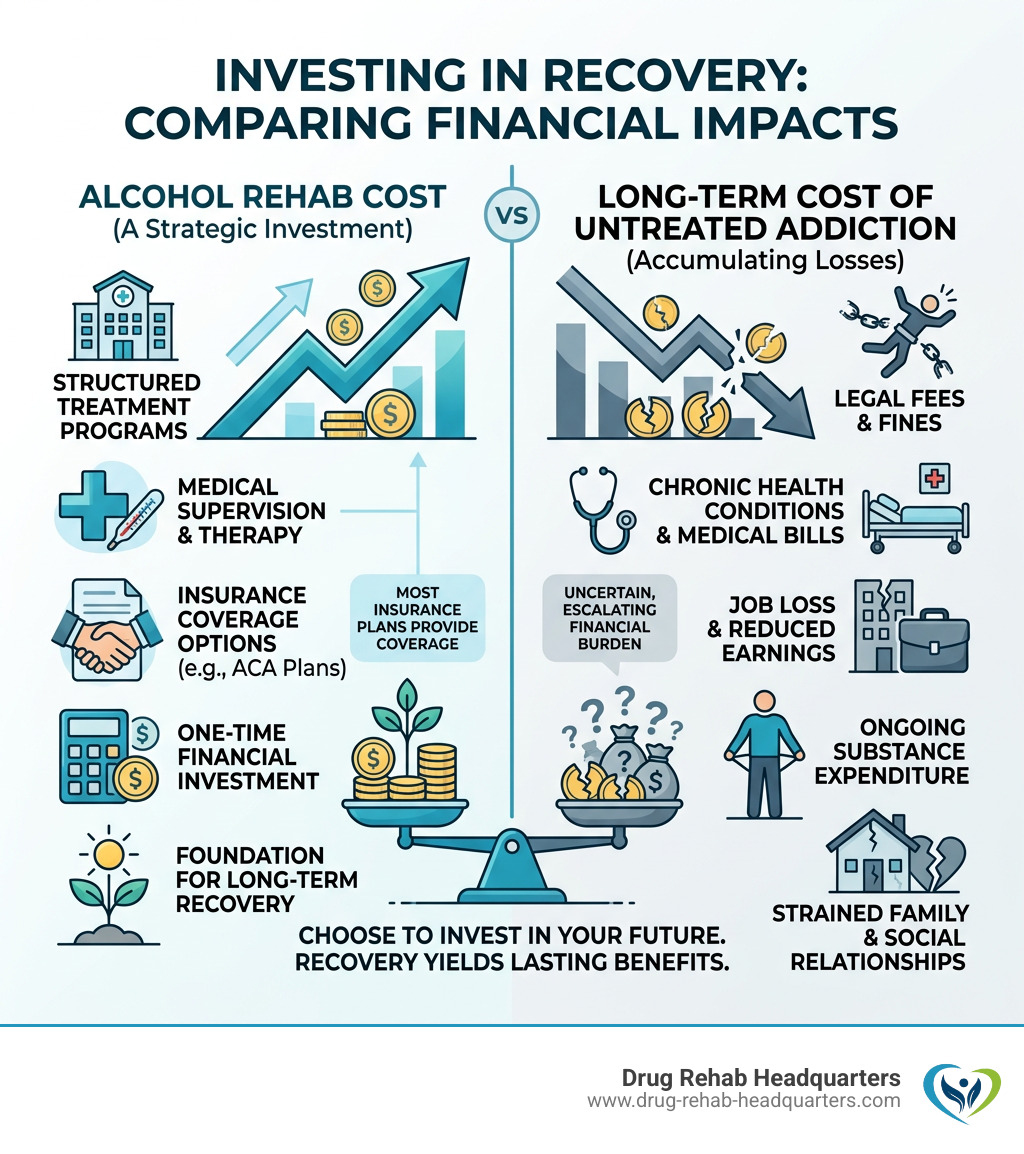
When we talk about alcohol rehab cost, it is important to flip the script and look at the cost of not going. Untreated addiction is incredibly expensive. Consider the following:
- Direct Costs: A heavy drinker spending $10 a day on a 12-pack spends over $3,600 a year just on the alcohol.
- Lost Productivity: Addiction often leads to job loss or missed promotions.
- Legal Fees: A single DUI can cost $10,000 or more in fines, legal fees, and increased insurance rates.
- Healthcare: Long-term alcohol use leads to organ damage, which can result in medical bills totaling hundreds of thousands of dollars for transplants or chronic care.
Research on the financial burden of substance abuse indicates that substance abuse costs the U.S. over $532 billion annually. In contrast, for every $1 spent on treatment, society saves roughly $12 in reduced health and social costs.
Recovery is an investment that pays dividends in your health, your career, and your relationships. To learn more about this perspective, read The Price of Recovery: Understanding Rehab Costs and Finding Free Options.
Frequently Asked Questions about Alcohol Rehab Cost
We know you have questions. Here are the most common ones we hear at (866) 720-3784.
Will my employer find out if I use insurance for rehab?
No. Federal laws, including HIPAA and specific substance abuse confidentiality regulations, prevent insurance companies from disclosing your treatment details to your employer. Your privacy and insurance rights are protected. Most people can take a leave of absence through the Family and Medical Leave Act (FMLA) without having to disclose the specific nature of their medical condition.
Does insurance cover luxury drug treatment centers?
Insurance typically covers the clinical portion of treatment (detox, therapy, medical monitoring) regardless of the facility. However, they usually will not pay for the “luxury” upgrades like a private room, gourmet meals, or spa services. In these cases, insurance might cover 30-50% of the total bill, leaving the family to pay the “room and board” difference out-of-pocket.
What is the average daily cost for inpatient rehab?
Without insurance, the average daily cost for residential treatment is approximately $629. With 60% insurance coverage, that daily out-of-pocket cost drops to about $251. This daily rate covers your housing, all meals, 24/7 medical supervision, and multiple therapy sessions per day.
Conclusion
Navigating alcohol rehab cost can feel like a maze, but you don’t have to walk it alone. At Drug Rehab Headquarters, our mission is to connect you with the resources you need to heal. We offer 24/7 free support from certified counselors—many of whom have lived experience with addiction and recovery.
Whether you are looking for a high-end residential program or a free inpatient rehab, we provide personalized guidance to help you find evidence-based, holistic treatment options across North America. Your life is priceless, and recovery is possible regardless of your budget.
Take the first step today. Search for a rehab center near you or call us right now at (866) 720-3784 for a free, confidential consultation. We are here for you every step of the way.