
Why Whole Person Healing Matters in Recovery from Alcohol Use Disorder
Whole person healing is a holistic approach to recovery that treats the entire individual—mind, body, and spirit—rather than focusing solely on stopping alcohol use. It addresses the root causes of addiction and co-occurring issues to help you build a fulfilling, healthy life beyond sobriety.
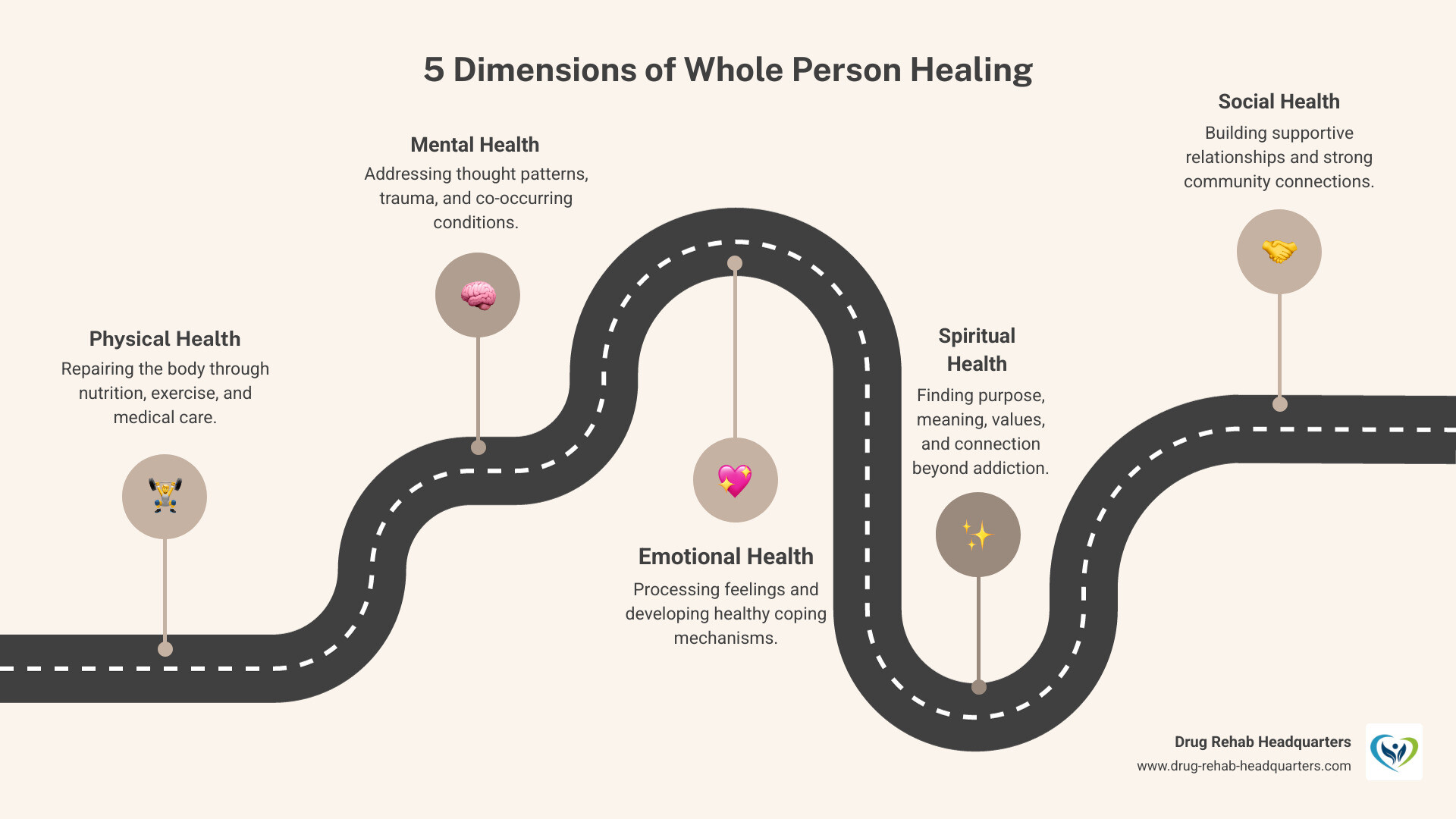
Quick Answer: What Is Whole Person Healing?
- Physical: Repairing the body through nutrition, exercise, and medical care
- Mental: Addressing thought patterns, trauma, and co-occurring mental health conditions
- Emotional: Processing feelings and developing healthy coping mechanisms
- Spiritual: Finding purpose, meaning, and connection beyond addiction
- Social: Building supportive relationships and community connections
For many people struggling with alcohol use disorder, achieving sobriety feels like the ultimate goal. You count the days, fight through cravings, and work hard to stay clean.
But then what?
Sobriety is absolutely essential—but it’s just the starting point. True recovery means building a life you don’t want to escape from. It means healing the pain, trauma, loneliness, or hopelessness that may have fueled your drinking in the first place.
This is where whole person healing comes in. Instead of only treating the symptom (drinking), this approach asks: What does your body need to heal? What does your mind need to process? What gives your life meaning? It recognizes that addiction doesn’t exist in a vacuum—it’s connected to your physical health, mental state, past experiences, relationships, and sense of purpose.
Traditional treatment often focuses on abstinence alone. Whole person healing goes further, integrating therapies like mindfulness, nutrition, exercise, trauma processing, and community support. Research from the National Center for Complementary and Integrative Health shows that addressing multiple interconnected areas—biological, behavioral, social, and environmental—leads to better long-term outcomes. Programs like the VA’s Whole Health System demonstrate that when we shift from disease-centered care to personalized, holistic approaches, people don’t just stop using substances—they actually thrive.
At Drug Rehab Headquarters, we specialize in connecting individuals and families with treatment centers that accept whole person healing, understanding that lasting recovery addresses every dimension of your well-being. We’ve helped countless people find programs that treat not just their addiction, but the whole person behind it.
Beyond Symptoms: What Is Whole Person Healing?
Whole person healing is a comprehensive and integrated approach to well-being that considers you as a unique individual, encompassing all aspects of your existence rather than focusing solely on isolated symptoms or diseases. It’s about moving from merely surviving to truly thriving.
Historically, our healthcare system has been primarily disease-centered. When you visit a doctor, the focus is often on diagnosing and treating a specific ailment, like a broken bone or a bacterial infection. While this approach is crucial for acute medical problems, it often falls short when addressing complex, chronic conditions like alcohol use disorder (AUD) or mental health challenges, which are deeply intertwined with lifestyle, environment, and personal experiences.
Whole person healing shifts this paradigm. It emphasizes restoring health, promoting resilience, and preventing diseases across your lifespan. Instead of just asking “What’s the matter with you?”, we ask “What matters to you?”. This profound shift empowers you as an active partner in your healing journey, moving you from a passive recipient of care to an engaged participant in your own proactive wellness.
Consider how this approach differs from traditional models:
| Aspect | Traditional Disease-Centered Model | Whole Person Healing Model |
|---|---|---|
| Focus | Symptoms, specific diseases, pathology | Root causes, overall well-being, health promotion |
| Patient Role | Passive recipient of treatment, follows doctor’s orders | Active partner, engaged in decision-making, self-empowered |
| Care Approach | Reactive, fragmented (specialists for each body part) | Proactive, integrated (mind, body, spirit, social, environment) |
| Goal | Absence of disease, symptom management | Restoration of health, resilience, fulfilling life |
| Treatment Modalities | Primarily pharmaceutical, surgical, acute interventions | Blend of conventional, complementary, and lifestyle interventions |
As the National Center for Complementary and Integrative Health (NCCIH) explains, Whole Person Health: What It Is and Why It’s Important involves looking at the whole person—not just separate organs or body systems—and considering multiple factors that promote either health or disease. This involves empowering individuals, families, communities, and populations to improve their health in interconnected biological, behavioral, social, and environmental areas.
The Core Philosophy of Whole Person Healing
At its heart, the philosophy of whole person healing is built on several foundational tenets:
- Holism and Interconnectedness: We are not just a collection of parts; we are an integrated system. Your physical health impacts your mental state, your emotional well-being affects your relationships, and your spiritual outlook can influence your resilience. This approach recognizes that true healing requires addressing all these interconnected aspects simultaneously.
- Individualized Care: There’s no one-size-fits-all solution for recovery. Whole person healing respects your unique experiences, values, needs, and goals. It’s about crafting a personalized plan that resonates with what matters most to you.
- Empowerment: This approach empowers you to take an active role in your health journey. It provides tools, knowledge, and support, fostering self-awareness and self-efficacy, helping you realize your innate capacity for healing.
- Health vs. Absence of Disease: As the World Health Organization (WHO) recognized, health is far more than just the absence of disease. It’s about a state of complete physical, mental, and social well-being, and a dynamic resource for living well. This concept, sometimes referred to as “salutogenesis,” focuses on the origins of health and what factors contribute to well-being, rather than just the origins of disease.
- Integration of Knowledge: It seeks to synergize the power of modern biomedicine with complementary therapies and the individual’s potential for healing. This means moving beyond a purely analytical, biochemical approach to healthcare and embracing a more synthetic, transdisciplinary perspective.
The Key Dimensions of a Person
To truly understand and engage in whole person healing, we must consider all the fundamental dimensions that make up who you are. These often include:

- Mind (Mental/Emotional): This encompasses your thoughts, beliefs, attitudes, feelings, and how you process emotions. It includes mental health conditions like anxiety and depression, your coping mechanisms, resilience, and cognitive functions. Addressing trauma and developing emotional regulation skills are critical here.
- Body (Physical): This is your physical health—nutrition, sleep, exercise, chronic pain, and any medical conditions. It’s about how you nourish and move your body, and how physical imbalances can contribute to or stem from other issues.
- Spirit (Purpose/Meaning): This dimension relates to your sense of purpose, meaning in life, values, ethics, and connection to something larger than yourself. It doesn’t necessarily mean organized religion, but rather a personal sense of hope, transcendence, and inner peace.
- Social (Community/Relationships): Humans are social creatures. This dimension includes your relationships with family, friends, and community, as well as your social support networks. Strong, healthy connections are vital for recovery and overall well-being.
- Environmental (Surroundings): Your physical and social environment—where you live, work, and spend your time—significantly impacts your health. This includes factors like safety, access to healthy food, clean air and water, and supportive surroundings.
The Science of Connection: How Mind, Body, and Spirit Influence Recovery
The idea that our mind, body, and spirit are intricately linked isn’t just a philosophical concept; it’s increasingly supported by scientific research. The mind-body connection, in particular, is a powerful force in both health and disease, especially in the context of alcohol use disorder.
When we experience stress, our bodies release hormones like cortisol, which, in chronic excess, can wreak havoc on nearly every system, from our immune function to our cardiovascular health. This is why psychological stress can manifest physically as headaches, high blood pressure, or digestive issues. Conversely, physical pain or illness can profoundly impact our mood and mental state.
For individuals with AUD, this connection is particularly relevant. Long-term alcohol use damages the body, impacting the brain, liver, heart, and digestive system. This physical toll often exacerbates mental health conditions, creating a vicious cycle. Moreover, trauma, a common underlying factor in addiction, isn’t just a mental scar; it can become “stored” in the body, influencing physical sensations and responses. As one study highlights, yogic practices, which emphasize this connection, can promote recovery from and treatment of addiction by helping individuals reconnect with their bodies and reduce stress. You can explore more about Research on the mind-body connection in addiction recovery.
Neurotransmitters, the chemical messengers in our brain, play a critical role. Alcohol disrupts the balance of these chemicals, affecting mood, pleasure, and stress responses. Therapies that support the mind-body connection, such as meditation or exercise, can help restore this balance, improving emotional regulation and reducing cravings. For instance, massage therapy has been shown to decrease cortisol levels while increasing serotonin and dopamine, counteracting the dopamine drop experienced in withdrawal.
Addressing Co-Occurring Disorders
It’s common for individuals struggling with AUD to also experience co-occurring mental health conditions such as anxiety, depression, or PTSD. In fact, these conditions often fuel each other, with alcohol sometimes used as a form of self-medication to cope with distressing thoughts or feelings. This creates a challenging cycle that traditional, siloed treatment approaches often fail to break.
This is where the whole person healing model truly shines. It advocates for integrated treatment, where both AUD and any co-occurring mental health issues are addressed simultaneously by a collaborative team. Our dedicated team at Drug Rehab Headquarters understands the complexities of these challenges and can connect you with a Dual Diagnosis Treatment Facility that specializes in this integrated approach. By treating both conditions concurrently, we can:
- Break the cycle of self-medication.
- Provide more effective coping strategies for mental health symptoms.
- Reduce the risk of relapse.
- Improve overall quality of life and long-term recovery outcomes.
The Role of Spirituality and Purpose
When we talk about the “spirit” in whole person healing, we’re not necessarily referring to organized religion. Instead, we mean your sense of purpose, meaning, values, and connection to something larger than yourself. This could be a connection to nature, a community, a creative pursuit, or a personal philosophy.
For many in recovery, addiction can strip away a sense of meaning and hope. Reconnecting with this spiritual dimension is a powerful catalyst for healing. It helps you find motivation beyond simply avoiding alcohol, giving you a reason to accept a fulfilling life. Studies have even shown that People with strong spiritual beliefs may heal faster and live longer, with improved substance abuse outcomes.
This spiritual component fosters:
- Hope: A belief in a better future and your capacity to achieve it.
- Resilience: The inner strength to overcome challenges and setbacks.
- Connection: A sense of belonging to something greater than yourself, whether it’s a higher power, humanity, or the natural world.
- Values: A clear understanding of what truly matters to you, guiding your actions and decisions in recovery.
Finding meaning and purpose is a deeply personal journey, and it’s a cornerstone of sustainable recovery. It helps you build an identity beyond addiction and refind the joy and richness of life.
The Pillars of Recovery: Practical Tools for Whole Person Healing
At Drug Rehab Headquarters, we believe that effective recovery from AUD involves a comprehensive approach that integrates the best of evidence-based practices with complementary therapies. This combination allows for a truly personalized treatment plan custom to your unique needs, addressing all dimensions of your well-being. Our focus is on connecting you with programs that offer Holistic Drug Addiction Treatment and comprehensive Behavioral Health services.
Here are some practical tools and therapeutic modalities commonly used in whole person healing for AUD:
Therapeutic Modalities
- Mindfulness & Meditation: These practices train you to focus on the present moment, observing thoughts and feelings without judgment. They are incredibly effective for stress reduction, helping manage cravings, and improving emotional regulation. By cultivating a greater awareness of your internal state, you can respond to triggers with intention rather than reaction.
- Cognitive-Behavioral Therapy (CBT): A cornerstone of addiction treatment, CBT helps you identify and challenge negative thought patterns and behaviors that contribute to alcohol use. It equips you with practical skills to cope with stress, manage cravings, and develop healthier responses to challenging situations.
- Yoga & Movement Therapy: Physical movement is a powerful way to reconnect with your body, especially after periods of dissociation or neglect due to addiction. Yoga, tai chi, and other movement therapies can help release stored tension and trauma, improve mood, increase body awareness, and promote relaxation. Studies show yogic practices can significantly aid addiction recovery.
- Nutritional Therapy: What you eat profoundly impacts your brain chemistry and overall physical health. Nutritional therapy focuses on repairing the physical damage caused by alcohol, stabilizing mood through balanced blood sugar, and supporting gut health (the “gut-brain axis” is increasingly recognized as vital for mental well-being).
- Acupuncture: A component of traditional Chinese medicine, acupuncture involves inserting fine needles into specific points on the body. It’s believed to stimulate the central nervous system, releasing chemicals that can reduce withdrawal symptoms, alleviate pain, and balance energy, making detox and recovery more comfortable.
- Art & Music Therapy: These creative therapies provide non-verbal avenues for expression, allowing you to process difficult emotions, trauma, and experiences that might be challenging to articulate verbally. They can foster self-findy, reduce stress, and promote spiritual recovery by engaging your innate creativity.
Building Healthy Habits for Life
- Importance of Sleep: Chronic alcohol use severely disrupts sleep patterns. Restorative sleep is essential for brain repair, mood regulation, and physical energy. Establishing a consistent sleep schedule and healthy sleep hygiene can dramatically improve your mental and physical health.
- Exercise for Mental Health: Regular physical activity is a natural mood booster and stress reliever. It releases endorphins, reduces anxiety and depression, and provides a healthy coping mechanism. Whether it’s walking, swimming, or dancing, finding an enjoyable form of exercise is key.
- Creating Routines: Addiction often thrives in chaos. Establishing consistent daily routines around sleep, meals, work, and leisure can provide structure, reduce decision fatigue, and create a sense of stability, which is vital for recovery.
- Stress Management Techniques: Learning effective ways to manage stress—such as deep breathing, progressive muscle relaxation, or spending time in nature—prevents stress from spiraling into cravings or relapse.
- Healthy Nutrition: As mentioned, what you eat impacts how you feel. A balanced diet rich in whole foods supports brain health, energy levels, and overall physical recovery.
A growing body of research consistently suggests the benefits of these healthy behaviors, environments, and policies in maintaining health and preventing, treating, and even reversing chronic diseases. For a deeper dive into comprehensive support, explore our Addiction Recovery Services Complete Guide.
Building Your Circle of Care: Integrating Support for Lasting Sobriety
Whole person healing recognizes that recovery is not a solitary journey. It thrives in a supportive healing environment, fostered by collaborative care, and centered around you, the patient. This involves not just your individual efforts but also the crucial role of healthcare providers, family, friends, and the wider community. For a comprehensive overview of treatment options, refer to our Addiction Treatment Center Complete Guide.
The Role of Healthcare Providers and Systems
Integrating whole person healing into healthcare systems is a significant shift from the traditional disease-centered model. It requires providers to look beyond medical charts and engage with you as a complete individual, understanding your values, life circumstances, and what truly matters to your well-being.
A prime example of this integration is the U.S. Department of Veterans Affairs (VA) Whole Health System of Care. This system aims to improve veterans’ health by addressing the lifestyle and environmental root causes of chronic disease, shifting from merely treating conditions to empowering veterans to make lifestyle changes and manage their health proactively. The VA’s approach centers on “what matters to you, not what is the matter with you,” developing personalized health plans based on individual values and goals.
For providers, this means:
- Adopting a person-centered approach: Focusing on your life mission, aspirations, and purpose.
- Training: Healthcare professionals are being trained to use tools like the Personal Health Inventory (PHI), which helps them understand what matters most in a patient’s life, fostering a deeper, more meaningful therapeutic relationship.
- Collaborative care: Working as part of an interprofessional team that coordinates physical, mental, emotional, and spiritual support.
This systemic change helps ensure that when you seek help for AUD, you’re not just getting treatment for your addiction but also comprehensive support for your overall health.
The Power of Family, Friends, and Community
Your social network plays an indispensable role in whole person healing. A supportive circle of family, friends, and community members can provide encouragement, accountability, and a sense of belonging—all vital for sustained recovery.
- Support Systems: Having people who believe in you and stand by you can make all the difference. This includes immediate family, close friends, and peer support specialists who share lived experiences of recovery. The U.S. Department of Defense Total Force Fitness Program, for instance, focuses on the health, well-being, and resilience of the whole person, family, and community, recognizing that these elements are intertwined.
- Reducing Stigma: A supportive community helps to reduce the stigma associated with AUD, creating a safe space where you feel understood and accepted, rather than judged.
- Family Therapy: Addiction affects the entire family system. Family therapy can help heal strained relationships, improve communication, and equip loved ones with tools to support your recovery effectively.
- Community-Based Programs: Engaging with local community resources, support groups like the 12 Step Program, or volunteer opportunities can provide a sense of purpose and connection, reinforcing your commitment to a substance-free life.
The “circle of health” in the VA model, for example, emphasizes the interconnectedness of the person, self-care, professional care, and the community. This holistic view ensures that your recovery journey is bolstered by a comprehensive network of support.
Frequently Asked Questions about Whole Person Healing for AUD
How is whole person healing different from just going to rehab?
Whole person healing is an ongoing philosophy that extends beyond a time-limited rehab stay. While Inpatient Drug Rehab is a crucial step for stabilization, whole person healing focuses on integrating new, healthy practices for the mind, body, and spirit into your daily life for long-term well-being, not just sobriety. Rehab provides the structured environment and initial tools, but whole person healing is the continuous application of those tools and principles throughout your life.
Can this approach help with chronic pain or other health issues alongside AUD?
Yes, this is a primary benefit. By addressing the whole person, this approach can help manage conditions often linked to AUD, like chronic pain, anxiety, and depression. Therapies like yoga, acupuncture, and mindfulness are effective for both addiction recovery and pain management, treating the interconnected issues simultaneously. This integrated approach acknowledges that these conditions are often intertwined and can be exacerbated by stress and substance use.
Do I have to be religious to benefit from the “spirit” component?
Not at all. The “spirit” component refers to your sense of purpose, meaning, values, and connection to something larger than yourself. This could be nature, community, art, or a personal mission. It’s about finding what gives your life meaning and joy, which is a powerful motivator in recovery. It is entirely non-denominational and focuses on your intrinsic drive and sense of belonging.
Your Path to a More Fulfilling Recovery Starts Here
Embracing whole person healing for alcohol use disorder is more than just choosing a treatment method; it’s choosing a new way of living. It’s a commitment to understanding and nurturing every facet of your being—your physical health, mental clarity, emotional resilience, spiritual purpose, and social connections.
The benefits are profound and far-reaching:
- Improved Physical Wellness: By focusing on nutrition, exercise, and addressing chronic conditions, you’ll feel stronger, healthier, and more energized.
- Improved Mental and Emotional Health: Through therapies that address trauma, thought patterns, and emotional regulation, you’ll develop healthier coping mechanisms and a greater sense of inner peace.
- Sustained Recovery: By treating the root causes of addiction and building a fulfilling life, you’ll significantly reduce the risk of relapse and build a foundation for long-term sobriety.
- A Life of Purpose and Connection: Refinding your values, finding meaning, and fostering supportive relationships will fill your life with joy, belonging, and a sense of direction.
We understand that navigating the path to recovery can feel overwhelming, but you don’t have to do it alone. At Drug Rehab Headquarters, we are here to support you 24/7 with free access to certified counselors. Many of our counselors have lived experience and offer personalized guidance to find suitable, evidence-based, holistic treatment options across North America. We can connect you with centers that specialize in holistic addiction treatment, ensuring you find a path that heals your whole self and leads to a truly fulfilling life.