
Understanding the Scope and Urgency of Xanax Addiction
Xanax addiction rehab is a specialized treatment process designed to help individuals safely withdraw from alprazolam (Xanax) and address the underlying causes of their dependence. Key components include:
- Medically Supervised Detox: Essential for managing severe withdrawal symptoms like seizures.
- Inpatient or Outpatient Programs: Offering different levels of care, from 24/7 support to flexible therapy schedules.
- Evidence-Based Therapies: Such as Cognitive Behavioral Therapy (CBT) to change thought patterns.
- Dual Diagnosis Treatment: Addressing co-occurring mental health conditions like anxiety or depression.
- Aftercare Planning: Providing ongoing support to prevent relapse.
Why is professional help critical? Xanax withdrawal can be life-threatening, with a 30% chance of seizures without medical care. Never attempt to quit “cold turkey.” As the most prescribed benzodiazepine in the U.S., Xanax is highly addictive due to its fast-acting nature. In 2020, over 3.4 million Americans misused it, and overdose deaths involving benzodiazepines have risen dramatically, often due to mixing with opioids or counterfeit pills containing fentanyl.
Addiction can develop quickly, even when Xanax is taken as prescribed. The drug alters brain chemistry by enhancing GABA, a calming neurotransmitter, which leads to tolerance and physical dependence. At Drug Rehab Headquarters, we understand these complexities and are dedicated to helping you find a personalized, evidence-based treatment program. Our mission is to guide you toward effective, compassionate care for both the addiction and any underlying mental health concerns.
What is Xanax and How Does Addiction Develop?
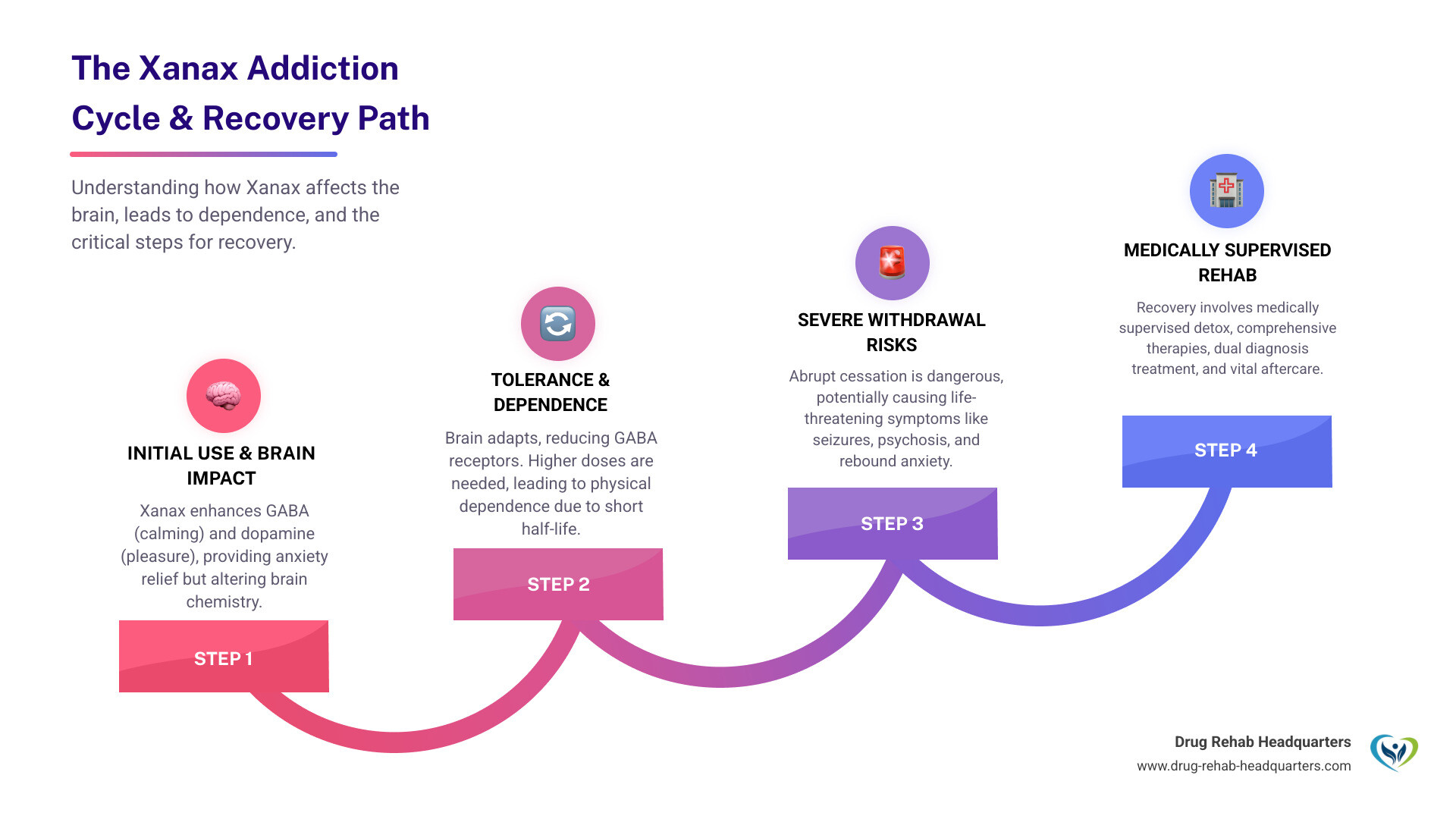
Xanax, the brand name for alprazolam, is a benzodiazepine prescribed for anxiety and panic disorders. It works by enhancing the effects of GABA, a neurotransmitter that calms the brain, and by increasing dopamine, which creates a feeling of pleasure.
The drug’s fast-acting nature and short half-life (around 11 hours) mean its effects are felt quickly but also fade rapidly. This can lead to a cycle of taking more frequent or higher doses to maintain the desired calm, which quickly builds tolerance and physical dependence. This cycle can lead to addiction, even when the medication is used as prescribed, as the fear of withdrawal symptoms can be a powerful motivator for continued use.
For more detailed information on treatment options, please visit our page on More info about Xanax Treatment.
Signs and Symptoms of Xanax Addiction
Recognizing the signs of Xanax addiction is the first step toward getting help. These signs can be behavioral, physical, and psychological.
Behavioral Signs:
- Taking more Xanax than prescribed or using it without a prescription.
- “Doctor shopping” for multiple prescriptions.
- Spending excessive time obtaining, using, or recovering from the drug.
- Neglecting responsibilities at work, school, or home.
- Withdrawing from social activities.
- Continuing use despite negative consequences.
- Engaging in risky behaviors, like driving under the influence.
- Lying about or hiding Xanax use.
- Unexplained financial problems.
Physical Symptoms:
- Needing higher doses to get the same effect (tolerance).
- Experiencing withdrawal symptoms when not using.
- Drowsiness, fatigue, or slurred speech.
- Poor coordination.
- Changes in appetite or weight.
Psychological Signs:
- Mood swings, irritability, or increased anxiety.
- Difficulty concentrating or memory problems.
- Confusion or disorientation.
- Lack of motivation.
- Persistent cravings for Xanax.
- Worsening anxiety or panic attacks (rebound anxiety).
If you or a loved one are showing these signs, professional help is strongly recommended.
Who is Most at Risk?
While anyone can develop a Xanax addiction, certain factors increase the risk:
- Co-occurring Mental Health Disorders: Individuals with conditions like depression, bipolar disorder, or PTSD are at higher risk. Many people misuse Xanax to self-medicate an untreated or undiagnosed mental problem, creating a cycle of dependence.
- Age and Gender: Young adults (18-25) and women are particularly vulnerable, often due to pressures related to school, work, or societal expectations.
- Personal and Family History: A personal or family history of substance abuse can indicate a genetic predisposition or learned behaviors that increase risk.
- Other Factors: Individuals with chronic pain or those who engage in risky behaviors may also be more susceptible to Xanax addiction.
Understanding these risk factors allows us to approach Xanax addiction with empathy and to provide targeted support. For a broader understanding of addiction, we recommend exploring our More info about Addiction Complete Guide.
The Dangers of Xanax Misuse and Withdrawal
The misuse of Xanax, whether by taking more than prescribed or using it without a prescription, carries significant risks, particularly with long-term use. These dangers extend beyond physical dependence and can have severe, life-altering consequences.
Long-term Xanax use can lead to:
- Cognitive Impairment: This can manifest as memory issues, brain fog, and decreased productivity. In older patients, these effects can resemble dementia, increasing their risk of falls and other complications.
- Increased Overdose Risk: As tolerance builds, individuals may take higher doses, significantly raising the risk of overdose.
- Respiratory Issues: Especially when combined with other substances, Xanax can depress the central nervous system, leading to dangerous respiratory problems.
- Social and Financial Consequences: Prolonged use often results in distant relationships, job loss, financial turmoil, and even the potential loss of one’s home.
The dangers are amplified when Xanax is mixed with other substances:
- Alcohol: Combining Xanax with alcohol is extremely dangerous. Both are central nervous system (CNS) depressants, and their combined effect can lead to severe sedation, respiratory depression, blackouts, coma, or even death.
- Opioids: The combination of benzodiazepines like Xanax and opioids is particularly lethal. The FDA issued its strongest warning against this combination due to the significantly increased risk of severe respiratory depression, brain damage, coma, and death. Tragically, 92.7% of deaths involving benzodiazepines also involved opioids, according to CDC data from 2020.
A growing and alarming concern is the presence of counterfeit Xanax pills. These illicit pills, often sold on the street, may not contain alprazolam at all, but rather dangerous substances like fentanyl. The DEA found that in 2022, 6 out of every 10 fake prescription pills contained a lethal dose of fentanyl, making them incredibly risky.
The statistics highlight the severity of the problem:
- From 2003 to 2009, the death rate from alprazolam misuse increased by 234%.
- Between 1999 and 2017, the number of overdose deaths involving benzodiazepines rose from 1,135 to 11,537, a staggering 917% increase.
- For every 311 Xanax prescriptions, there is one emergency room visit related to drug abuse.
These figures underscore the critical need for caution and professional intervention when dealing with Xanax misuse. For more information on prescription drug treatment, please refer to our More info about Prescription Drugs Treatment.
Why Xanax Withdrawal Requires Medical Supervision
Withdrawing from Xanax can be one of the most challenging and dangerous aspects of addiction recovery. The body’s adaptation to the drug means that suddenly stopping or significantly reducing the dosage can trigger a cascade of severe and potentially life-threatening symptoms. This is why medical supervision is not just recommended, but absolutely essential.

Xanax withdrawal symptoms can range from uncomfortable to critical, including:
- Physical Symptoms: Insomnia, irritability, increased tension, panic attacks, tremors, sweating, nausea, weight loss, heart palpitations, headaches, muscle pain and stiffness, tingling sensations, muscle cramps, diarrhea, and blurred vision.
- Severe Mental Health Effects: Psychosis, delirium, and hallucinations can occur, leading to a dangerous state of confusion and agitation.
- Rebound Anxiety: The anxiety and panic symptoms that Xanax was initially prescribed to treat can return with amplified intensity, often worse than the original condition.
- Seizures: Perhaps the most dangerous symptom, seizures can occur, and there is a 30% chance of having a seizure when going through Xanax withdrawal without medical care. As mentioned in research, severe symptoms such as seizures are a real risk.
Attempting to quit Xanax “cold turkey” (abruptly stopping without medical guidance) is incredibly risky. The body, accustomed to the drug’s presence, can react violently, leading to seizures, severe hypertension, and liftd body temperature, which can be fatal. Xanax withdrawal can be more severe than that of other benzodiazepines due to its short half-life, meaning symptoms can onset quickly, often within 6-12 hours of the last dose.
A medically supervised detox program is designed to manage these symptoms safely. Healthcare professionals will typically implement a gradual tapering schedule, slowly reducing the Xanax dosage over several weeks or months. This allows the body to adjust gradually, minimizing the severity of withdrawal symptoms and preventing dangerous complications. Sometimes, longer-acting benzodiazepines are used to stabilize the individual during this process before they are slowly tapered off. This careful, professional approach ensures the individual’s safety and comfort, providing a stable foundation for the next stages of recovery.
For more detailed information on managing withdrawal, please see our guide on More info about Benzo Withdrawal Treatment.
The Path to Recovery: A Guide to Xanax Addiction Rehab
Starting on the journey of Xanax addiction rehab is a courageous step towards reclaiming your life. It’s a comprehensive process that addresses not only the physical dependence but also the psychological and behavioral aspects of addiction. The National Institute on Drug Abuse outlines substance use recovery services thoroughly, highlighting that treatment is custom to individual needs.
The treatment for Xanax addiction is rarely a one-size-fits-all approach. We understand that each individual’s journey is unique, influenced by factors such as the duration and amount of Xanax used, the presence of co-occurring mental health conditions, and personal history. Therefore, individualized treatment plans are paramount to effective recovery.
The path typically involves several levels of care, each designed to provide the necessary support at different stages of recovery. These levels are often progressive, moving from highly structured environments to more flexible options as an individual gains stability and coping skills.
| Level of Care | Description -|
| Inpatient/Residential | Provides 24/7 medical and therapeutic support in a substance-free environment. Ideal for those with severe addiction or co-occurring disorders. -|
| Partial Hospitalization (PHP) | A step-down from inpatient care, offering intensive therapy during the day while allowing patients to return home at night. -|
| Intensive Outpatient (IOP) | A flexible option with several hours of therapy per week, suitable for those with a stable home environment who need to maintain work or school commitments. -|
Step 1: Medically Supervised Detox
As discussed, detox is the first step. It’s a medically managed process to safely clear Xanax from your system while minimizing withdrawal symptoms. This is crucial for preventing dangerous complications like seizures and preparing you for the next phase of treatment. For more details, see our More info about Medical Detox Programs page.
Step 2: Comprehensive Inpatient or Outpatient Programs
After detox, you’ll transition into a structured treatment program.
-
Inpatient/Residential Treatment: This offers the highest level of care with 24/7 support in a trigger-free environment. It’s ideal for those with severe addiction or co-occurring disorders, with programs typically lasting 30, 60, or 90 days. Learn more at our More info about Inpatient Drug Rehab page.
-
Outpatient Programs (PHP/IOP): These programs provide flexibility for those with strong support systems and less severe addiction. Partial Hospitalization Programs (PHP) offer intensive, daily treatment, while Intensive Outpatient Programs (IOP) involve fewer hours per week, allowing you to balance recovery with daily responsibilities.
Step 3: Therapeutic Approaches in Xanax Addiction Rehab
Therapy is essential for addressing the root causes of addiction and developing healthy coping skills.

Effective approaches include:
- Cognitive Behavioral Therapy (CBT): Helps identify and change negative thought patterns and behaviors related to drug use.
- Dialectical Behavior Therapy (DBT): Teaches skills for emotional regulation, distress tolerance, and interpersonal effectiveness, which is especially helpful for co-occurring disorders.
- Individual and Group Therapy: One-on-one counseling provides personalized support, while group sessions foster a sense of community and shared experience.
- Family Therapy: Involves loved ones to heal relationships and build a strong support network.
- Holistic Therapies: Many programs incorporate activities like yoga, meditation, and art therapy to support overall well-being. Explore these options further on our More info about Holistic Drug Addiction Treatment page.
Finding the Right Program and Ensuring Lasting Recovery
Choosing the right Xanax addiction rehab program is a critical step. To find a facility that fits your needs, consider the following:
- Licensing and Accreditation: Ensure the facility meets high standards of care.
- Staff Credentials: Look for a multidisciplinary team of qualified professionals (doctors, therapists, etc.).
- Treatment Philosophy: The program should be evidence-based and offer personalized treatment plans.
- Specialization: A center with experience in benzodiazepine addiction is ideal.
- Dual Diagnosis Care: The ability to treat co-occurring mental health disorders is crucial.
For a comprehensive guide, consult our More info about Addiction Treatment Center Complete Guide.
The Critical Role of Dual Diagnosis Treatment
Many people use Xanax to self-medicate underlying mental health issues like anxiety or depression. This is known as a “dual diagnosis.” Effective rehab must address both the substance use disorder and the mental health condition simultaneously.
An integrated treatment approach combines:
- Comprehensive Assessment: To accurately diagnose all conditions.
- Medication Management: To stabilize mental health symptoms while managing Xanax withdrawal.
- Integrated Therapies: Using methods like CBT and DBT to teach coping skills for both addiction and mental health challenges.
Treating both issues at once is key to preventing relapse and achieving lasting recovery. Learn more at our More info about Dual Diagnosis Treatment Facility page.
Aftercare and Relapse Prevention for Xanax Addiction Rehab
Recovery is a lifelong journey that continues after the initial treatment program. A strong aftercare plan is essential for maintaining sobriety.
Key components of aftercare include:
- Sober Living Homes: Structured, supportive environments to help transition back to daily life.
- Ongoing Therapy: Continuing with individual or group counseling to reinforce coping skills.
- Support Groups: Programs like Narcotics Anonymous (NA) provide a community of peers for encouragement and accountability. Find local meetings via the NA meeting finder or online at Virtual-NA.org.
- Relapse Prevention Strategies: Learning to identify triggers, manage stress, and develop a plan for high-risk situations is vital for long-term success.
By creating a robust aftercare plan, you can build resilience and maintain a fulfilling, sober life. For more on this, see our More info about Addiction Recovery Services Complete Guide.
Conclusion
The journey through Xanax addiction rehab is challenging, but it offers a path to a healthier, more fulfilling future. From medically supervised detox to comprehensive therapy and aftercare planning, effective treatment addresses both the physical and psychological aspects of addiction.
Recovery is not just possible; it’s a reality for countless individuals who commit to the process. It requires safely managing withdrawal, engaging in therapy to heal underlying issues, and building a strong support system for long-term sobriety.
At Drug Rehab Headquarters, we are here to guide you on this journey. We offer 24/7 free support from certified counselors, many with personal experience in recovery, who can provide compassionate and knowledgeable assistance. Our mission is to help you find the right evidence-based treatment program anywhere in North America, from Alabama to Wyoming. You don’t have to do this alone.
Taking the first step can be difficult, but connecting with professionals who understand benzodiazepine dependence is crucial. Your recovery story can begin today.