
Why Women Need Specialized Addiction Treatment
Women’s rehab centers provide gender-specific addiction treatment designed to address the unique biological, psychological, and social factors that influence how women experience substance use disorders and recovery. Here’s what makes them different:
Key Features of Women’s Rehab Centers:
- Trauma-informed care addressing high rates of sexual assault, domestic violence, and PTSD
- Co-occurring mental health treatment for depression, anxiety, and eating disorders
- Specialized programs for pregnant women, mothers with children, and parenting support
- Safe, women-only environments that reduce triggers and promote open sharing
- Evidence-based therapies custom to women’s unique recovery needs (CBT, DBT, EMDR)
- Holistic approaches including yoga, mindfulness, and peer support
- Family therapy to heal relationships and rebuild trust
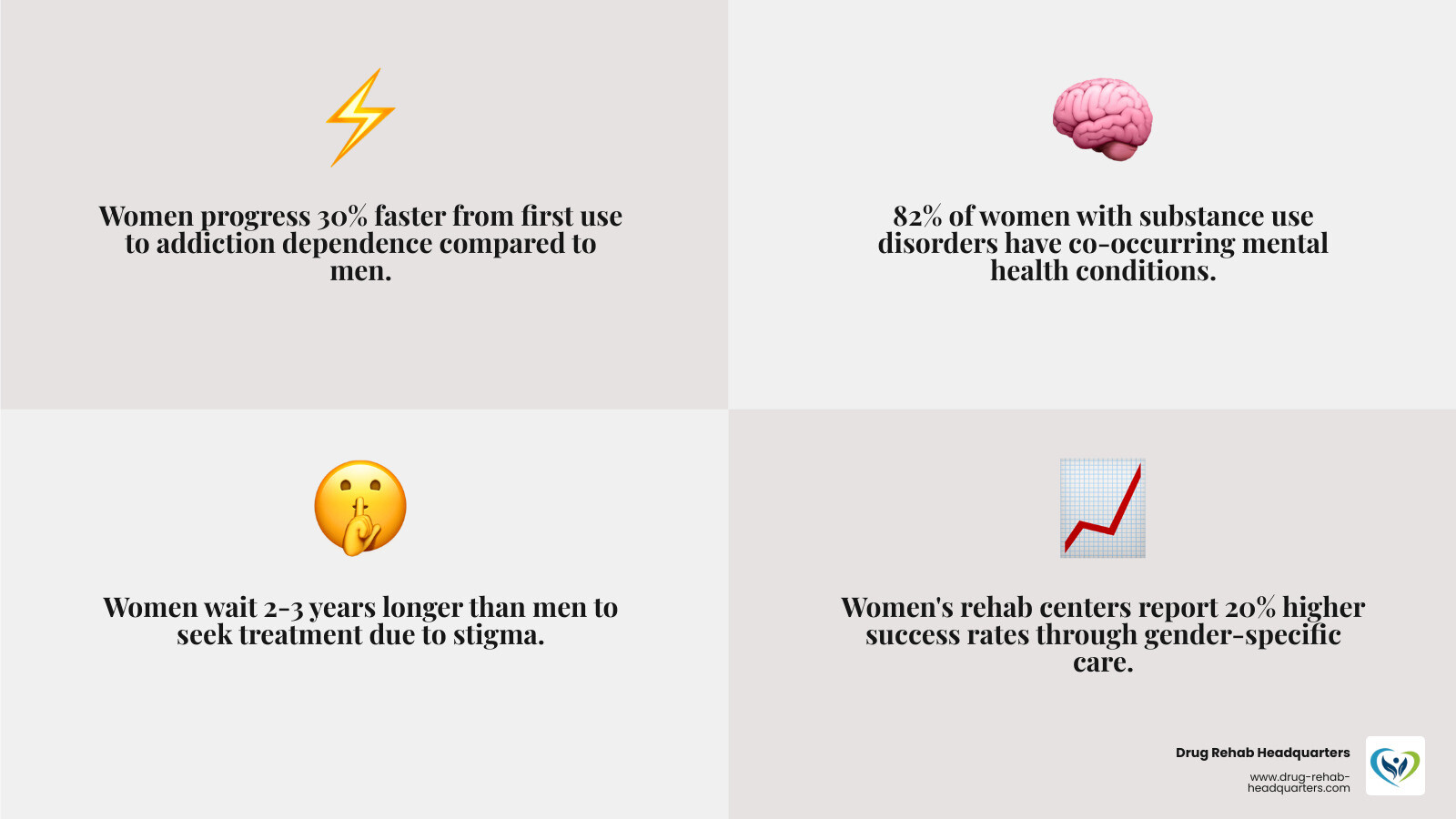
The research is clear: women face different challenges in addiction than men. Women tend to progress faster from first use to addiction—a phenomenon called “telescoping progression.” They experience more addiction-related mental health problems. They face unique barriers to seeking help, including greater shame and stigma, fear of losing custody of children, and economic hardship.
Women also process substances differently due to biological factors. Alcohol stays in a woman’s system longer and causes more damage to the liver and heart with less consumption. Women are more vulnerable to trauma-related addiction, with over half of all women experiencing at least one traumatic event and one in three facing physical or sexual violence in their lifetime.
The good news? Gender-specific treatment works. According to national surveys, women’s rehab centers report success rates up to 20% higher than mixed-gender programs. Women in specialized treatment report feeling safer, more understood, and better able to address the root causes of their addiction—including trauma, relationship issues, and co-occurring mental health conditions.
At Drug Rehab Headquarters, we’ve helped thousands of women and their families steer the complex landscape of women’s rehab centers to find specialized, evidence-based treatment that addresses their unique recovery needs. Our mission is to connect you with the right support for lasting sobriety.
When we talk about addiction and recovery, it’s crucial to understand that the journey isn’t the same for everyone. For women, there are distinct factors that shape both the development of substance use disorders and the path to lasting sobriety. This is why gender-specific treatment is not just beneficial, but often essential.
Women’s bodies respond to substances differently than men’s. Research indicates that women are more vulnerable to developing liver disease sooner than men and with less alcohol exposure. Alcohol-related heart disease also develops sooner in women. This means the physical health consequences can be more severe and accelerate more quickly. Beyond biology, women often face unique societal pressures, such as the immense responsibility of caregiving, which can create significant barriers to seeking help. The stigma associated with addiction for women, particularly mothers, can be overwhelming, leading many to delay treatment. This delay often results in a more severe progression of the disease by the time they finally seek help.
Gender-specific programs address these unique challenges head-on. They create an environment where women can feel safe, heard, and understood without the distractions or dynamics that can arise in mixed-gender settings. This allows for deeper therapeutic work on issues that are often specific to women, fostering a stronger sense of community and shared experience. You can learn more about these specific vulnerabilities in our guide on The Risk Factors for Women and Substance Abuse.
The Critical Role of Trauma in Women’s Addiction
One of the most significant differences in women’s addiction and recovery is the profound role of trauma. For many women, addiction is a coping mechanism for unresolved trauma. According to one study, more than half of all women will be exposed to at least one trauma, with one in three women experiencing physical or sexual violence in their lifetime. These traumas are often the foundation for their struggle with substance use disorder, leading to a cycle of self-medication.
In a mixed-gender environment, discussing sensitive trauma can be incredibly difficult, potentially triggering and hindering progress. Women’s rehab centers are specifically designed to provide a safe, contained space where women can address their trauma without fear or judgment. Trauma-informed care is central to these programs, ensuring that treatment approaches prioritize safety, empowerment, and respect for the individual’s experiences. Therapies like Eye Movement Desensitization and Reprocessing (EMDR) and Somatic Experiencing are often integrated to help women process traumatic memories in a gentle and effective way. We believe that addressing trauma is not just important, but absolutely vital for lasting recovery, as highlighted in Why Treatment for PTSD Is Beyond Important.
Co-Occurring Mental Health Disorders
It’s not uncommon for women struggling with addiction to also grapple with co-occurring mental health disorders. Women experience higher rates of depression and anxiety, and these conditions often intertwine with substance use, creating a complex dual diagnosis. For instance, a woman might use alcohol to self-medicate anxiety, or opioids to numb the pain of depression. This interconnectedness means that treating one without addressing the other is often ineffective.

Women’s rehab centers excel at providing integrated treatment for these co-occurring conditions. Our approach ensures that both the substance use disorder and any underlying mental health issues are treated simultaneously by a multidisciplinary team. This integrated care is critical because it acknowledges the holistic nature of recovery, recognizing that emotional well-being is just as important as physical sobriety. Resources like Dual Diagnosis Treatment Facility and Anxiety Disorder Treatment Centers provide more insights into this comprehensive care.
What to Expect in Women’s Rehab Centers
When you choose a women’s rehab center, you’re choosing an environment specifically crafted to support your unique journey. These centers prioritize creating a safe, nurturing, and judgment-free space. Imagine a place where every staff member understands the nuances of women’s experiences, where peer support comes from those who truly “get it,” and where the programming is custom-custom to foster healing and growth. It’s a sanctuary designed for women, by women, focused entirely on empowering you to reclaim your life. For a general overview, check out our insights on Drug Rehab for Women.

Levels of Care Available
The journey to recovery often involves different stages, and women’s rehab centers offer a continuum of care to meet these evolving needs.
- Medical Detox: This is often the first step, providing a safe and medically supervised environment to manage withdrawal symptoms. Our Medical Detox Programs ensure comfort and safety during this critical phase.
- Inpatient/Residential Treatment: This involves living at the facility for a structured period, typically 30, 60, or 90 days, receiving intensive therapy and support. It’s an immersive experience designed to build a strong foundation for recovery. Explore our Inpatient Drug Rehab options.
- Partial Hospitalization Programs (PHP): Often referred to as “day treatment,” PHP offers a high level of structured care during the day, allowing individuals to return home or to a sober living environment in the evenings. This provides intensive support while offering some flexibility.
- Intensive Outpatient Programs (IOP): These programs offer fewer hours per week than PHP, providing therapy and support several times a week. IOPs are ideal for women who have completed higher levels of care or those who need to maintain work, school, or family responsibilities while in treatment.
Effective Therapies and Treatment Modalities
The therapies offered in women’s rehab centers are chosen for their effectiveness in addressing the specific issues women face.
- Trauma-Informed Care: As we’ve discussed, this approach is foundational, ensuring that all interactions and treatments are sensitive to past trauma and promote emotional safety.
- Cognitive Behavioral Therapy (CBT): This helps women identify and change negative thought patterns and behaviors that contribute to substance use.
- Dialectical Behavior Therapy (DBT): Particularly effective for women with co-occurring mental health disorders like Borderline Personality Disorder, DBT teaches emotional regulation, distress tolerance, and interpersonal effectiveness skills.
- Holistic Therapies: These modalities nurture the mind, body, and spirit. We often see yoga, meditation, art therapy, equine therapy, and mindfulness practices integrated into programs to promote overall well-being and stress reduction. Our Holistic Drug Addiction Treatment guide offers more information.
- Group Therapy: This is a cornerstone of women’s programs, providing a powerful platform for peer support, shared experiences, and connection, often leading to profound healing.
Specialized Programs within Women’s Rehab Centers
Beyond core therapies, many women’s rehab centers offer specialized programs to cater to diverse needs.
- Support for Pregnant Women: These programs provide critical prenatal care alongside addiction treatment, focusing on the health of both mother and baby. Medication-assisted treatment (MAT) is often integrated, especially for opioid use disorder, with care coordinated by OB/GYN and addiction specialists.
- Programs for Mothers with Children: Some facilities allow mothers to bring their young children into residence with them, providing on-site childcare and parenting classes. This crucial support removes a significant barrier to treatment for many women, ensuring they don’t have to choose between their recovery and their children.
- Faith-Based Tracks: For women who find strength and guidance in spirituality, some centers integrate faith-based principles into their recovery models, offering spiritual counseling and communal worship opportunities.
- LGBTQ+ Affirming Care: Many women’s centers provide inclusive and affirming environments for LGBTQ+ women, addressing unique challenges they may face, such as discrimination or societal stigma, within a supportive community.
These specialized options within our Treatment Programs ensure that every woman can find a path to recovery that respects her individual circumstances and beliefs.
Building a Foundation for Lifelong Sobriety
Recovery isn’t just about stopping substance use; it’s about building a new, fulfilling life. In women’s rehab centers, the focus extends far beyond initial sobriety to equip women with the tools, resilience, and support systems needed for lifelong recovery. We believe in empowering you to develop healthy coping skills, refind your strengths, and create a future filled with purpose and joy. Our comprehensive guide on Addiction Recovery Services Complete Guide further elaborates on this journey.
The Power of Community and Aftercare
A cornerstone of successful long-term recovery for women is a strong, supportive community and robust aftercare planning. In women-only settings, peer support flourishes, creating a powerful “alumnae sisterhood” where women uplift, encourage, and hold each other accountable. This community extends beyond the treatment facility, often forming networks that last a lifetime.
Aftercare services are crucial for maintaining sobriety after leaving residential treatment. This can include:
- Sober Living Arrangements: Providing a safe, substance-free transitional environment.
- Relapse Prevention Planning: Developing personalized strategies and identifying triggers.
- Women-Focused Support Groups: Continuing peer support in a safe space.
- Therapy and Counseling: Ongoing individual or group sessions.
These continuing supports help women steer the challenges of reintegrating into daily life, offering a safety net and a constant reminder that they are not alone. Our Post Rehab Drug Rehab Aftercare resources and information on the 12 Step Program are invaluable for this phase.
Long-Term vs. Short-Term Treatment
When considering treatment, many wonder about the ideal length of stay. While short-term rehab, such as a 30-day program, can be a vital first step, research consistently shows that longer treatment durations often lead to better outcomes, especially for women.
- Short-term addiction treatment (e.g., 30 days) is effective for initial stabilization and detoxification, offering a crucial break from substance use. You can explore Short Term Rehab options.
- Long-term addiction treatment (e.g., 60-90 days or even longer) allows for deeper therapeutic work, particularly on trauma and co-occurring mental health issues, which are so prevalent in women’s addiction. This extended time provides a more robust opportunity to develop coping skills, practice new behaviors, and build a solid support network. For example, some programs, like those we connect you with, offer 60 Day Rehab Programs that yield significant results. The “right” duration is highly individualized, but we generally encourage women to consider longer stays if possible, as it provides a more comprehensive healing experience.
The Role of Family in Recovery
Addiction doesn’t just affect the individual; it impacts the entire family system. For women, family involvement can be a powerful catalyst for recovery. Women’s rehab centers often incorporate family therapy and educational programs for loved ones, helping to heal relationships, rebuild trust, and establish healthy communication patterns. When families understand the disease of addiction and learn how to support their loved one without enabling, it creates a much stronger foundation for lasting sobriety. This support can be essential for a woman’s journey through Alcohol and Drug Addiction Treatment for Women.
How to Find and Choose the Right Program
Choosing the right women’s rehab center can feel like a daunting task, but we’re here to guide you every step of the way. It’s about finding a program that aligns with your specific needs, values, and circumstances. Our comprehensive Addiction Treatment Center Complete Guide is a great starting point.
Key Features of High-Quality Women’s Rehab Centers
When you’re evaluating potential programs, here are some key features to look for:
- Licensing and Accreditation: Ensure the facility is licensed by the state and accredited by reputable bodies like CARF (Commission on Accreditation of Rehabilitation Facilities) or the Joint Commission. This signifies adherence to high standards of care.
- Staff Credentials: Look for a team of qualified professionals, including Licensed Alcohol and Drug Counselors (LADC), Licensed Marriage and Family Therapists (LMFT), psychiatrists, and medical doctors. Many high-quality centers also employ staff with lived experience in recovery, offering invaluable peer support.
- Individualized Treatment Plans: A one-size-fits-all approach rarely works. The best women’s rehab centers will conduct thorough assessments and create a personalized treatment plan custom to your unique history, challenges, and goals.
- Evidence-Based Practices: The program should use therapies backed by scientific research, such as CBT, DBT, and EMDR, proven to be effective in treating addiction and co-occurring disorders.
- Continuum of Care: A good program offers options for various levels of care (detox, residential, PHP, IOP) and clear pathways for transitioning between them, ensuring ongoing support as you progress.
- Positive Reviews and Outcomes: While testimonials are personal, consistent positive feedback and transparent reporting of success rates (like the 20% higher success rate seen in women’s rehabs) can be strong indicators of quality.
Finding Help and Navigating Your Options
We understand that reaching out for help is a courageous first step. That’s why we make it as easy as possible to find and choose the right program. You can start by exploring online resources and directories, but the most personalized guidance often comes from professionals.
At Drug Rehab Headquarters, we offer 24/7 free support from certified counselors, many with lived experience in recovery themselves. We provide personalized guidance to help you find suitable, evidence-based, holistic treatment options across North America, including all the states we serve from Alabama to Wyoming. We can help you steer your options, ask the right questions, and verify your insurance coverage to understand your financial options. Don’t hesitate to reach out; our certified counselors can help you find the right rehabilitation services for your needs.
Frequently Asked Questions about Women’s Rehab
We often hear similar questions from women and their families as they consider treatment. Here are some of the most common ones:
What are the success rates for women’s rehab programs?
Defining “success” in recovery can be complex, as it often involves more than just abstinence. It includes improved mental health, stable housing, healthy relationships, and overall well-being. However, specific statistics are encouraging. As mentioned, women’s rehab centers report success rates up to 20% higher than the average for rehabs nationally. Factors influencing these positive outcomes include the individualized, trauma-informed care, the strong peer support, and comprehensive aftercare planning. Long-term recovery is a marathon, not a sprint, and these programs are designed to support that journey.
How is treatment different for teen girls?
Treatment for teen girls in rehab requires a specialized approach that considers their unique developmental stage. Adolescence is a time of intense identity formation, peer pressure, and evolving family dynamics. Programs for teen girls focus on:
- Developmental Considerations: Tailoring therapy to address adolescent brain development, impulsivity, and emotional regulation.
- Peer Pressure: Teaching coping mechanisms to resist negative peer influences and build healthy friendships.
- Family Dynamics: Engaging families in therapy to address communication breakdowns and establish supportive home environments.
- Focus on Identity and Self-Esteem: Helping girls build a positive self-image and find purpose beyond substance use.
These specialized programs understand the heightened Adolescent Substance Abuse Health Risks and create a nurturing environment for young women to heal.
What if I have relapsed after attending rehab before?
Relapse is a common, though often disheartening, part of the recovery journey for many. Relapse is not a sign of failure, but rather an opportunity to reassess what went wrong, identify new triggers, and adjust your treatment plan. Many individuals experience multiple relapses before achieving long-term sobriety.
If you’ve relapsed after attending rehab, it doesn’t mean treatment doesn’t work for you. It means we need to look at what might be missing or what needs to change in your approach. This could involve:
- Exploring different therapeutic modalities.
- Extending the length of treatment.
- Addressing underlying trauma or mental health issues that weren’t fully resolved.
- Strengthening your aftercare plan and support network.
Our Addiction Complete Guide provides further context on viewing addiction as a chronic illness where setbacks can occur, and continued support is key. We are here to help you find a program that can build upon your previous experiences and get you back on track.
Conclusion
The journey to recovery is deeply personal, and for women, specialized women’s rehab centers offer a uniquely effective path to healing. By addressing the distinct biological, psychological, and social factors that influence women’s addiction, these programs empower individuals to confront trauma, manage co-occurring mental health disorders, and build robust support systems.
You are not alone in this fight. The hope for a new beginning is real, and with the right support, you can achieve lasting sobriety and a fulfilling life. Taking that first step can be challenging, but it’s the most courageous act you can make for yourself and your future. We are here to help you steer your options and connect you with the best possible care. Please don’t hesitate to Contact us for help today.