
Understanding If Outpatient Drug Treatment Matches Your Recovery Needs
Outpatient drug treatment offers a flexible path to recovery that allows you to receive professional care while maintaining your daily responsibilities. Here’s what you need to know:
Key Features of Outpatient Drug Treatment:
- No overnight stays required – attend scheduled sessions and return home
- Flexible scheduling – evening and weekend options available for work/school
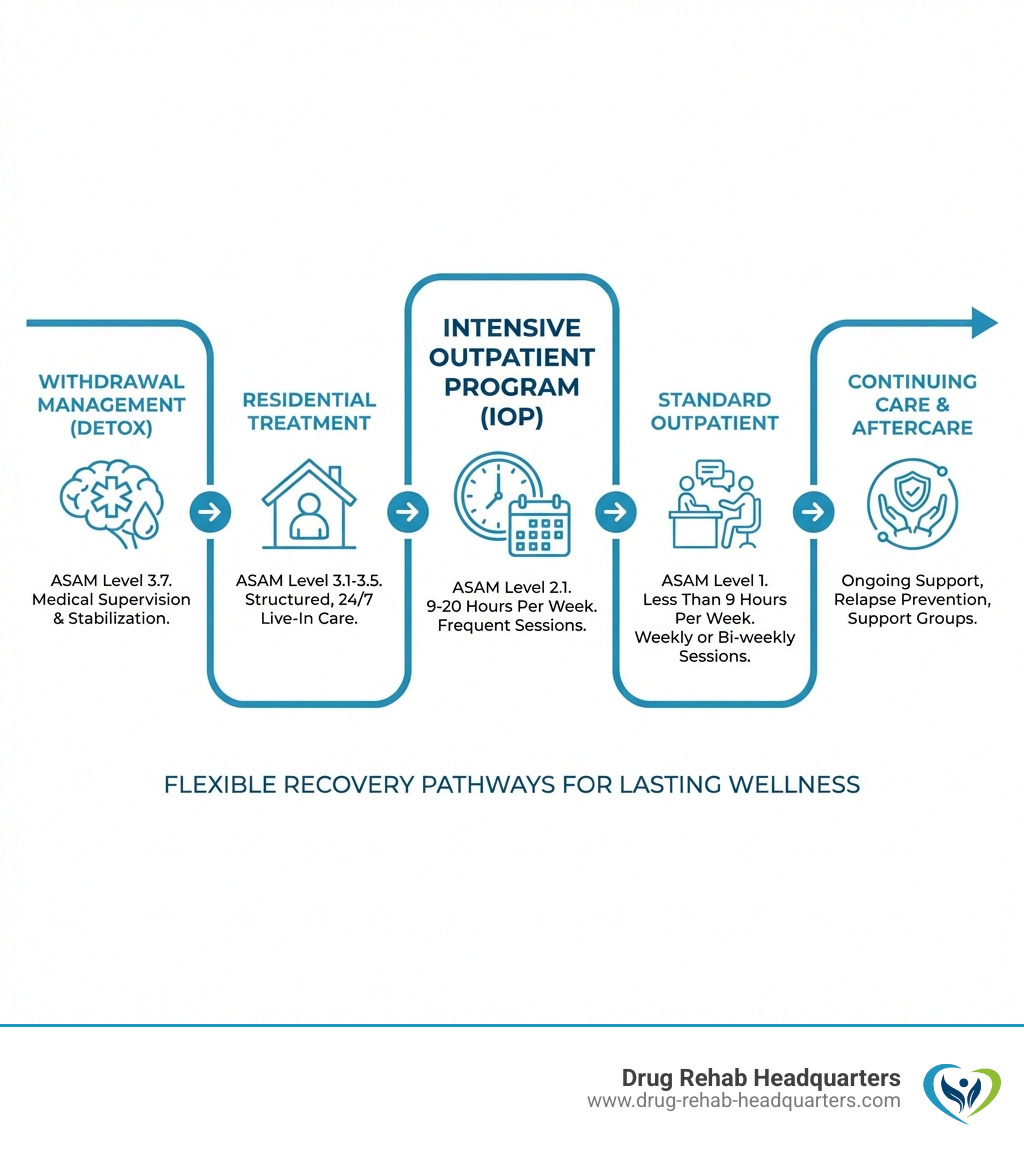
- Levels of care – from standard outpatient (<9 hours/week) to intensive programs (9-20 hours/week)
- Comprehensive services – individual counseling, group therapy, medication-assisted treatment, and family support
- Cost-effective – typically half the cost of inpatient care with comparable outcomes for suitable candidates
- Evidence-based therapies – CBT, DBT, motivational interviewing, and relapse prevention
Who Benefits Most:
- Individuals with mild to moderate substance use disorders
- Those with stable, supportive home environments
- People needing to maintain work, school, or family commitments
- Patients transitioning from higher levels of care
More than 20 million Americans struggle with substance use disorder, a chronic brain disease that changes how the brain functions. About 8 million of these individuals also face co-occurring mental health conditions like depression or anxiety. Outpatient programs provide personalized paths to recovery that address both addiction and mental health in community-based settings.
The decision between inpatient and outpatient care depends on several factors: addiction severity, medical stability, withdrawal risks, home environment, and personal motivation. While residential treatment offers 24/7 medical supervision, outpatient care allows you to practice recovery skills in real-time within your actual living environment—building confidence and self-sufficiency as you progress.
At Drug Rehab Headquarters, we specialize in helping individuals steer the complex landscape of outpatient drug treatment options to find programs that match their unique clinical needs and life circumstances. Our comprehensive guides connect you with certified treatment centers and evidence-based recovery resources.
Ways 1 & 2: Balancing Daily Life and Treatment Costs
Choosing the right path for recovery often feels like a balancing act. On one hand, you want the best possible care; on the other, life doesn’t just stop because you’ve decided to seek help. This is where outpatient drug treatment truly shines. We often see people who are hesitant to enter Alcohol Rehabilitation Centers because they fear they’ll lose their jobs or fall behind in school. Outpatient care bridges that gap.
| Treatment Type | Time Commitment | Average Cost (Private Pay) | Environment |
|---|---|---|---|
| Inpatient/Residential | 24/7 (30–90 days) | $500–$650 per day | Clinical/Residential Facility |
| Partial Hospitalization (PHP) | 20+ hours per week | $350–$450 per day | Clinical setting during day |
| Intensive Outpatient (IOP) | 9–20 hours per week | $250–$350 per day | Clinical setting/Home mix |
| Standard Outpatient | <9 hours per week | $2,000–$5,500 (total program) | Community-based/Home |
Way 1: You Need to Maintain Work, School, or Family Commitments
One of the biggest problems to starting recovery is the “life” factor. If you are the primary breadwinner, a full-time student, or a parent with young children, disappearing for 30 days into a residential facility might not be feasible. Outpatient drug treatment is designed specifically for you.
Many programs offer evening sessions and weekend programs so you can attend therapy after your shift ends or your kids are in bed. This flexibility allows you to integrate your recovery into your daily routine immediately. Instead of learning how to stay sober in a “bubble,” you learn how to handle stress at work or conflict at home in real-time, then bring those experiences back to your counseling sessions the next day. This “real-world” practice is incredibly valuable. For more details on how these community-based programs operate, check out your guide to outpatient services at a community medical center.
Way 2: You Are Seeking a Cost-Effective Recovery Option
Let’s be honest: recovery can be expensive, but it shouldn’t be inaccessible. Outpatient drug treatment is significantly more affordable than residential care because you aren’t paying for room and board. According to our research, a standard 1-to-3-month outpatient program typically costs between $2,000 and $5,500, whereas inpatient care can easily exceed $20,000 for the same duration.
Most Alcohol treatment centers accept private insurance, and many state-funded programs in locations like Texas or New York accept Medicaid and Medicare. If you are worried about the bill, many facilities offer a sliding scale based on your income or financial assistance programs. We believe that everyone deserves a chance at a new life, regardless of their bank account balance. When you are Comparing the Best alcohol rehab centers, always ask about their payment plans and insurance verification processes.
Ways 3 & 6: Matching Your Clinical Needs to Outpatient Levels of Care
Recovery isn’t “one size fits all.” We use the American Society of Addiction Medicine (ASAM) criteria to help determine the appropriate level of care. This ensures that you aren’t in a program that is too intense for your needs, nor one that doesn’t provide enough support.
Way 3: Your Addiction Severity is Mild to Moderate
If you are in the early stages of a substance use disorder or have a relatively short history of use, outpatient drug treatment might be the perfect starting point. The eligibility for these programs usually requires that you are medically stable and have a low risk of severe withdrawal symptoms (like seizures or delirium tremens).
During your initial clinical evaluation, a professional will look at your motivation levels and your ability to maintain abstinence while living at home. If you have a high level of self-discipline and a clear desire to change, the standard outpatient level (ASAM Level 1) provides the education and coping skills necessary to stay on track. You can learn more about how these programs perform in our guide on the effectiveness of outpatient drug treatment for Opioids and Alcohol.
Way 6: You Need the Structure of an Intensive Outpatient Program (IOP)
Sometimes, standard outpatient care isn’t quite enough, but residential care feels like too much. This is where an Intensive Outpatient Program (IOP) comes in. Typically requiring 9 to 20 hours of service per week, IOPs offer a higher level of structure. You’ll participate in frequent group therapy sessions, individual counseling, and educational workshops.
IOP is often used as a “step-up” for someone struggling in standard outpatient or a “step-down” for someone leaving a residential facility. It provides a safety net while you steer the challenges of early sobriety. For a deeper dive into these structured programs, see our more info about intensive outpatient treatment.
Finding Reputable Alcohol treatment centers
When searching for a program, quality matters. We recommend looking for Alcohol treatment centers that are licensed by state agencies (like OASAS in New York or the Health Care Authority in Washington) and accredited by national organizations like The Joint Commission or CARF.
Reputable centers use evidence-based practices—meaning their methods are backed by scientific research. This includes therapies like Cognitive Behavioral Therapy (CBT) and Dialectical Behavior Therapy (DBT). You can find a curated list of high-quality facilities in our Alcohol treatment centers directory.
Way 5: Accessing Specialized MAT and Dual Diagnosis Services
One of the most significant advancements in outpatient drug treatment is the integration of medical and psychiatric care. We know that addiction rarely exists in a vacuum.
Way 5: You Require Medication-Assisted Treatment or Mental Health Support
For those struggling with opioid or alcohol use disorders, Medication-Assisted Treatment (MAT) can be a literal lifesaver. Medications like Suboxone, Buprenorphine, Methadone, and Vivitrol help reduce cravings and manage withdrawal symptoms, allowing you to focus on the psychological work of recovery.
Furthermore, with roughly 8 million Americans living with both a substance use disorder and a co-existing psychiatric disease (dual diagnosis), it is vital that your treatment addresses both. Whether it’s depression, anxiety, or PTSD, outpatient drug treatment programs often have psychiatrists on staff to manage medications and provide specialized therapies like EMDR or trauma-focused CBT. Understanding the scientific research on MAT for substance use can help you make an informed choice about your medical care.
Specialized Programs for Veterans, Teens, and Legal Mandates
We also recognize that different populations have different needs. Many Alcohol treatment centers offer specialized tracks:
- Veterans: Programs that address the unique traumas and experiences of military service.
- Teens/Adolescents: Age-appropriate therapy that involves the whole family and often includes academic support.
- Legal Mandates: Specialized evaluations and reporting for those required to attend treatment due to a DWI, DWAI, or court order.
- LGBTQ+ and Gender-Specific Groups: Safe spaces to discuss identity and specific recovery challenges.
Ways 4 & 7: Leveraging Support Systems and Aftercare for Success
Your environment plays a massive role in your success. If you’re trying to get sober while living in a house where everyone is using, outpatient drug treatment will be an uphill battle. But if you have a solid foundation, it can be the key to long-term health.
Way 4: You Have a Stable and Supportive Home Environment
Outpatient care is ideal for those who have a “recovery-ready” home. This means living in a drug-free environment with family or friends who support your sobriety. Family therapy is often a core component of outpatient care, helping your loved ones understand the disease of addiction and how they can best support you without enabling.
Building a community is also vital. Most programs encourage or require participation in 12-step groups like AA or NA, or non-12-step alternatives like SMART Recovery. These groups provide a social support system that persists long after your formal treatment ends.
Way 7: You Are Transitioning from Inpatient Alcohol Rehabilitation Centers
The transition from a 24/7 facility back to “normal life” can be jarring. Many people experience a “pink cloud” phase in rehab, only to feel overwhelmed by triggers once they get home. Using outpatient drug treatment as step-down care provides a structured transition.
Continuing care (or aftercare) focus on long-term relapse prevention. This might involve weekly check-ins, sober housing, or ongoing individual therapy. It’s about building a life where you don’t feel the need to use. If you’re ready to take that first step, you can start your recovery journey with us today.
Frequently Asked Questions about outpatient drug treatment
What to Expect During Your First outpatient drug treatment Visit?
The intake process is designed to be comprehensive but supportive. You’ll usually meet with an admissions counselor for a psychosocial assessment and a nurse or doctor for a physical exam. They will also conduct a psychiatric evaluation to see if you need dual diagnosis support. All this information is used to create a personalized treatment plan custom to your specific goals and substance history.
How long does a typical outpatient program last?
While some “brief therapy” programs might only last 10 weeks, most effective outpatient drug treatment programs last at least 90 days. Some individuals remain in some form of outpatient or continuing care for a year or more. The duration depends on your progress, the milestones you hit, and the frequency of your sessions. As you get stronger in your recovery, the intensity of the sessions usually decreases.
What are the common challenges and how to prevent relapse?
The biggest challenge in outpatient care is the immediate access to triggers. Unlike inpatient care, you are still in the world where you used to buy or use drugs. Strategies to overcome this include:
- Case Management: Helping you steer housing, employment, and legal issues so stress doesn’t lead to use.
- 24-Hour Crisis Services: Having a “warm line” or crisis number to call when cravings get intense.
- Accountability: Random urine testing is a standard part of most programs to help keep you on track.
Success Rates and What to Expect from Outpatient Drug Treatment
Research shows that for individuals with a stable home and moderate addiction, outpatient drug treatment outcomes are comparable to residential care. In fact, a study of veterans showed that those attending IOP had higher engagement and lower mortality rates over two years.
Success in outpatient care is often measured not just by abstinence, but by improvements in employment, family relationships, and mental health. You can read more about real-life changes in our success stories at Drug Rehab Headquarters.
Facility Directory and Finder Integration
Finding the right program shouldn’t be the hardest part of your recovery. We provide tools to help you filter Alcohol Rehabilitation Centers and outpatient programs by location, insurance type, and specific services offered. Whether you are looking for a luxury facility in Florida or a state-funded clinic in Connecticut, we can help. For those in the New York area, you can also Find an NYP Location to see hospital-affiliated outpatient services.
Conclusion
At Drug Rehab Headquarters, we understand that reaching out for help is a brave first step. Our mission is to connect you with the outpatient drug treatment that fits your life. With 24/7 free support from certified counselors—many of whom have their own lived experience—we offer personalized guidance to help you find evidence-based, holistic treatment options across North America.
Whether you are in Alabama, California, New York, or any of the 50 states we serve, you don’t have to do this alone. We are here to help you steer insurance, understand your options, and find a path to a healthier, happier you. Contact us for help today and let’s start your recovery journey together.