Why Finding the Right Addiction Drug Treatment is Critical for Recovery
Addiction drug treatment offers proven pathways to recovery for millions of Americans struggling with substance use disorders. If you’re searching for treatment options right now, here’s what you need to know:
Quick Guide to Addiction Drug Treatment Options:
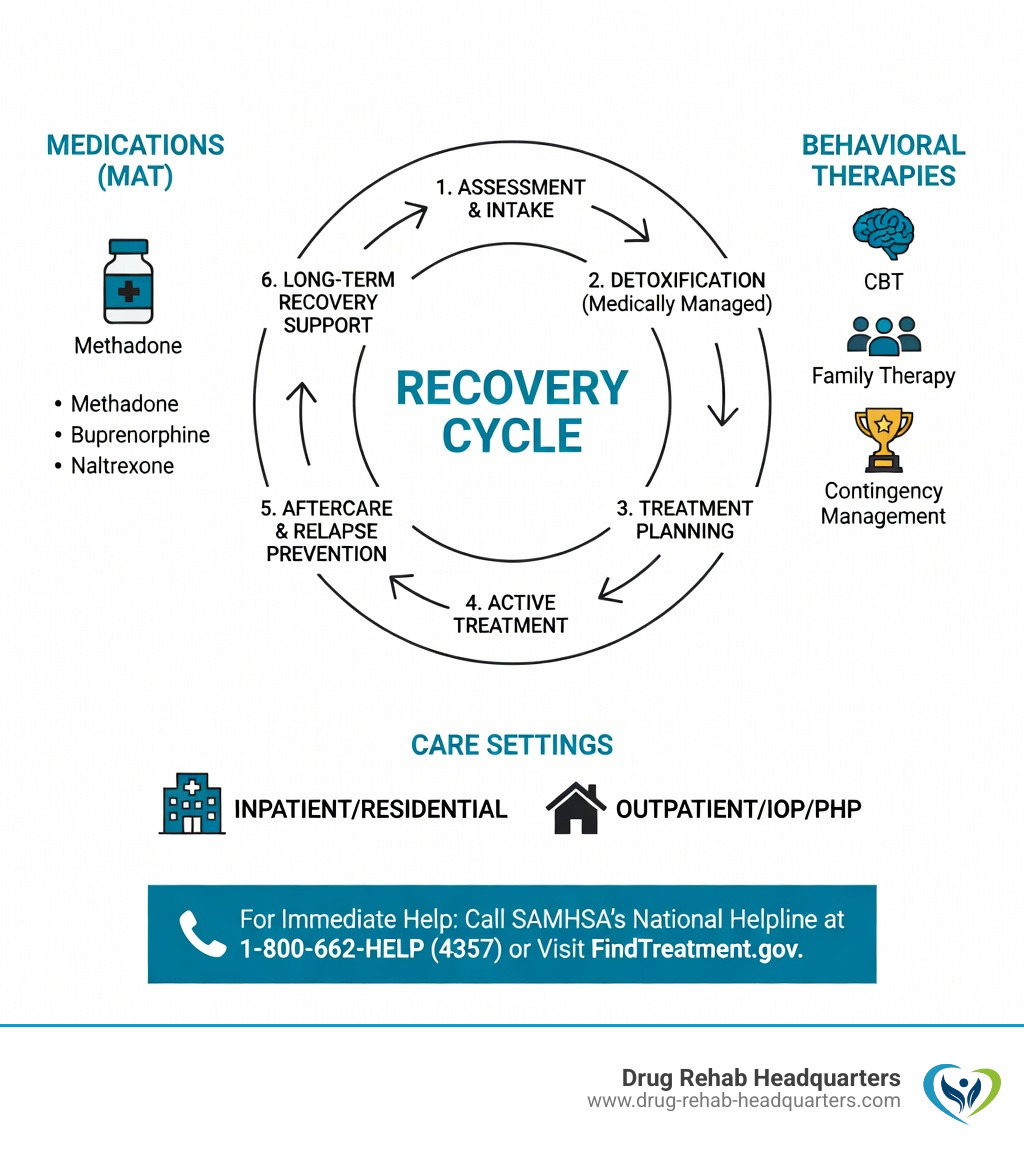
- Medications – FDA-approved options like methadone, buprenorphine, and naltrexone help manage withdrawal and cravings
- Behavioral Therapies – Cognitive-behavioral therapy, contingency management, and family therapy address the psychological aspects of addiction
- Care Settings – Choose from inpatient rehabilitation, outpatient counseling, intensive outpatient programs (IOP), or partial hospitalization (PHP)
- Support Resources – Access SAMHSA’s National Helpline (1-800-662-4357) or FindTreatment.gov for immediate assistance
- Duration – Most effective treatment lasts at least 90 days, though needs vary by individual
The numbers tell a stark story. In 2022, more than one in six Americans aged 12 or older experienced a substance use disorder. Yet treatment works. Research shows that combining medication with therapy produces the best outcomes, with relapse rates similar to other chronic diseases like diabetes or hypertension.
The path to recovery starts with understanding your options. Addiction is not a character flaw or moral failing—it’s a treatable chronic disease that responds to evidence-based care. Whether you’re considering medical detox, residential treatment, or outpatient counseling, the right program addresses your whole person: medical needs, mental health, family relationships, and long-term recovery goals.
At Drug Rehab Headquarters, we specialize in connecting individuals and families with comprehensive addiction drug treatment resources, helping you navigate the complex landscape of rehabilitation options to find personalized care that fits your unique situation. Our mission is to break down barriers to recovery by providing accurate information, treatment center connections, and ongoing support throughout your healing journey.
Understanding Substance Use Disorder and Addiction Drug Treatment
When we talk about “kicking the habit,” it sounds like something you can do with a bit of willpower and a sturdy pair of boots. But for those of us who have been in the trenches, we know it’s much more complex. A substance use disorder (SUD) is a treatable, chronic disease. It’s not about a lack of discipline; it’s about how the brain responds to certain substances.
According to the Substance-Related and Addictive Disorders (DSM-5), an SUD is diagnosed based on specific criteria that show a person is continuing to use a substance despite significant problems in their life. This can range from mild to severe. It’s a chronic brain disease because drugs change the brain—they change its structure and how it works. These changes can be long-lasting and lead to the harmful behaviors we see in people who use drugs.
Recognizing the Signs
We often see behavioral signs before the physical ones. Is your loved one suddenly secretive? Are they missing work or school? Have their hobbies fallen by the wayside? Physically, you might notice changes in appetite, sleep patterns, or sudden weight loss.
One of the biggest hurdles to seeking addiction drug treatment is stigma. We need to remember that addiction can happen to anyone—regardless of race, income, or social class. Reducing this stigma is the first step in helping people feel comfortable enough to ask for help. If we view it as a medical condition rather than a moral failing, we open the door to healing. At Drug Rehab Headquarters, we believe that Addiction Treatment should be accessible and approached with compassion, not judgment.
Behavioral Therapies in Addiction Drug Treatment
Therapy is the “heavy lifting” part of recovery. While medications can steady the ship, behavioral therapies help you learn how to sail through a storm without reaching for a substance. These therapies help patients engage in the treatment process, modify their attitudes and behaviors related to drug use, and increase healthy life skills.
Some of the most effective treatment programs include:
- Cognitive-Behavioral Therapy (CBT): This is the gold standard. It helps patients recognize, avoid, and cope with the situations in which they are most likely to use drugs.
- Contingency Management: This uses positive reinforcement (like rewards or privileges) to encourage sobriety. It’s a bit like getting a gold star in school, but the stakes—and the rewards—are much higher.
- Motivational Enhancement Therapy (MET): This is designed to evoke rapid and internally motivated change. It’s great for people who are on the fence about whether they really need treatment.
- Family Therapy: Addiction doesn’t happen in a vacuum. It affects everyone in the house. Family therapy addresses these dynamics and helps build a stronger support system.
Medications Used in Addiction Drug Treatment
For many, medication is a literal lifesaver. Medications for Opioid Use Disorder (MOUD) help normalize brain chemistry, block the euphoric effects of opioids, and relieve physiological cravings. They aren’t “replacing one drug with another”; they are medical tools used to manage a chronic illness.
The “Big Three” FDA-approved medications for opioids are:
- Methadone: Helps reduce cravings and withdrawal symptoms. It’s been used for decades and is highly effective.
- Buprenorphine: This can be prescribed in a doctor’s office, making it more accessible for many. You can find local help using the Buprenorphine Providers Locator.
- Naltrexone: This blocks the effects of opioids. If you use while on naltrexone, you won’t get high. It’s also used for alcohol use disorder.
Combining these medications with behavioral therapy is often the most successful approach to addiction drug treatment.
Comparing Care Settings: Inpatient vs. Outpatient Alcohol Treatment Centers
Choosing where to receive treatment is a big decision. Do you need the “full immersion” of a residential stay, or does your life require the flexibility of an outpatient program? When looking at Alcohol Rehabilitation Centers, it helps to understand the levels of care.
| Feature | Inpatient/Residential | Outpatient Programs |
|---|---|---|
| Environment | 24/7 supervised facility | Live at home, visit center |
| Intensity | High; focused entirely on recovery | Moderate; allows for work/school |
| Detox | Usually included with medical staff | May require separate detox first |
| Support | Immediate peer and professional support | Scheduled sessions and groups |
| Duration | 28 days to 6+ months | Varies; often long-term |
Inpatient and Residential Care
For many, Inpatient Drug Rehab is the best way to start. It removes you from the triggers of your everyday life and provides a safe, drug-free environment. This is especially important during the initial Detox Treatment phase, where withdrawal symptoms can be physically dangerous. Alcohol treatment centers that offer residential care provide a structured schedule of therapy, exercise, and nutritional support to help your body and mind heal simultaneously.
Outpatient and Low-Barrier Care
If you have work or family obligations you simply can’t leave, outpatient Alcohol treatment centers offer a middle ground.
- Partial Hospitalization Programs (PHP): You spend the day at the clinic (usually 20+ hours a week) but sleep at home.
- Intensive Outpatient Programs (IOP): These usually require about 9-12 hours a week and are great for those transitioning out of inpatient care.
Choosing the Best Alcohol Rehab Centers
Not all centers are created equal. When we help families find the Best alcohol rehab centers, we look for a few key indicators of quality:
- Accreditation: Look for the Joint Commission or CARF seal. This means the facility meets high standards of care.
- Personalized Care: Avoid “cookie-cutter” programs. The best treatment is tailored to your specific drug use patterns and history.
- Dual Diagnosis Capability: Many people struggling with addiction also have co-occurring disorders like depression, anxiety, or PTSD. If you don’t treat the mental health issue, the addiction is likely to return.
- Evidence-Based Practices: Ensure they use methods backed by science, not just “gut feelings.”
You can browse a variety of vetted Drug Treatment Centers through our network to find a facility that meets these criteria in your state, whether you’re in Florida, California, or anywhere in between.
Supporting Loved Ones and Setting Healthy Boundaries
Watching someone you love struggle with addiction is heartbreaking. It’s an emotional roller coaster that can leave you feeling exhausted, angry, and helpless. Nearly half of all Americans have a family member or close friend who has been addicted to drugs. You are not alone in this.
One of the hardest things for families to grasp is the difference between helping and enabling. Enabling is when you “help” in a way that shields the person from the consequences of their actions. This might mean paying their legal fees, lying to their boss, or giving them money for “rent” that goes toward drugs. While it comes from a place of love, it actually prevents them from reaching the point where they realize they need addiction drug treatment.
Setting Healthy Boundaries
Boundaries aren’t about punishing the other person; they are about protecting your own peace and well-being.
- Financial Boundaries: Stop giving cash. If they need food, buy the groceries yourself.
- Emotional Boundaries: You don’t have to engage in circular arguments or accept verbal abuse. It’s okay to walk away.
- House Rules: “No drugs in the house” is a perfectly reasonable boundary.
To avoid burnout, you must practice self-care. This isn’t just bubble baths and spa days; it’s joining support groups like Nar-Anon or SMART Recovery for families. These groups give you a space to talk with people who truly understand what you’re going through.
How to Support Recovery Without Enabling
If you want to help, focus on compassionate communication. Avoid lecturing, shaming, or making threats you don’t intend to keep. Instead, use “I” statements: “I feel scared when I see you using because I love you and I don’t want to lose you.”
When they are ready for help, be prepared to act. Have a list of resources ready. You can guide them through Your Recovery Journey by offering to help them make the first phone call or driving them to their first assessment. Support their recovery by participating in family therapy and learning about their triggers.
Finding the Best Addiction Drug Treatment Near You
The “best” treatment is the one that is available when you need it and fits your specific needs. In the U.S., we have over 14,500 specialized drug treatment facilities, but navigating them can feel like trying to find a needle in a haystack.
Resources for Immediate Help
If you are in crisis, call or text 988 for the Suicide & Crisis Lifeline. For general treatment referrals, the SAMHSA Behavioral Health Treatment Services locator is an excellent tool. You can also call the SAMHSA National Helpline at 1-800-662-4357 for 24/7 confidential support in English and Spanish.
Cost and Insurance Coverage
Let’s talk money, because it’s usually the first question people have. The cost of addiction drug treatment varies wildly based on the level of care.
- Public Insurance: If you have Medicaid or CHIP, many states offer comprehensive coverage for behavioral health.
- Private Insurance: Most private plans are required by law to cover mental health and substance abuse treatment at the same level they cover physical health.
- Uninsured: Don’t lose hope. Many facilities offer sliding scale fees based on income, and SAMHSA provides grants to states to help fund treatment for those who can’t afford it.
At Drug Rehab Headquarters, we help take the guesswork out of this process. We can help you verify your insurance and find Addiction Treatment Centers that fit your budget and location, from the mountains of Colorado to the shores of New Jersey.
Frequently Asked Questions about Addiction Recovery
Is relapse a normal part of recovery?
Yes. Relapse is common and should be viewed as a sign that treatment needs to be adjusted, restarted, or modified. Scientific research on relapse rates shows that they are similar to those of other chronic illnesses like asthma or high blood pressure. If a person with asthma has a flare-up, we don’t say they “failed” at health; we adjust their medication. Addiction recovery should be handled the same way.
How important is treating co-occurring mental health issues?
It is absolutely vital. This is often called “Dual Diagnosis.” If someone is using drugs to self-medicate for undiagnosed depression or anxiety, treating the drug use alone is like putting a band-aid on a broken leg. Integrated care—where both issues are treated at the same time by the same team—is the most effective approach. You can find more about Mental Health and Addiction Insurance Help to see how your plan covers these combined services.
Can addiction be successfully treated long-term?
Absolutely. While there is no “cure” in the traditional sense, people can and do live long, productive lives in recovery. Brain scans have shown that with long-term abstinence, brain density and function can actually recover. Long-term success often involves a combination of formal treatment, peer support groups like Narcotics Anonymous, and a commitment to healthy lifestyle changes.
Conclusion
Recovery is a marathon, not a sprint, and you don’t have to run it alone. At Drug Rehab Headquarters, we are committed to being your partner in this journey. We offer 24/7 free support from certified counselors, many of whom have lived experience with addiction. We know the fear, the frustration, and the hope that comes with seeking help.
Whether you are looking for a luxury Alcohol Rehabilitation Center or a community-based outpatient program, we provide personalized guidance to help you find evidence-based, holistic treatment options across North America. From Alabama to Wyoming and everywhere in between, we have the connections to get you into the right program.
Don’t wait for “rock bottom.” The best time to seek help is right now. Find Addiction Drug Treatment Today and take the first step toward a brighter, healthier future for you and your family. We are here to help you kick the habit and start living again.