
Why Medicaid Alcohol Rehab Coverage Matters for Your Recovery
Medicaid alcohol rehab is a lifeline for millions of Americans struggling with alcohol addiction who can’t afford expensive treatment. If you’re wondering whether Medicaid covers alcohol rehab, here’s what you need to know right away:
Quick Answer: Does Medicaid Cover Alcohol Rehab?
- Yes, Medicaid covers alcohol rehab in all states
- Coverage includes detox, inpatient treatment, outpatient care, and medications
- The Affordable Care Act requires Medicaid to treat addiction like any other medical condition
- No or low co-pays for most beneficiaries
- Coverage varies by state, but federal law mandates basic addiction services
- You must meet income requirements (typically 138% of Federal Poverty Level in expansion states)
The decision to get help for alcohol addiction is hard enough. Worrying about how to pay for it shouldn’t stop you. Yet for too many people, the cost of rehab feels like an impossible barrier. According to Medicaid claims data, approximately 7.2% of Medicaid enrollees have a diagnosed substance use disorder, and nearly three-quarters of them received treatment or support services in 2020. This proves that Medicaid alcohol rehab works as a real pathway to recovery.
The good news? Federal law now requires Medicaid to cover substance use disorder treatment at the same level as other medical care. That means if you qualify for Medicaid, you have access to evidence-based alcohol addiction treatment—from medical detox to counseling to medications that reduce cravings.
At Drug Rehab Headquarters, we’ve helped thousands of individuals and families steer the complex world of Medicaid alcohol rehab coverage, connecting them with qualified treatment centers that accept their insurance and provide personalized care plans. Our certified counselors understand both the medical aspects of addiction recovery and the practical challenges of using Medicaid to pay for it, offering free 24/7 guidance to help you take the first step toward sobriety.
Similar topics to medicaid alcohol rehab:
Understanding Medicaid Alcohol Rehab Coverage and the ACA
For many years, accessing addiction treatment was a significant challenge, often limited by insurance coverage that treated mental health and substance use disorders differently from physical health conditions. Fortunately, federal legislation has stepped in to level the playing field, making Medicaid alcohol rehab a more accessible reality.
The Affordable Care Act (ACA), passed in 2010, significantly transformed healthcare coverage in the United States. A cornerstone of the ACA is its mandate that all Marketplace plans, and by extension Medicaid plans, cover certain Essential Health Benefits (EHBs). Among these EHBs are mental health and substance use disorder services. This means that if you have Medicaid in states like California, Florida, New York, or Texas, you are entitled to coverage for alcohol addiction treatment.
The Role of the Affordable Care Act
The ACA’s impact on addiction treatment has been profound. Before its implementation, many insurance plans offered limited or no coverage for substance use disorders (SUDs). The ACA changed this by requiring that insurance providers, including Medicaid, cover all basic aspects of drug and alcohol dependency recovery. This means that services related to Alcohol Rehab are now considered fundamental healthcare, not an optional extra.
Furthermore, the Mental Health Parity and Addiction Equity Act (MHPAEA), which predates the ACA but was expanded by it, ensures that coverage for mental health and substance use disorders is no less restrictive than for medical and surgical benefits. This principle of behavioral health parity is critical. It prohibits discriminatory practices that could limit insurance coverage for behavioral health treatment. For instance, if your Medicaid plan covers unlimited doctor visits for a physical ailment, it cannot impose stricter limits on therapy sessions for alcohol addiction. Federal guidelines now require Medicaid to comply with these parity requirements, ensuring that individuals seeking help for alcohol use disorder (AUD) receive the care they need without facing unfair barriers.
Since the implementation of the ACA in 2014, Medicaid coverage for addiction treatments, particularly medication-assisted treatments (MAT), has expanded significantly. This expansion has been crucial in addressing the ongoing public health crisis related to substance use. We understand that navigating insurance can be daunting, but the good news is that federal laws are on your side when it comes to seeking help for alcohol addiction. You can learn more about general insurance coverage for treatment on our Does Insurance Cover Rehab page.
Types of Alcohol Addiction Services Covered by Medicaid
Medicaid is a major financier of substance use disorder treatment in the U.S., and this includes a comprehensive range of services for alcohol addiction. When you’re ready to seek help, understanding the specific types of Medicaid alcohol rehab services available can help you choose the right path to recovery.

Medicaid plans often cover a full continuum of care, which means you can transition between different levels of care as your needs evolve during treatment. This approach ensures that you receive the most appropriate and effective treatment at every stage of your recovery journey.
Here are the specific types of alcohol rehab services Medicaid typically covers:
- Medical Detoxification (Detox): This is often the first step in alcohol addiction treatment. Alcohol Detox helps individuals safely manage withdrawal symptoms in a medically supervised environment. It can involve medications to minimize discomfort and prevent complications that might arise from severe alcohol withdrawal. Medicaid generally covers detox services in most states.
- Inpatient/Residential Treatment: These programs require individuals to live and sleep at the treatment facility, providing 24/7 care in a highly structured and supportive setting. Inpatient Drug Rehab is particularly beneficial for those with severe addictions, co-occurring mental health disorders (like anxiety or depression), or those who lack a stable home environment. Most states offer Medicaid plans that cover inpatient residential treatment for AUD.
- Outpatient Addiction Treatment: For individuals with a stable home environment and a less severe addiction, outpatient programs offer flexibility. There are different levels, including standard outpatient rehab, intensive outpatient programs (IOPs), and partial hospitalization programs (PHPs). These programs allow you to attend therapy and receive treatment while living at home.
- Counseling and Behavioral Therapy: Individual, group, and family counseling are core components of alcohol rehab. These therapies help individuals understand the root causes of their addiction, develop coping mechanisms, and learn relapse prevention strategies. Medicaid covers these essential mental health and behavioral therapy services.
- Screenings and Assessments: Before treatment begins, you’ll undergo screenings and assessments to determine the most appropriate level and type of care. Medicaid typically covers these initial evaluations.
- Case Management and Peer Support: Depending on your state’s Medicaid plan, services like case management (which helps coordinate care and connect you with resources like housing or employment) and peer support (support from individuals with lived experience in recovery) may also be covered.
Here’s a quick comparison of inpatient versus outpatient Medicaid benefits for alcohol rehab:
| Feature | Inpatient/Residential Rehab | Outpatient Rehab |
|---|---|---|
| Setting | Live at facility, 24/7 supervision | Live at home, attend sessions during the day/evening |
| Intensity | High, structured, medical supervision, comprehensive therapies | Moderate to high, varying levels (standard, IOP, PHP) |
| Ideal For | Severe AUD, co-occurring disorders, unstable home environment | Less severe AUD, stable home environment, work/family commitments |
| Medicaid Cover | Often covers when medically necessary | Often covers various levels, including detox and counseling |
| Duration | 5-7 days for detox, up to 90+ days for residential | Weeks to a year or more, depending on program and needs |
Medication-Assisted Treatment (MAT) for Medicaid Alcohol Rehab
Medication-Assisted Treatment (MAT) is a powerful tool in combating alcohol use disorder. It combines FDA-approved medications with counseling and behavioral therapies to provide a “whole-patient” approach to recovery. For many people, MAT is a core component of successful AUD treatment, helping to reduce cravings and prevent relapse.
Medicaid covers these essential medications for AUD. The U.S. Food and Drug Administration (FDA) has approved three medications specifically for treating alcohol use disorder:
- Naltrexone: Available in oral and injectable (Vivitrol) forms, naltrexone helps reduce alcohol cravings and the pleasurable effects of alcohol, making it easier to maintain abstinence.
- Acamprosate: This medication helps reduce post-acute withdrawal symptoms, such as anxiety and dysphoria, that can lead to relapse. It helps restore the brain’s chemical balance disrupted by long-term alcohol use.
- Disulfiram: This medication works by causing unpleasant reactions (like nausea, vomiting, and headache) when alcohol is consumed, deterring individuals from drinking.
While medication treatment rates for opioid use disorder (63%) are significantly higher than for alcohol use disorder (10%), pharmacotherapy is increasingly recommended for many individuals with moderate or severe AUD. These medications, combined with behavioral therapies, can greatly improve treatment outcomes. Medicaid plans are required to cover these medications, often including them on their Preferred Drug Lists (PDLs). For more information on the medical side of treatment, visit our Medical Detox Programs page.
Specialized Medicaid Alcohol Rehab Programs
Medicaid also supports specialized programs designed to meet the unique needs of different populations struggling with alcohol addiction. These programs ensure that care is custom and effective.
- Dual Diagnosis Treatment: Many individuals struggling with alcohol addiction also experience co-occurring mental health disorders such as anxiety or depression. Integrated dual diagnosis treatment addresses both conditions simultaneously, which is crucial for long-term recovery. Medicaid typically covers treatment for these co-occurring conditions, recognizing the interconnectedness of mental health and addiction.
- Pregnant and Postpartum Care: Recognizing the unique vulnerabilities of pregnant and postpartum individuals, Medicaid provides coverage and specific guidance for behavioral health services to support this population. This includes access to residential treatment and other services outside of traditional institutional settings.
- Youth Services: While youth and young adults generally have lower overall SUD treatment rates, Medicaid aims to provide necessary care. Specific programs focus on adolescent substance use disorder treatment, though current research may consider medication treatment for adolescents and pregnant women for AUD to be insufficient. However, counseling and behavioral therapies remain vital components of youth-focused Medicaid alcohol rehab.
- Family-Focused Residential Treatment: Some Medicaid programs may cover family-focused residential treatment, which allows parents to receive treatment for their substance use disorder while living with their children. This approach supports family reunification and strengthens family bonds during recovery. Medicaid’s Behavioral Health Services page provides further details on the range of mental health and substance use services covered.
Eligibility and State Variations for Medicaid Coverage
Understanding Medicaid eligibility is crucial for accessing Medicaid alcohol rehab. Medicaid is a federal- and state-funded program, which means while federal guidelines set a baseline, individual states have significant flexibility in how they administer their programs. This leads to variations in eligibility criteria and covered services from one state to another.
Generally, eligibility for Medicaid is determined by a combination of factors including income, family size, age, disability status, and pregnancy. For most adults, eligibility is based on their Modified Adjusted Gross Income (MAGI). The ACA significantly expanded Medicaid eligibility, allowing states to cover individuals with incomes up to 138% of the Federal Poverty Level (FPL). As of 2023, for example, the FPL for an individual was $14,580, meaning someone earning up to $20,110 (138%) could qualify in an expansion state.
In states that have expanded Medicaid, like Arizona, Colorado, Illinois, Kentucky, Maryland, Massachusetts, Michigan, New Jersey, New York, Ohio, Oregon, Pennsylvania, and Washington, low-income adults without children can qualify. In other states, traditional Medicaid eligibility often targets specific groups:
- Pregnant women
- Children
- Individuals with disabilities
- Parents or caretakers of children
- Individuals over 65 (often exempt from MAGI rules)
You can find detailed Eligibility requirements on the official Medicaid.gov website.
Some states operate their Medicaid programs directly, while others use private insurance companies to manage benefits, a system known as “managed Medicaid.” If you’re in a state that uses managed Medicaid, you might need to qualify for Medicaid through the state and then sign up for benefits with a private company. It’s also important to note that Medicaid often acts as the “payer of last resort,” meaning if you have other health insurance, that insurance will typically be billed first before Medicaid covers the remaining costs.
How State Policies Impact Your Care
The variation in state policies means that while federal law mandates coverage for SUD treatment, the specifics can differ. States have flexibility in how they include behavioral health services for SUD in their State Medicaid Plans, Managed Care Waivers, and Section 1115 Demonstrations. These demonstrations allow states to test new approaches to Medicaid that differ from federal rules, often expanding services or eligibility for specific populations, including those with SUDs.
For example, a state like Georgia will have its own specific guidelines for income thresholds and the exact scope of services covered under its Medicaid program. This means that while Alcohol Rehab Centers in Georgia will accept Medicaid, the precise details of your coverage might be unique to Georgia’s plan.
This state-level variation can lead to significant differences in treatment rates and access. For instance, some states have consistently higher SUD treatment rates across various services, while others have lower rates. Factors contributing to this variation include the availability of treatment infrastructure and workforce, specific state coverage policies, provider participation, and even how data is captured. Therefore, understanding your specific state’s Medicaid program is a crucial step in your journey to recovery.
How to Find and Pay for a Medicaid Alcohol Rehab Center
Finding the right Medicaid alcohol rehab center that fits your needs and accepts your insurance can feel like a maze, but we’re here to help you steer it. The good news is that with Medicaid, the financial burden is significantly reduced, often to no or very low out-of-pocket costs.
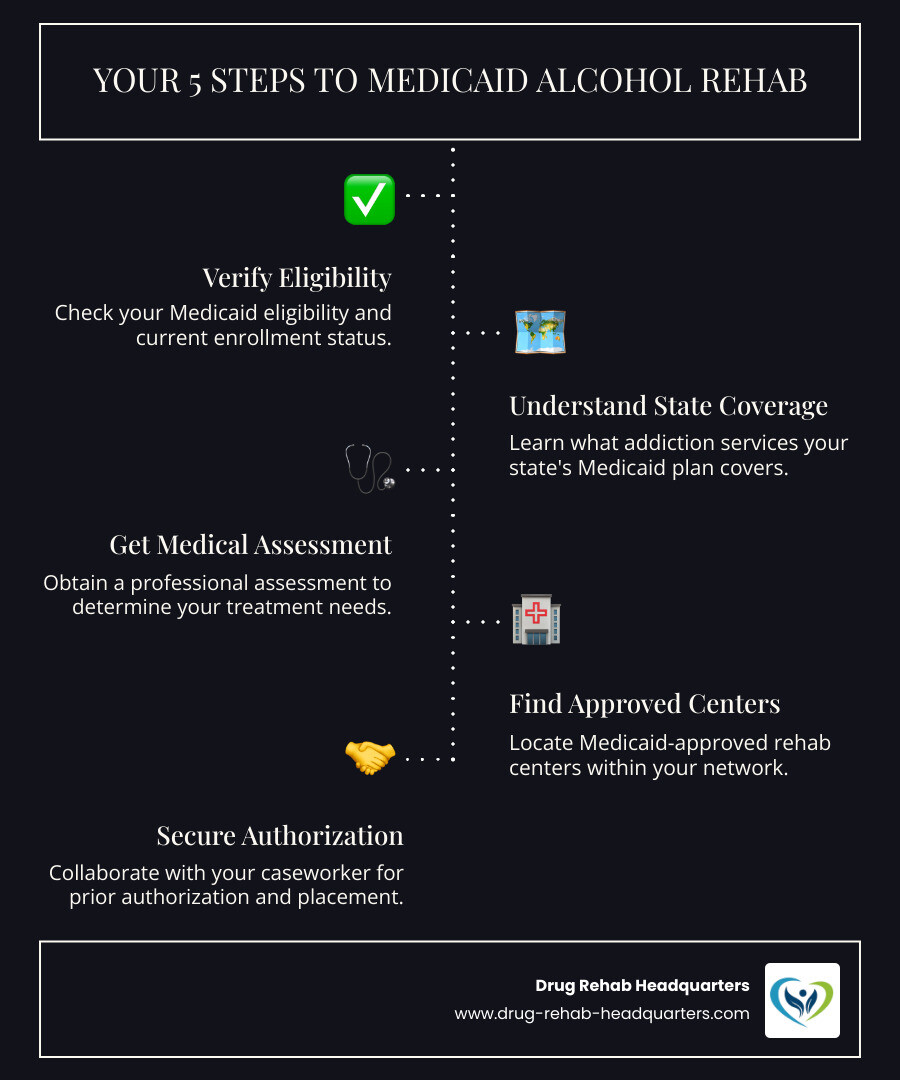
Your first step should always be to confirm your Medicaid eligibility and understand your specific benefits. You can do this by contacting your state Medicaid office or, if you’re in a managed Medicaid plan, your insurance provider directly. Be ready to ask specific questions about what types of alcohol rehab services are covered (detox, inpatient, outpatient, MAT), any limitations on length of stay, and if prior authorization is required. You can also use our Verify Insurance tool to get a head start.
Next, you’ll need to find a treatment center that accepts Medicaid. Not all rehab centers are equipped to accept Medicaid payment plans, so confirm this upfront. Many facilities that accept Medicaid also specialize in treating individuals with specific needs, recognizing that Medicaid recipients often face additional challenges.
If, for some reason, Medicaid doesn’t cover the full cost of your chosen program, or if you wish to attend a center that doesn’t accept Medicaid, don’t despair! There are still options to make treatment affordable:
- Payment Plans: Many rehab centers offer payment plans, allowing you to pay the remaining balance over time.
- Sliding Scale Fees: Some facilities offer fees adjusted based on your income, making treatment more accessible.
- Grants and Scholarships: Organizations and some treatment centers offer grants or scholarships specifically for addiction treatment. The Substance Abuse and Mental Health Services Administration (SAMHSA) offers a National Helpline at 1-800-662-HELP (4357) that can connect you with resources and information about treatment facilities and financial assistance.
- Healthcare Financing: While we encourage exploring other options first, some individuals may consider healthcare-specific loans or credit cards.
- Personal Funds: If you have personal savings or support from family and friends, this can cover any gaps.
For a broader understanding of treatment costs, you can visit our Cost of Rehab page. To find alcohol recovery centers near you that might accept Medicaid, explore our Alcohol Recovery Centers Near Me Guide.
Steps to Secure Funding
Securing funding for Medicaid alcohol rehab involves a few key steps to ensure a smooth process:
- Caseworker Consultation: If you’re unsure about your eligibility or how to apply, contacting a Medicaid caseworker in your state is an excellent starting point. They can guide you through the application process and help you understand your benefits.
- Medical Necessity Assessment: Medicaid generally covers treatment that is deemed “medically necessary” by a healthcare professional. A thorough assessment from a doctor or addiction specialist will determine the appropriate level of care and duration of treatment for your alcohol use disorder. This assessment is crucial for securing coverage.
- Prior Authorization: For certain services, especially inpatient or long-term care, your Medicaid plan or managed care organization might require prior authorization. This means your healthcare provider needs to get approval before you start treatment. We can help you steer this process.
- Treatment Placement: Based on your medical assessment and insurance benefits, you’ll be placed in a treatment program that aligns with your needs and is covered by Medicaid. The American Society of Addiction Medicine (ASAM) criteria are often used to guide these treatment placement decisions, ensuring you receive the most clinically appropriate care.
For a comprehensive look at the entire recovery process, our Addiction Recovery Services Complete Guide offers valuable insights.
Frequently Asked Questions about Medicaid Alcohol Rehab
We know you have questions, and we’re here to provide clear answers about using Medicaid for alcohol rehab.
Does Medicaid cover out-of-state alcohol rehab?
Generally, Medicaid alcohol rehab benefits are not transferable across state lines. Medicaid programs are administered by individual states, and each state has its own residency requirements and network of approved providers. This means that if you have Medicaid in Florida, it typically won’t cover treatment at a facility in Alabama, for example.
There are, however, exceptions:
- Emergency Services: In emergency situations where a hospital must provide life-saving services, Medicaid will generally cover care regardless of state residency.
- Prior Authorization: In very rare cases, with a physician referral and explicit prior authorization from your state’s Medicaid program, out-of-state coverage might be approved if the necessary specialized treatment is unavailable within your home state. However, this is uncommon for non-emergency addiction treatment.
For most individuals, it’s best to find an in-network provider within your home state. If you live in a border community, check if your state has any specific agreements with neighboring states for healthcare services.
Are there co-payments for alcohol rehab under Medicaid?
One of the great advantages of using Medicaid for alcohol rehab is the significantly reduced out-of-pocket costs. Many Medicaid recipients do not have a co-payment for drug and alcohol treatment services. This is a deliberate policy choice to remove financial barriers to essential care.
However, some states may impose nominal co-pays or have an out-of-pocket maximum for certain services. These co-pays are typically very low and are often capped to ensure they don’t prevent access to care. Additionally, individuals with very low incomes may be exempt from co-pays altogether. Because these rules vary by state, it’s always best to check with your specific state’s Medicaid program or your managed Medicaid plan to understand any potential co-payment requirements.
How long will Medicaid pay for my rehab stay?
The duration of Medicaid alcohol rehab coverage is not one-size-fits-all. It depends heavily on your individual clinical needs and the specific benefits offered by your state’s Medicaid plan. There isn’t a predetermined length of stay that applies to everyone.
Medicaid plans are guided by the principle of clinical necessity. This means that as long as a healthcare professional determines that ongoing treatment is medically necessary for your recovery, Medicaid will typically continue to cover it, within the limits of your plan.
- Individualized Treatment Plans: Your treatment will be based on an individualized plan developed by your care team, which will dictate the recommended length of stay for detox, inpatient, or outpatient programs.
- Continued Care Assessments: Throughout your treatment, your progress will be regularly assessed. If you require more time or a different level of care, your treatment team can advocate for extensions or adjustments to your plan, which Medicaid may cover if clinically justified.
- Long-term Residential Limits: While Medicaid covers various forms of residential treatment, some states may have limits on the maximum duration of long-term residential care. However, federal guidelines allow for flexibility, and extensions are often possible in necessary circumstances.
Evidence indicates that treatment outcomes are contingent on adequate treatment length, with inpatient treatment potentially lasting from 5-7 days for detox up to 90 days or more, and outpatient care lasting a year or more. We offer various programs, including Short Term Rehab, and our certified counselors can help you understand the typical duration for different levels of care.
Conclusion
Navigating the complexities of alcohol addiction and the path to recovery is a significant journey, and understanding how to finance that journey shouldn’t add to your burden. Medicaid alcohol rehab coverage stands as a vital resource, making evidence-based treatment accessible to millions across the United States. Thanks to federal mandates like the Affordable Care Act and the Mental Health Parity and Addiction Equity Act, alcohol use disorder treatment is now recognized as an essential health benefit, covered at the same level as other medical conditions.
From medically supervised detox and inpatient residential programs to various levels of outpatient care, counseling, and life-saving medication-assisted treatments, Medicaid provides comprehensive support. While state policies introduce some variations in eligibility and specific benefits, the overarching commitment to behavioral health parity ensures that individuals in states like California, New York, Florida, and Texas have a pathway to recovery.
At Drug Rehab Headquarters, we understand that every individual’s journey is unique. Our mission is to connect you with the right support and resources. Our team of certified counselors, many with lived experience in recovery, offers 24/7 free support, providing personalized guidance to help you find suitable, evidence-based, and holistic treatment options across North America, including the states we serve. Don’t let financial concerns deter you from seeking the help you deserve. Reach out to us today, and let us be your partner in taking the first step towards a brighter, healthier future.
Your path to healing begins with a single step. For more information and to explore your treatment options, visit our Addiction Treatment Centers Your First Step Towards a Brighter Future page.