
Why Treatment Centers for Opioid Addiction Are Essential to Recovery
Treatment centers for opioid addiction offer specialized programs designed to help people overcome opioid use disorder through medical care, counseling, and long-term support. If you or a loved one is struggling with opioid addiction, here’s what you need to know:
Key Features of Opioid Treatment Centers:
- Medical Detox – Safe, supervised withdrawal management
- Medication-Assisted Treatment (MAT) – FDA-approved medications like methadone, buprenorphine (Suboxone), and naltrexone (Vivitrol) to reduce cravings and prevent relapse
- Inpatient/Residential Care – 24/7 structured treatment in a safe environment
- Outpatient Programs – Flexible care while living at home
- Behavioral Therapy – Individual and group counseling to address root causes
- Aftercare Support – Ongoing services to maintain long-term recovery
For immediate help finding the right treatment center, call Drug Rehab Headquarters at 866-720-3784 for a free, confidential assessment.
The opioid crisis continues to devastate communities across America. In 2023, 46.3 million people aged 12 or older had a substance use disorder, and over 300 people die every day from drug or alcohol overdose. Opioid use disorder (OUD) is a chronic, relapsing condition that changes the brain’s reward system, making it incredibly difficult to quit without professional help.
But here’s the good news: recovery is possible. Research shows that the most effective approach combines medical treatment with behavioral therapy. Studies indicate that people who stay in treatment for at least 90 days have the best outcomes, and longer aftercare programs lead to greater long-term success.
Finding the right treatment center can feel overwhelming. That’s why this guide exists—to help you understand your options, know what to look for in a quality program, and take the first step toward recovery.
Whether you’re seeking help for yourself or a loved one, Drug Rehab Headquarters is here to guide you. Our team provides free, confidential support to connect you with the best treatment options for your unique situation. Call 866-720-3784 today to speak with a compassionate specialist who can answer your questions and help you get started.
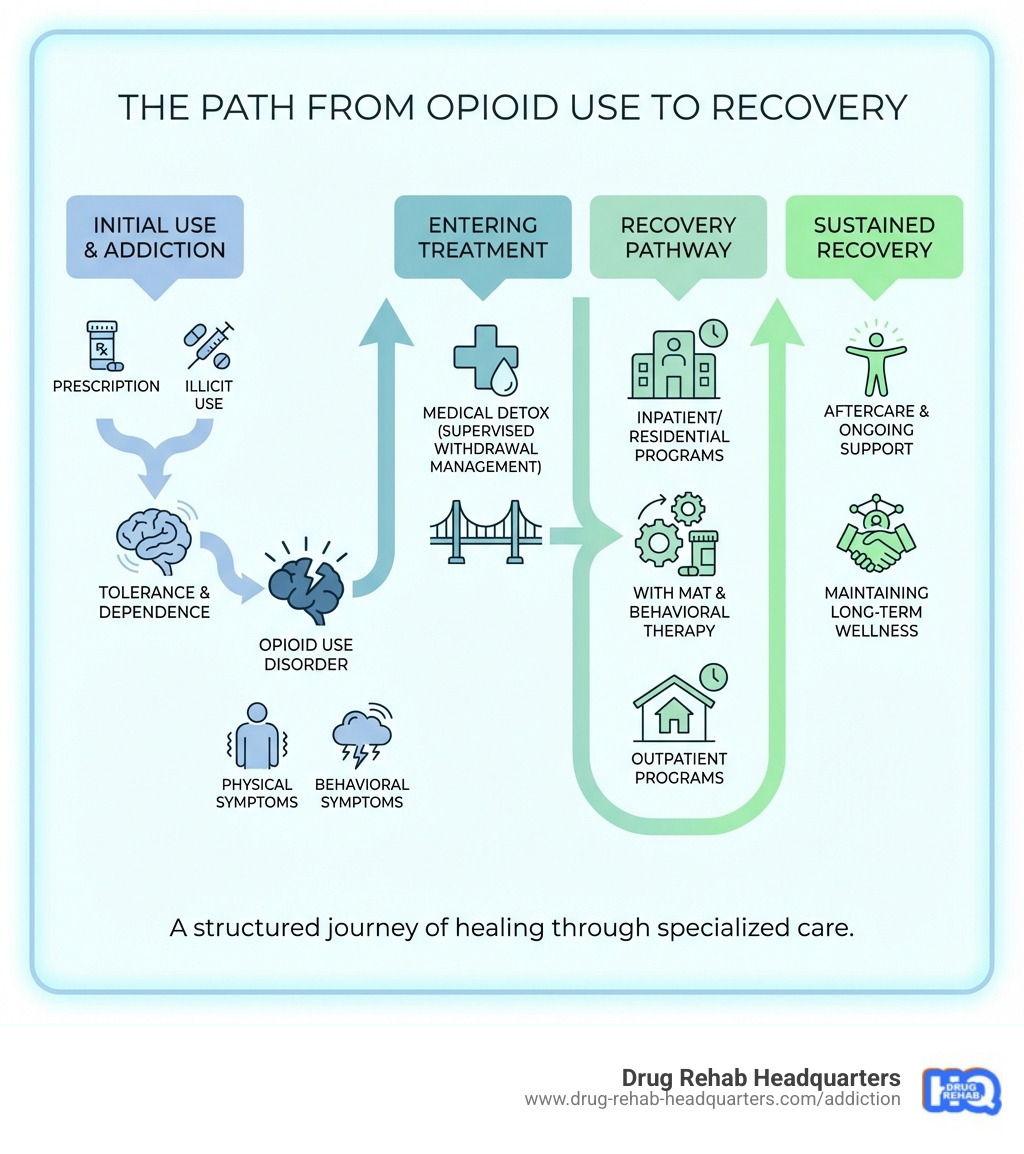
Understanding Opioid Addiction: The First Step to Recovery
Opioid use disorder (OUD) is a complex brain disease characterized by the compulsive use of opioids despite the negative consequences it brings to one’s life. Opioids, whether prescription painkillers, heroin, or illicit fentanyl, don’t just relieve pain; they also “hijack” the brain’s natural dopamine reward system. This creates powerful physiological dependency and reinforces the desire to repeat drug use, making it incredibly challenging to stop without professional help.
In 2021, a staggering 46.3 million people aged 12 or older in the U.S. had a substance use disorder, with millions specifically struggling with drug use disorders. Opioid addiction is a chronic, relapsing condition, but it’s crucial to remember that it can be treated effectively with evidence-based methods.
Commonly Misused Opioids
Opioids come in many forms, each with its own risks:
- Prescription Painkillers: These include medications like codeine, hydrocodone (e.g., Vicodin), morphine, and oxycodone (e.g., OxyContin). They are often prescribed for pain but can lead to addiction when misused.
- Heroin: An illicit opioid that is highly addictive and dangerous due to its unknown purity and potency. You can find more information on Heroin Addiction Treatment.
- Fentanyl: A synthetic opioid 50 to 100 times more potent than morphine. It can be legally prescribed but is often manufactured illicitly and mixed with other drugs, significantly increasing the risk of overdose.
Signs of Addiction
Recognizing the signs of opioid addiction is vital for seeking timely help. These signs can manifest in physical, behavioral, and psychological ways:
- Physical Symptoms:
- Constricted pupils
- Nodding off or appearing drowsy
- Nausea, vomiting, or constipation
- Flu-like symptoms (runny nose, watery eyes, muscle aches) if withdrawal sets in
- Changes in sleep patterns
- Weight loss
- Behavioral Changes:
- Taking opioids in larger amounts or for longer than intended
- Persistent, unsuccessful efforts to cut down or control opioid use
- Spending a significant amount of time obtaining opioids, using them, or recovering from their effects
- Cravings that are intense and overwhelming
- Failure to meet obligations at work, school, or home
- Continuing to use opioids despite interpersonal problems caused by the use
- Giving up important social, occupational, or recreational activities
- Using opioids in hazardous situations (e.g., driving under the influence)
- Psychological Signs:
- Mood swings, irritability, or anxiety
- Depression
- Secretive behavior
- Lack of motivation or interest in previously enjoyed activities
- Continuing to use opioids despite knowing it’s causing physical or psychological problems
If you recognize these signs in yourself or a loved one, it’s a clear indication that professional help is needed. While addiction is a powerful force, recovery is absolutely within reach. Contact Drug Rehab Headquarters at 866-720-3784 for a confidential discussion about symptoms and next steps. We can connect you with treatment centers for opioid addiction that specialize in comprehensive care.
Types of Programs Offered by Treatment Centers for Opioid Addiction
When seeking help for opioid addiction, understanding the different levels of care available is crucial. Effective treatment centers for opioid addiction offer a continuum of treatment, ensuring that care can be custom to an individual’s specific needs and adjusted as they progress in their recovery journey. Our goal is always to help you find an individualized plan that provides the best chance for lasting sobriety.
Medical Detoxification
The first critical step for many individuals with opioid addiction is medical detoxification. Opioid withdrawal can be incredibly uncomfortable and, in some cases, dangerous. Medical detox provides a safe, medically supervised environment to manage these symptoms.
- Managing Withdrawal Symptoms: During detox, medical professionals monitor vital signs and may administer medications to alleviate withdrawal symptoms, making the process more tolerable. This helps individuals safely transition away from physical dependence on opioids.
- First Step in Treatment: Detox alone is seldom effective for long-term sobriety. It addresses the immediate physical dependency but doesn’t tackle the underlying psychological aspects of addiction. Its primary purpose is to stabilize the patient and prepare them for continued treatment.
- Medical Supervision: This phase typically involves evaluation, stabilization, and then fostering entry into the next stage of comprehensive treatment. For more information on managing withdrawal, you can explore our resources on drug withdrawal.
Call Drug Rehab Headquarters at 866-720-3784 to learn about safe, supervised detox options available at quality treatment centers for opioid addiction in your area.
Inpatient and Residential Treatment
For individuals requiring a higher level of care, inpatient and residential treatment programs offer a structured, immersive environment conducive to recovery.
- 24/7 Structured Care: Patients live at the facility, receiving round-the-clock medical supervision, therapy, and support. This removes them from environments that might trigger substance use and allows them to focus entirely on healing.
- Safe Environment: These programs provide a safe, drug-free setting, which is especially beneficial for those with severe addictions or co-occurring mental health disorders.
- 90-Day Treatment Benefit: Studies consistently show that most people benefit from at least 90 days in treatment. This duration allows for significant behavioral changes, development of coping skills, and integration of therapeutic interventions. You can explore inpatient drug rehab options to see if this level of care is right for you.
- Peer Support: Living alongside others in recovery fosters a strong sense of community and mutual support, which is invaluable for long-term sobriety.
Speak with our team at 866-720-3784 to find the best inpatient program for you or your loved one among the many reputable treatment centers for opioid addiction we work with.
Outpatient Treatment Programs
Outpatient programs offer flexibility, allowing individuals to receive treatment while continuing to live at home and manage their daily responsibilities, such as work or family life. These programs vary in intensity:
- Partial Hospitalization Programs (PHP): Often called “day treatment,” PHPs typically involve treatment for several hours a day, five days a week (e.g., 20 hours or more weekly). This level of care is ideal for those who need intensive support but don’t require 24/7 supervision.
- Intensive Outpatient Programs (IOP): IOPs are less intensive than PHPs, usually consisting of 3 to 5 days per week for a weekly total of at least 9 hours. They offer a balance between structured therapy and personal freedom.
- Standard Outpatient: This is the least intensive level of outpatient care, involving weekly therapy sessions and support groups. It’s often used as a step-down from more intensive programs or for individuals with less severe OUD.
- Maintaining Work and Family Life: Outpatient programs are excellent for individuals who need to maintain their work, school, or family commitments while actively engaging in their recovery journey.
Call 866-720-3784 to discuss outpatient options and get matched with a program that fits your needs and lifestyle among our network of treatment centers for opioid addiction.
The Core Components of Effective Opioid Treatment
Effective treatment centers for opioid addiction don’t just address the physical dependence; they adopt a holistic approach that combines various evidence-based therapies to heal the mind, body, and spirit. Research shows that for many people, the integration of both behavioral and pharmacologic (medical) types of treatment is the most effective approach for overcoming opioid addiction.
Medication-Assisted Treatment (MAT)
Medication-Assisted Treatment (MAT) is a cornerstone of modern opioid addiction treatment. It combines FDA-approved medications with counseling and behavioral therapies.
- What is MAT: MAT is an evidence-based approach that helps individuals manage withdrawal symptoms, reduce cravings, and prevent relapse. A common misconception is that medications used in MAT simply substitute one drug for another. This is not true; these medications are part of a comprehensive treatment plan designed to normalize brain chemistry and block the euphoric effects of opioids.
- Reducing Cravings and Preventing Relapse: MAT significantly improves treatment retention and reduces illicit opioid use.
- Key Medications Used in MAT:
- Methadone: A long-acting opioid agonist that reduces withdrawal symptoms and cravings without producing the euphoric high associated with illicit opioid use. It is typically dispensed daily in specialized clinics.
- Buprenorphine (Suboxone, Sublocade, Butrans): A partial opioid agonist that also reduces cravings and withdrawal symptoms. It has a “ceiling effect,” meaning its opioid effects level off at a moderate dose, reducing the risk of misuse. Buprenorphine is often combined with naloxone (e.g., Suboxone) to deter injection.
- Naltrexone (ReVia, Depade, Vivitrol): An opioid antagonist that blocks the effects of opioids. It does not produce opioid effects and is non-addictive. Available in oral form or as a monthly extended-release injection (Vivitrol), it helps prevent relapse by eliminating the euphoric effects of opioids.
For more in-depth research on effective treatments for opioid addiction, you can refer to resources like those found here: Effective treatments for opioid addiction research. Call Drug Rehab Headquarters at 866-720-3784 to discuss MAT options and eligibility and find treatment centers for opioid addiction that provide this life-saving treatment.
Behavioral Therapies and Counseling
While MAT addresses the physical aspects of addiction, behavioral therapies and counseling are crucial for addressing the psychological and emotional underpinnings of opioid use disorder.
- Addressing Root Causes: These therapies help individuals understand why they use opioids, develop healthier coping mechanisms, and learn to manage triggers.
- Types of Counseling:
- Individual Therapy: One-on-one sessions with a therapist to explore personal issues, trauma, and develop personalized strategies.
- Group Counseling: Provides a supportive environment where individuals can share experiences, learn from peers, and practice new social skills.
- Family Therapy: Involves family members to heal relationships, improve communication, and create a supportive home environment for recovery.
- Specific Behavioral Therapies:
- Cognitive Behavioral Therapy (CBT): Helps individuals identify and change negative thought patterns and behaviors that contribute to substance use.
- Motivational Interviewing (MI): A client-centered approach that helps individuals explore and resolve ambivalence about behavior change, strengthening their motivation for recovery.
Mental health plays a significant role in addiction recovery, and many individuals with OUD also experience co-occurring mental health disorders. Understanding why mental health care is crucial is key to comprehensive treatment. Contact us at 866-720-3784 to learn about therapy and counseling options available at our network of treatment centers for opioid addiction.
Aftercare and Long-Term Support
Recovery from opioid addiction is a lifelong journey, not a destination. Aftercare and ongoing support are essential for sustaining the positive effects of initial treatment and preventing relapse. Studies show that enrolling in a continuing care program can effectively sustain the positive effects of initial treatment, and longer planned durations of aftercare were associated with greater success.
- Sustaining Recovery and Relapse Prevention: Aftercare programs provide continued guidance and support as individuals transition back into their daily lives.
- Key Aftercare Components:
- Sober Living Homes: Provide a safe, structured, drug-free environment for individuals to live while transitioning from intensive treatment.
- 12-Step Meetings (NA, AA): Narcotics Anonymous (NA) and Alcoholics Anonymous (AA) offer peer support groups that foster accountability and shared recovery experiences. You can locate an Alcoholics Anonymous (AA) meeting near you at aa.org and Narcotics Anonymous (NA) meetings at na.org.
- Ongoing Therapy: Continuing individual or group therapy helps reinforce coping skills and address any emerging challenges.
- Alumni Programs: Many treatment centers for opioid addiction offer alumni programs that connect former residents, providing a supportive network and opportunities for continued engagement in recovery.
For more information on the benefits of sustained support, you can review our long-term drug rehab in Georgia resources. Call 866-720-3784 for aftercare planning and support resources that can help you or your loved one build a strong foundation for lasting recovery.
How to Find and Pay for a Quality Opioid Treatment Program
Navigating the multitude of options for treatment centers for opioid addiction can be daunting. Our aim is to help you make an informed choice and find the right fit for your unique situation.
Using Drug Rehab Headquarters to Find Treatment Centers for Opioid Addiction
Choosing the right treatment centers for opioid addiction is one of the most important decisions you’ll make on the path to recovery. That’s where we come in. At Drug Rehab Headquarters, we understand the complexities of addiction and the treatment landscape.
Our team at Drug Rehab Headquarters provides free, confidential help to find the best treatment centers for opioid addiction. Call 866-720-3784 for personalized assistance. We have extensive knowledge of facilities across the country, including those in Alabama, Arizona, California, Colorado, Florida, Georgia, Illinois, Indiana, Kansas, Kentucky, Louisiana, Maryland, Massachusetts, Michigan, Minnesota, Mississippi, Missouri, Montana, Nebraska, Nevada, New Jersey, New Mexico, New York, North Carolina, Ohio, Oklahoma, Oregon, Pennsylvania, South Carolina, Tennessee, Texas, Utah, Virginia, Washington, Wisconsin, and Wyoming. We can help you find a program that meets your specific needs, whether it’s for heroin rehab in Arizona or a methadone detox facility in California.
Evaluating the Quality of Treatment Centers for Opioid Addiction
Not all treatment centers for opioid addiction are created equal. Knowing what to look for can help you identify high-quality programs:
- State Licensure: Ensure the facility is licensed by the state where it operates. This indicates it meets basic health and safety standards.
- Accreditation (JCAHO, CARF): Look for accreditation from recognized bodies like the Joint Commission (JCAHO) or the Commission on Accreditation of Rehabilitation Facilities (CARF). These accreditations signify adherence to rigorous quality standards.
- Evidence-Based Practices: A quality center will use treatments supported by scientific research, such as MAT and various behavioral therapies.
- Individualized Treatment Plans: Effective treatment is never one-size-fits-all. The program should develop a personalized plan that addresses your specific needs, history, and goals.
- Co-occurring Disorder Treatment: Many individuals with OUD also have co-occurring mental health conditions. A good center will offer integrated treatment for both substance use and mental health disorders.
Let Drug Rehab Headquarters help you verify quality—call 866-720-3784 to ensure you’re connecting with reputable and effective treatment centers for opioid addiction.
Costs, Insurance, and Payment Options
The cost of opioid addiction treatment can vary widely depending on the type of program, duration, and services offered. However, financial concerns should never be a barrier to seeking help.
- Insurance Coverage: Most rehab centers accept health insurance. The Affordable Care Act (ACA) mandates that insurance providers offer coverage for mental health and substance use disorder treatment comparable to medical and surgical care.
- Medicare and Medicaid: Medicare covers a wide range of behavioral health services, including inpatient, outpatient, and intensive outpatient programs, as well as prescription drugs for mental health conditions and opioid use disorder treatments. Similarly, Medicaid provides coverage for substance use disorder treatment. If you’re eligible for both Medicare and Medicaid, you may have even more comprehensive coverage. You can contact your State Medical Assistance (Medicaid) office for specific details in your state.
- Sliding Scale Fees: Many treatment centers for opioid addiction, particularly non-profit or state-funded facilities, offer a sliding scale fee structure based on your income and ability to pay. This ensures that treatment is accessible regardless of financial resources.
- Payment Plans: Some centers offer payment plans to help spread the cost of treatment over time.
Call 866-720-3784 for help understanding your insurance and payment options. Our team can assist you in verifying your insurance benefits and finding affordable treatment centers for opioid addiction.
Specialized Programs for Diverse Needs
Addiction affects people from all walks of life, and specialized programs cater to the unique needs of different populations.
- Pregnant Women: Addiction during pregnancy requires delicate and specialized care that addresses both the mother’s and the baby’s health. Many treatment centers for opioid addiction offer programs custom to pregnant individuals.
- Veterans Programs: Veterans often face unique challenges, including PTSD and other trauma-related conditions, which can contribute to substance use. Specialized programs for veterans provide trauma-informed care and peer support.
- Adolescents: Young adults and adolescents have different developmental needs and respond best to age-appropriate treatment approaches. We can help you find rehab for young adults that focuses on their specific challenges.
- LGBTQ+ Affirming Care: These programs provide a safe and inclusive environment for LGBTQ+ individuals, addressing specific issues they may face in recovery.
- Gender-Specific Programs: Some individuals prefer gender-specific treatment, such as drug rehab for women, which can create a more comfortable and focused therapeutic setting.
Contact Drug Rehab Headquarters at 866-720-3784 for help finding specialized programs that can provide the custom care you or your loved one deserves among treatment centers for opioid addiction.
Frequently Asked Questions about Opioid Addiction Treatment
We understand you likely have many questions about opioid addiction and its treatment. Here are answers to some of the most common ones we encounter.
How long does opioid rehab last?
The duration of opioid rehab varies significantly based on individual needs, the severity of the addiction, and the type of program. While studies suggest that most people benefit from spending at least 90 days in treatment, this is often a minimum recommendation.
- Varies by Individual: Some individuals may start with a short detox, move to a 30-day inpatient program, and then transition to several months of intensive outpatient care. Others might require longer residential stays.
- 90 Days Recommended: This benchmark is crucial because it allows enough time for the brain to begin healing, for new coping mechanisms to be learned, and for recovery skills to be practiced and reinforced.
- Continuum of Care: Effective treatment is a continuum, not a one-time event. It often involves progressing through different levels of care, from detox to inpatient, outpatient, and then long-term aftercare.
- Long-Term Process: Recovery is a marathon, not a sprint. The duration of formal treatment is just the beginning of a lifelong journey of sobriety and personal growth.
Call 866-720-3784 for a personalized treatment timeline that aligns with your specific needs and circumstances.
Can opioid addiction be cured?
Opioid addiction, or Opioid Use Disorder (OUD), is considered a chronic disease, similar to diabetes or hypertension. Like other chronic diseases, it cannot be “cured” in the traditional sense, but it can be effectively managed.
- Chronic, Manageable Disease: This means that while the propensity for addiction may always exist, individuals can achieve long-term remission and lead fulfilling, sober lives with ongoing effort and support.
- Not “Cured”: The brain changes caused by addiction can be long-lasting, making relapse a potential risk even after years of sobriety.
- Lifelong Recovery Journey: Recovery involves continuous self-care, participation in support systems, and sometimes ongoing therapy or MAT.
- Remission is the Goal: The primary goal of treatment is to achieve sustained remission, where the symptoms of OUD are no longer present, and the individual maintains a drug-free lifestyle.
Speak with our experts at 866-720-3784 about long-term recovery strategies and how treatment centers for opioid addiction can support you every step of the way.
What should I do in a crisis?
If you or someone you know is in immediate danger due to an overdose or is experiencing a severe mental health crisis, acting quickly is paramount.
- Immediate Danger Call 911: If there’s an overdose, severe injury, or a direct threat to life, call 911 immediately. This is for medical emergencies.
- Call or Text 988: For mental health crises, substance use crises, or suicidal thoughts, the 988 Suicide & Crisis Lifeline offers free and confidential support 24/7. You can call or text 988 to connect with a trained crisis counselor.
- Don’t Wait to Get Help: It’s crucial not to hesitate. Crisis situations require immediate attention.
For urgent placement or support in finding *treatment centers for opioid addiction, especially during difficult times, call Drug Rehab Headquarters at 866-720-3784*. Our team is here to provide immediate guidance and connect you with resources.
Conclusion
The journey to recovery from opioid addiction is challenging, but it is a journey that can lead to a healthier, happier life. We’ve explored what opioid addiction is, the various types of treatment centers for opioid addiction available, the essential components of effective treatment like MAT and behavioral therapies, and how to steer the process of finding and paying for quality care.
Recovery is not just possible—it’s happening every day for millions of people. The key is finding the right support system and treatment program custom to your unique needs. Don’t let fear or uncertainty prevent you from taking the first step.
Drug Rehab Headquarters is your trusted resource. Our compassionate team is ready to provide free, confidential assessments and connect you with the best treatment centers for opioid addiction in your area. Take that courageous first step today. We are here to help you find comprehensive Heroin Addiction Treatment resources and begin your path to lasting recovery.