
Understanding What Happens When You Stop Taking Adderall
Adderall withdrawal symptoms occur when someone who has been taking the medication regularly suddenly stops or significantly reduces their dose. These symptoms are your body’s way of reacting to the absence of a drug it has become dependent on.
Common Adderall Withdrawal Symptoms Include:
- Fatigue and extreme tiredness – feeling exhausted even after sleeping
- Depression and dysphoric mood – intense sadness or inability to feel pleasure
- Increased appetite – sudden hunger and potential weight gain
- Sleep disturbances – either sleeping too much (hypersomnia) or insomnia
- Vivid or unpleasant dreams and nightmares
- Irritability and mood swings
- Anxiety and panic attacks
- Difficulty concentrating – “brain fog” or mental slowness
- Intense cravings for Adderall
- Physical discomfort – headaches, muscle aches, slowed movements
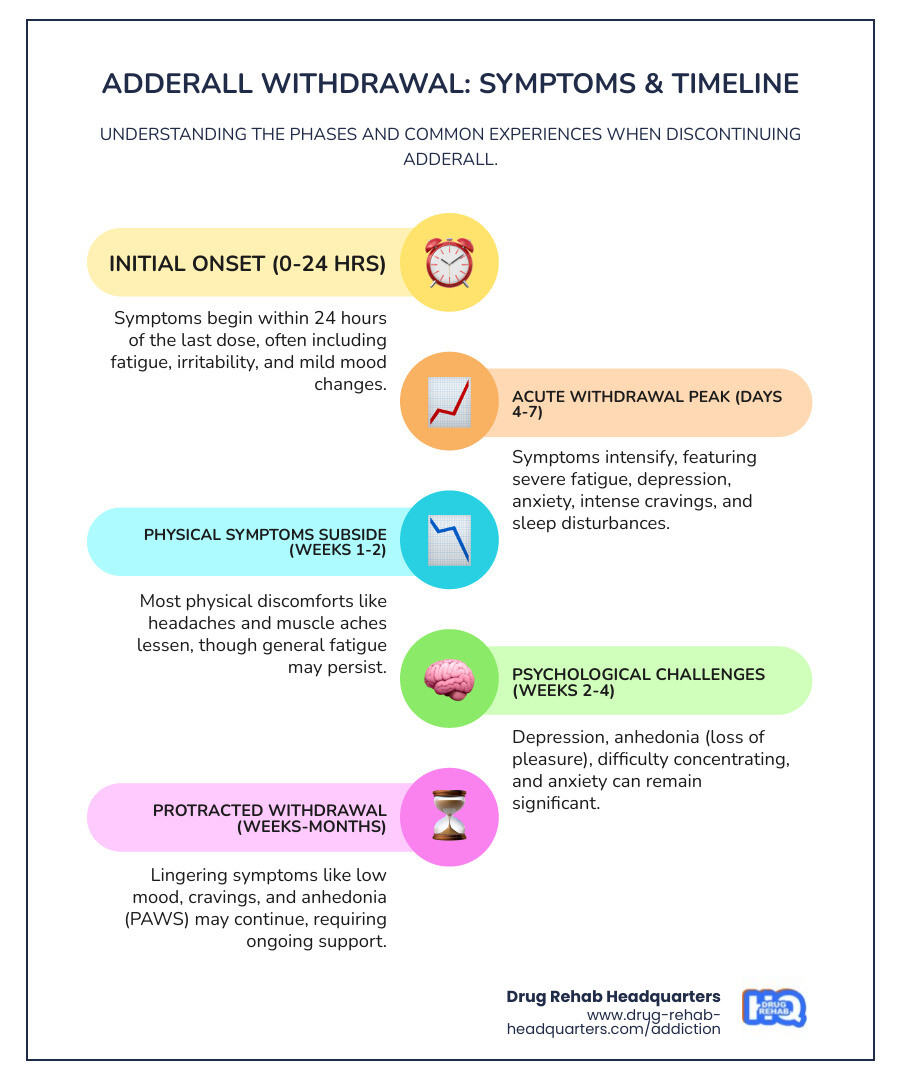
Timeline: Symptoms typically begin within 24 hours of the last dose, peak around days 4-7, and can last anywhere from one week to several months depending on usage history and individual factors.
Adderall is a prescription stimulant medication made up of amphetamine and dextroamphetamine. It’s a central nervous system stimulant primarily prescribed to treat Attention Deficit Hyperactivity Disorder (ADHD) and narcolepsy. While effective for these conditions, Adderall carries a high potential for dependence and addiction.
When someone takes Adderall regularly – whether as prescribed or through misuse – their brain adapts to the constant presence of the drug. The medication increases levels of dopamine and norepinephrine, neurotransmitters that affect focus, attention, and pleasure. Over time, the brain adjusts its natural production of these chemicals, essentially relying on the drug to maintain normal function.
When Adderall is stopped, the brain must rebalance itself. This process of brain adaptation is what causes withdrawal symptoms. Research shows that 87.6% of individuals with amphetamine dependence experience six or more withdrawal symptoms when they stop using the drug.
Withdrawal can happen even if you’re taking Adderall exactly as your doctor prescribed. Physical dependence is different from addiction, though the two often overlap. Anyone who has used Adderall regularly for an extended period can experience withdrawal when stopping.
At Drug Rehab Headquarters, we’ve helped countless individuals steer the challenges of Adderall withdrawal symptoms through compassionate support and connection to evidence-based treatment resources. If you or a loved one is struggling with Adderall dependence, call us at 866-720-3784 for confidential guidance on your path to recovery.
Understanding the Adderall ‘Crash’ vs. True Withdrawal
When discussing the effects of stopping Adderall, it’s crucial to differentiate between an Adderall ‘crash’ or ‘comedown’ and true Adderall withdrawal symptoms. While both involve unpleasant sensations after the drug’s effects wear off, they signify different physiological states and durations.
An Adderall ‘crash’ refers to the short-term effects experienced when a single dose or a period of heavy use (a binge) of Adderall wears off. The use of central nervous system (CNS) stimulants like Adderall causes a significant release of excitatory neurotransmitters such as dopamine and norepinephrine. When the drug’s effects diminish, this surge is counterbalanced by a massive depletion of these neurotransmitters. This depletion leads to a sudden onset of opposite effects, often described as rebound effects. Symptoms typically include lethargy, problems concentrating, increased hunger, and depression. This “crash” usually resolves within about a week.
True Adderall withdrawal symptoms, however, are experienced by someone who has developed a physiological dependence on the drug after prolonged or high-dose use and then attempts to quit or significantly reduce their intake. This is a more sustained and intense process, as the brain needs to fully rebalance its neurochemistry without the drug. The withdrawal process is a prolonged effort by the body to return to a state of homeostasis.
Here’s a quick comparison to help clarify the differences:

What Causes Withdrawal?
The underlying cause of Adderall withdrawal symptoms is the brain’s adaptation to the drug’s constant presence. When Adderall is used regularly, especially in higher doses, our bodies develop a tolerance. This means that over time, we need larger or more frequent doses to achieve the same desired effects. This tolerance development is a key indicator of physical dependence.
Adderall directly impacts the brain’s reward system by boosting levels of dopamine and norepinephrine. These neurotransmitters are vital for regulating mood, motivation, attention, and pleasure. When the brain is consistently flooded with these chemicals from an external source, it reduces its natural production. This disruption of the brain’s natural chemical balance, or homeostasis, means that when the drug is removed, the brain struggles to function normally without it. The absence of Adderall triggers a cascade of effects as the body reacts to the sudden lack of the stimulant it has come to rely on, leading to the manifestation of Adderall withdrawal symptoms.
Common Adderall Withdrawal Symptoms and Timeline
Adderall withdrawal symptoms encompass a wide range of physical and psychological manifestations, often presenting as the opposite of the drug’s stimulating effects. These symptoms can be highly uncomfortable and challenging to manage without professional support.
Physical symptoms often include profound fatigue and extreme tiredness, which can make even simple tasks feel monumental. Individuals may experience significant sleep disturbances, either sleeping excessively (hypersomnia) or struggling with insomnia. Increased appetite and corresponding weight gain are also common, as the drug’s appetite-suppressing effects wear off. Other physical discomforts can include headaches, muscle aches, nausea, stomach aches, and even vomiting. Some may also notice psychomotor retardation (slowed movements) or agitation.
Psychological symptoms are often the most distressing aspect of Adderall withdrawal. These include intense depression and a dysphoric mood, characterized by profound sadness or an inability to feel pleasure (anhedonia). Anxiety and panic attacks are frequent occurrences, as are heightened irritability and mood swings. Many individuals report difficulty concentrating, often described as “brain fog” or mental slowness, making it hard to think clearly or focus. Vivid or unpleasant dreams and nightmares can also disrupt sleep and mental well-being. Perhaps most challenging are the intense cravings for Adderall, which can be a significant barrier to sustained sobriety. In some severe cases, paranoia and even suicidal thoughts can emerge, highlighting the critical need for medical oversight during withdrawal.
Here are the top 10 most reported Adderall withdrawal symptoms:
- Fatigue and Extreme Tiredness: Profound exhaustion, even after sleeping.
- Depression and Dysphoric Mood: Intense sadness, hopelessness, or anhedonia (inability to feel pleasure).
- Increased Appetite: Strong urges to eat, often leading to weight gain.
- Sleep Disturbances: Hypersomnia (excessive sleeping) or insomnia (difficulty sleeping).
- Vivid or Unpleasant Dreams: Nightmares and disturbing dream content.
- Irritability and Mood Swings: Heightened emotional reactivity and unpredictable mood changes.
- Anxiety and Panic Attacks: Feelings of unease, worry, fear, or sudden, intense episodes of panic.
- Difficulty Concentrating: “Brain fog,” mental slowness, and impaired cognitive function.
- Intense Cravings: A strong psychological urge to use Adderall.
- Physical Discomfort: Headaches, muscle aches, nausea, or stomach cramping.

The Typical Adderall Withdrawal Timeline
Understanding the timeline of Adderall withdrawal symptoms can help individuals and their support systems prepare for the challenges ahead. While individual experiences vary based on factors like dosage, duration of use, and personal physiology, a general pattern of phases is commonly observed.
-
Initial Phase (Days 1-3): The “Crash”
Withdrawal symptoms typically begin within 12 to 24 hours after the last dose. This initial period is often referred to as the “crash” and is marked by intense fatigue and profound depression. Many individuals experience hypersomnia, sleeping for extended periods, as their body attempts to recover from the stimulant’s effects. The acute crash symptoms can also include increased appetite and a general sense of mental and physical slowing. -
Peak Phase (Days 4-7): Heightened Symptoms
The most severe Adderall withdrawal symptoms usually peak during days four to seven. During this phase, psychological symptoms often intensify. We might see heightened irritability, anxiety, and continued deep depression. Physical discomforts like aches and pains can also become more pronounced. This is often the most challenging period, where cravings can be particularly strong, and the risk of relapse is high due to the sheer discomfort and distress. -
Gradual Improvement (Weeks 2-3): Lingering Effects
After the peak, symptoms generally begin a gradual decline. By days 6-10, the most severe psychological symptoms may start to lessen, though lingering mood swings and difficulty socializing can persist. Sleep patterns may begin to normalize during week two, but fatigue and cravings can continue. While many physical symptoms subside within a few weeks, some psychological effects, such as low mood, anhedonia, and difficulty concentrating, can linger for several weeks or even months.
For a more comprehensive understanding of the general stages of drug withdrawal, we encourage you to explore our resources on More info about drug withdrawal stages.
Managing Psychological Adderall Withdrawal Symptoms
The psychological aspects of Adderall withdrawal symptoms can be particularly challenging and, at times, dangerous. It’s crucial to address these symptoms with care and professional support.
- Depression and Dysphoria: Intense feelings of sadness, hopelessness, and an inability to experience pleasure (anhedonia) are hallmarks of Adderall withdrawal. This dysphoric mood can be debilitating, making it difficult to engage in daily activities or find motivation. These depressive symptoms can be severe and may persist for weeks or even months, requiring ongoing therapeutic intervention.
- Anxiety and Panic Attacks: Many individuals experience heightened anxiety, worry, and even full-blown panic attacks during withdrawal. The sudden absence of the stimulant can leave the nervous system feeling overstimulated and vulnerable, leading to a sense of unease or dread.
- Irritability and Mood Swings: Emotional regulation can become extremely difficult, resulting in pronounced irritability and rapid mood swings. Small frustrations can trigger disproportionately strong reactions, impacting relationships and overall well-being.
- Suicidal Ideation Risk: This is perhaps the most serious psychological risk associated with Adderall withdrawal symptoms. Severe dysphoria, including suicidal ideation, is an often-overlooked medical danger of stimulant withdrawal. If you or a loved one expresses suicidal thoughts or severe hopelessness, it is imperative to seek immediate medical help. The National Suicide Prevention Lifeline offers trained counselors ready to listen and help at any time. You can reach them at 988.
The importance of a strong support system cannot be overstated. Open communication with loved ones, joining support groups, and engaging in therapy can provide essential emotional support and encouragement. If you are experiencing overwhelming psychological distress or thoughts of self-harm during withdrawal, please don’t hesitate to reach out for immediate support. Call us at 866-720-3784 for confidential assistance.
Factors Influencing Withdrawal Severity
The intensity and duration of Adderall withdrawal symptoms are not uniform; they can vary significantly from person to person. Several factors play a crucial role in influencing how an individual experiences withdrawal.
- Dosage and Frequency: Generally, the higher the dose of Adderall and the more frequently it was taken, the more severe and prolonged the withdrawal symptoms tend to be. Our bodies become more accustomed to the drug’s presence at higher levels, leading to a more significant shock when it’s removed. Research indicates that the severity of withdrawal symptoms is greater in individuals with more extensive amphetamine use disorders.
- Duration of Use: The longer someone has been using Adderall, the more time their brain has had to adapt to its presence. This prolonged adaptation means a longer and potentially more difficult rebalancing period when the drug is stopped.
- Method of Administration: While not explicitly detailed in our research for Adderall, the method of administration (e.g., oral, snorting, injecting) can affect how quickly the drug enters and leaves the system, which in turn can influence the onset and intensity of the initial withdrawal phase. Faster absorption often leads to a more rapid and intense crash.
- Individual Physiology and Genetics: Each person’s unique body chemistry, metabolism, and genetic makeup can impact how they process and react to Adderall, and subsequently, how they experience withdrawal. Our genes and overall health history, especially mental health, contribute to this variability.
- Co-occurring Mental Health Disorders: Individuals with underlying mental health conditions such as anxiety, depression, or ADHD may experience more complicated and severe Adderall withdrawal symptoms. The withdrawal process can exacerbate these existing conditions, making management more challenging. There is significant overlap between ADHD symptoms and substance use disorder symptoms, which can complicate diagnosis and treatment.
- Polysubstance Use: Using Adderall in combination with other substances, particularly central nervous system depressants like alcohol or opioids, can significantly complicate withdrawal. This polysubstance use can lead to more unpredictable and potentially dangerous withdrawal syndromes, as the body is simultaneously adjusting to the absence of multiple substances.
Understanding these factors is essential for developing a personalized and effective withdrawal management plan.
Instant-Release (IR) vs. Extended-Release (XR) Adderall Withdrawal Symptoms
The formulation of Adderall – whether it’s instant-release (IR) or extended-release (XR) – can impact the onset and duration of Adderall withdrawal symptoms. This difference is primarily due to how quickly the drug is absorbed and eliminated by the body.
- Instant-Release (IR) Adderall: IR Adderall is designed to release its full dose of medication into the bloodstream quickly, with effects typically lasting for several hours. Because it leaves the body relatively fast, withdrawal symptoms from IR Adderall may start sooner, often within 12-24 hours of the last dose. The initial “crash” can be more abrupt and intense due to the rapid decline in stimulant levels.
- Extended-Release (XR) Adderall: Adderall XR is formulated to release medication over a longer period, providing effects for up to 10-12 hours. This slower, more sustained release means that the drug builds up in the system and takes longer to be fully eliminated. Consequently, Adderall withdrawal symptoms from XR may have a slightly delayed onset compared to IR, but they can last weeks longer as the body detoxes the drug more gradually. The withdrawal experience from XR might be less acutely intense at the very beginning but more protracted overall.
For individuals considering tapering plans, the type of Adderall formulation is a critical consideration. A tapering schedule for XR might need to be slower and more prolonged to mitigate withdrawal symptoms effectively, given its longer presence in the body. Regardless of the formulation, medical supervision is always recommended when discontinuing Adderall.
How to Safely Manage and Treat Withdrawal
Navigating Adderall withdrawal symptoms can be a daunting experience, but with the right strategies and support, it is possible to manage them safely and effectively.
Dangers of Quitting “Cold Turkey”
Quitting Adderall suddenly, or “cold turkey,” especially after prolonged or high-dose use, can lead to more severe and distressing withdrawal symptoms. While Adderall withdrawal is rarely life-threatening on its own, the intense psychological discomfort, including severe depression and potential suicidal ideation, makes it a risky approach without medical oversight. The sudden absence of the drug can overwhelm the body and mind, leading to debilitating mental conditions like anhedonia (inability to feel pleasure) and intense drug cravings, making it incredibly difficult to endure withdrawal alone. This is why medical supervision is so important.
Medical Supervision Importance
Medical supervision during Adderall cessation is crucial for several reasons. Healthcare professionals can assess your individual situation, including your usage history, overall health, and any co-occurring conditions, to create a safe and personalized plan. They can monitor your physical and psychological well-being, intervene if severe symptoms arise, and provide support to ensure your safety and comfort.
Tapering Down Dosage
One of the safest and most recommended strategies for discontinuing Adderall is a gradual tapering down of the dosage under medical guidance. Instead of stopping abruptly, your doctor can help you slowly reduce your dose over time. This allows your brain and body to gradually adjust to less of the drug, minimizing the intensity of Adderall withdrawal symptoms and reducing the risk of severe rebound effects. If withdrawal symptoms become too severe during tapering, the process can be paused or slowed down.
At-Home Strategies for Managing Symptoms
While professional guidance is paramount, certain at-home strategies can help alleviate some Adderall withdrawal symptoms:
- Hydration: Staying well-hydrated by drinking plenty of water can help flush toxins from your system and mitigate some physical symptoms.
- Balanced Nutrition: Eating nutrient-rich meals supports your body’s recovery process. Focus on a healthy diet to lessen lethargy and help stabilize mood.
- Rest and Sleep Hygiene: Getting plenty of rest is vital. Practice good sleep hygiene by maintaining a consistent sleep schedule and creating a comfortable sleep environment.
- Light Exercise: Engaging in mild physical activity can help flush toxins, distract from cravings, boost mood, and improve sleep. Avoid overexertion.
- Stress Management Techniques: Techniques such as meditation, yoga, deep breathing exercises, or mindfulness can help manage anxiety and promote emotional well-being.
These at-home strategies are most effective when combined with professional medical guidance. If you’re struggling to manage your Adderall withdrawal symptoms, call us at 866-720-3784 for confidential assistance and to connect with resources in your area, such as in Nevada, California, or Texas.
When to Seek Professional Medical Help
While some mild Adderall withdrawal symptoms might be managed with careful at-home strategies and medical tapering, certain signs indicate an urgent need for professional medical help. We strongly advise seeking immediate assistance if you or a loved one experiences any of the following:
- Severe Depression: If feelings of sadness, hopelessness, or anhedonia become overwhelming or debilitating.
- Suicidal Thoughts or Behaviors: Any mention of self-harm, suicidal ideation, or specific plans requires immediate professional intervention. As mentioned, the National Suicide Prevention Lifeline at 988 is available 24/7.
- Psychotic Symptoms: The emergence of hallucinations (seeing or hearing things that aren’t there), paranoia, or disordered thoughts.
- Seizures: Although rare, seizures can occur during severe withdrawal and require emergency medical attention.
- Inability to Perform Daily Functions: If withdrawal symptoms prevent you from eating, sleeping, maintaining hygiene, or fulfilling basic responsibilities.
- Uncontrollable Cravings Leading to Relapse Risk: If cravings for Adderall become so intense that you fear you cannot maintain sobriety, professional support can provide the necessary structure and intervention.
These symptoms can be dangerous and warrant professional medical oversight to ensure safety and appropriate treatment.
Professional Treatment for Adderall Addiction
For individuals facing significant Adderall withdrawal symptoms and a stimulant use disorder, professional treatment offers the most supportive and effective path to recovery. At Drug Rehab Headquarters, we connect individuals with top-rated treatment centers that provide comprehensive care.
- Medical Detox Programs: This is often the first step in treating Adderall dependence. Medical detox involves safely discontinuing the drug under round-the-clock medical supervision. Healthcare professionals monitor withdrawal symptoms, ensuring comfort and safety. While there are no FDA-approved medications specifically for amphetamine withdrawal, supportive medications may be prescribed to alleviate specific symptoms like anxiety, insomnia, or depression. Medical detox programs are available in various states where we have resources, including Georgia, Florida, and Arizona.
- Inpatient Rehabilitation: For those with severe addiction, limited social support, an unstable home environment, or co-occurring mental health disorders, inpatient rehab offers a structured and immersive treatment experience. Patients reside at the facility, receiving intensive therapy, counseling, and medical care in an environment free from triggers. Many of our listed facilities, such as those in California, New York, and Pennsylvania, offer inpatient programs.
- Outpatient Treatment Options: Outpatient programs provide flexibility for individuals with strong support systems, less severe addiction, or ongoing work/school obligations. These include Partial Hospitalization Programs (PHPs) and Intensive Outpatient Programs (IOPs), offering similar therapeutic interventions without requiring residential stay.
- Behavioral Therapies: These are the cornerstone of Adderall addiction treatment.
- Cognitive Behavioral Therapy (CBT): Helps individuals identify and change negative thought patterns and behaviors contributing to Adderall misuse.
- Contingency Management (CM): Uses motivational incentives to reinforce positive behaviors, such as abstinence from Adderall.
- Community Reinforcement Approach (CRA): Aims to make a sober lifestyle more rewarding than drug use by improving life skills and relationships.
- Dialectical Behavioral Therapy (DBT): Focuses on emotional regulation and coping skills, particularly helpful for managing intense mood swings during withdrawal and recovery.
- Support Groups: Programs like Narcotics Anonymous (NA) provide a community of peers who share similar experiences, offering invaluable support, encouragement, and accountability throughout the recovery journey.
The scientific community continues to research effective pharmacological treatments for amphetamine withdrawal. A systematic review on Scientific research on amphetamine withdrawal treatments highlights that while no specific medication has been definitively proven effective for amphetamine withdrawal, certain medications may help manage symptoms.
We are committed to helping you steer these options. For more information on various treatment modalities and to find resources, please explore our drug withdrawal resources. We can help you find top-rated treatment centers in Nevada and other states like Alabama, Arizona, and Florida. Contact us today at 866-720-3784 to begin your journey.
Life After Adderall: Long-Term Recovery
Overcoming Adderall withdrawal symptoms is a significant achievement, but the journey to lasting recovery extends far beyond the acute withdrawal phase. Long-term recovery involves a commitment to healing, growth, and building a fulfilling life free from substance dependence.
The brain healing process is central to this stage. After prolonged Adderall use, the brain’s natural dopamine production is often suppressed. Restoring natural dopamine production takes time, and the brain gradually rebalances its neurochemistry. This process can be slow, but with consistent abstinence and supportive care, the brain can regain its ability to produce and regulate these essential neurotransmitters on its own.
Relapse prevention planning is a critical component of long-term recovery. This involves:
- Identifying Triggers: Recognizing the people, places, things, and emotions that might provoke cravings or a desire to use Adderall.
- Developing Coping Skills: Learning healthy strategies to manage stress, cravings, and difficult emotions without resorting to substance use. Techniques like mindfulness, exercise, and therapy are invaluable here.
One important aspect of long-term recovery is understanding Post-Acute Withdrawal Syndrome (PAWS). While acute Adderall withdrawal symptoms typically subside within weeks, PAWS refers to a set of lingering symptoms that can persist for weeks, months, or even longer. These can include:
- Intermittent mood swings
- Persistent fatigue or low energy
- Difficulty concentrating or “brain fog”
- Sleep disturbances
- Anhedonia (inability to feel pleasure)
- Increased sensitivity to stress
PAWS symptoms can fluctuate in intensity, making recovery feel like a “two steps forward, one step back” process. Patience, self-compassion, and continued support are essential during this phase.
Building a sober support network is also paramount. This network can include family, friends, mentors, and peers in recovery. Connecting with others who understand your struggles and triumphs provides encouragement, reduces feelings of isolation, and offers accountability. Support groups like Narcotics Anonymous (NA) are excellent resources for building such a network.
At Drug Rehab Headquarters, we understand that recovery is a marathon, not a sprint. We are here to help you find ongoing support and resources in locations like Nevada, Colorado, and Washington, to ensure you have the tools for lasting sobriety.
Frequently Asked Questions about Adderall Withdrawal
It’s natural to have many questions when contemplating or experiencing Adderall withdrawal symptoms. Here, we address some of the most common concerns.
How long does the “brain fog” from Adderall withdrawal last?
The “brain fog” experienced during Adderall withdrawal, characterized by difficulty concentrating, mental slowness, and memory issues, is a common and frustrating symptom. This cognitive impairment is due to the brain’s adjustment to the absence of the stimulant. The timeline for cognitive improvement varies significantly among individuals. For some, it may begin to lift within a few weeks, while for others, it can persist for several months. This is often part of Post-Acute Withdrawal Syndrome (PAWS). The good news is that with continued abstinence, healthy lifestyle choices, and engagement in cognitive-enhancing activities, gradual recovery of mental clarity and function is possible.
Is it dangerous to quit Adderall cold turkey?
While Adderall withdrawal is generally not considered life-threatening in the same way as alcohol or benzodiazepine withdrawal, quitting “cold turkey” can be dangerous due primarily to severe psychological risks. The intense depression and dysphoria can lead to profound hopelessness and, in some cases, suicidal ideation. As we’ve emphasized, these severe psychological symptoms require immediate professional intervention. Although medical complications are rare, they are possible, especially if there are underlying health issues. Therefore, medical supervision and a gradual tapering plan are strongly recommended to mitigate these risks and ensure a safer, more comfortable withdrawal experience.
Are there medications to stop Adderall withdrawal symptoms?
Currently, there are no FDA-approved medications specifically designed to stop or treat amphetamine withdrawal symptoms directly. However, healthcare professionals can prescribe medications to manage individual symptoms, making the withdrawal process more tolerable. These supportive medications may include:
- Antidepressants: To address severe depression and dysphoric mood.
- Anti-anxiety medication: To alleviate anxiety, panic attacks, and agitation.
- Sleep aids: To help manage insomnia or regulate sleep patterns.
It’s crucial that any medication used during withdrawal is prescribed and closely monitored by a medical professional. Self-medicating can be dangerous and may complicate the withdrawal process. Professional medical guidance is essential to ensure that any pharmacological interventions are safe and appropriate for your specific situation.
Find Lasting Recovery from Adderall Addiction
The journey through Adderall withdrawal symptoms and into recovery can be challenging, but it is a path that countless individuals have successfully walked. We’ve explored the common symptoms, understanding the timeline, differentiating between a crash and true withdrawal, and highlighting the critical factors that influence severity. We’ve also emphasized the dangers of quitting cold turkey and the paramount importance of professional medical help.
Recovery from Adderall addiction is absolutely possible, and you don’t have to face it alone. With the right support, including medical detox, behavioral therapies like CBT, and strong support networks, you can achieve lasting sobriety and reclaim your life.
At Drug Rehab Headquarters, we are dedicated to connecting you with the resources you need. We can help you find top-rated addiction treatment centers across the country, including specialized facilities in Nevada, California, Florida, and other states. Our compassionate team is ready to listen and guide you toward the best options for your unique journey.
Contact us at 866-720-3784 to speak with a specialist today. Let us help you take the first brave step towards a healthier, Adderall-free future. Begin your recovery journey with our help.