
Understanding Alcohol Addiction Hotlines: Your Gateway to Recovery
An alcohol addiction hotline is a free, confidential telephone service available 24/7 that connects you with trained specialists who can answer questions about alcohol misuse, provide crisis support, and help you find treatment options in your area. These hotlines are staffed by compassionate professionals—often including individuals in recovery themselves—who offer immediate guidance without judgment or obligation.
Key Facts About Alcohol Addiction Hotlines:
- Available 24/7, 365 days a year – Help is always just a phone call away
- 100% Free and Confidential – No cost to call, and your privacy is protected by law
- No Obligation to Enter Treatment – You can call just to ask questions or gather information
- Immediate Support – Connect with a trained specialist within minutes
- Personalized Guidance – Get referrals to treatment centers, support groups, and resources in your area
- Crisis Intervention – Receive immediate support if you or a loved one is in distress
Call Drug Rehab Headquarters at 866-720-3784 for immediate, confidential help.
When you or someone you love is struggling with alcohol, it’s completely normal to feel overwhelmed and unsure where to turn. You might be questioning whether your drinking has become a problem, worried about withdrawal symptoms, or simply need someone to talk to who understands. With SAMHSA projecting over 1.2 million calls to alcohol addiction hotlines in 2025, it’s clear you are not alone in seeking help.
The reality is that alcohol addiction is a medical condition, not a moral failing. It affects millions of Americans and their families. Calling a hotline doesn’t mean you’re weak—it means you’re taking the first brave step toward getting your life back.
Drug Rehab Headquarters specializes in connecting Nevada residents and others across the United States with trusted treatment providers for alcohol and substance use disorders. Our experienced team operates a 24/7 alcohol addiction hotline at 866-720-3784, offering personalized support to help you steer your recovery journey. Whether you’re seeking help for yourself or a loved one, we’re here to provide the guidance and resources you need to take that critical first step.
Recognizing the Signs: When to Call for Help
Recognizing the signs of alcohol addiction in yourself or a loved one is the crucial first step toward seeking help. It’s not always about hitting rock bottom; sometimes, it’s a slow, insidious progression where drinking becomes more frequent, heavier, and harder to control. An alcohol addiction hotline can provide clarity and guidance the moment these concerns arise.

The Substance Abuse and Mental Health Services Administration (SAMHSA) defines Alcohol Use Disorder (AUD) as a chronic brain disease characterized by an impaired ability to stop or control alcohol use despite adverse social, occupational, or health consequences. To be diagnosed with AUD, an individual must meet at least two specific criteria within a 12-month period. These criteria can manifest as various behavioral signs and physical symptoms.
Behavioral Signs of Alcohol Addiction:
- Using alcohol in higher amounts or for a longer time than originally intended.
- Spending a lot of time obtaining, using, or recovering from the effects of alcohol.
- Continuing to use alcohol despite negative interpersonal or social problems.
- Giving up previously enjoyed social, occupational, or recreational activities because of alcohol use.
- Being unable to fulfill major obligations at home, work, or school due to alcohol.
- Having strong cravings or an intense urge to drink.
- Continuing to use alcohol despite it causing or exacerbating a psychological or physical problem.
- Failed attempts to cut down or control alcohol use.
Physical Symptoms of Alcohol Addiction:
- Increased tolerance, meaning you need to drink more to achieve the desired effect.
- Experiencing withdrawal symptoms when efforts are made to stop using alcohol.
- Using alcohol in physically dangerous situations, such as driving or operating machinery.
If you recognize these signs, it’s a clear indicator that it might be time to reach out. For more in-depth information on the physical reactions your body might have, you can read more about alcohol detox symptoms.
In some cases, the situation can escalate to an emergency. If you or someone you know is in immediate danger due to alcohol use, such as severe intoxication, unconsciousness, or a suspected overdose, call 911 immediately. Hotlines are a valuable resource, but they are not a substitute for emergency medical services.
Signs of Alcohol Dependency and Withdrawal
Alcohol dependency develops when your body and mind adapt to the presence of alcohol, making it difficult to function normally without it. This dependency can be both physical and psychological.
Physical Dependency means your body has become accustomed to alcohol and reacts negatively when it’s removed. Withdrawal symptoms can range from uncomfortable to life-threatening. Common symptoms include:
- Anxiety and irritability
- Nausea and vomiting
- Headaches
- Tremors (shakiness)
- Insomnia
- Sweating
- Increased heart rate and blood pressure
In severe cases, alcohol withdrawal can lead to dangerous complications such as seizures and Delirium Tremens (DTs), which involve confusion, hallucinations, and rapid heart rate. These severe symptoms underscore the critical importance of medically supervised detoxification for safe withdrawal. Scientific research confirms that medically supervised detoxification is often necessary to manage withdrawal symptoms safely. If you witness severe withdrawal symptoms like fever, seizures, hallucinations, irregular heartbeat, or delirium, call 911 immediately.
Psychological Dependency refers to the emotional and mental reliance on alcohol to cope with stress, anxiety, or other difficult emotions. You might feel an overwhelming urge to drink to feel “normal” or to escape problems.
Who Should Call a Hotline?
The beauty of an alcohol addiction hotline is its accessibility to anyone affected by alcohol misuse. There’s no specific qualification or “rock bottom” you need to hit before calling.
- Individuals questioning their drinking: If you’re wondering if your drinking is a problem, or if you’ve tried to cut back without success, a hotline is an excellent starting point.
- Concerned family members and friends: If you’re worried about a loved one’s drinking habits, you can call for advice on how to approach them, understand treatment options, and find support for yourself. Many hotlines offer resources for families, including information on intervention strategies and support groups like Al-Anon.
- Employers: If you’re noticing impaired performance or other issues related to an employee’s alcohol use, a hotline can offer guidance on workplace resources and support programs.
- Anyone needing information: Whether you’re researching addiction, looking for local resources, or simply need to understand the treatment process, hotlines are a free and confidential source of information.
We understand that addiction can affect anyone, and resources custom to specific needs are crucial. If you’re looking for support specifically for women, you can find more information about drug rehab for women.
The Calling Process: What to Expect and How to Prepare
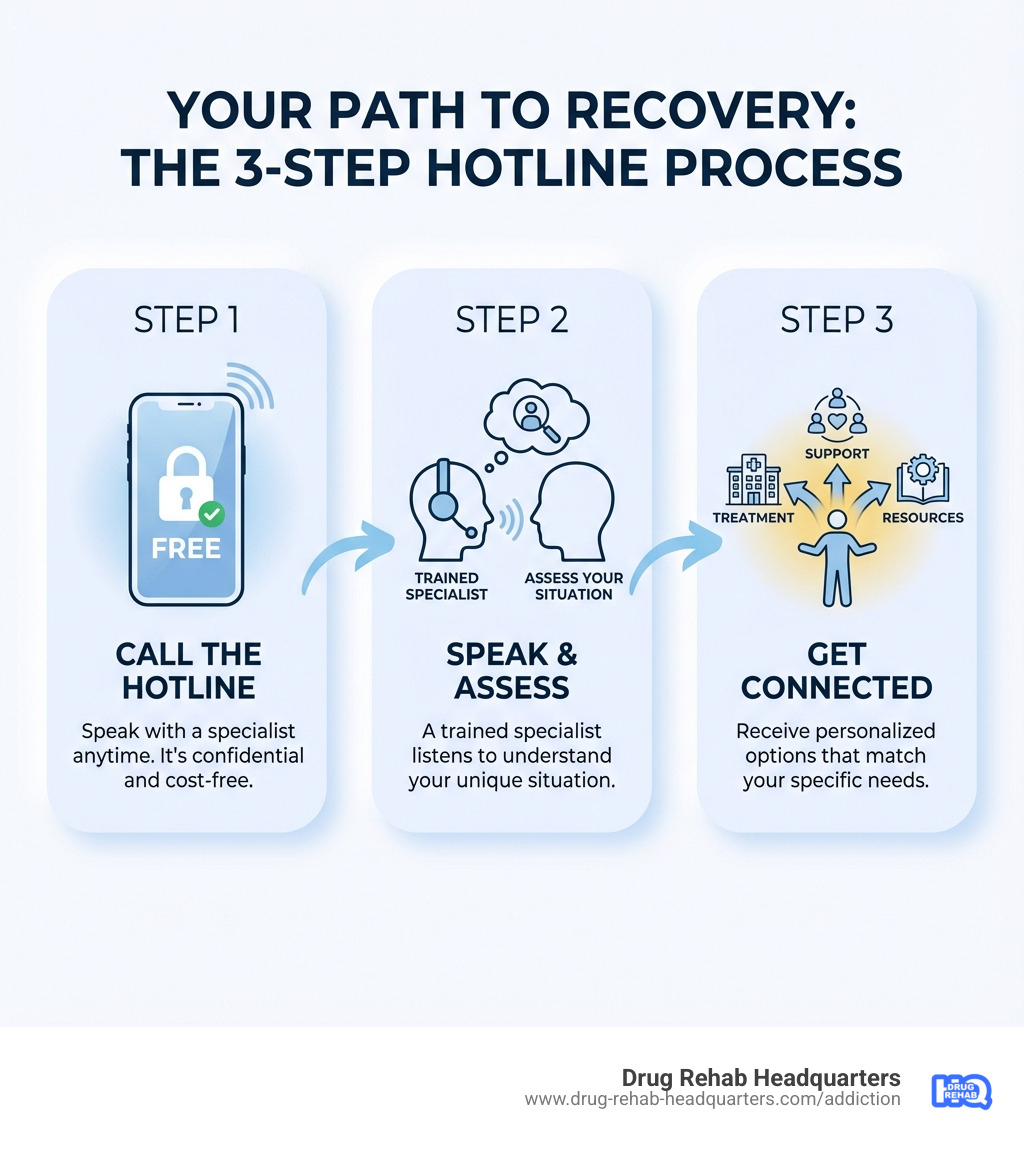
Making that first call to an alcohol addiction hotline can feel daunting, but knowing what to expect can ease your mind. Our hotline, like many reputable services, offers an anonymous and confidential process. You are under no obligation to share identifying information, and your privacy is protected. These calls are handled by trained specialists who offer non-judgmental support, aiming to provide emotional relief and practical guidance.

Unlike treatment centers that provide direct care, our hotline serves as a crucial gateway. We don’t provide counseling services directly, but we do offer support, education, and resources to help you better understand how to get additional help and guide you through the steps to addiction treatment. We can connect you to treatment centers, support groups, and community-based services that are right for you.
Preparing for Your Call to an Alcohol Addiction Hotline
A little preparation can make your call more effective and help you get the most out of the conversation.
- Gathering Information: Before you call, think about your situation. Are you calling for yourself or a loved one? What are the main concerns? Having a general idea of the symptoms you’re experiencing or observing can be helpful.
- Insurance Details: If you’re considering treatment, having your insurance information handy (provider, policy number) can expedite the process of verifying benefits. However, don’t let this deter you from calling if you don’t have it; you can still get valuable information.
- Pen and Paper: Keep a pen and paper nearby to jot down important phone numbers, resources, or advice given by the specialist.
- Private Space: Find a quiet, private place where you can speak openly and without interruption.
- Be Honest with Yourself: The more open and honest you are about your situation, the better the specialist can assist you. They are there to help, not to judge.
For those exploring different treatment durations, understanding your options can be helpful. You can find more information about short-term rehab options to consider what might be best for your needs.
Questions the Hotline Will Ask You
When you call an alcohol addiction hotline, the specialist will likely ask a series of questions to understand your situation better and provide the most relevant assistance. These questions are designed to assess your needs and guide you toward appropriate resources.
- Current Safety: They will first ensure you or the person you’re calling about is in a non-life-threatening situation. If there’s an emergency, they will advise you to call 911.
- Substance Use History: Questions about the type of alcohol consumed, how long the problem has existed, and any past attempts at recovery.
- Frequency and Amount of Use: How often and how much alcohol is being consumed.
- Co-occurring Mental Health Conditions: Whether there are other factors involved, such as depression, anxiety, or other mental health issues, as these often go hand-in-hand with addiction.
- Willingness to Seek Treatment: Your readiness or the individual’s readiness to start treatment.
- Location and Basic Demographics: Your general location (city, state) to help them find local resources, and sometimes basic demographic information for reporting purposes (which remains anonymous).
What to Ask an Alcohol Addiction Hotline Specialist
This is your opportunity to gather information and clarify your next steps. Don’t hesitate to ask anything that’s on your mind. Here are some questions you might consider:
- What treatment options are available in my area (e.g., Las Vegas, Nevada; Miami, Florida; Atlanta, Georgia)?
- What types of therapy are offered in these programs (e.g., cognitive-behavioral therapy, motivational interviewing)?
- How does the cost of treatment vary, and will my insurance cover it?
- What is the typical duration of different treatment programs (e.g., 30, 60, or 90 days)?
- Is medical detox available, and is it recommended for my situation?
- What kind of aftercare support is provided to prevent relapse?
- Can you recommend any local support groups or meetings (like AA or Al-Anon)?
- What resources are available for family members of someone with an alcohol addiction?
For a comprehensive look at what’s available, you can also find addiction treatment centers directly through our website.
Your Next Steps: From Hotline to Recovery
Once you’ve made that initial call to an alcohol addiction hotline, you’ve opened the door to recovery. The hotline specialist will help you steer the next steps, making the process feel less overwhelming. This could involve immediate treatment placement, verification of your insurance benefits, an assessment of the appropriate level of care, and the development of a personalized treatment plan.
Our goal at Drug Rehab Headquarters is to ensure you or your loved one receives the most effective care custom to individual needs. We understand that every journey to sobriety is unique, and we’re here to guide you through the various options available in locations like Atlanta, Georgia, and other cities across the country. You can find more information about addiction treatment in Georgia if that’s a relevant location for you.
Levels of Care in Alcohol Treatment
Addiction treatment is not a one-size-fits-all solution. There are various levels of care designed to meet different needs and stages of recovery:
- Medical Detoxification: This is often the first step, especially for individuals with significant physical dependency. It involves safely managing withdrawal symptoms under medical supervision.
- Inpatient/Residential Rehab: Patients live at the treatment facility 24/7, receiving intensive therapy, counseling, and support. This option provides a structured environment away from triggers.
- Outpatient Programs (OP): Patients attend therapy sessions and group meetings during the day but return home at night. This allows individuals to maintain work, school, or family responsibilities.
- Intensive Outpatient Programs (IOP): A more intensive form of outpatient care, involving several hours of treatment per day, multiple days a week.
- Partial Hospitalization Programs (PHP): This level of care is similar to inpatient treatment in intensity but allows patients to return home or to a sober living environment in the evenings.
- Aftercare and Sober Living: Post-treatment support is crucial for long-term recovery. This can include ongoing therapy, support groups, and sober living facilities that provide a supportive, alcohol-free environment.
If you’re in California, exploring options like these can be a critical step. For instance, you can find a detox facility in California to begin your journey.
Can I Start Rehab Immediately After Calling?
For many, the decision to seek help is a powerful moment, and acting on that impulse can be critical. Yes, it is often possible to start the detox and rehab process immediately or very soon after calling an alcohol addiction hotline.
Our admissions navigators are trained to facilitate this process efficiently. They can guide you through:
- The Admissions Process: Explaining necessary paperwork, assessments, and what to expect upon arrival.
- Same-Day Admission Possibilities: Depending on the facility’s availability and your specific needs, same-day admission may be an option.
- Travel Arrangements: Assistance with coordinating travel to the treatment center, especially if it’s out of state.
- What to Pack for Rehab: Guidance on what personal items are allowed and recommended for your stay.
- Coordinating with the Treatment Center: Our team works directly with trusted treatment centers across the US, including those in top cities like Las Vegas, Nevada, to streamline your entry into care.
If you’re ready to take the next step, call Drug Rehab Headquarters at 866-720-3784 to verify insurance and find a program that can accommodate your immediate needs.
National and Specialized Addiction Hotlines
When you’re seeking help for alcohol addiction, it’s reassuring to know that support is available 24/7. Numerous free and confidential resources, including national helplines and specialized hotlines, offer information, referrals, and crisis intervention. These services act as vital lifelines, connecting individuals and their loved ones to the care they need.
General Addiction and Mental Health Helplines
Beyond our own Drug Rehab Headquarters 24/7 Helpline at 866-720-3784, several national resources are dedicated to addressing alcohol addiction, substance use, and mental health concerns across the United States:
- SAMHSA’s National Helpline: 1-800-662-HELP (4357) is a free, confidential, 24/7, 365-day-a-year treatment referral and information service (in English and Spanish) for individuals and families facing mental and/or substance use disorders. With call volumes projected to exceed 1.2 million in 2025, the need for these services is more significant than ever.
- 988 Suicide & Crisis Lifeline: Call or Text 988. This lifeline provides 24/7, free, and confidential support for people in distress, prevention and crisis resources for you or your loved ones, and best practices for professionals in the United States. Press 1 for Veterans, 2 for Spanish, and 3 for the LGBTQ+ community.
- Crisis Text Line: Text HOME to 741741 to connect with a volunteer crisis counselor 24/7.
- National Drug Helpline: Call 1-844-289-0879. This helpline offers compassionate operators who provide free and confidential support.
- National Council on Alcoholism and Drug Dependence (NCADD): NCADD operates a helpline that provides free and confidential information, support, and referrals for individuals seeking help with alcohol addiction. The helpline is available 24/7.
- Alcoholics Anonymous (AA) Helpline: You can find local AA helplines through their website, which connects you with recovering alcoholics who can provide support, information about AA meetings, and guidance on finding local resources. Many AA helplines are available 24/7.
Specialized Support Hotlines
Recognizing that different communities and situations require custom support, several specialized hotlines cater to specific needs:
- Veterans Crisis Line: Call 1-800-273-8255 and Press 1, or text 838255. This line connects veterans in crisis and their families and friends with qualified Department of Veterans Affairs responders.
- LGBTQ+ National Hotline: 1-888-843-4564. Trained LGBTQIA+ volunteers provide free and confidential support, information, and local resources. (Available Monday – Friday 1 pm to 9 pm, Saturday 9 am to 2 pm, Pacific time).
- Family Support Resources (Al-Anon and Alateen): Al-Anon and Alateen hotline: 800-356-9996. Counselors provide support to teens and adults who are negatively impacted by alcohol addiction in a loved one and provide resources to group therapy nearby for ongoing support.
- Youth and Teen Support Lines (Boys Town National Hotline): 1-800-448-3000. This crisis, resource, and referral helpline is staffed by people who can provide information about a variety of issues, including alcohol use, and help callers find needed resources. Over 140 languages can be translated; they also provide a telecommunications device for the deaf (TDD) line for the speech and hearing impaired (1-800-448-1833).
- National Runaway Safeline: 1-800-RUNAWAY (786-2929). The Safeline provides help for young people who have run away, are homeless, or are otherwise at-risk. Their helpline is available 24/7.
- National Domestic Violence Hotline: 1-800-799-SAFE (7233). This hotline provides essential tools and support to help survivors of domestic violence so they can live their lives free of abuse.
All these specialized resources can be accessed through Drug Rehab Headquarters’ referral network. We’re here to connect you with the right support, no matter your unique circumstances.
Frequently Asked Questions about Alcohol Addiction Hotlines
It’s natural to have questions when considering reaching out for help. We’ve compiled some of the most common inquiries about alcohol addiction hotlines to provide you with clear, concise answers.
Are calls to an alcohol addiction hotline free and confidential?
Absolutely, yes! This is one of the most critical aspects of these services. Reputable hotlines, including the Drug Rehab Headquarters helpline, are entirely free to call. You will not be charged for the conversation.
Furthermore, calls are confidential. This means your personal information and the details of your conversation are protected. Many hotlines operate with anonymity, meaning you don’t have to provide your name or any identifying details if you prefer not to. Your privacy is safeguarded, allowing you to speak openly and honestly without fear of judgment or exposure. Confidentiality is often protected by federal regulations like HIPAA, ensuring your health information remains private.
What if my loved one refuses to get help?
This is a challenging and common situation for many families. An alcohol addiction hotline can be an invaluable resource even when your loved one isn’t ready to acknowledge their problem.
- Guidance for Families: Hotline specialists can offer advice on how to talk to your loved one about their drinking in a constructive way.
- Intervention Strategies: They can provide information on professional interventionists who can facilitate a structured conversation with your loved one.
- Family Support Resources: You can learn about support groups like Al-Anon, which are specifically designed for family members and friends of alcoholics. These groups offer a safe space to share experiences and learn coping strategies.
- Setting Healthy Boundaries: Hotlines can help you understand how to establish boundaries that protect your own well-being while still offering support to your loved one.
While you can’t force someone into recovery, you can find support for yourself and learn how to be a positive influence.
What should I do in an alcohol-related emergency?
If you or someone you know is experiencing an alcohol-related emergency, the most important action is to call 911 immediately. Hotlines are for information and support, but they are not equipped for immediate medical or life-threatening situations.
Signs of an alcohol-related emergency include:
- Signs of Alcohol Poisoning: Confusion, stupor, unconsciousness, vomiting, seizures, slow or irregular breathing, pale or bluish skin, hypothermia.
- Seizures or Unconsciousness: If someone is having a seizure or cannot be awakened.
- Suicidal Threats or Actions: If the person is threatening to harm themselves or others, or is actively engaging in self-harm.
- Severe Withdrawal Symptoms: As mentioned earlier, severe symptoms like high fever, uncontrolled seizures, or Delirium Tremens (DTs) require immediate medical attention.
While waiting for emergency services, do not leave the person alone. Try to keep them awake if possible. If they are unconscious, turn them on their side to prevent choking on vomit. Provide as much information as you can to first responders when they arrive.
Find the Right Path to Recovery Today
Taking the first step toward addressing alcohol addiction is undoubtedly the most important and often the most courageous one. An alcohol addiction hotline provides a safe, confidential, and judgment-free starting point for this transformative journey. It’s a place where you can ask questions, voice concerns, and receive immediate support and guidance.
Recovery from alcohol addiction is not only possible but achievable with the right support system and personalized treatment plan. Drug Rehab Headquarters is dedicated to being a leading resource in this journey, connecting individuals with quality treatment centers across the United States, with a unique focus on top cities for treatment in Nevada, including Las Vegas, Reno, and Henderson. Our comprehensive network includes facilities that offer a full spectrum of care, from medical detox to inpatient and outpatient programs, ensuring that you find a program that perfectly aligns with your needs.
Don’t let uncertainty or fear hold you back from a healthier, happier life. We are here 24/7 to help you steer the complexities of addiction treatment. Your path to recovery can begin with a single, courageous call.
If you’re ready to explore your options further, you can also explore top-rated drug treatment centers through our online resources.