The Reality of Finding Opioid Rehab in Connecticut Right Now
Connecticut opioid rehab facilities range from state-funded detox beds to private inpatient programs — and knowing where to start can save a life. If you need help now, here are your fastest options:
- Call (866) 720-3784 for immediate help finding an open rehab bed
- Call the 24/7 DMHAS Access Line at 1-800-563-4086 for free screening and referrals to state-funded treatment
- Check the DMHAS Bed Availability Website for real-time openings in detox and residential programs
- Walk into a same-day assessment center — no appointment needed at many locations
Connecticut has over 230 drug and alcohol treatment facilities, including inpatient rehab, outpatient programs, medication-assisted treatment (MAT), and detox services. In 2021 alone, the state served over 43,000 first-time participants in substance use treatment. Yet for many people — and their families — figuring out where to go and how to pay still feels overwhelming.
This guide cuts through the confusion. Whether you’re looking for a state-funded bed, a private drug treatment center, or a specialized inpatient rehab program, we’ll walk you through exactly what’s available and how to access it fast.
At Drug Rehab Headquarters, we’ve spent years helping individuals and families navigate Connecticut opioid rehab facilities and find the right fit for their situation. If you’d rather talk to someone directly, call us now at (866) 720-3784 — we’re here to help.
Navigating Connecticut Addiction Treatment Facilities: Levels of Care
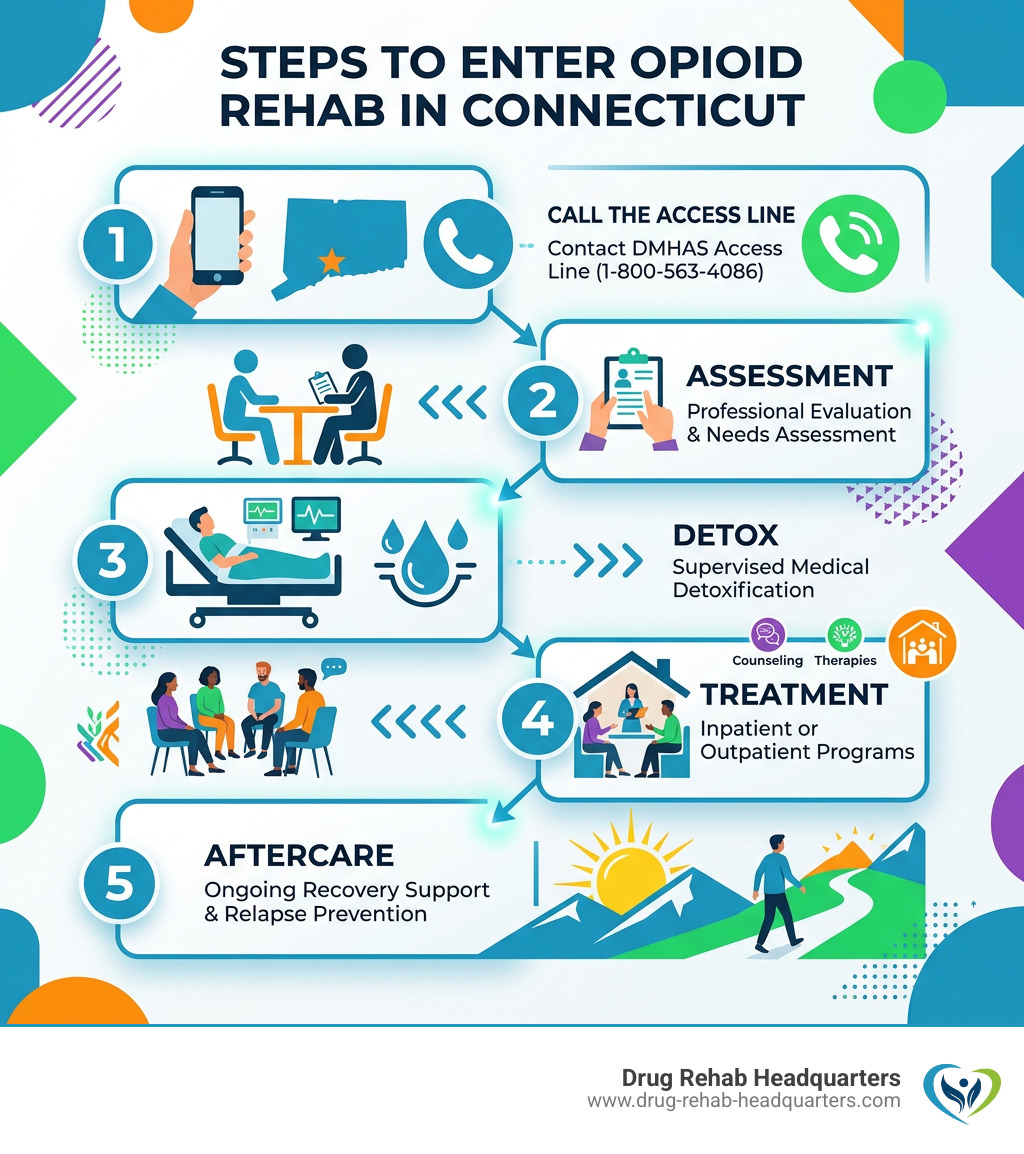
When you begin looking for Connecticut opioid rehab facilities, the first thing you’ll notice is that “rehab” isn’t just one thing. Treatment is a spectrum, and the right level of care depends on how long someone has been using, the specific substance involved, and any underlying health issues.
In Connecticut, the Department of Mental Health and Addiction Services (DMHAS) and private providers categorize care into several main stages. Understanding these helps you advocate for the right placement when you call us at (866) 720-3784.
- Detoxification: This is the first, critical step. It involves clearing the body of toxins under medical supervision. For opioids, this stage is often the most physically grueling, making Drug Detox essential for safety and comfort.
- Residential or Inpatient Treatment: This involves living at a facility for 30 to 90 days (or longer). Inpatient Drug Rehab provides a structured, drug-free environment where individuals can focus entirely on recovery without the distractions or triggers of home life.
- Outpatient Services: These programs allow you to live at home while attending therapy. Intensive Outpatient Treatment (IOP) is a step up from standard outpatient care, usually requiring several hours of therapy multiple days a week.
If you aren’t sure which level of care is right for you or a loved one, our counselors at (866) 720-3784 can help you weigh the options.
How to Find Connecticut Rehab Facilities with Open Beds
One of the biggest hurdles in the Nutmeg State is “bed availability.” It is heartbreaking to be ready for help and find out there are no openings. To solve this, Connecticut uses a real-time tracking system for DMHAS-funded beds.
You can check the official DMHAS Bed Availability website, which is updated daily. This site tracks openings for withdrawal management (detox), residential treatment, and even sober houses. For many, Treatment Centers for Opioid Addiction also offer same-day walk-in assessments. These “Open Access” centers allow you to show up without an appointment to get evaluated and placed into care immediately. If you’re struggling to find a spot, call us at (866) 720-3784, and we can help locate a facility with an immediate opening.
Withdrawal Management and Medical Detox
We cannot stress this enough: detoxing from opioids or alcohol alone can be dangerous and is the point where many people relapse because the withdrawal symptoms are so intense.
Medically monitored withdrawal management uses specific medications to ease cravings and physical pain. This isn’t just about comfort; it’s about clinical safety. Beyond the Shakes: Why Medical Detox is Crucial for Recovery explains why having 24/7 nursing care during this phase significantly increases the chances of completing the full treatment program. If you need to find a detox center right now, call (866) 720-3784.
Accessing State-Funded Support and MAT
Connecticut has a robust public safety net for those struggling with opioid use disorder (OUD). The cornerstone of this is the DMHAS Access Line (1-800-563-4086). This 24/7 service, operated by Wheeler Clinic, provides screenings and can even facilitate three-way calls with treatment providers to get you admitted on the spot.
However, the state system can sometimes be busy. If you need immediate rehab placement assistance or want to explore private options that might have shorter wait times, you can always reach us at (866) 720-3784.
One encouraging statistic from the state’s triennial report shows that readmissions into treatment dropped by more than 3,500 people in 2021, suggesting that more people are finding sustained success in their initial recovery attempts.
Connecticut also heavily promotes naloxone (Narcan) distribution. Many facilities and outreach vans provide free Narcan kits and training to ensure that if an overdose does happen, it doesn’t have to be fatal.
Medication-Assisted Treatment (MAT) Options in CT
For opioid addiction, “willpower” is rarely enough. The brain’s chemistry changes after prolonged use, which is why Medication-Assisted Treatment (MAT) is considered the gold standard of care. Opiate Addiction Treatment often involves one of the following:
- Buprenorphine (Suboxone): Helps reduce cravings and withdrawal symptoms. You can find more info in Your Guide to Suboxone Treatment Centers Near You.
- Methadone: A long-standing treatment usually provided through specialized clinics.
- Vivitrol/Naltrexone: Non-addictive medications that block the effects of opioids and alcohol, helping to prevent relapse.
Many Connecticut opioid rehab facilities integrate these medications into their residential and outpatient programs. To find a center that offers MAT, call us at (866) 720-3784.
State Resources and Crisis Intervention
The state doesn’t just provide the treatment; it helps you get there. DMHAS-funded programs often offer transportation assistance as a last resort for those who have no other way to reach an inpatient facility.
If you are dealing with a crisis, such as a recent overdose, the state’s outreach vans operate seven days a week in cities like Stamford and New Haven. These vans offer referrals, prescriptions, and even syringe exchange services. For those seeking Heroin Addiction Treatment, these mobile units are often the first point of contact for long-term recovery. For immediate help finding a crisis intervention or a stable treatment bed, call (866) 720-3784.
Understanding the Cost of Addiction Recovery in CT
Cost is often the biggest “No” when people think about rehab. But in Connecticut, there are ways to make it work regardless of your bank account balance.
| Treatment Type | Average Cost in CT |
|---|---|
| Medical Detox | ~$142,170 (varies by intensity) |
| Long-Term Inpatient | ~$50,888 |
| Standard Outpatient | ~$8,456 |
| Methadone Outpatient | ~$7,513 |
Note: These are average “sticker prices.” Most people pay significantly less through insurance or state subsidies.
If these numbers look scary, don’t panic. Does Insurance Cover Rehab? The answer is almost always yes. Whether you have private insurance or state aid, there is a path forward. Call us at (866) 720-3784 to discuss your financial options.
Insurance Coverage: Medicaid, Medicare, and Private Plans
Connecticut is a leader in insurance accessibility for addiction. Husky Health (Connecticut’s Medicaid) is accepted at 184 out of the roughly 230 facilities in the state. This covers everything from detox to outpatient therapy.
Private insurance plans are also required by law to provide “parity,” meaning they must cover mental health and addiction services similarly to how they cover physical health. You can Verify insurance coverage easily by calling a facility or speaking with our team at (866) 720-3784. We can do the heavy lifting of calling the insurance company for you.
Reducing Expenses and Low-Cost Options
If you are uninsured or underinsured, there are still options:
- Sliding Scale Fees: Many non-profit facilities adjust their costs based on what you can afford to pay.
- Scholarships: Some private Connecticut opioid rehab facilities offer scholarships specifically for individuals with opioid use disorder.
- Tribal Funding: Connecticut recognizes five Indigenous Nations that may have specific grants or funding for substance abuse treatment.
- Faith-Based Programs: Organizations like Adult & Teen Challenge offer low-cost, long-term residential options.
For more details on navigating these costs, check out our Cost of rehab resources or call (866) 720-3784.
Specialized Care and Top-Rated Recovery Centers
Recovery isn’t one-size-fits-all. Some people need a high-end retreat, while others need a program that understands the specific challenges of being a veteran or a pregnant mother.
A major focus in modern treatment is the Dual Diagnosis Treatment Facility. This means treating addiction and mental health disorders (like depression, PTSD, or anxiety) at the same time. Research shows this is the only way to ensure long-term success. For example, studies of incarcerated individuals who receive comprehensive treatment and follow-up care show that drug use decreases by 50-70%.
Top-Rated Connecticut Addiction Treatment Centers and Holistic Programs
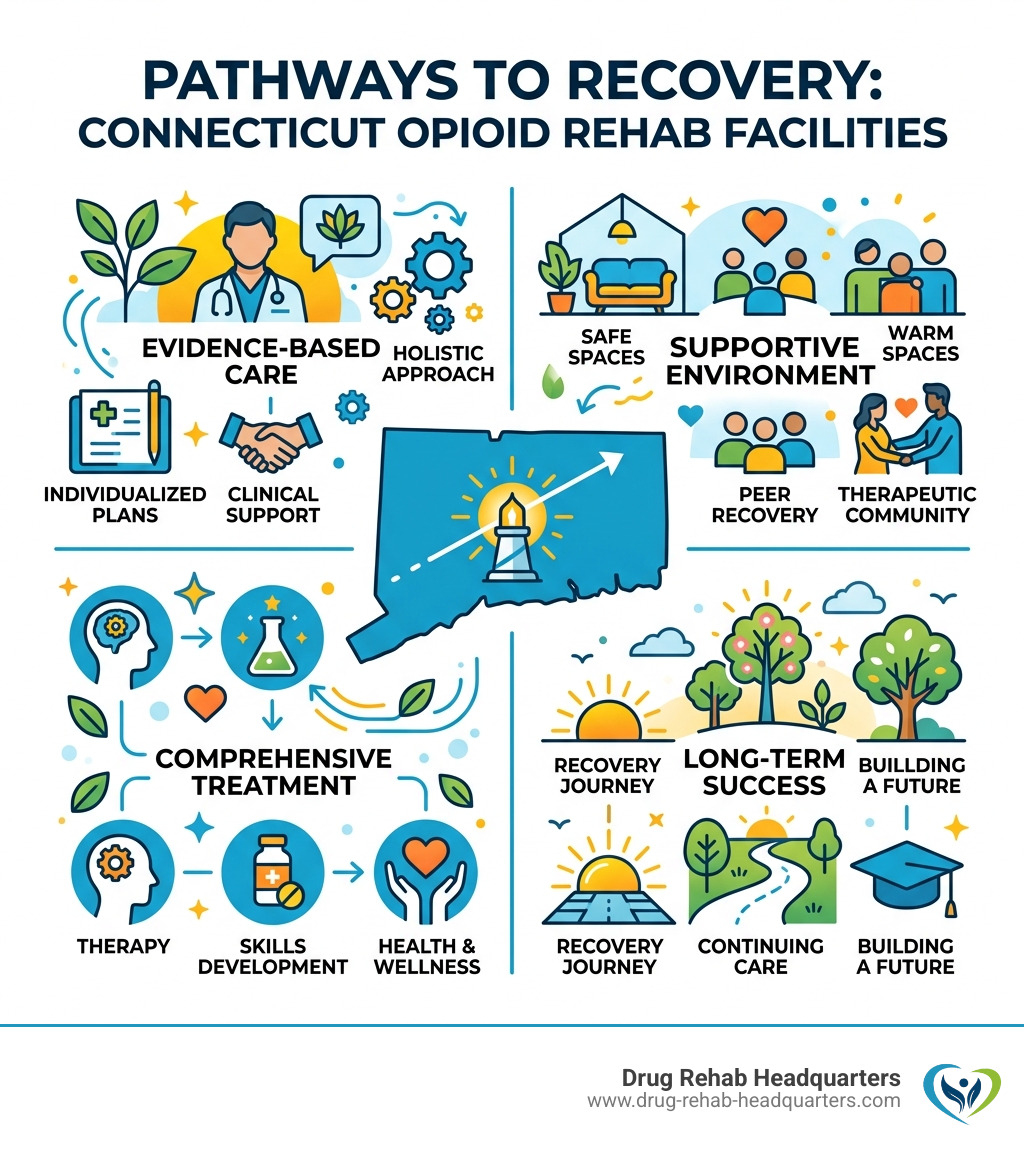
The best Connecticut opioid rehab facilities combine evidence-based medicine (like MAT and Cognitive Behavioral Therapy) with holistic health. This might include:
- Yoga and meditation
- Nature-based therapy and hiking
- Art and music therapy
- Nutritional counseling
These programs aim to heal the whole person, not just stop the drug use. If you’re looking for a Drug Addiction Treatment program that feels more like a community and less like a hospital, call us at (866) 720-3784. We know which facilities offer these innovative approaches.
Programs for Specific Populations
Specialized care can make a world of difference in how comfortable a person feels in rehab. Connecticut offers programs tailored for:
- Pregnant and Parenting Women: Facilities that allow children to stay with their mothers or provide specialized prenatal care.
- Veterans: Programs that focus on combat-related PTSD and the unique culture of military service.
- Young Adults: Focusing on the specific social and developmental needs of people in their late teens and early twenties. Many young adults also seek Prescription Drugs Treatment for issues involving pills.
- LGBTQ+ Individuals: Providing a safe, affirming environment for recovery.
If you belong to one of these groups and want a program that “gets” you, call (866) 720-3784.
Conclusion and Frequently Asked Questions
Finding the right Connecticut opioid rehab facilities is the first step toward a life you don’t need to escape from. Sustained sobriety is possible, but it usually requires a solid plan that includes detox, residential treatment, and a strong aftercare or alumni program to keep you connected to a sober community.
At Drug Rehab Headquarters, we believe that no one should have to navigate this journey alone. Whether you’re looking for Addiction Rehab Centers Near Me or need to understand the nuances of state-funded care, our team is available 24/7 at (866) 720-3784.
What is the 24/7 Substance Use Access Line in Connecticut?
The Access Line (1-800-563-4086) is a DMHAS-funded service that provides immediate screening and referrals for Connecticut residents. It is a great resource for finding state-funded beds and local walk-in centers. For direct assistance in finding a private or specialized rehab facility, you can also contact us at (866) 720-3784.
Does Connecticut Medicaid cover opioid rehab?
Yes. Husky Health (Medicaid) provides comprehensive coverage for addiction treatment. Over 180 facilities in Connecticut accept Medicaid for services ranging from medical detox to long-term outpatient care. If you need help finding a facility that accepts your specific plan, call us at (866) 720-3784.
How effective is addiction treatment for opioids?
Addiction treatment is highly effective when it includes long-term care and support. Studies show a 50-70% decrease in drug use for those who complete treatment and stay engaged in aftercare. This is especially true for those seeking Oxycontin Addiction Treatment or help for other prescription opioids, where MAT and therapy work together to rebuild the brain’s health.
Don’t wait for “rock bottom.” The best time to call for help is right now. Reach out to us at (866) 720-3784.