
Understanding Your Path Forward
Addiction recovery journey is a lifelong process of change through which individuals improve their health and wellness, live a self-directed life, and strive to reach their full potential. Here’s what to expect:
- Recovery is not a cure – Addiction is a chronic disease that requires ongoing management, similar to diabetes or heart disease
- The journey is non-linear – You may move back and forth between stages of change, and setbacks don’t erase progress
- It takes time – The maintenance stage alone can last from 6 months to 5+ years, with most people needing 2-5 years to truly solidify change
- Multiple stages exist – Recovery typically progresses through precontemplation, contemplation, preparation, action, and maintenance phases
- Support is essential – Studies show that 65% of Canadians in treatment cite relationships as the most important factor in initiating recovery
- Treatment differs from recovery – Treatment is a time-limited intervention (like detox or rehab), while recovery is the ongoing process of building a meaningful, balanced life
The specifics of every person’s addiction journey are different, but for most people, the path to recovery follows a similar trajectory: a “bottom” followed by the decision to take action, the initial adjustment to life without the substance, the gradual establishment of a “new normal,” and working on the difficulties that led to addiction in the first place.
Recovery is a journey, and each person’s path is unique. It’s a self-directed process that improves wellness and allows individuals to reach their full potential in ways that work best for them. Understanding that recovery isn’t linear helps individuals avoid feelings of failure and stay committed when challenges arise.
At Drug Rehab Headquarters, we’ve dedicated ourselves to guiding individuals and families through every stage of the addiction recovery journey, connecting you with evidence-based treatment options and personalized support that meets you where you are. Our mission is to provide the accurate information and compassionate guidance you need to steer your unique path to healing.
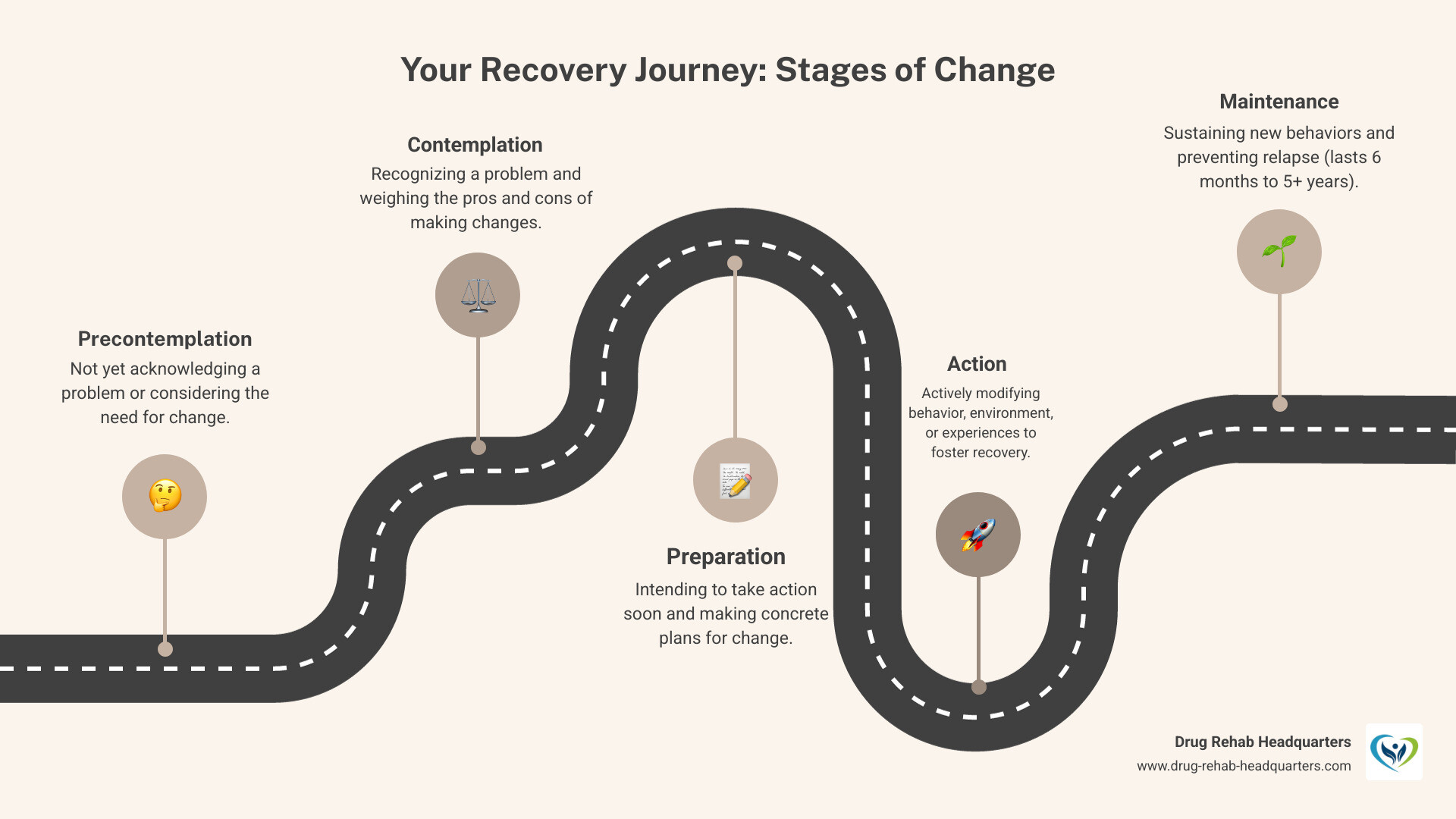
The Stages of Change in Recovery
The addiction recovery journey is often understood through the Transtheoretical Stages of Change Model. This model helps us recognize that recovery isn’t a single event, but a process where individuals move through distinct psychological stages. It’s crucial to remember that this process is rarely linear; we might move forward, then slide back, or even skip a stage entirely. Setbacks are a normal part of this human experience, not a sign of failure. You can learn more about a guide to the stages of change.
1. Precontemplation and Contemplation
Our journey often begins long before we take any concrete steps towards sobriety.
In the Precontemplation Stage, we might not recognize that a problem exists. We may be in denial, perhaps due to a lack of information about how our behaviors are impacting our lives, or perhaps we’ve tried to change before and felt disappointed by past failures. We might rationalize our substance use, minimizing its negative consequences or blaming external factors. For those trying to help a loved one in this stage, approach with compassion, not confrontation, using education and motivational interviewing to build trust.
As awareness slowly dawns, we might enter the Contemplation Stage. Here, we acknowledge that our substance use might be a problem, but we’re still ambivalent about changing. We start to weigh the pros and cons of our addiction versus the unknowns of sobriety. We might ask ourselves, “Will I be able to cope without substances? Will I lose friendships or routines I rely on?” This stage is characterized by internal debate, doubt, and fear. For supporters, offering motivational encouragement and nonjudgmental conversation can plant seeds of hope without pushing too hard.
2. Preparation and Action
Once the scales tip towards change, we move into more active phases.
The Preparation Stage is where we commit to making a change in the near future, often within the next month. We start to research treatment options, talk to professionals, or even reduce our substance use. We might go for a day or two without substances, testing the waters. It’s perfectly normal to move back and forth between contemplation and preparation, as this is a period of planning and mental readiness. A well-structured treatment plan, peer encouragement, and professional support are incredibly beneficial here.
The Action Stage is where the rubber meets the road. We actively engage in treatment, whether that’s undergoing detoxification, attending inpatient or outpatient programs, or committing to therapy. This is often the most challenging stage, as we confront the physical and psychological realities of sobriety.
Detoxification is typically the initial phase, where our bodies rid themselves of substances. Medically supervised detox is the safest option, as healthcare providers can monitor withdrawal symptoms and provide medications to manage them. This can be intense, but it’s a critical first step.
Following detox, we enter Early Sobriety, a vulnerable time. We might experience Post-Acute Withdrawal Syndrome (PAWS), which involves symptoms like irritation, panic, anxiety, trouble sleeping, depression, and difficulty concentrating, sometimes lasting for months or even years. Intense cravings, mood swings, and grief over processing life without substances are common. Therapy, structured routines, and strong support groups are vital to steer these challenges, helping us replace old habits with healthy new ones.
Sometimes, in the first few months of sobriety, we might experience a “pink cloud” phase—a period of intense positive feelings, improved well-being, and euphoria. While wonderful, it’s important to remain grounded and continue building sustainable recovery tools.
3. Maintenance and Long-Term Growth
The journey doesn’t end with initial treatment; it evolves.
The Maintenance Stage is about sustaining the changes we’ve made and preventing relapse. This stage can last from six months to five years, with many people needing two to five years to truly solidify their new habits and break the old ones. The biggest challenge here can be complacency. As life stabilizes and the memory of addiction fades, we might reduce our involvement in support systems, which can increase relapse risk.
Ongoing therapy, community connection, and purposeful living are essential for sustained recovery. This is where we focus on building resilience, developing coping mechanisms, and finding new meaning in life. We learn to manage stress, communicate effectively, and set healthy boundaries. Our goal is not just abstinence, but a fulfilling, self-directed life.
Treatment vs. Recovery: Building Your Foundation
Understanding the distinction between “treatment” and “recovery” is fundamental to navigating your addiction recovery journey. Addiction, as defined by the National Institute on Drug Abuse (NIDA), is a chronic disease, similar to heart disease or asthma. This means it cannot be “cured” in the traditional sense, but it can be successfully managed, allowing us to regain control of our lives.
Treatment refers to the specific, often time-limited interventions designed to address acute substance use and its immediate consequences. This might include detoxification, inpatient rehabilitation, or outpatient programs. It’s the initial phase where we learn tools and strategies to stop using substances.
Recovery, on the other hand, is the ongoing, lifelong process of change. It’s about applying those tools and strategies to improve our overall health and wellness, live a self-directed life, and strive to reach our full potential. Recovery encompasses all aspects of life—physical, mental, emotional, social, and spiritual—and continues long after formal treatment ends.
Here’s a simple comparison:
| Feature | Addiction Treatment | Addiction Recovery |
|---|---|---|
| Nature | Formal, structured intervention | Lifelong process of change |
| Goal | Address acute substance use, achieve initial sobriety | Improve overall health, wellness, and quality of life |
| Duration | Often time-limited (days, weeks, months) | Ongoing, continuous, no fixed endpoint |
| Focus | Stopping substance use, managing withdrawal, early coping skills | Sustaining sobriety, personal growth, purpose, community |
| Outcome | Stability, readiness for ongoing change | Self-directed life, full potential, meaningful existence |
Principles and Types of Effective Treatment
When it comes to treatment, we understand that no single approach is right for everyone. Our needs are unique, influenced by the type and severity of our addiction, co-occurring mental health conditions, and personal circumstances. Effective treatment follows several key principles:
- Individualized Treatment Plans: Treatment should be custom to address our specific patterns of drug use and related problems.
- Readily Available Access: Timely access to care can be critical.
- Addressing Multiple Needs: The best programs address us as a whole person, considering our medical, mental, social, occupational, family, and legal needs.
- Medication and Behavioral Therapy: For many addictions, a combination of medication and behavioral therapy is the most effective approach.
You can find more information on these principles from NIDA’s Principles of Drug Addiction Treatment: A Research-Based Guide.
At Drug Rehab Headquarters, we connect individuals to a variety of evidence-based, holistic treatment options across North America, including facilities in Alabama, Alaska, Arizona, Arkansas, California, Colorado, Connecticut, Delaware, Florida, Georgia, Hawaii, Idaho, Illinois, Indiana, Iowa, Kansas, Kentucky, Louisiana, Maine, Maryland, Massachusetts, Michigan, Minnesota, Mississippi, Missouri, Montana, Nebraska, Nevada, New Hampshire, New Jersey, New Mexico, New York, North Carolina, North Dakota, Ohio, Oklahoma, Oregon, Pennsylvania, Puerto Rico, Rhode Island, South Carolina, South Dakota, Tennessee, Texas, Utah, Vermont, Virginia, Washington, West Virginia, Wisconsin, and Wyoming.
Here are some common types of treatment and recovery programs we can help you explore:
- Medically-supervised Detox: This is often the first step, providing a safe environment to manage withdrawal symptoms, sometimes with medication assistance.
- Inpatient/Residential Rehab: Offers 24/7 care in a structured environment for 30 to 90 days. It includes intensive therapy and peer support, allowing a singular focus on recovery.
- Outpatient Programs (PHP/IOP): These flexible programs (Partial Hospitalization and Intensive Outpatient) provide structured treatment while allowing individuals to live at home and maintain daily responsibilities.
- Behavioral Therapies: These are crucial for modifying attitudes and behaviors related to substance use.
- Cognitive Behavioral Therapy (CBT): Helps us identify and change negative thought patterns that contribute to addiction.
- Dialectical Behavior Therapy (DBT): Focuses on emotional regulation, mindfulness, distress tolerance, and interpersonal effectiveness.
- Motivational Interviewing: Helps us explore and resolve ambivalence about change.
- Medication-Assisted Treatment (MAT): Combines medications with counseling to reduce cravings and withdrawal symptoms for opioid, alcohol, and nicotine addictions.
We understand that finding the right fit is crucial. Our certified counselors, many with lived experience, offer 24/7 free support and personalized guidance to help you find personalized rehabilitation services that align with your unique needs.
Defining a Successful Addiction Recovery Journey
What does “successful” recovery truly mean? It’s more than just abstinence. A successful addiction recovery journey is a broad lifestyle change. The Betty Ford Institute defines it as a “voluntarily maintained lifestyle characterized by sobriety, personal health, and citizenship.”
The Substance Abuse and Mental Health Services Administration (SAMHSA) offers a holistic view: “a process of change through which individuals improve their health and wellness, live a self-directed life, and strive to reach their full potential.”
SAMHSA identifies four key dimensions of a successful recovery:
- Health: Making informed choices for physical and emotional well-being.
- Home: Living in a stable, safe, and supportive environment.
- Purpose: Engaging in meaningful daily activities like work, school, or family care.
- Community: Building social networks that provide support, friendship, and hope.
True success means nurturing all these areas—improving our lives, healing relationships, finding purpose, and building community. It’s a continuous process of personal growth and celebrating milestones along the way.
Navigating the Challenges of Your Addiction Recovery Journey

The addiction recovery journey is not without its challenges. We all face problems that can test our resolve and make us feel vulnerable. Common challenges include:
- Cravings and Triggers: The intense desire to use substances, often sparked by specific people, places, things, or emotions.
- Emotional Distress: Dealing with uncomfortable feelings like anxiety, depression, guilt, shame, or grief that might have been masked by substance use.
- Social Pressure: Navigating situations where substance use is prevalent or dealing with unsupportive social circles.
- Boredom and Loneliness: Finding healthy ways to fill time and connect with others after leaving behind old routines and acquaintances.
- Complacency: In the maintenance stage, as life stabilizes, the memory of addiction can fade, leading to a false sense of security.
These challenges are real, but with the right strategies and support, we can learn to steer them successfully.
The Role of a Healthy Support System
One of the most powerful tools in our addiction recovery journey is a strong support system. We know this isn’t just anecdotal; studies consistently back it up. For instance, a study of nearly 1,200 women in inpatient treatment found that those with supportive families were less likely to relapse within six months. Similarly, adolescents with highly supportive parents had better treatment outcomes. A meta-analysis even found that addiction treatments involving family are associated with a 6% reduction in substance use compared to individual therapies. In fact, 65% of Canadians in treatment for an addiction cited marital, family, or other relationships as the most important factor in initiating recovery. We believe this holds true for individuals across the United States and Puerto Rico as well.
A healthy support system is a network of people who cheer us on, lend an ear, and help us get back up when we stumble. It includes:
- Family and Friends: Loved ones who understand the recovery process and offer non-judgmental support. We encourage families to learn more about the importance of social support in recovery.
- Peer Support Groups: Organizations like Alcoholics Anonymous (AA), Narcotics Anonymous (NA), and SMART Recovery provide invaluable connections with others who share similar experiences. These groups offer a sense of belonging and practical strategies.
- Sober Living Communities: These homes provide a structured, drug- and alcohol-free environment, offering a gradual transition from intensive treatment back into daily life.
- Professional Support: Therapists, counselors, and recovery coaches provide expert guidance, helping us develop coping skills and address underlying issues.
Building this system begins during treatment and continues throughout recovery. It involves actively seeking out positive influences, attending meetings, connecting with a sponsor, and engaging in sober social activities. This network helps us manage stress, combat isolation, and strengthens our ability to make healthy decisions.
Understanding and Overcoming Relapse
Relapse is a common, though often feared, part of the addiction recovery journey. Relapse is not a sign of failure, but rather a setback that can occur due to the chronic nature of addiction. Think of it like managing other chronic illnesses: someone with diabetes might have a spike in blood sugar, or someone with asthma might experience an attack. These aren’t failures, but indications that treatment might need adjustment. Relapse rates for drug use are similar to rates for other chronic medical illnesses. We know that two out of three people recovering from an addiction will likely relapse within their first year of recovery.
When a relapse occurs, it’s a learning opportunity. It signals that we need to re-evaluate our strategies, identify our triggers, and strengthen our coping mechanisms. This might mean returning to treatment, modifying our current plan, or trying a new approach. The goal is to respond with compassion and renewed commitment, not self-blame.
Key strategies for preventing and managing relapse include:
- Identifying Triggers: Knowing what physical, psychological, emotional, or social factors lead to cravings or urges to use. This can include stress, specific people, or even boredom.
- Developing Coping Strategies: Learning healthy ways to respond to triggers, such as mindfulness, exercise, calling a support person, or engaging in a hobby.
- Building a Relapse Prevention Plan: A detailed, written plan outlining triggers, coping strategies, and who to contact for support.
- Regularly Reviewing and Updating Your Plan: As we grow and change, so do our triggers and coping needs.
- Maintaining Vigilance: Even in long-term recovery, it’s important to recognize “prelapse” conditions—circumstances or behaviors that make us feel unable to cope without a substance, like overworking or stopping healthy routines.
Thriving in Long-Term Recovery: Strategies for a Fulfilling Life

Beyond simply abstaining from substances, the addiction recovery journey is about building a rich, fulfilling life. It’s about thriving, not just surviving. This involves cultivating personal resilience, which is our ability to confront and cope with life’s challenges without turning to substances.
Here are some strategies we can employ for long-term recovery and relapse prevention:
- Self-Care Practices: Prioritizing our physical, mental, and emotional well-being is paramount. This includes getting quality rest, practicing good nutrition, and engaging in positive recreation.
- Mindfulness: Techniques like deep breathing or meditation help us stay in the present moment, manage anxious thoughts, and reinforce strategies learned in therapies like CBT.
- Healthy Nutrition: Choosing wholesome foods, especially those rich in carbohydrates and proteins, can help balance hormones and reduce cravings. Adequate B and C vitamins can also aid physical recovery.
- Exercise: Regular physical activity reduces stress, boosts mood, and improves cardiovascular health. Research suggests it can make us less likely to abuse drugs and alcohol.
- Finding New Passions and Purpose: Filling the void left by substance use with meaningful activities is vital.
- Volunteering: Giving back to the community shifts our focus away from ourselves and can reduce the likelihood of substance abuse.
- Hobbies and Creative Outlets: Refinding old interests or finding new ones, like painting, writing, or learning an instrument, can provide healthy ways to express emotions and fill free time.
- Community Connection: Actively seeking out and engaging with a supportive community helps combat isolation and provides a sense of belonging. This might include recovery cafes, sports leagues, or creative arts programs.
Your Lifelong Addiction Recovery Journey
Your addiction recovery journey is a lifelong process of learning, growing, and adapting. It’s about continually developing the tools and mindset to steer life’s ups and downs without returning to substance use.
Key components of this ongoing growth include:
- Developing Coping Mechanisms: Mastering techniques to handle stress, cravings, and difficult emotions. This includes effective communication, problem-solving skills, and time management.
- Stress Management: Incorporating practices like exercise, visualization, deep breathing, or spending time in nature to reduce stress, a common relapse trigger.
- Healthy Communication and Boundaries: Learning to express our needs and feelings assertively, and setting clear boundaries in relationships to protect our recovery.
- Creating a Relapse Prevention Plan: A dynamic document that evolves with us, detailing triggers, coping strategies, and our support network.
- Enjoying a Sober Life: This is the ultimate goal—to live a life filled with purpose, joy, and healthy connections. It means celebrating small victories, setting new goals, and embracing the freedom that recovery brings.
We encourage you to continually seek out resources and support. This might involve ongoing therapy (CBT, DBT), regularly attending support groups (AA, NA, SMART Recovery), and life-skills training. The journey is long, but it’s one of immense personal growth and fulfillment.
Frequently Asked Questions about the Recovery Journey
How long does the addiction recovery journey take?
The addiction recovery journey is a lifelong process, not a destination with a fixed endpoint. While initial treatment phases may last weeks or months, the commitment to maintaining sobriety and personal growth continues indefinitely. The time we spend in each stage of change (precontemplation, contemplation, preparation, action, and maintenance) varies greatly depending on individual factors like the severity of the addiction, co-occurring mental health conditions, and the strength of our support systems.
For many, the maintenance stage alone can last from six months to five years, with a commitment of two to five years often necessary to truly solidify change and break old habits. A multi-year study of people with substance use disorder showed that only about a third of recovering individuals who had been sober for less than a year remained abstinent, highlighting that sustained sobriety often requires significant time and effort. The focus should be on consistent progress and learning, rather than rigid timelines.
Can addiction really be cured?
Addiction cannot be “cured” in the traditional sense, but it is a manageable chronic condition. The National Institute on Drug Abuse (NIDA) defines addiction as a chronic disease, much like diabetes, heart disease, or asthma. These conditions cannot be cured, but they can be effectively managed with ongoing treatment, lifestyle changes, and support.
Treatment for addiction helps us manage symptoms, reduce cravings, and regain control over our lives. The goal is remission, where we no longer meet the diagnostic criteria for a substance use disorder and can live a healthy, self-directed life. If a relapse occurs, it’s seen as a recurrence of a chronic condition, not a failure, indicating a need to adjust or resume treatment.
What is the difference between treatment and recovery?
The terms “treatment” and “recovery” are often used interchangeably, but they represent distinct phases and processes within the broader addiction recovery journey.
Addiction treatment refers to the formal, often time-limited, interventions designed to address acute substance use and its immediate consequences. This includes services like:
- Medically supervised detoxification
- Inpatient or residential rehabilitation programs
- Outpatient programs (PHP, IOP)
- Specific behavioral therapies (CBT, DBT)
- Medication-Assisted Treatment (MAT)
Treatment is typically provided by healthcare professionals in clinical settings, with the primary goal of achieving initial sobriety and equipping us with foundational coping skills.
Addiction recovery, on the other hand, is a much broader and lifelong process. As defined by SAMHSA, it’s “a process of change through which individuals improve their health and wellness, live a self-directed life, and strive to reach their full potential.” Recovery encompasses:
- Sustaining sobriety long-term
- Developing healthy coping mechanisms and life skills
- Building and maintaining supportive relationships
- Engaging in meaningful activities (purpose)
- Finding stable housing (home)
- Improving overall physical and mental health
- Reintegrating into the community
Treatment is a critical phase within the addiction recovery journey that helps us build a strong foundation, while recovery is the ongoing construction and maintenance of a fulfilling, substance-free life.
Conclusion
Your addiction recovery journey is a testament to your strength and resilience. It’s a personal, often winding path, but one filled with immense potential for healing, growth, and a deeply fulfilling life. We’ve explored the various stages, the critical distinction between treatment and recovery, the vital role of support systems, and the strategies for navigating challenges like relapse. Hope is always present, and you are never alone in this process.
At Drug Rehab Headquarters, we understand the complexities of this journey. That’s why we offer 24/7 free, confidential support from certified counselors, many with lived experience, providing personalized guidance to help you find suitable, evidence-based, holistic treatment options across the United States and Puerto Rico. We are here to help you take that crucial next step and begin building the life you deserve.