Why Finding the Right Drug Addiction Helpline Matters
A drug addiction helpline is your first point of contact for confidential, immediate support and a direct link to treatment options. These free services are staffed 24/7 by trained counselors who provide crisis intervention, answer questions about addiction, and help you find the right rehabilitation program for your unique needs.
Quick Access to Drug Addiction Helplines and Crisis Support:
- Drug Rehab Headquarters 24/7 Helpline: Free, confidential guidance from certified counselors who can help you understand your options and connect you with appropriate treatment and support.
- 988 Suicide & Crisis Lifeline: Call or text 988 – For anyone in distress or crisis.
Nearly 49 million people in the United States meet the criteria for a substance use disorder, yet only about 1 in 4 people who need treatment actually receive it. This gap between needing help and getting it is staggering, but it doesn’t have to be your story.
Calling a drug addiction helpline is often the crucial first step toward recovery. These services offer more than just phone numbersthey provide hope, connection, and a clear path forward when everything feels overwhelming.
If you’ve tried to quit on your own and failed, if your relationships are suffering, if you’re experiencing health problems, or if you simply feel stuck, a helpline call can change everything. The conversation is confidential, non-judgmental, and requires no commitment to treatment. You’re simply gathering information and exploring your options.
At Drug Rehab Headquarters, we’ve helped thousands of individuals and families steer the complex world of addiction treatment by connecting them with the right drug addiction helpline resources and personalized rehabilitation options. Our mission is to make the path to recovery as clear and accessible as possible.
Understanding Drug Addiction Helplines: Your First Step to Recovery

When you’re struggling with substance use, reaching out can feel like an impossible task. But imagine a friendly, understanding voice on the other end of the line, ready to listen without judgment and offer clear guidance. That’s what a drug addiction helpline provides. These invaluable resources offer confidential support, free information, and 24/7 availability, ensuring that help is always just a call away.
Our certified counselors, many with lived experience, understand the complexities of addiction firsthand. They’re not just reading from a script; they’re offering genuine empathy and guidance through what can be an overwhelming process. Whether it’s 3 AM on a Tuesday or midday Sunday, these helplines are staffed by real people ready to connect you to the support you need. For more comprehensive information on addiction, explore our Addiction Information page.
What services do helplines offer?
A drug addiction helpline is a multifaceted resource designed to support individuals at every stage of their journey. They are far more than just a directory; they are a lifeline offering a range of critical services:
- Crisis Intervention: For moments of immediate distress, crisis-focused helplines such as the 988 Suicide & Crisis Lifeline offer immediate support. While not a substitute for 911 in an emergency, they provide crucial emotional support and de-escalation.
- Emotional Support: Sometimes, you just need someone to listen. Helpline advisors provide a compassionate, non-judgmental ear, helping you process your feelings and fears.
- Treatment Referrals: A primary function of a drug addiction helpline is to provide information on treatment options, including inpatient and outpatient clinics. They can connect you to local services and explain how to access them.
- Information on Addiction: Helplines can clarify what addiction is, its symptoms, and how it affects your health. They can answer your questions about substance abuse, helping you understand the disease and its impact.
- Guidance for Families: Addiction affects the entire family. Helplines offer crucial advice on how to help a loved one, approach the topic of treatment, and find support for family members.
These services are designed to ensure no one feels alone in their struggle. For a detailed guide on available recovery services, visit our Addiction Recovery Services Complete Guide.
Are there different types of helplines?
Yes, just as addiction manifests in diverse ways, so do the helplines designed to help. The landscape of drug addiction helpline services is varied, offering different levels of support to meet specific needs:
- National Helplines: These are broad-reaching services operating across the United States, including national crisis lines and information services. They provide general information, referrals, and crisis support.
- State-Specific Helplines: Many states, from Alabama to Wyoming, offer their own helplines. These are excellent for finding localized resources and community-based treatment centers close to home.
- Non-Profit and Private Helplines: Some helplines are run by non-profits focused on advocacy, while others, like the services provided through Drug Rehab Headquarters, are connected to networks of private treatment providers. Our counselors offer personalized guidance to find suitable, evidence-based, holistic treatment options.
- Helplines for Specific Groups: Certain hotlines cater to particular demographics, such as teens or young adults. Others are dedicated to supporting family members of those struggling with addiction.
- Crisis-Specific Helplines: Beyond general addiction support, some helplines are custom for immediate crisis situations, including those offering counseling for people whose substance use is worsened by traumatic or highly stressful events.
Understanding these distinctions helps you choose the most appropriate resource. When you contact Drug Rehab Headquarters, we connect you with the right drug addiction helpline that aligns with your unique needs. You can reach us directly through our Contact Drug Rehab Headquarters Helpline page.
How do helplines ensure confidentiality?
Confidentiality is the cornerstone of any effective drug addiction helpline. We understand that discussing personal struggles requires a space of absolute trust and privacy. Helplines are designed to ensure your information remains secure.
- Anonymity: You can call and remain completely anonymous. You don’t have to provide your name or any identifying details unless you choose to. This fosters a sense of safety, encouraging open and honest conversation.
- Privacy Policies: Reputable helplines operate under strict privacy policies. Online treatment finders and referral resources emphasize that your personal information is secure and anonymous. We adhere to stringent privacy standards to protect your data. For more details, please refer to our Privacy Policy.
- Secure Communication: Whether you’re calling, texting, or using an online chat, modern helplines use secure communication channels to protect your privacy.
- Non-Judgmental Environment: Confidentiality is also about the human element. Helpline staff are trained to provide non-judgmental advice and assistance. Their goal is to support and guide you, not to criticize or report.
This commitment to privacy is vital. It empowers individuals to take that crucial first step, knowing their vulnerability will be met with respect and discretion.
Recognizing the Need: When Should You Call a Helpline?

It’s easy to tell yourself, “I can handle this on my own,” or “It’s not that bad.” But sometimes, the signs become too clear to ignore. A drug addiction helpline isn’t just for rock-bottom moments; it’s a resource for anyone questioning their relationship with substances or for those concerned about a loved one.
If you’ve tried to quit using drugs or alcohol and failed, it’s a strong indicator that professional support is needed. Long-term addiction causes persistent changes in the brain, making it incredibly difficult to stop without help. When negative consequences—like health issues, job loss, strained relationships, or legal troubles—start to pile up and substance use continues, it’s a clear signal. You might feel hopeless or trapped in a cycle you can’t break. Perhaps friends and family have expressed their concerns, echoing your own unspoken fears. In any of these scenarios, a call to a drug addiction helpline can be a turning point. For a complete understanding of addiction, visit our Addiction Complete Guide.
What are the signs and symptoms of drug addiction?
Recognizing the signs of drug addiction is crucial for seeking help. According to the National Institute on Drug Abuse, addiction is a chronic disease that causes compulsive drug use despite harmful consequences. Symptoms can vary, but here are some common indicators:
- Inability to Stop: Despite wanting to, you find you cannot quit or cut back on your own.
- Increased Tolerance: Needing more of the substance to get the same effect.
- Withdrawal Symptoms: Experiencing physical or psychological distress when you stop using. For more information, see our Drug Withdrawal Symptoms Complete Guide.
- Loss of Control: Using more of the drug or for longer than you intended.
- Neglecting Responsibilities: Failing to meet obligations at work, school, or home.
- Continued Use Despite Harm: Using even when you know it’s causing problems in your life.
- Obsession and Preoccupation: Spending a significant amount of time thinking about, obtaining, or using the drug.
- Risky Behavior: Engaging in dangerous activities to get or use the drug.
- Loss of Interest: Giving up hobbies and activities you once enjoyed.
- Isolation and Secrecy: Withdrawing from friends and family or hiding your drug use.
- Financial Difficulties: Experiencing money problems due to drug spending.
- Health Issues: A noticeable decline in physical or mental health.
- Denial: Refusing to acknowledge the problem or minimizing its severity.
If you or someone you know exhibits several of these signs, it’s a strong indication that a call to a drug addiction helpline is warranted.
When should a friend or family member call?
It’s not just the individual struggling with addiction who can benefit from a drug addiction helpline. Friends and family often bear a significant emotional burden and can feel helpless or confused. If you’re a loved one, calling a helpline is a powerful step you can take for several reasons:
- You’ve Noticed Warning Signs: If you see the signs of addiction in someone you care about but are unsure what to do next, a helpline can offer guidance.
- You Don’t Know How to Help: You want to help, but your attempts haven’t worked. Helplines can provide strategies for communicating effectively and encouraging your loved one to seek help.
- You’re Considering an Intervention: A helpline can advise on the best approach for an intervention and connect you with professional resources.
- You Need Support for Yourself: Supporting someone with an addiction is emotionally draining. Helplines can direct you to family support groups and resources, ensuring you also receive care.
- You Want to Learn About Treatment: Even if your loved one isn’t ready, you can gather information about treatment options, costs, and what to expect. This knowledge empowers you to be a more effective advocate when the time comes.
You don’t have to wait for your loved one to be ready. You can call on their behalf, gather information, and prepare yourself to support them. For more helpful information and tools, visit our Resources page.
What to Expect When You Call a Drug Addiction Helpline
Making that first call to a drug addiction helpline can be daunting. You might worry about being judged, pressured, or what you’ll be asked. Rest assured, the experience is designed to be as supportive and stress-free as possible.
When you connect with a helpline, you’ll speak with a friendly, knowledgeable, and non-judgmental advisor. This isn’t a sales call; it’s a conversation with someone who genuinely wants to help. There is no obligation to commit to treatment. Our goal is to provide personalized guidance, offer empathy, and conduct an initial assessment to understand your unique situation. Many of our counselors have lived experience with addiction, bringing an extra layer of understanding and compassion to every conversation.
What information should I share with a drug addiction helpline?
To provide the most helpful guidance, the advisor will ask some questions. Everything you share is confidential, and honesty helps them tailor their advice to your needs. You might be asked about:
- Substance Use History: What substances are being used, for how long, and in what amounts.
- Frequency and Amount: How often and how much is typically used.
- Co-occurring Mental Health Conditions: Any history of depression, anxiety, or other mental health concerns, as dual diagnosis treatment is often most effective.
- Insurance Information (Optional): While not required, providing insurance details can help advisors find treatment centers that accept your plan. You can learn more about this on our Verify Insurance page.
- Previous Treatment: Any past attempts at recovery and what did or didn’t work.
- Motivation for Calling: What prompted you to call and what your goals are.
- Triggers: Situations, emotions, or people that lead to substance use.
- Life Impact: How addiction has affected your health, relationships, and work.
These questions help the advisor build a complete picture to offer the most effective, personalized solutions.
What happens after the call?
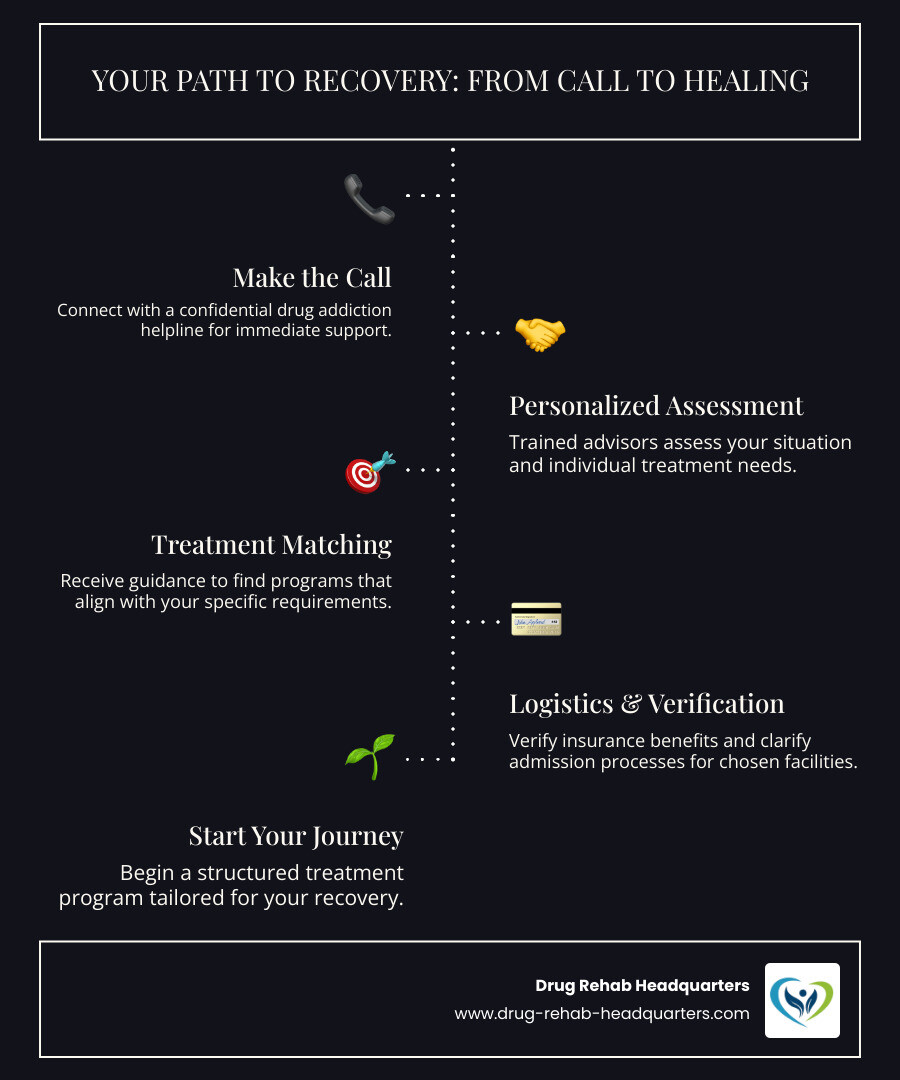
After your confidential conversation with a drug addiction helpline advisor, the path forward becomes much clearer. The call is just the beginning; it sets in motion a series of steps to help you get the support you need:
- Receive Treatment Options: Based on your conversation, the advisor will provide a list of potential rehabilitation centers that match your needs, preferences, and location. We connect individuals to facilities in states across North America, including Alabama, Alaska, Arizona, California, Florida, and many more.
- Verify Insurance Benefits: If you provided insurance information, the helpline can assist in verifying your benefits and identifying covered treatment centers. They can also direct you to state aid resources if needed.
- Connect with an Admissions Coordinator: The helpline can often directly connect you with an admissions coordinator at a suitable facility. This person will guide you through the enrollment process and answer any specific questions.
- Schedule an Assessment: The next step is usually a comprehensive assessment with the chosen treatment facility. This helps their clinical team create a personalized treatment plan.
- Develop a Treatment Plan: Following the assessment, the center will work with you to develop a plan that outlines the therapies and support services for your recovery journey.
The helpline’s role is to empower you with information and options, allowing you to make an informed decision. For a comprehensive overview of the treatment process, refer to our Addiction Treatment Center Complete Guide.
Are calls to a drug addiction helpline free?
Yes, one of the most important things to know is that calling a drug addiction helpline is completely free. The advice and information you receive come at no cost, and you don’t need health insurance to call.
While the call is free, the treatment programs themselves will have costs. Helpline advisors can help you understand these potential expenses:
- Understanding Treatment Costs: They can provide general information on the costs of different types of care, such as medical detox, outpatient programs, and residential treatment.
- Insurance Coverage: Many insurance plans cover substance use treatment. Advisors can help you understand your benefits and find in-network providers.
- Financial Assistance: If you’re uninsured or concerned about costs, helplines can inform you about financial assistance options like scholarships, grants, state-funded programs, or facilities with sliding scale fees.
The goal is to ensure that financial concerns don’t prevent you from getting help. Calling a drug addiction helpline is a no-cost, no-obligation way to explore your options. For a detailed breakdown of potential expenses, visit our Cost of Rehab page.
From Helpline to Healing: Finding Treatment and Support
Connecting with a drug addiction helpline is the spark, but finding the right treatment is the fire that ignites lasting recovery. This transition from a phone call to tangible healing involves personalized treatment matching, navigating a landscape of options, and embracing evidence-based and holistic approaches. Our goal at Drug Rehab Headquarters is to ensure that the journey from helpline to healing is as seamless and effective as possible, guiding you to suitable, evidence-based, holistic treatment options across North America. For a deeper dive into available therapeutic paths, explore our Treatment Options page.
How can a helpline assist in finding treatment?
A drug addiction helpline serves as your personal guide through the often-complex world of addiction treatment. Their expertise is invaluable in helping you find the right fit:
- Vetting Facilities: Helplines often have access to comprehensive databases of accredited treatment centers. They can provide information on a facility’s background, services offered, and therapeutic approaches, helping you choose a reputable program.
- Matching Needs to Programs: Not all treatment programs are the same. Advisors consider your specific substance use, any co-occurring mental health issues, and personal preferences to match you with the most suitable programs, whether they are traditional, holistic, or a combination.
- Location-Based Searches: Whether you’re looking for treatment close to home in a specific state like Florida, Texas, or California, or prefer a program further away for a fresh start, helplines can perform location-based searches to find centers in your desired area. Our extensive network covers numerous states, ensuring we can help you find a suitable facility. To find centers near you, check out our Drug Rehab Centers Near Me page.
- Explaining Levels of Care: Addiction treatment involves different levels of care. Helplines can explain these options in detail:
- Detox: The initial stage where the body is safely cleared of substances, often with medical supervision.
- Inpatient/Residential: Living at a treatment facility 24/7 for intensive therapy and support.
- Outpatient Programs: Attending therapy sessions while living at home, allowing you to maintain work or school commitments. This includes Partial Hospitalization Programs (PHP) and Intensive Outpatient Programs (IOP).
By providing this personalized assistance, a drug addiction helpline simplifies the process of finding effective treatment, making it less overwhelming and more accessible.
What are the different addiction treatment programs?
Addiction treatment is a dynamic field with a spectrum of programs designed to meet individual needs. A drug addiction helpline can help you steer these options to find the best fit. Here’s a comparison of common program types:
| Program Type | Description | Best For |
|---|---|---|
| Medical Detox | Medically supervised withdrawal management to safely and comfortably remove substances from the body. | Individuals with physical dependence, especially on alcohol, benzodiazepines, or opioids, to help manage potentially dangerous withdrawal symptoms. |
| Inpatient/Residential | A highly structured, live-in program offering 24/7 medical and therapeutic support in a substance-free environment. | Those with severe addictions, co-occurring mental health disorders, or an unstable home environment. Provides an immersive healing experience. |
| Outpatient (PHP/IOP) | Treatment programs where clients attend therapy for several hours a day, multiple days a week, but live at home. | Individuals with a stable and supportive home environment who need a structured treatment program but also require flexibility for work, school, or family. |
| Dual Diagnosis | An integrated approach that addresses both a substance use disorder and a co-occurring mental health condition (like depression or anxiety) simultaneously. | Anyone diagnosed with both an addiction and a mental health disorder, as treating one without the other is often ineffective. |
| Aftercare | Ongoing support services after completing a primary treatment program, such as support groups, sober living homes, and continued counseling. | Everyone. Aftercare is crucial for maintaining long-term sobriety and helping to prevent relapse by providing a continued support network. |
For more details on these programs, visit our Addiction Treatment Programs page.
What support is available for families?
Addiction is often called a “family disease” because it profoundly impacts everyone involved. Recognizing this, many treatment resources and helplines offer dedicated support for family members and loved ones. A drug addiction helpline can connect you with:
- Family Therapy and Counseling: Many treatment centers offer family therapy sessions to help repair relationships, improve communication, and educate family members on how to best support their loved one’s recovery.
- Support Groups: Groups designed for friends and family of individuals with addiction provide a safe space to share experiences and receive peer support.
- Educational Resources: Understanding the nature of addiction is key to providing effective support. Helplines can direct you to articles, books, and workshops that explain the science of addiction and the recovery process.
- Guidance on Healthy Boundaries: Learning to set and maintain healthy boundaries is crucial for your own well-being and can be a powerful tool in motivating your loved one to seek help. Counselors can offer strategies for doing this without enabling destructive behavior.
Taking care of yourself is not selfish; it’s a necessary part of the recovery journey for the entire family. For more resources and support options for families, visit our Resources page.