
Understanding Inpatient Drug Rehab: A Structured Path to Recovery
Inpatient drug rehab is a residential treatment program where individuals live at a facility 24/7, receiving intensive care and support to overcome substance use disorders. Here’s a brief overview:
Key Features of Inpatient Drug Rehab:
- 24/7 medical supervision and emotional support
- Structured daily schedule with therapy and skill-building
- Safe, drug-free environment away from triggers
- Typical duration: 30-90 days, but can be longer
- Average cost: Around $629/day without insurance in Florida
- Common therapies: Individual/group therapy, CBT, DBT, MAT, and holistic treatments
Who Benefits Most:
- Those with severe addiction or high relapse risk
- Individuals with co-occurring mental health disorders
- People in unsupportive or triggering home environments
- Anyone needing medically supervised detox
Addiction is a chronic disease, but recovery is possible. Inpatient rehab offers the highest level of structured care, creating a foundation for lasting sobriety by removing you from daily stressors and surrounding you with professional support.
This guide covers everything about inpatient treatment—from daily life and therapies to finding the right facility and navigating costs.
At Drug Rehab Headquarters, we connect individuals with quality inpatient drug rehab programs custom to their needs. Our mission is to provide clear, accurate information that empowers you to take the first step toward healing.
What Is Inpatient Drug Rehab and Who Is It For?
Inpatient drug rehab is a comprehensive, live-in program offering the highest level of care for substance use disorders. Patients reside at the facility 24/7, receiving constant supervision, medical care, and emotional support from a dedicated team of professionals. This structured, drug-free environment allows your sole focus to be on healing, away from daily stresses and triggers. It provides an intensive setting for deep work on the underlying causes of addiction, fostering personal growth and healthy coping mechanisms.

Signs You or a Loved One Might Need Inpatient Care
Recognizing the need for help is the first step. Inpatient drug rehab may be the right choice if you or a loved one experiences the following:
- Severe Substance Use Disorder: Addiction is deeply ingrained, causing significant health or legal problems, or there’s a high risk of relapse.
- Co-occurring Mental Health Conditions: Many people with addiction also have anxiety, depression, or trauma (a dual diagnosis). Inpatient facilities can provide integrated treatment for both. You can find more info about dual diagnosis treatment.
- Unsupportive or Triggering Home Environment: If your home or social circles are not conducive to sobriety, a safe, controlled environment is essential.
- Previous Unsuccessful Attempts at Outpatient Treatment: If less intensive programs haven’t led to lasting sobriety, a higher level of care may be necessary.
- Need for Medically Supervised Detox: Withdrawal from substances like alcohol, benzodiazepines, and opioids can be dangerous. Inpatient rehab provides a safe medical detox managed by healthcare professionals. For more detailed information, refer to Clinical Guidelines for Withdrawal Management.
The Core Benefits of Choosing an Inpatient Program
An inpatient drug rehab program offers several key benefits for long-term recovery:
- Safety and Medical Supervision: 24/7 medical oversight ensures your safety and comfort, especially during the difficult withdrawal phase.
- Focus Solely on Recovery: Removing you from daily pressures allows for an undivided focus on healing, free from triggers and negative influences.
- Peer Support and Community: Living with others who understand your struggles creates a strong sense of community and mutual support.
- Access to a Wide Range of Therapies: Inpatient programs offer comprehensive treatment plans with various evidence-based and holistic therapies. You can learn more info about addiction recovery services.
- Development of Healthy Routines and Coping Skills: A structured environment helps you build healthy habits and learn new skills to manage stress and cravings, preparing you for a sober life.
Inpatient vs. Other Levels of Care: Making the Right Choice
Choosing the right recovery path involves matching treatment intensity to your needs. Addiction treatment is a “continuum of care,” a spectrum of services for different stages of your journey.

Inpatient drug rehab is the most intensive option, but other levels like Partial Hospitalization Programs (PHP) and Intensive Outpatient Programs (IOP) offer structured support with more flexibility. The goal is to find the most effective level of care for your situation.
Here’s a quick comparison:
| Feature | Inpatient Rehab | Partial Hospitalization Program (PHP) | Intensive Outpatient Program (IOP) |
|---|---|---|---|
| Living Situation | Reside at the facility 24/7 | Live at home or in a sober living facility | Live at home |
| Hours of Treatment/Week | 24/7 supervision and structured activities | Typically 5-6 hours/day, 5-6 days/week | Typically 3 hours/day, 3-5 days/week |
| Level of Supervision | Highest (constant medical & emotional support) | High (structured days, return home at night) | Moderate (scheduled sessions, more independence) |
| Ideal Candidate | Severe addiction, dual diagnosis, unstable home, need for medical detox, history of relapse | Stable home, stepping down from inpatient, need for structured day | Stable home, strong support, maintaining work/school, stepping down from PHP |
When is Outpatient Treatment a Viable Option?
While inpatient drug rehab offers maximum support, outpatient options like PHP and IOP can be effective if you have:
- A less severe addiction without life-threatening withdrawal symptoms.
- A strong, stable, and drug-free support system at home.
- A need to maintain daily responsibilities like work, school, or family care.
- Completed inpatient rehab and are ready for a “step-down” level of care to transition back to daily life. For more on this, explore more info about intensive outpatient treatment.
A Look Inside: Daily Life, Therapies, and Program Duration
Stepping into an inpatient drug rehab program means entering a world designed for healing. Every aspect of your day is structured to support recovery and help you build a foundation for a sober life. It’s a journey focused on growth, learning, and self-findy.
What Does a Typical Day in Rehab Look Like?
While schedules vary, a typical day in inpatient drug rehab is planned to promote healthy habits and maximize therapeutic benefit. A day generally includes:
- Morning: Nutritious breakfast, followed by educational sessions (psychoeducation) and group therapy to share experiences and set intentions for the day.
- Afternoon: Individual counseling sessions, specialized therapies, and skill-building workshops. This is often balanced with holistic activities like yoga, art therapy, or meditation.
- Evening: A communal dinner, followed by a 12-step meeting (like AA or NA) or another support group. The evening allows for personal reflection before a structured lights-out time to promote a healthy sleep schedule.
This routine helps stabilize your mood and allows you to fully engage in the therapeutic process.
Common Therapies and Treatments Offered
Effective inpatient drug rehab programs use evidence-based therapies custom to your needs. Core offerings include:
- Individual, Group, and Family Therapy: These sessions address personal issues, build community support, and heal family relationships.
- Cognitive Behavioral Therapy (CBT) and Dialectical Behavioral Therapy (DBT): CBT helps change negative thought patterns, while DBT focuses on emotional regulation and distress tolerance.
- Motivational Interviewing (MI): Strengthens your motivation to pursue and maintain sobriety.
- Medication-Assisted Treatment (MAT): Uses medications combined with therapy to manage withdrawal, reduce cravings, and prevent relapse for certain addictions.
- Holistic Treatments: Many programs include yoga, meditation, art therapy, and fitness to treat the whole person. Find more info about holistic drug addiction treatment.
- 12-Step Programs: Integration with programs like AA or NA provides a framework for lifelong recovery. Learn more info about 12-step programs.
- Life Skills Education: Sessions on vocational skills, financial management, and nutrition prepare you for success after rehab.
How Long Does Inpatient Rehab Last?
Program length is highly individualized, depending on addiction severity, co-occurring conditions, progress, and insurance. There is no one-size-fits-all answer.
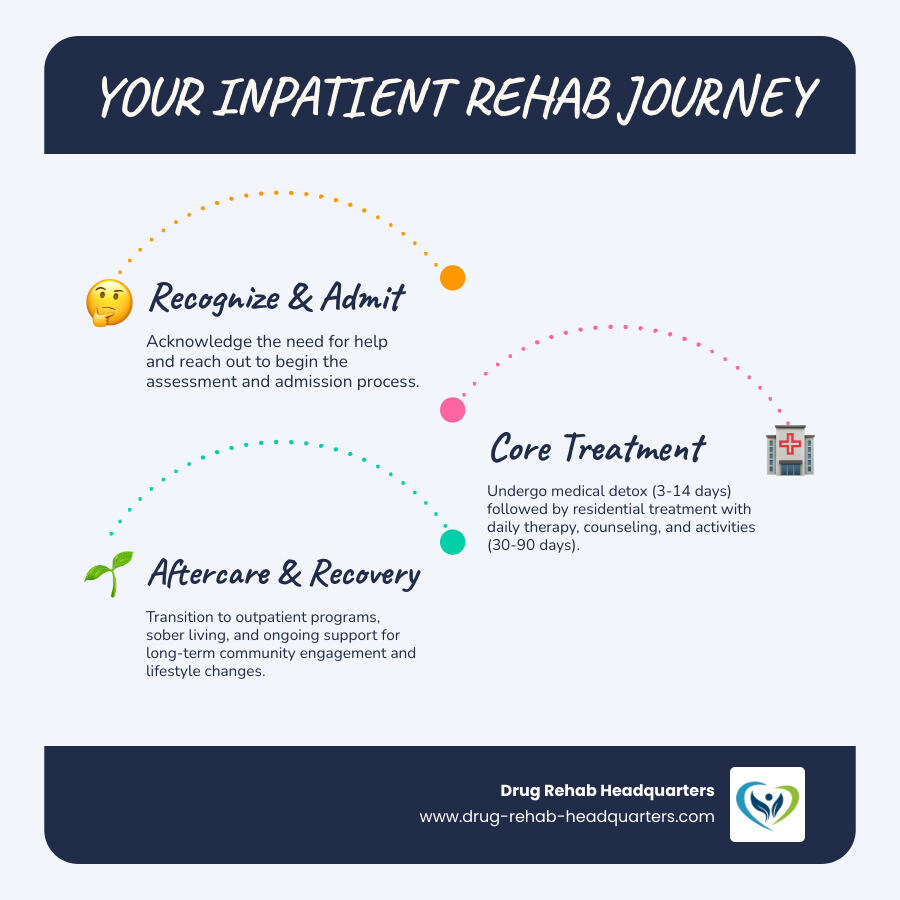
- Medical Detox: The initial phase typically lasts 3 to 14 days.
- Short-Term Programs: Often last 28 to 30 days, a good starting point for many.
- Mid-Range Programs: Programs of 60 to 90 days are common and highly effective. Research shows that treatment lasting 90 days or more leads to better long-term outcomes. For more, see our guide on 60-day rehab programs.
- Long-Term Programs: Can last 6 to 12 months or more, often for those with chronic relapse issues or severe co-occurring disorders.
The average stay is 30 days, but more time is often beneficial. The goal is to build the skills and resilience needed to stay sober, and the duration should match your personal needs.
How to Find and Pay for an Inpatient Drug Rehab Program
Once you’ve decided that inpatient drug rehab is the right path, the next questions are how to find the right facility and how to afford it. We can help you steer these logistics to make the process as clear as possible.
What to Look for When Choosing an Inpatient Drug Rehab
Choosing the right facility is critical. Consider these key factors:
- Accreditation and Licensing: Ensure the facility is accredited by bodies like The Joint Commission or CARF and licensed by the state. This guarantees high standards of care.
- Staff Qualifications and Credentials: Look for a multidisciplinary team of licensed professionals. Many of our counselors at Drug Rehab Headquarters have lived experience, offering unique empathy and insight.
- Treatment Philosophies: Find a facility offering evidence-based therapies (CBT, DBT, MAT) and holistic approaches that resonate with you.
- Aftercare Planning and Support: A good program prepares you for life after rehab with relapse prevention strategies and connections to support groups. You can find more info about post-rehab aftercare.
- Specialized Programs: Look for tracks that meet your specific needs, such as programs for women, veterans, or those with dual diagnoses.
- Location and Environment: Decide if you prefer a facility close to home or one in a new environment, and consider if you’d thrive in a clinical or a more retreat-like atmosphere.
The Cost of Inpatient Drug Rehab and Insurance Options
Cost can be a concern, but financial barriers should not stop you from seeking treatment. Help is available.
- Cost Variation: The price depends on location, amenities, stay length, and therapies. For a full overview, see our guide on the cost of rehab.
- Average Costs: In Florida, the average daily cost for inpatient rehab without insurance is around $629.33. Outpatient programs average about $56.83 per day.
- The Role of Insurance: The Affordable Care Act (ACA) and Mental Health Parity and Addiction Equity Act (MHPAEA) mandate that most insurance plans cover addiction treatment. To understand your coverage, call the number on your insurance card or visit our page on Does insurance cover rehab?
- Government Programs:
- Medicare: Covers a wide range of behavioral health services, including inpatient care.
- Medicaid: Contact your State Medical Assistance (Medicaid) office to learn about covered services in your state.
- Other Payment Options: Many facilities offer financial aid, sliding scale payments, payment plans, or scholarships.
How to Find a Treatment Center
Finding the right center can feel overwhelming, but we can simplify it.
- Contact Drug Rehab Headquarters: We offer 24/7 free, personalized guidance from certified counselors, many with lived experience. We can help you find evidence-based and holistic treatment options across North America. Start by exploring our resource to find addiction rehab centers near me.
- Contacting Your Insurance Provider: Your insurance company can provide a list of in-network facilities, which is a great first step.
Frequently Asked Questions about Inpatient Rehab
Here, we address some of the most common inquiries about inpatient drug rehab to provide clarity and peace of mind.
Are cell phones and outside contact allowed?
Policies vary by facility. Many centers have an initial “blackout” period (often around 7 days) with no outside contact. This allows you to detox, acclimate, and focus entirely on recovery without distraction. After this phase, facilities may allow supervised phone calls or encourage contact through family therapy sessions. Always check a specific center’s communication policy before admission.
What is the difference between inpatient and residential treatment?
The terms are often used interchangeably, as both refer to 24/7 live-in programs. However, there can be subtle differences:
- Inpatient Treatment: Can imply a more clinical, hospital-like setting with a high level of medical care, focusing on stabilization.
- Residential Treatment: Often refers to a more home-like, comfortable setting focused on therapeutic interventions and life skills.
In practice, most facilities blend these aspects. The key is the 24/7 supervised care. Focus on the services offered rather than the specific term.
What happens after inpatient rehab is completed?
Completing inpatient drug rehab is a major milestone, but recovery is a lifelong journey. Aftercare is crucial for a successful transition back to daily life. A personalized aftercare plan is developed during your stay and may include:
- Step-Down Care: Transitioning to a Partial Hospitalization Program (PHP) or an Intensive Outpatient Program (IOP) for continued, structured support.
- Sober Living Homes: A safe, substance-free environment to practice coping skills with peer support.
- Support Groups: Continued participation in 12-step meetings (like AA or NA) is a cornerstone of long-term recovery.
- Ongoing Therapy: Individual or group therapy helps address emerging challenges.
- Relapse Prevention Planning: Identifying triggers and developing strategies to manage cravings and difficult situations.
The goal of aftercare is to ensure you have the tools and support system to maintain sobriety and build a fulfilling life.
Your Path to Recovery Starts Today
The journey to overcome addiction is profound, challenging, and ultimately, incredibly rewarding. Inpatient drug rehab offers an intensive, life-changing step for those who need a structured, supportive environment away from the everyday triggers of their addiction. It’s a chance to hit the reset button, to heal, and to build a solid foundation for a future free from substance use.
Recovery is not a destination; it’s a continuous journey, filled with growth, learning, and the unwavering support of a community that understands. There is no shame in seeking help; in fact, it’s one of the bravest things you can do for yourself and your loved ones.
At Drug Rehab Headquarters, we believe everyone deserves a chance at a healthy, sober life. Our mission is to connect you with the right support, resources, and treatment options. We offer 24/7 confidential support from certified counselors, many with lived experience, providing personalized guidance to help you find suitable, evidence-based, and holistic treatment options across North America.
Don’t let uncertainty or fear hold you back. Your path to recovery starts today. Take the first step and explore your inpatient drug rehab options now.