
The Journey Together: Understanding Family Addiction Support
Navigating the complexities of addiction can feel incredibly isolating, but effective family addiction support offers a pathway to healing and connection for everyone involved. If you are seeking support, here are key avenues to explore:
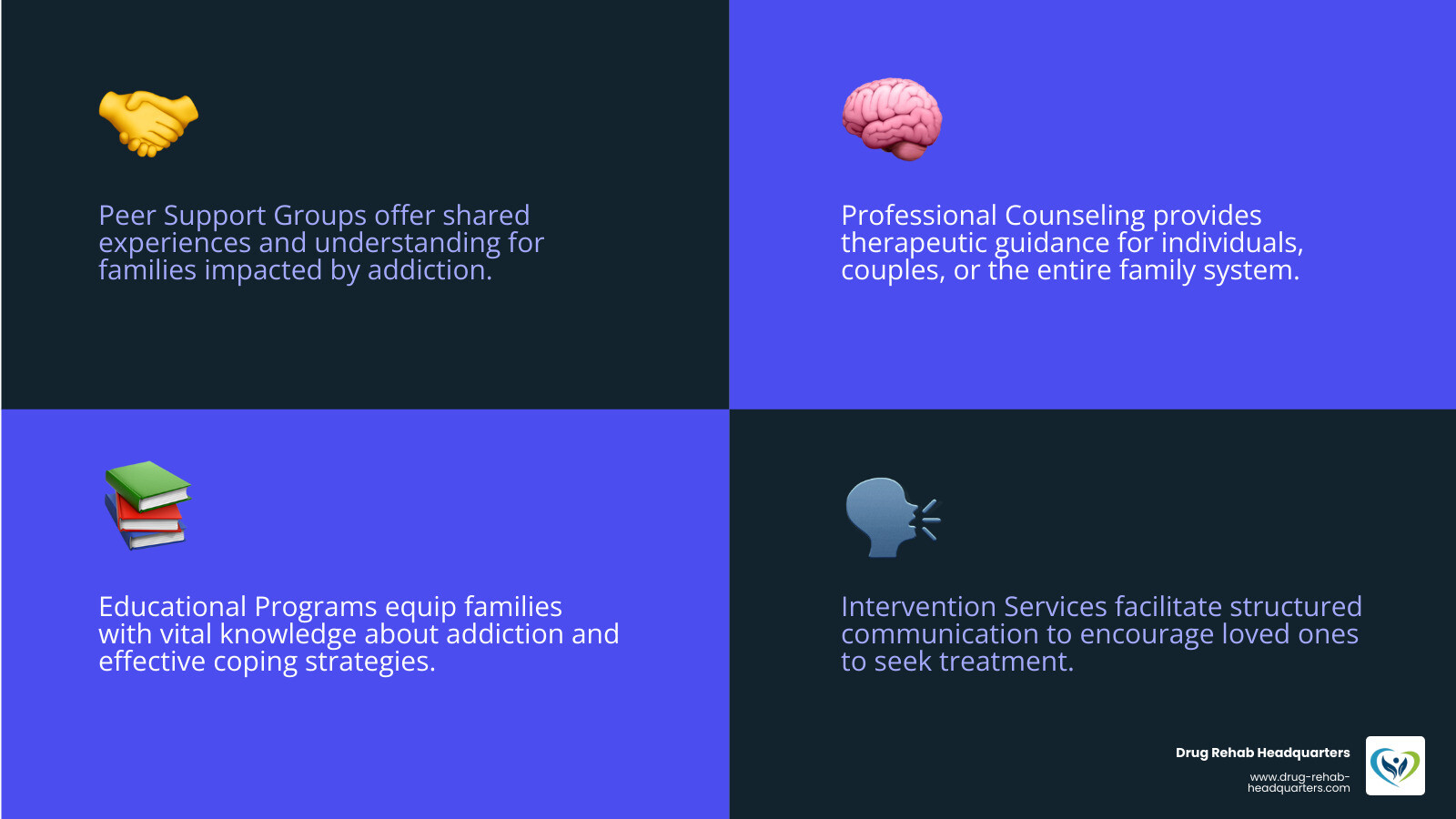
- Family addiction support can be found through various resources, such as:
- Mutual aid groups (e.g., Al-Anon, Nar-Anon, SMART Recovery Family & Friends, Families Anonymous).
- Individual, family, and couples counseling.
- Educational programs and workshops on addiction.
- Professional intervention services.
- Online and phone-based support systems.
- Advocacy groups and community organizations specializing in addiction.
Addiction is not a solitary disease. It impacts the entire family system, creating immense stress and often turning lives upside down. Being in a close relationship with someone struggling with addiction is highly stressful.
The good news is, you are not alone. Millions of families face similar struggles. Every family shares a bond that can be used to support one another during trying times. The family system, despite past pain, can become a powerful source of strength in healing. Support, encouragement, and guidance are available.
This guide will help you understand the impact of addiction on families. It will show you how your support can shape recovery. And it will introduce you to essential tools and resources for effective family addiction support.
Drug Rehab Headquarters is dedicated to helping individuals and families steer addiction recovery. We provide accurate information and resources to help you find the right family addiction support.
Family addiction support terms to learn:
Understanding Addiction’s Ripple Effect on the Family
Addiction is often misunderstood as a moral failing or a lack of willpower. However, it is fundamentally a complex disease, characterized by compulsive drug seeking and use despite harmful consequences. This understanding is crucial for families, as it shifts the perspective from blame to compassion and empowers them to seek appropriate family addiction support. Viewing addiction as a disease helps us recognize that it requires treatment, not judgment.
The pervasive nature of addiction means it rarely affects only the individual struggling. It casts a wide net, creating a ripple effect that impacts every member of the family unit. When a loved one struggles with addiction, families face a myriad of challenges:
- Stress and Anxiety: The constant worry about a loved one’s safety, health, and future can lead to chronic stress and anxiety for family members. There’s an emotional rollercoaster that can be psychologically devastating.
- Financial Strain: Addiction can lead to significant financial burdens, from funding the addiction itself to covering legal fees, medical expenses, or lost income. This strain can destabilize the entire household.
- Broken Trust: Deception and broken promises erode trust, making healthy relationships incredibly difficult to maintain. Families often find it hard to function as a unit, experiencing frequent turbulence.
- Unhealthy Family Roles: To cope with the chaos of addiction, family members often adopt specific, often unhealthy, roles. These roles, while seemingly helpful in the short term, can perpetuate the cycle of dysfunction.
- The Addict: The person struggling with substance use, whose behavior often becomes increasingly selfish and unpredictable.
- The Caretaker (Enabler): This person tries to “fix” everything for the addict, making excuses, covering up consequences, or providing financial support, inadvertently preventing the addict from facing the natural outcomes of their actions.
- The Hero: Often an older child, this individual strives for perfection and over-achievement to distract from or compensate for the family’s problems, hoping to make things “normal.”
- The Mascot: This family member uses humor and clowning around to diffuse tension and avoid confronting painful feelings or difficult situations.
- The Scapegoat: This person is often blamed for the family’s problems, drawing attention away from the addiction itself. They may act out or engage in risky behaviors.
- The Lost Child: This individual withdraws emotionally, becoming quiet and isolated, hoping to avoid conflict and not add to the family’s burdens.

These roles highlight how addiction can warp family dynamics, creating a system where everyone is trying to cope, but often in ways that are ultimately counterproductive to healing.
Impact on Children: The effects of addiction are particularly devastating for children. Living in a household with addiction can lead to lifelong consequences. Research shows that children of addicts are 4 times more likely to develop drug or alcohol issues themselves. This creates a heartbreaking cycle of abuse across generations. Approximately 8.3 million children in the U.S. live with at least one addicted parent who needs treatment, and at least 80 million children throughout the country are impacted by addiction. These children are vulnerable, and without intervention, they may continue the dysfunctional cycle. Learning that a parent’s alcoholism or substance abuse is not their fault is incredibly powerful for a child, allowing them to truly be a kid again. Equipping youngsters with healthy living skills is an effective form of prevention.
Understanding addiction as a disease, rather than a moral failing, is the first step toward breaking these cycles and seeking effective family addiction support. It removes the shame and blame, opening the door for compassion, education, and healing for the entire family.
The Power of Family: How Your Support Shapes Recovery
Our role as a family in a loved one’s recovery journey is not just significant; it’s transformative. Family support can have a measurable impact on recovery outcomes, acting as a powerful catalyst for positive change. When individuals in recovery feel supported by their families, they are less likely to relapse. For instance, a study of nearly 1,200 women in inpatient substance abuse treatment found that those with supportive families were less likely to relapse within six months of discharge. Similarly, adolescents undergoing substance use treatment who perceived their parents to be highly supportive had better outcomes. In fact, a meta-analysis of 16 research studies found that addiction treatments involving family are associated with a 6% reduction in substance use compared to individual therapies alone. These statistics underscore the profound importance of family addiction support.
The positive impact of family extends beyond simply reducing relapse rates. It can:
- Inspire Commitment: Positive attitudes and reinforcement from family members can inspire a loved one’s commitment to recovery and help them adapt to new challenges.
- Rebuild Relationships: Recovery is a chance to mend broken bonds. A commitment to rebuilding relationships is necessary, creating a stronger, healthier family unit.
Recovery is not a linear path; it’s a journey with various stages of change. Understanding these stages can help families offer appropriate and effective family addiction support:
- Precontemplation: The individual doesn’t see their substance use as a problem and has no intention of changing. Families can gently express concern without judgment.
- Contemplation: The individual acknowledges a problem but is ambivalent about changing. Families can encourage self-reflection and provide information without pressure.
- Preparation: The individual plans to take action soon. Families can help research treatment options and offer practical support.
- Action: The individual actively engages in treatment and makes behavioral changes. Families provide direct support, encouragement, and understanding.
- Maintenance: The individual sustains changes and works to prevent relapse. Families continue to offer ongoing support, celebrate milestones, and maintain healthy boundaries.
- Relapse as a Stage: It’s vital to view relapse not as a failure, but as a potential stage in the recovery process. This perspective helps families avoid blame and instead re-engage with support strategies.
Our role in relapse prevention is crucial. We can talk openly with our loved ones about relapse triggers and help them develop a relapse prevention plan. By paying attention to our own behaviors, we can avoid falling back into old, destructive patterns that might inadvertently contribute to a relapse. Family involvement in treatment, including family therapy and educational programs, significantly improves outcomes by addressing underlying family dynamics and providing tools for sustained recovery.
Essential Tools for Effective Family Addiction Support
Supporting a loved one through addiction recovery is an immense undertaking, and it’s easy for caregivers to neglect their own well-being. However, prioritizing our own health and pursuing our own recovery journey is not selfish; it’s essential. The unique challenges of helping a loved one with a mental or substance use disorder can be taxing, leading to burnout. We must take steps to prioritize our own health, just as we encourage our loved one to prioritize theirs. This includes seeking our own support, engaging in self-care, and understanding that our own healing is paramount, regardless of the choices our loved one makes.
Mastering Healthy Communication for family addiction support
Effective communication is the bedrock of healthy relationships, especially when navigating the sensitive terrain of addiction recovery. One of the most powerful tools we can employ is the use of ‘I’ statements.
- ‘I’ statements vs ‘You’ statements: ‘You’ statements (e.g., “You always mess things up”) often come across as accusatory, leading to defensiveness and shutting down communication. ‘I’ statements, however, focus on our own feelings and experiences (e.g., “I feel worried when you come home late because I fear for your safety”). This approach fosters connection and increases the likelihood of being heard.
- Active listening: Truly hearing and understanding what our loved one is saying, without interrupting or formulating our response, builds trust and shows respect.
- Avoiding blame: Addiction is a disease. While actions have consequences, blaming the individual can hinder recovery. Focus on solutions and support rather than assigning fault.
- Expressing feelings constructively: Use ‘I’ statements to articulate feelings, needs, and observations respectfully. For example, instead of “You make me so angry,” try “I feel frustrated when plans change unexpectedly, because it makes it hard for me to manage my schedule.”
- Fostering connection: Calm, empathetic communication helps to rebuild trust and connection, which are vital for long-term recovery.

Setting and Maintaining Healthy Boundaries
Boundaries are not about controlling our loved one; they are about protecting our own well-being and fostering an environment conducive to recovery for everyone. Setting and maintaining healthy boundaries is crucial for both the individual in recovery and their family members.
- Boundaries vs. threats: A boundary is a statement of what we will and will not accept, accompanied by a clear consequence that we are prepared to enforce. A threat, on the other hand, is often made in anger and may not be followed through, eroding trust.
- Protecting your well-being: Boundaries help us maintain our self-respect, energy, and sanity. For example, a boundary might be, “I will not lend you money if I know it will be used for substances.”
- Defining consequences: When setting a boundary, clearly state the desired behavioral change and indicate the action we will take if the boundary is crossed. This is not about punishment, but about natural consequences.
- Sticking to boundaries: Consistency is key. If we set a boundary, we must follow through with the stated consequences. This teaches our loved one that our words have meaning and helps them understand the gravity of their choices.
- Gaining self-respect: By upholding our boundaries, we reinforce our own value and demonstrate that our well-being matters, which can be a powerful example for our loved one.
To set a boundary effectively, describe the situation causing discomfort, express feelings using ‘I’ statements, state the desired behavioral change, and indicate the action you will take if the boundary is crossed, without making threats. This approach allows us to protect ourselves while still offering support.
Finding the Right Support: A Comparison of Family Resources
Finding the right family addiction support can feel overwhelming, but a variety of resources exist to help us steer this journey. We can access both peer-led and professional support, each offering unique benefits to families affected by addiction.
Peer Support Groups for family addiction support
Peer support groups are invaluable resources, offering a safe space for families to share experiences, gain insights, and realize they are not alone. These groups are founded on the principle of mutual aid, where individuals with shared experiences support each other.
| Feature | Families Anonymous | Al-Anon |
|---|---|---|
| Focus | Broader scope, addressing addictive behaviors including substance abuse, gambling, sex addictions, and other behavioral addictions. | Primarily focused on alcohol use disorder. Its primary goal is “to provide support to the friends and families of alcoholics.” |
| Philosophy | Follows a 12-step program, helping family members develop coping skills and positive life changes, regardless of whether the addict seeks recovery. Recommends a six-week commitment to fully engage. | Follows a 12-step program, providing a fellowship for families and friends of alcoholics. Offers support and coping strategies for those affected by a loved one’s drinking. |
| Meeting Style | Free to join, no registration, completely anonymous, focuses on supporting those affected by a loved one’s addiction, teaching coping skills. Members often share experiences related to a wide range of addictive behaviors. | Free to join, no registration, completely anonymous, focuses on supporting those affected by a loved one’s drinking problem. Members share experiences specifically related to alcohol addiction. However, 35 percent of Al-Anon members said they joined the program because of a loved one’s drug addiction, showing some overlap. |
| Who it’s for | Families and friends concerned about a loved one’s addiction to drugs, alcohol, gambling, sex, or other compulsive behaviors. If your loved one’s behavior is related to an addiction other than alcohol, Families Anonymous might be a better fit. | Families and friends concerned about a loved one’s drinking problem. While many members join due to drug addiction, the core literature and focus are alcohol-centric. |
| Self-assessment | Encourages attending multiple meetings to find the best fit and making a commitment to experience the benefits. | Offers self-assessment quizzes to help individuals decide if Al-Anon or Alateen (for teens) might be able to help. |
Both Families Anonymous and Al-Anon offer free, anonymous meetings and operate on a 12-step philosophy. The key difference lies in their primary focus. While Al-Anon is specifically geared towards those affected by a loved one’s alcohol use disorder, Families Anonymous addresses a broader spectrum of addictive behaviors. If we are unsure which group is right for us, the best approach is to attend meetings for both and see where we feel most supported.
Other peer support options include Nar-Anon Family Groups (for those affected by a loved one’s drug use), SMART Recovery Family & Friends (which focuses on developing coping strategies and communication skills), and Adult Children of Alcoholics. These groups provide information, social, emotional, and spiritual support, helping families cope with addiction’s destruction and sustain recovery.
Professional Help for the Family
Beyond peer support, professional services offer structured guidance and therapeutic interventions.
- Family therapy: A major goal of family therapy in substance abuse treatment is prevention, particularly preventing substance abuse from moving from one generation to another. This type of therapy addresses the family as a system, helping to identify and change unhealthy dynamics that may contribute to or perpetuate addiction.
- Individual counseling: Family members can benefit immensely from individual counseling to process their own emotions, develop coping mechanisms, and learn strategies for setting boundaries and communicating effectively.
- Educational programs: Many organizations offer workshops and educational programs that provide in-depth information about addiction as a disease, recovery processes, and practical tools for family addiction support.
- Professional interventions: For loved ones who refuse to acknowledge their problem or seek help, a professional intervention can be a powerful tool. Interventions are carefully planned processes, often led by a certified interventionist, that help families express their concerns and encourage the individual to accept treatment. By raising the bottom line for an addict, interventions can create conditions that make treatment decisions more attractive.
We understand the gravity of this situation. If your family is seeking professional help, Drug Rehab Headquarters offers 24/7 free support from certified counselors. Many of our counselors have lived experience and can offer personalized guidance to help you find suitable, evidence-based, holistic inpatient drug rehab options across North America, including all the states we serve: Alabama, Alaska, Arizona, Arkansas, California, Colorado, Connecticut, Delaware, Florida, Georgia, Hawaii, Idaho, Illinois, Indiana, Iowa, Kansas, Kentucky, Louisiana, Maine, Maryland, Massachusetts, Michigan, Minnesota, Mississippi, Missouri, Montana, Nebraska, Nevada, New Hampshire, New Jersey, New Mexico, New York, North Carolina, North Dakota, Ohio, Oklahoma, Oregon, Pennsylvania, Puerto Rico, Rhode Island, South Carolina, South Dakota, Tennessee, Texas, Utah, Vermont, Virginia, Washington, West Virginia, Wisconsin, and Wyoming.
Frequently Asked Questions about Family Support in Addiction
We often hear similar questions from families seeking family addiction support. Here are some common concerns and our insights:
What if my loved one refuses to get help?
This is an incredibly frustrating and heartbreaking situation, but we cannot force someone into recovery. However, we are not powerless.
- Focus on what you can control: We can control our own reactions, boundaries, and choices. Our own healing and well-being should become a priority.
- Seek your own support: Engage in peer support groups like Al-Anon or Families Anonymous, or seek individual counseling. This will equip us with coping strategies and a stronger emotional foundation.
- Learn about evidence-based approaches: Educate ourselves on addiction and effective treatment methods. This knowledge empowers us to make informed decisions.
- Consider a professional intervention: If our loved one is resistant, a professional intervention can help to break cycles of despair. It provides a structured, formal setting for family members to express their concerns and offer a clear path to treatment.
How can I help my children cope with a parent’s addiction?
Children living with a parent’s addiction face unique challenges and are at increased risk. Supporting them is a vital part of family addiction support.
- Age-appropriate communication: Talk to children about addiction in ways they can understand. Reassure them that it’s a disease, not a fault.
- Reassure them it’s not their fault: This is perhaps the most crucial message. Children often internalize guilt and blame themselves for a parent’s substance use. Learning that their parent’s addiction is not their fault is very powerful for a child, allowing them to be a kid again.
- Maintain routines: Predictability and structure provide a sense of safety and stability in an otherwise chaotic environment.
- Seek counseling for children: A children’s program, like those offered by some treatment centers, blends learning and play through developmentally appropriate content. With the care and guidance of highly trained counselors, children can express themselves in healthy ways, understand addiction, and begin creating self-care strategies. Through artwork, stories, and letters, children can share with their parents what it’s been like to live with chaos and uncertainty, deepening family healing.
- Support groups for young people: Alateen (for children of alcoholics) or other youth-focused support groups can provide a safe space for children to share experiences with peers who understand. Equipping youngsters with healthy living skills is an effective form of prevention.
Is it enabling to let my loved one live at home while using?
This is a complex question with no simple answer, as the line between supporting and enabling can be blurry.
- Enabling vs. supporting: Enabling often involves protecting a loved one from the natural consequences of their actions, inadvertently allowing the addiction to continue. Support, conversely, empowers them towards recovery while holding them accountable.
- Setting clear boundaries: If a loved one is living at home while using, establishing firm boundaries is essential for the well-being of everyone. This might include rules about substance use in the home, financial contributions, or participation in household duties.
- Requiring participation in treatment: A condition for living at home could be active engagement in treatment, counseling, or support groups.
- Protecting the home environment: We must protect the physical and emotional safety of our home, especially if there are children present. This might mean making difficult decisions about living arrangements if the addiction continues to create an unsafe or unhealthy environment.
These decisions are never easy, and seeking guidance from a therapist or support group can provide clarity and strength.
Conclusion
The journey through addiction is undoubtedly challenging, but it is not one we have to walk alone. As we’ve explored, addiction is a disease that impacts the entire family, creating a ripple effect of stress, broken trust, and unhealthy dynamics. Yet, within this challenge lies immense strength: the power of family addiction support.
Our involvement, understanding of addiction as a disease, and commitment to healthy communication and boundaries can profoundly shape our loved one’s recovery outcomes. By recognizing the stages of change and viewing relapse as a stage rather than a failure, we can offer more effective, compassionate support. Equally important is our own well-being, ensuring that caregivers prioritize their own healing journey.
There is hope, and healing is possible for the entire family. We encourage you to take the first step today. Whether it’s exploring peer support groups like Al-Anon or Families Anonymous, seeking professional family therapy, or learning more about intervention services, resources are available.
At Drug Rehab Headquarters, we are here to help. Our 24/7 free support from certified counselors, many with lived experience, offers personalized guidance to help you find suitable, evidence-based, holistic treatment options across North America. You are not alone; strength truly can be found in family addiction support.