Understanding Kansas Addiction Treatment: Your Path to Recovery
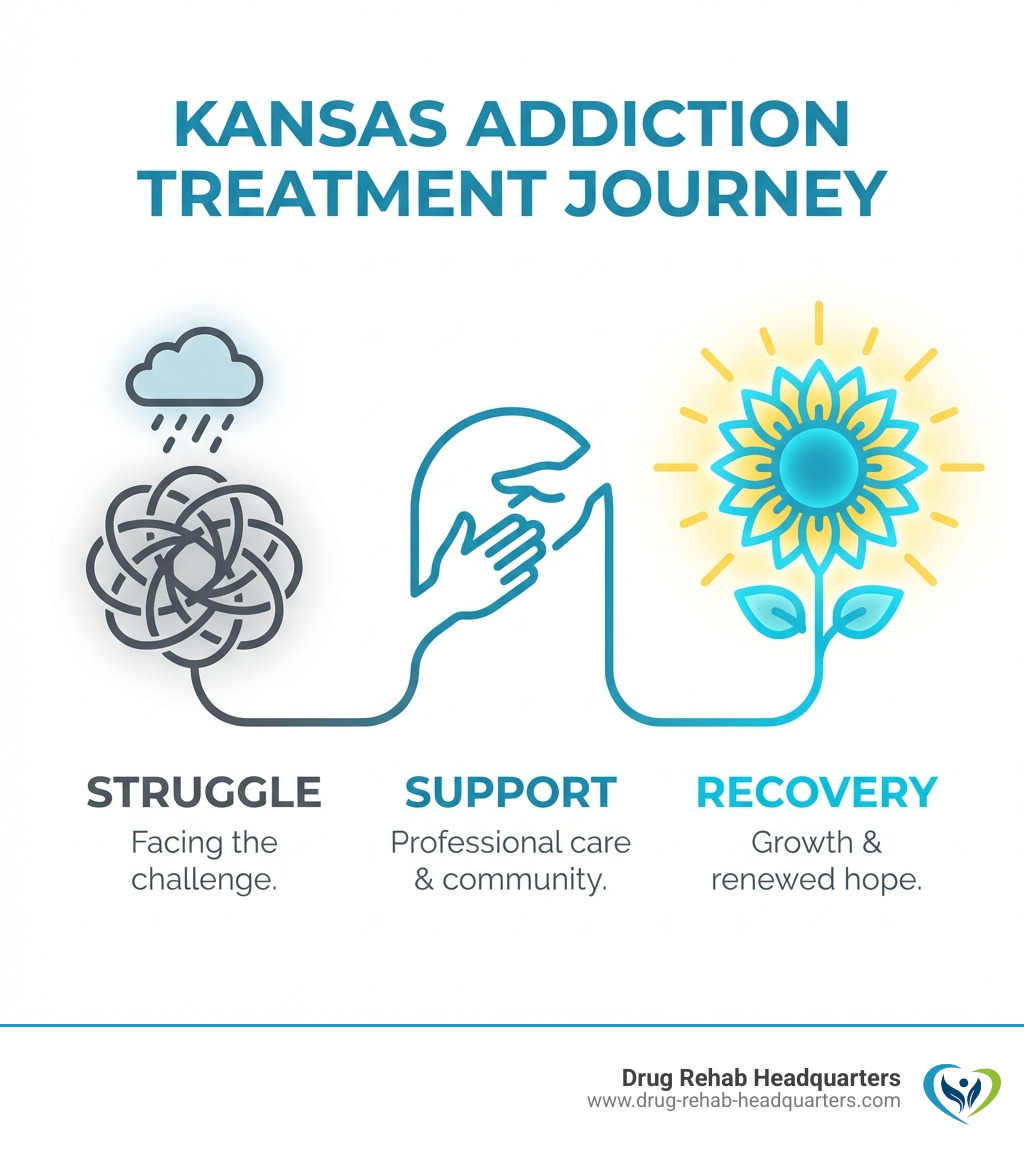
Kansas Addiction Treatment offers comprehensive care options for individuals struggling with substance use disorders, ranging from medical detox and inpatient residential programs to outpatient services and medication-assisted treatment (MAT). The state provides access to over 350 treatment centers, specialized programs for vulnerable populations, and state-funded assessment services through Beacon Health Options.
Quick Overview of Kansas Addiction Treatment Options:
- Medical Detox & Inpatient Care: 24-hour supervised care in residential facilities with medical monitoring
- Outpatient Programs: Intensive Outpatient (IOP) and Partial Hospitalization (PHP) for flexible scheduling
- Medication-Assisted Treatment (MAT): Buprenorphine, methadone, and naltrexone for opioid addiction
- Specialized Programs: Designated women’s treatment, veteran care, dual diagnosis, and adolescent services
- Priority Access: Same-day assessment for pregnant women and IV drug users
- Assessment & Referral: Call Beacon Health Options at 1-866-645-8216 for free evaluation
- Insurance Coverage: Most Kansas plans cover mental health and addiction treatment
The need for accessible addiction treatment in Kansas has never been more urgent. Over the past decade, the state experienced a 24% increase in drug-related overdose deaths, with opioid-associated deaths in Sedgwick County outnumbering stimulants, cocaine, and marijuana-related deaths combined in 2019. Emergency room visits linked to opioids jumped 80% between 2014 and 2018 in the county alone.
But these statistics tell only part of the story. Behind each number is a person, a family, and a community impacted by substance use disorder. Roughly 200,000 Kansans struggle with alcohol dependence, while approximately 100,000 live with serious mental illness—often co-occurring with addiction.
The good news? Kansas has built a robust network of treatment resources designed to meet you where you are. Whether you’re in Wichita, Overland Park, Topeka, or a rural community, help is available. The state follows a Recovery-Oriented Systems of Care (ROSC) model, which recognizes addiction as a chronic health condition requiring long-term management—not a moral failing or character flaw.
Kansas offers multiple pathways to recovery, from evidence-based therapies like Cognitive Behavioral Therapy (CBT) to holistic approaches that treat the whole person. You’ll find programs specializing in dual diagnosis (addressing both mental health and substance use), gender-specific treatment tracks, and services tailored for adolescents, veterans, and older adults.
The state has also implemented practical legal supports, including drug diversion programs and Senate Bill 123, which prioritizes treatment over incarceration for certain non-violent drug offenses. Kansas law now allows pharmacists to dispense naloxone (a life-saving overdose reversal medication) without a prescription, making it accessible to families, first responders, and community members.
Insurance coverage is comprehensive in Kansas. Most private insurance plans, Medicaid (KanCare), and Medicare cover mental health and addiction treatment services. For those without insurance, many facilities operate on sliding fee scales or accept state funding.
At Drug Rehab Headquarters, we’ve guided thousands of individuals and families through the complex landscape of addiction recovery, including connecting Kansans with quality Kansas Addiction Treatment programs that match their specific needs. Our mission is to simplify your search and empower you with accurate, comprehensive information so you can make confident decisions about treatment.
Understanding the Landscape of Kansas Addiction Treatment
The landscape of Kansas Addiction Treatment is shaped by both challenges and innovative solutions. With a state population of approximately 3 million, the impact of substance use is widespread. Recent data highlights a 24% increase in drug-related overdose deaths over a single year. In Sedgwick County alone, 870 drug overdose deaths occurred between 2011 and 2020, with opioids accounting for 43% of those tragedies.
Beyond opioids, alcohol remains a significant concern, with roughly 200,000 residents struggling with dependency. Furthermore, about 100,000 Kansans live with a serious mental illness. Research shows that while half of residents with mental illness receive care, over one-quarter of adults still report unmet mental health needs. This intersection of mental health and substance use is why many Kansas providers now focus on Recovery-Oriented Systems of Care (ROSC).
The ROSC model is a paradigm shift; it moves away from seeing addiction as an acute crisis and instead views it as a chronic disease. This approach emphasizes multiple pathways to recovery and leverages community supports to ensure long-term success. You can find more detailed scientific research on Kansas substance use trends through SAMHSA to better understand these local dynamics.
Accessing Kansas Addiction Treatment via State Resources
Navigating the system doesn’t have to be overwhelming. The Kansas Department for Aging and Disability Services (KDADS) serves as the primary regulatory and licensing body for treatment centers. To streamline the process, Kansas utilizes Beacon Health Options as a centralized hub for assessments.
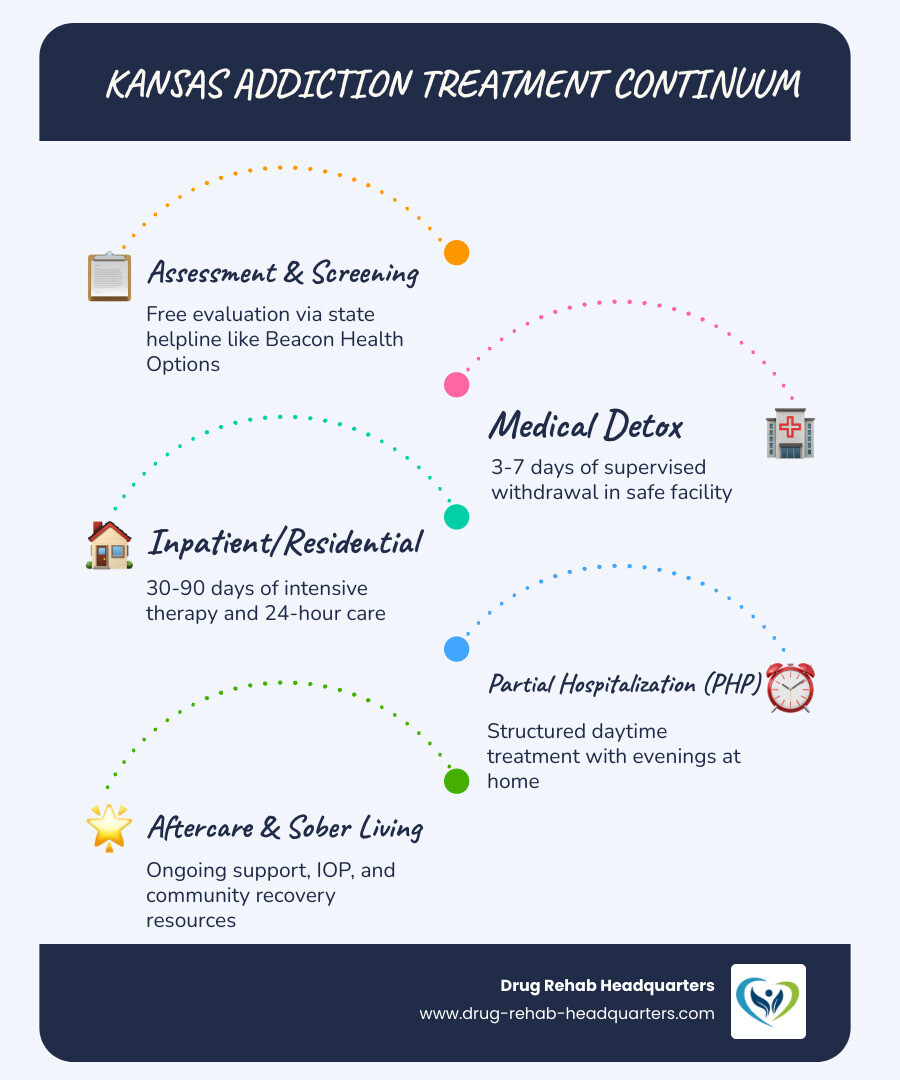
By calling 1-866-645-8216 (select option 2), you can schedule an alcohol and drug assessment. These evaluations are critical because they analyze your medical history, social environment, and current substance use to refer you to the most appropriate level of care. Additionally, the SAMHSA locator is an invaluable tool for finding licensed facilities near your zip code.
The Role of Research Institutions in Kansas
Kansas is home to world-class research that directly informs how we treat addiction. The KU Life Span Institute and its Cofrin Logan Center for Addiction Research and Treatment play a pivotal role. These institutions focus on interdisciplinary research—combining psychology, behavioral science, and data science—to develop evidence-based practices.
One interesting area of their research includes the impact of “hyper-palatable” foods on addiction pathways, demonstrating how biological triggers affect overconsumption. By focusing on science-driven solutions, these institutions help reduce the stigma surrounding addiction and ensure that Kansas Addiction Treatment remains at the cutting edge of clinical excellence.
Types of Alcohol Rehabilitation Centers in Kansas
When searching for Alcohol Rehabilitation Centers, it is essential to understand that there is no “one-size-fits-all” solution. Kansas offers a full spectrum of care designed to help individuals at every stage of their journey. According to our research, there are 351 drug rehab centers in the state, offering everything from medical detox to long-term reintegration.
For many, the first step is an Alcohol treatment center that provides medical detoxification. This process ensures that the physical symptoms of withdrawal are managed safely under the supervision of medical professionals. Following detox, individuals often transition into residential or outpatient care.
| Treatment Level | Description | Best For |
|---|---|---|
| Medical Detox | 24/7 medical supervision during withdrawal | High-risk withdrawal symptoms |
| Inpatient (Residential) | Living at the facility with structured therapy | Severe addiction or unstable home environment |
| Partial Hospitalization (PHP) | Full-day treatment while living at home/sober living | Step-down from inpatient care |
| Intensive Outpatient (IOP) | Multi-day evening or morning group sessions | Those maintaining work or school schedules |
| Outpatient | Weekly individual or group counseling | Mild addiction or long-term maintenance |
For a deeper dive into these options, check out our Alcohol Rehab Centers Guide.
Inpatient vs. Outpatient Alcohol Treatment Centers
The choice between inpatient and outpatient care often depends on the severity of the addiction and your personal responsibilities. Inpatient Drug Rehab provides 24-hour care in a therapeutic community. This environment is highly structured and removes the triggers of everyday life, allowing for total focus on healing.
Conversely, outpatient Alcohol treatment centers offer more flexibility. Many facilities in Kansas now provide telehealth options, allowing you to participate in clinical supervision and therapy from the comfort of your home. This is often ideal for those who have completed a residential program but still need ongoing support. For more details, see our Inpatient Drug Rehab Complete Guide.
Holistic and Strengths-Based Approaches
Modern Kansas Addiction Treatment has moved toward a more compassionate, “strengths-based” model. Rather than focusing solely on what is “wrong,” these programs use positive psychology to identify what is “right.”
Key components of these approaches include:
- Cognitive Behavioral Therapy (CBT): Identifying and modifying negative thought patterns.
- Personalized Treatment Plans: Tailoring goals to the individual’s unique life circumstances.
- Resilience Building: Using tools from positive psychology to foster gratitude and personal growth.
- Peer Mentoring: Connecting with individuals in long-term recovery who provide “lived experience” support.
More info about holistic treatment options can help you understand how these methods improve patient satisfaction and long-term sobriety rates.
Specialized Care and Evidence-Based Treatment Options
Recovery is most effective when it addresses the specific needs of the individual. In Kansas, this includes a heavy emphasis on dual diagnosis—treating both the addiction and co-occurring mental health disorders like depression, anxiety, or PTSD simultaneously.
A cornerstone of modern recovery is Medication-Assisted Treatment (MAT). MAT uses FDA-approved medications like Buprenorphine, Methadone, or Vivitrol to reduce cravings and ease the physical symptoms of opioid or alcohol withdrawal. When combined with counseling, MAT is considered the “gold standard” for opioid maintenance and relapse prevention.
Specialized Programs for Vulnerable Populations
Kansas recognizes that certain groups require tailored environments to feel safe and supported.
- Designated Women’s Programs: There are eight state-designated programs in Kansas specifically for women, often allowing them to bring their dependent children.
- Veteran-Specific Care: Facilities like the Robert J. Dole VA Medical Center provide specialized tracks for PTSD and military-related trauma.
- Adolescent Treatment: Programs designed for teens focus on family dynamics and peer pressure.
- LGBTQ+ Friendly Tracks: Ensuring a safe, non-judgmental space for the LGBTQ+ community.
If you are just starting the process, understanding Detox Treatment is a vital first step for these specialized tracks.
Priority Admission and Accessibility
Kansas has strict mandates to ensure that those at the highest risk get help immediately. Federal and state laws require priority admission for:
- Pregnant Women: Must receive an assessment within 24 hours and admission within 48 hours.
- IV Drug Users: Must be admitted within 14 days of initial contact.
- Women with Dependent Children: Given priority status for residential beds.
The Substance Abuse and Mental Health Services Administration (SAMHSA) provides the framework for these mandates, ensuring that life-saving care is accessible when it is needed most.
Navigating Laws, Insurance, and Finding the Best Alcohol Rehab Centers
One of the biggest hurdles to starting treatment is the Cost of Rehab. However, Kansas residents have several options. KanCare (Kansas Medicaid) covers a wide range of addiction services. Private insurance providers like Aetna, Blue Cross Blue Shield, and UnitedHealthcare also typically cover mental health and substance use treatment as essential health benefits.
For those without insurance, state-funded programs and sliding fee scales are available. Many Best alcohol rehab centers in the state will work with you to find a financing option that fits your budget.
Legal Support and Diversion Programs
Kansas has implemented several laws to support recovery over punishment:
- Senate Bill 123: Provides drug treatment and community corrections supervision for first- or second-time non-violent drug possession offenders.
- Drug Courts: Programs like the Wichita Municipal Drug Court (established in 1995) allow charges to be dismissed upon the successful completion of a rigorous treatment program.
- Naloxone Access: Pharmacists can dispense Narcan to anyone—families, friends, or first responders—without a prescription and with legal immunity.
Top Rated Centers in Major Kansas Cities
Whether you are looking for the Best alcohol rehab centers in a metropolitan hub or a quiet rural setting, Kansas has high-quality options:
- Wichita: Home to COMCARE and numerous residential facilities.
- Overland Park & Kansas City: Offers a high density of outpatient and PHP programs.
- Topeka & Lawrence: Features strong community support networks and university-linked research programs.
For long-term success, many Kansans transition into Sober Living environments. The Friends of Recovery Association manages over 150 Oxford Houses across the state, providing democratically run, self-supporting, and drug-free homes.
Frequently Asked Questions about Kansas Addiction Treatment
How do I start the assessment process in Kansas?
The easiest way to start is by calling Beacon Health Options at 1-866-645-8216. They will provide a free screening and refer you to a local provider for a full clinical assessment.
Does Kansas Medicaid (KanCare) cover drug and alcohol rehab?
Yes. KanCare covers various levels of care, including outpatient treatment, residential services, and medication-assisted treatment (MAT), provided the facility is a Medicaid-approved provider.
What is Senate Bill 123 and how does it affect treatment?
Senate Bill 123 is a Kansas law that mandates substance abuse treatment instead of prison time for certain non-violent, first- or second-time drug possession offenders. It ensures that individuals get the help they need to stop the cycle of addiction.
Conclusion
Recovery is a journey, not a destination. Kansas Addiction Treatment provides the tools, the science, and the community support necessary to reclaim your life from substance use. From the innovative research at KU to the grassroots support of Oxford Houses, the state is equipped to help you succeed.
At Drug Rehab Headquarters, we are here to be your advocate. Our certified counselors are available 24/7 to help you navigate these choices and find a program that aligns with your needs. Whether you need an Addiction Treatment Center Complete Guide or a simple phone call to discuss your options, we are ready to help.
Take the first step today. Your new life is waiting.