
Finding Hope: Free Addiction Treatment Options in Cincinnati
Free rehab centers in Cincinnati Ohio provide accessible addiction treatment for individuals who lack insurance or financial resources. Here’s how you can access free or low-cost care:
Top Ways to Get Free Treatment in Cincinnati:
- Medicaid Coverage – Ohio Medicaid covers substance abuse treatment for eligible residents
- Sliding Scale Fees – Many centers charge based on your income (as low as $0 for those at or below Federal Poverty Guidelines)
- State-Funded Programs – Centers funded by SAMHSA grants and Ohio state funding
- Non-Profit Organizations – Faith-based and community programs offering free services
- Payment Assistance – Financial aid programs at participating facilities
Key Cincinnati Resources:
- Center for Addiction Treatment (CAT House) – 513-381-6672
- Talbert House – Multiple locations with sliding scale
- Crossroads Center – Women’s treatment with sliding fees
- Joseph House – Services for veterans
- BrightView – Medication-assisted treatment
Around 20.4 million people aged 12 or older don’t receive the addiction treatment they need each year, and cost is often the biggest barrier. In Cincinnati, SAMHSA has provided Ohio with a $64 million grant for substance use prevention and treatment, helping fund local programs that make recovery possible regardless of your ability to pay. Whether you’re struggling with alcohol, opioids, or other substances, Cincinnati offers multiple pathways to free treatment through government programs, non-profit organizations, and community resources.
At Drug Rehab Headquarters, we’ve helped thousands of individuals and families across the country connect with free rehab centers in Cincinnati Ohio and understand their treatment options. Our team can guide you through the process of finding and accessing no-cost addiction services that fit your specific situation—call us 24/7 at 866-720-3784 for confidential support.
Understanding Free & Low-Cost Addiction Treatment in Cincinnati
Navigating the landscape of addiction treatment can feel overwhelming, especially when financial constraints are a concern. However, it’s crucial to understand that “free” doesn’t necessarily mean lower quality. Instead, it often refers to services made accessible through various funding mechanisms, ensuring that everyone, regardless of their income or insurance status, can receive life-saving care.

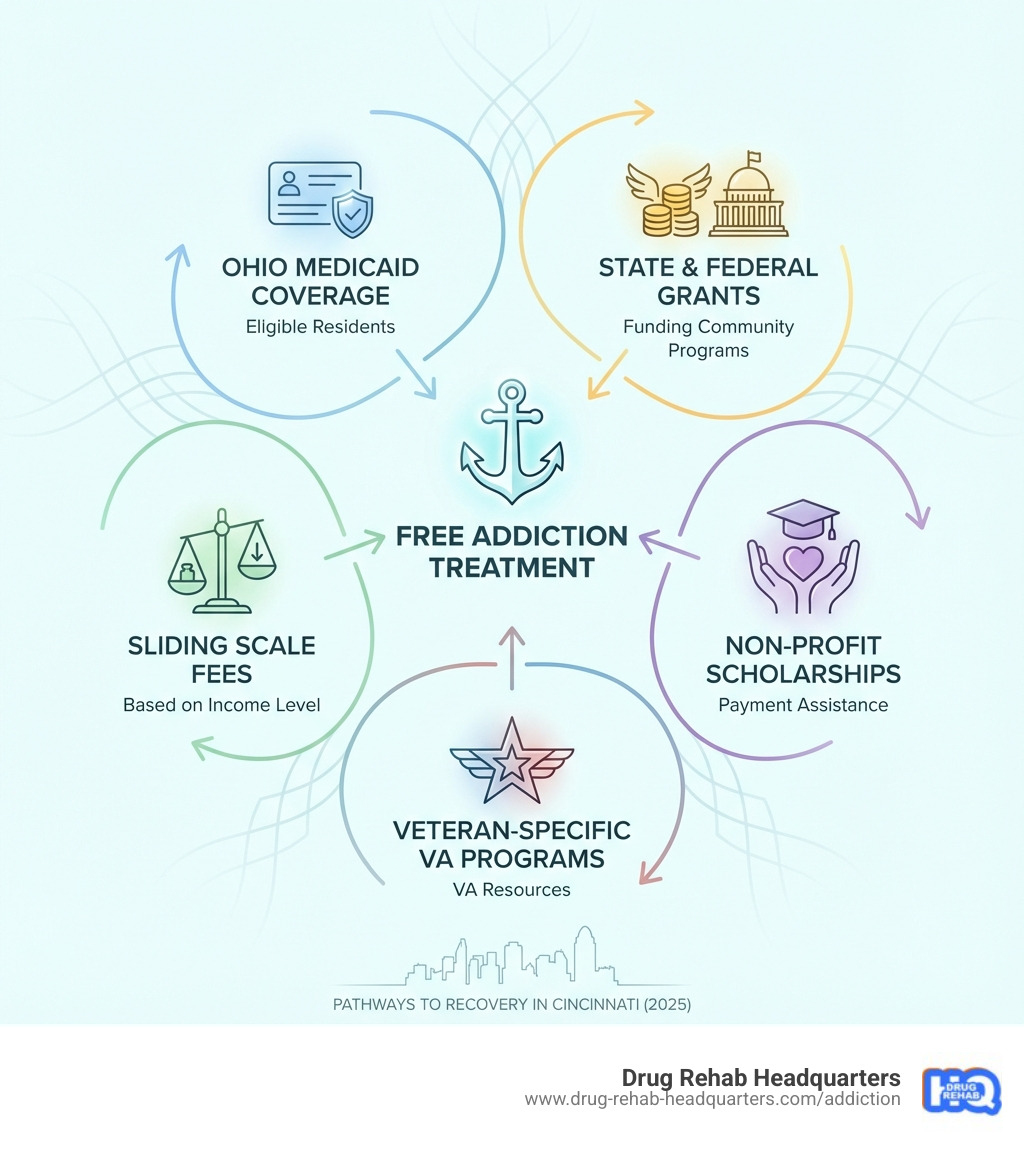
When we talk about free rehab centers in Cincinnati Ohio, we’re primarily referring to programs that do not require out-of-pocket payment from the individual. These can include:
- Medicaid Coverage: Ohio’s Medicaid program is a federal- and state-funded health insurance program that can cover a significant portion, if not all, of drug and alcohol addiction treatment costs for eligible residents. This is a primary pathway to free treatment for many low-income individuals.
- Sliding Scale Fees: Many facilities operate on a sliding scale, meaning the cost of treatment is adjusted based on your income and ability to pay. For individuals at or below the Federal Poverty Guidelines, this can effectively result in free treatment.
- Non-Profit Organizations: Numerous non-profit and faith-based organizations in Cincinnati and across Ohio are dedicated to providing addiction treatment and recovery support at no cost or very low cost, often relying on donations and community funding.
- State and Federal Funding: Government grants play a critical role in making treatment accessible. For instance, SAMHSA has provided Ohio with a $64 million grant for substance use prevention and treatment efforts. These funds are distributed to various treatment centers and programs, allowing them to offer services at reduced or no cost to clients. We’ve seen how these grants enable centers to prioritize patient care over profit, providing essential services to those who need them most.
These diverse funding streams mean that if you’re without insurance or have a limited income, there are still robust options available for you in Cincinnati. Our team at Drug Rehab Headquarters can help you understand your options—call 866-720-3784.
Types of Programs and Services Offered
Free and low-cost rehab centers in Cincinnati offer a comprehensive range of services, often mirroring those found in private facilities. The goal is to provide a full continuum of care, from initial crisis intervention to long-term recovery support. You might find:
- Medical Detox: For many, the first step in recovery is medically monitored detoxification. This ensures a safe and comfortable withdrawal from substances, with 24/7 medical supervision. The Center for Addiction Treatment (CAT House) in Cincinnati, for example, offers the only community-based medically monitored detox unit in a five-county area.
- Inpatient Residential Care: This involves living at a facility for a period (often 14 to 90 days, though individualized plans are key) to receive intensive therapy and support in a structured environment. Short-term residential treatment and Medication-Assisted Treatment (MAT) are common components.
- Outpatient Programs (OP): These programs allow individuals to live at home while attending scheduled therapy sessions and groups during the day or evening. This is a flexible option for those with stable living situations and commitments.
- Intensive Outpatient Programs (IOP): A step up from standard outpatient, IOPs offer more hours of treatment per week, providing a higher level of support while still allowing clients to live at home.
- Medication-Assisted Treatment (MAT): Combining FDA-approved medications (like buprenorphine, naltrexone, or methadone) with counseling and behavioral therapies, MAT is highly effective for opioid and alcohol use disorders. Many free and low-cost centers, such as BrightView Cincinnati, offer MAT.
- Dual Diagnosis for Co-Occurring Disorders: Many individuals struggling with addiction also have co-occurring mental health conditions like depression, anxiety, or PTSD. Reputable free rehabs provide integrated treatment for both, recognizing that treating one without the other is often ineffective.
- Individual and Group Therapy: These are foundational components of addiction treatment, helping individuals explore the root causes of their addiction, develop coping skills, and build a supportive community.
- Family Counseling: Addiction affects the entire family. Many programs offer family services to help improve communication, heal relationships, and establish healthy boundaries. The CAT House, for instance, provides family services as part of its outpatient offerings.
Top Free Rehab Resources in Cincinnati, Ohio
Cincinnati is home to a variety of dedicated organizations committed to making addiction treatment accessible. These resources are invaluable for residents seeking help without the burden of high costs.
Community-Based Addiction Recovery Resources
When looking for free rehab centers in Cincinnati Ohio, it’s helpful to consider a mix of direct treatment providers and broader community support networks. We’ve compiled a list of key resources known for their commitment to affordable care:
- Center for Addiction Treatment (CAT House): Often referred to as the “CAT House,” this facility offers a continuum of care for alcohol, drugs, and gambling addiction. They accept Medicaid and Hamilton County funding based on income guidelines, making treatment accessible. Services include medically monitored detox, inpatient residential treatment (including MAT), and comprehensive outpatient services like family counseling and a specialized Gambling Recovery Program. You can start the intake process by calling 513-381-6672 and asking for “ACCESS.”
- Crossroads Center Treatment Center for Women: This center is a vital resource specifically for women, offering behavioral healthcare and substance abuse treatment. They are accredited by JCAHO and licensed by the Ohio Department of Mental Health and Alcohol and Drug Addiction Services. Crossroads Center operates on a sliding scale fee system, making it an affordable, often free, option for many women, particularly those at or below Federal Poverty Guidelines.
- Joseph House Inc. (Cincinnati VA Medical Center): Serving veterans affected by addiction and homelessness, Joseph House provides a critical service to a population that has often sacrificed so much. As part of the VA network, services for eligible veterans are typically free or very low cost.
- First Step Home: This unique residential treatment center in Cincinnati focuses on women, allowing them to live with their children (up to age 12) during treatment. They accept Medicaid and offer trauma-informed therapy, MAT, parenting education, and job training, along with on-site housing and transitional support.
- Talbert House: With multiple locations across Cincinnati, Talbert House is a comprehensive social service agency that often provides addiction treatment and mental health services on a sliding scale. They offer a variety of programs for adults and adolescents, including outpatient and residential options.
- BrightView Cincinnati Addiction Treatment Center: BrightView is known for offering medication-assisted treatment (MAT) alongside counseling for opioid and alcohol use disorders. They typically accept Medicaid and other insurance plans, striving to make treatment accessible.
- Pinnacle Covedale Treatment Services: Listed in local directories, Pinnacle Covedale often offers various outpatient services, and like many community providers, may work with Medicaid or offer financial assistance.
- Adolescent Substance Abuse Programs (ASAP Cincinnati) and Lighthouse Youth Services: These organizations specialize in supporting youth and young adults struggling with substance use and mental health challenges, providing assessments, school-based services, group and individual sessions, and family support.
- Ohio 211 / United Way 211 of Greater Cincinnati: These services provide free, confidential referrals to local substance abuse treatment services and support groups. They are available 24/7 and can connect individuals with appropriate resources for their specific needs.
- Hamilton County Public Health Addiction Services: This local government agency provides screening, assessment, and referral services for substance use disorders, offering information on treatment options and support groups within Cincinnati and Hamilton County.
- NAMI Southwest Ohio: While primarily focused on mental health, NAMI (National Alliance on Mental Illness) offers support groups, education programs, and resources for individuals with mental health conditions, including those with co-occurring substance use disorders, and can provide connections to local resources.
- Greater Cincinnati Area Narcotics Anonymous (NA) and SMART Recovery Cincinnati: These are peer-led support groups that offer free meetings based on different recovery philosophies (12-step for NA, self-empowerment for SMART Recovery). They are crucial for long-term recovery and community building.
- Oxford House: This organization provides self-run, self-supported recovery houses for individuals recovering from substance use disorders. While there’s a small weekly fee, it’s significantly lower than traditional housing, making it an affordable sober living option.
For personalized help finding a program that fits your needs, call Drug Rehab Headquarters at 866-720-3784. We can help you steer these options and find the best fit for you or your loved one.
How to Access Free Addiction Treatment in Cincinnati
Accessing free addiction treatment in Cincinnati often involves a few key steps. It’s less about finding a single “free rehab” sign and more about understanding the pathways to care that eliminate financial barriers.
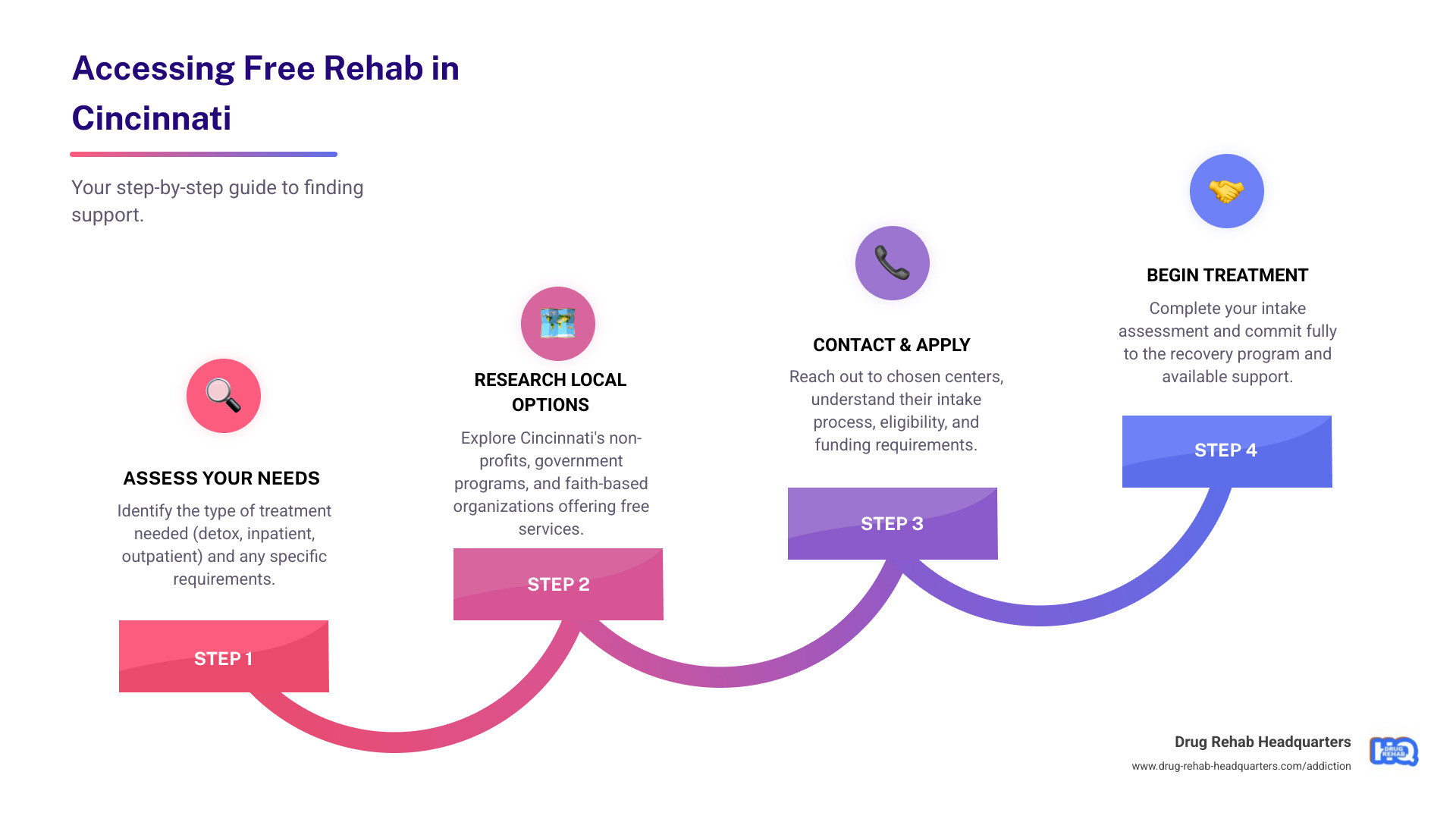
The process typically begins with an assessment of your needs and financial situation. Many programs prioritize individuals based on clinical need and income eligibility. While it might seem daunting, help is available, and organizations are set up to guide you through this. Need help with the process? Call Drug Rehab Headquarters at 866-720-3784 for step-by-step support.
Eligibility for Free Rehab Resources in Cincinnati, Ohio
Eligibility for free rehab centers in Cincinnati Ohio is generally determined by a few factors:
- Residency Requirements: Most state-funded and local programs require you to be a resident of Ohio, and sometimes specifically Hamilton County, to qualify. You’ll typically need to provide proof of residency (e.g., a state-issued ID or utility bill).
- Income Verification: This is a primary determinant for free or sliding-scale services. Programs will often ask for proof of income (pay stubs, tax returns) to assess your ability to pay. Eligibility often aligns with the Federal Poverty Guidelines. For example, a single person earning $14,580 or less annually might qualify for significantly reduced or free care.
- Lack of Insurance: While some free programs might accept Medicaid, many are specifically designed for individuals who are uninsured or underinsured and cannot afford treatment otherwise.
- Special Populations: Some programs prioritize or specialize in care for certain groups:
- Veterans: Facilities like Joseph House Inc. specifically cater to veterans. Ohio VA Medical Centers are also key resources.
- Pregnant Women/Women with Young Children: Programs like First Step Home offer specialized services, recognizing the unique needs of this population. Some federal grants prioritize these groups for treatment.
- Individuals with Co-Occurring Disorders: Programs that integrate mental health and substance use disorder treatment are often available, with eligibility based on both conditions.
- Homeless Individuals: Many free programs and shelters offer integrated services for individuals experiencing homelessness and substance use disorders.
Finding and Applying for Free Rehab Resources in Cincinnati, Ohio
Finding the right free or low-cost addiction treatment in Cincinnati requires knowing where to look and what questions to ask. Here are actionable steps we recommend:
- Use the SAMHSA Locator Tool: The Substance Abuse and Mental Health Services Administration (SAMHSA) provides an excellent locator tool where you can search for substance use and mental health treatment facilities by entering your city, state, or zip code. This tool can filter for facilities that offer free or low-cost services.
- Call the SAMHSA National Helpline: For personalized guidance, you can call the SAMHSA National Helpline at 1-800-662-HELP (4357). This 24/7 service offers free, confidential information and referrals to support groups and treatment facilities in English and Spanish.
- Contact Hamilton County Public Health Addiction Services: Reach out to your local public health department at 513-946-7800. They can provide screening, assessment, and referrals to local treatment options and support groups.
- Dial 211 for United Way Referrals: United Way 211 of Greater Cincinnati (or Ohio 211 more broadly) provides comprehensive information and referral services. By dialing 211, you can access assistance 24/7 to connect with local treatment centers, support groups, and other resources.
- Call Resources Directly: Once you’ve identified potential facilities from the lists above or through search tools, call them directly. Ask about their payment options, including Medicaid, sliding scale fees, and any available grants, scholarships, or payment assistance programs. Inquire about eligibility requirements and the intake process. For example, to start the process at the Center for Addiction Treatment, call 513-381-6672 and ask for “ACCESS.” Be prepared to provide demographic information and proof of residency.
The initial phone call can be the hardest step, but it’s the most important. Don’t hesitate to reach out for help. For confidential assistance navigating your options, contact Drug Rehab Headquarters at 866-720-3784. We are here to guide you through every step.
Pros and Cons of Free vs. Paid Rehab Programs
When seeking addiction treatment, many individuals weigh their options between free/low-cost programs and paid/private facilities. Both have their unique advantages and potential drawbacks. Understanding these can help you make an informed decision about what’s best for your recovery journey.
| Feature | Free Rehab Programs | Paid Rehab Programs |
|---|---|---|
| Accessibility | High (financial barriers removed, often located in urban/underserved areas) | Lower (requires insurance or significant out-of-pocket payment) |
| Cost | Minimal to none (Medicaid, grants, sliding scale, non-profits) | Significant (can range from thousands to tens of thousands per month) |
| Community | Strong peer support, diverse backgrounds, shared experience of hardship | Often more homogenous, may offer more privacy, focus on individual luxury |
| Amenities | Basic facilities, focus on core treatment services | Luxury accommodations, holistic therapies (yoga, massage), private rooms, gourmet meals |
| Immediacy | May involve waitlists due to high demand and limited funding | Often quicker admission, can accommodate immediate needs |
| Staffing Ratio | Can have higher client-to-staff ratios | Typically lower client-to-staff ratios, more individualized attention |
| Program Length | Can sometimes be shorter due to funding, but evidence-based treatment is key | Often flexible, can extend based on individual needs and financial capacity |
| Specialization | Often cater to specific vulnerable populations (veterans, homeless, women/children) | Wide range of specialized programs, but may come at a premium |
Benefits of Free Rehab
Choosing a free or low-cost rehab program offers several significant benefits that make recovery accessible to a wider population:
- No Financial Burden: This is arguably the most crucial benefit. With the cost of addiction treatment being a major barrier for millions (nearly 90% of people with a substance use disorder live without care), free programs ensure that finances do not prevent someone from getting help. This allows individuals to focus solely on their recovery without the added stress of accumulating debt.
- Accessible to All: Free rehabs often have “no-turn-away” policies based on ability to pay, making them a lifeline for uninsured or low-income individuals. They are often strategically located in communities with high need, ensuring geographic accessibility.
- Evidence-Based Treatment: Don’t let the “free” label mislead you into thinking the care is subpar. Many free rehabs, especially those funded by state and federal grants (like the SAMHSA grants in Ohio) or accredited non-profits, adhere to evidence-based practices. They offer therapies like Cognitive Behavioral Therapy (CBT), Medication-Assisted Treatment (MAT), and trauma-informed care, all proven to be effective.
- Diverse Peer Groups: Free programs often serve a diverse population, bringing together individuals from various backgrounds and life experiences. This can enrich group therapy sessions and foster a strong sense of community and shared understanding, which is vital for long-term recovery.
- Strong Community Focus: Many free rehabs are deeply integrated into the local community, offering robust aftercare planning, connections to local support groups (like NA or SMART Recovery), and often providing additional supportive services like housing assistance or job training.
Potential Drawbacks of Free Rehab
While invaluable, free rehab programs can come with certain limitations compared to their paid counterparts:
- Waiting Lists: Due to high demand and limited funding, many free or low-cost programs, especially residential ones, may have waiting lists. This can be a significant challenge for individuals seeking immediate help during a crisis.
- Fewer Amenities: Free rehabs typically prioritize core treatment services over luxurious amenities. You might find more basic accommodations, fewer recreational activities, or less private settings compared to high-end paid facilities.
- Potentially Larger Group Sizes: To serve more people with limited resources, group therapy sessions or program cohorts might be larger, which could mean less individualized attention in some settings.
- Less Individualized Programming (than luxury options): While individualized treatment plans are a standard in quality care, luxury paid options might offer a wider array of highly specialized or alternative therapies that free programs cannot afford to provide. However, this doesn’t mean free programs aren’t custom to individual needs; it just means the scope of additional, non-essential services might be narrower.
The “best” program is the one that meets your clinical needs and that you can access. The existence of free rehab centers in Cincinnati Ohio ensures that financial status is not a barrier to starting your recovery journey. If you need help weighing your options, call Drug Rehab Headquarters at 866-720-3784 for a confidential discussion.
Immediate Help and Crisis Resources in Cincinnati
When addiction reaches a critical point, immediate action is often necessary. Fortunately, Cincinnati provides several resources for crisis intervention and 24/7 support, ensuring that help is available when it’s needed most.
Beyond formal treatment centers, a strong network of helplines and local support groups can provide guidance, immediate assistance, and ongoing peer support.
24/7 Addiction Helplines
These helplines are your first point of contact for confidential support, information, and referrals during a crisis:
- SAMHSA National Helpline: Call 1-800-662-HELP (4357). This is a national service available 24/7 in English and Spanish, offering free, confidential information and referrals for individuals and families facing mental and/or substance use disorders. It’s an excellent starting point for finding resources in Cincinnati.
- Ohio CareLine: This statewide service connects individuals to recovery support services and systems, including support groups, housing assistance, and employment. While it doesn’t have a specific 24/7 number listed in our research, the Ohio Department of Mental Health and Addiction Services (OhioMHAS) at 1-877-275-6364 can provide information on accessing these resources.
- United Way 211 of Greater Cincinnati: Dial 211. This service provides free, confidential referrals to local substance abuse treatment services and support groups, available 24/7. It’s a fantastic resource for connecting with appropriate local resources quickly.
- Partnership for Drug-Free Kids Hotline: Call 855-378-4373. This confidential helpline helps families create action plans to address a child’s substance use, available in English and Spanish.
For immediate help and placement, call Drug Rehab Headquarters at 866-720-3784. Our team can connect you with the right resources without delay.
Local Recovery Support Groups
Community-based support groups are a cornerstone of long-term recovery, offering peer support, shared experiences, and a sense of belonging. They are typically free to attend and provide invaluable ongoing motivation:
- Greater Cincinnati Area Narcotics Anonymous (NA): NA is a fellowship for anyone seeking to stop using drugs, including alcohol. They provide a comprehensive list of local meeting times and locations. You can find more information at nacincinnati.com.
- Alcoholics Anonymous (AA): AA is a fellowship aimed at helping alcoholics achieve sobriety through the twelve-step approach. You can find local meeting information on their national website, aa.org.
- SMART Recovery Cincinnati: SMART Recovery is a secular recovery community that uses mutual support and focuses on self-empowerment to help participants gain independence from triggering behaviors. They have local meeting times and locations listed on smartcincy.com.
- Oxford House: These are self-run, self-supported recovery houses for those in recovery. They provide a drug- and alcohol-free living environment, which is crucial for maintaining sobriety after treatment. You can learn more at oxfordhouse.org.
- NAMI Southwest Ohio: While not solely addiction-focused, NAMI offers support groups and educational programs for individuals with mental health conditions, including those with co-occurring substance use disorders, providing a crucial layer of support.
These resources ensure that no one in Cincinnati has to face addiction alone. From immediate crisis support to ongoing peer networks, the city is committed to fostering a recovery-friendly environment.
Conclusion
The journey to recovery from substance use disorder is deeply personal, but it’s not one you have to walk alone. In Cincinnati, the availability of free rehab centers in Cincinnati Ohio ensures that financial barriers do not stand in the way of life-saving treatment. We’ve explored the various types of free and low-cost programs, from comprehensive medical detox and inpatient care to flexible outpatient options and crucial aftercare support.
We’ve highlighted key resources like the Center for Addiction Treatment (CAT House), Crossroads Center for Women, Joseph House for veterans, and First Step Home for mothers and children. These facilities, alongside robust community support networks like United Way 211, SAMHSA’s helplines, and peer support groups like NA and SMART Recovery, form a vital safety net for individuals and families in need.
Recovery is possible, and taking that first step is the most courageous act. Whether through Medicaid, sliding scale fees, state grants, or non-profit assistance, Cincinnati offers multiple pathways to healing. Finding the right drug treatment center is a critical part of the journey, and understand your options, eligibility, and how to steer the application process.
The experts at Drug Rehab Headquarters are here to help you steer your options. Connect with us anytime for a free, confidential consultation.