
Why Understanding Addiction Recovery Services is Essential for Your Journey
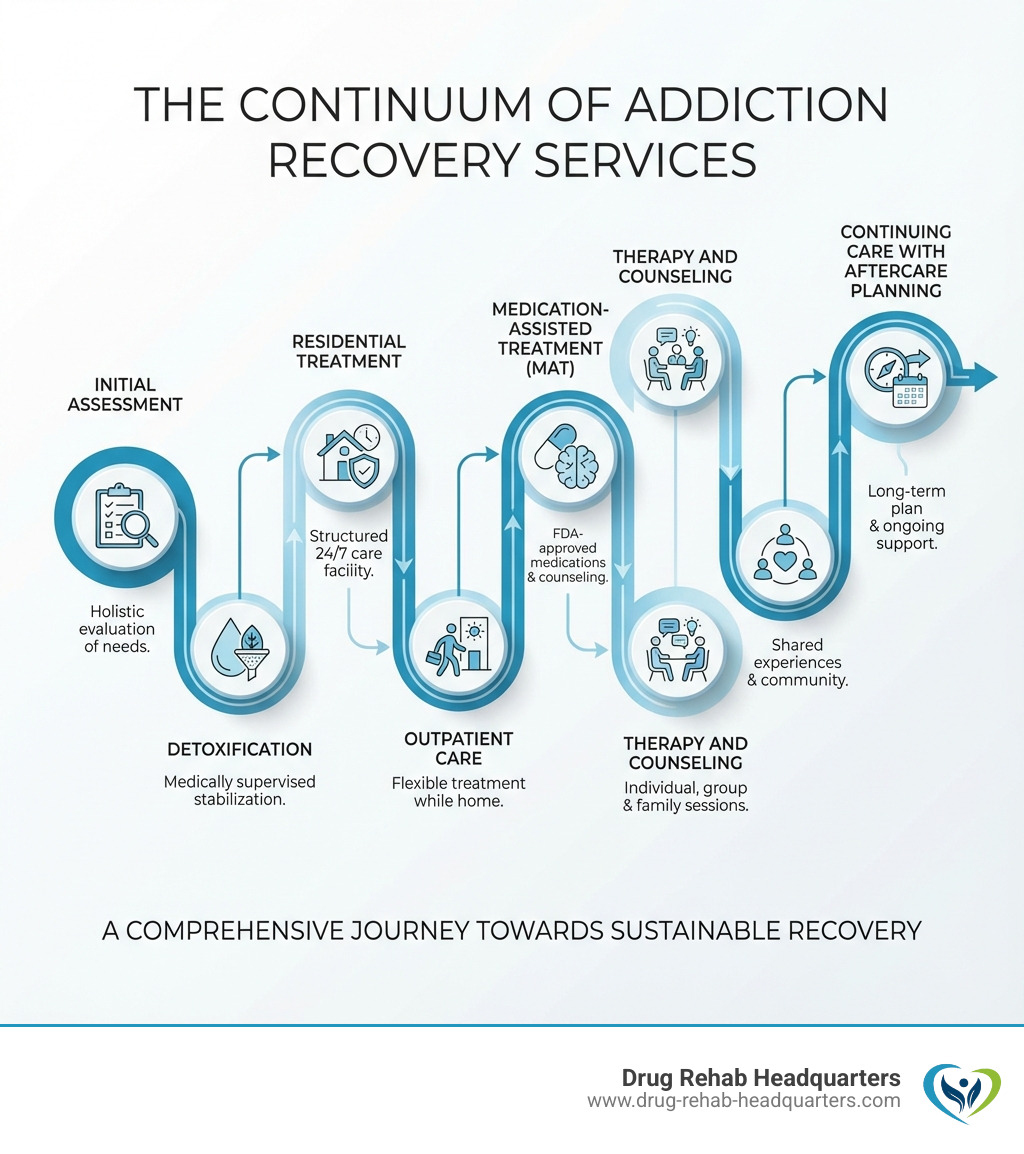
Addiction recovery services are professional programs designed to help individuals overcome substance use disorders and achieve lasting sobriety. These services can include:
- Detoxification: Medically supervised withdrawal.
- Inpatient/Residential Treatment: 24/7 care in a facility.
- Outpatient Programs: Flexible treatment while living at home.
- Medication-Assisted Treatment (MAT): Using medications to reduce cravings.
- Therapy and Counseling: Individual, group, and family sessions.
- Peer Support: Connecting with others in recovery.
- Continuing Care: Ongoing support after initial treatment.
If you or a loved one is struggling with addiction, you’re not alone. In 2022, over one in six Americans aged 12 or older had a substance use disorder. The good news is that recovery is possible.
Addiction is a treatable, chronic disease that changes the brain—not a moral failing. With the right support, people can and do recover, regaining control of their lives. However, navigating addiction recovery can be overwhelming.
This guide will break down the different types of programs, treatment approaches, and levels of care. Whether you’re seeking help for yourself or a loved one, you’ll find the information you need to take the next step. At Drug Rehab Headquarters, we specialize in connecting people with the right addiction recovery services for their unique needs.
Understanding Substance Use Disorder (SUD): The First Step to Recovery
Before exploring addiction recovery services, it’s crucial to understand what a Substance Use Disorder (SUD) is. A SUD is a treatable, chronic disease characterized by compulsive substance use despite harmful consequences. It’s not a lack of willpower but a complex condition that alters brain function and behavior, leading to intense cravings and an inability to stop using.
This disease can affect anyone, regardless of their background. For more in-depth information, you can explore our Addiction: Complete Guide. Understanding the complexities of SUD is the first step toward effective recovery.
Signs and Symptoms of a Substance Use Disorder
Recognizing the signs of a SUD is vital. Mental health professionals use criteria from the Diagnostic and Statistical Manual of Mental Disorders (DSM-5) for diagnosis. Common signs include:
- Behavioral: Neglecting responsibilities, using despite negative consequences, and giving up important activities for substance use.
- Physical: Increased tolerance, withdrawal symptoms when not using (e.g., tremors, nausea, anxiety), and changes in appearance or sleep patterns. For example, you can learn more about Alcohol Addiction Signs.
- Psychological: Intense cravings, inability to control use, and worsening mental health issues like anxiety or depression.
If you observe these signs, professional help from addiction recovery services may be necessary.
The Importance of Acknowledging the Problem
Acknowledging the problem is often the most difficult but crucial step. Denial can prevent individuals from seeing the impact of their substance use. Admitting the need for help, despite feelings of shame or fear, is the first step toward freedom and healing. This acceptance empowers individuals to seek the support they need to address the underlying issues. The growing demand for mental health treatment, which often addresses co-occurring SUDs, shows that more people are recognizing these complex challenges. You can read more about Why Mental Health Treatment Centers Are In High Demand to understand this trend. Our goal is to help you or your loved one move from a place of hopelessness to one of action.
The Spectrum of Addiction Recovery Services
Once the problem is acknowledged, the next step is exploring the vast spectrum of addiction recovery services available. There isn’t a one-size-fits-all solution; effective treatment is highly individualized. We believe in finding the right level of care and the most appropriate setting to meet each person’s unique needs.

The continuum of care in addiction recovery typically begins with detoxification, moves through various levels of treatment, and extends into long-term support. The goal is to provide comprehensive care that addresses not only the substance use itself but also any co-occurring mental health issues, social challenges, and personal growth needs. To learn more about various options, our Addiction Treatment Center: Complete Guide provides an excellent overview.
Inpatient vs. Outpatient Treatment
One of the primary distinctions in addiction recovery services is between inpatient and outpatient treatment. Each offers a different level of structure and support, making them suitable for different stages of recovery and individual circumstances.
| Feature | Inpatient (Residential) Treatment | Outpatient Treatment – |
Why Understanding Addiction Recovery Services is Essential for Your Journey
Addiction recovery services are professional programs and supports designed to help individuals overcome substance use disorders and build lasting sobriety. They include:
- Detoxification – Medically supervised withdrawal from substances
- Inpatient/Residential Treatment – 24/7 care in a structured facility
- Outpatient Programs – Flexible treatment while living at home
- Medication-Assisted Treatment (MAT) – FDA-approved medications to reduce cravings
- Therapy and Counseling – Individual, group, and family sessions
- Peer Support – Connection with others in recovery
- Continuing Care – Ongoing support after initial treatment
If you or someone you love is struggling with addiction, you’re not alone. In 2022, more than one in six Americans aged 12 or older experienced a substance use disorder. The good news? Recovery is possible, and it happens every day.
Addiction is a treatable, chronic disease that changes the brain—it’s not a character flaw or moral failing. With the right support and services, people can and do recover. In fact, research shows that most people who get into treatment and stay engaged stop using drugs, improve their relationships, and regain control of their lives.
But finding the right help can feel overwhelming. The world of addiction recovery services is vast, with many different types of programs, treatment approaches, and levels of care. From detox to therapy to medication-assisted treatment, each service plays a unique role in supporting recovery.
This guide breaks down everything you need to know. We’ll walk you through what addiction really is, the full spectrum of services available, how to choose the right program, and what happens after treatment ends. Whether you’re seeking help for yourself or a loved one, you’ll find clear, practical information to guide your next steps.
At Drug Rehab Headquarters, we’ve spent years connecting individuals and families with the right addiction recovery services to match their unique needs. We understand that every recovery journey is different, and we’re here to help you steer yours.
Understanding Substance Use Disorder (SUD): The First Step to Recovery
Before diving into addiction recovery services, understand what a Substance Use Disorder (SUD) is. A SUD is a treatable, chronic disease characterized by compulsive substance use despite harmful consequences. It’s not a lack of willpower but a complex condition that alters brain function and behavior, leading to intense cravings and an inability to stop using. This disease can affect anyone.
For more in-depth information, you can explore our Addiction: Complete Guide. For an overview of diagnosis and treatment, see our Addiction Treatment Center: Complete Guide.
Signs and Symptoms of a Substance Use Disorder
Recognizing the signs of a SUD is key. Professionals use criteria from the Diagnostic and Statistical Manual of Mental Disorders (DSM-5) for diagnosis. Common signs include:
- Behavioral: Neglecting responsibilities, using despite negative consequences, and giving up important activities for substance use.
- Physical: Increased tolerance and experiencing withdrawal symptoms when not using. These can vary, from Alcohol Detox Symptoms to Meth Withdrawal Symptoms.
- Psychological: Intense cravings, inability to control use, and worsening mental health issues like anxiety or depression.
If you observe these signs, professional help from addiction recovery services may be necessary. For specifics on alcohol, see our guide to Alcohol Addiction Signs.
The Importance of Acknowledging the Problem
Acknowledging the problem is the most crucial first step. Denial can prevent individuals from seeing the impact of their substance use. Admitting the need for help, despite feelings of shame or fear, is the start of the journey to freedom and healing. This acceptance empowers individuals to seek support. The growing demand for mental health treatment centers, which often address co-occurring SUDs, shows that more people are recognizing these challenges. You can read more about Why Mental Health Treatment Centers Are In High Demand to understand this trend. Our goal is to help you or your loved one move from hopelessness to action.
The Spectrum of Addiction Recovery Services
Once the problem is acknowledged, the next step is exploring the vast spectrum of addiction recovery services available. There isn’t a one-size-fits-all solution; effective treatment is highly individualized. We believe in finding the right level of care and the most appropriate setting to meet each person’s unique needs.
The continuum of care in addiction recovery typically begins with medically managed detoxification, moves through various levels of treatment, and extends into long-term support. The goal is to provide comprehensive care that addresses not only the substance use itself but also any co-occurring mental health issues, social challenges, and personal growth needs. To learn more about various options, our Addiction Treatment Centers guide provides an excellent overview.
Inpatient vs. Outpatient Treatment
One of the primary distinctions in addiction recovery services is between inpatient and outpatient treatment. Each offers a different level of structure and support, making them suitable for different stages of recovery and individual circumstances.
| Feature | Inpatient (Residential) Treatment – | Outpatient Treatment – |
Life After Treatment: Building a Foundation for Lasting Recovery
Completing an initial treatment program is a monumental achievement, but recovery is a lifelong journey. Addiction is a chronic disease requiring ongoing management. The period after formal treatment is critical for building a strong foundation for lasting sobriety and preventing relapse, which is a common part of the process and not a sign of failure.

The Importance of Continuing Care
Continuing care, or aftercare, provides ongoing support after initial treatment and is essential for long-term success. Research shows that individuals who engage in continuing care have significantly better outcomes. Key elements include:
- Aftercare Plans: Personalized plans outlining steps for continued support.
- Sober Living Homes: Structured, substance-free environments that offer accountability and peer support.
- Alumni Programs: Treatment center networks that provide connection, mentorship, and sober social activities.
- Ongoing Therapy: Continued individual or group sessions to manage challenges and refine coping skills.
- Step-Down Care: A gradual transition from more intensive to less intensive levels of care.
To find local support, you can explore resources like our Alcohol Recovery Centers Near Me Guide.
The Role of Family and Loved Ones in Recovery
Addiction impacts the entire family, so their involvement is critical for long-term sobriety. Their support can be a powerful motivator for individuals to enter and stay in treatment.
- Family Therapy: Helps heal relationships, improve communication, and educate family members about addiction.
- Education and Boundaries: Understanding addiction helps families respond effectively and set healthy boundaries.
- Rebuilding Trust: This is a key part of the family recovery process, achieved through consistent, sober behavior and open communication.
- Support Groups for Families: Groups like Al-Anon or Nar-Anon offer invaluable support for family members.
When families heal together, the foundation for sustainable recovery becomes much stronger.
Overcoming the Stigma of Addiction
The stigma surrounding addiction often prevents people from seeking the addiction recovery services they need. It stems from the misconception that addiction is a moral failing, not a treatable disease. We can combat this by:
- Educating others that addiction is a brain disease.
- Using person-first language (e.g., “person with a substance use disorder” instead of “addict”).
- Sharing recovery stories to reduce shame and offer hope.
- Advocating for better policies and healthcare that treat addiction with compassion.
Challenging stereotypes creates a more supportive environment where people feel safe seeking help.
Conclusion
The journey from addiction to recovery is profound, and it is absolutely achievable. The world of addiction recovery services is rich and varied, offering a spectrum of support customized to individual needs. From understanding Substance Use Disorder as a chronic disease, through various treatment modalities like inpatient and outpatient care, to the vital role of therapy and peer support, each component helps build a sustainable, sober life.
Choosing the right program, understanding the financial landscape, and preparing for treatment can feel daunting, but you don’t have to steer it alone. With the right guidance, you can find a path that resonates with your unique circumstances. Recovery doesn’t end when formal treatment does; continuing care and the support of loved ones are the pillars of long-term success.
At Drug Rehab Headquarters, we are dedicated to connecting individuals with drug and alcohol addiction rehab centers nationwide, covering states like Alabama, Alaska, Arizona, California, Florida, Georgia, Indiana, Nevada, New York, Ohio, Pennsylvania, Tennessee, and Texas, among many others. We offer personalized guidance to help you find evidence-based, holistic treatment options that align with your needs.
Hope for a new beginning is not just a dream; it’s a reality within reach. Take the first step today. We’re here to help you find the addiction recovery services that will light your way forward.