When You Need Help Right Now: The Best Free 24/7 Addiction Support Hotlines
If you’re looking for an immediate addiction help hotline, here are the top free, 24/7 numbers to call right now:
| Hotline | Phone Number | Who It’s For |
|---|---|---|
| Drug Rehab Headquarters | (866) 720-3784 | Anyone seeking addiction treatment guidance |
| SAMHSA National Helpline | 1-800-662-4357 | Free treatment referrals, all substances |
| 988 Suicide & Crisis Lifeline | Call or text 988 | Mental health and addiction crises |
| National Rehab Hotline | 866-210-1303 | Drug, alcohol, and mental health support |
| Crisis Text Line | Text HOME to 741741 | Text-based crisis support |
All of the above are free, confidential, and available 24/7.
Addiction doesn’t wait for business hours. Whether you’re scared for yourself or watching someone you love struggle, the urge to do something right now is completely valid.
The numbers are staggering. Nearly 49 million Americans meet the criteria for a substance use disorder — yet only about 1 in 4 who need treatment actually receive it. That gap isn’t just a statistic. It represents millions of people who didn’t know where to turn, or felt too overwhelmed to take the first step.
A single phone call can change that.
Hotlines don’t just hand you a pamphlet. They connect you with trained counselors who can talk you through a crisis, help identify treatment options near you, and answer your questions — with zero judgment and zero obligation.
At Drug Rehab Headquarters, we’ve spent years helping individuals and families navigate the addiction treatment landscape, including connecting people with the right immediate addiction help hotline for their unique situation. We’re here to make that process as simple as possible for you.
What to Expect from an Immediate Addiction Help Hotline
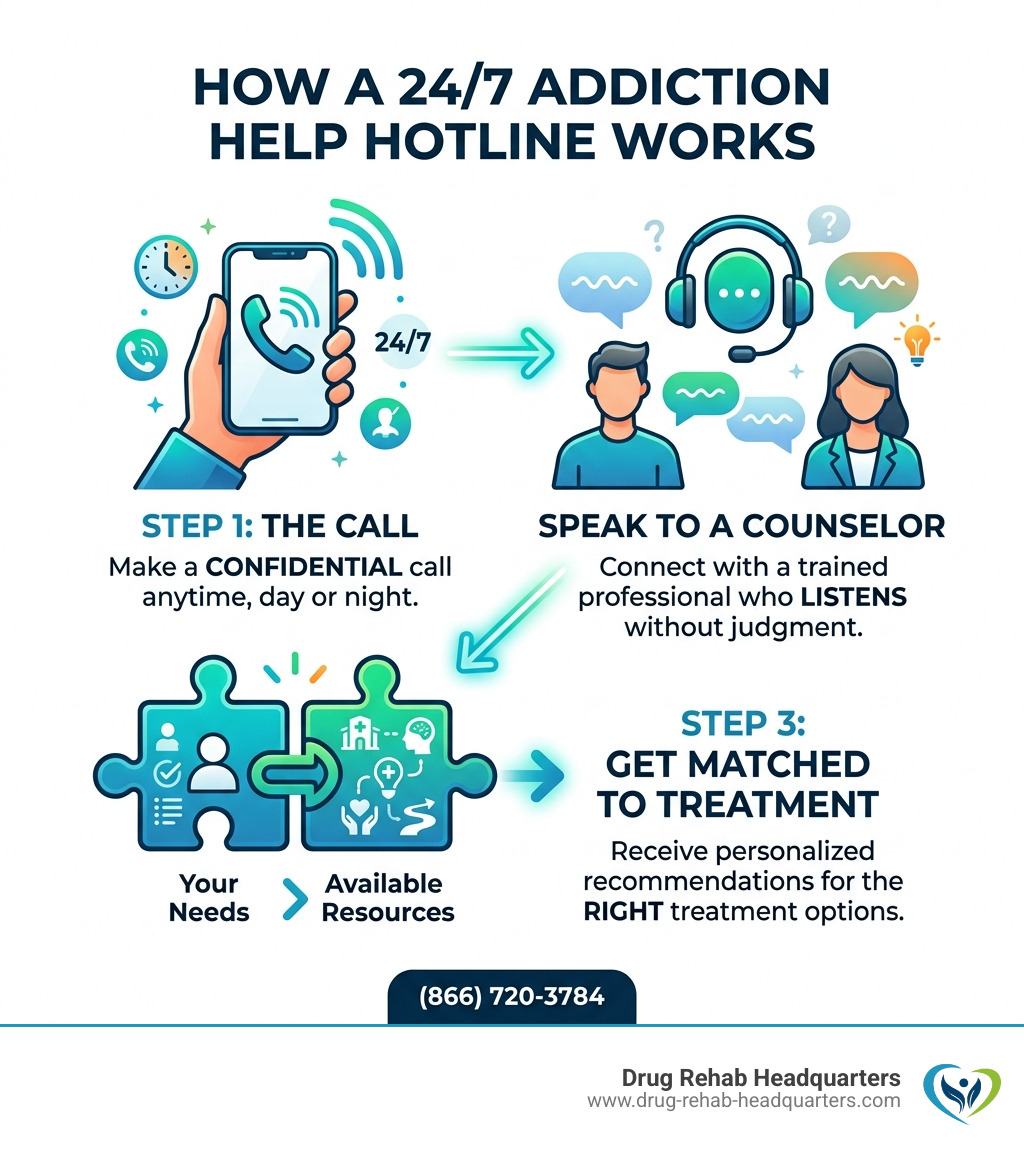
When you pick up the phone to call an immediate addiction help hotline, it’s normal to feel a mix of anxiety and relief. You might wonder who is on the other end or if your information will stay private. We want to reassure you: these services are designed to be a safe harbor.
Most reputable hotlines, including our team at (866) 720-3784, are staffed by trained advisors. Many of these professionals have “lived experience,” meaning they have walked the path of recovery themselves or supported a loved one through it. This creates a space of deep empathy rather than clinical coldness.
Key features of these calls include:
- Confidentiality and Anonymity: Your conversation is protected. Under laws like HIPAA, your personal health information cannot be shared without your consent.
- 24/7/365 Availability: Addiction doesn’t take holidays. Whether it’s 3:00 AM on a Tuesday or Christmas morning, someone is there to answer.
- No Obligation: Calling doesn’t mean you are signing a contract to enter rehab that day. It is a resource for information and 247 Support Finding Immediate Addiction Help.
According to SAMHSA, these helplines serve as a vital entry point for the millions of Americans currently struggling with mental health or substance use issues.
Immediate Crisis Intervention
If you are in the middle of a “right now” emergency, a hotline can provide life-saving instructions. This includes guidance on overdose prevention and how to administer Naloxone (Narcan) if someone has stopped breathing.
Counselors are also trained in de-escalation for emotional distress. If you feel like you are at a breaking point, calling (866) 720-3784 provides an immediate human connection to help stabilize your mood and keep you safe until further help arrives.
Personalized Treatment Referrals
Once the immediate “fire” is out, the next step is planning for the future. An immediate addiction help hotline uses your specific details—like what substances are involved, your location, and your insurance—to find 247 Support Connecting With A Drug Addiction Helpline that fits your life. We focus on evidence-based care, ensuring the facilities we suggest use proven methods like Cognitive Behavioral Therapy (CBT) or Medication-Assisted Treatment (MAT).
Treatment Options Available Through Crisis Helplines
Navigating rehab can feel like learning a new language. When you call (866) 720-3784, our counselors help translate these options into a clear plan. There is no “one-size-fits-all” in recovery; what worked for a neighbor might not be the right fit for you.
Medical Detox and Stabilization
For many, the first and most frightening hurdle is withdrawal. Depending on the substance—especially alcohol or benzodiazepines—quitting “cold turkey” can be physically dangerous or even fatal.
An immediate addiction help hotline can help you find Immediate Addiction Help Resources For Urgent Support that include medical detox. In these programs, doctors supervise the process, often using medications to ease cravings and prevent seizures or delirium tremens. You can learn more about this in our Alcohol Addiction Hotline Complete Guide.
Inpatient and Residential Programs
If your home environment is a trigger for use, inpatient care offers a “reset button.” These programs provide 24-hour supervision and a structured environment. This is often the best choice for those with a “dual diagnosis”—where a mental health condition like depression or PTSD co-occurs with addiction. States like California have extensive networks of these facilities that we can help you access.
Outpatient and Telehealth Services
Not everyone can leave their job or family for 30 days. Outpatient programs allow you to receive high-quality behavioral counseling while living at home. In 2026, telehealth has become a standard, allowing you to meet with specialists via video call. This is particularly helpful in states like Arizona where distance to a physical clinic might be an issue.
National Statistics and Localized Support Resources
The scale of addiction in the United States is vast, but you are not alone in this fight. As of April 2026, recent data shows:
- Nearly 49 million people meet the criteria for a substance use disorder.
- Only 24% of those who needed specialty treatment in the past year received it.
- Approximately 169 million Americans (age 12+) are past-month substance users, including alcohol.
- About 59 million adults struggle with a mental illness, which frequently overlaps with substance use.
Connecting with an Immediate Addiction Help Hotline in Your State
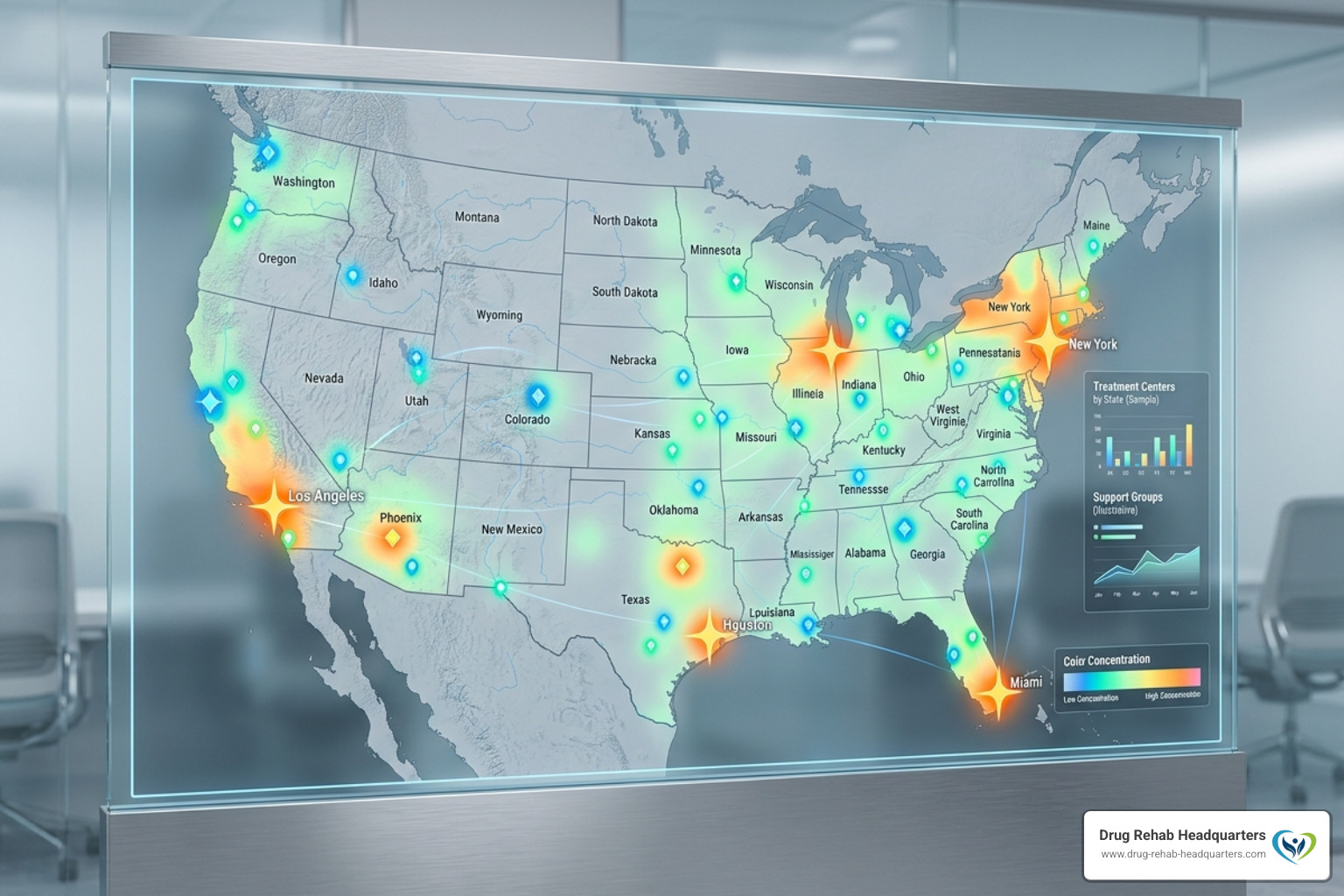
While national numbers are great, recovery happens locally. Whether you are in Arkansas or Colorado, we can help you find county-level resources. This includes finding the nearest detox center in your specific city so you don’t have to travel hundreds of miles for help.
Specialized Support for Vulnerable Populations
Specific groups face unique hurdles in recovery. We provide tailored referrals for:
- Veterans: Addressing service-related trauma and PTSD.
- LGBTQ+ Individuals: Finding inclusive, affirming environments free from discrimination.
- Teens and Young Adults: Programs that focus on the specific developmental needs of youth, often available through Connecticut’s crisis services.
How to Choose a Trusted Recovery Resource
With so many “rehab” ads online, how do you know who to trust? Not every immediate addiction help hotline is created equal. Some are simply answering services for specific high-cost facilities. At Drug Rehab Headquarters, we provide an unbiased look at your options.
| Feature | National Public Hotlines (SAMHSA/988) | Private Support Lines (Like Ours) |
|---|---|---|
| Primary Goal | General info & government referrals | Personalized matching & placement |
| Wait Times | Can be high during peak hours | Generally rapid response |
| Lived Experience | Varies by volunteer | High priority for staff |
| Insurance Help | Limited | Detailed verification & advocacy |
What to Look for in a Hotline
A trusted resource should offer a non-judgmental tone. If you feel shamed or pressured into a specific “deal,” hang up. You deserve a counselor who listens more than they talk. Organizations like the Medical Society of Delaware emphasize that rapid response and professional accreditation are the hallmarks of quality support. You can also check our general Alcohol Addiction Hotline page for more tips on vetting services.
Preparing for Your Call
You don’t need a script, but having a few things ready can help the counselor help you faster. Think about:
- Substance History: What are you using, how much, and for how long?
- Medical History: Do you have seizures, heart issues, or mental health diagnoses?
- Insurance Info: Have your card handy.
- Your Goals: Are you looking for detox, long-term rehab, or just a local support group?
For more help on what to say, see our guide: Dont Wait Your Guide To Immediate Alcohol Assistance.
Navigating Insurance and Treatment Costs
The biggest barrier to treatment is often the price tag. However, there are more ways to pay for rehab in 2026 than ever before. Most calls to an immediate addiction help hotline involve a heavy discussion about finances.
Understanding Coverage for Urgent Care
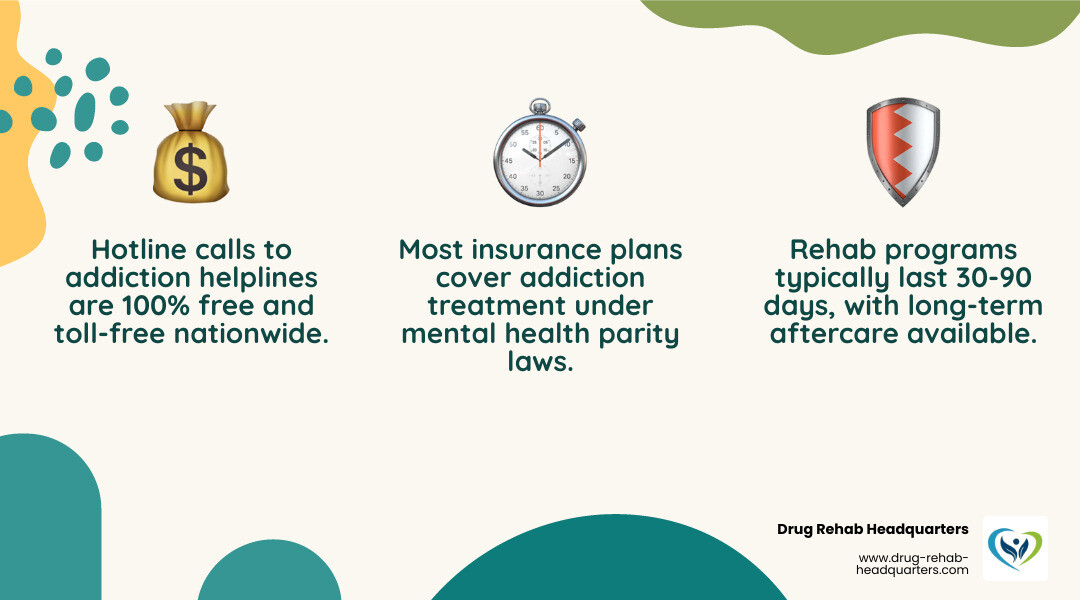
Most private insurance plans (PPO and HMO) are required to cover addiction treatment under mental health parity laws. This means your insurance should treat a substance use disorder with the same urgency as a heart condition. When you call our team, we can perform a Verify Your Insurance for Treatment check in minutes. We handle the difficult phone calls with the insurance company so you don’t have to.
Low-Cost and State-Funded Options
If you don’t have private insurance, don’t lose hope. There are several other paths:
- Medicaid and Medicare: Many high-quality facilities now accept state-funded insurance.
- Sliding Scale Fees: Some centers adjust their costs based on your income.
- Grants and Scholarships: Certain non-profits provide funding for those who are committed to recovery but lack funds.
- Personal Loans: Some specialized lenders offer “health care loans” specifically for treatment.
You can Search for Treatment Options on our site to filter by payment type, or check our breakdown of the Cost of Rehab Resources.
Frequently Asked Questions
How much does it cost to call an immediate addiction help hotline?
Calling a hotline like ours or the SAMHSA National Helpline is 100% free. These are toll-free numbers, and there is no charge for the consultation, the referral, or the emotional support provided during the call.
How long does the rehab process typically take?
Treatment is not a race. Common program lengths include:
- 30 Days: A “short-term” stay focused on detox and initial therapy.
- 60 to 90 Days: Often recommended for better long-term success rates, as it allows more time for the brain to heal.
- Long-term Aftercare: This can last months or years, involving sober living homes and support groups like AA or NA.
Will my insurance cover the full cost of addiction treatment?
It depends on your specific policy. Some plans cover 100% of the cost, while others require a deductible or co-pay. We can help you find Dual Diagnosis Treatment Facility Options that work specifically with your provider to minimize out-of-pocket costs.
Conclusion
At Drug Rehab Headquarters, we believe that no one should have to face the mountain of addiction alone. Our mission is to bridge the gap between “I need help” and “I am in treatment.”
With our 24/7 support line, you get more than just a resource; you get a partner in your recovery. Our certified counselors use their lived experience and professional expertise to offer personalized, evidence-based, and holistic guidance. We cover all 50 states and Puerto Rico, ensuring that no matter where you are, help is just a phone call away.
Don’t let another day slip by. Whether you need an immediate addiction help hotline for a crisis or just want to explore your Rehabilitation Services Overview, we are standing by.
Take the first step toward recovery today.