
Why Immediate Support Matters in an Addiction Crisis
Addiction crisis hotline services provide immediate, confidential support when you or a loved one needs help right now. Access help immediately through these resources:
Quick Access to Crisis Support:
- Call 988 – Suicide & Crisis Lifeline (24/7, toll-free)
- Call 1-800-662-4357 – SAMHSA’s National Helpline (24/7, free, confidential)
- Call 811 – HealthLine for mental health and addiction support
- Call 211 – Community services database with over 6,000 resources
- Call 911 – For immediate life-threatening emergencies
Nearly 49 million Americans meet the criteria for a substance use disorder, yet only about 1 in 4 receive treatment. An addiction crisis hotline bridges this gap by offering immediate access to trained professionals who guide you through treatment options, insurance, and recovery steps.
These hotlines are free, confidential, and available 24/7. You don’t need insurance to call for yourself or a loved one. Crisis counselors are trained to listen without judgment while helping you identify the right level of care.
At Drug Rehab Headquarters, we’ve helped thousands steer the complex world of addiction treatment, connecting them with appropriate addiction crisis hotline resources and personalized recovery pathways. Making that first call is often the turning point in recovery.
Addiction crisis hotline vocab explained:
What is an Addiction Crisis Hotline and How Does It Work?
An addiction crisis hotline is a confidential, free telephone service available 24/7/365. It provides immediate support to individuals and families facing substance use or mental health disorders. When you call, you connect with trained professionals offering crisis intervention and information in a safe, non-judgmental space.
The core function is to provide guidance during acute need. This involves assessing risks, offering emotional support, and de-escalating the crisis to connect you with recovery steps. According to SAMHSA, nearly 49 million people in the U.S. met substance use disorder criteria in 2022, yet many lack treatment. Hotlines bridge this gap. For more resources, visit our guide on Immediate Addiction Help Resources for Urgent Support or view scientific research on substance use indicators.
Services Offered by an Addiction Crisis Hotline
- Crisis Counseling: Immediate support to manage overwhelming emotions and develop coping strategies.
- Treatment Referrals: Connections to local facilities, including detox, inpatient, and outpatient programs across our service areas (AL, AK, AZ, AR, CA, CO, CT, DE, FL, GA, HI, ID, IL, IN, IA, KS, KY, LA, ME, MD, MA, MI, MN, MS, MO, MT, NE, NV, NH, NJ, NM, NY, NC, ND, OH, OK, OR, PA, PR, RI, SC, SD, TN, TX, UT, VT, VA, WA, WV, WI, WY).
- Support Groups: Links to AA, NA, Al-Anon, or Nar-Anon for peer support.
- Information Services: Answers regarding substance misuse symptoms, health effects, and treatments like CBT, DBT, or MAT.
- Guidance for Family: Education on managing crises and recognizing signs of misuse.
Explore more at 24/7 Support: Connecting with a Drug Addiction Helpline.
Benefits of Immediate Professional Guidance
- Anonymity: Hotlines offer a confidential environment, reducing the stigma associated with seeking help.
- Personalized Guidance: Counselors assess your specific needs to identify the appropriate level of care.
- Rapid Access: Quick connections to crisis intervention, insurance guidance, and financial assistance resources.
- Expert Support: Many advisors have lived experience, offering empathy without judgment.
Learn more in our Addiction Recovery Services Complete Guide.
Navigating Your Options: The Role of an Addiction Crisis Hotline
Addiction crisis hotlines simplify finding help by offering national, state, and specialized avenues for support.

National and State Addiction Crisis Hotline Options
- 988 Suicide & Crisis Lifeline: 24/7 support for suicidal thoughts, mental health crises, or substance use difficulties via call, text, or chat.
- SAMHSA’s National Helpline (1-800-662-4357): A 24/7 information service providing referrals to local treatment and support groups in English and Spanish.
- 211 Services: A community service connecting callers to local mental health and addiction resources.
- State HealthLines (e.g., 811): Many states and provinces offer health information lines for professional advice and crisis intervention. See 811 HealthLine Medical Advice.
Specialized Support for Specific Substances and Groups
- Opioid Dependence: Dedicated lines for ODT, medication-assisted treatment, and naloxone access. See the Opioid Dependence Treatment Line.
- Alcohol Assistance: Specialized resources for alcohol treatment and withdrawal. Our Alcohol Addiction Hotline offers immediate help.
- Veterans Crisis Line: Confidential support for veterans via the 988 network.
- Disaster Distress Helpline: 24/7 counseling for distress related to disasters.
| Hotline Type | Description | Key Services | Example |
|---|---|---|---|
| National | Broad reach | Crisis counseling, referrals | 988, SAMHSA |
| State/Local | Geographically specific | Community directories | 211, 811 |
| Specialized | Focused populations | Targeted substance support | Veterans Line |
When to Call for Immediate Assistance
Certain situations warrant immediate contact with an addiction crisis hotline. These services are designed for intervention and support during any moment of concern.
Recognizing the Signs of an Addiction Crisis
Call a hotline if you or someone you know exhibits:
- Suicidal Thoughts or Self-Harm: Immediate help is essential for safety and crisis intervention.
- Overwhelming Emotions: Severe anxiety, depression, or psychotic thinking require professional guidance.
- Difficulty Coping: If substance use feels out of control or daily life becomes unmanageable.
- Escalating Use or Withdrawal: Rapid increases in use or fear of severe withdrawal symptoms.
- Overdose Risk: If there is a risk of overdose, call immediately. Knowing about naloxone kit availability and training can save lives by reversing opioid effects.
For alcohol-specific crises, see Don’t Wait: Your Guide to Immediate Alcohol Assistance.
Supporting Friends and Family Members
Hotlines are vital resources for loved ones, offering:
- Outreach and Consultation: Information on recognizing signs of misuse and approaching the situation.
- Intervention Guidance: Advice on conducting safe, effective interventions.
- Education: Resources like SAMHSA’s What Is Substance Abuse Treatment? A Booklet for Families explain symptoms and recovery.
- Emotional Support: A confidential space for family members to process their own stress and anxiety.
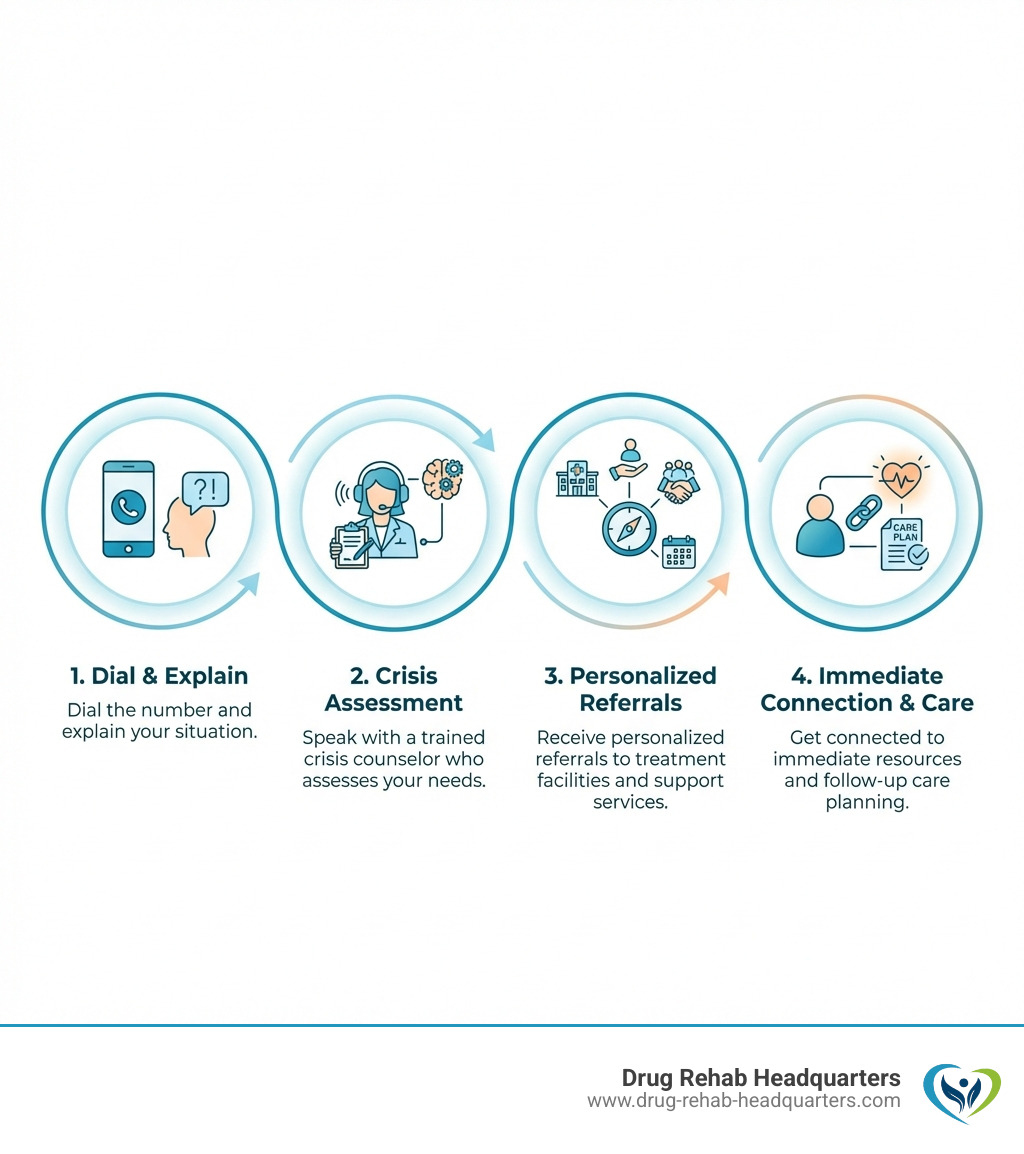
What to Expect During and After Your Call
Knowing what to expect can ease apprehension. Hotline specialists ask questions to provide the most accurate guidance for your recovery journey.
Preparing Information for the Specialist
Be ready to share:
- Substance Details: Type of substance, frequency, and duration of use.
- Current State: Emotional and physical symptoms, including any crisis indicators.
- Mental Health: Any co-occurring conditions like PTSD or depression.
- Insurance and Location: Policy details and your ZIP code to find local facilities in our service areas (AL, AK, AZ, AR, CA, CO, CT, DE, FL, GA, HI, ID, IL, IN, IA, KS, KY, LA, ME, MD, MA, MI, MN, MS, MO, MT, NE, NV, NH, NJ, NM, NY, NC, ND, OH, OK, OR, PA, PR, RI, SC, SD, TN, TX, UT, VT, VA, WA, WV, WI, WY).
For more, see Your Recovery Journey: Navigating Addiction Treatment Options and Support.
Transitioning to Long-Term Recovery
After assessment, the specialist will:
- Offer Solutions: Referrals to detox, inpatient, or outpatient programs.
- Connect with Treatment: Direct links to centers offering CBT, DBT, or MAT.
- Discuss Finances: Clarify insurance coverage and financial assistance options.
- Plan Aftercare: Emphasize therapy and sober living to prevent relapse.
Explore Drug Treatment Centers for more details.
Frequently Asked Questions about Addiction Hotlines
Are there costs associated with calling a hotline?
No. Calls to addiction crisis hotlines like SAMHSA’s are free. You do not need insurance to access this 24/7 support, as these services are often publicly funded to remove financial barriers.
Can family members call on behalf of a loved one?
Yes. Family and friends can call to learn about signs of misuse, get intervention guidance, find support groups like Al-Anon, and receive emotional support for themselves.
How do hotlines ensure my anonymity?
Confidentiality is a cornerstone of these services. You are not required to provide identifying information, and conversations are held in secure systems to protect your privacy and build trust.
Conclusion
An addiction crisis hotline is a guide of hope, offering free, confidential support 24/7. At Drug Rehab Headquarters, our certified counselors with lived experience provide personalized guidance to evidence-based treatment across the U.S., including AL, AZ, CA, FL, NY, TX, and beyond. Making that initial call is a brave step toward healing and a brighter future. Start your journey today by exploring Addiction Treatment Centers: Your First Step.