What Are Residential Drug Rehab Centers — and Do You Need One?
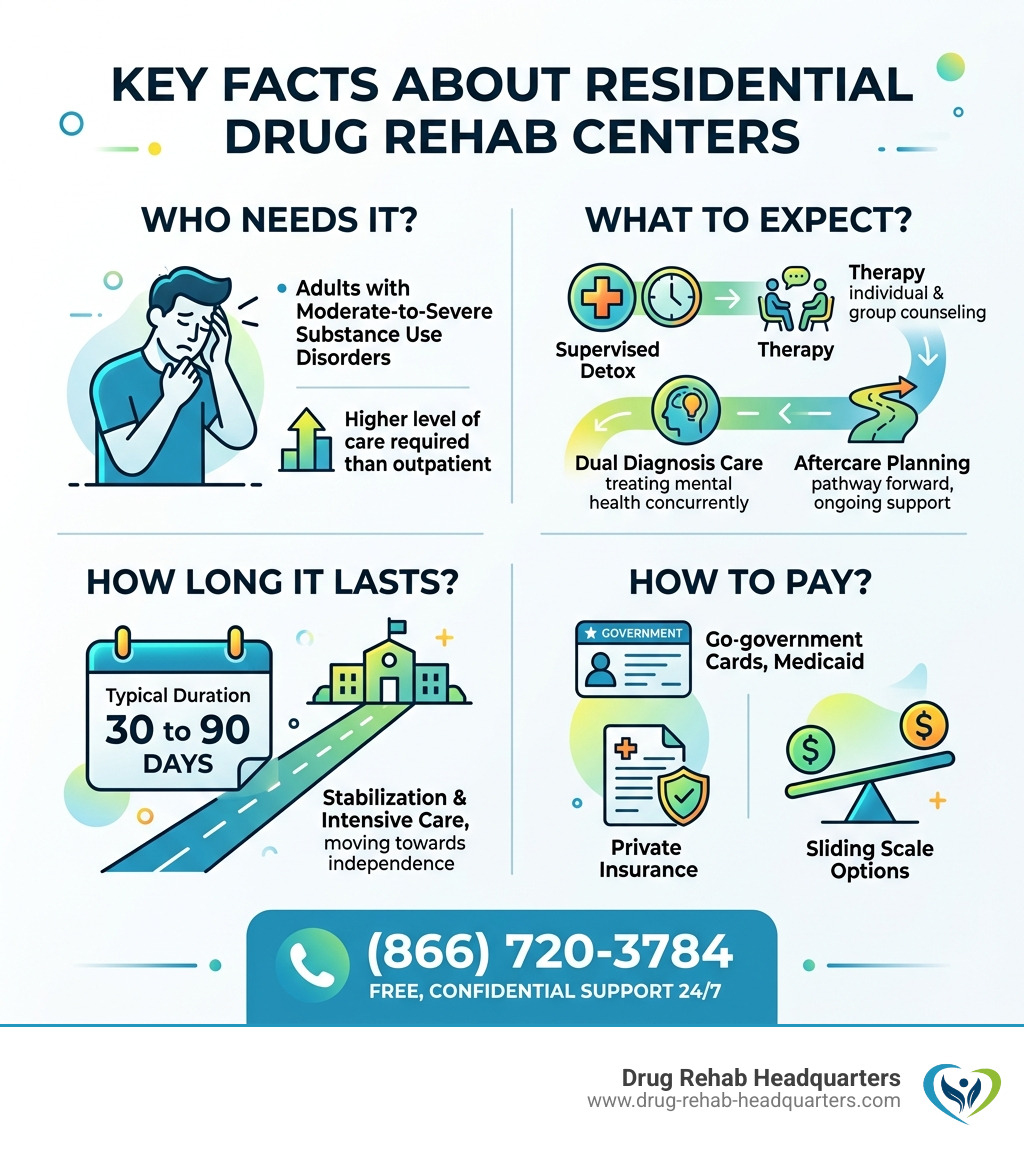
Residential drug rehab centers are live-in treatment facilities where people with moderate to severe addiction receive round-the-clock clinical care, therapy, and support in a structured, substance-free environment.
Here’s what you need to know at a glance:
| Feature | Details |
|---|---|
| Who it’s for | Adults with moderate-to-severe substance use disorders |
| Level of care | 24/7 supervised, higher intensity than outpatient |
| Typical duration | 30 to 90 days (sometimes longer) |
| What’s included | Detox, therapy, dual diagnosis care, aftercare planning |
| Cost help | Medicare, Medicaid, private insurance, sliding scale |
| Get help now | (866) 720-3784 |
Over 46.3 million Americans aged 12 and older had a substance use disorder in 2023. Every day, more than 300 people die from drug or alcohol overuse. For many of them, the difference between life and death comes down to getting the right level of care at the right time.
If you or someone you love is struggling, this guide will help you understand your options — quickly and clearly.
Choosing a treatment program can feel overwhelming. There are dozens of types of facilities, varying costs, and confusing insurance rules. Most people don’t know where to start.
That’s exactly what this guide is for.
At Drug Rehab Headquarters, we’ve spent years helping individuals and families navigate the complex world of addiction recovery — including finding and evaluating residential drug rehab centers across the country. Our team connects people with reputable, evidence-based treatment options so you don’t have to figure it out alone.
Ready to talk to someone now? Call (866) 720-3784 — free, confidential support is available 24/7.
Treatment Section
When we look at the landscape of recovery in April 2026, it is clear that a “one size fits all” approach simply doesn’t work. Residential drug rehab centers offer a comprehensive “full system of care” that addresses the physical, emotional, and spiritual aspects of addiction. This journey typically begins with stabilization and moves toward long-term independence. According to the Substance Abuse and Mental Health Services Administration (SAMHSA), evidence-based practices are the cornerstone of effective treatment.
For more details on the transition from initial care to long-term sobriety, check out our guide: From Detox To Recovery A Deep Dive Into Inpatient Treatment Centers.
Medically Monitored Detoxification
The first step at many residential drug rehab centers is withdrawal management. For many substances—especially alcohol, benzodiazepines, and opioids—stopping “cold turkey” isn’t just difficult; it can be life-threatening.
In a medically monitored detox program, patients have access to 24/7 nursing care and medication-assisted treatment (MAT). This ensures that the body can safely clear substances while managing painful withdrawal symptoms. By stabilizing the body first, we clear the fog so that the real work of therapy can begin.
Need help now? Call (866) 720-3784
Inpatient Care and Residential Structure
Once detox is complete, the focus shifts to the residential phase. Residential drug rehab centers provide a high level of clinical intensity and stabilization. The primary benefit of this setting is the removal of the individual from their triggering environment.
In a residential facility, every hour is structured. Residents participate in individual counseling, group therapy, and educational workshops. This environment is designed to build a foundation for lifelong recovery by teaching new coping mechanisms in a safe, substance-free space. Whether it is a scenic mountain retreat in Utah or a beachside facility in California, the goal remains the same: total immersion in healing.
- More info on inpatient drug rehab
- Your Path To Healing Exploring Inpatient Addiction Recovery Options
Transitioning to Outpatient Support
Recovery doesn’t end when you walk out the front doors of a residential facility. In fact, that is often where the journey truly begins. Most high-quality residential drug rehab centers emphasize a continuum of care. This might include:
- Partial Hospitalization Programs (PHP): Often requiring at least 20 hours of therapy per week while living at home or in sober housing.
- Intensive Outpatient Programs (IOP): Typically involving 9 or more hours of service per week.
- Alumni Support: Lifelong membership in recovery communities, providing a safety net of peers who understand the struggle.
For a deeper look at how these programs work together, see Beyond The Walls Exploring Addiction Recovery Programs And Centers.
Local Section
Understanding the Scope of Addiction in 2026
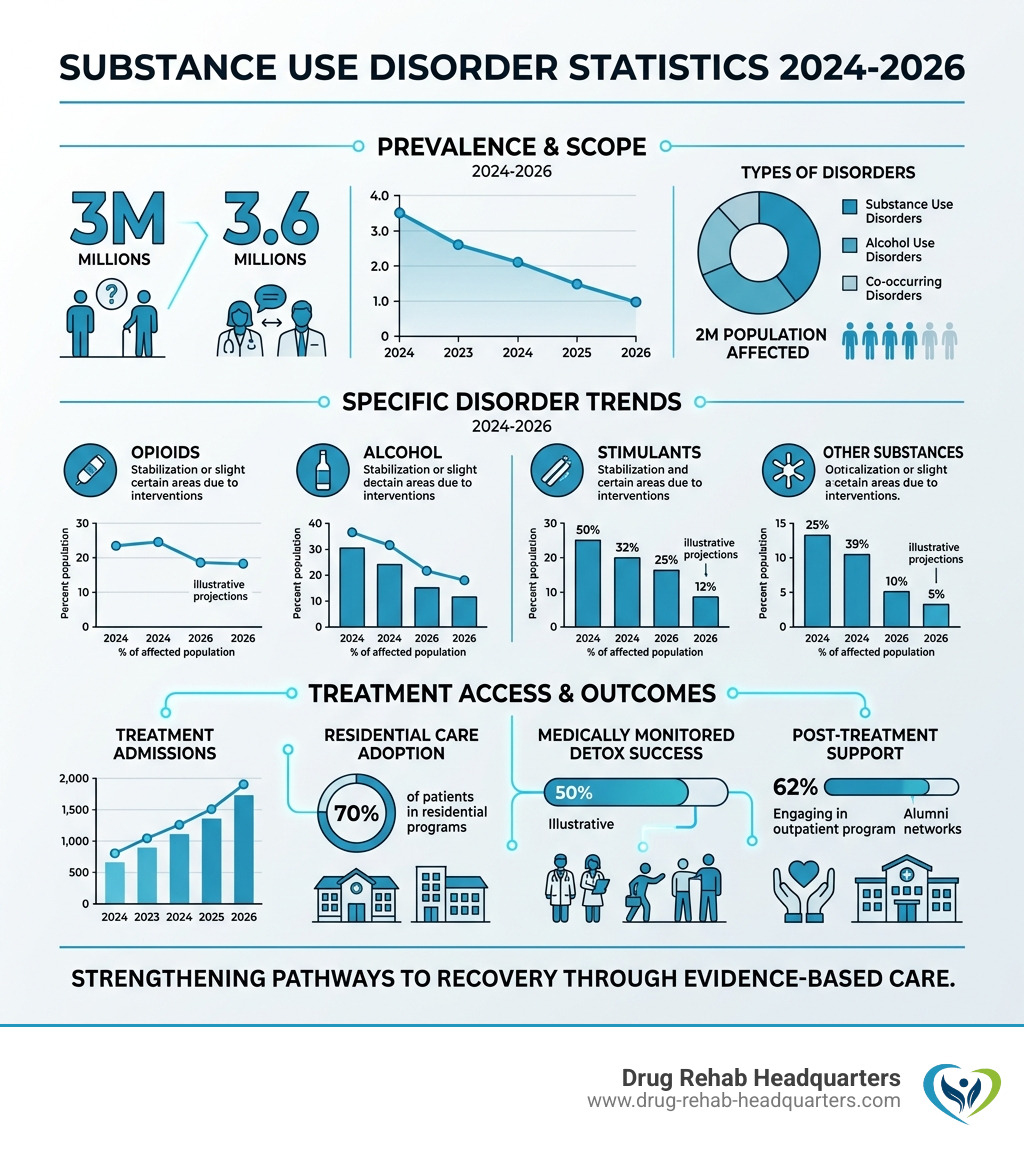
As of 2026, the addiction crisis remains a significant challenge for families across North America. Statistics from recent years highlight the urgency of the situation. In 2021, 46.3 million people aged 12 or older had a substance use disorder (SUD). By 2023, that number remained staggeringly high, with millions struggling specifically with alcohol and drug use.
| Disorder Type | Number of Individuals (Estimated) |
|---|---|
| Alcohol Use Disorder (AUD) | 29.5 Million |
| Drug Use Disorder | 24.0 Million |
| Co-occurring (Both AUD and Drug) | 7.3 Million |
| Total Served in 2024 | 151,869 |
With over 300 people dying daily from drug or alcohol overuse, the work done by residential drug rehab centers is more vital than ever. Facilities across the country have reported saving tens of thousands of lives through evidence-based interventions and dedicated care.
Regional Availability and Nearby Cities
We understand that proximity to family or a specific climate can be a major factor in choosing a center. We help connect individuals to top-tier programs in states ranging from the Northeast to the West Coast. Whether you need a facility overlooking the Susquehanna River in Pennsylvania or a desert retreat in Arizona, there are options available.
If you are looking for specific state resources, explore these guides:
Our network includes verified facilities in Alabama, Alaska, Arizona, Arkansas, California, Colorado, Delaware, Florida, Georgia, Ohio, Pennsylvania, Texas, Utah, and many more. No matter where you are, a path to recovery is nearby.
Speak with a local specialist: (866) 720-3784
Trust Section
How to Choose the Right Residential Program
Not all residential drug rehab centers are created equal. When we help families choose a program, we look for “gold standard” markers of quality. The most important thing to check is accreditation. Look for facilities accredited by The Joint Commission or CARF (Commission on Accreditation of Rehabilitation Facilities). These seals of approval mean the facility meets rigorous national standards for safety and quality of care.
To help you weigh your options, we’ve compiled a list: Compare Choose The Ultimate List Of Best Inpatient Rehab Programs.
What to Look for in a Facility
When you call a facility, don’t be afraid to ask the tough questions. We recommend prioritizing the following:
- Staff-to-Client Ratio: Will you be just a number, or will you receive personalized attention?
- Multidisciplinary Teams: Does the staff include medical doctors, psychiatrists, licensed counselors, and nutritionists?
- Family Involvement: Addiction is a family disease. Look for programs that offer family therapy, workshops, and support for your loved ones.
- Evidence-Based Practices: Ensure they use proven methods like Cognitive Behavioral Therapy (CBT) and Dialectical Behavior Therapy (DBT).
For those just starting their search, our guide for beginners is a great resource: The Best Inpatient Rehab Centers For Beginners.
Dual Diagnosis and Specialized Care
Many people struggling with addiction are also dealing with underlying mental health issues like depression, anxiety, or PTSD. This is known as dual diagnosis. High-quality residential drug rehab centers treat both conditions simultaneously. If you only treat the addiction but leave the depression unaddressed, the risk of relapse is much higher.
Specialized tracks are also available for specific groups:
- Veterans and First Responders: Programs focusing on “military resiliency” and trauma-informed care for those who have served.
- Young Adults: Tailored programs that address the unique social and developmental challenges of people in their late teens and early twenties.
- Professionals: Programs that allow for privacy and continued professional engagement while seeking treatment.
For placement assistance, call (866) 720-3784
Money Section
Insurance and Financing Your Recovery
One of the biggest hurdles families face is the cost of care. However, in 2026, there are more ways to pay for treatment than ever before.
Medicare Coverage: Medicare can be a lifesaver for those who qualify.
- Part A generally covers inpatient services in a general or psychiatric hospital.
- Part B covers outpatient services, including intensive outpatient programs (IOP) and partial hospitalization.
- Part D helps cover the medications used during and after treatment.
Private Insurance: Most major private insurance providers are now “in-network” with various residential drug rehab centers. This can significantly reduce out-of-pocket costs. We always recommend verifying your benefits before admission to avoid surprises.
Verify your insurance coverage
Payment Options and Program Tiers
The cost of residential drug rehab centers varies widely based on the amenities and the length of stay. We categorize these into a few tiers to help you find what fits your budget:
- Luxury Rehab: These facilities offer high-end amenities like private rooms, executive chefs, equine therapy, and even helicopter experiences in scenic locations like Utah or Arizona. For many, these extra comforts reduce the stress of recovery.
- Standard Residential: These focus on high-quality clinical care in a comfortable, home-like setting without the “five-star” price tag.
- Free or Low-Cost Options: Organizations like The Salvation Army offer 180-day residential work-therapy programs that are often provided without charge. These programs are spiritually integrated and focus on building life skills.
Financial questions? Call (866) 720-3784
FAQ Section
How much do residential drug rehab centers cost?
The cost varies significantly. Luxury programs can cost tens of thousands of dollars, while standard programs might range from $5,000 to $20,000 per month. However, with insurance, many patients pay only a fraction of this. Many centers also offer sliding scale fees based on income or financing plans to make care accessible. Resources on the cost of rehab
How long does a typical residential program last?
Most programs are structured in 30, 60, or 90-day increments. However, research shows that longer stays often lead to better long-term outcomes. Some specialized programs, like work-therapy models, can last up to 180 days. Your clinical team will help determine the best duration based on your progress. Inpatient Drug Treatment Complete Guide
Does insurance cover residential drug rehab?
Yes! Thanks to mental health parity laws, most private insurance plans must cover addiction treatment similarly to other medical procedures. Medicare and Medicaid also provide coverage for various levels of residential and outpatient care.
What should I bring to a residential rehab center?
Most residential drug rehab centers will provide a “packing list.” Generally, you should bring comfortable clothing, personal toiletries (without alcohol), and family photos. Prohibited items usually include electronics with internet access, clothing with drug-related imagery, and any products containing alcohol. Rehabilitation Centers Pennsylvania Guide
Is family involvement allowed?
Absolutely. Most top-tier programs encourage family involvement through “Family Week” or scheduled family therapy sessions. Healing the family unit is often a critical component of preventing relapse once the resident returns home.
What is the difference between residential and outpatient care?
The main difference is the environment. In residential care, you live at the facility 24/7. This is best for those with severe addictions, unstable home environments, or those who have tried outpatient care before and relapsed. Outpatient care allows you to live at home while attending therapy sessions several times a week.
Conclusion: Taking the First Step Toward Healing
The journey to recovery is rarely a straight line, and choosing the right environment is the most important decision you can make. Residential drug rehab centers provide the safety, structure, and clinical expertise needed to turn the page on addiction. Whether you need the intensive support of a 24/7 medical team or the holistic healing of a mountain retreat, there is a program designed for you.
At Drug Rehab Headquarters, we are dedicated to helping you find that path. You don’t have to navigate the maze of insurance, locations, and treatment types alone. Our certified counselors – many of whom have their own lived experience in recovery – are available 24/7 to provide free, personalized guidance.