
Why Kentucky Faces a Critical Need for Addiction Recovery Support
Addiction recovery centers in kentucky provide essential services for thousands of individuals and families struggling with substance use disorders across the Commonwealth. With hundreds of drug rehab facilities operating statewide, Kentucky offers a network of treatment options ranging from medical detox to long-term residential care and outpatient services.
Quick Facts About Addiction Recovery in Kentucky:
- 530+ treatment facilities across the state offer varying levels of care
- Average treatment cost: $57,033 without insurance (ranked 34th nationally for affordability)
- 382 facilities accept Medicaid, and 190 offer free or low-cost treatment
- State-sponsored programs and helplines are available to provide support
- Recovery Kentucky centers provide housing and recovery services for hundreds of Kentuckians
The statistics paint a sobering picture. Between 2021-2022, 6.4% of adolescents ages 12-17 reported using illicit drugs monthly. The opioid crisis has hit the Bluegrass State particularly hard, prompting a comprehensive response from state agencies and treatment providers. For additional background on how this crisis has unfolded nationwide, you can review the overview of the opioid epidemic in the United States.
But there’s real hope. Stories of recovery emerge every day from those who have found a new path, leaving them feeling grateful and blessed. Kentucky’s addiction recovery centers combine evidence-based treatment with compassionate care, offering everything from faith-based programs to medication-assisted treatment (MAT) and trauma-informed therapy.
At Drug Rehab Headquarters, we’ve guided countless individuals and families through the complex landscape of addiction recovery centers in kentucky, helping them find personalized treatment options that match their unique needs. Our mission is to connect you with the right resources quickly, so recovery can begin today.
Understanding the Levels of Care in Kentucky
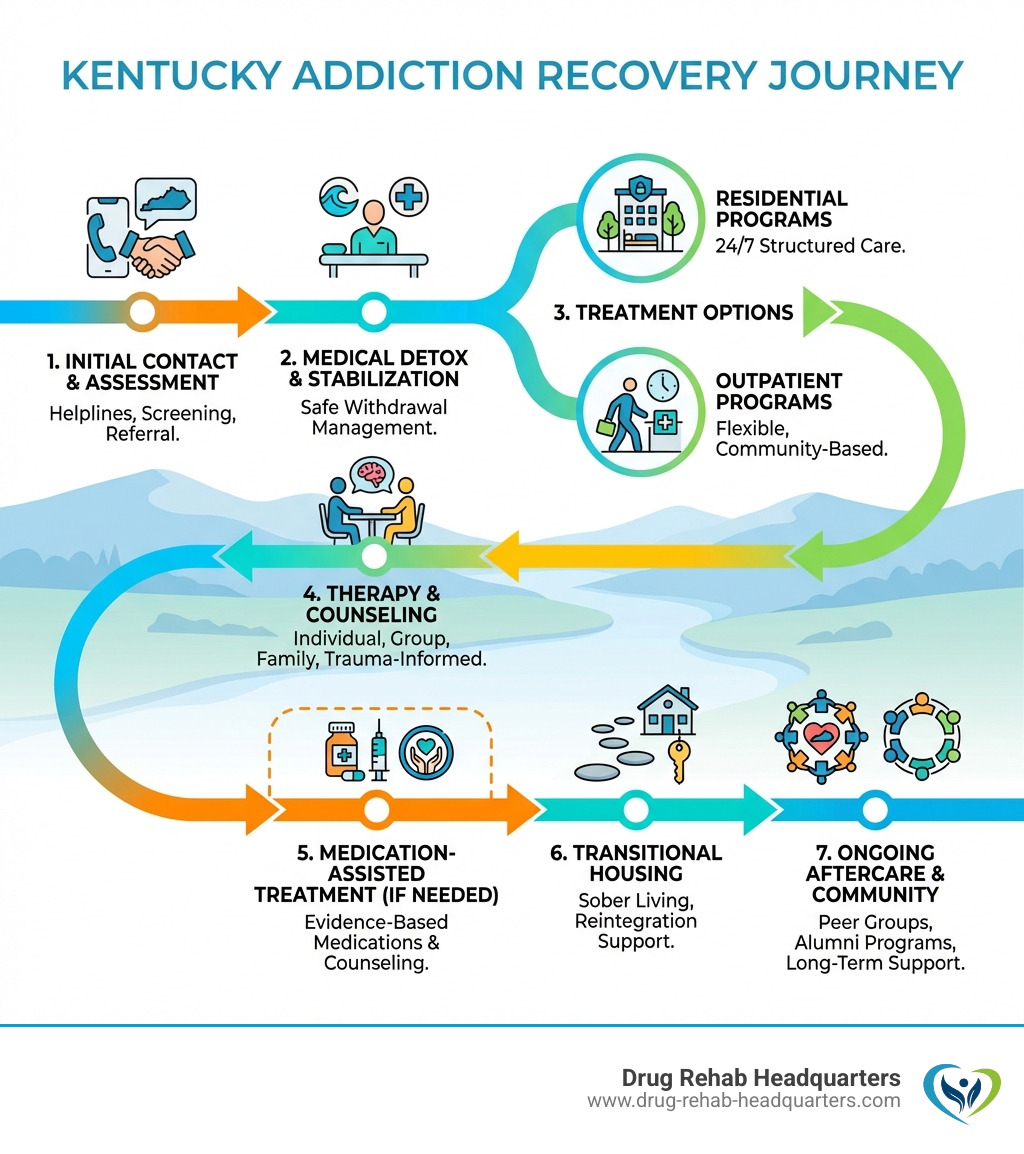
When seeking help for substance use disorder, understanding the different levels of care is crucial. Kentucky’s addiction recovery centers in kentucky offer a continuum of care to ensure individuals receive personalized treatment. This approach recognizes that there is no one-size-fits-all solution to addiction.
| Feature | Inpatient Treatment | Outpatient Treatment |
|---|---|---|
| Environment | 24/7 supervised, structured, immersive | Flexible, allows living at home, maintaining daily life |
| Intensity | High, constant support, removes external triggers | Varies (PHP, IOP, General), less intense than inpatient |
| Focus | Stabilization, intensive therapy, skill-building | Relapse prevention, coping strategies, community integration |
| Cost (Average) | $50,328 (long-term residential without insurance) | $8,363 (general outpatient without insurance) |
| Best For | Severe addiction, co-occurring disorders, unstable home life | Moderate addiction, strong support system, work/school commitments |
Medical Detox
The first step for many is medical detox, which involves safely managing withdrawal symptoms under medical supervision. Since withdrawal can be uncomfortable and sometimes dangerous, medical detox ensures safety and comfort. It stabilizes the individual physically before addressing the psychological aspects of addiction. While it can be the most expensive part of treatment, averaging $140,607 in Kentucky without insurance, its importance cannot be overstated.
For more detailed information on this vital first step, explore our resources on More info about Medical Detox Programs and More info about Alcohol Detox.
Inpatient and Residential Treatment
Following detox, many individuals enter inpatient or residential treatment. These programs offer a structured, immersive environment where clients live at the facility 24/7, removed from daily triggers. This allows for an intense focus on recovery through individual and group therapy, educational sessions, and holistic activities. Long-term inpatient drug rehab in Kentucky costs an average of $50,328 without insurance. Many centers offer comprehensive residential programs designed to provide a safe space for healing and growth, often with comfortable, semi-private rooms.

To learn more about the benefits and structure of these programs, visit More info about Inpatient Drug Rehab.
Outpatient Programs (PHP, IOP, and General)
Outpatient programs provide a flexible alternative for those who don’t require 24/7 supervision. These programs allow clients to live at home while receiving treatment.
- Partial Hospitalization Programs (PHP): The most intensive outpatient care, requiring several hours of therapy per day, multiple days a week.
- Intensive Outpatient Programs (IOP): A step down from PHP, with fewer hours per week, providing structured therapy while allowing more personal freedom.
- General Outpatient Programs: The least intensive, typically involving weekly therapy sessions and support groups for ongoing support.
Outpatient addiction treatment in Kentucky costs an average of $8,363 without insurance, making it a more affordable option for many.
Find more about this flexible treatment option at More info about Intensive Outpatient Treatment.
Dual Diagnosis and Mental Health
Addiction often co-occurs with mental health disorders like anxiety, depression, or PTSD. This is known as a dual diagnosis, and effective treatment requires an integrated approach that addresses both conditions simultaneously. Kentucky’s addiction recovery centers in kentucky increasingly recognize this, offering integrated programs that tailor treatment plans to the complex interplay between substance use and mental health.
If you or a loved one are facing these challenges, it’s crucial to seek specialized care. Learn more about integrated treatment at a More info about Dual Diagnosis Treatment Facility and find support from More info about Mental Health Professionals Near Me.
Aftercare and Long-Term Support
Recovery is a journey, not a destination. After formal treatment, aftercare and long-term support are paramount to sustaining sobriety. This phase often includes:
- Sober Living Homes: A safe, drug-free, and supportive living environment.
- Alumni Programs: Many centers offer these programs to foster community and ongoing connection.
- Peer Support Groups: Groups like Alcoholics Anonymous (AA) and Narcotics Anonymous (NA) offer invaluable peer support.
- Relapse Prevention: Counseling focused on identifying triggers and developing coping mechanisms.
- Transitional Care: Support for employment, housing, and navigating legal and medical issues.
These ongoing resources are critical for building a fulfilling, sober life.
A Closer Look at Addiction Recovery Centers in Kentucky
Kentucky is home to a diverse array of addiction recovery centers, each with its unique philosophy and specialized approaches. From busy cities to serene rural landscapes, these centers are dedicated to providing hope and healing.
Features and Focus Areas of Kentucky Recovery Centers
When examining addiction recovery centers in kentucky, you’ll find a common commitment to comprehensive care. Key features to look for include:
- A Full Continuum of Care: Top centers offer everything from detox and residential treatment to outpatient programs and aftercare, ensuring a smooth transition through every stage of recovery.
- Holistic and Faith-Based Approaches: Many facilities treat the whole person, addressing physical, mental, spiritual, and occupational needs. Some offer faith-based tracks rooted in Christian values, while others focus on broader spiritual healing.
- Evidence-Based Therapies: Effective treatment is grounded in scientifically proven methods like Cognitive Behavioral Therapy (CBT), Dialectical Behavior Therapy (DBT), and trauma-informed care.
- Medically Assisted Treatment (MAT): The use of medications like Suboxone, combined with counseling, is a key component of care for opioid use disorder at many centers.
- Peer Support Models: Some programs are built on the philosophy of peer support, where individuals on the recovery journey help guide and support newcomers.
- Family Involvement: Recognizing that addiction affects the whole family, many centers offer family therapy and educational programs to help heal relationships.
Specialized Programs for Diverse Needs
Recognizing that addiction affects everyone differently, many addiction recovery centers in kentucky offer specialized programs:
- Veterans Programs: Some facilities and state resources connect veterans to appropriate treatment options, including those covered by TRICARE.
- Inclusive Care for All Backgrounds: Many centers offer inclusive treatment for diverse sexual orientations and gender identities (LGBTQ+ individuals).
- Gender-Specific Treatment: Men’s and women’s rehab programs are common, acknowledging that men and women often face different challenges related to addiction. This approach can provide a uniquely supportive environment. We know that More info about Drug Rehab for Women can be particularly effective.
- Young Adult Programs: Some centers cater to young adults, recognizing the unique stressors of this age group. This is relevant given that 6.4% of adolescents aged 12-17 in Kentucky reported monthly illicit drug use between 2021-2022.
These specialized programs ensure treatment is not only effective but also culturally competent and sensitive to individual experiences.
How to Choose the Right Addiction Recovery Center in Kentucky
Choosing the right center can feel overwhelming, but focusing on key factors can simplify the process:
- Accreditation and Licensing: Look for centers accredited by reputable organizations like CARF (Commission on Accreditation of Rehabilitation Facilities) or The Joint Commission. State licensure is a non-negotiable requirement.
- Staff Qualifications: Inquire about the qualifications of the clinical team, including licensed clinicians, medical providers, and certified addiction specialists. A compassionate, expert team makes a significant difference.
- Evidence-Based Practices: Ensure the center uses therapies supported by scientific research, such as CBT, DBT, and MAT.
- Continuum of Care: A center offering a full spectrum of services, from detox to aftercare, can provide seamless transitions and long-term support.
- Personalized Treatment Plans: The best centers create individualized plans custom to your specific needs, rather than a one-size-fits-all approach.
For a comprehensive guide on selecting the best facility, refer to our More info about Addiction Treatment Center Complete Guide.
Navigating the Cost of Treatment and Payment Options
Understanding the financial aspect of addiction treatment is a common concern. Kentucky is ranked 34th nationwide in terms of addiction treatment affordability, with an average cost of drug and alcohol rehab at $57,033 without insurance. While this might seem daunting, various payment options and resources are available to make treatment accessible.
Using Insurance for Rehab
Private health insurance is a common way to cover treatment costs. As of 2024, 357 facilities in Kentucky accept private health insurance. It’s crucial to understand your policy’s specifics, including:
- In-network vs. Out-of-network: In-network providers typically result in lower out-of-pocket costs.
- Deductibles, Co-pays, and Co-insurance: Be aware of these costs, as they will be your responsibility.
- Coverage for Mental Health and Substance Use: The Affordable Care Act (ACA) mandates that most insurance plans cover these as essential health benefits.
Many centers work with major insurance providers. We always recommend verifying your benefits directly with your insurance company or with the admissions team at the treatment center.
For more information, please read More info about Does Insurance Cover Rehab?. To get a head start, you can Verify Your Insurance Now through our convenient tool.
State-Funded and Low-Cost Options
For those without private insurance or with limited financial resources, Kentucky offers several state-funded and low-cost options:
- Medicaid and State-Funded Insurance: A significant number of facilities accept these options. As of 2024, 382 facilities accept Medicaid, and 225 accept state-funded insurance.
- Free or Low-Cost Treatment: 190 facilities in Kentucky offer free or low-cost treatment, with 8 facilities providing free treatment for all clients.
- Sliding-Scale Fees: 264 facilities offer sliding-scale fees, where the cost is adjusted based on an individual’s income.
- Voucher Programs: Some organizations and state initiatives may provide vouchers to help cover treatment costs for low-income individuals.
- Recovery Kentucky Centers: These 13 centers across the Commonwealth provide housing and recovery services, particularly for those facing chronic homelessness due to substance abuse.
- Tribal Funding: 14 facilities accept tribal funding, supporting culturally appropriate treatment for Indigenous communities.
These options are vital in ensuring that financial barriers do not prevent individuals from accessing the help they need. For further assistance, explore our resources on More info about Treatment Vouchers and Financial Assistance.
Understanding the Cost of Addiction Recovery Centers in Kentucky
The cost of treatment can vary significantly based on the program, duration, and amenities. Here’s a breakdown of average costs in Kentucky (without insurance):
- Overall Average Cost: $57,033
- Medical Detox: Averages $140,607, reflecting the constant medical supervision required.
- Long-Term Inpatient Drug Rehab: An average of $50,328.
- Outpatient Addiction Treatment: Averages $8,363.
- Outpatient Methadone Treatment: The most affordable option, averaging $7,430.
While the numbers can seem high, many facilities are willing to work with clients on payment plans, and the long-term benefits of recovery far outweigh the initial investment.
Kentucky State Resources and How to Get Immediate Help
Kentucky has developed a robust network of state-sponsored programs to combat the addiction crisis and provide assistance. We understand that taking the first step can be daunting, but help is available.
State-Sponsored Programs and Initiatives
The Commonwealth of Kentucky is actively addressing substance use disorders through various initiatives:
- State Helplines: Kentucky provides statewide call centers for screening and referral assistance. Instead of navigating these systems alone, our team can help you connect with the right resources immediately.
- KSP Angel Initiative: This innovative program allows individuals to walk into any Kentucky State Police Post and ask for help. An “Angel” at the post will connect them with treatment professionals in a stigma-free way.
- Public Awareness Campaigns: Statewide campaigns like UNSHAME Kentucky are dedicated to destigmatizing opioid use disorder (OUD) by providing education and sharing recovery stories.
- Kentucky Opioid Response Effort (KORE): KORE is a comprehensive initiative focused on expanding access to evidence-based opioid prevention, treatment, and recovery services.
- Recovery Kentucky: These 13 centers address both substance abuse and chronic homelessness by providing housing and recovery services, using a model that includes peer support and life skills training.
- State Departments: The Department for Behavioral Health, Developmental and Intellectual Disabilities provides leadership and resources for mental health and substance abuse services across the state.
These resources underscore Kentucky’s proactive approach. To explore more state-specific recovery resources, Learn about Recovery Resources in Kentucky.
Finding Support in Your Community
Beyond formal treatment, community support is a cornerstone of lasting recovery. Local support groups, such as AA and NA, offer a safe space for individuals to share their experiences and build a network of sober peers. Many addiction recovery centers in kentucky also foster strong alumni programs, creating a continued sense of belonging. Community initiatives often provide additional resources, from educational workshops to vocational training, helping individuals reintegrate into society and build fulfilling lives.
If you’re looking for recovery centers and support closer to home, our guide to More info about Addiction Rehab Centers Near Me can help.
Frequently Asked Questions about Addiction Recovery in Kentucky
We often hear similar questions from individuals and families reaching out for help. Here are some of the most common ones:
What is the first step to getting help for addiction in Kentucky?
The very first step, and often the hardest, is acknowledging that help is needed and being willing to reach out. Once that decision is made, you can:
- Contact a helpline or treatment referral service: Our certified counselors are available 24/7 to offer free, confidential support and connect you with resources.
- Speak with a doctor or mental health professional: They can assess your situation and make referrals to appropriate treatment programs.
- Use the KSP Angel Initiative: Simply walk into any Kentucky State Police Post for an immediate connection to treatment.
Taking this first step is a courageous act. For immediate, confidential support, learn more about More info about 24/7 Support: Connecting With a Drug Addiction Helpline.
How do I know which type of treatment is right for me?
Determining the right type of treatment involves a comprehensive assessment by a qualified professional. They will consider several factors:
- Severity and history of addiction
- Substance(s) used
- Co-occurring mental or physical health disorders
- Personal obligations like work, family, or school
- Home environment and support system
A thorough consultation will help determine the appropriate level of care, whether it’s medical detox, residential, or outpatient. Our counselors can guide you through this assessment. Find out more about the various More info about Treatment Options available.
Can I be forced to go to rehab in Kentucky?
Yes, under certain circumstances, an individual can be legally mandated to receive addiction treatment in Kentucky. This is governed by Casey’s Law, officially the “Matthew Casey Wethington Act for a Drug-Free Kentucky.”
Casey’s Law allows a loved one to petition the court for mandatory treatment for an individual who is unwilling to seek help. The petitioner must demonstrate to the court that the individual:
- Is suffering from a substance use disorder.
- Presents a danger to themselves or others.
- Can reasonably benefit from treatment.
If the court agrees, it can order the individual into involuntary treatment. This law provides a critical pathway for families to intervene when a loved one’s addiction poses a severe risk.
Your Path to Recovery Starts Today
The journey to recovery from addiction is a challenging but profoundly rewarding one. In Kentucky, a strong, compassionate network of addiction recovery centers in kentucky stands ready to offer support, guidance, and evidence-based treatment. With a wide range of options available, from holistic and faith-based programs to cutting-edge clinical care, hope is abundant in the Bluegrass State.
We understand that taking the first step can feel overwhelming, but recovery is possible, and you don’t have to steer it alone. At Drug Rehab Headquarters, our certified counselors offer 24/7 free, confidential support. We’re here to listen, provide personalized guidance, and connect you with suitable, evidence-based, holistic treatment options that align with your unique needs.
Your path to a healthier, sober life can begin right now. Let us help you find the right support. Begin your journey with our Addiction Treatment services.