
Understanding Your Options for Alcohol Recovery
Best alcohol treatment is not a one-size-fits-all solution—it’s a personalized combination of evidence-based therapies, medical support, and ongoing care custom to your unique situation. If you’re searching for help, here’s what effective treatment typically includes:
Key Components of Effective Alcohol Treatment:
- Medical Detoxification – Safely managing withdrawal symptoms under medical supervision (typically 2-7 days)
- Behavioral Therapies – Cognitive Behavioral Therapy (CBT), Motivational Interviewing, and counseling to address underlying issues
- FDA-Approved Medications – Naltrexone, Acamprosate, or Disulfiram to reduce cravings and prevent relapse
- Level of Care – Inpatient, outpatient, or intensive programs matched to your needs
- Dual Diagnosis Treatment – Integrated care for co-occurring mental health conditions
- Aftercare Planning – Ongoing support through therapy, support groups, and relapse prevention
Alcohol use disorder (AUD) is a highly treatable condition affecting a significant portion of the adult population. Modern treatment goes beyond traditional rehab, combining medical care, therapy, peer support, and telehealth for flexible, effective recovery.
Help is available for any level of alcohol misuse, from binge drinking to severe dependency. Research shows that combining behavioral healthcare and medications yields the best outcomes, with treatment plans that can be customized to fit your life, budget, and recovery goals.
At Drug Rehab Headquarters, we’ve helped thousands of individuals and families steer the complex world of addiction recovery and find the best alcohol treatment programs for their unique circumstances. Our mission is to cut through the confusion and connect you with evidence-based, accredited treatment centers that offer real hope for lasting recovery.
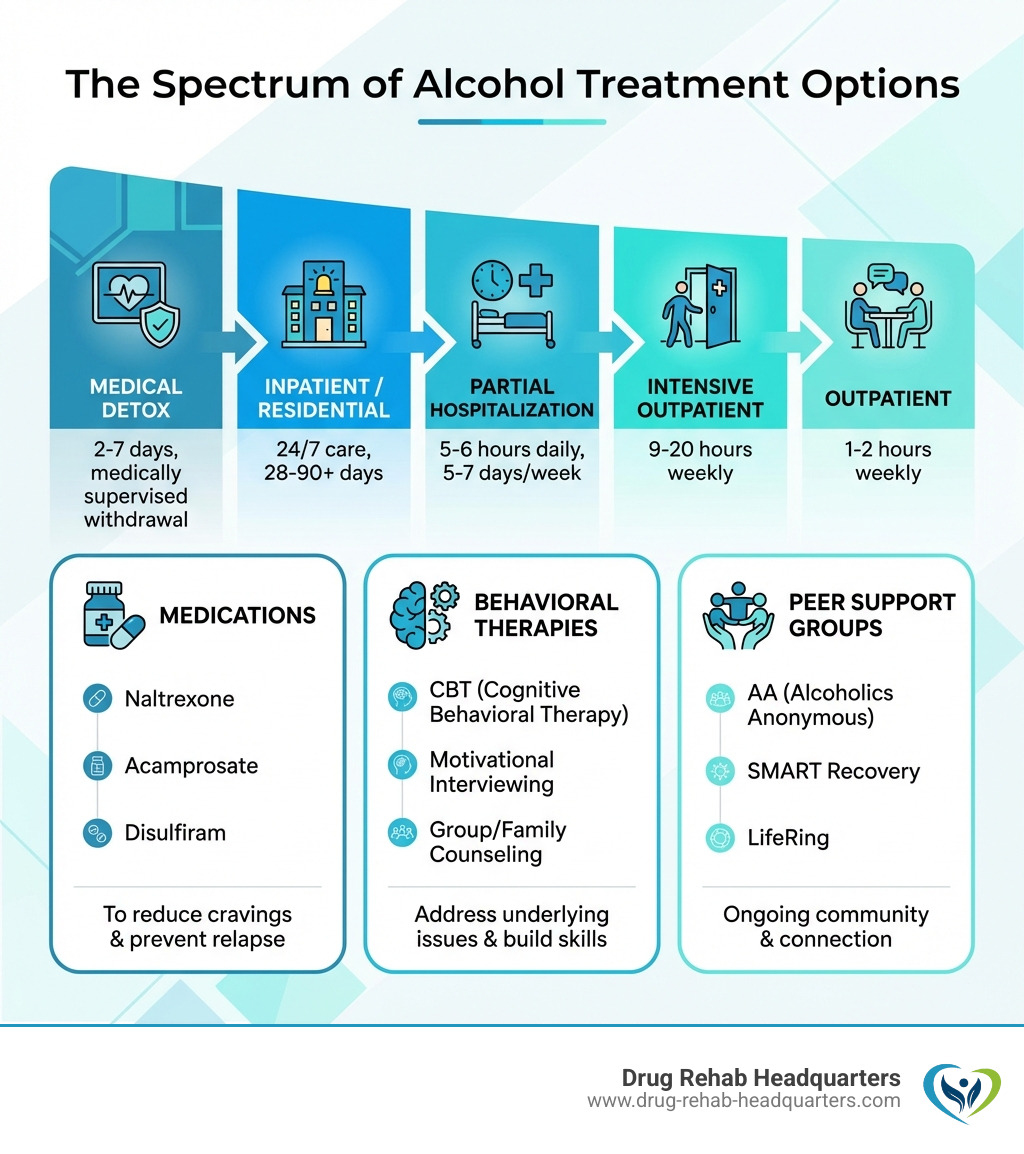
Best alcohol treatment terms simplified:
Recognizing the Need for Help: Signs and Diagnosis of Alcohol Use Disorder
Alcohol is a legal, dependence-producing substance whose impact is often underestimated. Excessive use is a leading cause of death in the U.S., responsible for over 140,000 deaths annually. “Alcohol use disorder” (AUD) is the clinical term for the spectrum of unhealthy drinking.
Signs and Symptoms of Alcohol Addiction
Recognizing the signs of AUD is the first step toward finding the best alcohol treatment. AUD is diagnosed when drinking continues despite causing significant harm, leading to brain changes that impair decision-making. According to the NIAAA Alcohol Treatment Navigator, you may have an AUD if you answer “yes” to two or more of the following questions over the past year:
- Have you often drunk more alcohol or for a longer time than you intended?
- Have you wanted to cut down or stop drinking, or tried to, but couldn’t?
- Have you spent a lot of time drinking or recovering from the effects of drinking?
- Have you experienced strong cravings or urges to drink?
- Has your drinking interfered with your responsibilities at home, work, or school?
- Have you continued to drink even when it caused problems with family or friends?
- Have you given up or cut back on activities you once found important or pleasurable because of drinking?
- Have you engaged in risky behaviors while drinking, such as driving, operating machinery, or having unprotected sex?
- Have you continued to drink even though it was making you feel depressed or anxious, or worsening another health problem?
- Have you needed to drink much more than you once did to get the effect you want (increased tolerance)?
- Have you experienced withdrawal symptoms, such as trouble sleeping, shakiness, restlessness, nausea, sweating, a racing heart, or a seizure, when the effects of alcohol were wearing off?
The more “yes” answers, the more severe the problem may be. For a more comprehensive look, explore our page on Alcohol Addiction Signs.
Effects of Alcohol Addiction on the Body and Mind
Excessive alcohol consumption impacts nearly every system in the body and mind.
On the body:
- Injury and Violence: Impaired judgment increases risks of accidents, falls, and violence.
- Risky Sexual Behavior: Can lead to unprotected sex, STIs, and unintended pregnancies.
- Fetal Alcohol Syndrome: Drinking during pregnancy causes severe birth defects and developmental issues.
- Heart Problems: Chronic use can cause high blood pressure, heart disease, and stroke.
- Cancer Risk: Linked to cancers of the mouth, esophagus, colon, liver, and breast.
- Liver Damage: Can lead to fatty liver, hepatitis, and irreversible, life-threatening cirrhosis.
- Weakened Immune System: Increases vulnerability to infections like pneumonia.
On the mind:
- Brain Function: Impairs memory, learning, and decision-making, potentially causing permanent damage.
- Mental Health: Can cause or worsen depression, anxiety, and other disorders. Co-occurring conditions are common.
- Judgment and Impulse Control: Leads to poor decisions and impulsivity, with potential legal or social fallout.
For more detailed information, refer to the CDC’s factsheet on Long-term health consequences.
When to Seek Professional Help
Seek professional help when drinking becomes problematic, causes withdrawal, negatively impacts your life, or if you’ve tried to quit unsuccessfully. Even “high-functioning” individuals who hide their struggles can benefit immensely from intervention.
How Healthcare Professionals Diagnose Alcohol Use Disorder
A healthcare provider can diagnose AUD. The process usually involves a physical exam, lab tests, and a psychological evaluation. Expect questions about your drinking habits, family history, health, and how alcohol has impacted your life. This comprehensive assessment helps determine the severity of the AUD (mild, moderate, or severe) and recommend the best alcohol treatment plan.
The Spectrum of Care: Finding the Right Level of Alcohol Treatment
Finding the best alcohol treatment means matching the intensity of care to your individual needs. The American Society of Addiction Medicine (ASAM) outlines several levels of care for a personalized recovery.
Medical Detoxification
For those with physical dependence, medical detox is often the first step. It provides 24/7 medical supervision to safely manage dangerous withdrawal symptoms, typically over 2 to 7 days. For more information, visit our page on Alcohol Detox.
Inpatient Treatment
Inpatient (or residential) treatment offers a structured, live-in environment. It’s ideal for those needing intensive, 24/7 support away from daily triggers to focus on recovery. Programs include therapy, support groups, and education delivered by licensed professionals. Intensive inpatient care, often in a hospital, is the highest level of care for those with severe AUD and complex medical or psychiatric needs. Explore more about Alcohol Rehab options.
Partial Hospitalization Programs (PHP)
PHPs provide structured daily treatment (5-6 hours/day) while you live at home. It’s a strong step-down option from inpatient care or for those needing intensive support without 24/7 supervision.
Intensive Outpatient Programs (IOP)
IOPs offer flexible but structured care, with several hours of therapy 3-5 days a week. This allows you to live at home and maintain daily responsibilities, making it suitable for those with stable support systems. Learn more about Intensive Outpatient Treatment.
Outpatient Care
Standard outpatient care involves less frequent sessions (e.g., 1-2 times a week). It’s ideal for individuals with mild AUD or as a long-term aftercare plan to maintain sobriety.
Here’s a comparison of inpatient and outpatient treatment:
| Feature | Inpatient Treatment | Outpatient Treatment |
|---|---|---|
| Environment | 24/7 supervised facility | Live at home, attend sessions |
| Intensity | High (daily, structured therapy) | Moderate to Low (scheduled sessions, flexible) |
| Support | Constant medical and therapeutic support | Scheduled therapeutic support, self-management required |
| Privacy | Limited, within a communal setting | Higher degree of privacy, maintains daily routine |
| Ideal Candidate | Severe AUD, co-occurring disorders, unstable home environment, risk of relapse or withdrawal complications | Mild AUD, stable home, strong support system, work/school commitments |
| Duration | 28-90+ days | Weeks to several months or ongoing |
For those requiring inpatient care, our page on Inpatient Drug Rehab provides further details.
Core Components of the Best Alcohol Treatment Programs
The best alcohol treatment programs are built on evidence-based practices, combining behavioral healthcare and medication-assisted treatment for comprehensive solutions. These approaches can be combined and customized to improve outcomes. For more insights, refer to the NIAAA treatment overview.
Behavioral Therapies and Psychological Counseling
“Talk therapy” is crucial for understanding the root causes of AUD, developing coping skills, and building a sober life. It is offered in individual, group, or family settings.
- Cognitive Behavioral Therapy (CBT): Teaches you to identify and change negative thoughts and behaviors related to drinking and to manage triggers.
- Dialectical Behavior Therapy (DBT): Focuses on emotional regulation, mindfulness, and distress tolerance, often used for co-occurring disorders.
- Motivational Interviewing (MI): Helps you resolve ambivalence about quitting and strengthens your motivation to change.
- Contingency Management (CM): Provides rewards for positive behaviors like staying sober.
- Family Counseling: Improves family dynamics and builds a supportive home environment.
- Group Therapy: Offers a safe space to share experiences and learn from peers.
- Twelve-Step Facilitation Therapy: Encourages engagement with 12-step programs like Alcoholics Anonymous.
These treatments are often part of a broader Behavioral Health services plan.
FDA-Approved Medications for Alcohol Use Disorder
Medication-Assisted Treatment (MAT) uses non-addictive, FDA-approved medications alongside counseling to treat AUD and improve recovery outcomes.
- Naltrexone: Available as a daily pill or monthly injection (Vivitrol), Naltrexone blocks the pleasurable effects of alcohol, reducing cravings. It can be started while a person is still drinking. Learn more about Oral Naltrexone research and injectable extended-release Naltrexone.
- Acamprosate: Helps restore brain chemistry after quitting, easing post-acute withdrawal symptoms like anxiety and insomnia. It is started after a person achieves abstinence. See details on Acamprosate.
- Disulfiram: Creates an unpleasant physical reaction (nausea, headache) if alcohol is consumed, acting as a deterrent. It requires at least 12 hours of abstinence before starting. More information on Disulfiram.
Other medications like gabapentin or topiramate may also be used as second-line therapies.
The Importance of Treating Dual Diagnosis
Addressing co-occurring mental health disorders (dual diagnosis) is critical for effective treatment. About 50% of people with a substance use disorder also have a condition like depression, anxiety, or PTSD, often using alcohol to self-medicate.
Integrated treatment addresses both the AUD and the mental health disorder simultaneously to prevent relapse. This coordinated approach includes specialized psychotherapy, medication management, and support groups. Our Dual Diagnosis Treatment Facility offers comprehensive care for these complex cases. Understanding the prevalence of these conditions is key, as highlighted by Substance use and mental health statistics.
Modern & Holistic Approaches to Recovery
The landscape of alcohol treatment is continuously evolving, offering more flexible and comprehensive options. Modern alternatives and holistic approaches play a vital role in achieving lasting recovery.
The Rise of Telehealth and Online Treatment
Technology has made alcohol treatment more accessible, overcoming barriers like distance or privacy concerns. Telehealth is now a common option, often covered by insurance and Medicaid in many states. Virtual therapy, online programs, and mobile apps provide flexible and private treatment from home. These e-Health options are particularly effective for increasing access to care.
To explore these options, the NIAAA provides resources on Telehealth for alcohol treatment. We can help you filter search results for telemedicine/telehealth or confirm availability with programs directly.
Finding the Best Alcohol Treatment with Holistic and Alternative Therapies
Holistic therapies complement traditional treatment by focusing on overall well-being and addressing the mind-body-spirit connection. They can be powerful tools for managing stress and fostering a balanced lifestyle. Popular practices include yoga and meditation for stress reduction, nutritional counseling to restore physical health, and fitness programs to improve mood. These approaches, often part of our Holistic Drug Addiction Treatment programs, contribute to a well-rounded, sustainable recovery.
The Power of Peer Support Groups
Peer support groups are an invaluable part of the best alcohol treatment. They offer a community of people with shared experiences for encouragement and practical advice.
- Alcoholics Anonymous (AA): A well-known 12-step program with a spiritual framework. Secular options are also available.
- SMART Recovery®: A self-empowering alternative using CBT principles. Visit SMART Recovery® for more.
- Women for Sobriety: A self-help program focused on women’s emotional and spiritual growth. Learn more at Women for Sobriety.
- LifeRing: A secular, abstinence-based group emphasizing personal choice. Find out more at LifeRing.
- Al-Anon and Alateen: Support for families and friends affected by a loved one’s drinking. Al-Anon Family Groups are a vital resource.
Research shows secular groups are as effective as 12-step programs. Active participation in any support group significantly increases the chances of maintaining long-term sobriety.
Navigating Your Path to Recovery
Starting on the journey to sobriety can feel overwhelming, but with the right guidance, you can steer your path to recovery successfully. This involves making informed choices, preparing for appointments, and establishing a robust aftercare plan.
How to Choose the Best Alcohol Treatment Center for You
Selecting the best alcohol treatment center requires careful consideration to ensure it aligns with your specific needs.
- Accreditation and Licensing: Look for state-licensed and accredited facilities to ensure quality standards.
- Staff Credentials: Ensure staff are qualified, licensed, and experienced.
- Individualized Plans: Effective programs tailor treatment to your unique needs, avoiding a one-size-fits-all approach.
- Evidence-Based Practices: Choose centers using scientifically proven therapies and medications.
- Location: Decide between a local facility or one that offers a change of scenery. We have network options nationwide in states like California, Florida, Texas, and New York.
- Cost and Insurance: Clarify costs and ask about insurance coverage (private, Medicare, Medicaid), payment plans, or sliding scale fees. See our guides on the Cost of Rehab and Insurance coverage for rehab.
- Continuum of Care: The center should offer a full range of services from detox to aftercare.
- Specializations: Find a center that specializes in your specific needs, like dual diagnosis or gender-specific care.
Our Alcohol Rehab Centers Guide can provide further assistance.
Preparing for Your First Appointment
Your initial appointment is a pivotal step. Being prepared can make it more productive.
- Start with your primary care provider. They can assess your health and refer you to a specialist.
- Prepare information: Make a list of your symptoms, medications, life stressors, and drinking habits.
- Ask questions: Inquire if your drinking is problematic, what the best course of action is, if alcohol is affecting other health issues, and if you should see a specialist.
- Consider bringing a trusted friend or family member for support.
The Mayo Clinic offers an excellent guide on preparing for an appointment.
Building a Strong Aftercare and Relapse Prevention Plan
Recovery is an ongoing process. A strong aftercare and relapse prevention plan is essential for long-term sobriety.
- Continuing Care: Step down to less intensive support like ongoing therapy or peer groups.
- Sober Living Homes: Offer a structured, supportive environment for transitioning back to daily life.
- Identifying Triggers: Learn to recognize and manage situations, people, or emotions that cause cravings.
- Developing Coping Skills: Find healthy ways to manage stress and emotions without alcohol.
- Ongoing Therapy: Continue therapy to reinforce skills and address new challenges.
- Alumni Programs: Stay connected through alumni networks for continued support and accountability.
Setbacks can happen. Persistence and a solid aftercare plan are key to navigating them. For more on this stage, see our guide on Post Rehab Drug Rehab Aftercare.
Frequently Asked Questions about Alcohol Treatment
What is the most effective treatment for alcohol use disorder?
There is no single “most effective” treatment. The best alcohol treatment is highly individualized. Research shows the most successful outcomes come from a personalized combination of behavioral therapies (like CBT) and FDA-approved medications (Naltrexone, Acamprosate), custom to the person’s needs, AUD severity, and any co-occurring conditions. Commitment to the plan is critical.
How long does alcohol rehab last?
Rehab duration varies. Medical detox is typically 2-7 days. Inpatient programs can be 28, 60, or 90 days, with longer options available. Outpatient programs can last for several months or longer as part of aftercare. The ideal length depends on clinical assessment and individual progress.
Can you be forced into rehab for alcohol?
Adults generally cannot be forced into rehab unless they are a danger to themselves or others. Some states have involuntary commitment laws (e.g., Florida’s Marchman Act) for severe cases, allowing court-ordered assessment. However, treatment is most effective when voluntary. Our compassionate counselors can help you explore options to encourage a loved one to seek help.
Your Journey to Sobriety Starts Today
Recovery is a personal journey, not a destination. The best alcohol treatment is the one that meets your unique needs, accepts your strengths, and provides the comprehensive support necessary for lasting change. A combination of professional care, medication, therapy, and peer support offers the highest chance of sustained success.
At Drug Rehab Headquarters, we understand the courage it takes to seek help. We offer 24/7 confidential support from certified counselors, many with lived experience, who are ready to offer personalized guidance. We’ll help you steer through your options and connect you with suitable, evidence-based, holistic treatment centers across North America, including our extensive network in states like California, Florida, Texas, New York, and many more.
Don’t wait another day to reclaim your life. Reach out now, and let us help you find the right path forward. Your journey to a healthier, happier future starts today.