
Why Inpatient Addiction Recovery Could Be Your Lifeline
Inpatient addiction recovery is a residential program where you live at a rehab facility full-time, receiving 24/7 medical care and support to overcome substance use disorders.
Quick Overview: Inpatient Addiction Recovery
- What it is: Live-in treatment at a licensed facility with round-the-clock supervision.
- Who needs it: Individuals with severe addiction, unstable home environments, co-occurring mental health issues, or a history of relapse.
- How long it lasts: Programs typically run 28-90 days.
- What’s included: Medical detox, individual and group therapy, behavioral treatments (CBT), holistic care, and aftercare planning.
- Success rates: Studies show 50-68% of people who complete inpatient programs maintain sobriety, compared to 35-45% for outpatient-only treatment.
- Cost: Ranges from $300-$800 per day, but insurance and other financial aid options can significantly reduce out-of-pocket expenses.
The Hope of Recovery
Addiction is a treatable chronic disease that alters brain function, weakening self-control and making it nearly impossible to quit alone. However, recovery is absolutely possible with the right support. One client shared: “The staff believed I could change and grow. I felt welcome from the start, even when I didn’t believe in myself.”
Why Inpatient Treatment Works
Inpatient addiction recovery removes you from triggers and stressors, providing a safe, structured setting to focus on healing. You’re surrounded by medical professionals, therapists, and peers on the same path. Research shows that after six months or more of treatment, cocaine use dropped by 83%, problem alcohol use fell by 90%, and suicidal thoughts decreased by 96%.
What This Guide Covers
This guide explains inpatient addiction recovery, including:
- The differences between detox, inpatient, and outpatient care
- What a typical day in treatment looks like
- How to choose the right facility
- Therapies and treatments offered
- How to pay for treatment
- What happens after you complete inpatient care
About Drug Rehab Headquarters
At Drug Rehab Headquarters, we help individuals and families steer inpatient addiction recovery. Our mission is to connect you with reputable treatment centers and provide expert guidance to find personalized care that fits your unique situation.
Handy inpatient addiction recovery terms:
Understanding Inpatient Rehab and Its Benefits

Inpatient addiction recovery refers to a residential treatment program where individuals live at a facility 24/7. This supervised, highly structured setting provides a safe environment for healing with several core benefits:
- 24/7 Safety and Supervision: A dedicated care team protects you during withdrawal and early recovery, addressing any medical or psychiatric needs immediately.
- Distance from Triggers: By removing you from the people, places, and stressors that fuel addiction, inpatient rehab allows you to focus solely on your healing journey.
- Community and Support: You’ll connect with peers who understand your struggles, fostering an encouraging and accountable community that builds a strong foundation for recovery.
To learn more about the broader landscape of treatment options, explore our resources on Addiction Treatment.
What Is the Goal of Inpatient Addiction Recovery?
The primary goal of inpatient addiction recovery is to equip you with the skills for sustained abstinence by changing your life from the inside out. Key goals include:
- Developing abstinence skills: Learning practical strategies to avoid substance use.
- Understanding addiction: Gaining insight into your addiction, its triggers, and its impact.
- Medical stabilization: Treating the addiction and any associated medical or psychiatric problems.
- Building a foundation for sobriety: Establishing new routines, healthy habits, and a robust support system.
For more in-depth knowledge, visit our page on Addiction Information.
Key Differences: Detox, Inpatient, and Outpatient
Understanding the levels of care is crucial. Here’s how they compare:
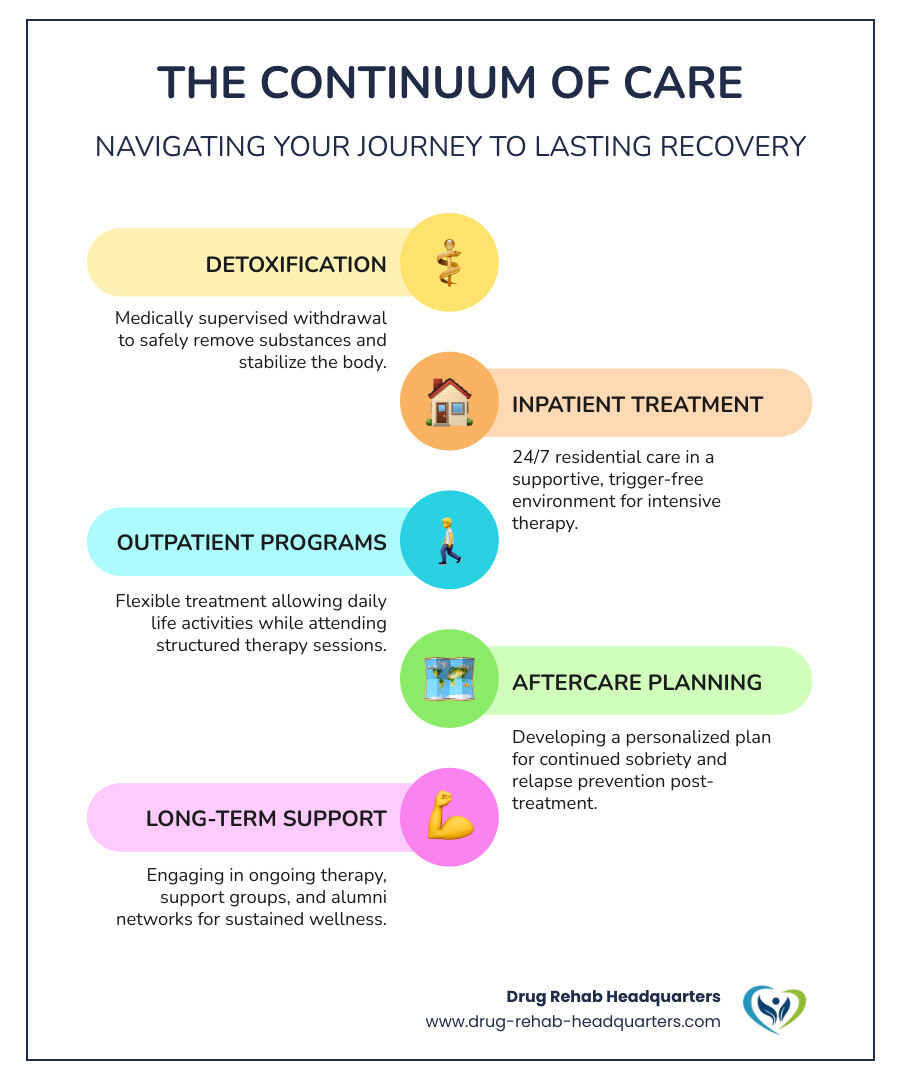
Medically Supervised Detox: Often the first step, detox is the process of safely removing substances from the body. Medical professionals manage withdrawal symptoms to ensure comfort and safety, typically over 5-7 days. Our Drug Detox page offers more details.
Inpatient Rehab (Residential Treatment): Following detox, inpatient addiction recovery provides 24/7 structured care. You reside at the facility, engaging in intensive therapy and support, away from your daily environment.
Outpatient Treatment: This flexible option allows you to live at home while attending scheduled therapy. It’s often used as a “step-down” from inpatient care or for those with less severe addictions and a stable home. Learn more about Intensive Outpatient Treatment.
| Feature | Inpatient Treatment (Residential) | Outpatient Treatment |
|---|---|---|
| Structure | Highly structured, 24/7 supervision | Flexible scheduling, live at home |
| Intensity | High, immersive | Moderate to low, depending on program |
| Cost | Higher | Lower |
| Ideal Candidate | Severe addiction, unstable home, co-occurring disorders, history of relapse | Mild to moderate addiction, stable home, strong support, step-down from inpatient |
Who Needs Inpatient Treatment?
Inpatient care may be necessary if you:
- Experience chronic relapse: You’ve tried to quit multiple times without success.
- Live in an unstable or triggering home environment: Your home makes sobriety difficult due to stress, access to substances, or unsupportive relationships.
- Have co-occurring medical or mental health conditions: Dual diagnoses benefit from integrated care and constant medical supervision.
- Struggle with a severe substance use disorder: Long-term, heavy use or addiction to substances with dangerous withdrawal symptoms requires medical safety.
- Have been unsuccessful with other levels of care: Outpatient programs haven’t provided the support needed for lasting sobriety.
For a deeper understanding of addiction, please refer to our main page on Addiction.
What to Expect During Inpatient Treatment
An inpatient addiction recovery facility provides a structured, supportive environment focused entirely on healing. A typical day is designed for therapeutic engagement and personal growth.
Days usually begin early with breakfast and meditation, followed by a schedule of individual and group therapies. Individual counseling offers a private space to explore personal issues, while group therapy provides peer support and communication practice. Afternoons may include educational sessions on addiction and relapse prevention, along with recreational activities like fitness or yoga to reduce stress. Evenings are for personal reflection or self-help meetings. This routine helps you stabilize and build new habits. For more on the services involved, explore our page on Rehabilitation Services.
Therapies and Treatments Offered
Inpatient programs offer a comprehensive array of evidence-based therapies to address the complex nature of addiction.

Key modalities include:
- Cognitive Behavioral Therapy (CBT): Helps you identify and change negative thought patterns and behaviors related to substance use.
- Dialectical Behavior Therapy (DBT): Focuses on emotional regulation, distress tolerance, and mindfulness, often for co-occurring disorders.
- Motivational Interviewing (MI): A client-centered approach to strengthen your motivation for recovery.
- 12-Step Facilitation: Integrates the principles of 12-Step programs to provide a framework for support. Learn more on our 12 Step Program page.
- Holistic Therapies: Complements traditional methods by addressing mind, body, and spirit through activities like yoga, art therapy, and meditation.
- Family Therapy: Helps heal relationships, improve communication, and educate loved ones on how to support the recovery process.
We also offer various forms of Behavioral Health support to address all aspects of your well-being.
Addressing Co-Occurring Disorders (Dual Diagnosis)
Many people with substance use disorders also have co-occurring mental health conditions. Research shows that approximately 44% of American adults with addictions also have mental health conditions, making integrated dual diagnosis treatment critical.
Inpatient addiction recovery programs are equipped to treat both conditions simultaneously. This approach includes:
- Psychiatric assessments to diagnose underlying mental health conditions.
- Medication management to help manage symptoms of disorders like depression or anxiety.
- Integrated therapies that address both addiction and mental health in a cohesive manner.
Treating the whole person leads to more sustainable recovery. For more, visit our Dual Diagnosis Treatment Facility page.
How Long Does Inpatient Rehab Last?
The length of an inpatient addiction recovery program varies based on individual needs, addiction severity, and insurance coverage.
Typical program lengths include:
- 28-30 days: A common short-term option for detox and initial therapy.
- 60 days: Allows for deeper therapeutic work and skill-building. See our 60-Day Rehab Programs page.
- 90 days or longer: Research from NIDA suggests that treatment exceeding 90 days is linked to better long-term success.
The recommended duration is influenced by addiction severity, insurance coverage, individual progress, and the presence of co-occurring disorders. While detox lasts 3-14 days, the rehab phase is typically 30 to 90 days, with longer stays available for those who need it.
Choosing the Right Inpatient Addiction Recovery Center
Selecting the right inpatient addiction recovery center is a critical decision. Find a place that aligns with your specific needs to give you the best chance for lasting recovery. Key factors to consider include:
- Accreditation: Look for facilities accredited by CARF or The Joint Commission, which signifies high standards for care and safety.
- Staff Qualifications: Inquire about the credentials and experience of the medical staff and therapists.
- Staff-to-Patient Ratio: A lower ratio often means more personalized attention.
- Treatment Philosophy: Ensure the center’s approach (e.g., evidence-based, holistic) resonates with you.
- Amenities: Consider if things like private rooms, fitness facilities, or healthy meals are important for your comfort.
- Location: Decide if a local facility or one further away from triggers is more beneficial.
For a comprehensive overview, consult our Addiction Treatment Center Complete Guide.
How to Find a Facility Near You
Finding an inpatient addiction recovery center can be overwhelming, but we can simplify the process. Drug Rehab Headquarters offers 24/7 free support from certified counselors, many with lived experience, to help you find suitable treatment options across North America.
Other resources include:
- Your Insurance Provider: Call the number on your insurance card to find in-network facilities.
- State Health Services Websites: These often provide directories of local treatment centers.
- SAMHSA’s National Helpline: This confidential service includes an online directory (findtreatment.gov).
When searching for Addiction Rehab Centers Near Me, we’re a call away to provide free, confidential support.
Cost and Payment Options
The cost of inpatient addiction recovery is a common concern, but numerous payment options make it affordable. Costs vary by location, amenities, and program length, with daily rates from $300 to $800.
Don’t let cost deter you. Avenues for affordable treatment include:
- Insurance Coverage: Most health insurance plans cover addiction treatment. We can help you Verify Insurance to understand your benefits. Learn more in our article, Does Insurance Cover Rehab?.
- Medicare and Medicaid: These government programs often cover medically necessary services.
- Financing and Payment Plans: Many facilities offer installment plans or work with third-party lenders.
- Sliding Scale Fees: Some centers adjust fees based on your income.
- State-Funded Programs: States receive grants to provide treatment services.
Understanding the Cost of Rehab involves exploring all these possibilities.
The Role of Family in Recovery
Addiction is a family disease, and family involvement is often essential for long-term healing. The goal is to heal and rebuild relationships. Family recovery includes:
- Family therapy sessions to improve communication and address past hurts.
- Educational programs to teach families about addiction and how to provide support.
- Building a support system by learning how to respond constructively to the challenges of recovery.
- Healing relationships by working towards forgiveness and reconciliation.
- Learning communication skills to set boundaries and resolve conflict.
Family involvement creates a cohesive support network for long-term success. Our resources on Pre-Rehab Addiction Intervention can be a helpful starting point.
Life After Inpatient Rehab: The Journey to Lasting Sobriety
Completing an inpatient addiction recovery program is a major milestone, but recovery is a lifelong journey. Transitioning back to daily life requires continued support to use the skills gained in rehab effectively. Continuing care is crucial for solidifying recovery, preventing relapse, and building a sober network. For some, sober living homes can provide a structured, substance-free environment that bridges the gap between inpatient care and full independence.
Aftercare and Continuing Support
An effective aftercare plan is essential for long-term sobriety after inpatient addiction recovery. This often involves a “step-down” approach to more flexible support. Key components include:
- Discharge planning: A personalized plan created with your clinical team before you leave, outlining resources for continued recovery.
- Step-down care: Transitioning to less intensive care like Intensive Outpatient Programs (IOPs).
- Individual therapy: Continuing one-on-one counseling to process ongoing challenges.
- Support groups: Engaging with peer groups for encouragement and accountability.
- Alumni programs: Staying connected to the recovery community through meetings and events.
Aftercare is an ongoing commitment to the lifelong process of recovery. For more information, visit our page on Post-Rehab Drug Rehab Aftercare.
Key Features of Long-Term Inpatient Addiction Recovery
While many programs last 30-90 days, long-term residential treatment (3-12+ months) offers a deeper approach for those with chronic addiction or a history of relapse. Key features include:
- Therapeutic communities (TCs): Structured environments where residents and staff work together to promote personal change.
- Extended duration: Longer stays provide more time to practice new behaviors. Research shows treatment over 90 days has more positive outcomes.
- Focus on resocialization: Programs help individuals reintegrate into society by developing communication and conflict resolution skills.
- Job training and life skills development: Vocational counseling and other practical skills are taught to build a stable life post-rehab.
- Higher success rates for chronic addiction: The immersive nature of long-term care can lead to higher rates of abstinence.
Long-term inpatient addiction recovery provides the sustained environment needed to transform lives. To explore more, visit our Addiction Recovery Services Complete Guide.
Frequently Asked Questions about Inpatient Addiction Recovery
Here are answers to common questions about inpatient addiction recovery.
Can I use my phone or have visitors in inpatient rehab?
Policies vary, but most inpatient addiction recovery facilities limit phone use, especially initially, to help you focus on recovery without distractions. Scheduled visits are often allowed after a stabilization period and may be part of family therapy. Always check the specific facility’s policies on communication and visitation.
What should I pack for my stay at an inpatient facility?
Pack for comfort and practicality. General items to bring include:
- Comfortable, modest clothing for about a week.
- Unopened, alcohol-free personal hygiene items.
- Prescription medications in their original containers.
- A journal or reading material.
- Photo ID, insurance card, and a small amount of cash.
Prohibited items usually include alcohol, drugs, weapons, and products containing alcohol. Check with the facility for their specific packing list.
Is treatment voluntary, and can I leave if I want to?
In most cases, inpatient addiction recovery is voluntary, meaning you can leave at any time. However, leaving against medical advice can hinder your recovery and increase the risk of relapse. Completing the full program provides the strongest foundation for lasting sobriety. If you feel the urge to leave, we encourage you to speak with your counselors, who can address your concerns and support you in completing your treatment.
Conclusion
Choosing inpatient addiction recovery is a courageous step toward reclaiming your future. This immersive, structured environment provides a lifeline with 24/7 medical supervision, a safe space away from triggers, and a supportive community.
Inpatient programs help you develop abstinence skills, understand your addiction, and stabilize medically and psychologically through comprehensive therapies. Treatment is custom to your needs, with program lengths of 30, 60, or 90+ days, and robust aftercare planning ensures your recovery is a lifelong journey of growth.
Choosing a center and navigating costs can seem daunting, but resources are available. At Drug Rehab Headquarters, we connect you with personalized, evidence-based treatment options across the US.
The first step is the most powerful. If you or a loved one is struggling, hope and healing are within reach. We encourage you to take that step today.