
Why an Alcohol Detox Center is Your First Step to Recovery
Alcohol detox center programs provide the medical supervision and support you need to safely withdraw from alcohol and begin your recovery journey. If you’re searching for help in Nevada, here’s what you need to know:
Key Facts About Alcohol Detox Centers:
- What they provide: 24/7 medical monitoring, medications to manage withdrawal symptoms, and a safe environment
- Why they’re necessary: Alcohol withdrawal can be life-threatening without proper medical care
- Types available: Inpatient detox (24-hour supervision) or outpatient detox (regular check-ins)
- Duration: Typically 3-7 days for the acute detox phase
- What happens next: Transition to ongoing treatment like rehab or counseling
To find a detox center now, call Drug Rehab Headquarters at 866-720-3784 for a free, confidential consultation.
When you’ve been drinking heavily for weeks, months, or years, your body becomes physically dependent on alcohol to function normally. Your central nervous system adapts to alcohol’s depressant effects—and when you suddenly stop drinking, your brain goes into a hyper-excitable state that causes withdrawal symptoms.
These symptoms aren’t just uncomfortable. They can be deadly. Roughly 10% of people undergoing detox experience severe alcohol withdrawal symptoms, including seizures and a condition called delirium tremens (DTs), which can be fatal without medical intervention. That’s why attempting to quit alcohol “cold turkey” at home is extremely dangerous.
A professional alcohol detox center provides the medical care, medications, and monitoring you need to withdraw safely. The staff evaluates your health, manages your symptoms with proven medications like benzodiazepines, and prepares you for the next phase of treatment. Detox is more than just removing alcohol from your system—it’s about stabilizing your body and building motivation for lasting recovery.
At Drug Rehab Headquarters, we’ve helped thousands of Nevada residents find safe, effective alcohol detox centers and steer their path to sobriety. We understand the challenges you’re facing and connect you with licensed, accredited facilities that provide compassionate, evidence-based care.
Basic alcohol detox center terms:
What is Alcohol Detox and Why is it Essential for Recovery?
Alcohol detoxification, often simply called detox, is the crucial first step on the path to overcoming Alcohol Use Disorder (AUD). It’s the process by which your body eliminates alcohol from its system after a period of heavy or prolonged drinking. For someone who has developed a physical dependence on alcohol, this process isn’t just uncomfortable; it’s a medical necessity that requires careful supervision.
When you regularly consume alcohol, your central nervous system (CNS) adapts to its depressant effects. To compensate, your brain becomes overactive. When you suddenly stop drinking, your brain remains in this hyper-excitable state, triggering the severe and potentially life-threatening symptoms of alcohol withdrawal.
The statistics highlight the critical need for professional detox: Each year, more than 1.7 million people in the U.S. go through alcohol withdrawal in a rehab or medical setting. This isn’t a journey to undertake alone. The primary goal of detox is to ensure your safety and manage withdrawal symptoms effectively, making the transition to sobriety as comfortable as possible. Without medical intervention, the withdrawal process can be fraught with serious complications.
The Necessity of Medical Supervision
We cannot stress enough the dangers of attempting to detox from alcohol without medical supervision. While it might seem like a simple act of willpower to quit “cold turkey” at home, the reality is far more complex and perilous. Alcohol withdrawal is unique among substance withdrawals because it can be fatal.
The risks associated with unsupervised alcohol withdrawal include:
- Severe physical discomfort: Intense tremors, nausea, vomiting, headaches, and profuse sweating can make the experience unbearable, often leading individuals to relapse just to alleviate the symptoms.
- Life-threatening complications: The most severe and dangerous complications are seizures and Delirium Tremens (DTs). Seizures can occur as early as 24 hours after the last drink and can be life-threatening. Delirium Tremens is a severe form of alcohol withdrawal that typically appears 48-96 hours after the last drink. It involves profound confusion, disorientation, hallucinations, rapid heartbeat, high blood pressure, and fever. Without proper treatment, DTs can lead to death. Roughly 10% of people undergoing detox treatment experience severe alcohol-withdrawal symptoms, underscoring the risk.
These severe reactions can strike without warning, even in individuals who have successfully detoxed before. That’s why professional medical care at a licensed alcohol detox center is not just recommended, but essential for anyone with moderate to severe alcohol dependence.
The Goals of a Professional Detox Program
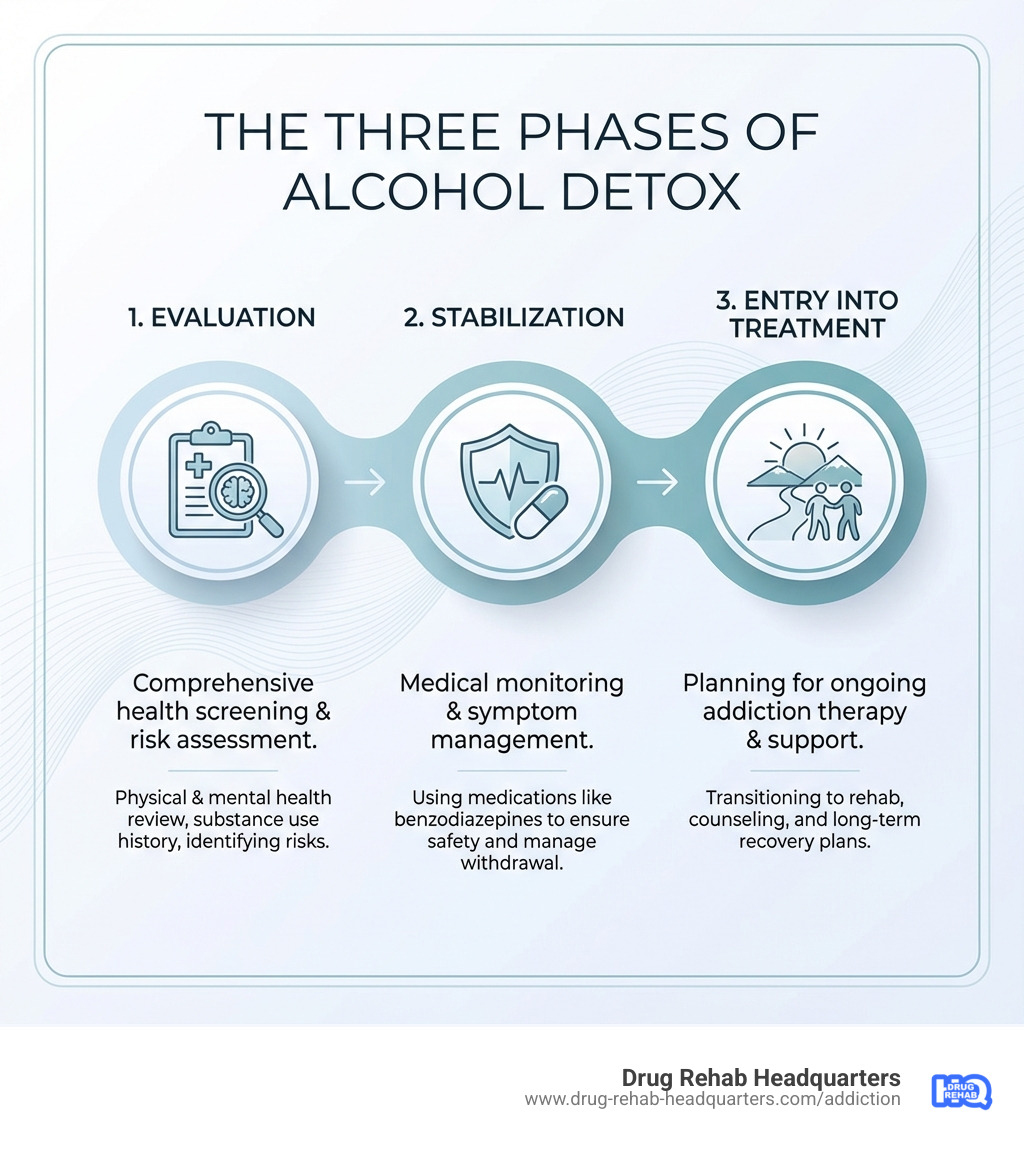
A professional alcohol detox center is a structured process designed for long-term success, with goals extending beyond managing acute withdrawal symptoms:
- Evaluation: Upon admission, a comprehensive assessment of your medical history, drinking patterns, and mental health status helps the medical team create a custom detox plan for your unique needs.
- Stabilization: This is the core of detox, focusing on safely managing withdrawal symptoms. Medications are given to alleviate discomfort and prevent severe complications like seizures. Our medical staff provides 24/7 monitoring of your vital signs to ensure you remain safe and comfortable.
- Fostering Entry into Treatment: Detox is the first step. A crucial goal is preparing you for ongoing addiction treatment by educating you on addiction, discussing therapy options, and building motivation for long-term recovery. The detox period is a vital opportunity to introduce the concept of a continuum of care, ensuring you understand that sustained recovery requires ongoing effort.
By addressing these goals comprehensively, a professional detox program provides a solid foundation upon which to build a sober and fulfilling life.
The Alcohol Withdrawal Timeline: Symptoms and Dangers
Understanding the alcohol withdrawal timeline helps you recognize the signs and appreciate why medical supervision is critical. When alcohol is removed, the brain becomes overactive, creating a hyper-excitable state that causes physical and psychological symptoms.
The severity and duration of alcohol withdrawal symptoms are not the same for everyone. Several factors influence how you might experience them:
- Amount and Duration of Drinking: The more heavily and consistently you’ve consumed alcohol, the more severe your withdrawal symptoms are likely to be.
- Age and General Health: Older individuals or those with pre-existing health conditions (like liver disease, heart problems, or mental health disorders) may experience more complicated withdrawals.
- History of Withdrawal: If you’ve experienced alcohol withdrawal before, subsequent withdrawals tend to be more severe.
- Co-occurring Disorders: Mental health conditions such as anxiety or depression can exacerbate withdrawal symptoms.

Common Symptoms and Timeline (6-72 Hours)
Alcohol withdrawal symptoms can begin surprisingly quickly, often within hours of your last drink, and typically peak within the first few days. Here’s a general timeline of what to expect:
- 6-12 Hours After Last Drink: This is when the first, milder symptoms often appear. You might experience:
- Anxiety and nervousness
- Insomnia or difficulty sleeping
- Headaches
- Nausea and vomiting
- Loss of appetite
- Mild tremors (shakiness, especially in the hands)
- Sweating
- Increased heart rate and blood pressure (though often still within a manageable range)
- Strong cravings for alcohol
- 12-24 Hours After Last Drink: As withdrawal progresses, symptoms can intensify. Some individuals may begin to experience:
- Visual, auditory, or tactile hallucinations (seeing, hearing, or feeling things that aren’t there). These are usually transient and not as severe as those experienced during DTs.
- Increased agitation and irritability
- More pronounced tremors
- 24-72 Hours After Last Drink: This period typically marks the peak intensity of withdrawal symptoms for most individuals. You may experience:
- Significant increase in tremors
- Profuse sweating
- Liftd heart rate and blood pressure
- Fever
- Continued nausea and vomiting
- Intense anxiety and hypervigilance
This timeline is a general guide, and individual experiences can vary significantly.
Severe Withdrawal: Delirium Tremens (DTs) and Seizures
While most people experience mild to moderate withdrawal, a small but significant percentage will develop severe, life-threatening complications. These typically manifest in the later stages of acute withdrawal:
- Seizures (24-48 Hours): Alcohol withdrawal seizures are a serious medical emergency. They typically occur within the first 48 hours after the last drink, with the highest risk around 24 hours. These can be grand mal seizures, which involve loss of consciousness and violent muscle contractions. They are unpredictable and can occur without warning, which is why medical monitoring is crucial.
- Delirium Tremens (DTs) (48-96 Hours): Often considered the most severe manifestation of alcohol withdrawal, DTs can begin 48-96 hours after the last drink, though sometimes it can take up to 7-10 days for symptoms to appear. DTs are characterized by:
- Sudden and extreme confusion
- Profound disorientation
- Severe agitation and excitement
- Vivid hallucinations (often terrifying)
- Rapid heart rate and high blood pressure
- Fever and profuse sweating
- Tremors that can become whole-body
- Deep sleep for 24 or more hours
DTs are a true medical emergency. Without immediate and appropriate medical treatment, they can be fatal. If you or someone you know exhibits any of these severe symptoms, especially after stopping alcohol, call 911 immediately.
Long-Term Effects: Post-Acute Withdrawal Syndrome (PAWS)
Even after the acute withdrawal phase has passed and the body has been safely detoxified, some individuals may experience lingering symptoms known as Post-Acute Withdrawal Syndrome (PAWS). This is a protracted form of withdrawal where symptoms can ebb and flow for weeks, months, or even years after stopping alcohol.
PAWS symptoms are often less intense than acute withdrawal but can be incredibly frustrating and challenging to manage. They can include:
- Mood swings, irritability, and emotional numbness
- Sleep disturbances, including insomnia or vivid dreams
- Fatigue and low energy
- Difficulty concentrating and memory problems
- Increased sensitivity to stress
- Anxiety and depression
PAWS significantly increases relapse risk because the lingering symptoms are distressing. This highlights the importance of ongoing support and comprehensive treatment after detox. In rehab, you’ll learn coping skills to manage these prolonged symptoms, prevent relapse, and build resilience for the long haul.
Inside a Professional Alcohol Detox Center: What to Expect
Stepping into an alcohol detox center can feel daunting, but it’s a place designed specifically for your safety and comfort during a challenging time. Imagine a calm and supportive recovery environment, where your well-being is the top priority. From the moment you arrive, you’ll be under the compassionate care of a medical team.

A professional detox center provides 24/7 medical monitoring, individualized care, and a structured, safe environment. The process typically begins with an evaluation and moves into a stabilization phase, ensuring every step is taken to make your detox as smooth and secure as possible.
Types of Alcohol Detox Programs
Not all detox experiences are the same; the best option for you depends on your individual needs, the severity of your dependence, and your risk of severe withdrawal symptoms. We offer various types of alcohol detox center programs:
| Program Type | Description | Best Suited For |
|---|---|---|
| Inpatient Detox | 24-hour medical supervision and care in a dedicated facility. Patients reside at the center during detox. | Individuals at risk for moderate to severe withdrawal symptoms, those with co-occurring medical or mental health conditions, history of seizures or DTs, or those without a stable and supportive home environment. This offers the highest level of safety and monitoring. |
| Outpatient Detox | Patients attend regular medical appointments at a facility but return home each day. | Individuals at low risk for severe withdrawal symptoms, who have a strong support system at home, good overall health, and the ability to adhere to a strict medication schedule and appointments. Progress is closely monitored through frequent check-ups. |
| Hospital-Based Detox | For the most severe cases or those with complex medical needs, detox may occur in a hospital setting. | Patients requiring intensive medical intervention for severe complications, or those with acute medical emergencies alongside withdrawal. This is typically coordinated when medically necessary through our network, including facilities like IU Health Methodist Hospital in Indianapolis, providing a high level of acute care. |
Medical Interventions and Support in an Alcohol Detox Center
When you enter a professional alcohol detox center, you’re not just left to suffer through withdrawal. Our medical team uses evidence-based practices to manage your symptoms and ensure your comfort and safety. Key interventions include:
- CIWA-Ar Scale: The Clinical Institute Withdrawal Assessment for Alcohol, Revised (CIWA-Ar) is a 10-item standardized assessment tool used by medical professionals. This scale helps us objectively measure the severity of your alcohol withdrawal symptoms, allowing us to tailor your treatment and adjust medications as needed.
- Medications: The most common and effective medications used during alcohol detox are benzodiazepines. These include:
- Librium (Chlordiazepoxide): Often used for its long-acting effects to prevent seizures and reduce anxiety.
- Valium (Diazepam): Another long-acting benzodiazepine that helps calm the central nervous system.
- Ativan (Lorazepam): A shorter-acting benzodiazepine, often preferred for individuals with liver issues or for rapid symptom control.
These medications work by calming the overactive brain, reducing anxiety, preventing seizures, and alleviating other distressing symptoms. Depending on your specific needs, anti-seizure medications, anti-nausea medications, or medications to manage high blood pressure may also be prescribed.
- Nutritional Support and Hydration: Alcohol addiction often leads to significant nutritional deficiencies, which can prolong detox and worsen symptoms. Your detox center’s initial assessment may include a nutritional evaluation. We prioritize providing a healthy diet and IV fluids for hydration to support your body’s healing process. In many cases, vitamin supplements, particularly Thiamine (Vitamin B1), are administered to address deficiencies and prevent neurological complications.
The environment itself is designed for recovery. Many detox centers consciously create quiet spaces with low lighting and minimal stimulation to help keep you calm and reduce sensory overload during this vulnerable time. You may also have access to a therapist to talk through your feelings and cravings, and some centers offer peer support interactions.
How to Find and Pay for an Alcohol Detox Program
Finding the right alcohol detox center is a critical step towards recovery. It can feel overwhelming, but we’re here to guide you. When looking for a reputable center, it’s important to ask the right questions and verify their credentials.
Call Drug Rehab Headquarters for a free consultation at 866-720-3784. We can help you steer the options and connect you with trusted facilities in Nevada and across the U.S.
How to Choose a Reputable Alcohol Detox Center
Choosing a quality alcohol detox center is paramount for your safety and success. Here are key factors to consider:
- Accreditation and Licensing: Look for centers accredited by recognized bodies like The Joint Commission or CARF (Commission on Accreditation of Rehabilitation Facilities). These accreditations signify that a facility meets rigorous standards for patient care, safety, and quality. Reputable centers also often adhere to standards from the American Society of Addiction Medicine (ASAM) and the 13 core principles of substance use disorder treatment identified by the National Institute on Drug Abuse (NIDA).
- Licensed Medical Staff: Ensure the center employs a team of licensed and credentialed professionals, including physicians, nurses, therapists, and addiction specialists. Their expertise is vital for safe and effective detox.
- Evidence-Based Treatment: A reputable alcohol detox center will use treatment methods backed by scientific research. This includes medically assisted detox protocols, individual and group therapy, and comprehensive aftercare planning.
- Continuum of Care: Detox is just the beginning. The best centers will offer or have strong referral networks for a full continuum of care, including inpatient rehab, outpatient programs, and aftercare support.
- Specialized Programs: If you have co-occurring mental health disorders (like depression or anxiety), ensure the center has experience treating dual diagnoses. Some centers also offer specialized programs for specific populations, such as healthcare professionals or veterans.
Navigating Cost and Insurance Coverage
The cost of alcohol detox varies significantly based on the program type, location, and services. While costs fluctuate, national averages can provide a general idea:
- Inpatient Detox: A 30-day stay can average around $600 per day without insurance.
- Outpatient Detox: A 30-day program can average around $55 per day without insurance.
These figures are averages and can vary. The good news is that most insurance plans now cover a significant portion of addiction treatment, including detox, due to federal mandates. We can help you understand your options:
- Insurance Verification: Our treatment advisors can help you verify your insurance coverage and understand what your policy will cover for detox and subsequent treatment. We work with a wide range of insurance providers, including major companies like Aetna, Blue Cross Blue Shield, Cigna, and many others.
- In-network vs. Out-of-network: We’ll explain the difference and help you maximize your benefits, whether you have a PPO or HMO plan.
- Private Pay Options: If you don’t have insurance or prefer to pay out-of-pocket, we can discuss various payment plans and financing options.
- State-Funded Programs: We can also help you explore state-funded programs and resources that may be available in your area.
Don’t let concerns about cost prevent you from seeking help. Call Drug Rehab Headquarters at 866-720-3784 for help with insurance and payment options. We’re here to make the process as seamless as possible.
Life After Detox: Your Journey to Lasting Sobriety
Congratulations, you’ve completed detox! This is a monumental achievement, but it’s crucial to understand that detox is merely the first, albeit vital, step on your journey to lasting sobriety. It addresses the physical dependence, but the underlying psychological, emotional, and behavioral aspects of addiction still need to be tackled.
True recovery requires a comprehensive approach, often referred to as a “continuum of care.” This means transitioning from detox into further treatment that addresses the root causes of your addiction, helps you build essential coping skills, and develops a robust relapse prevention plan.
Transitioning to Further Treatment
After detox, our team at Drug Rehab Headquarters will work with you to find the most appropriate next step in your treatment plan. This might include:
- Residential Treatment: Also known as inpatient rehab, this involves living at a treatment facility for an extended period (typically 30-90 days or longer). It provides 24/7 structured support, intensive therapy, and removes you from triggering environments, allowing you to focus entirely on your recovery.
- Partial Hospitalization Program (PHP): This is a step down from residential care, where you attend treatment during the day for several hours, typically five days a week, and return home or to a sober living facility in the evenings.
- Intensive Outpatient Program (IOP): Offering more flexibility than PHP, IOPs involve fewer hours of treatment per week, allowing you to maintain work, school, or family responsibilities while still receiving significant therapeutic support.
- Individual Therapy: One-on-one sessions with a therapist help you explore the psychological roots of your addiction, develop coping mechanisms, and address any co-occurring mental health issues.
- Group Counseling: Sharing experiences and strategies with peers in a supportive group setting can be incredibly powerful for healing and developing social skills.
- Family Therapy: Addiction impacts the entire family. Family therapy helps mend relationships, improve communication, and ensures your loved ones understand how to support your recovery.
All these options are available through Drug Rehab Headquarters’ network of trusted providers, ensuring you receive the comprehensive care needed for sustainable recovery.
Building a Sober Support Network
A strong support network is one of the most powerful tools in long-term recovery. You don’t have to walk this path alone. Here are some key ways to build and maintain a sober support system:
- Peer Support Groups: Programs like Alcoholics Anonymous (AA), Narcotics Anonymous (NA), SMART Recovery, and other 12-Step or alternative programs provide invaluable peer support, shared experiences, and a sense of community.
- Sober Living Homes: These residences provide a safe, structured, and substance-free environment for individuals transitioning from inpatient treatment back into independent living.
- Alumni Programs: Many treatment centers offer alumni programs that provide ongoing connection, support, and resources to graduates of their programs.
- Family Involvement: Encouraging family members to participate in family therapy or support groups like Al-Anon can strengthen your support system and help heal familial relationships.
LIST of support resources:
- Alcoholics Anonymous (AA)
- Al-Anon (for family and friends of alcoholics)
- SMART Recovery
- LifeRing Secular Recovery
- Moderation Management
- Women for Sobriety
- Yoga of 12 Step Recovery (Y12SR)
Call Drug Rehab Headquarters at 866-720-3784 for help connecting to ongoing support and finding local resources in Nevada and beyond.
Frequently Asked Questions about Alcohol Detox Centers
How long does alcohol withdrawal typically last?
The acute phase of alcohol withdrawal symptoms usually begins within 6-12 hours after your last drink, peaks around 24-72 hours, and generally subsides within 5-7 days. However, some individuals may experience Post-Acute Withdrawal Syndrome (PAWS), where lingering symptoms like mood swings, sleep issues, and fatigue can persist for weeks or even months. The total duration depends on factors such as the individual’s drinking history, overall health, and the presence of co-occurring conditions.
Is it safe to detox from alcohol at home?
Absolutely not. Detoxing from alcohol at home without medical supervision is extremely dangerous and can be fatal. The risks include severe dehydration, grand mal seizures, and the onset of Delirium Tremens (DTs), which can lead to cardiovascular collapse or respiratory arrest. Medical supervision at a licensed alcohol detox center ensures that you receive necessary medications and around-the-clock monitoring to manage symptoms safely and prevent life-threatening complications.
What medications are used for alcohol detox?
The most common and effective medications used during medically supervised alcohol detox are benzodiazepines. These include:
- Librium (Chlordiazepoxide)
- Valium (Diazepam)
- Ativan (Lorazepam)
These medications work by calming the central nervous system, which becomes overactive during withdrawal. They are crucial for managing anxiety, preventing seizures, reducing tremors, and alleviating overall symptom severity. Additionally, other medications may be used to address specific symptoms like nausea, high blood pressure, or to prevent vitamin deficiencies (e.g., Thiamine/Vitamin B1). The choice and dosage of medication are always custom to your individual needs by a medical professional.
Begin Your Recovery Journey Today
Detox is a critical, life-saving first step toward a future free from alcohol. It addresses the immediate physical dangers of withdrawal, providing a safe and medically supervised environment for your body to heal. Recovery is not only possible but within your reach with professional support and a commitment to change.
You don’t have to face this alone. The team at Drug Rehab Headquarters is ready to help you find the right alcohol detox center to start your journey. We understand the unique challenges and concerns, especially for individuals seeking help in Nevada. Our compassionate advisors are available to answer your questions, verify your insurance, and connect you with accredited, evidence-based treatment programs.
Take the first brave step towards a healthier, sober life. Call our confidential helpline 24/7 at 866-720-3784.