
Understanding Short Term Rehab and Why It Matters
Short term rehab is an intensive addiction treatment program lasting under 90 days, often 28 to 30 days. It provides structured care to help you stabilize and build a foundation for recovery. Here’s what you need to know:
Quick Answer: What is Short Term Rehab?
- Duration: 14 days to 6 weeks, most commonly 28-30 days
- Setting: Residential/inpatient or intensive outpatient
- Core Services: Medical detox, individual therapy, group counseling, life skills training
- Goal: Stabilize your condition, break the cycle of use, and prepare you for ongoing recovery
- Best For: First-time treatment seekers, those with less severe addiction, people needing a focused intervention before continuing with outpatient care
Many people who need help with a substance use disorder can’t commit to months away from work or family. Short term drug rehab offers an intensive way to jumpstart recovery without putting your life on hold.
These programs help you safely withdraw from substances under medical supervision and provide the tools to maintain sobriety. While extended treatment often has better outcomes, many people succeed by combining a short inpatient stay with strong aftercare.
At Drug Rehab Headquarters, we help people nationwide find short-term drug rehab programs that fit their unique needs. Call us at 866-720-3784 for a free, confidential assessment and personalized guidance.
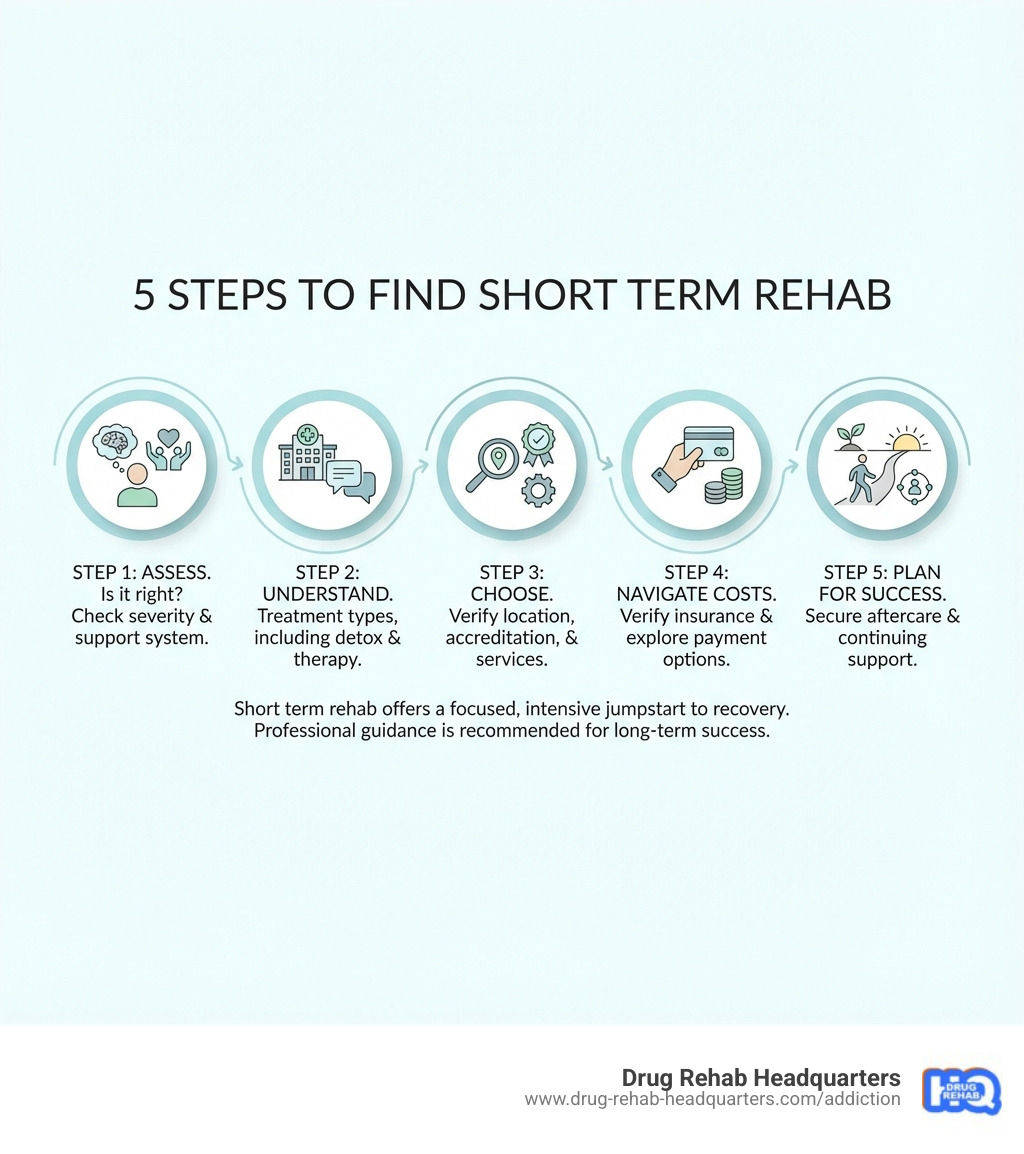
Step 1: Is a Short-Term Rehab Program Right for You?
Deciding on the right rehab program is a crucial first step. Short term drug rehab is a powerful option, but it’s important to know if it’s the right fit for you.
A short-term program offers focused, intensive treatment to stabilize your health, break the cycle of use, and teach essential coping skills. It can be a catalyst for change, especially for motivated individuals with strong support.
Call 866-720-3784 to discuss if this level of care matches your needs with a Drug Rehab Headquarters specialist. Our team is ready to provide expert guidance without judgment.
Who Is a Good Candidate for Short-Term Rehab?
Short term drug rehab can be particularly effective for certain individuals. You might be a good candidate if:
- Your addiction is less severe or shorter-term: If your substance use is recent or dependence isn’t severe, a short-term program can provide the needed intervention to prevent escalation.
- You have a strong support system: A supportive network of family and friends improves the effectiveness of a shorter program by providing encouragement and accountability after treatment.
- You’re seeking treatment for the first time: A shorter commitment can be less intimidating, making it an accessible entry point for those new to rehab.
- You’ve relapsed and need to stabilize: A short-term program offers an intensive return to a structured environment to regain your footing and reinforce coping skills.
- You have work or family obligations: For those with significant responsibilities, a shorter, intensive program may be the only feasible option, allowing for focused healing before returning to daily life with outpatient support.
For some, a short term drug rehab can also be an effective bridge to other forms of care. As we’ve explored, subacute rehab, which shares some characteristics with short-term addiction treatment in its intensity and goal-oriented approach, can be highly effective for certain conditions. Learn more about how intensive, focused care can be beneficial in various scenarios at Why Subacute Rehab Is Effective for Less Severe Disorders.
Understanding the Benefits and Limitations
Every treatment path has its pros and cons. For short term drug rehab, these are important considerations:
Benefits:
- Less disruption to life: A shorter program means less time away from work and family.
- Lower initial cost: Shorter programs are typically less expensive upfront, making treatment more accessible.
- Intensive focus: These programs are highly structured, maximizing therapeutic impact in a condensed timeframe for a powerful start to recovery.
- Easier to commit: A defined, shorter period can make it easier to commit and stay motivated.
Limitations:
- May not be sufficient for severe addiction: Those with chronic substance use disorders may need more time to address deep-seated issues. Research from the National Institute on Drug Abuse (NIDA) indicates that most addicted individuals need at least three months in treatment to significantly reduce or stop their drug use.
- Limited time for medication to work: For co-occurring disorders, some psychiatric meds take effect in about 6 weeks. A 30-day program may end before you feel the full effects, requiring careful aftercare.
- Higher relapse risk without strong aftercare: A rapid return to daily life means a strong aftercare plan is essential to manage triggers and prevent relapse.
Not sure if short-term rehab is right for you? Call Drug Rehab Headquarters at 866-720-3784 for a personalized recommendation. Our specialists can help you weigh these factors against your personal circumstances.
| Feature | Short-Term Rehab | Long-Term Rehab |
|---|---|---|
| Duration | 14 days to 6 weeks (typically 28-30 days) | 60 days, 90 days, or longer (up to a year) |
| Intensity | Highly intensive, focused | Intensive, comprehensive, and sustained |
| Cost | Generally lower initial cost | Higher overall cost |
| Ideal Candidate | Less severe addiction, strong support, first-time seekers, relapse stabilization, work/family constraints | Severe/chronic addiction, co-occurring disorders, history of relapse, need for deeper psychological work |
| Focus | Stabilization, immediate skill-building, breaking cycle of use | Deep-seated issues, behavioral change, long-term coping, relapse prevention |
Step 2: What to Expect During Treatment
Entering a short term drug rehab program is a step into a world designed for healing and growth. Here’s what to expect from this transformative experience.

Our programs nationwide provide a safe haven where you can focus on recovery, away from daily stresses and triggers. This supportive environment fosters a sense of community with others on similar journeys, building bonds crucial for long-term sobriety.
The Crucial Role of Medical Detox
For many, medical detox is the critical first phase of rehab. It involves safely managing withdrawal symptoms that occur when you stop using substances.
- Medically supervised withdrawal: Medical teams provide 24/7 monitoring to ensure your safety and comfort. This is vital for substances like alcohol, opioids, and benzodiazepines, as withdrawal can be life-threatening. For example, alcohol withdrawal can cause delirium tremens, which requires immediate medical care.
- Symptom management: Medications are often used to ease withdrawal symptoms, reduce cravings, and prevent complications, making detox more tolerable.
- Stabilization for therapy: This initial stabilization is vital for preparing you for the therapeutic aspects of rehab. Once stable, you can fully engage in your program.
The duration of detox varies depending on the substance and severity of dependence, typically lasting 5-14 days. This crucial step sets the stage for meaningful recovery. You can learn more about the importance of stabilizing physical health in the initial phase of treatment at Research on detox stabilization.
If you or a loved one needs to find a detox center, our team at Drug Rehab Headquarters can help you locate accredited facilities. Find a detox center near you with Drug Rehab Headquarters.
A Typical Day and Therapies Offered
After detox (if needed), your days will follow a structured schedule designed for healing and skill-building. A typical day includes:
- Mornings: Healthy breakfast, followed by group therapy, educational workshops, or individual counseling.
- Afternoons: More therapy, such as Cognitive Behavioral Therapy (CBT) or Dialectical Behavior Therapy (DBT), skill-building exercises, or holistic activities like yoga and meditation.
- Evenings: Peer support meetings (like 12-step programs), recreational activities, and personal reflection time.
Therapies are designed to address the root causes of addiction and build healthy coping skills:
- Individual Therapy: One-on-one sessions to explore personal challenges and underlying causes of addiction. Common approaches like CBT and DBT help change negative thought patterns.
- Group Therapy: A supportive environment to share experiences with peers, practice communication, and build a sense of community.
- Family Counseling: Sessions to heal relationships, improve communication, and educate loved ones on supporting recovery.
- Holistic Therapies: Activities like yoga, meditation, or art therapy to promote well-being and reduce stress.
- Life Skills Training: Workshops on practical skills like stress management, relapse prevention, and building healthy relationships.
For more details on what to expect, call our team at 866-720-3784. We can walk you through the specifics of various programs and help you find one that aligns with your therapeutic needs.
Step 3: How to Choose the Best Short-Term Rehab Program
Choosing the right short term drug rehab is a critical decision. Think of it as picking an expert guide for a challenging journey. We’re here to help you make an informed choice.

With many factors to consider, our goal at Drug Rehab Headquarters is to simplify the process and help you find a facility that truly fits.
Key Criteria for Your Search
When evaluating short term drug rehab options, keep these criteria in mind:
- Location: Decide if staying close to home for support or traveling for a fresh start is better for you. We have resources for states nationwide, including our Drug Alcohol Rehab California Guide and guides for Inpatient Drug Rehab in Texas. Consider which environment best supports your healing.
- Specialized programs: Some facilities excel at treating specific addictions. If you have an opioid addiction, look for a program with MAT expertise, like those found in our guide to Treatment Centers for Opioid Addiction. Programs should also have protocols for other substances like alcohol.
- Staff qualifications and ratio: A qualified, compassionate team is essential. Look for licensed therapists, doctors, and nurses specializing in addiction. A lower patient-to-staff ratio usually means more personalized care.
- Treatment philosophy: Does the program use 12-step, evidence-based therapies (CBT, DBT), holistic methods, or a mix? Make sure the approach fits your needs.
- Co-occurring disorder treatment: If you also have a mental health condition like depression or anxiety, find a program offering integrated “dual diagnosis” treatment for a comprehensive recovery.
Let Drug Rehab Headquarters help you compare your options—call 866-720-3784. Our specialists can provide custom recommendations based on your unique situation.
Verifying Quality and Accreditation
Accreditation and ratings are key indicators of a high-quality facility.
- Accreditation: This shows a facility meets high standards for care, safety, and ethics. Key accrediting bodies include:
- CARF (Commission on Accreditation of Rehabilitation Facilities): Signifies conformance to proven standards and commitment to quality. Learn more at More About CARF Accreditation.
- The Joint Commission: Accredits U.S. healthcare organizations, reflecting a commitment to quality and safety.
- SAMHSA (Substance Abuse and Mental Health Services Administration): Provides resources and lists facilities meeting federal standards for treatment.
- Patient reviews: Reviews offer insight into the daily experience and staff. Look for patterns in feedback. Resources like U.S. News & World Report also rate rehab facilities.
Questions to Ask an Admissions Counselor
When you call a facility, ask detailed questions. Your health is on the line. Here’s a list to get you started:
- What is the program’s philosophy and approach to addiction treatment?
- Does the program offer medically supervised detoxification?
- Are treatment plans personalized for each patient?
- What types of therapy and support groups are available?
- How does the program address co-occurring mental health disorders?
- What qualifications do the staff members have?
- What is the typical daily schedule?
- How is family involved in the treatment process?
- What is the success rate of the program, and how is it measured?
- Is there a comprehensive aftercare plan?
- What are the costs, and what financial options are available?
For help asking the right questions and interpreting the answers, call our specialists at Drug Rehab Headquarters: 866-720-3784. We can guide you through these conversations to ensure you gather all the necessary information.
Step 4: Navigating Costs and Insurance
The cost of short term drug rehab is a common concern, but it shouldn’t be a barrier to getting help. At Drug Rehab Headquarters, our mission is to help you understand your financial options. This investment in your health is invaluable, and there are many ways to manage the cost.
How Insurance Coverage Works for Short-Term Rehab
Understanding your insurance is the first step to managing rehab costs.
- Affordable Care Act (ACA): The ACA requires most insurance plans to cover substance use disorder treatment as an essential health benefit, comparable to medical care.
- Private insurance: Most PPO and HMO plans cover addiction treatment, but details like deductibles and co-pays vary. It’s crucial to verify your benefits.
- Verifying benefits: This can be complex, but our team can help. We’ll contact your provider to determine your exact coverage for short-term rehab.
- Medicare and Medicaid coverage:
- Medicare: Part A generally covers medically necessary inpatient short-term rehab for those 65+ or with certain disabilities.
- Medicaid: This program for low-income individuals covers addiction treatment, though benefits vary by state. It typically covers detox, inpatient, and outpatient services.
Call Drug Rehab Headquarters at 866-720-3784 for a free, confidential insurance benefits check. We can quickly determine your coverage and help you understand your financial responsibilities.
Other Payment Options
If you have out-of-pocket costs or no insurance, there are other ways to pay for short term drug rehab:
- Private pay: Paying directly is an option. A short-term program can cost $5,000 to $20,000 but is often more cost-effective than long-term rehab.
- Sliding scale fees: Many facilities adjust costs based on your income.
- Scholarships or grants: Non-profits and some centers offer financial aid to those in need.
- Payment plans: Many facilities offer installment plans to pay for treatment over time.
- State-funded programs: Most states offer free or low-cost treatment for eligible residents, though there may be waitlists.
Financial concerns can affect access to care, but we believe everyone deserves treatment.
Our team can help you explore all payment options—call 866-720-3784. We are dedicated to helping you find a financial solution that works, so you can focus on what truly matters: your recovery.
Step 5: Planning for Success After Your Program
Completing short term drug rehab is a huge achievement, but recovery is a long-term journey. The real work often begins after you leave the structured rehab environment.
Addiction is a chronic disease with relapse rates of 40-60%. A relapse isn’t a failure but a sign that your treatment plan needs adjustment. This is why a robust aftercare plan is critical.
The Importance of Aftercare
Aftercare bridges the gap between rehab and daily life. It’s the ongoing support and strategies needed to maintain sobriety and prevent relapse.
- SAMHSA research underscores aftercare: Research from SAMHSA highlights the importance of aftercare to sustain recovery. Without ongoing support, the skills learned in rehab can fade under the pressures of daily life. You can review the findings here: SAMHSA’s National Survey underscores aftercare.
- Relapse prevention plan: This involves identifying triggers, developing coping skills, and having a clear plan for handling cravings.
- Transitioning to daily life: Aftercare provides support and accountability as you return home, re-engage with work and family, and build healthy new routines.
Types of Continuing Support
A strong aftercare plan for short term drug rehab often includes several of these elements:
- Intensive Outpatient Programs (IOP): Continue receiving structured therapy several times a week while living at home.
- Sober living homes: Transitional, drug-free housing with peer support and accountability.
- Support groups (12-Step, SMART Recovery): Groups like Alcoholics Anonymous (AA) and Narcotics Anonymous (NA) offer peer support, shared experience, and a framework for sobriety.
- Ongoing individual therapy: Continue one-on-one sessions to process challenges and refine coping skills.
- Alumni programs: Many facilities offer alumni networks for continued support and connection.
We encourage you to explore our various rehab categories to find facilities that offer robust aftercare planning as part of their programs. Explore our rehab categories.
For aftercare planning, call Drug Rehab Headquarters at 866-720-3784. Our specialists can help you craft a personalized aftercare strategy that gives you the best chance for long-term recovery.
Your Questions Answered
We know you have questions, and we’re here to provide clear, straightforward answers.
How long is a typical short-term rehab program?
Short term drug rehab programs are intensive and brief, typically lasting 14 days to six weeks. The most common length is 28 or 30 days. By definition, these programs are under 90 days and provide a powerful intervention to break the cycle of use and build recovery skills.
Can I lose my job for going to rehab?
In many cases, no. Federal laws like the FMLA and ADA protect your job while you seek treatment for a substance use disorder.
- Family and Medical Leave Act (FMLA): This may allow you to take up to 12 weeks of unpaid, job-protected leave for treatment.
- Americans with Disabilities Act (ADA): The ADA protects people in recovery from job discrimination.
- Confidentiality: Your treatment is confidential, and many employers are supportive. It’s often helpful to speak with your HR department, but always check your company’s specific policies.
Is short-term rehab as effective as long-term rehab?
The effectiveness of short term drug rehab versus long-term rehab depends on the individual’s unique situation.
- Effectiveness depends on the individual: For those with less severe addiction and a strong support system, short-term rehab can be very effective for starting recovery.
- A vital first step: It’s often a vital first step for detox and learning foundational skills. However, NIDA research suggests at least three months of treatment for the best outcomes.
- The power of aftercare: The success of a short-term program is heavily dependent on strong aftercare, such as outpatient care and support groups. Commitment, a supportive network, and adherence to the aftercare plan are key to maintaining recovery.
Short term drug rehab can be incredibly powerful for jump-starting recovery, especially when followed by a committed and personalized aftercare plan. It’s about finding the right fit for your unique journey.
Get Help Finding a Short-Term Rehab Today
Finding the right short term drug rehab doesn’t have to be overwhelming. Recovery begins with one courageous step, and that step can start now.
At Drug Rehab Headquarters, we are committed to guiding you through every stage, from assessment to aftercare planning. Our expert specialists can help you steer your options, understand program types, and verify your insurance benefits. We serve every state and are dedicated to connecting you with the best possible care.
Don’t let uncertainty hold you back from the life you deserve. Explore our nationwide directory of Drug Rehab Centers to begin your search. Your path to recovery is waiting, and we’re here to light the way.