
Navigating Addiction in the Golden State: An Introduction
Drug and alcohol rehab centers in California offer comprehensive treatment options for individuals struggling with substance use disorders. Whether you’re seeking help for yourself or a loved one, understanding your options is the first step toward recovery.
Quick Overview: California Rehab Centers at a Glance
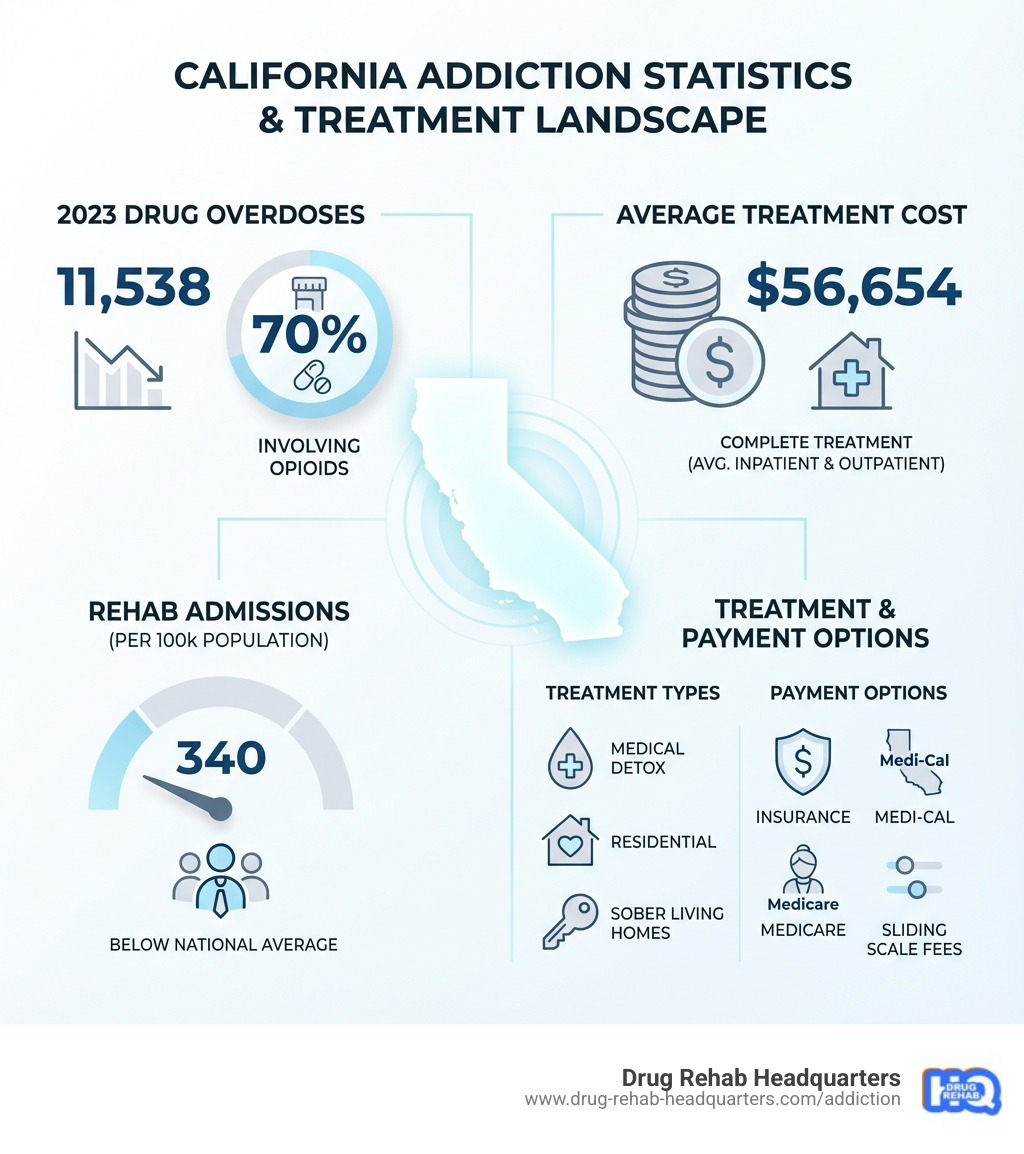
- Treatment Types Available: Medical detox, inpatient residential, outpatient programs, intensive outpatient (IOP), partial hospitalization (PHP), and sober living homes
- Average Cost: $56,654 for complete treatment; inpatient averages $629/day, outpatient $56/day
- Payment Options: Private insurance, Medi-Cal (California Medicaid), Medicare, sliding scale fees, state-funded programs, and financing
- Number of Facilities: Over 1,200 licensed treatment centers across California
- Top Cities for Treatment: Los Angeles, San Diego, San Francisco, Orange County, San Jose
- Success Factor: Evidence-based therapies combined with holistic approaches like CBT, DBT, meditation, and art therapy
California faces a significant addiction crisis. In 2023, the state recorded 11,538 drug overdoses, with opioids accounting for 70% of all overdose deaths. Despite having extensive treatment resources, California ranks 32nd nationwide in rehab admissions, with only 340 admissions per 100,000 people—well below the national average of 621.
The need for treatment is urgent. Nationwide statistics show that 1 in 7 Americans will develop a substance use disorder, but only 1 in 10 will get treatment. Even more concerning, 90% of people struggling with addiction began using substances before age 18.
Recovery is possible. California’s rehab centers offer a spectrum of care, from medically supervised detox to long-term residential programs and flexible outpatient services. Many facilities hold prestigious accreditations from organizations like the Joint Commission and CARF, ensuring quality care that addresses both addiction and co-occurring mental health conditions.
The Golden State’s treatment landscape includes specialized programs for diverse populations—veterans, LGBTQ+ individuals, adolescents, and those with dual diagnoses. Whether you’re drawn to the serene coastal settings of Malibu, the structured programs in Los Angeles, or the holistic approaches in Northern California, there’s a path forward.
This guide will help you understand the types of treatment available, how to recognize when professional help is needed, what quality rehab centers look like, and how to pay for care—including government-funded and low-cost options.
Recognizing the Need for Professional Help
It can be incredibly challenging to watch a loved one struggle with addiction. The worry, fear, and intimidation surrounding the decision to seek treatment are very real. However, recognizing the signs and intervening early can make a profound difference in their journey toward recovery. Addiction is a chronic illness, not a moral failing, and it requires urgent, compassionate care.
What are the Signs a Loved One Needs Treatment?
Spotting the signs of addiction can be difficult, as individuals often try to hide their struggles. However, there are common behavioral, physical, and psychological indicators that suggest a loved one might need professional help from drug and alcohol rehab centers in California. We’ve compiled some key signs to look out for:
- Social Withdrawal: They might start isolating themselves from family and friends, losing interest in hobbies or activities they once enjoyed. This can often be a way to hide their substance use or avoid confrontation.
- Neglecting Responsibilities: A noticeable decline in performance at work or school, missing appointments, or failing to meet family obligations are red flags. Their focus shifts primarily to obtaining and using substances.
- Financial Issues: Addiction can be expensive. You might notice unexplained financial problems, requests for money, missing valuables, or a general disregard for financial stability.
- Changes in Appearance: Poor hygiene, sudden weight loss or gain, bloodshot eyes, dilated pupils, or unusual smells on their breath or clothing can all be indicators.
- Mood Swings and Behavioral Changes: They may exhibit extreme irritability, anxiety, depression, paranoia, or aggressive behavior. Their personality might seem to change, becoming secretive or dishonest.
- Increased Tolerance and Withdrawal Symptoms: They might need more of a substance to achieve the same effect (tolerance), or they may experience physical or psychological discomfort when they try to stop or cut back (withdrawal).
- Secretive Behavior: Hiding substance use, lying about their whereabouts, or being evasive about their activities are common. They might become defensive or angry when confronted.
If you observe several of these signs, it’s often an indication that professional help is needed. Staging a gentle, supportive intervention with the help of a professional can be a crucial step. This process involves loved ones expressing their concerns and offering a clear path to treatment, such as admission to one of the many reputable drug and alcohol rehab centers in California.
The Critical Benefits of Early Intervention
We cannot stress enough the importance of early intervention for substance use disorders. It’s a game-changer. Phoenix House California, a prominent treatment provider, emphasizes that seeking early treatment can prevent potentially irreparable harm to personal life, offers a more practical and affordable way to address the issue, and, most importantly, has a higher rate of success.
Consider these compelling reasons why stepping in early matters:
- Higher Success Rates: The sooner an individual receives treatment, the better their chances of achieving lasting recovery. Early intervention addresses addiction before it becomes deeply entrenched, making it easier to break harmful patterns.
- Preventing Irreparable Harm: Addiction can devastate relationships, careers, physical health, and mental well-being. Early intervention can mitigate these long-term consequences, preserving what matters most.
- Reduced Long-Term Costs: Addressing addiction early can prevent the escalating financial burdens associated with prolonged substance use, including healthcare costs, legal fees, and lost income.
- Improved Mental Health: Addiction often co-occurs with mental health issues like anxiety and depression. Early treatment can address both conditions simultaneously, leading to better overall mental health outcomes.
- Rebuilding Relationships: Repairing trust and mending relationships becomes more manageable when treatment begins before too much damage is done. Family involvement is a fundamental element for long-term success.
The statistics paint a stark picture: 1 in 7 Americans will develop a substance use disorder, but only 1 in 10 will get treatment. Furthermore, a staggering 90% of people who struggle with a substance use disorder began using drugs or alcohol before the age of 18. This highlights the urgent need for awareness, early identification, and accessible treatment options within drug and alcohol rehab centers in California. Early intervention isn’t just a recommendation; it’s a critical lifeline.
Understanding Treatment Options: A Spectrum of Care
When considering drug and alcohol rehab centers in California, understand that addiction treatment is not a one-size-fits-all solution. Instead, it’s a “continuum of care,” meaning there are various levels of support designed to meet individual needs at different stages of recovery. Our goal is to help you find the personalized treatment plan that offers the best chance for lasting sobriety.

Different Types of Drug and Alcohol Rehab Programs
California’s extensive network of drug and alcohol rehab centers in California offers a wide range of programs, each custom to specific needs and severity of addiction. Here’s a breakdown of the most common types:
- Medical Detox (Withdrawal Management): This is often the first step in the recovery process, especially for severe substance use disorders. Medical detox provides a safe, supervised environment where individuals can withdraw from drugs or alcohol under the care of medical professionals. Medications may be administered to manage severe withdrawal symptoms and prevent complications. This ensures physical stabilization before deeper therapeutic work can begin.
- Inpatient Residential Rehab: For those requiring a structured, immersive environment, residential treatment offers 24/7 care in a non-hospital setting. Clients live at the facility for a period, typically 30, 60, or 90 days (though some programs can extend to 180 days or more, depending on individual needs), engaging in intensive therapy, counseling, and support groups. This setting removes individuals from triggering environments, allowing them to focus entirely on recovery.
- Outpatient Programs (OP): Outpatient treatment allows individuals to live at home while attending scheduled therapy sessions and groups at a facility. This option offers flexibility, enabling people to maintain work, school, or family responsibilities. It’s often suitable for those with less severe addictions, a strong support system at home, or as a step-down from inpatient care.
- Intensive Outpatient Programs (IOP): IOPs provide a higher level of care than standard outpatient programs but less intensive than residential. Participants attend treatment for several hours a day, multiple days a week, while still living at home. This allows for significant therapeutic engagement without the need for full-time residency.
- Partial Hospitalization Programs (PHP): PHPs are often considered a bridge between inpatient and outpatient care. Clients attend treatment for most of the day, typically five days a week, but return home in the evenings. PHPs offer comprehensive therapeutic services, similar to inpatient care, but with greater independence.
- Sober Living Homes: After completing a more intensive program, many individuals transition to sober living homes. These residences provide a safe, drug-free environment with peer support, helping residents practice newly learned coping skills and gradually re-integrate into daily life. They are crucial for improving long-term recovery outcomes.
The Role of Evidence-Based and Holistic Therapies
The most effective drug and alcohol rehab centers in California integrate a blend of evidence-based therapies with holistic approaches. This comprehensive strategy ensures that we address not only the physical aspects of addiction but also the psychological, emotional, and spiritual dimensions.
Evidence-Based Therapies are approaches scientifically proven to be effective in treating substance use disorders. These include:
- Cognitive Behavioral Therapy (CBT): Helps individuals identify and change negative thought patterns and behaviors that contribute to substance use.
- Dialectical Behavioral Therapy (DBT): Focuses on emotional regulation, mindfulness, distress tolerance, and interpersonal effectiveness.
- Motivational Interviewing (MI): A client-centered approach that helps individuals explore and resolve ambivalence about behavior change.
- Eye Movement Desensitization and Reprocessing (EMDR): Often used for individuals with co-occurring trauma, EMDR helps process distressing memories and reduce their emotional impact.
- Medication-Assisted Treatment (MAT): Combines FDA-approved medications (like buprenorphine, naltrexone, or methadone) with counseling and behavioral therapies, particularly effective for opioid and alcohol use disorders.
Holistic Approaches complement traditional therapies by focusing on the ‘whole person’—mind, body, and spirit. Many California rehabs, like Buddy’s Ranch and Bayside Marin, incorporate these practices:
- Yoga and Meditation: Promote mindfulness, reduce stress, and improve physical well-being.
- Art Therapy and Music Therapy: Provide creative outlets for emotional expression and processing.
- Physical Wellness: Includes exercise, nutrition counseling, and outdoor activities to restore physical health and energy.
- Spiritual Counseling: Helps individuals explore their values and find purpose, often without adherence to a specific religion.
By combining these approaches, drug and alcohol rehab centers in California can provide a robust foundation for recovery, equipping individuals with diverse tools for long-term sobriety.
| Feature | Inpatient Residential Rehab | Outpatient Programs (OP, IOP, PHP) |
|---|---|---|
| Living Situation | Lives at the treatment facility 24/7 | Lives at home, attends sessions at facility |
| Intensity | Highly structured, immersive, daily therapy | Structured, but allows for external responsibilities |
| Supervision | Constant medical and therapeutic supervision | Scheduled supervision, more personal responsibility |
| Environment | Removes individual from triggers and daily stressors | Steers daily life while attending treatment |
| Duration | Typically 30, 60, 90 days, or longer | Varies; can be weeks to months, often step-down from inpatient |
| Suitability | Severe addiction, co-occurring disorders, unstable home | Less severe addiction, strong home support, work/school commitments |
| Cost | Generally higher due to 24/7 care and accommodations | Generally lower due as no residential stay |
The Cost of Recovery and How to Pay for It
One of the first questions many individuals and families ask when considering drug and alcohol rehab centers in California is, “How much does it cost?” We understand that financial concerns can be a significant barrier to seeking help, but addiction is far more costly in the long run.
The average cost for a person in California who seeks substance abuse treatment is $56,654. This figure can vary widely based on the type of program, duration, amenities, and specific services offered. For instance:
- Inpatient rehab in California costs an average of $629.49 per day without insurance coverage. For a 30-day stay, that’s roughly $18,884.70.
- Outpatient rehab in California costs an average of $56.76 per day without insurance coverage. For a 30-day program, that’s approximately $1,702.80.
These numbers can seem daunting, but we want to assure you that there are many ways to make treatment affordable.
How to Pay for Drug and Alcohol Rehab Centers in California
Fortunately, several options exist to help individuals and families cover the cost of treatment at drug and alcohol rehab centers in California. Our goal is to help you steer these options to find the best fit for your situation.
- Private Health Insurance: This is one of the most common ways to pay for rehab. Thanks to the Affordable Care Act (ACA) and the Mental Health Parity and Addiction Equity Act (MHPAEA), most private insurance plans are required to cover substance use disorder treatment. Many California rehab centers accept a wide range of private insurance providers. For example, Blue Cross Blue Shield is widely accepted by 824 treatment centers, Aetna by 816, and Cigna by 709. It’s crucial to verify your insurance coverage with the specific rehab center you’re considering. Many facilities, like Bayside Marin, offer free insurance verification services.
- State-Funded Programs (Medi-Cal): California’s Medicaid program, known as Medi-Cal, provides coverage for addiction treatment services for eligible low-income residents. Many drug and alcohol rehab centers in California accept Medi-Cal, with 701 centers accepting it according to recent data.
- Medicare: For individuals 65 and older or those with certain disabilities, Medicare can help cover the costs of addiction treatment, including inpatient, outpatient, and partial hospitalization programs. Approximately 431 California rehab centers accept Medicare.
- Out-of-Pocket Payments: For those without insurance or who prefer to pay directly, contacting the rehab center to inquire about their payment policies is essential. Some centers may offer payment plans.
- Sliding Scale Fees: Many facilities, particularly non-profit or government-funded ones, offer sliding scale fees based on an individual’s income and ability to pay. This makes treatment more accessible to those with limited financial resources. Over 900 California rehabs offer sliding-scale fees.
- Financing Options: Some treatment centers partner with third-party lenders to offer financing plans, allowing you to pay for treatment in installments.
- Military Insurance (TRICARE): For active-duty service members, veterans, and their families, TRICARE provides coverage for substance use disorder treatment. About 403 California rehabs accept TRICARE.
We recommend contacting several drug and alcohol rehab centers in California to get an estimate of costs and understand their specific payment policies. Don’t let cost deter you from seeking life-saving treatment; there are options available.
Are There Government-Funded and Free Options?
Absolutely! While treatment can be expensive, we understand that not everyone has private insurance or the means to pay out-of-pocket. California offers several government-funded and low-cost options to ensure that individuals can access the care they need.
Government-funded rehab programs are primarily run by state agencies and funded by grants or allocations from municipal budgets. These programs provide affordable addiction treatment, making them a lifeline for many. However, they often have limited slots, and recipients typically must meet specific criteria and are admitted on a priority basis.
The California Department of Health Care Services (DHCS) leads the effort to reduce alcoholism and drug addiction in California, providing numerous resources. Their website, for instance, offers directories for substance use disorder services that can help you find licensed and certified facilities.
Here’s how to find these options:
- State Grants and County Programs: DHCS supports various prevention, treatment, and recovery programs across the state. We can find more information about these services through county access lines or by searching for providers based on zip code at ChooseMAT.org.
- Non-Profit Organizations: Many non-profit organizations receive grants and donations, allowing them to offer free or low-cost treatment services. These programs often have eligibility requirements, so it’s best to contact them directly.
- Medi-Cal: As mentioned, Medi-Cal is California’s Medicaid program and covers substance use disorder treatment for eligible residents. This is a significant resource for many.
- Free Treatment Centers: While less common, some facilities offer free treatment, often funded by donations, government grants, or religious organizations. These programs typically have strict eligibility criteria and may have waitlists. Our research shows that 68 California facilities offer free treatment.
We encourage you to explore these avenues if cost is a primary concern. The DHCS helpline at 800-597-2557 is a valuable resource for guiding you to state-funded options. Help is available, and financial barriers should not prevent anyone from beginning their recovery journey.
Finding the Right Drug and Alcohol Rehab Centers in California
Choosing the right drug and alcohol rehab centers in California is a critical decision that can significantly impact the success of your recovery journey. With over 1,200 licensed facilities across the state, it can feel overwhelming to select the best fit. We’re here to help you understand what to prioritize in your search.
What to Look for in Drug and Alcohol Rehab Centers in California
When we evaluate drug and alcohol rehab centers in California, several key factors stand out as indicators of quality care and a supportive environment. These elements ensure that you or your loved one receives the most effective treatment possible:
Accreditation and Licensing: This is paramount. Look for centers accredited by reputable organizations such as:
- The Joint Commission (JCAHO): This is a national healthcare accreditation body that sets high standards for patient care and safety. Facilities like Buddy’s Ranch proudly display their Gold Seal of Approval from The Joint Commission.
- Commission on Accreditation of Rehabilitation Facilities (CARF): CARF accreditation signifies that a program meets rigorous international standards for quality and outcomes.
- State Licensing: All legitimate drug and alcohol rehab centers in California must be licensed by the State Department of Health Care Services (DHCS). This ensures they meet state-mandated health and safety standards. You can find lists of licensed facilities through the DHCS directories.
- LegitScript Certification: This certification indicates that a treatment provider has been vetted and complies with strict standards regarding transparency and ethical practices.
Staff Credentials and Experience: Inquire about the qualifications of the clinical staff, including therapists, counselors, doctors, and nurses. Look for licensed professionals with experience in addiction treatment. A combination of life experience, education, and professional development, as seen at Buddy’s Ranch, often leads to compassionate and effective care.
Treatment Philosophy: Does the center align with your values? Some centers emphasize a 12-step approach, while others focus on evidence-based therapies, holistic methods, or a combination. Bayside Marin, for example, highlights a blend of traditional and holistic therapies custom to individual needs.
Staff-to-Client Ratio: A lower staff-to-client ratio often means more personalized attention and care. This can be particularly important for individuals requiring intensive support.
Location and Environment: Consider whether a local facility is best for family involvement, or if a change of environment would be more beneficial. California offers diverse settings, from serene coastal views to mountain retreats. Some centers, like Lift Addiction Services – Sky Lake Recovery Center, leverage scenic locations for healing. Our internal guide, Top 10 Cities in California to Attend Addiction Treatment, can help you explore options in major cities like Los Angeles, San Diego, and San Francisco.
By carefully considering these factors, we can significantly narrow down the options and find a drug and alcohol rehab centers in California that offers the best chance for successful, long-term recovery.
Specialized Programs and Amenities
California’s diverse landscape is reflected in the wide array of specialized programs and amenities offered by its drug and alcohol rehab centers in California. These cater to unique needs and preferences, ensuring that treatment is as effective and comfortable as possible.
- Dual Diagnosis Treatment: Many individuals struggling with substance use disorders also have co-occurring mental health conditions like depression, anxiety, PTSD, or bipolar disorder. Dual diagnosis programs provide integrated treatment for both conditions simultaneously, recognizing that treating one without the other often leads to relapse. This holistic approach is crucial for lasting recovery.
- Teen-Specific Programs: Recognizing that 90% of substance use disorders begin before age 18, many California rehabs offer programs specifically designed for adolescents. These centers, such as OC Revive – Teen Rehab Center, address the unique developmental, social, and psychological needs of teenagers, often incorporating academic support and family therapy.
- LGBTQ+ Affirming Care: Some centers offer specialized programs that create a safe, inclusive, and affirming environment for LGBTQ+ individuals, addressing the unique challenges and discrimination they may face.
- Veterans Programs: Military veterans often face specific challenges, including PTSD and trauma, which can contribute to substance use. Specialized programs for veterans provide custom therapy and support, sometimes incorporating pathways for military veterans, as mentioned by Buddy’s Ranch.
- Luxury Accommodations: For those seeking a higher level of comfort and privacy, luxury rehabs offer upscale amenities such as private rooms, gourmet meals, spa services, and executive programs. Facilities like Luxe Recovery blend clinical care with luxury retreat comfort.
- Pet-Friendly Facilities: Some centers understand the importance of companion animals in a person’s life and offer pet-friendly options, allowing clients to bring their beloved pets to treatment.
- Specialized Detox and Treatment Options: Beyond general detox, some centers specialize in specific substances, such as Narcotic Treatment Programs (NTPs) for opioid medication-assisted treatment, including detoxification and maintenance services. Our internal guide, Top 11 California Cities Methadone Detox Facilities, can provide more detailed information on these specialized services.
These specialized options demonstrate California’s commitment to providing comprehensive and inclusive care, ensuring that every individual can find a program that meets their specific needs and promotes a successful recovery.
Official Resources and Directories for California
Finding reliable information is a crucial step in the search for drug and alcohol rehab centers in California. Fortunately, the state provides several official resources and directories to help individuals and families connect with licensed and certified treatment providers. We always recommend starting with these official sources for accurate and up-to-date information:
- California Department of Health Care Services (DHCS) SUD Directories: This is a primary resource for finding state-licensed and certified facilities. It includes lists of residential and outpatient facilities, as well as county-specific information. You can access these directories directly through the DHCS portal: SUD Directories
- DHCS Licensing & Certification Directory: For an alphabetical list by county of all non-medical alcoholism and drug abuse recovery or treatment facilities, this resource is invaluable: Licensing & Certification
- Licensed Driving Under the Influence (DUI) Provider Directory: If you or a loved one needs a program specifically for DUI offenses, this directory lists licensed providers: Driving Under the Influence (DUI)
- CA.gov – Find Substance Use Disorder Services: The state’s official website offers a comprehensive overview and direct links to various services: Find Substance Use Disorder Services | CA.gov
- SAMHSA’s National Directory of Drug and Alcohol Use Treatment Facilities: The Substance Abuse and Mental Health Services Administration (SAMHSA) provides a national directory that includes facilities in California, often with detailed codes for services, payment options, and specialized programs. This directory is also available in a searchable format at FindTreatment.gov: 2024 National Directory of Drug and Alcohol Use Treatment Facilities
- County Access Lines: For localized support and immediate assistance, contacting your specific county’s alcohol and other drug services is highly recommended. These access lines can provide information about local providers, resources, and often offer guidance on navigating the treatment system. The DHCS SUD directories often link directly to these county resources.
By utilizing these official channels, we can ensure that you are connected with reputable, licensed, and certified drug and alcohol rehab centers in California that adhere to state and federal standards.
Frequently Asked Questions about California Rehab
We understand you likely have many questions as you steer the path to recovery. Here, we address some of the most common inquiries we receive about drug and alcohol rehab centers in California.
How long does a typical rehab program in California last?
The duration of a rehab program in California is highly individualized, as it depends on the severity of the addiction, the presence of co-occurring mental health disorders, the type of substance used, and the individual’s progress. There isn’t a single “typical” length, but programs commonly fall into these categories:
- 30-day programs: These are often an initial step, focusing on detox and foundational therapy. They can be very effective for those with less severe addictions or as a way to “reset.”
- 60-day programs: Offering a more extended period for therapy and skill-building, these programs allow for deeper engagement with the recovery process.
- 90-day programs: Considered a gold standard by many experts, 90-day programs provide ample time for individuals to address underlying issues, practice coping mechanisms, and solidify their commitment to sobriety. Research often shows better long-term outcomes with longer treatment durations.
- Long-term care (120+ days): Some residential programs, like those mentioned by Buddy’s Ranch, can extend from 30 to 180 days or more, based on client needs. These are particularly beneficial for chronic relapsers or those with complex co-occurring disorders.
Regardless of the initial program length, effective treatment always includes aftercare planning. This might involve transitioning to an intensive outpatient program, sober living, or participating in ongoing support groups to ensure continuity of care and prevent relapse.
How are co-occurring mental health disorders addressed in rehab?
Addressing co-occurring mental health disorders alongside addiction is a cornerstone of modern treatment at drug and alcohol rehab centers in California. We know that 51.5 million adults nationwide struggle with a mental illness, and often, these conditions fuel or are fueled by substance use. This is why integrated treatment, often called “dual diagnosis” treatment, is so vital.
Here’s how California rehab centers typically approach these complex needs:
- Integrated Treatment: Rather than treating addiction and mental health issues separately, dual diagnosis programs address both concurrently. This recognizes that these conditions are interconnected and require a unified approach for effective healing.
- Psychiatric Evaluation: Upon admission, clients undergo thorough psychiatric evaluations to diagnose any underlying mental health conditions, such as depression, anxiety, bipolar disorder, or PTSD.
- Medication Management: If appropriate, psychiatric medications are prescribed and carefully managed by medical professionals to stabilize mood, reduce anxiety, or address other mental health symptoms.
- Individual Therapy: Clients engage in one-on-one sessions with therapists specializing in both addiction and mental health. Therapies like CBT, DBT, and EMDR are particularly effective for dual diagnosis clients.
- Group Therapy: Group sessions provide a supportive environment where individuals can share experiences, develop coping skills, and learn from peers who are also navigating co-occurring disorders.
- Holistic Approaches: Many centers integrate holistic therapies like mindfulness, yoga, and art therapy to help clients manage stress, regulate emotions, and foster overall well-being, which is crucial for both mental health and sobriety.
Centers like Bayside Marin specialize in treating co-occurring disorders, emphasizing a comprehensive approach to address both the addiction and the underlying mental health challenges.
What kind of support is available for teenagers?
We recognize the unique vulnerability of teenagers to substance use disorders, especially given that 90% of people who struggle with a substance use disorder began using drugs or alcohol before the age of 18. Finding appropriate support for adolescents is therefore incredibly important. Drug and alcohol rehab centers in California offer specialized programs designed to meet the distinct needs of young people:
- Adolescent-Specific Programs: These programs are custom to the developmental stage of teenagers, using age-appropriate language, activities, and therapeutic approaches. Phoenix House California, for example, offers Adolescent Outpatient – Substance Use Disorder programs.
- Family Therapy: Family involvement is often a critical component of teen treatment. Therapy sessions help improve communication, rebuild trust, and address family dynamics that may contribute to substance use. Phoenix House also highlights “Wraparound Services for Families” for children in crisis.
- Academic Support: Many programs integrate educational components or provide support to ensure that academic progress isn’t completely derailed during treatment. School-based mental health services are also offered by some organizations like Phoenix House California.
- Peer Support Groups: Connecting with other teenagers facing similar struggles can be incredibly empowering. Groups like Alateen (for family and friends of alcoholics) and Al-Anon (for family and friends of drug users) provide a safe space for sharing and support.
- Focus on Prevention: Organizations like Phoenix House California strongly believe that prevention through education is key to breaking the cycle of addiction, particularly for young people.
Centers such as OC Revive – Teen Rehab Center provide exceptional care for teens, focusing on renewing lives and addressing the specific challenges adolescents face. These programs aim to equip teenagers with the skills to maintain sobriety, build healthy relationships, and develop a fulfilling life.
Your Path to Recovery Starts Today
The decision to seek help for a substance use disorder is one of the bravest steps you or a loved one can take. We understand that the journey to recovery can seem daunting, but it is a path filled with hope, healing, and renewed purpose. Drug and alcohol rehab centers in California are equipped with the expertise, compassion, and diverse programs to guide you every step of the way.
Making the decision to seek treatment is the first, most crucial step. It’s an affirmation that you are worth a life free from the grip of addiction. Our comprehensive guide has aimed to explain the process, offering insights into treatment options, costs, payment methods, and what to look for in a quality rehab center.
Long-term success in recovery is a continuous process that often includes relapse prevention strategies, ongoing community support, and a commitment to personal growth. You are not alone on this journey.
We at Drug Rehab Headquarters are dedicated to providing you with the information and resources you need to make an informed decision. Your path to recovery starts today.