Your Journey to Recovery: How to Find Rehab
If you’re wondering how to find rehab, you’re taking a courageous first step. The path to recovery can seem overwhelming, and statistics show many who need substance use treatment don’t receive it. But finding the right support is possible. This guide will help you or a loved one steer the choices and find the best treatment.
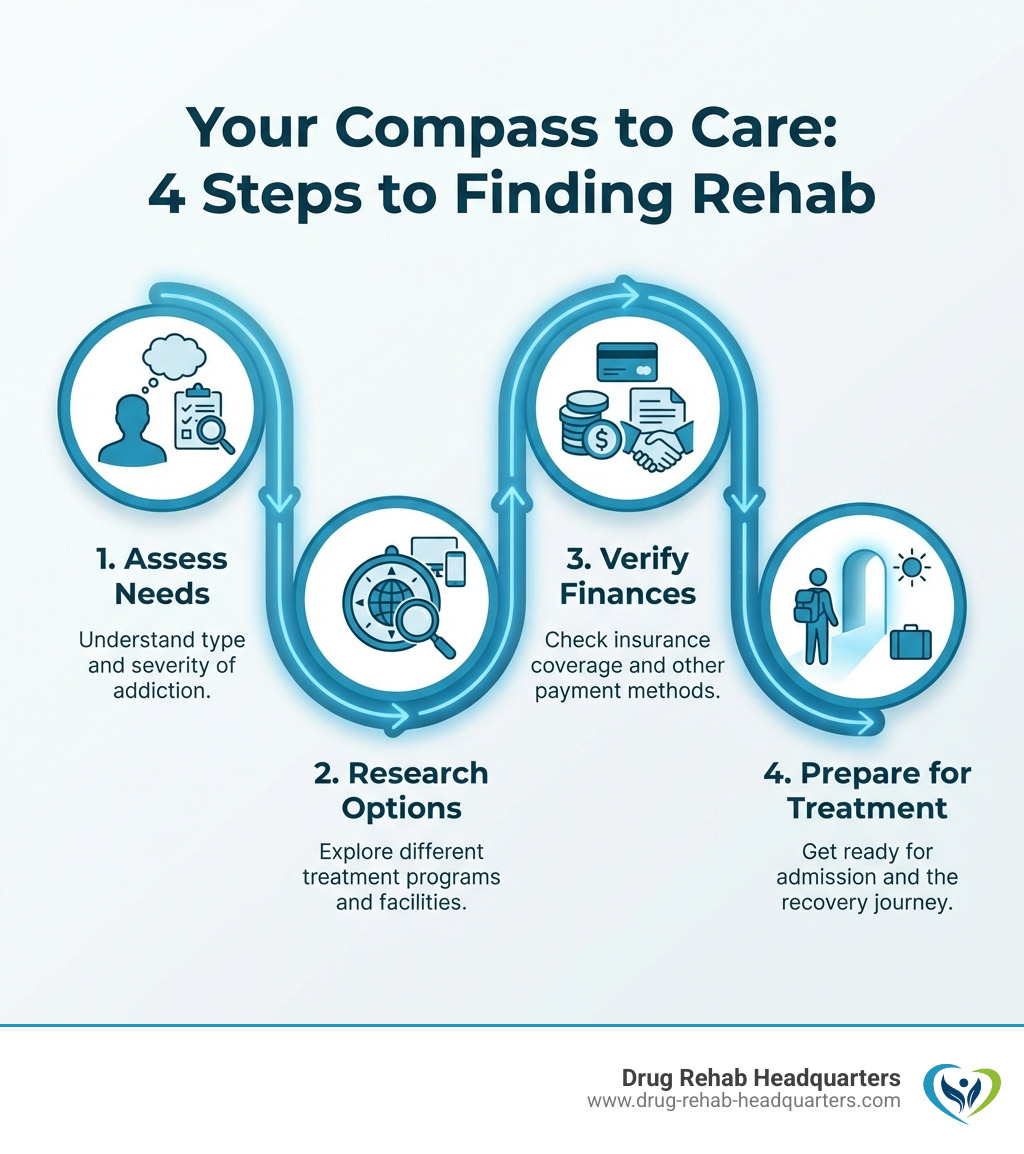
Here are the key steps to finding rehab:
- Assess Needs: Understand the type and severity of addiction.
- Research Options: Explore different treatment programs and facilities.
- Verify Finances: Check insurance coverage and other payment methods.
- Prepare for Treatment: Get ready for admission and the recovery journey.
This process can feel like a lot, but you don’t have to do it alone. At Drug Rehab Headquarters, we’ve helped countless individuals and families find the right support for their journey to sobriety.
How to find rehab helpful reading:
- Nutrition addiction recovery
- addiction recovery centers arizona
- addiction recovery centers in kentucky
Step 1: Understanding Your Needs and Treatment Options

When you’re asking yourself, “How to find rehab that genuinely works for you?”, the answer begins with understanding that recovery isn’t a one-size-fits-all journey. Effective treatment is personalized to your unique situation, following a “continuum of care” model with various levels of support. The first step is an honest self-assessment, followed by exploring the available options. The National Institute on Drug Abuse (NIDA) outlines principles of effective treatment that emphasize this personalized approach.
How to Determine the Severity of Your Addiction
To choose the right path, you must first understand the severity of the addiction. This isn’t always easy to do on your own, but you can start by considering these questions:
- How often do you use the substance, and in what quantities?
- Has your use increased over time?
- Do you experience withdrawal symptoms when you try to stop or cut back?
- Has your substance use interfered with your work, relationships, or daily responsibilities?
- Have you tried to stop or cut back multiple times without success?
While these questions help, a professional evaluation is the most accurate way to determine the level of care you need. Addiction specialists use criteria from the American Society of Addiction Medicine (ASAM) to assess your needs across multiple dimensions and recommend the appropriate level of care. Honesty during this assessment is crucial for creating an effective, personalized recovery plan. For a deeper dive into understanding addiction, explore our complete guide to addiction.
Exploring Different Types of Addiction Treatment Programs
Once you have a clearer understanding of your needs, you can explore the diverse landscape of addiction treatment programs. Each is designed to address different levels of addiction severity and individual circumstances.
Here are the main types of treatment programs you might encounter:
- Medical Detox: Medically supervised withdrawal, often the first step for substances like alcohol or opioids, where withdrawal can be dangerous.
- Inpatient Residential Care: 24/7 care in a structured, substance-free facility. This is ideal for severe addictions or those with co-occurring mental health disorders.
- Partial Hospitalization Programs (PHP): Intensive day treatment, allowing you to return home or to a sober living environment in the evenings.
- Intensive Outpatient Programs (IOP): A flexible option with several hours of therapy per week, allowing individuals to maintain work, school, or family responsibilities.
- Standard Outpatient Treatment: The least intensive level of care, typically involving weekly therapy sessions. It’s suitable for mild substance use disorders or as a long-term aftercare option.
- Sober Living Homes: Transitional residences that provide a structured, supportive, and substance-free environment for individuals after completing a higher level of care.
To learn more about the various treatment options and find what might be best for you, we encourage you to explore our treatment programs.
Inpatient vs. Outpatient: Which is Right for You?
The choice between inpatient and outpatient treatment is a significant one when considering how to find rehab. Both have distinct advantages and are suited for different situations.
| Feature | Inpatient Treatment – Co-occurring Disorders / Dual Diagnosis: For those with both a substance use disorder and a mental health condition like depression or anxiety. Integrated treatment is key for lasting recovery. If this sounds like your situation, we can help you find a Dual Diagnosis Treatment Facility.
- Substance-Specific Treatment: Programs custom to specific substances, like alcohol or opioids, which may involve medication-assisted treatment (MAT) to manage cravings and withdrawal.
- Programs for Women: These programs address gender-specific issues, such as trauma and parenting challenges, in a safe and supportive environment.
- Programs for Young Adults: With unique developmental stages and peer pressures, young adults benefit from programs designed to meet their specific needs. You can explore Rehab for Young Adults.
- LGBTQ+ Affirming Care: These programs offer a safe and understanding space for individuals from the LGBTQ+ community, addressing potential stigma and specific mental health challenges they may face.
Understanding these specialized options is vital as you determine how to find rehab that truly resonates with your personal journey.
How to Find Rehab: A Practical Search Guide

With a clearer understanding of your needs, it’s time to find the right rehab. This involves using online tools, getting referrals, and vetting facilities. With over 14,500 treatment centers in the U.S., we can help you narrow the options to find your best fit.
Key Factors to Consider When Comparing Rehab Centers
When comparing rehabs, focus on these key factors to ensure quality and effective care:
- Accreditation and Licensing: Ensure the facility is licensed by the state and accredited by organizations like CARF International or The Joint Commission. This guarantees quality and safety.
- Staff Qualifications: Look for a team of licensed professionals, including doctors, nurses, and therapists. Our counselors often have lived experience, adding a layer of personal understanding.
- Evidence-Based Therapies: The center should use scientifically-backed treatments like Cognitive Behavioral Therapy (CBT), Dialectical Behavior Therapy (DBT), and Medication-Assisted Treatment (MAT).
- Location and Environment: Decide if a local center with family support or a distant one away from triggers is better for you. Consider the setting, whether it’s serene and natural or urban and accessible.
- Patient-to-Staff Ratio: A lower ratio usually means more personalized attention.
- Aftercare Planning: A quality program prepares you for life after treatment with alumni programs, support groups, and continued therapy.
We pride ourselves on connecting individuals with facilities that meet these high standards. Learn more about our rehabilitation services.
How to Find Rehab That is Affordable or Low-Cost
Cost should not be a barrier to getting help. We understand that asking “How to find rehab I can actually afford?” is a very real question. Here’s how to find affordable or low-cost treatment:
- Insurance Options: Most insurance plans, especially those compliant with the Affordable Care Act (ACA), cover addiction treatment. We’ll discuss this more in the next section.
- Sliding Scale Payment: Many facilities offer a sliding scale fee based on your income.
- Payment Plans: Rehab centers are often willing to create a manageable payment plan.
- Medicaid and State-Funded Programs: Government-funded programs provide free or low-cost services to eligible residents, though they may have waitlists.
- Finding Local Agencies: Your state’s Department of Health or the Substance Abuse and Mental Health Services Administration (SAMHSA) can provide lists of state-funded facilities and resources.
Financial assistance is often available. We can guide you to free or low-cost treatment resources.
Resources for Indigenous Communities
Finding culturally appropriate care is vital for Indigenous communities. When considering how to find rehab, look for programs that integrate traditional practices, spiritual beliefs, and community values.
- Culturally-Specific Programming: Seek facilities that incorporate practices like talking circles, sweat lodge ceremonies, and traditional storytelling.
- Traditional Healing: Many programs involve traditional healers and elders for a holistic approach to recovery.
- On-the-Land Programs: Some centers use natural settings to connect individuals with the land and traditional ways of life.
- Support Lines and Community Resources: Federal resources like SAMHSA and local tribal health services can help you find culturally competent providers.
Our commitment is to help everyone find treatment that respects their identity and heritage. We can help you explore culturally sensitive treatment options that align with your values.
Navigating the Financial and Logistical Problems
Once you’ve identified potential rehab centers, the next step is handling the financial and logistical details. This section covers the cost of rehab, insurance, payment options, and the admissions process, empowering you to find a program that fits your budget and lifestyle.
The Role of Insurance in Paying for Rehab
Health insurance is key to affording treatment. Here’s what you need to know:
- Affordable Care Act (ACA): The ACA requires most insurance plans to cover substance use disorder services as essential health benefits.
- In-network vs. Out-of-network: In-network facilities are more affordable, as insurance covers a higher percentage of the cost.
- Parity Laws: These laws ensure that coverage for mental health and substance use is comparable to medical/surgical benefits.
- Deductibles and Copays: Be aware of your plan’s deductible (what you pay before coverage starts) and copays or coinsurance (your share of the cost).
Coverage varies by plan. To understand what your plan covers, see our guide: Does Insurance Cover Rehab?
How to Find Rehab and Verify Your Insurance Benefits
Verifying your insurance benefits is a critical step. Here’s how to find rehab that accepts your insurance and confirm your coverage:
- Call Your Insurance Provider: Use the number on your insurance card. Ask about inpatient/outpatient benefits, pre-authorization requirements, deductibles, out-of-pocket maximums, and in-network facilities.
- Contact the Rehab Center: Admissions teams can often verify your benefits for you and explain what your plan covers at their facility. You’ll need to provide your policy information.
- Use Our Online Tool: For a quick and confidential check, verify your insurance with us.
Don’t let the insurance process be a barrier. Getting this information upfront will save you time and stress.
What to Expect When You Call a Rehab Center
Making the first call to a rehab center is a brave step. Knowing what to expect can ease any apprehension.
- Initial Assessment: A compassionate admissions specialist will ask about your substance use, health history, and treatment goals to recommend the right level of care.
- Information to Provide: Be ready to share details about your substance use, medical history, and insurance information. All conversations are confidential.
- Questions to Ask: This is your chance to learn about the program. Ask about therapies offered, staff qualifications, daily schedules, family involvement, and aftercare planning.
We offer 24/7 support through our addiction helpline. Our certified counselors can answer your questions and guide you through this process with understanding and expertise.
Life In and After Rehab: The Journey to Lasting Recovery
Starting rehab is the first step on a lifelong journey of recovery. It’s a process of building a new, sober life with strong support. Understanding what happens during and after treatment is key to long-term success and knowing that how to find rehab is just the beginning of a rewarding adventure.
How Long Does Addiction Treatment Typically Last?
The length of treatment is personalized based on addiction severity, co-occurring disorders, and individual progress. There’s no magic number, but research offers some guidance:
- 30-day Programs: Often a starting point, these programs provide a concentrated period of stabilization and initial therapy.
- 60-day Programs: Offering more time for therapy and skill-building, these programs allow for deeper engagement with the recovery process. You can learn about 60-day rehab programs to see if this duration fits your needs.
- 90+ day Programs: The National Institute on Drug Abuse (NIDA) recommends that addiction treatment last at least 90 days for the best long-term outcomes. This extended period allows the brain to heal and healthy habits to become ingrained.
The goal is to stay in treatment long enough to develop the skills for sustained recovery. Your treatment team will help determine the optimal duration for your specific situation. For more insights, refer to NIDA’s research on treatment duration.
What Happens After Rehab? Aftercare and Relapse Prevention
Completing rehab is a major milestone, but recovery is an ongoing process. Aftercare is critical for maintaining sobriety and preventing relapse, as relapse rates for drug addiction are between 40 and 60 percent.
Effective aftercare strategies include:
- Continuing Care: Stepping down to a less intensive level of care, such as an Intensive Outpatient Program (IOP) or regular outpatient therapy.
- Sober Living Environments: Structured, drug-free housing that provides peer support during the transition back to daily life.
- Alumni Programs: Stay connected with a supportive community of former residents.
- Support Groups: Joining groups like Alcoholics Anonymous (AA), Narcotics Anonymous (NA), or SMART Recovery™ offers invaluable peer support and a framework for sustained sobriety.
- Individual Therapy: Continuing therapy helps address underlying issues and develop coping skills.
- Relapse Prevention Planning: This involves identifying triggers and creating a plan to manage cravings.
Aftercare builds a robust support network for navigating life’s challenges without returning to substance use. For inspiration, read our Success Stories.
How to Support a Loved One Through Treatment
Supporting a loved one through addiction treatment is a profound act of love, but it also comes with its own challenges. Understanding your role can make a significant difference in their journey and your own well-being.
- The Role of Family: Family involvement, through therapy and education, can heal relationships and improve communication.
- Avoiding Enabling: It’s crucial to distinguish between supporting and enabling. This often means setting clear, loving boundaries to stop behaviors that allow the addiction to continue.
- Family Therapy Programs: Participate in family programs offered by the rehab center to learn coping strategies and support the recovery process together.
- Attending Support Groups like Al-Anon: Addiction impacts the entire family. Support groups like Al-Anon or Nar-Anon provide a safe space for family members to share experiences, learn coping mechanisms, and find their own path to healing.
If you’re considering an intervention to help a loved one, it’s a delicate process that requires careful planning. Learn more about pre-rehab addiction intervention to approach this critical conversation effectively.
Frequently Asked Questions about Finding Rehab
As you steer the process of understanding how to find rehab, many questions will naturally arise. Here, we address some of the most common inquiries to provide clarity and peace of mind.
What is the very first step to finding a rehab center?
The first step is acknowledging the need for help. The next is getting a professional assessment from a doctor, therapist, or addiction counselor. This evaluation determines the severity of the addiction and helps create a personalized treatment plan, ensuring you start with the right level of care.
How do I know if a rehab center is reputable and qualified?
To ensure a rehab center is reputable, look for these key indicators:
- State Licensure & Accreditation: Verify the facility is licensed by the state and accredited by a national body like The Joint Commission or CARF International.
- Qualified Staff: The team should include licensed medical and therapeutic professionals with experience in addiction treatment.
- Evidence-Based Treatment: The center must use scientifically proven methods like Cognitive Behavioral Therapy (CBT), Dialectical Behavior Therapy (DBT), and Medication-Assisted Treatment (MAT).
- Transparency: A reputable center will be open about its treatment philosophy, success rates, and how it handles relapse.
What is the difference between private and public rehab?
The main differences are funding, cost, and services:
- Private Rehab: Funded by private insurance or self-pay. They often offer more amenities, specialized programs, and have shorter wait times, but can be more expensive.
- Public Rehab: Government-funded (e.g., Medicaid), offering low-cost or free services. They may have more basic facilities and longer waitlists.
The best choice depends on your finances, urgency, and needs. Both options aim to provide effective addiction treatment.
Your Journey to Recovery Starts Now
Taking the initiative to learn how to find rehab is a powerful first step toward healing and rebuilding your life. The journey to recovery, while challenging, is undeniably achievable, and you are not alone in this endeavor.
We’ve covered the crucial steps: from assessing your unique needs and exploring diverse treatment options, to navigating financial complexities and understanding the vital role of aftercare. There’s a wide spectrum of support and resources designed to meet every individual’s specific situation.
At Drug Rehab Headquarters, we believe in providing accessible, evidence-based, and compassionate care. Our certified counselors, many with lived experience, are available 24/7 to provide free, confidential support and help you steer your options. We are committed to connecting you with the best holistic treatment options across North America.
Your journey to a healthier, sober life starts now. Let us be your compass to care. Find the right addiction treatment for you today.