
Understanding the Reality of Meth Withdrawal
Meth withdrawal symptoms are the physical and psychological effects that occur when someone stops using methamphetamine after developing dependence. If you’re looking for a quick answer, here’s what you need to know:
Common Meth Withdrawal Symptoms:
- Physical: Extreme fatigue, increased appetite, headaches, muscle aches, excessive sleeping (hypersomnia), dehydration, tremors
- Psychological: Severe depression, anxiety, inability to feel pleasure (anhedonia), intense drug cravings, irritability, paranoia, confusion, and in severe cases, psychosis
- Timeline: Symptoms typically begin within 24 hours, peak around days 3-10, and acute symptoms last 7-14 days, though psychological symptoms can persist for weeks or months
Methamphetamine is a highly addictive stimulant that affects the central nervous system. Current estimates suggest 1.4 million people in the United States are struggling with methamphetamine abuse, and globally, there are 26 million meth addicts worldwide.
When someone uses meth regularly, their brain becomes dependent on the drug to function normally. Quitting triggers withdrawal as the brain attempts to rebalance itself without the substance. While meth withdrawal is rarely life-threatening physically, the psychological symptoms can be severe and dangerous, particularly depression and suicidal thoughts.
The good news? Recovery is absolutely possible. With proper support and treatment, people successfully steer withdrawal every day and go on to rebuild their lives. Understanding what to expect during withdrawal is the first crucial step toward recovery.
Navigating the Spectrum of Meth Withdrawal Symptoms
The journey through meth withdrawal symptoms is often likened to a rollercoaster – intense highs followed by crashing lows. This dramatic shift occurs because methamphetamine floods the brain with dopamine, a neurotransmitter responsible for pleasure and reward. Over time, the brain adjusts, becoming reliant on the drug to produce these feelings. When meth use stops, the brain struggles to produce dopamine naturally, leading to a significant chemical imbalance that manifests as painful withdrawal symptoms. This process of the brain attempting to rebalance itself is at the heart of why withdrawal is so challenging.
While some physical symptoms are present, the psychological effects of meth withdrawal are often far more intense and prolonged than those associated with withdrawal from substances like opioids or benzodiazepines. It’s crucial to understand both the immediate physical and psychological symptoms, as well as the broader signs of meth addiction itself, to fully grasp the challenge ahead. For more in-depth information, you can explore scientific research on methamphetamine’s effects.
Immediate Physical Meth Withdrawal Symptoms
When someone stops using meth, their body immediately begins to react to the absence of the drug. These physical meth withdrawal symptoms are often the opposite of the effects experienced while using. They typically begin within 24 hours of the last dose.
- Fatigue and Hypersomnia: One of the most common and immediate physical symptoms is extreme tiredness. Individuals may experience an overwhelming urge to sleep, often sleeping for most of the day for 2 to 4 days, a phenomenon known as hypersomnia. This is a stark contrast to the wakefulness meth induces.
- Increased Appetite: Methamphetamine is an appetite suppressant, so during withdrawal, the body often tries to compensate, leading to intense hunger and increased caloric intake.
- Headaches: Persistent and sometimes severe headaches are a frequent complaint as the body adjusts.
- Muscle Aches and Pains: General body aches, muscle cramps, and flu-like symptoms can make the withdrawal period incredibly uncomfortable.
- Dehydration: Due to neglect of self-care during active use and the body’s struggle to regulate, dehydration is common.
- Tremors: Involuntary shaking or trembling can occur as the central nervous system attempts to stabilize.
- Restlessness: Despite extreme fatigue, some individuals may experience an inability to relax or sit still, contributing to overall discomfort.
While these physical symptoms can be unpleasant, they are generally not life-threatening. However, they can significantly contribute to discomfort and make it difficult to focus on recovery.
Intense Psychological Meth Withdrawal Symptoms
The psychological meth withdrawal symptoms are often the most debilitating and challenging aspects of the detox process. They can be incredibly intense and, in some cases, dangerous, requiring careful monitoring and support. Research indicates that depressive symptoms are far more common and severe during meth withdrawal than psychotic symptoms, which are often portrayed in media.
- Anxiety and Paranoia: Heightened anxiety, nervousness, and even paranoia are common. Users may feel constantly on edge, suspicious of others, or believe they are being watched.
- Severe Depression: This is perhaps the most significant psychological symptom. The abrupt drop in dopamine levels can lead to profound sadness, hopelessness, and a complete lack of interest in activities once enjoyed. This depression can be severe and debilitating, lasting for weeks or months.
- Anhedonia (Inability to Feel Pleasure): Due to the damage to dopamine receptors, individuals often lose the ability to experience pleasure from natural rewards. This can make life feel dull and meaningless, fueling the desire to use again.
- Irritability and Agitation: Mood swings, short temper, and general agitation are frequent. Small frustrations can feel overwhelming, leading to outbursts.
- Intense Cravings: The brain’s desperate plea for dopamine translates into overwhelming and persistent cravings for meth. These cravings are a major driver of relapse and can be incredibly difficult to resist.
- Confusion and Cognitive Fog: Difficulty concentrating, memory issues, and a general sense of mental fogginess are common. This “cognitive fog” can make simple tasks feel impossible.
- Psychosis (Hallucinations, Delusions): While less common than depression, some individuals, particularly those with pre-existing conditions or prolonged heavy use, may experience psychotic symptoms like hallucinations (seeing or hearing things that aren’t there) or delusions (false beliefs).
These psychological symptoms underscore why professional medical and therapeutic support is not just helpful but often crucial for navigating meth withdrawal symptoms safely and effectively. The intensity of these symptoms can make self-detox incredibly difficult and prone to relapse.
The Meth Withdrawal Timeline: What to Expect Day by Day
Understanding the meth withdrawal timeline can help explain the process and prepare individuals and their loved ones for what lies ahead. This timeline is a general guide; individual experiences can vary significantly based on factors like the duration and intensity of meth use, the method of administration (e.g., injecting meth can lead to a longer, more intense withdrawal), overall health, and the presence of co-occurring mental health disorders. Generally, withdrawal symptoms can begin within 3-24 hours after the last dose, as the substance leaves the system.
While acute withdrawal refers to the initial, more severe phase, protracted withdrawal describes the lingering, often milder symptoms that can persist for a longer period.
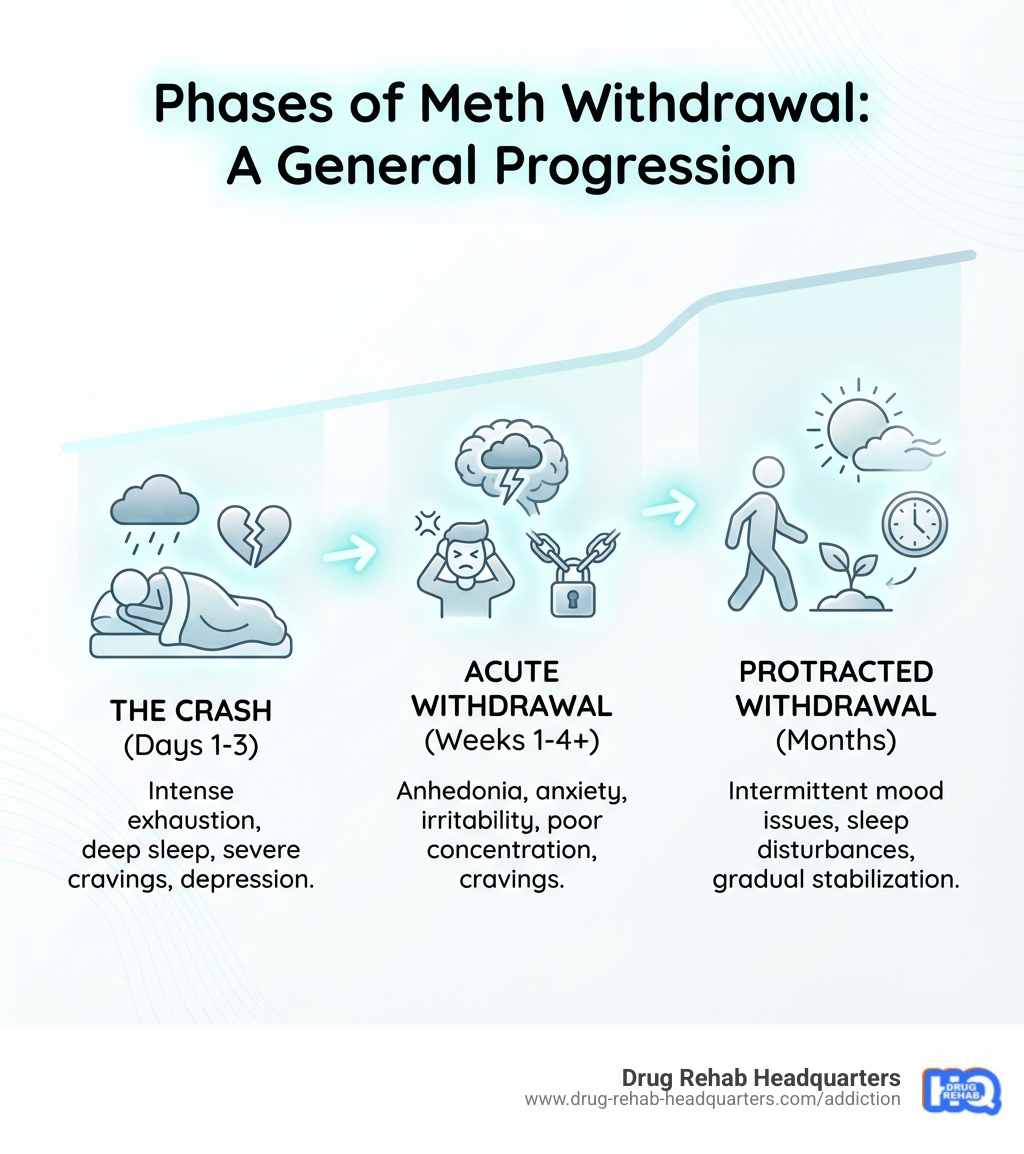
Here’s a breakdown of the typical phases:
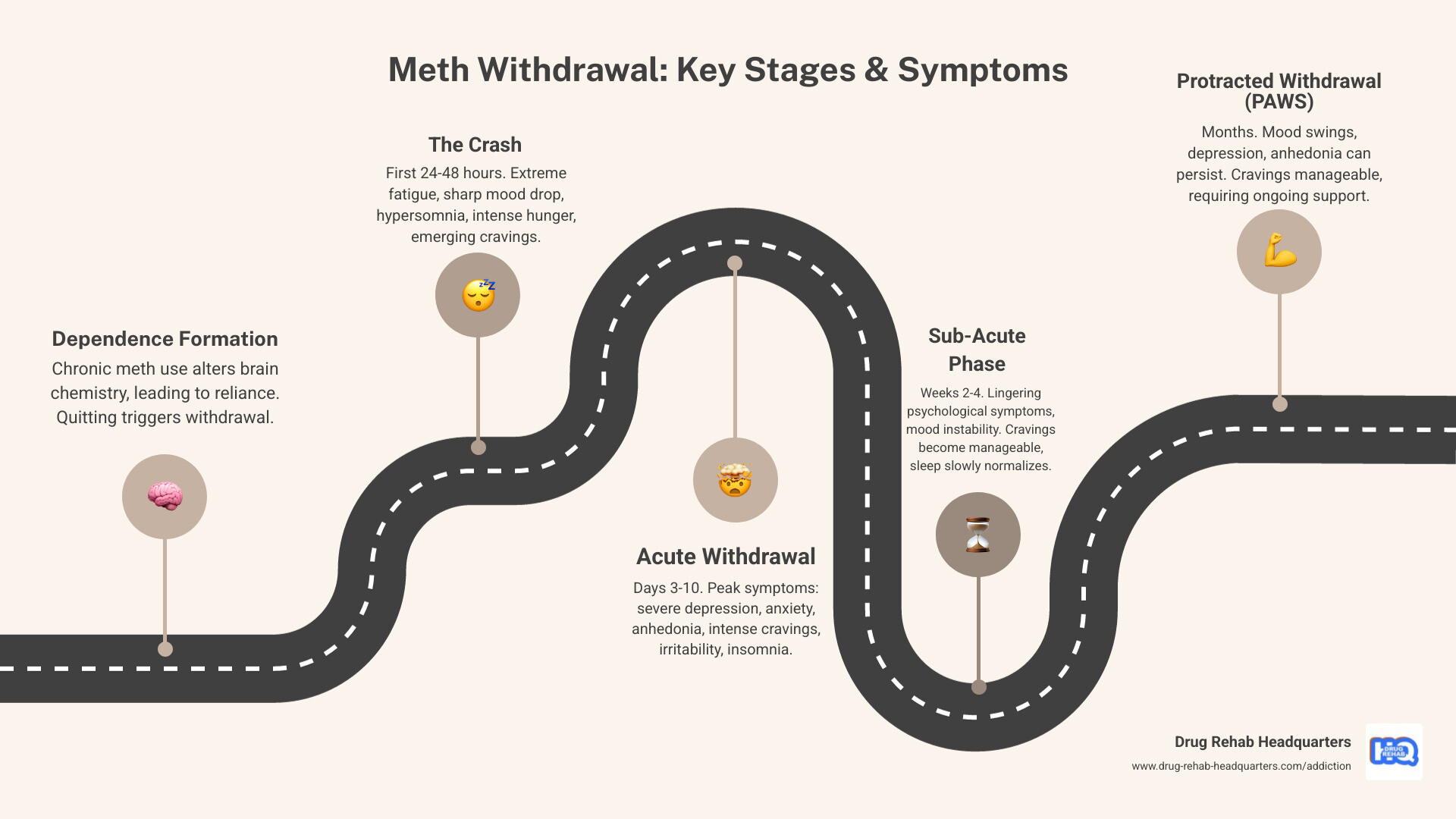
The Crash (First 24-48 Hours)
This initial phase begins almost immediately after the last dose wears off. It’s characterized by a sharp reversal of the stimulant’s effects.
- Initial Exhaustion: Users often experience an overwhelming sense of fatigue and a sudden drop in energy levels.
- Sharp Mood Drop: The euphoria gives way to intense feelings of sadness, irritability, and dysphoria (a general state of unease or dissatisfaction).
- Increased Sleep: Many individuals will sleep for extended periods, sometimes for 2 to 4 days, as their body attempts to recover from prolonged wakefulness.
- Intense Hunger: Appetite, suppressed during meth use, returns with a vengeance, leading to significant hunger.
- Emerging Cravings: While not yet at their peak, cravings for meth begin to surface, adding to the psychological discomfort.
This “crash” is the body’s immediate reaction to the absence of the stimulant.
Acute Withdrawal (Days 3-10)
This is often the most challenging phase, where meth withdrawal symptoms are at their peak intensity. Acute withdrawal symptoms commonly last 7-10 days, though they can potentially extend up to 2 weeks after the last drug use.
- Peak Symptoms: Psychological symptoms like severe depression, anxiety, paranoia, and anhedonia are at their worst. The risk of suicidal thoughts is particularly high during this period.
- Intense Cravings: Cravings for meth become extremely powerful and persistent, posing a significant risk of relapse.
- Mood Swings: Rapid and unpredictable shifts in mood are common, ranging from deep depression to intense irritability.
- Body Aches: Physical discomfort, including headaches and generalized muscle aches, can be pronounced.
- Insomnia: Despite the initial hypersomnia, severe insomnia often sets in during this phase, making it difficult to find restful sleep. This can exacerbate psychological symptoms.
- For more specific details on this phase, you can refer to withdrawal symptoms in abstinent methamphetamine-dependent subjects.
Sub-Acute & Protracted Withdrawal (2 Weeks to Several Months)
Even after the acute phase subsides, the journey isn’t over. Many individuals experience lingering symptoms, often referred to as Post-Acute Withdrawal Syndrome (PAWS). Protracted withdrawal symptoms commonly last an additional 2-3 weeks after the acute phase, but for some, mood and sleep disturbances can last for several months, or even up to a year for severe depression.
- Lingering Psychological Symptoms: Depression, anxiety, and anhedonia can persist, though usually with less intensity than during acute withdrawal. These emotional symptoms can be frustrating and contribute to a feeling of being “stuck.”
- Mood Instability: While less extreme, mood swings can still occur as the brain slowly re-establishes its chemical balance.
- Cravings Become More Manageable: While cravings may still occur, they tend to be less overwhelming and more episodic, making them easier to cope with over time.
- Sleep Patterns Slowly Normalize: Disturbed sleep patterns, including insomnia or vivid dreams/nightmares, may persist for many weeks after long-term meth use, but gradually improve.
- Post-Acute Withdrawal Syndrome (PAWS): This refers to a collection of persistent symptoms that can wax and wane for months. It includes issues like cognitive impairment, emotional lability, sleep disturbances, and continued cravings. It’s a critical period where ongoing support and therapy are essential to prevent relapse.
The severity of meth withdrawal symptoms and the overall timeline can be influenced by several factors: the amount and frequency of meth used, the duration of use, the individual’s overall physical and mental health, and whether other substances were also used (polysubstance use).
Finding Relief: Medical Detox and Treatment for Meth Withdrawal
Navigating the intense and often dangerous meth withdrawal symptoms alone is incredibly challenging and rarely successful. This is where professional support becomes not just beneficial, but crucial. We understand that taking the first step can be daunting, but knowing that a safe, supportive environment awaits can make all the difference.
The primary goals of professional medical detox and subsequent treatment are to ensure safety, manage discomfort, prevent relapse, and lay the groundwork for long-term recovery. While the detox process for substances like alcohol and opioids can be dangerous due to severe physical risks, meth withdrawal’s primary dangers are psychological, specifically severe depression and suicidal thoughts. However, this doesn’t diminish the need for professional care. For more information on general addiction treatment, explore our resources on Drug Addiction Treatment.
The Role of Medical Detox
Medical detox is the safest and most effective way to manage meth withdrawal symptoms. It provides a structured, supportive environment where individuals can safely cleanse their bodies of the drug under constant medical supervision.
- 24/7 Monitoring: Medical professionals are on hand around the clock to monitor vital signs, assess symptoms, and intervene if any complications arise, ensuring the individual’s physical and psychological safety.
- Managing Severe Symptoms: Intense psychological symptoms like severe depression, paranoia, and anxiety can be medically managed to reduce discomfort and prevent self-harm.
- Safe Environment: A controlled, substance-free environment removes access to meth, significantly reducing the immediate risk of relapse during the most vulnerable period.
- Stabilization: The medical team works to stabilize the individual’s physical and mental state, addressing dehydration, nutritional deficiencies, and sleep disturbances.
- Transition to Further Care: Detox is just the first step. Medical detox programs are designed to transition individuals seamlessly into comprehensive addiction treatment programs, which are vital for long-term recovery. As studies show, the detox process alone is not enough to help people be successful in recovery. For more details on various services, refer to Drug Rehab Services.
Medications for Symptom Management
Currently, there are no FDA-approved medications specifically designed to treat meth withdrawal symptoms or stimulant use disorder. However, medical professionals can use “off-label” medications to manage specific symptoms and alleviate discomfort during detox.
- Bupropion for Cravings: This antidepressant, sometimes used for smoking cessation, has shown promise in reducing meth cravings and improving mood.
- Modafinil for Fatigue: Used to treat narcolepsy, modafinil can help combat the severe fatigue and hypersomnia experienced during withdrawal.
- Antidepressants for Mood: Medications like fluoxetine or other antidepressants may be prescribed to address the severe depression and anhedonia, especially during the protracted withdrawal phase.
- Symptom-Specific Relief: Other medications may be used to manage specific acute symptoms such as anxiety (short-term benzodiazepines), insomnia, or psychotic features (antipsychotics). These are carefully administered to ensure safety and avoid new dependencies.
These medications are used as adjunctive treatments, meaning they support the overall detox process by making it more tolerable, increasing the likelihood of successful completion and transition to further treatment.
Behavioral Therapies and Ongoing Support
Beyond medical detox, behavioral therapies and ongoing support are the cornerstones of long-term recovery from meth addiction. These approaches address the underlying psychological and behavioral patterns that contribute to addiction. Our treatment programs draw on therapies and recovery activities backed by science.
- Cognitive-Behavioral Therapy (CBT): CBT helps individuals identify and change the unhealthy thought patterns and behaviors that led to meth use. It equips them with coping strategies to manage cravings, stress, and triggers without resorting to drugs.
- Contingency Management (CM): CM uses positive reinforcement, offering tangible rewards for desired behaviors, such as negative drug tests. This motivational approach can be highly effective in encouraging abstinence.
- Support Groups: Participation in peer support groups like Narcotics Anonymous (NA) provides a sense of community, shared experience, and accountability, which are invaluable for sustained recovery.
- Holistic Approaches: Many programs integrate holistic therapies like mindfulness, yoga, nutrition counseling, and art therapy to promote overall well-being and help individuals heal wholly.
These therapies, offered in various settings from inpatient to outpatient, provide the skills and support necessary to steer the challenges of recovery and prevent relapse. To find out more about these crucial programs, explore our resources on Addiction Treatment Centers.
Life After Meth: Risks, Recovery Outlook, and the Benefits of Quitting
Quitting meth is a monumental step, but be aware of the risks involved, especially if withdrawal is attempted without professional help. The greatest risks of meth withdrawal symptoms are psychological: potentially severe depression and suicidal thoughts. In 2020, overdose deaths involving meth and other psychostimulants were around 23,827. While withdrawal itself is rarely fatal, the severe psychological distress can lead to self-harm or suicide. Relapse is also a significant danger, particularly during the vulnerable periods of acute and protracted withdrawal.
However, with professional treatment and ongoing support, the outlook for recovery is positive. The long-term benefits of quitting meth extend far beyond simply stopping drug use; they encompass a comprehensive restoration of health, well-being, and quality of life.
Improved Physical and Mental Health
The body and mind are remarkably resilient. Once free from the grip of meth, individuals can experience profound improvements:
- Restored Energy Levels: The chronic fatigue associated with withdrawal eventually gives way to renewed energy as the body heals and sleep patterns normalize.
- Stable Mood: With time and therapeutic intervention, the severe mood swings and depression subside, leading to more balanced emotional states.
- Better Sleep: While disturbed sleep can persist for weeks, consistent abstinence allows the brain to regulate sleep cycles, leading to more restful and restorative sleep.
- Reduced Anxiety: The constant state of anxiety and paranoia diminishes, replaced by a greater sense of calm and peace.
- Improved Cognitive Function: The “cognitive fog” lifts, and individuals experience clearer thinking, improved memory, and better concentration.
- Rebuilding Relationships: As physical and mental health improve, individuals are better equipped to repair strained relationships with family and friends and build a supportive network.
- Improved Quality of Life: Beyond health benefits, quitting meth allows for the rebuilding of a stable life, including financial stability, renewed interests, and a sense of purpose.
How Loved Ones Can Provide Support
Supporting someone through meth withdrawal symptoms and recovery is a challenging but incredibly meaningful role. Loved ones can offer crucial assistance by:
- Offer Encouragement: Remind them that quitting is a smart and courageous move. Acknowledge their struggle and celebrate their progress, no matter how small.
- Provide a Stable Environment: Ensure a safe, calm, and drug-free home environment. Reduce stressors and triggers as much as possible.
- Help with Practical Needs: During withdrawal, individuals may struggle with basic self-care. Offer help with preparing healthy food, ensuring they stay hydrated, and getting adequate rest.
- Encourage Professional Help: Gently but firmly encourage them to seek and adhere to professional medical detox and ongoing treatment. Offer to help research facilities or accompany them to appointments.
- Practice Patience and Understanding: Recovery is a long and winding road with ups and downs. Be patient, understand that relapse can be part of the journey, and avoid judgment. Educate yourself about addiction to better understand what they are going through.
Supporting a loved one also means taking care of yourself. Seek your own support systems, such as family support groups, to help you steer this challenging period.
Common Questions About Meth Withdrawal
We know you might have more questions about meth withdrawal symptoms and the recovery process. Here, we address some of the most frequently asked questions.
What’s the difference between a meth ‘comedown’ and withdrawal?
This is a common point of confusion, but understanding the distinction is important.
- Comedown as a Short-Term ‘Hangover’: A meth ‘comedown’ occurs as the immediate effects of a single dose of methamphetamine wear off, typically within 12-24 hours. It’s often described as a severe “hangover” and includes symptoms like exhaustion, irritability, and mild depression. While unpleasant, a comedown generally resolves on its own if no more drug is ingested. It’s a temporary physiological dip after the stimulant’s effects subside.
- Withdrawal as a Longer, More Intense Process: Meth withdrawal symptoms, in contrast, are a more prolonged and intense set of reactions that occur when someone with a physical dependence on meth stops or significantly reduces their use. It’s caused by the brain and body attempting to readjust to functioning without the drug after a period of chronic use. Withdrawal symptoms are more severe, last much longer (weeks to months), and carry significant psychological risks. While symptoms overlap, withdrawal signifies a deeper physiological adaptation and dependence.
Can using meth just once cause withdrawal?
Generally, no. While methamphetamine is highly addictive and can cause dependency after just one use, experiencing full-blown meth withdrawal symptoms typically requires chronic or heavy use over time.
- Unlikely with a Single Use: There is inadequate research to suggest that using meth just one time will cause withdrawal symptoms. The body needs time to develop a physical dependence, where it adapts to the presence of the drug and functions abnormally without it.
- Withdrawal Stems from Chronic Use: Withdrawal occurs when the brain’s neurochemistry has been significantly altered by repeated exposure to meth. It’s this sustained adaptation that leads to the intense physical and psychological reactions when the drug is removed.
- Physical Dependence Development: Dependence is a physiological adaptation where the body needs the substance to function properly. This usually develops over time with regular use.
- Addiction Potential After One Use: It’s important to distinguish that while withdrawal might not occur after one use, addiction can still rapidly develop. The powerful euphoric effects can quickly lead to psychological craving and compulsive use, even if physical dependence hasn’t fully set in.
Is meth withdrawal fatal?
This is a critical question, and the answer is nuanced.
- Withdrawal Itself Is Rarely Fatal: Unlike withdrawal from alcohol or benzodiazepines, meth withdrawal symptoms are generally not considered physically life-threatening. There are usually no severe physical complications like seizures or delirium that directly lead to death.
- Psychological Risks Are Severe: The primary danger during meth withdrawal lies in the intense psychological symptoms. Severe depression, anhedonia, paranoia, and suicidal ideation are incredibly prevalent and can be debilitating. These symptoms significantly increase the risk of self-harm or suicide. This is why medical supervision is so crucial.
- Depression and Suicidal Thoughts Are the Main Dangers: The profound drop in dopamine levels can lead to an overwhelming sense of hopelessness, making individuals highly vulnerable to suicidal thoughts and attempts. Proper monitoring and support are essential to mitigate this risk.
- Meth Abuse Itself Increases Risk of Premature Death: While withdrawal isn’t typically fatal, chronic methamphetamine abuse significantly increases the risk of premature death from various causes. These include cardiovascular disease (heart attack, stroke), infections (HIV, hepatitis from injecting), severe malnutrition, accidents, violence, and suicide related to the long-term effects of the drug.
Therefore, while the withdrawal process itself may not directly cause death, the associated psychological distress and the long-term health consequences of meth abuse make it a highly dangerous substance. Professional intervention dramatically improves safety and the chances of successful recovery.
Conclusion
Navigating meth withdrawal symptoms is undoubtedly one of the most formidable challenges an individual can face on the path to recovery. We’ve explored the immediate physical discomforts, the profound psychological battles, and the typical timeline that unfolds over days, weeks, and even months. From the initial “crash” to the lingering effects of protracted withdrawal, the journey requires immense resilience.
However, we want to emphasize that hope is not lost. With professional support, safe medical detox, and ongoing therapeutic interventions, recovery is not just a possibility—it’s a reality for many. The benefits of quitting meth—including improved physical and mental health, restored relationships, and an improved quality of life—are profound and enduring. Loved ones also play a vital role in providing encouragement and practical support, helping to create a stable environment for healing.
If you or someone you care about is struggling with meth addiction, you don’t have to face this alone. Organizations like Drug Rehab Headquarters are here to provide information and connect you with the resources needed to begin your journey toward lasting sobriety. Take that courageous first step today. Let us help you find the right addiction treatment program for you in any of our locations across the United States.