
When Suboxone Becomes the Problem: What You Need to Know About Detox
Suboxone detox treatment centers are specialized medical facilities that help people safely stop using Suboxone (buprenorphine/naloxone) through supervised withdrawal management, tapering protocols, or rapid detox programs.
Quick answers about Suboxone detox centers:
- What they treat: Physical dependence on Suboxone (buprenorphine), often developed during opioid addiction treatment
- Main detox methods: Medical tapering, rapid detox under sedation, or structured outpatient programs
- How long it takes: Typically 8 days to several months, depending on the method and dosage
- Who needs one: Anyone experiencing withdrawal symptoms when reducing or stopping Suboxone
- How to start: Call (866) 720-3784 for same-day guidance on finding the right program
Suboxone was designed to solve opioid addiction. But for millions of people, it has quietly become a problem of its own.
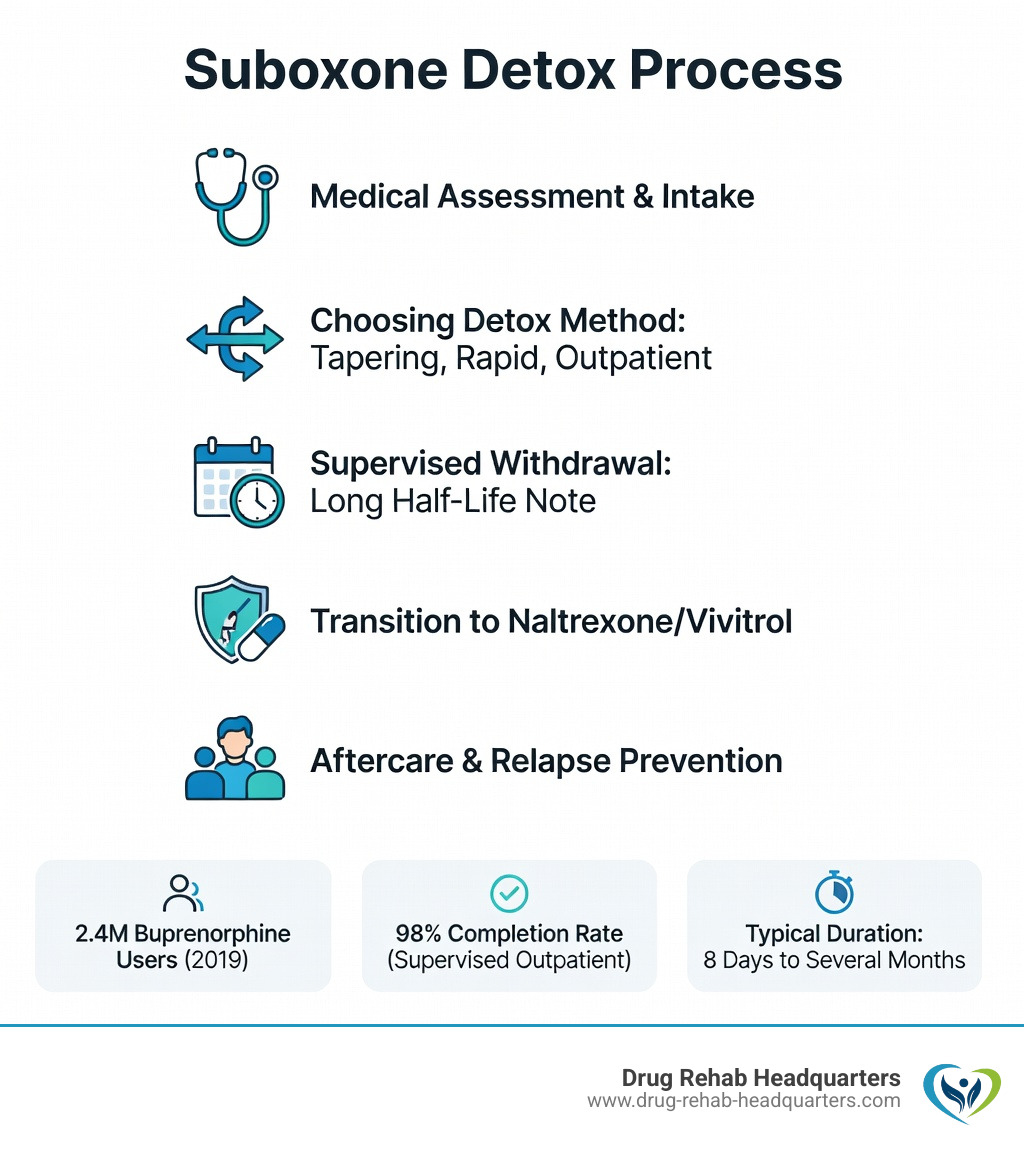
In 2019, an estimated 2.4 million adults used buprenorphine products like Suboxone. Of those, 25% reported misusing them. And in 2011 alone, over 21,000 emergency room visits were linked to the nonmedical use of buprenorphine.
Here’s what makes this especially hard: Suboxone has a very long half-life. It stays in your system for weeks. That means withdrawal symptoms last longer and feel more intense than withdrawal from many other opioids — including the drug someone was originally trying to quit.
Many people are never told this when they start treatment.
If you or someone you love is feeling stuck on Suboxone, unable to taper down without feeling sick, you are not alone — and professional help is available.
At Drug Rehab Headquarters, we’ve spent years helping individuals and families navigate the confusing world of addiction treatment, including connecting people with trusted suboxone detox treatment centers, drug treatment centers, and alcohol treatment services that match their unique situation, budget, and level of need. Whether you require an inpatient rehab or outpatient care, call us at (866) 720-3784 for same-day guidance. This guide will walk you through everything you need to make an informed decision.
Understanding Suboxone and Its Role in Opioid Recovery
To understand why suboxone detox treatment centers are necessary, we first have to look at how the drug works. Suboxone is a combination of two medications: buprenorphine and naloxone.
Buprenorphine is a “partial opioid agonist.” Think of your brain’s opioid receptors like a lock. A full agonist (like heroin or OxyContin) turns the key all the way, creating a massive “high.” Buprenorphine only turns the key halfway. It provides enough stimulation to stop cravings and withdrawal, but it has a “ceiling effect” that prevents the intense euphoria associated with other drugs.
Naloxone is the second ingredient, added specifically to prevent misuse. If someone tries to inject Suboxone, the naloxone activates immediately, throwing the person into instant, painful withdrawal.
While this makes Suboxone a powerful tool for medication-assisted treatment, it is not a “cure.” It essentially replaces a dangerous opioid dependency with a more stable, legally managed dependency. Over time, the brain stops producing its own natural endorphins because it relies on the Suboxone. This is why stopping “cold turkey” is so incredibly difficult.
If you are currently enrolled in an inpatient rehab or looking for drug treatment centers to help you transition off this medication, call us at (866) 720-3784. We can help you find a facility that understands the delicate science of brain chemistry restoration.
Signs of Dependence and the Need for Suboxone Detox Treatment Centers
How do you know if your use of Suboxone has crossed the line from “treatment” to “dependence”? For many, the realization comes when they try to skip a dose.
Statistics show that in 2016, roughly 2.1 million people reported misuse or dependence on opioids. Even when taken as prescribed, physical dependence is almost a guarantee if the medication is used long-term.
Common signs that you may need the help of suboxone detox treatment centers include:
- Tolerance: Needing higher doses to achieve the same stabilizing effect.
- Withdrawal Avoidance: Taking the medication purely to avoid feeling “dope sick” rather than for recovery purposes.
- Failed Tapers: Attempting to cut back on your own but returning to your full dose because the physical pain or anxiety is too much to handle.
- Behavioral Changes: Feeling “numb,” experiencing extreme fatigue, or noticing that your personality has changed while on the medication.
If you recognize these patterns, professional medical supervision is the safest path forward. You can reach a counselor 24/7 at (866) 720-3784 to discuss your options.
How Suboxone Compares to Oxycontin in Detox
Detoxing from Suboxone is often described by patients as harder than detoxing from OxyContin or heroin. This sounds counterintuitive, but there is a scientific reason for it.
OxyContin is a “full agonist” with a relatively short half-life. The withdrawal is intense and “violent,” but it usually peaks within 48 to 72 hours and begins to subside within a week. Suboxone, however, has a massive half-life. It lingers in your fatty tissues and blood for a long time.
Because it leaves the body so slowly, the withdrawal symptoms can drag on for three to four weeks. This “slow burn” is what breaks most people’s resolve. Specialized detoxification programs are designed to manage this extended timeline, providing medical support that a standard 5-day detox simply cannot offer. For more information on finding the right program, call (866) 720-3784.
The Challenges of Suboxone Withdrawal and Detox Timelines

The biggest hurdle in Suboxone recovery is the timeline. Because the drug is long-acting, you won’t even start feeling withdrawal for the first 24 to 48 hours after your last dose. This can give a false sense of security before the symptoms truly hit.
Factors that affect your detox duration include:
- Metabolism: How fast your body processes chemicals.
- Dosage: Someone on 16mg daily will have a much longer road than someone on 2mg.
- Duration of Use: If you’ve been on Suboxone for five years, your brain receptors will need more time to adjust than someone who used it for five months.
Common Symptoms Managed at Suboxone Detox Treatment Centers
When you enter suboxone detox treatment centers, the medical team is there to protect you from the “Big Four” categories of symptoms:
- Physical Pain: Intense muscle aches, joint pain, and “bone-deep” discomfort.
- Gastrointestinal Distress: Nausea, vomiting, stomach cramps, and diarrhea.
- Neurological Issues: Insomnia, restless leg syndrome (RLS), and extreme sensitivity to light or sound.
- Psychological Distress: Severe anxiety, panic attacks, depression, and “brain fog.”
Medical supervision is vital because these symptoms can lead to dangerous dehydration or heart palpitations. If you’re worried about the physical toll of withdrawal, call (866) 720-3784 to find a center that offers advanced comfort medications.
The Suboxone Detox Timeline
The journey through detox generally follows three phases:
- The Acute Phase (Days 1–7): This is the physical peak. You’ll experience sweating, chills, and digestive issues. At professional centers, you’ll receive 24/7 monitoring to ensure your vitals stay stable.
- The Stabilization Phase (Days 8–21): The worst physical symptoms fade, but the fatigue and insomnia often linger. This is where psychological support becomes crucial.
- Post-Acute Withdrawal Syndrome (PAWS): This can last for months. It involves mood swings and cravings. High-quality suboxone detox treatment centers don’t just kick you out after a week; they provide a “continuum of care” to help you through this long-term adjustment.
Need help navigating this timeline? Call us at (866) 720-3784.
Evidence-Based Methods Used in Suboxone Detox Treatment Centers
There is no “one-size-fits-all” way to get off Suboxone. However, science has given us several proven methods to make the process more bearable.
Success Rates of Suboxone Detox
When evaluating suboxone detox treatment centers, success rates are a primary concern. Clinical data suggests that structured medical tapering has a significantly higher success rate than unsupervised attempts. Some specialized outpatient protocols boast a 98% completion rate for their tapering programs, compared to the high relapse rates associated with “cold turkey” withdrawal.
Medical Tapering vs. Rapid Detox Under Sedation
Medical Tapering is the “gold standard” for most people. Under the guidance of a doctor, you slowly reduce your dose over weeks or months. This allows your brain chemistry to heal incrementally.
Rapid Detox Under Sedation is a much faster, more intensive option. In a 3 to 4-day program, a patient is placed under light sedation while an anesthesiologist uses medications to “scrub” the opioid receptors. This forces the body through the worst of the withdrawal while the patient is asleep.
While rapid detox can be life-saving for those who have failed every other method, it does carry risks associated with anesthesia and requires a hospital-level environment.
Many centers now use Vivitrol for maintenance immediately following detox. Vivitrol is a monthly injection of Naltrexone that blocks all opioid effects and significantly reduces cravings without being addictive itself.
To find out which method is right for you, call (866) 720-3784. Our team can help you find drug treatment centers and alcohol treatment services that fit your needs.
Holistic and Complementary Therapies in Detox
Modern suboxone detox treatment centers realize that pills alone aren’t enough. They often incorporate behavioral health services such as:
- Cognitive Behavioral Therapy (CBT): To help you identify the “why” behind your addiction.
- Nutritional Support: Opioid use often depletes the body of vital nutrients; a proper diet can speed up physical healing.
- Ketamine Therapy: Some luxury centers now offer low-dose ketamine to help with the severe depression that often follows opioid detox.
- Mindfulness and Yoga: To help manage the “restless” feeling that comes with withdrawal.
Inpatient vs. Outpatient Treatment in Indiana
Deciding where to detox is just as important as deciding how. In Indiana, patients have access to a wide range of care levels tailored to their specific needs.
Benefits of Inpatient Suboxone Detox
For most people, inpatient rehab is the safest choice. It provides a controlled environment where you are removed from the stresses and triggers of home life.
- 24/7 Medical Care: If you have a panic attack at 3 AM, a nurse is there to help.
- Dual Diagnosis: Many people use opioids to mask underlying issues like PTSD or depression. Inpatient centers can treat both at once.
- Peer Support: You are surrounded by people who truly understand what you’re going through.
If you are looking for a high-intensity program, call (866) 720-3784 for a list of accredited residential centers and alcohol treatment services.
When to Consider Outpatient Detox
Outpatient programs can be effective for those with a strong support system at home and a lower level of dependency.
- Work/Family Flexibility: You can continue to meet your daily obligations.
- Lower Cost: Since you aren’t paying for room and board, it’s often more affordable.
- Telehealth Options: Some modern clinics even offer remote monitoring and drug screening. For more information on drug treatment centers, call (866) 720-3784.
Insurance Coverage for Indiana Rehab Centers
How much does Suboxone detox cost?
The cost of treatment at suboxone detox treatment centers in Indiana varies based on the level of care. Outpatient tapering programs may range from $1,500 to $5,000. Inpatient programs, which include housing and 24/7 medical supervision, typically range from $10,000 to $30,000 per month. Many facilities offer sliding scale fees or payment plans to ensure rehabilitation is accessible.
Does insurance cover treatment at Suboxone detox centers?
Yes, thanks to the Affordable Care Act, most private insurance, Medicaid, and CHIP plans are required to cover substance use disorder treatment. The level of coverage varies, so find help with insurance coverage before you check in. We can help you verify your benefits for free when you call (866) 720-3784.
Frequently Asked Questions
How long does Suboxone stay in your system during detox? Suboxone has a half-life of 24 to 42 hours. This means it takes nearly two days for just half of the dose to leave your blood. It can take 7 to 14 days for the drug to be completely undetectable in your system, though the psychological effects can last much longer.
Is it dangerous to detox from Suboxone at home? While Suboxone withdrawal is rarely fatal on its own, it is extremely dangerous due to the risk of relapse. When the pain becomes unbearable, many people return to full-agonist opioids like fentanyl to stop the sickness, leading to a high risk of overdose.
Conclusion
Getting off Suboxone is one of the bravest things you will ever do. It is the final step in reclaiming your brain from the cycle of opioid dependency.
At Drug Rehab Headquarters, we don’t just see you as a statistic. We see you as a person ready for a new beginning. Whether you need a high-end inpatient rehab, a 4-day rapid detox, or a gentle outpatient taper, our certified counselors are here to help you find the right fit among top-rated drug treatment centers and alcohol treatment services.
We offer 24/7 free support and personalized guidance to help you find evidence-based, holistic treatment options across North America. We have helped thousands of people in states from California and Florida to Michigan and Texas find their way back to health.
Don’t spend another day feeling stuck. You can contact a counselor for placement or call us directly right now at (866) 720-3784. The call is free, confidential, and could be the turning point you’ve been waiting for.
Types of Rehab Centers in Indiana
Indiana provides several options for those seeking to overcome Suboxone dependency. These include:
- Private Residential Facilities: Offering luxury amenities and intensive therapy.
- State-Funded Rehabilitation Centers: Providing accessible care for those with limited financial resources.
- Hospital-Based Detox Units: Best for patients with complex medical needs or those requiring rapid detox under sedation.
- Faith-Based Programs: Incorporating spiritual support into the recovery process.
Each type of facility offers different strengths, and the choice often depends on the individual’s medical history and personal preferences.
Finding the Right Addiction Treatment Program
Finding the right program requires careful consideration of several factors. First, ensure the facility is accredited by organizations like CARF or The Joint Commission. Second, ask about their specific experience with Suboxone; because of its long half-life, the detox protocol must be specialized. Finally, look for a center that offers a continuum of care, including transition to medications like Vivitrol and ongoing counseling to address the psychological aspects of addiction. For personalized assistance in finding a program that fits your needs, call (866) 720-3784.